
Review · COPENHAGEN WALKING TOURS
Copenhagen: Guided Walking Tour
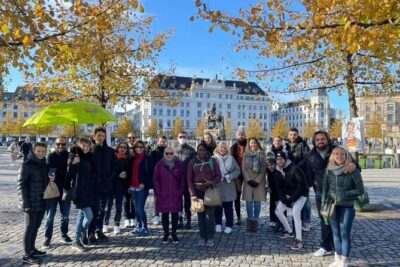
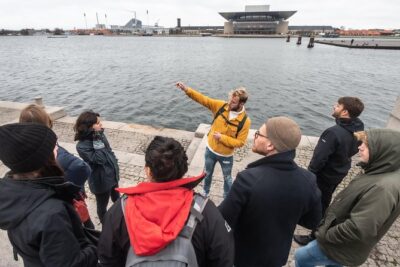
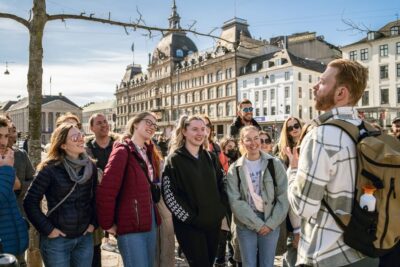
Copenhagen reveals itself best on foot. This private three-hour walk links medieval Copenhagen with royal squares, canals, castles, and everyday Danish customs, giving you a useful first look at the city rather than a quick list of photo stops. I like the flexible route, which can reflect your interests, and the way guides such as Facundo, Stuart, Alessio, Lucy, and Tina bring history to life with stories, humor, and practical local advice.
I also like the strong family appeal. Guides have kept children aged 11 and 14, as well as three teenagers, engaged, and several guides adjusted the pace or route to suit the group. The main drawback is the amount of walking: one guest covered about seven miles in three hours, so this is not a gentle stroll. Despite being listed as wheelchair accessible, it is not suitable for people with mobility impairments.
Key points at a glance
- A private route for up to five people: Your group gets a guide rather than joining a large public walk.
- A broad central Copenhagen circuit: The route may include Tivoli, City Hall, Strøget, Christiansborg, the Round Tower, Rosenborg, Nyhavn, and Amalienborg.
- Strong storytelling: Guides explain Danish history, customs, royal life, and modern culture, not just building names.
- Good for first-time visitors: The tour gives you a clear sense of the city center in three hours.
- Flexible pacing and interests: Guides have adapted routes for families, hot weather, royal events, and individual questions.
- Prepare for real walking: Comfortable shoes, warm layers, and rain protection matter because the tour runs in all weather.
Starting at Central Station and Tivoli Gardens

You meet your guide at Copenhagen Central Station, at the exit toward Tivoli Gardens. This is a practical meeting point if you have just arrived by train or are staying near the central station. The route begins outside Tivoli, so you get the famous amusement park’s setting without paying an admission fee or spending tour time inside its gates.
That distinction matters. This is a city walking tour, not a Tivoli visit. You will see Tivoli from the outside and then continue into the central streets. If Tivoli is a major reason for your visit, plan a separate visit for another part of the day.
The opening section gives your guide room to explain Copenhagen’s place in Danish history and the wider Nordic world. Facundo was praised for offering that wider regional view, while Stuart and Tina were singled out for explaining not only what you were seeing, but why it mattered.
More Guided Walks in Copenhagen:
- Copenhagen: City Highlights Walking Tour With Local Guide
★ 4.7 · 316 reviews - Copenhagen: Guided Walking Tour in French
★ 4.9 · 249 reviews - Copenhagen: Christiania & Christianshavn Guided Walking Tour
★ 4.7 · 119 reviews
City Hall, medieval squares, and the old city center
From the station, the walk may continue toward City Hall and the older central squares, Ny Torv and Gammel Torv. These stops help you understand how Copenhagen developed from a medieval settlement into Denmark’s capital.
The value here is less about entering a particular building and more about reading the city around you. A good guide can connect the street plan, public squares, civic buildings, and changing uses of the center. You will hear about Denmark’s past, but also about Danish life today, including customs and everyday habits.
The tour does not appear to follow one rigid route every time. Your guide may adjust the order or skip a stop if your group has a special interest. Rachel’s guide worked in the sites that mattered most to her family, while Alessio paused when the group unexpectedly saw the King and Queen arriving at Parliament.
That flexibility is a real advantage over a fixed audio tour. It also means you should not treat the advertised sights as a guarantee that every one will receive equal time. Three hours is enough for a broad introduction, not a detailed visit inside every major building.
Copenhagen Cathedral and Strøget
Copenhagen’s Cathedral is another likely stop in the historic center. From there, the walk can lead onto Strøget, the central shopping street and one of the easiest places to sense how old Copenhagen and modern Copenhagen fit together.
Strøget is useful for orientation. You can locate shops, cafés, public squares, and connecting streets while listening to stories about the city’s past. The guide can also help you decide which areas deserve a return visit after the tour.
The best guides keep this part from becoming a simple shopping walk. Papito was praised for mixing humor with useful information, and Martin was described as making the tour fun while covering a large amount of ground. That balance is important. Three hours of dates and royal names would be tiring, especially for children. Short stories and jokes help keep the pace human.
For families, this section can be one of the easiest parts of the route. The children in several groups stayed interested, and guides answered many questions instead of rushing from one point to the next. You should still expect to walk continuously, with stops rather than long seated breaks.
Christiansborg and the Old Stock Exchange
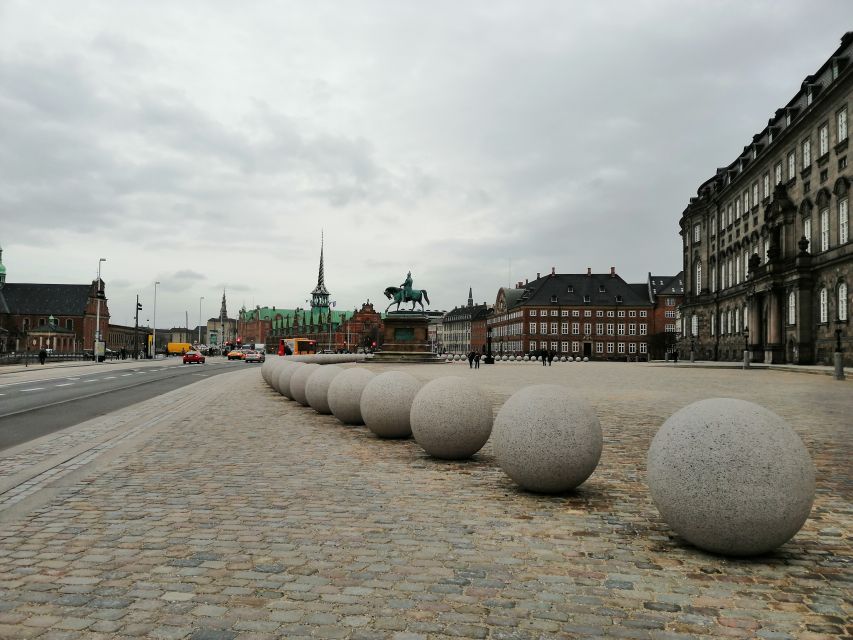
Christiansborg Castle gives the tour a strong royal and political focus. It is also the area where a guide can explain how Denmark’s monarchy, government, and national institutions fit into the city.
You will generally experience these sites from the outside during the walk. The tour does not include admission to Christiansborg or other attractions, and food and drinks are not included. If you want to tour the castle interiors, budget additional time and money outside the three-hour walk.
The nearby Old Stock Exchange adds another layer, showing Copenhagen’s commercial past. Together, Christiansborg and the Old Stock Exchange help broaden the tour beyond royal residences. You get a look at political power, trade, architecture, and the changing role of the city center.
This is where a strong guide earns the fee. Alessio was praised for telling stories about Copenhagen’s way of life, while Tina was valued for bringing the reason behind each place into focus. You are not simply told that a building is old. You get context for why it was built and how it fits into Danish society.
A few more walks around Copenhagen worth a look
- Private Walking Grand Tour of Copenhagen
★ 5.0 · 3,953 reviews - Copenhagen Highlights Walking Tour
★ 5.0 · 2,324 reviews - Politically Incorrect Private Highlights Walking Tour
★ 5.0 · 1,244 reviews - Copenhagen: Group Walking Tour – City Highlights – 2 Hours
★ 4.7 · 1,088 reviews
The Round Tower and Rosenborg Castle
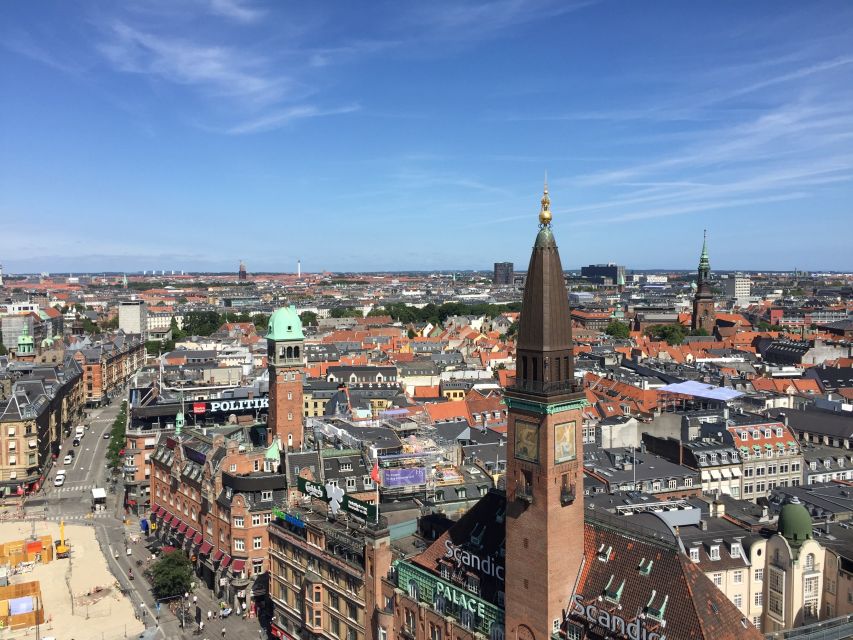
The Round Tower and Rosenborg Castle may appear later in the route, depending on the guide’s plan and your group’s priorities. These stops move the walk toward royal Copenhagen and offer some of the most recognizable architecture in the city.
The Round Tower is especially useful as a city reference point. Even if you do not go inside, its presence helps you understand the scale of the old center. Rosenborg Castle shifts the mood toward royal history and palace life.
Do not expect a full museum visit during this tour. The experience is designed to connect major sights from the street. That makes it efficient for a first day, but less suitable if you want extended time with paintings, royal rooms, or exhibits.
I would use the tour to mark the attractions you want to revisit. If Rosenborg or the Round Tower catches your interest, you can return later with enough time to explore properly. That is one of the tour’s practical strengths: it gives you a map in your head before you commit several hours to a single site.
Nyhavn, Amalienborg, and royal Copenhagen
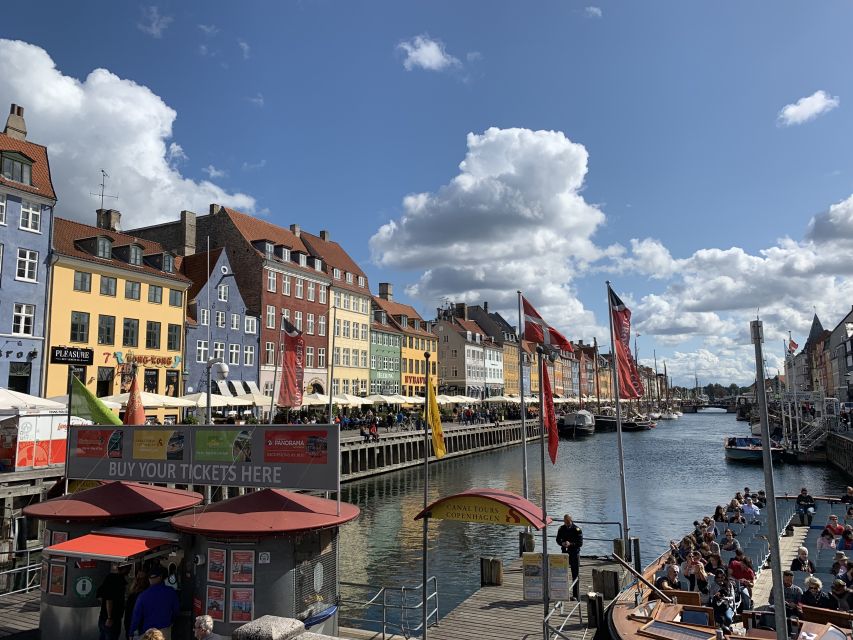
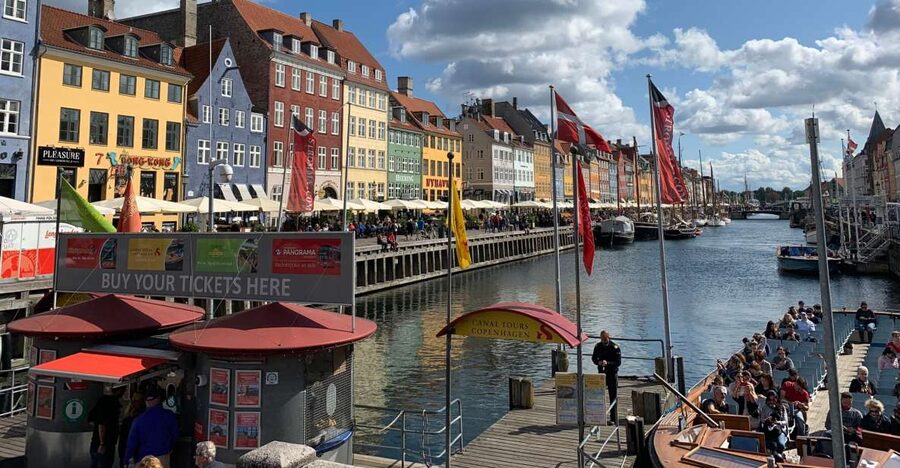
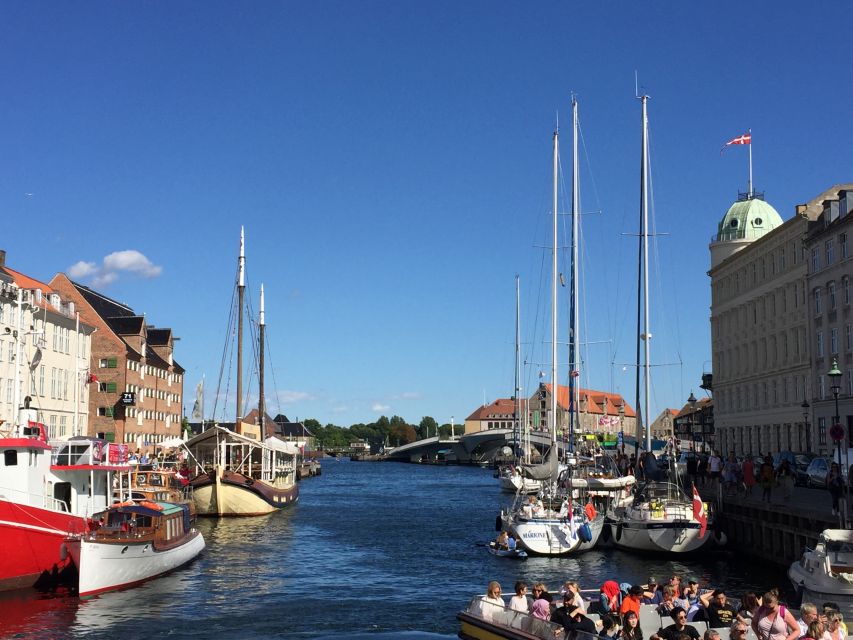
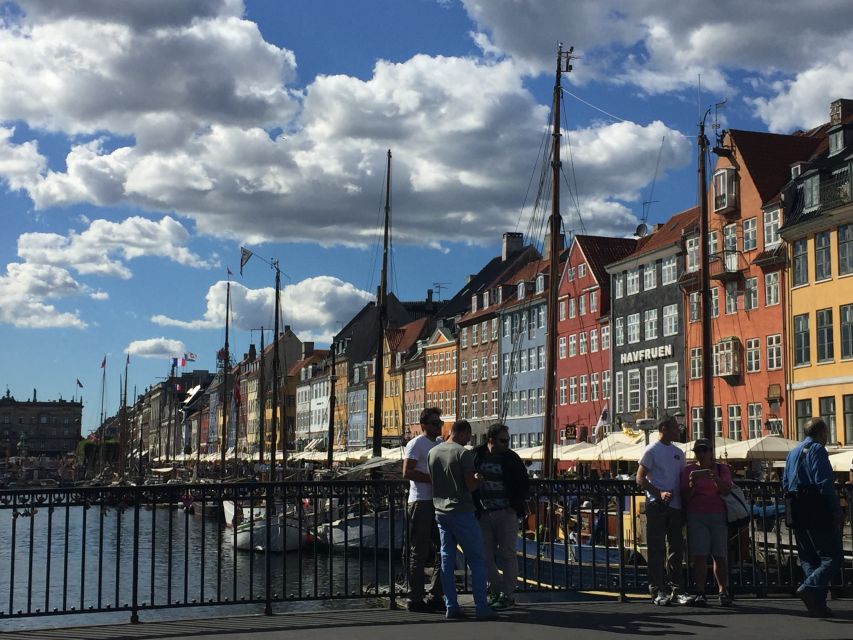
Nyhavn is one of Copenhagen’s most photographed areas, with colorful waterfront buildings and a strong connection to the city’s maritime identity. It is also a place where crowds and busy foot traffic can slow the group, so your guide’s timing and route choices matter.
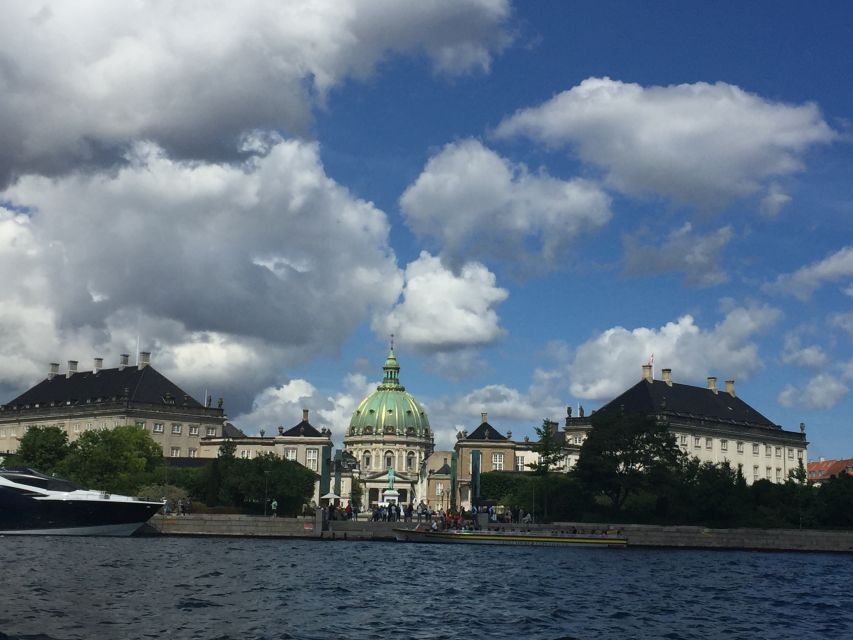
Amalienborg Castle brings the walk to royal Copenhagen. Several guides have timed the route around the changing of the guard, which can add a memorable live moment to the day. Natasja’s guide arranged the timing well, and another group was able to pause near Parliament when the royal family arrived.
Those moments cannot be promised, but they show why a private guide can be useful. A fixed group schedule may have to move on. A private guide has more room to respond to what is happening around you.
The final stretch can also help you continue exploring on your own. One guide helped a group find its way back to a bus via the Little Mermaid. The monument is not listed as a standard stop, so do not assume it will be part of your route, but you can ask about transport and nearby sights before the tour ends.
What the guides do best
The strongest part of this experience is the human explanation. The guides are not presented as one single host, so your guide may be Facundo, Stuart, Alessio, Edgar, Lucy, Tina, Papito, Martin, Nuria, Agustina, or another member of the team.
Several qualities appear again and again:
- Clear storytelling: Guides use short stories and local details instead of reciting a timeline.
- Cultural context: You learn about Danish customs and modern life along with older events.
- Good humor: Papito, Stuart, Martin, and Facundo were especially praised for keeping the mood light.
- Flexibility: Guides have adjusted routes, answered many questions, and responded to royal events.
- Family awareness: Edgar and Lucy were praised for holding the attention of younger group members.
- Practical advice: Nuria offered suggestions for places to explore and eat after the tour.
Nuria’s approach is worth noting. Her tour combined Danish and Copenhagen history with current events and cultural awareness, then added suggestions for further places to visit. That is exactly what I want from an orientation walk. You should leave with both a better understanding of the city and a short list of ideas for the rest of your stay.
The pace, distance, and weather
Three hours sounds modest until you spend that time on Copenhagen’s streets. One guest estimated about seven miles, while other groups described the pace as comfortable, with stops for rest and scenery. The distance will depend on the route, guide, weather, and how much time you spend at each sight.
Wear comfortable walking shoes. Bring warm clothing, a jacket, and an umbrella, especially outside summer. The tour runs rain or shine, and a rainy, windy day made one walk less pleasant even though the guide continued to explain the sights in detail.
Heat also matters. During a hot-day tour, Lucy made sure the group stayed hydrated and adjusted the experience to the conditions. You should still bring your own water because drinks are not included.
The listing gives two pieces of information that need to be read together. The tour is marked wheelchair accessible, but it is also marked unsuitable for people with mobility impairments. Given the length and city-street format, anyone with limited walking ability should confirm the route directly before booking.
Large luggage is not allowed. Leave suitcases at your hotel, station storage, or another secure place before meeting your guide. Hotel pickup and drop-off are not included, so you must reach Central Station on your own.
Is $343 good value for up to five people?
The price is $343 per private group of up to five. At five people, that works out to $68.60 per person for three hours. For a couple, the per-person cost is much higher, but you gain a private format and a route that can respond to your interests.
I see the best value for families or small groups who would otherwise book several separate orientation activities. You are paying for a live guide, local context, and the ability to ask questions throughout the walk. A family can also avoid the awkwardness of trying to keep children interested in a large group.
The value is weaker if you mainly want a short introduction with little walking. A public group walk or self-guided route may cost less, though neither offers the same level of personal adjustment.
Food, drinks, attraction admission, and transport are extra. Think of this as a paid orientation to central Copenhagen, not a full sightseeing package. If you use the route to choose which museums, castles, or neighborhoods deserve more time, the fee makes more sense.
Flexible booking helps if your schedule is uncertain. You can cancel up to 24 hours in advance for a full refund, and the reserve-now, pay-later option lets you hold a place without paying immediately.
Who should book this walk?
I would choose this tour for a first day in Copenhagen, particularly if you have only one day or want a clear introduction before exploring alone. It is also a good match for families, couples, and small private groups who like asking questions.
You should book it if you want:
- A broad look at central Copenhagen
- Stories about Danish history and customs
- A private guide who can adjust the route
- Help choosing what to revisit later
- A family-friendly way to see many major sights
- A mix of medieval streets, royal buildings, civic landmarks, and waterfront scenery
I would think twice if you dislike long walks, need frequent seated breaks, or want to spend time inside each attraction. This tour keeps moving, and rain or cold can affect the experience.
Final verdict: book it for orientation and stories
Book this Copenhagen walking tour if you want to understand the city before exploring it on your own. The route covers a lot, the guides have a strong record of clear storytelling, and the private format gives you room to ask questions or change priorities.
The most useful strategy is to schedule it early in your visit. Wear sturdy shoes, carry rain protection, leave your luggage behind, and tell the guide what matters most to you at the start. You may see Tivoli, Christiansborg, the Round Tower, Rosenborg, Nyhavn, and Amalienborg in one walk, but the real benefit is learning how these places connect.
The main caution is simple: this is a serious walk. If seven miles sounds daunting, ask about the pace and route before booking. For an active group that wants history, local customs, royal Copenhagen, and practical advice in one private outing, the 4.9 rating feels well supported.
FAQ
Where does the Copenhagen walking tour meet?
You meet the guide at Copenhagen Central Station, at the exit toward Tivoli Gardens.
How long does the tour last?
The walking tour lasts three hours. Starting times depend on availability.
How many people can join the private group?
The price covers a private group of up to five people.
Which languages are available?
The tour is offered in English and Spanish.
Is the tour suitable for children?
Yes. Guides have successfully kept children aged 11 and 14, as well as teenagers, interested during the walk.
What sights might the route include?
Possible stops include Tivoli from the outside, City Hall, Ny Torv, Gammel Torv, Copenhagen’s Cathedral, Strøget, Christiansborg Castle, the Old Stock Exchange, the Round Tower, Rosenborg Castle, Nyhavn, and Amalienborg Castle.
What should I bring?
Bring comfortable shoes, comfortable clothes, warm layers, a jacket, an umbrella, and clothing suited to the weather.
Can I bring luggage or cancel the booking?
Large bags and luggage are not allowed. You can cancel up to 24 hours in advance for a full refund.
Just added around Copenhagen
- Copenhagen: The Six Forgotten Giants Hunt and Nature Walk★ 5.0 · 95 reviews
- Copenhagen’s oldest and original food tour (Est. 2011).★ 4.8 · 442 reviews
- Copenhagen: Private Walking Tour with a Local★ 4.6 · 249 reviews
- Copenhagen: Hygge and Happiness Culture Walking Tour★ 4.9 · 539 reviews
- Copenhagen: Politically Incorrect Beer Tasting Walking Tour★ 4.8 · 239 reviews
- Copenhagen: City Highlights Walking Tour with Local Guide★ 4.8 · 87 reviews
- Copenhagen: Private Walking Tour★ 4.6 · 174 reviews
- Copenhagen: Highlights & Hygge Guided Walking Tour w/ Lunch★ 4.9 · 75 reviews
Copenhagen Walking Tours, compared.

Group Walking Tour – City Highlights – 2 Hours
Read our review →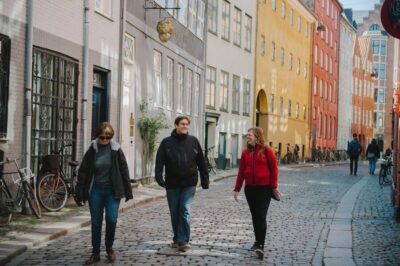

Copenhagen’s oldest and original food tour (Est. 2011).
Read our review →

Browse the lists this tour appears in