
Review · AMSTERDAM WALKING TOURS
Amsterdam: Sex, Drugs, and Freedom Walking Tour
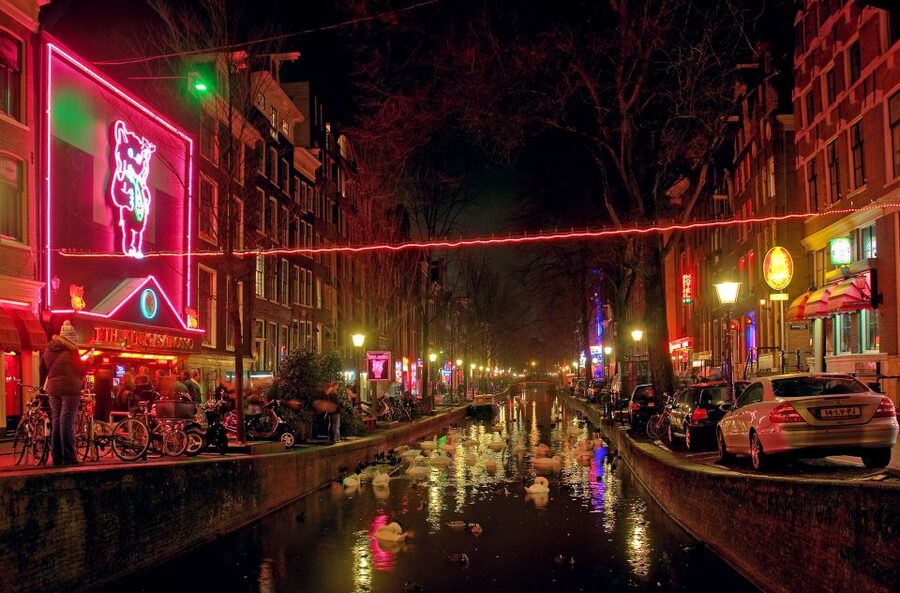
Amsterdam’s taboos make a useful walking lesson. This two-hour tour turns Amsterdam’s famous sex and drug culture into a history and civics class, with a local guide leading you through the Red-light District and nearby streets. I like the plainspoken approach and the chance to see places beyond the usual photo stops. I also like that the tour treats prostitution, drug policy, gay rights, and sexual freedom as connected parts of Amsterdam’s past, not as cheap entertainment.
The main drawback is the tight schedule. Two hours gives you a lively introduction, but not a full study of Dutch drug policy or the economics of the sex industry. The subject matter can also feel uncomfortable for some people, and the walking route is not suitable for people with mobility impairments.
Key points to know before you book
- A two-hour introduction: The tour gives you a quick, focused orientation to Amsterdam’s Red-light District, coffeeshops, social policies, and liberal traditions.
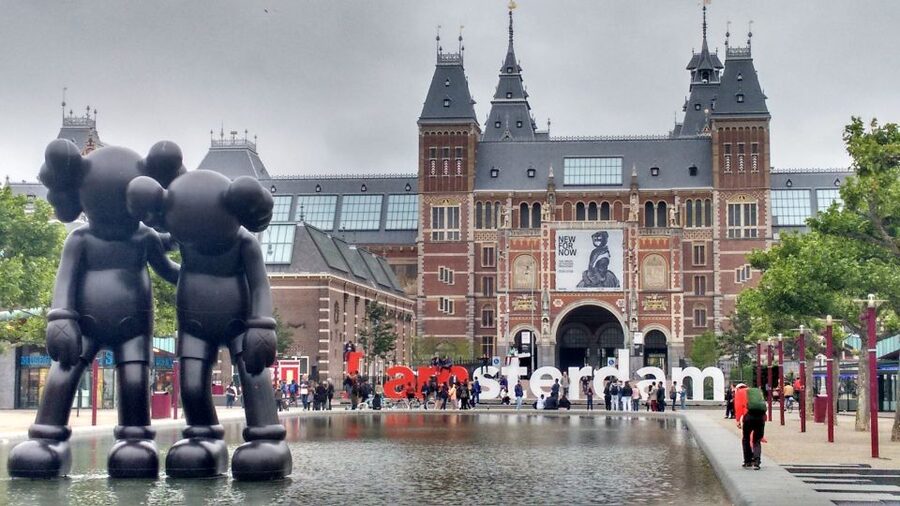
- More than a photo walk: You visit the Old Church, Condomerie, Dam Square, the Royal Palace, and lesser-known local spots while hearing how the area developed.
- Guides shape the experience: Guides including Martin, David, Stan, and Jesse have been praised for friendly delivery, humor, local stories, and calm group management.
- Sensitive subjects are handled directly: Expect discussion of sex work, prostitution laws, soft drugs, sexual liberty, gay rights, and social awareness.
- Good value at $31: For the price of a casual meal and the time of a museum visit, you get two hours with a live guide and a useful first look at a complicated part of Amsterdam.
- Practical limits: Meeting points vary by booking option, food and drinks are not included, and comfortable shoes and water are sensible.
What this Amsterdam walking tour is really about
The title is blunt, but the tour is not simply a stroll past red-lit windows. Its aim is to explain why Amsterdam became associated with tolerance, how the sex industry operates, and what the city’s soft-drug policies actually mean.
That distinction matters. It is easy to arrive in Amsterdam with a cartoon version of the city: legal prostitution, coffeeshops, canals, and an anything-goes attitude. This tour gives you a chance to examine the rules behind those images. You hear about the legalization of prostitution in the Netherlands, the development of the Red-light District, and the social questions that come with treating sex work and drug use as matters of public policy.
I would book it early in your stay if you want help understanding the area before exploring it on your own. Blake described it as a good introduction to Amsterdam when arriving, and that is a fair way to think about it. You will not leave with every answer, but you should have a clearer set of questions and a better sense of what you are seeing.
The tour is also designed around conversation. Your guide answers questions during the walk, so the experience can shift toward whatever interests your group most. That is useful here because the subject is too complicated for a fixed list of facts.
A few more walks around Amsterdam worth a look
- Amsterdam Anne Frank: Small-Group Walking Tour & Local Guide
★ 4.8 · 12,789 reviews - Anne Frank’s Story – Guided Walking Tour through Amsterdam
★ 5.0 · 11,619 reviews - Absolutely Amsterdam – the Essential Introductory Walking Tour
★ 5.0 · 3,629 reviews
Starting among Amsterdam’s famous streets
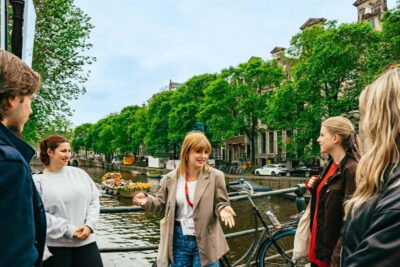
The exact meeting point depends on the option you book, so check your confirmation carefully rather than assuming you will begin at one particular landmark. Once underway, you can expect to move through winding streets and alleyways in and around the city center.
This is a walking tour, not a sightseeing bus with a few quick stops. You should expect to remain on your feet and keep pace with the group. Wear comfortable shoes, bring water, and avoid arriving in clothing that makes two hours of city walking unpleasant.
The route introduces Amsterdam through both well-known sights and places presented as known mainly to locals. That mix is one of the strongest reasons to choose a guided walk. You get the major landmarks needed to orient yourself, then hear the less polished stories that explain how the area functions.
A guide can also help you read the street properly. In the Red-light District, a narrow lane, a church facade, a shop window, and a busy square may all belong to different chapters of the same story. Without context, you see a curious neighborhood. With context, you begin to understand how religion, commerce, sex work, tourism, and public policy share the same small area.
The Old Church and the Red-light District
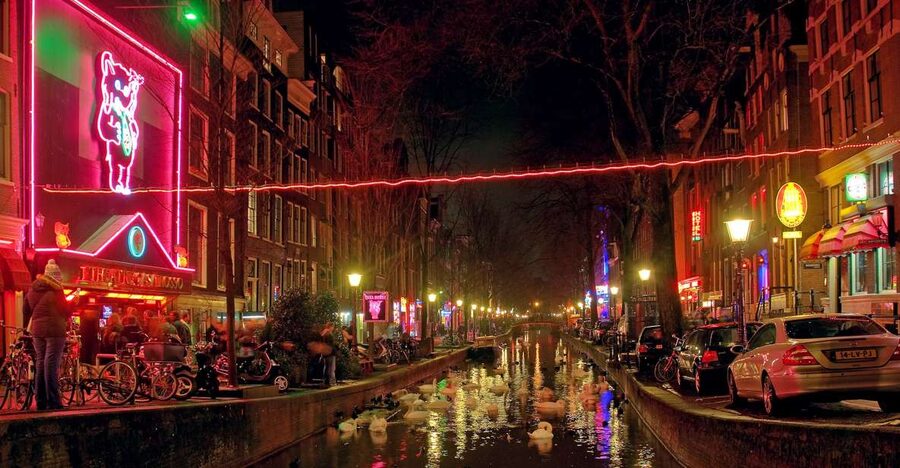
The Old Church is one of the key sights on the route. Its presence gives the walk an important sense of place. Amsterdam’s sex industry is not separated from the older city center. It exists beside major religious and civic landmarks, which helps explain why the district feels both historic and intensely modern.
You will hear about the origins and development of the Red-light District, including what it is like to work as a prostitute and how legalization shaped the area over time. The value here is not shock. It is the chance to consider how legal recognition changes a profession, a neighborhood, and the way the public sees both.
Your guide may also explain the realities behind the windows and the broader system around prostitution. The supplied information does not promise visits inside workplaces or contact with sex workers, so you should expect an educational walking route rather than an interactive sex-industry experience.
This is a place where good behavior matters. Listen to your guide about local etiquette, stay with the group, and treat workers and residents as people rather than scenery. The tour focuses on the district, but it does not turn the people who work there into props.
The route may include anecdotes that add a lighter touch. Lisa particularly enjoyed hearing about sleeping in the monkey, an unusual local expression or story connected with the area. Details like this can make the history easier to remember, though your enjoyment will depend on your taste for local humor.
Condomerie, coffeeshops, and the facts behind the myths
The Condomerie is another named stop. It provides a natural opening for discussion about sexual health, sexual liberty, and Amsterdam’s long association with practical attitudes toward sex. You should expect the guide to place the shop within the wider culture rather than treating it as a novelty stop.
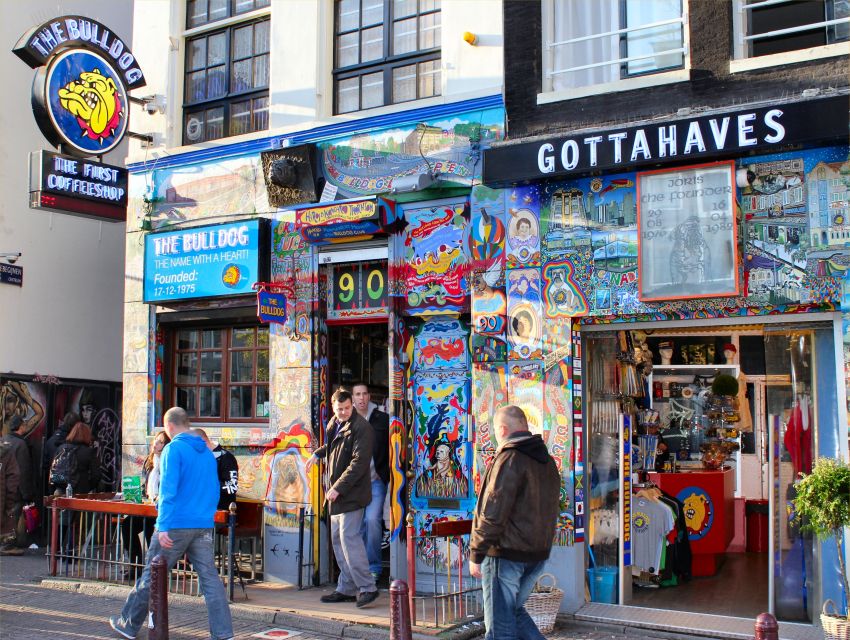
The coffeeshop portion of the tour looks at the history and origins of these establishments, Amsterdam’s peculiar drug regulations, and the use and manufacture of soft drugs. This is a useful subject because the word coffeeshop often confuses first-time visitors. The tour aims to explain the policy and its history rather than simply point out where to buy something.
Do not book this walk expecting a tasting session. Food and drinks are not included, and the experience is a guided discussion on foot. The information provided also does not promise samples, purchases, or a stop inside a coffeeshop.
The drug section appears to be one of the areas where time may feel short. Laneque enjoyed the discussion but wanted more detail about drugs and the Dutch economy. That is a useful warning. The tour can explain the basics and provide context, but it cannot fully cover regulation, production, public health, economics, and enforcement in a single two-hour route.
I like that the subject is treated as a policy question rather than a dare. You learn about the Dutch approach to soft drugs, how coffeeshops fit into Amsterdam’s identity, and why the city’s reputation can be simpler than its actual rules.
Same streets, a different way to see them:
- Amsterdam: Anne Frank Guided Walking Tour in DE/EN/IT/ES
★ 4.9 · 3,107 reviews - Amsterdam: Anne Frank Guided Small Group Walking Tour
★ 4.8 · 2,722 reviews - Amsterdam: Cultural Highlights Walking Tour
★ 4.9 · 2,629 reviews - Amsterdam: Ganja Walking Tour
★ 4.2 · 2,127 reviews
Dam Square and the Royal Palace
Dam Square and the Royal Palace bring the tour into Amsterdam’s main civic center. These sights may seem unrelated to sex work and drug policy, but that is part of the point. The walk places the alternative scenes beside the official city, showing you that Amsterdam’s identity is made from both grand public institutions and everyday street life.
The square is a useful orientation point. If you are new to Amsterdam, it helps you understand how the central streets connect. The Royal Palace adds a formal contrast to the Red-light District’s less conventional reputation.
Do not expect a full palace tour or an extended architectural lecture. The experience is centered on the city’s social history, so these landmarks function as landmarks and context rather than the main event. If you want detailed royal art and interiors, choose a palace visit separately.
I find this balance helpful. Amsterdam is not only canals, museums, and postcard views, but it is not only sex and drugs either. A walk that connects the Royal Palace with the Red-light District gives you a more honest sense of the city’s competing identities.
Equality, gay rights, and Amsterdam’s liberal image
The tour also explores how Amsterdam grew into an inclusive city and discusses the Dutch fight for gay rights, social awareness, and sexual liberty. This broadens the experience beyond the Red-light District.
That section matters because the city’s liberal image did not appear from nowhere. The guide links specific social movements and public attitudes to the way Amsterdam presents itself today. You may find this especially useful if you are interested in LGBTQ+ history or in the relationship between law, culture, and personal freedom.
The tour does not promise a dedicated LGBTQ+ museum visit or a complete national history. Instead, the subject forms part of a wider conversation about inclusion and changing ideas of public morality.
Amy found her guide engaging and appreciated the way questions were answered. That is exactly where a live guide earns the fee. A book can tell you that the Netherlands was a pioneer in the fight for equality. A guide can explain how that idea connects to the streets under your feet and respond when you want to ask what the policy means in daily life.
The guides make or break the two-hour format
The strongest praise for this experience centers on the guides. Martin was described as friendly and very informed. David combined the main sights with his own family history in Amsterdam. Stan helped make the subjects of sex workers, coffeeshops, and the Red-light District easy to follow.
Jesse received praise for clever humor, patience, and a strong personality. Those traits matter on a topic that can become either grim or silly. Humor can make difficult material approachable, but patience keeps the walk from turning into a performance.
One particularly useful detail concerns group management. On one outing, some people were tipsy and kept falling behind or wandering off. The guide stayed calm and worked to keep the group together. That may sound minor, but it matters in the narrow, busy streets of central Amsterdam.
Guide quality can vary from one departure to another, as it does with any live tour. Still, the repeated pattern is clear: the best version of this walk depends on a guide who can mix local knowledge, historical explanation, and good judgment. You should ask questions and take advantage of that access.
Spanish, Dutch, English, and German are offered. Confirm your preferred language when choosing the option, since the meeting point and departure details can vary as well. Private groups are available if you want a more personal pace or prefer to discuss sensitive subjects without a large mixed group.
Is $31 a fair price?
At $31 per person, the tour is reasonably priced for two hours with an expert-guided walk. You are paying for interpretation, not admission tickets, meals, drinks, or transport. That makes the value depend on how much you want context and conversation.
I think the price works well for a first visit. The route covers several central landmarks and gives you a framework for exploring the area later. It can also save you from spending an evening wandering through the district with only internet myths as your guide.
The value is weaker if you already know Amsterdam’s drug policy, prostitution history, and LGBTQ+ social history in detail. In that case, you might prefer a museum, a longer specialist tour, or independent exploration.
Remember that the $31 does not buy a complete account of the Dutch economy or a technical study of drug regulation. Laneque specifically wished for more detail in those areas, and the two-hour limit explains why that material may receive only a short treatment.
Who will enjoy this walk most?
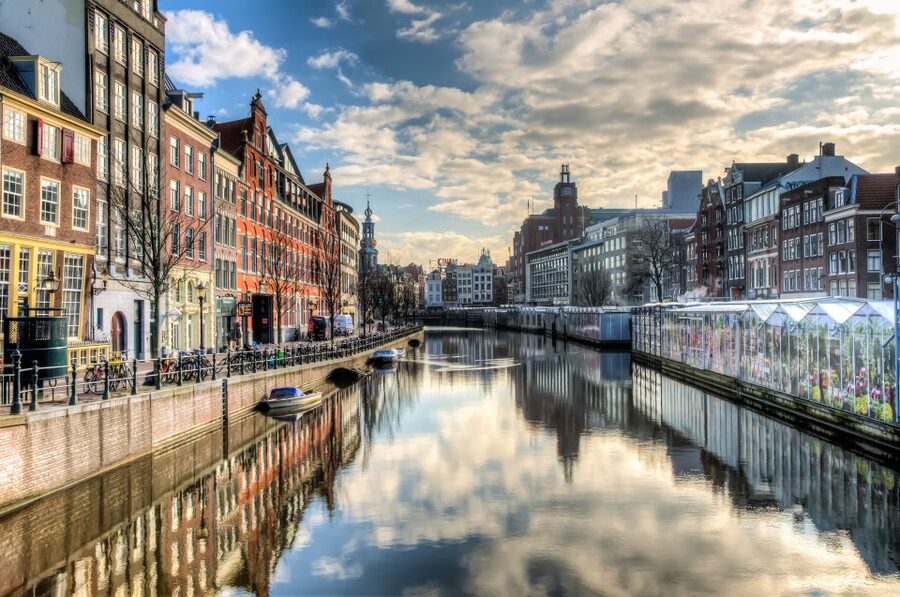
I would recommend it to first-time visitors who want to understand the Red-light District before returning on their own. It suits adults interested in social history, public policy, equality, sex work, or the unusual gap between Amsterdam’s reputation and its actual rules.
It is also a good fit for curious friends who want more than a standard city-center walk. The tour offers major sights, local anecdotes, and a candid look at subjects many guides avoid.
You should think twice if you dislike frank discussion of prostitution, drug use, or sexual rights. This is not a traditional architecture tour, and the Red-light District can feel uncomfortable. It is also not suitable for people with mobility impairments, since the experience takes place on foot through city streets and alleyways.
If you are traveling with a group, agree beforehand on respectful behavior. Stay with the guide, listen to instructions, and remember that the district is a working neighborhood, not a theme park.
Practical details for a smoother experience
The tour lasts two hours, so plan to arrive ready to walk rather than expecting a long break. Food and drinks are not included, and you should carry water.
Comfortable shoes are the most important item. Comfortable clothing will also help, particularly if you are joining after a full day of sightseeing.
The meeting location varies with the selected option. Check the exact details before setting out, especially if you are booking a private group or a language other than English.
You can cancel up to 24 hours in advance for a full refund, and the reserve-now, pay-later option lets you hold a place without paying immediately. Those policies are useful if your Amsterdam schedule is still shifting.
The experience has a 4.6 rating from 74 reviews, which fits the overall picture: strong satisfaction, especially with the guides, but not a substitute for a longer specialist course. It is a compact introduction with a clear point of view.
Should you book the Sex, Drugs, and Freedom Walking Tour?
Book it if you want Amsterdam’s famous permissive image explained rather than merely photographed. The strongest reasons are the guides, the local anecdotes, the blend of landmarks and lesser-known streets, and the willingness to discuss prostitution, coffeeshops, equality, and gay rights in one connected walk.
Skip it if you want a quiet architecture tour, a full economic study, or an experience focused on buying or sampling anything. The tour is educational, social, and sometimes provocative. At $31, it offers good value for a first look, especially when you take it early in your stay and use the information to shape the rest of your time in Amsterdam.
FAQ
How long does the Amsterdam Sex, Drugs, and Freedom Walking Tour last?
The tour lasts two hours.
How much does the tour cost?
The listed price is $31 per person.
What languages are available?
The tour is offered in Spanish, Dutch, English, and German.
Is a private group available?
Yes. A private group option is available.
What sights are included on the route?
The route includes the Old Church, the Condomerie, the Royal Palace, Dam Square, and places described as known mainly to locals.
Are food and drinks included?
No. Food and drinks are not included.
What should I bring?
Bring comfortable shoes, water, and comfortable clothing.
Is the tour suitable for people with mobility impairments?
No. The experience is listed as unsuitable for people with mobility impairments.
Can I cancel the booking?
Yes. You can cancel up to 24 hours in advance for a full refund. A reserve-now, pay-later option is also available.
Just added around Amsterdam
- Small Group Walking Tour in Amsterdam with Friendly and Fun Guide★ 5.0 · 281 reviews
- Amsterdam: Private Introduction Walking Tour (TOP RATED)★ 5.0 · 223 reviews
- Humans of Amsterdam: Cultural Walking Tour incl. meeting 2 locals★ 5.0 · 320 reviews
- Amsterdam Private Historical Walking Tour★ 5.0 · 75 reviews
- Private Tour: Amsterdam City Walking Tour and Canal Cruise★ 4.5 · 142 reviews
- Anne Frank and Jewish Quarter Amsterdam Private Walking Tour★ 5.0 · 684 reviews
- Small Group Walking Tour – Hello Amsterdam★ 5.0 · 505 reviews
- Amsterdam: Anne Frank and World War II Walking Tour (TOP RATED)★ 4.5 · 72 reviews
Amsterdam Walking Tours, compared.

Amsterdam Anne Frank: Small-Group Walking Tour & Local Guide
Read our review →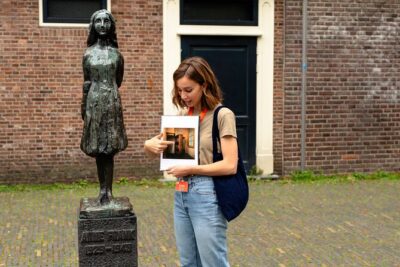
Anne Frank’s Story – Guided Walking Tour through Amsterdam
Read our review →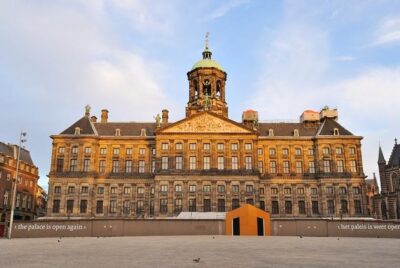
Absolutely Amsterdam – the Essential Introductory Walking Tour
Read our review →
Anne Frank Guided Walking Tour in DE/EN/IT/ES
Read our review →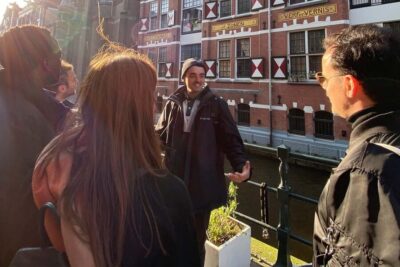

Anne Frank Walking Tour Amsterdam Including Jewish Cultural Quarter
Read our review →Browse the lists this tour appears in