
Review · ATHENS WALKING TOURS
Athens: Acropolis and Parthenon Guided Walking Tour
The Acropolis rewards a little preparation. This 2 to 3.5-hour walk puts a local licensed guide beside you for the Parthenon, Erechtheion, Theatre of Dionysus, and other ancient sites. I like the clear route through the south slope and the personal earsets, which make it easier to follow the guide near noisy crowds. I also like the way the tour connects the stones to Greek myths, political ideas, and everyday ancient life.
The main catch is the strict entry time. You must arrive 20 minutes early, and your Acropolis ticket must match the tour time. Summer heat, steep stone paths, security queues, and the no-stroller, no-large-bag rule also require some planning. Still, a rating of 4.6 from 5,882 ratings reflects a consistently strong experience, especially for first-time visitors.
Key points at a glance
- South-slope approach: You begin near Hadrian’s Arch and walk past the Sanctuary and Theatre of Dionysus before climbing toward the Acropolis.
- Licensed English-speaking guides: Guides such as Eva, Dory, Maria, Victor, Andrea, Giota, Kalli, and Antonis have been praised for clear explanations and lively storytelling.
- Earsets included: You can hear the guide without standing shoulder to shoulder with the group at every stop.
- Two ticket choices: Select the option with Acropolis admission, or buy your own official ticket immediately after booking if you choose the without-tickets option.
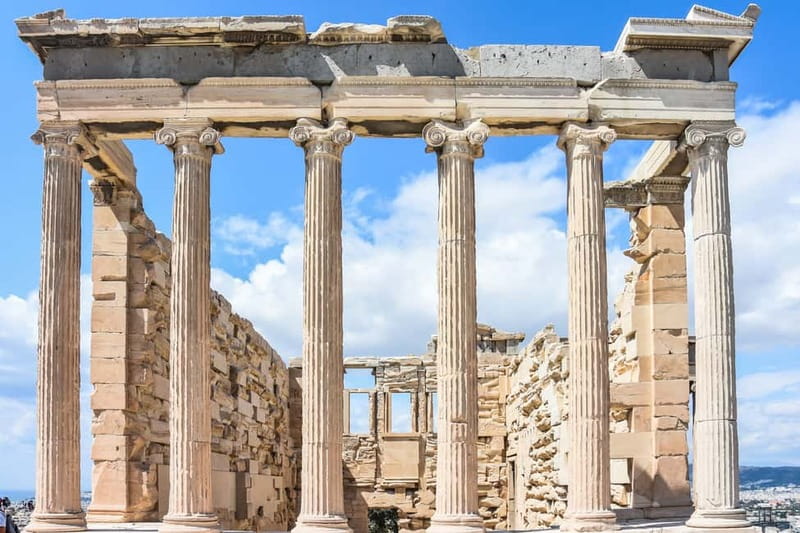
- Major monuments together: The route covers the Odeon of Herodes Atticus, Propylaea, Temple of Athena Nike, Erechtheion, and Parthenon.
- Useful timing advice: Early morning helps with heat, while a late afternoon departure may offer softer light for photographs.
Why a guided Acropolis walk helps
The Acropolis is not hard to find. Understanding what you are seeing is the harder part.
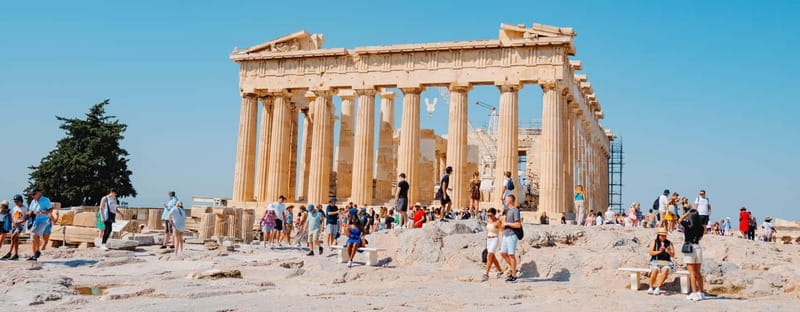
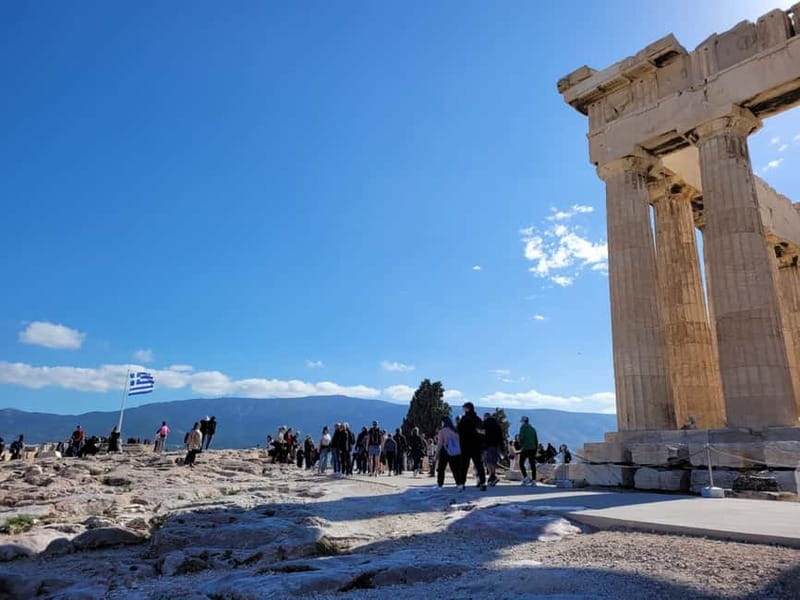
At first glance, you see columns, broken marble, scaffolding, and a superb view of Athens. A good guide gives those pieces order. You learn why the Parthenon was built, how Athena shaped the identity of the city, what the Caryatids represent, and how the Acropolis functioned as both a sacred center and a symbol of Athenian power.
That context matters because the monuments are not arranged like a tidy museum display. You move through an active archaeological site with several temples and theaters competing for your attention. Without help, it is easy to photograph the Parthenon and miss the smaller buildings, ancient religious practices, and important viewpoints around it.
This tour has been operating for 20 years, and that experience shows in the basic structure. You meet on Dionysiou Areopagitou Street, use the pedestrian approach from Hadrian’s Arch, and enter through the south slope. The route then rises in a logical order toward the summit.
The personal earsets are more useful than they may sound. Acropolis crowds can be loud, and the guide may need to speak while the group spreads around a monument. You can keep looking at the stones instead of staring at the guide’s mouth. Several visitors specifically praised the ability to hear and understand the guide throughout the walk.
More Guided Walks in Athens:
- Acropolis and Parthenon Guided Walking Tour
★ 5.0 · 4,755 reviews - Acropolis: Acropolis and Parthenon Guided Walking Tour
★ 4.7 · 3,442 reviews - Athens: Guided Greek Food Walking Tour with Tastings
★ 4.9 · 2,859 reviews
Meeting at Dionysiou Areopagitou Street
The meeting point is at 3 Dionyssiou Areopagitou Street. Look for the orange Athens Walking Tours sign at the start of the pedestrian walkway leading toward the Acropolis from Hadrian’s Arch and Syngrou Avenue.
Arrive 20 minutes before departure. This is not an arrival window to ignore. The Acropolis uses timed entry, and the group cannot wait for late arrivals. If you miss the scheduled entry, the tour fee is not refunded.
The route is on foot from the beginning, so wear shoes with a reliable grip. Bring water, sunglasses, a hat, sunscreen, and comfortable clothing. Large bags and luggage are not allowed, and baby strollers are not permitted. Pack lightly so security and the uphill walk do not become a nuisance.
The tour runs in rain or shine. Check the forecast, but do not assume poor weather will cancel the experience.
Theatre of Dionysus and the south slope
The first major part of the walk takes you through the Sanctuary of Dionysus and the Theatre of Dionysus. This is a smart beginning because it introduces the religious and theatrical life of ancient Athens before you reach the more famous temples above.
The Theatre of Dionysus is associated with the birth of Western drama and sits directly into the lower slope of the Acropolis. Your guide helps explain how performances fit into religious festivals honoring Dionysus, the god linked with wine, theater, and celebration.
This is also where the physical character of the visit becomes clear. You are walking over uneven surfaces and gradually climbing. The route is manageable for many people, but it is not designed for wheelchair users or people with mobility impairments.
The guide-led format helps here because you are not simply rushing uphill. Stops break up the walk, and the explanations give you something useful to focus on while you catch your breath. One family found the pace workable even with a young child, though the official advice still says the activity is not suitable for people with mobility impairments.
Asklepieion and the Odeon of Herodes Atticus
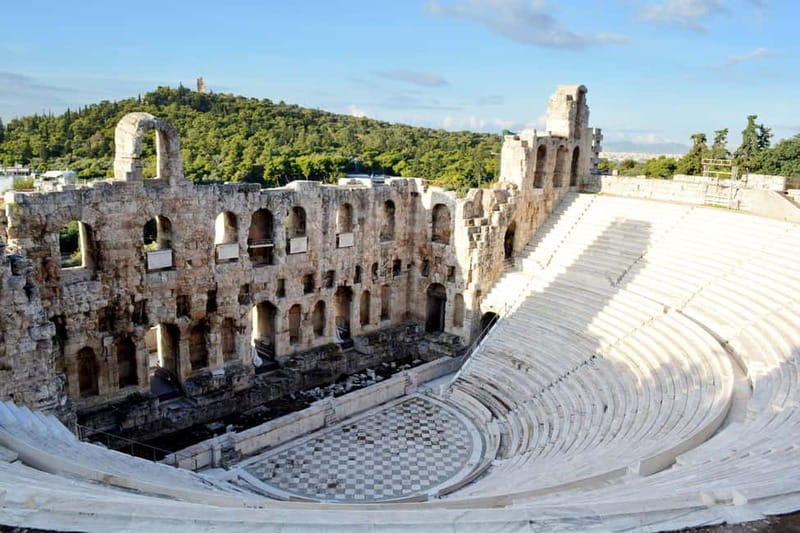
The route continues past the Asklepieion of Athens, an ancient healing center connected with the god Asclepius. This stop adds a different side of Greek life. The Acropolis was not only about grand temples and civic pride. People also came to sacred places seeking healing and relief from illness.
Next comes the Odeon of Herodes Atticus, a large Roman-era theater built on the southern side of the Acropolis. Its curved stone structure is one of the most striking sights below the summit, and it remains associated with performances today.
The guide’s role is especially helpful at these stops because they can be easy to skim past. The Odeon is often treated as a quick photo opportunity, but its position, design, and continuing use make it more than a dramatic backdrop.
Expect the group to pause for photos here. The southern slope also opens views toward Athens and the surrounding hills. On a clear day, the setting helps you understand how the Acropolis dominates the center of the city.
A few more walks around Athens worth a look
- Greek Food Walking Tour in Athens
★ 5.0 · 4,740 reviews - Acropolis monuments & Parthenon Walking Tour with Optional Acropolis Museum
★ 5.0 · 2,678 reviews - Athens Acropolis and Parthenon Walking Tour
★ 4.5 · 1,355 reviews - Acropolis, Parthenon & Athens Old City Heritage Walking Tour
★ 4.5 · 876 reviews
Propylaea and the Temple of Athena Nike
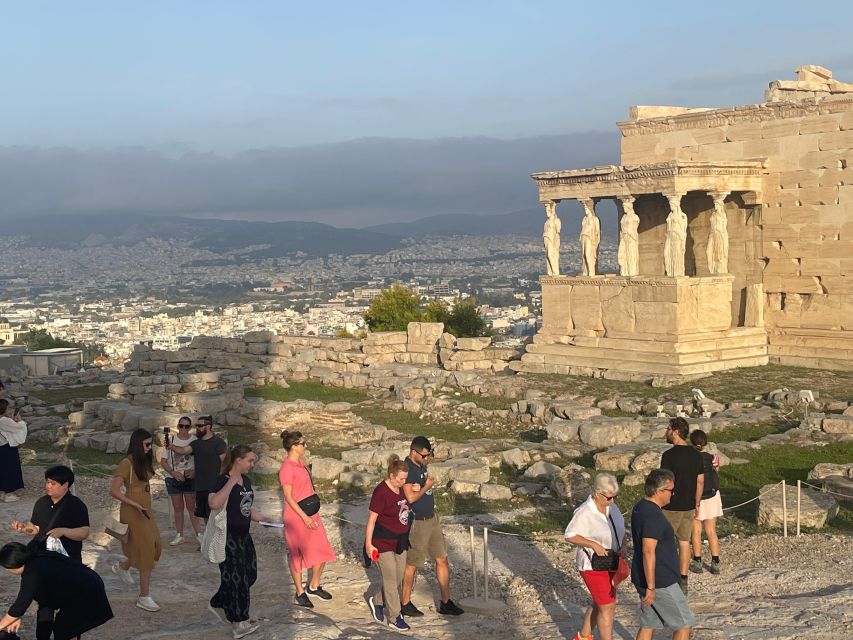
The climb reaches the Propylaea, the monumental gateway to the Acropolis. This is your grand entrance to the upper complex. Its marble architecture framed the approach and prepared ancient visitors for the sacred buildings beyond.
The Propylaea can be crowded, especially during the busiest hours. The earsets are valuable here, since your guide may need to keep the group moving while explaining the gateway from one side or another.
Nearby is the Temple of Athena Nike, a small but elegant temple dedicated to Athena in her role as a bringer of victory. Its compact size makes it easy to overlook beside the Parthenon, yet its position near the entrance gives it strong symbolic importance.
This part of the tour is also a good test of the guide’s storytelling. The strongest guides do not simply name the buildings. They explain why the Athenians placed them where they did and how myth, religion, and civic identity overlap.
Names praised for this kind of clear, engaging approach include Eva, Victor, Maria, Andrea, Giota, Kalli, and Antonis. Guide assignments can change, so you should not book expecting one specific person. The consistent advantage is the use of licensed local guides who can interpret the site in English.
Erechtheion and the Caryatids
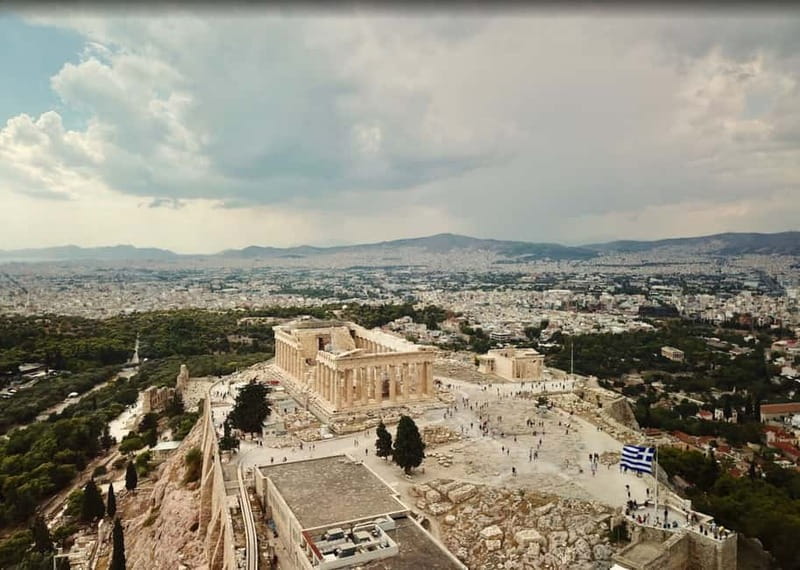
The Erechtheion is one of the most rewarding stops on the Acropolis because it is less visually obvious than the Parthenon but full of detail. Its unusual design reflects the complicated sacred traditions of the Acropolis.
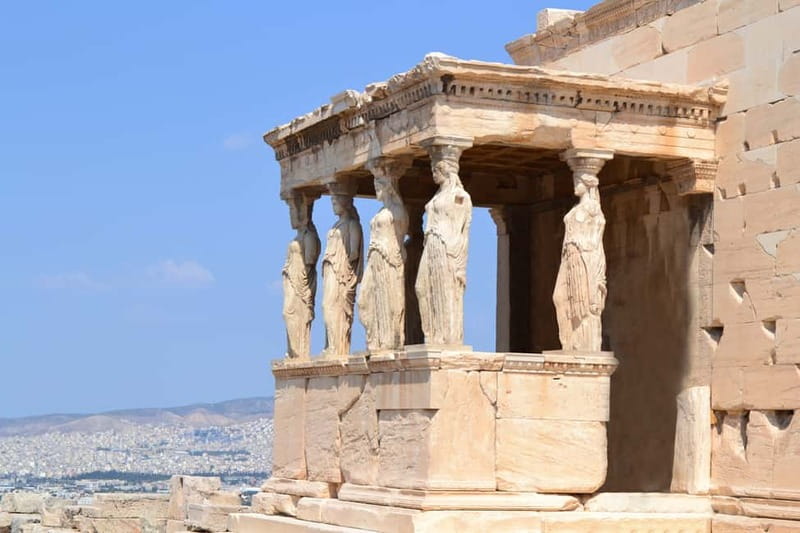
The building is famous for the Caryatids, the sculpted female figures that support part of the porch. Your guide can help you distinguish the original sculptures from the copies displayed outside, and explain the myths tied to Athena, Poseidon, and the founding stories of Athens.
This is an excellent place to slow down. The Erechtheion does not have the simple, symmetrical shape most people expect from a Greek temple. Its uneven form reflects the importance of several sacred places within one structure.
Crowds can make the porch difficult to view at close range. Do not expect a quiet, private look. The group may need to shift position, and the guide may use the earsets to keep speaking while you look from different angles.
The Parthenon and the view over Athens
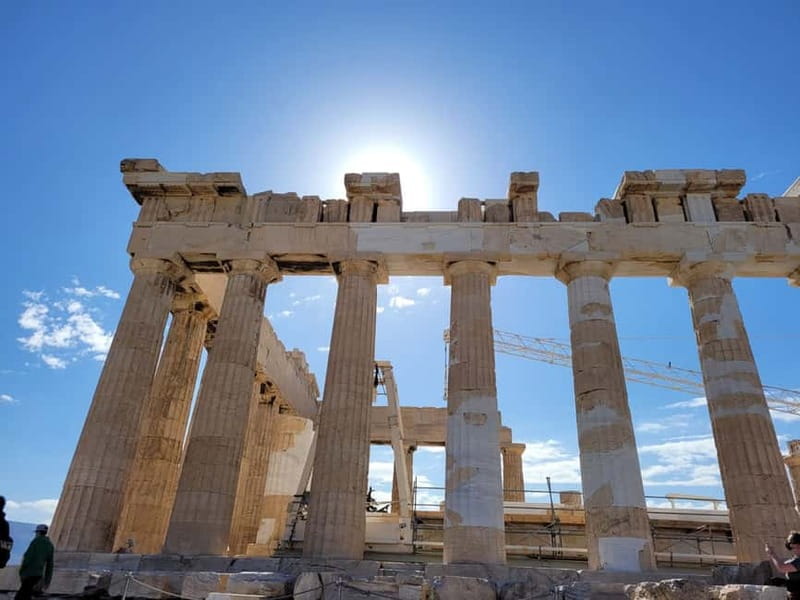
The Parthenon is the final major focus of the route. It is the monument most people picture before arriving, but seeing it after the south-slope approach gives it more meaning. You have already passed theaters, healing sites, gateways, and smaller temples. The Parthenon then reads as part of a larger sacred complex rather than a single isolated ruin.
Your guide explains the building’s dedication to Athena, its role in ancient Athens, and the myths and historical facts connected with the site. The discussion also helps you notice details that are easy to miss from ground level, including the scale of the columns, the sculptural program, and the traces of the building’s long and difficult history.
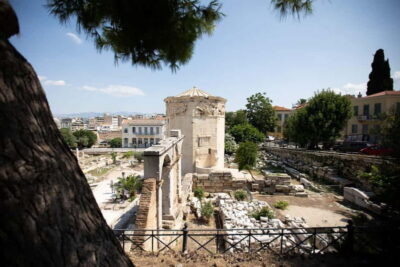
The views are a major reward. From the Acropolis, you can look over central Athens toward the Ancient Agora, the National Observatory, and the hills of Filopappos, Mars, and Pnyx. These views are not an afterthought. They show how the ancient city related to its meeting places, sacred hills, and surrounding neighborhoods.
Take your photos, but leave time to look without a camera. The Parthenon is crowded, and the best position may not remain open for long. An early morning tour can reduce some heat and crowd pressure. A departure around 5:30 p.m. may provide cooler conditions and warmer light, though crowds remain possible.
The guided portion finishes at the Acropolis and the published meeting information says the activity ends back at the meeting point. Confirm the exact exit arrangement when you receive your booking details, especially if you have a reservation immediately afterward.
How much value do you get for $38.39?
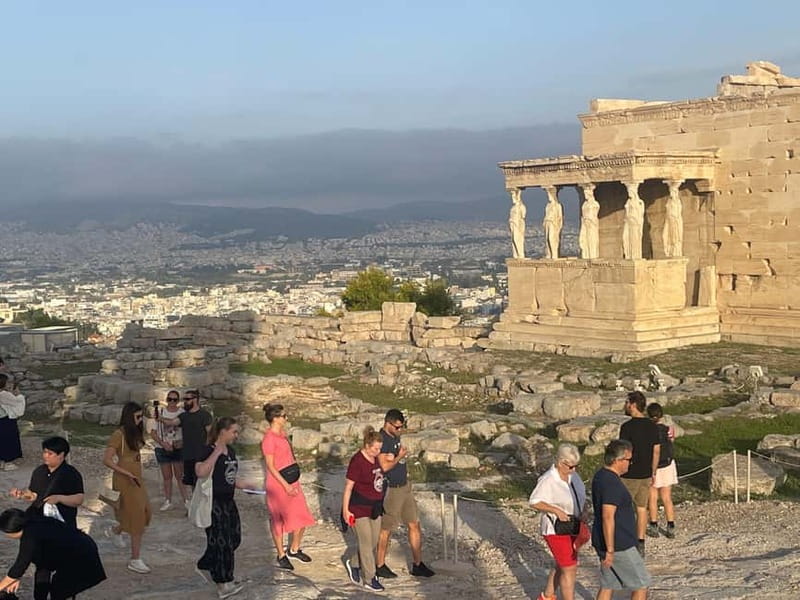
The advertised price is $38.39 per person, but the real value depends on which ticket option you choose.
The option with Acropolis entry is the simplest. The operator handles the admission, and you avoid the risk of buying the wrong date, time, or ticket category. This matters because the tour enters soon after it begins, and a ticket that does not match the scheduled entry can make the entire booking useless.
The without-tickets option may suit you if you already understand the official ticket system and want to arrange admission yourself. You are responsible for buying that ticket from the official website, and you are told to do so immediately after booking. The ticket must match the tour time and category, such as adult or student.
The price becomes more attractive if you value interpretation rather than just entry. You receive a licensed guide, earsets, an Athens map, and an Athens Guide magazine. Food, drinks, and hotel pickup are not included.
Some booking choices also include the Acropolis Museum ticket and a museum tour. That is a separate value question. The main experience described here is the outdoor Acropolis walk, while the museum option can make sense if you want the sculpture and architectural details explained indoors as well.
Free Acropolis entry days are handled differently, with the ticket cost deducted from the tour price. Check the exact option before paying so you know what is included.
Crowds, heat, and the physical effort
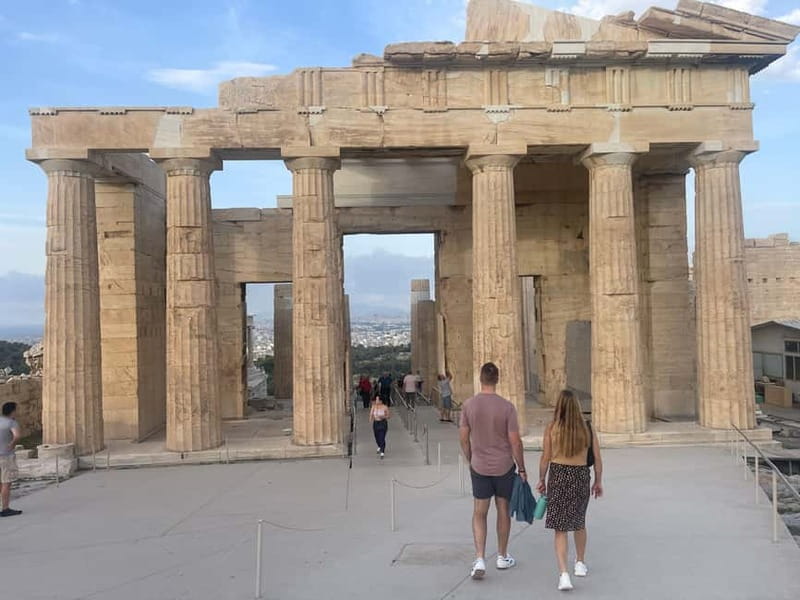
This is a walking tour on an exposed archaeological hill. There is limited shade, and one otherwise positive experience noted that the guide could have made a greater effort to find shaded places during long explanations.
Security checks can take 30 minutes or more during peak season. Add that possible wait to the walking time, especially if you are planning lunch, a museum visit, or a ferry connection afterward.
The site is not suitable for wheelchair users or people with mobility impairments. Uneven ground, steps, uphill sections, and crowd movement are part of the experience. A stroller is also not allowed.
For most able-bodied visitors, the route is reasonable, but do not treat it like a flat city stroll. Bring water and protect yourself from the sun. If you are visiting with children, the stories can help hold their attention. Guides have used visual material, myths, and even a Lego reconstruction of the Acropolis to keep younger visitors engaged.
Who will get the most from this tour?
I would choose this tour for a first visit to Athens, especially if you have only one day and want the Acropolis to make sense rather than simply check it off.
It also suits you if you prefer a clear route, organized timing, and live explanation. The earsets are a real help for families and anyone who does not want to stand directly beside the guide at every stop.
You may prefer to visit independently if you want to linger at one monument for a long time, move at your own pace, or avoid a group structure. The tour keeps moving through a busy site, and even a good guide cannot control the crowd or the heat.
English is the listed tour language. If you need another language, this experience is not the right choice based on the available information.
Booking advice and final verdict
Book this tour if you want the Acropolis explained by a local licensed guide and you value a well-organized route. The strongest parts are the south-slope approach, the broad range of monuments, the useful earsets, and the guides’ ability to make mythology accessible without losing the historical facts.
Choose the with-tickets option if you want fewer chances for an expensive mistake. Choose without tickets only if you are ready to buy the correct official admission immediately and match it precisely to the tour time.
I would aim for the earliest available start to limit the heat, or consider late afternoon for softer photographs. Arrive early, carry only what you need, and wear proper shoes. For a first look at Athens, this is a good-value introduction. For visitors with mobility limits or a strong dislike of group tours, it is better to make another plan.
FAQ
How long does the Athens Acropolis walking tour last?
The tour lasts between 2 and 3.5 hours. Starting times vary, so check availability for the date you want.
Where does the tour meet?
Meet at 3 Dionyssiou Areopagitou Street, near the orange Athens Walking Tours sign. It is at the beginning of the pedestrian walkway leading toward the Acropolis from Hadrian’s Arch and Syngrou Avenue.
How early should I arrive?
Arrive 20 minutes before the scheduled departure. The Acropolis has strict timed entry, and late arrivals cannot be accommodated.
Does the tour price include the Acropolis ticket?
Only the with-tickets option includes Acropolis admission. If you choose without tickets, you must purchase your own official ticket immediately after booking and match it to the tour date, time, and ticket category.
Are headphones provided?
Yes. Personal earsets are included so you can hear the English-speaking guide clearly during the walk.
Is the tour suitable for wheelchair users or strollers?
No. The activity is not suitable for wheelchair users or people with mobility impairments, and baby strollers and large bags are not allowed.
Just added around Athens
- The Acropolis, Athens Walking City Tour and Acropolis Museum★ 5.0 · 442 reviews
- Acropolis monuments, Parthenon and Plaka, Monastiraki walking tour★ 5.0 · 182 reviews
- Athens Street Art Walk★ 5.0 · 309 reviews
- Athens Street Food Walk★ 5.0 · 385 reviews
- Athens Shore Excursion: Acropolis Walking Tour★ 4.5 · 131 reviews
- Athens Off the Beaten Track Private City Walking Tour★ 5.0 · 304 reviews
- Athens at Night Small-Group Walking Tour with Dinner★ 5.0 · 230 reviews
- Athens Highlights: Myths & Philosophers Walking Tour★ 5.0 · 125 reviews
Athens Walking Tours, compared.


Acropolis: Acropolis and Parthenon Guided Walking Tour
Read our review →
Acropolis monuments & Parthenon Walking Tour with Optional Acropolis Museum
Read our review →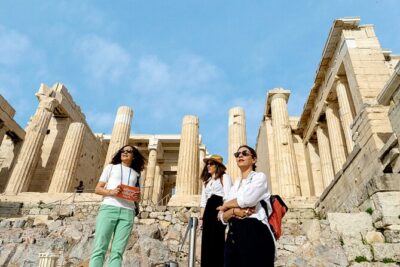
Acropolis, Parthenon & Athens Old City Heritage Walking Tour
Read our review →
Athens Authentic Greek Food Walking Tour (Small Group)
Read our review →Browse the lists this tour appears in