
Review · PORTUGAL WALKING TOURS
Aveiro: Stories, Canals, and Tiles Guided Walking Tour
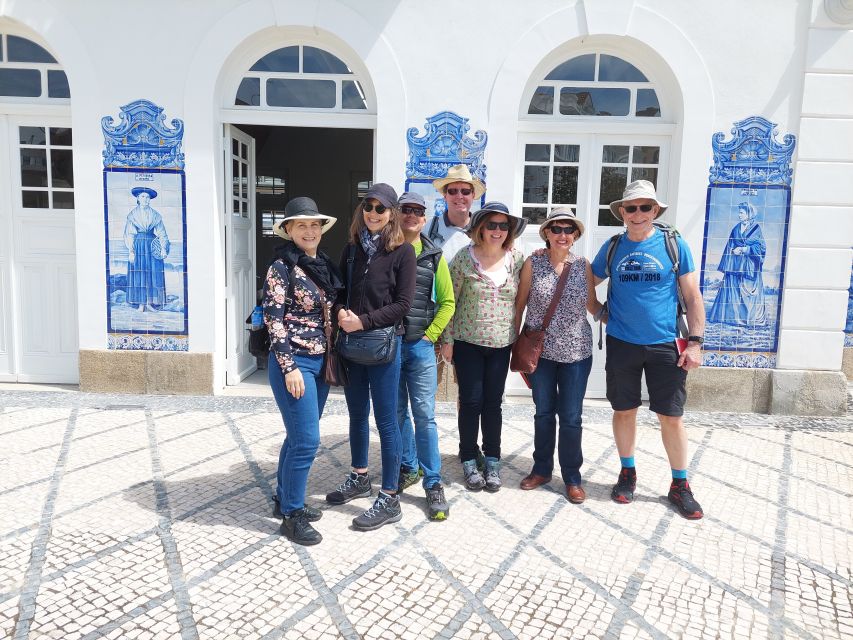
Aveiro rewards a closer look. I like the way Antonio, also known as Tony Walker, connects tiled façades and canals to the city’s past, and I like that the tour includes entry to two churches rather than simply pointing at them from the street. The small-group feel, easy pace, and room for questions make this a strong first look at Aveiro.
The main consideration is the walking itself. This tour is not suitable for children under 10, wheelchair users, people with mobility impairments, or anyone with a low level of fitness. Some museums and interiors may also be closed, especially on Mondays, so the experience works best if you are happy to appreciate the city from the streets as well as inside its churches.
Key points to know before you go
- Church interiors add real value: Entry to the Church of Mercy and Carmelite Convent Church is included.
- Tony Walker is the main attraction: He brings years of local experience, historical research, humor, and a teacher’s habit of explaining details clearly.
- Aveiro’s tiles get proper attention: You will look at azulejos from early modern designs through Art Nouveau and Art Deco work.
- The canals have a purpose: You learn how the Ria de Aveiro shaped transport, trade, salt production, and the city’s traditional boats.
- The pace is gentle but active: Expect two hours on foot, with stops for stories, architecture, questions, and photographs.
- The price is fair for the access: At $23 per person, the tour combines a local guide with two church admissions and a well-planned route.
Why two hours with Tony can change Aveiro
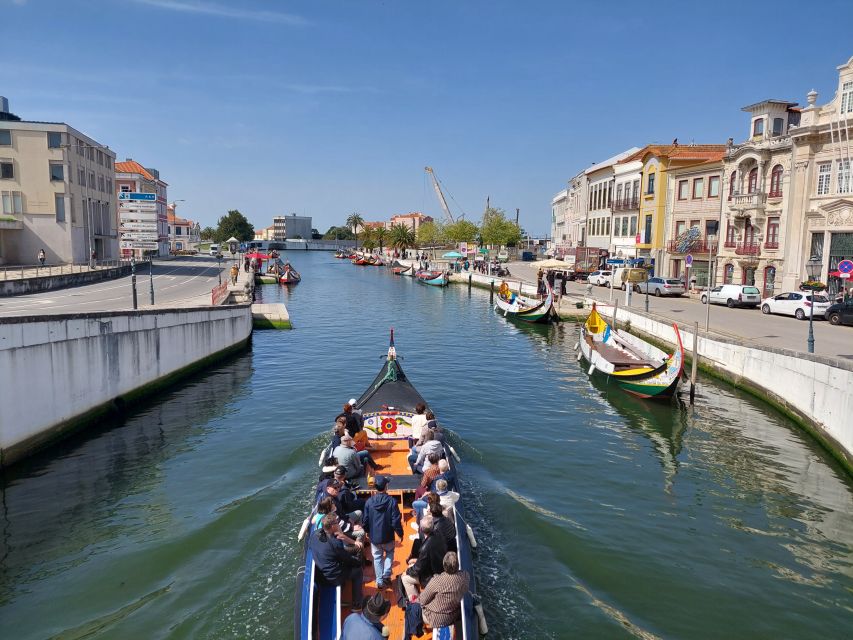
Aveiro can seem almost too tidy and pretty at first glance. You see canals, colorful boats, striped façades, and tiled buildings, then wonder how much there is beyond the picture-postcard view.
That is where this walk earns its keep. Tony Walker explains the connections between the sights. A canal is not just a scenic strip of water. A tile façade is not just decoration. A church is not simply another baroque interior. Each one becomes part of Aveiro’s story as a port, salt-producing center, religious town, industrial town, and later Art Nouveau showcase.
Tony has lived in Aveiro for more than 20 years and brings the ease of someone showing you his home city. He is also a retired teacher, which comes through in the way he explains architecture, symbols, dates, and local customs. The tone is informal rather than academic. You can ask questions, stop to take in a façade, or request more detail about something that catches your eye.
The group size can be small, and that matters. Instead of listening to a fixed speech from the back of a crowd, you can interact with the guide and ask for clarification. Tony has also been praised for adjusting the route or emphasis to suit the group’s interests. That personal touch is one of the strongest reasons to choose this walk over simply wandering around Aveiro with a guidebook.
More Guided Walks in Portugal:
- Best of Lisbon Small-Group Guided Walking Tour
★ 5.0 · 4,869 reviews - Experience Porto’s Charm: 3-Hour Guided Walking Tour
★ 5.0 · 2,432 reviews - Madeira: Enjoy a Guided Levada Walk in the Rabaçal Valley
★ 4.7 · 2,197 reviews
Praça da República: a useful starting point
The meeting point is near the statue in the center of Praça da República. Look for the guide carrying a yellow and blue card.
The square gives you a good introduction to Aveiro’s public face. The Town Hall and the Misericórdia church frame the opening discussion, and entry to the Church of Mercy is included. This is a practical start because you do not spend the first part of the tour hunting for the city’s main landmarks. You begin in a central place and quickly move from orientation into detail.
From here, the group follows Rua de Coimbra. Pay attention to the pavement under your feet. Tony explains the black and white calçada à portuguesa, the patterned stone paving used across Portugal. It is easy to overlook, but it tells you something about the care given to public spaces and gives the walk a distinctly Portuguese texture.
Wear shoes with a firm sole. The route is not presented as strenuous, but two hours on stone paving can be tiring if you arrive in soft sandals or uncomfortable footwear.
Carmelite Convent Church and the city’s religious past
At Praça Marques de Pombal, you enter the Carmelite Convent Church. It is a small building, but the interior makes a strong impression through its baroque decoration.
This is one of the tour’s better inclusions. A street walk can show you the outline of a church, but going inside lets you see the craftsmanship and religious atmosphere that shaped Aveiro’s older neighborhoods. Tony uses the visit to explain more than decoration. His approach links the building to the city’s religious institutions and the people who lived within them.
The square is also useful for practical planning. A paid underground car park is about 200 meters from the meeting point in Praça Marques de Pombal, so you can leave a car nearby before starting the walk. The tour itself does not provide transportation, food, or drinks.
Tiles, convents, and Santa Joana
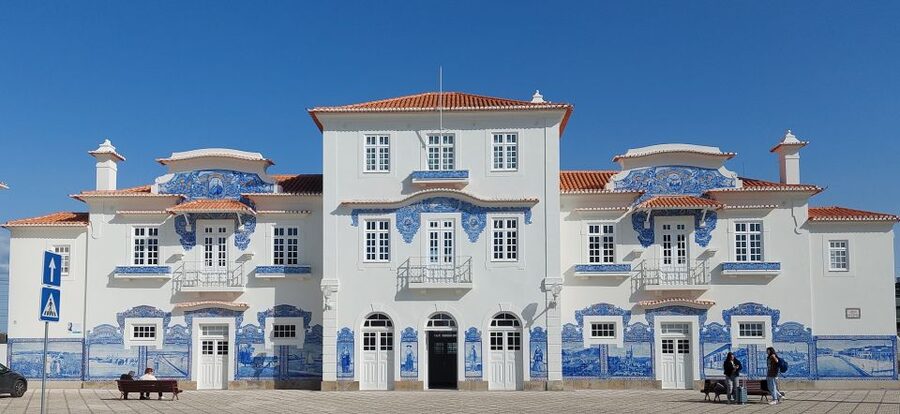
The route continues past the tile panels of Casa de Santa Zita and Sapataria Leão. These are the sort of details you could pass without noticing if you were focused only on the canals.
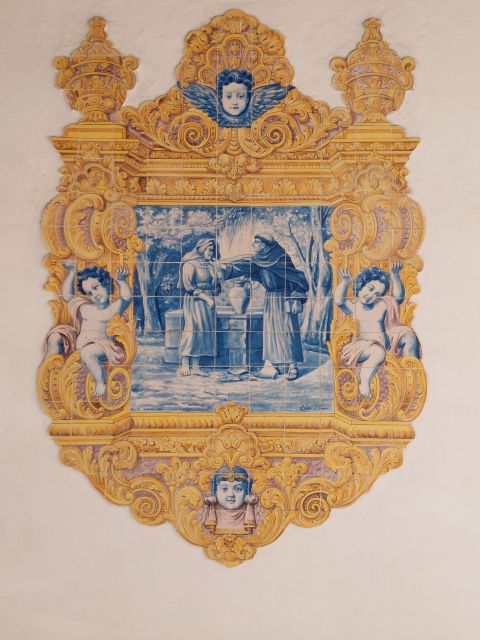
Tony draws your attention to the patterns, colors, and placement of the tiles. In Aveiro, azulejos are not confined to churches or grand civic buildings. They can cover ordinary façades and commercial properties, turning a daily street into a small outdoor gallery.
You then pass the Dominican Convent of Jesus. Here the story turns to Princess Santa Joana, Aveiro’s patron saint. Her connection to the city gives the walk a human focus. Instead of treating the convent as a silent monument, Tony uses it to explain a person whose religious and royal background shaped local identity.
The Cathedral follows. This portion of the route helps you understand how churches, convents, and civic buildings formed the old city center. If you enjoy religious art, architecture, and local legends, this is one of the most rewarding stretches.
A few more walks around Portugal worth a look
- Lisbon: History, Stories and Lifestyle Walking Tour
★ 4.8 · 10,902 reviews - Lisbon: Food and Wine Small Group Walking Tour
★ 4.9 · 4,082 reviews - Porto Walking Tour, Lello Bookshop, River Cruise and Cable Car
★ 5.0 · 3,354 reviews - Funchal: Old Town Walking Tour
★ 4.7 · 3,233 reviews
Canal da Fonte Nova and Aveiro’s working waterways
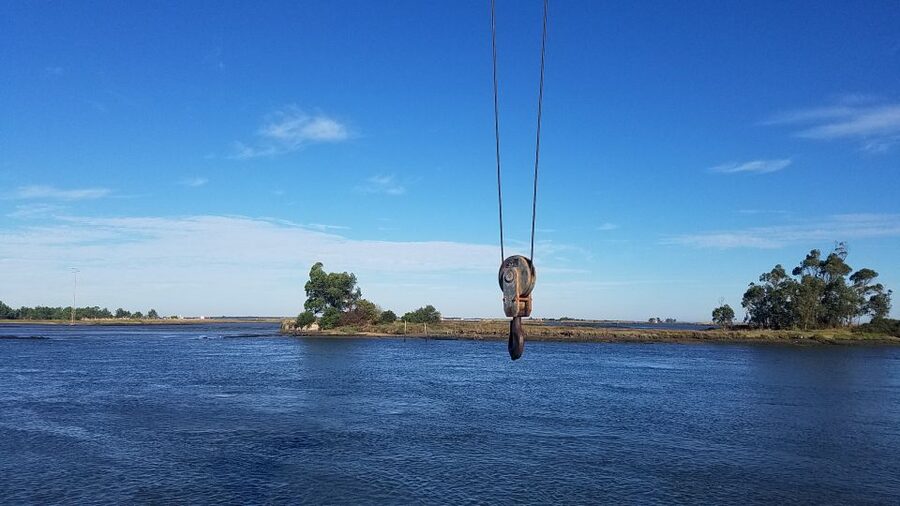
The walk then reaches the Canal da Fonte Nova, where the remains of a former ceramics factory can still be seen. That factory building provides a useful bridge between Aveiro’s older religious world and its industrial period.
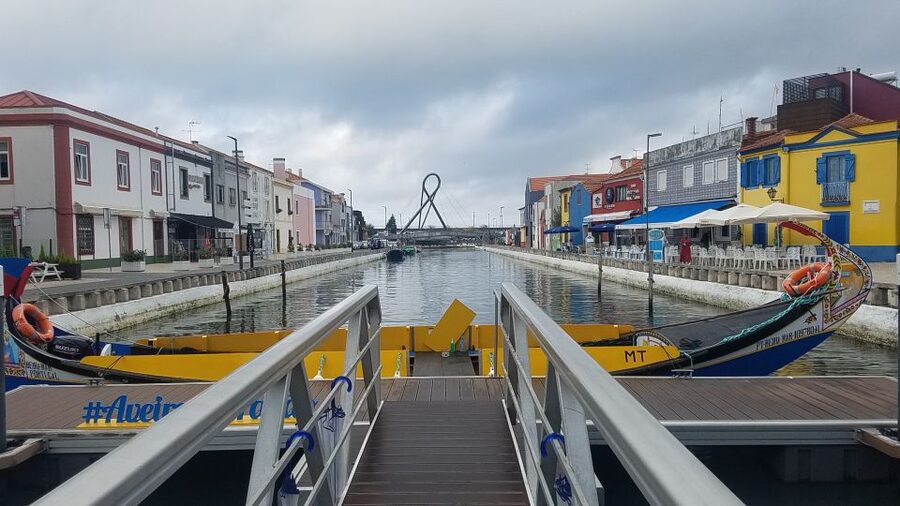
Here the canals become more than pretty backdrops. Tony explains their origins and practical use, along with the role of the Ria de Aveiro in moving goods and supporting local work. You learn to identify the traditional boats, including moliceiros and mercanteis.
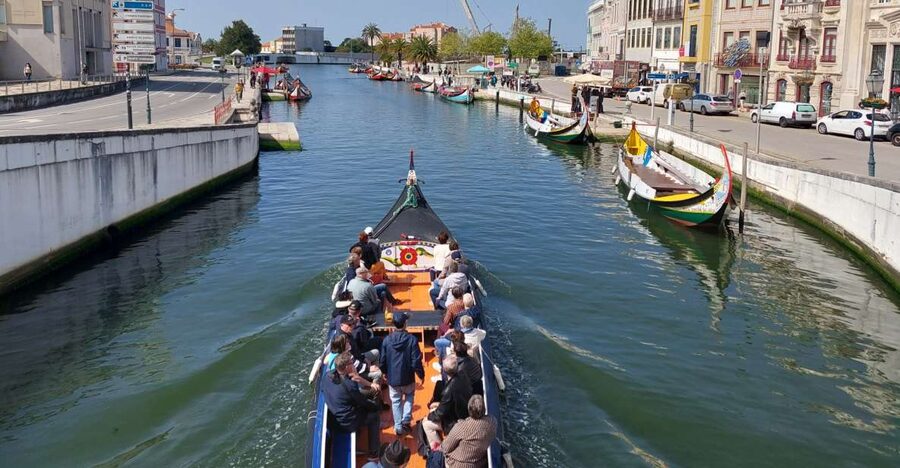
Moliceiros are the colorful boats most people associate with Aveiro, but the tour gives you a broader view of the lagoon’s boat culture. Recognizing different boat types helps you read the waterways as part of the city’s economy rather than as a sightseeing prop.
The canal section is also a good place to pause for photographs. Still, do not expect a boat ride. This is a walking tour, and a separate canal cruise can be booked if you want to see Aveiro from the water. One useful piece of advice from an experienced participant was to take the two-hour walk first and add a boat trip separately if desired. That order makes sense because the walk gives meaning to what you later see from the canal.
Beira Mar, Art Nouveau, and ironwork
In the Beira Mar neighborhood, tiles continue to compete for your attention. The route points out Art Nouveau and Art Deco touches, as well as iron architecture from the turn of the 19th to the 20th century.
This is where Aveiro’s character becomes more layered. The city is often sold as a canals-and-boats destination, but its buildings reveal another story. Decorative iron, curved lines, geometric details, and tiled fronts show how Aveiro changed as trade and industry developed.
You will also see both façades of the Museum of Art Nouveau. The tour does not promise a full museum visit, so check the day’s opening conditions if going inside matters to you. The value here is the close reading of the exterior. Tony points out features that may look like simple ornament until you understand the period and design ideas behind them.
This portion will suit anyone who likes architecture but does not want a highly technical lecture. Tony’s teaching background helps him explain the styles in plain language, and his humor keeps the pace relaxed.
Saltpans and the long story of Aveiro
On the way toward the saltpans, Tony places Aveiro in a much wider time frame. The discussion covers the city’s power from the 11th to the 15th centuries, its difficult period in the 17th and 18th centuries, and its revival in the 19th century.
That timeline is important. Without it, Aveiro can appear to be a charming town that grew up around canals. With it, you see a city that gained influence, suffered a long decline, and later found new energy through industry, transport, salt, ceramics, and changing urban life.
The salt connection also helps explain the smell of the lagoon and the references to salt production. The tour does not reduce Aveiro to one postcard image. It shows how water could bring prosperity, support work, and also shape the city’s problems.
You should bring sunscreen and clothing suited to the weather. The tour runs in rain or shine, and parts of the route are outdoors. A light layer is sensible because conditions near open water can change during the day.
Local food and São Gonçalinho
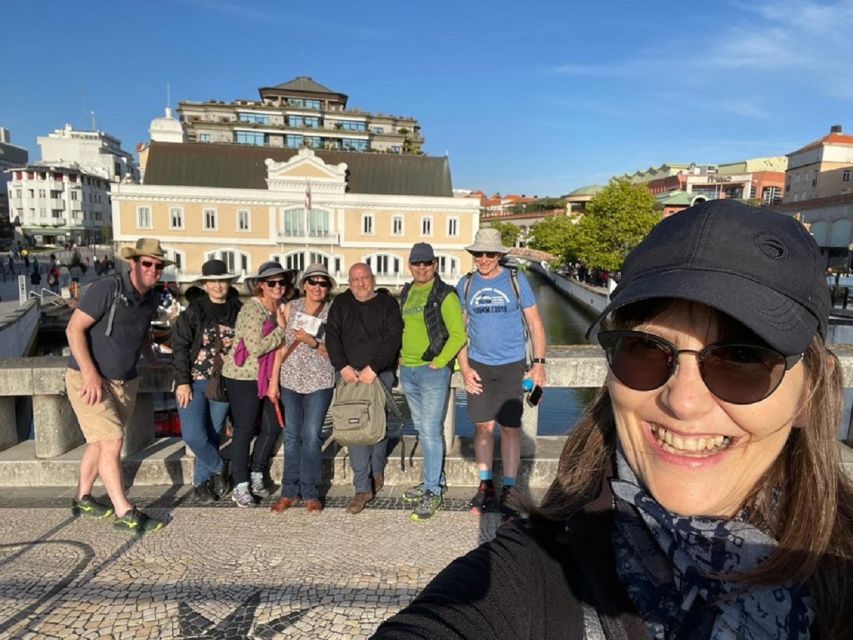
The return route brings in local food. Tony talks about eel stew and ovos moles, Aveiro’s famous traditional sweet.
Ovos moles are a useful example of how food carries local identity. You will not receive food or drinks during the tour, but the introduction can help you choose what to try later. If you like to connect places with their kitchen traditions, this short food section adds warmth to the historical material.
The walk ends at the Church of São Gonçalinho. Tony explains the January festival held there, including the unusual custom of throwing a hard, heavy traditional sweet over the heads of the faithful.
It is a lively ending to a route that has covered churches, canals, factories, boats, paving, tiles, salt, and food. The festival story also shows that Aveiro’s traditions are not only preserved in museums. They remain part of public celebration and local life.
What $23 buys you
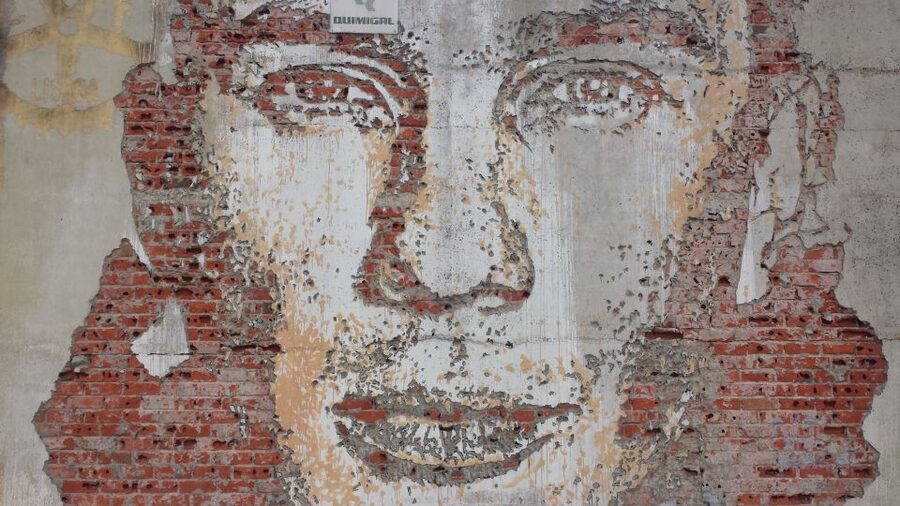
At $23 per person, this is a solid value if you want context rather than a quick orientation walk. The price includes a live guide in English, Spanish, Portuguese, or French, plus entrance to the Church of Mercy and Carmelite Convent Church.
That matters because the two interiors give you more than an outside look at Aveiro. You are also paying for Tony’s local knowledge, route planning, and ability to answer questions. The strongest part of the experience is not the number of stops. It is the way the guide links them.
The value is lower if you already know Aveiro’s history, architecture, and boat traditions well. It may also feel less complete if your main goal is to visit museums, since opening hours can affect what you enter. On the other hand, the tour still has plenty to offer from the streets, canals, churches, and façades.
Free cancellation up to 24 hours before the start and a reserve-now, pay-later option make it easier to fit into a changing Portugal schedule.
Who should book this walk?
I would choose this tour for a first visit to Aveiro, especially if you have only a few hours. It suits adults, older children over 10, architecture fans, history lovers, and anyone who wants a local guide rather than a checklist of photo stops.
It is also a good choice for people who walked around Aveiro alone and found the city attractive but hard to interpret. Tony’s explanations can turn small details into useful clues.
I would not choose it for a visitor who cannot walk comfortably for two hours, uses a wheelchair, needs a stroller, or wants a boat trip included. Large bags, bicycles, and baby carriages are not allowed, and the experience is not designed for unaccompanied minors.
Should you book the Aveiro walking tour?
Yes, if you want Aveiro to make sense beyond its canals. The strongest reasons are Tony Walker’s personal connection to the city, the small-group atmosphere, the church entries, and the careful attention to tiles, architecture, boats, salt, and food.
Book it early in your Aveiro stay so you can use Tony’s suggestions for the rest of your visit. Bring comfortable shoes, sunscreen, weather-appropriate clothing, and an interest in asking questions. If you want a boat ride too, add one separately rather than expecting this walking tour to provide it.
FAQ
Where does the Aveiro walking tour begin?
Meet near the statue in the center of Praça da República. The guide will be wearing or carrying a yellow and blue card.
How long does the tour last?
The walking tour lasts two hours. Starting times vary, so check availability when booking.
What languages are available?
The live guide can lead the tour in English, Spanish, Portuguese, or French.
Are church admissions included?
Yes. Admission to the Church of Mercy and the Carmelite Convent Church is included. Other locations are walk-through sites or free to enter.
Is a canal boat ride part of the tour?
No. The tour explains Aveiro’s traditional boats and canals, but it is a walking experience. A boat trip can be booked separately.
Is the tour suitable for children?
It is not suitable for children under 10. Unaccompanied minors are also not allowed.
Can wheelchair users join?
No. The experience is not suitable for wheelchair users or people with mobility impairments.
What should I bring?
Bring comfortable shoes, sunscreen, a passport or ID card, and clothing suited to the weather. The tour runs rain or shine. Large bags, luggage, bicycles, alcohol, drugs, and baby carriages are not allowed.
Just added around Portugal
- Small Group Walking Tour of Belém★ 4.9 · 80 reviews
- PORTO: Historical Walking Tour★ 4.8 · 92 reviews
- Porto: Sunset Walking Tour with Port Wine and Views★ 4.6 · 95 reviews
- Porto: City Center Walking Tour★ 4.6 · 227 reviews
- Porto: Highlights & hidden gems Walk – max 10★ 5.0 · 441 reviews
- Porto: Historical Center Walking Tour★ 4.8 · 898 reviews
- Porto: Harry Potter and City of Porto Guided Walking Tour★ 4.9 · 501 reviews
- Porto: 3-Hour Walking City Tour & Lello Bookstore Visit★ 4.7 · 99 reviews
Portugal Walking Tours, compared.

Best of Lisbon Small-Group Guided Walking Tour
Read our review →
Porto Walking Tour, Lello Bookshop, River Cruise and Cable Car
Read our review →
Best of Lisbon Walking Tour: Rossio, Chiado & Alfama
Read our review →
Experience Porto’s Charm: 3-Hour Guided Walking Tour
Read our review →
Madeira: Enjoy a Guided Levada Walk in the Rabaçal Valley
Read our review →Browse the lists this tour appears in