
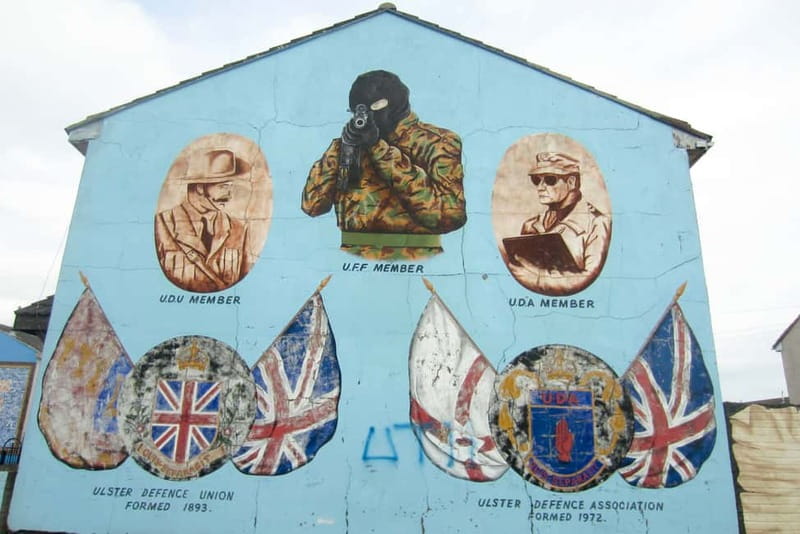
Review · UK WALKING TOURS
Belfast: Political Conflict 3-Hour Walking Tour
The past still speaks here. This three-hour Belfast walking tour brings you onto the Falls and Shankill Roads with former Republican and Loyalist political prisoners, giving you two personal views of The Troubles rather than one polished version. I like the directness of the guides and the way murals, memorials, gates, and streets make the story visible. The main drawback is that some accounts can feel strongly partisan, and parts of the walk may move quickly.
At $35 per person, this is a good-value history tour if you want more than photographs of Belfast’s famous murals. You walk about 4 kilometers, cross between two communities, and hear from people who grew up inside the conflict. Bring comfortable shoes, prepare for difficult stories, and remember that this is not a light sightseeing stroll.
Key points before you book
- Two guides, two political traditions: The tour is split between a Republican guide on the Falls Road and a Loyalist or security-force guide on the Shankill Road.
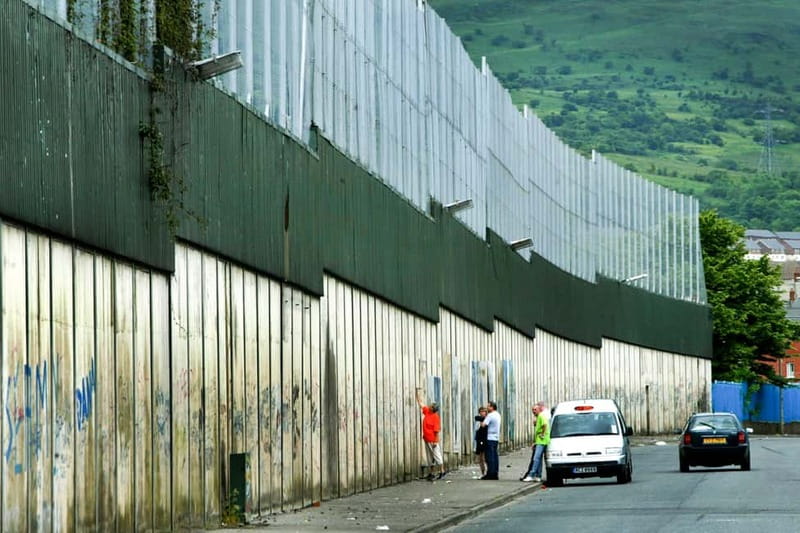
- Real streets, not a museum display: You see Divis Tower, political murals, memorials, the Peace Walls, and electronically controlled gates in their original setting.
- Personal stories carry the tour: Guides such as Robert, Jack, Mark, Pod, Gerard, Paul, and Jake have been praised for passionate and open accounts of growing up during The Troubles.
- A serious three-hour walk: The route covers about 4 kilometers and ends on Lower Shankill Road, around 15 minutes from the starting point.
- Expect emotional material: Extreme violence, loss, injustice, and lingering mistrust are discussed. The experience may not suit children under 15.
- Small practical warning: There is no programmed meal stop, and traffic can make it hard to hear at times. Arrive early and tell your guide if you need a comfort break.
Why this Belfast tour feels different
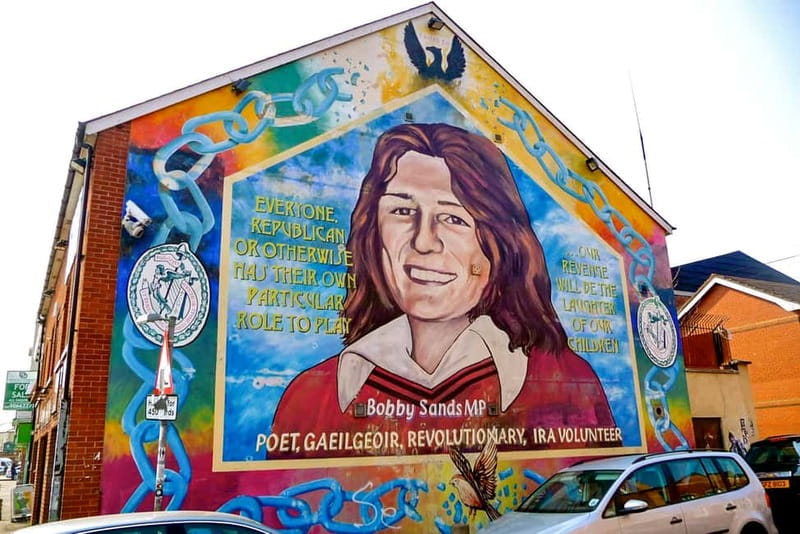
Many Belfast sightseeing tours explain The Troubles from a safe distance. This one places you in the neighborhoods where the conflict took shape, with guides who were personally involved or directly affected.
That changes the tone. A mural is no longer just a colorful wall. A memorial is not simply a photo stop. A checkpoint or gate becomes part of a daily system that shaped where people lived, walked, worked, and felt safe.
The tour gives roughly half its time to each community. You begin with a Republican former political prisoner around the Falls Road, then continue into the mainly Protestant Shankill area with a Loyalist former prisoner or former member of the security forces.
That structure is the central strength. You do not receive one official explanation and leave believing the story is tidy. You hear competing memories, different ideas about justice, and different hopes for Northern Ireland’s future.
The guides do not necessarily sound alike. One may be warm and open about reconciliation, while another may speak in a more guarded or reserved manner. That contrast is useful. It shows that the peace process did not erase old loyalties or personal pain.
A few more walks around Belfast worth a look
- Prague: 3-Hour Walking Tour of Old Town & Prague Castle
★ 4.7 · 5,696 reviews - Eat Like a Local: Venice 3-Hour Small-Group Food Tasting Tour
★ 5.0 · 3,137 reviews - Experience Porto’s Charm: 3-Hour Guided Walking Tour
★ 5.0 · 2,432 reviews
Divis Tower and the beginning on Falls Road
The meeting point is in front of Divis Tower on Divis Street. This is a useful starting place because the area immediately places you inside West Belfast’s Republican community rather than beginning with a general city-center introduction.
Your first guide leads the group along the Falls Road and nearby streets. You can expect explanations of the community’s desire for a united Ireland, the pressures that shaped Republican politics, and the effects of military presence, protest, imprisonment, and violence.
The value here is not just in dates. Guides describe what it was like to grow up in the area while the conflict was active. Personal memories help explain why political language remains so emotional and why old events still influence opinions today.
Robert has been especially praised for his warmth, local connections, and ability to make difficult material understandable. Jack, Peter, Pod, and Gerard have also been singled out for personal and compelling accounts. The exact guide varies, but the format remains the same: a former participant explains the neighborhood from his own experience.
Reading the Falls Road murals
The murals are among Belfast’s most visible attractions, but they are easy to misunderstand without context. On this walk, you get explanations of the symbols, people, causes, and events shown on the walls.
Some murals remember Republican prisoners and those killed during the conflict. Others connect the local struggle with political causes around the world. The art changes over time, so the walls reflect both the past and current ideas about justice, identity, and solidarity.
I like this part because you are not simply handed a list of famous images. You can ask why a particular figure appears, what a symbol means, or how the local community views the mural today.
At the same time, listen critically. The guide is speaking from a defined political position. That does not make the account unhelpful, but it means you should treat it as one testimony within a larger story. The tour itself helps by giving you a second perspective later.
Crossing toward Shankill Road
The move from Falls Road toward Shankill Road is one of the most revealing parts of the walk. You pass through gates in the Peace Line system, including electronically controlled gates used to manage movement between the areas.
This is a striking moment because the division is not only historical. Physical barriers and controlled access show that separation still has a practical role in everyday life.
The tour then shifts from the mainly Catholic and Nationalist Republican community to the mainly Protestant and Unionist Loyalist area. Your second guide may be a Loyalist former political prisoner or an ex-member of the security forces from the neighborhood.
You hear why some residents want Northern Ireland to remain part of the United Kingdom and how Unionist families experienced the conflict. This section can challenge visitors who have already formed a simple view of the period.
It is also where the tour’s balance becomes most important. The conflict was not simply Catholics against Protestants. It involved questions of national identity, civil rights, British rule, Irish unity, security, discrimination, violence, and competing ideas of legitimacy.
Some people find the two presentations noticeably different in tone. That is not necessarily a weakness. It may feel less smooth than a single scripted tour, but it gives you a more honest sense of how far apart the communities have been.
Same streets, a different way to see them:
- A History of Terror – Belfast City Centre Walking Tour
★ 5.0 · 2,883 reviews - Belfast: A History of Terror Walking Tour
★ 4.9 · 854 reviews - Belfast: The Troubles Walls & Bridges Guided Walking Tour
★ 4.8 · 583 reviews - Belfast Political Tour-Conflicting Stories Walking Tour
★ 4.5 · 459 reviews
Shankill Road, memorials, and local memory
The Shankill Road section brings you past Unionist and Loyalist murals, memorials, and other signs of community identity. Your guide explains the meaning of the images and links them to events and people from the area.
This is where Mark, Jake, Fred, and other guides have been praised for speaking openly about their experiences and present-day views. Some guides are highly expressive, while others are more restrained. Expect passion, but do not expect the same presentation from every guide.
There may be moments when the group is given only limited time at a memorial or cemetery. If a particular site matters to you, stay close and ask your question before the group moves on.
The Shankill section also helps correct a common mistake: assuming that only one community had fears, losses, or a sense of being under threat. Hearing the Unionist account does not cancel out Republican grievances. It helps you understand why the conflict lasted so long and why political identity remains powerful.
The Peace Walls and the last part of the walk
The final part focuses on the Peace Walls, the physical barriers built to reduce contact and violence between communities. Their name sounds hopeful, but the walls also show how incomplete the peace remains.
You may have the chance to sign the wall and leave a message beside names such as Bill Clinton and the Dalai Lama. It is a small gesture, but it gives the ending a personal feel after several hours of political argument and painful testimony.
The tour ends on Lower Shankill Road, not back at Divis Tower. From there, you are about a 15-minute walk from the starting point. Plan your day around that finish, especially if you have a timed attraction or restaurant reservation afterward.
The final impression is not a neat conclusion. You may leave with a better understanding of the past, while also seeing that mistrust and disagreement have not vanished. Several guides speak about peace, reconciliation, and hope, but the tour does not pretend that the work is finished.
How much walking and how demanding is it?
The route covers approximately 4 kilometers over three hours. That is manageable for most people who are comfortable walking, but it is not a short mural stop with a few steps between locations.
You will spend much of the time standing while the guide talks. Comfortable walking shoes are a must, especially in wet or cold Belfast weather.
There are opportunities for comfort breaks on some tours, but do not count on a scheduled toilet or food stop. One version of the route includes a chance to buy a hot drink or snack, but this should not be treated as part of the fixed program. Use the restroom before setting out and tell your guide if you need a break.
The tour is listed as wheelchair accessible. Because it crosses neighborhood streets and includes several standing stops, anyone with specific mobility needs should still check the route details when booking.
How the $35 price measures up
At $35, this is not the cheapest way to see Belfast’s murals. It is good value if you want interpretation from people with direct experience of the conflict rather than a simple walk-by tour.
You are paying for three hours of guiding, two political perspectives, and access to a form of local testimony that you cannot get from photographs alone. The guides explain details you would likely miss if you walked Falls Road and Shankill Road independently.
The value is especially strong for visitors interested in modern history, politics, peace-building, or Northern Ireland’s identity debate. It is less suitable if you want a relaxed city walk, architectural sightseeing, or a family activity with light conversation.
The tour has a rating of 4.6 from more than 2,200 ratings, which fits the main strengths of the experience: passionate guides, strong local knowledge, and a format that makes the two sides impossible to ignore.
What could be improved
The tour is powerful, but it is not perfectly even in every moment. The quality and tone can depend on which guides are working that day. One guide may be especially warm and engaging, while the second feels more reserved.
That difference can make the two halves feel uneven. It can also reveal genuine differences in outlook, which some people find valuable and others may find uncomfortable.
Traffic is another practical issue. One visitor noted that city noise made it difficult to hear, so stay near the guide and speak up if you are missing details. A wireless microphone would help in louder stretches.
Some stops, especially memorials and the Shankill graveyard, may feel rushed. Arrive early because guides may begin showing photographs or discussing material before the formal start time.
Finally, do not book this expecting a neutral, detached lecture. The guides speak from personal political positions. That is the reason to take the tour, but it also means you should listen carefully, ask fair questions, and remember that no single account can cover every part of The Troubles.
Who should take this walking tour?
I would recommend it to adults and older teenagers who want to understand Belfast through lived experience. It is a strong choice for first-time visitors who have seen the murals in photographs but want to understand what they represent.
It suits you especially well if you:
- Like modern history and politics
- Want to hear directly from people connected to the conflict
- Prefer walking through real neighborhoods to visiting a formal museum
- Are willing to hear painful and politically charged material
- Want to understand both Republican and Loyalist viewpoints
It may not suit young children, visitors who dislike confrontational topics, or anyone looking for a gentle sightseeing afternoon. The activity may not be suitable for children under 15 because extreme violence can be discussed.
Should you book the Belfast Political Conflict Walking Tour?
Yes, if your goal is to understand Belfast rather than simply photograph it.
The strongest reason to book is the two-guide format. Hearing the Falls Road and Shankill Road explained by people connected to each side gives you a clearer sense of how memory, identity, and fear continue to shape the city.
Book it early in your Belfast visit if you can. The tour gives you useful context for other attractions and helps you read the murals and Peace Walls with more care. Wear good shoes, bring weather protection, eat beforehand, and allow extra time after the finish on Lower Shankill Road.
At $35, it offers a serious and memorable three hours. It will not give you a perfectly neutral account, and that is precisely why you should listen with an open mind.
FAQ
Where does the tour start?
The tour starts in front of Divis Tower on Divis Street in Belfast.
Where does the tour finish?
It ends on Lower Shankill Road, about a 15-minute walk from the starting point.
How long is the tour?
The walking tour lasts approximately three hours.
How far do you walk?
The route covers about 4 kilometers, or 2.5 miles.
Which areas does the tour visit?
It visits Falls Road, Shankill Road, and the Peace Walls, with a route through both Republican and Loyalist areas.
Who leads the tour?
The tour includes two guides. One is a Republican former political prisoner, and the other is a Loyalist former political prisoner or an ex-member of the security forces.
What language is the tour in?
The live tour is conducted in English.
Is the tour suitable for children?
It may not be suitable for children under 15 because the discussion can include extreme violence. The final decision is left to the guardian.
Is the tour wheelchair accessible?
Yes, the activity is listed as wheelchair accessible.
Can I cancel the booking?
You can cancel up to 24 hours in advance for a full refund. A reserve-now, pay-later option is also available.
Just added around Belfast
- The Real Eclectic Belfast City Walking Tour/Experience.★ 5.0 · 152 reviews
- Belfast Political Tour-Conflicting Stories Walking Tour★ 4.5 · 459 reviews
- Belfast Eclectic Walking City Center Experience, The Marti Way★ 5.0 · 348 reviews
- The Real Story of Belfast walking tour with a local guide★ 5.0 · 144 reviews
- Best of Belfast Walking Tour★ 5.0 · 399 reviews
- Belfast Centre Food Tour of 12+ Local Irish Dishes & Drinks★ 5.0 · 266 reviews
- Belfast Troubles Murals Street Art and Peace Wall Walking Tour★ 5.0 · 163 reviews
- Belfast: Best of Belfast History, Culture & Art Walking Tour★ 4.9 · 158 reviews
UK Walking Tours, compared.

Magical London: Harry Potter Guided Walking Tour
Read our review →
Edinburgh Castle: Guided Walking Tour with Entry Ticket
Read our review →
Underground Vaults Walking Tour in Edinburgh Old Town
Read our review →
Oxford University Walking Tour With University Alumni Guide
Read our review →Edinburgh Castle: Guided Walking Tour with Entry Ticket
Read our review →
Edinburgh Castle Guided Walking Tour in English
Read our review →Browse the lists this tour appears in