Review · GUIDED
Buenos Aires: La Boca Guided Walking Tour in English
La Boca tells its story in color. This two-hour English walking tour brings the neighborhood’s conventillos, tango, fileteado art, and football culture together in a compact walk that gives you far more context than a quick photo stop. I especially like the way the guides connect everyday streets with Argentina’s wider history, and I like that the tour ends near La Bombonera, where you can continue with the Boca Juniors Museum if you wish.
The main consideration is that the stadium admission costs extra, and the street tango performances are likely rather than guaranteed. Traffic around the meeting point can also be heavy, so you need to arrive on time. Still, at $13 per person, this is an unusually good-value introduction to one of Buenos Aires’ most photographed neighborhoods.
Key points before you book
- Colorful conventillos: See the painted houses that give La Boca its famous look, while learning why the neighborhood developed this way.
- Tango on the street: You may encounter live dancers and hear how tango grew from the area’s multicultural roots.
- Fileteado art: Look for the decorative lettering and painted designs that are closely tied to Buenos Aires street culture.
- Boca Juniors finale: Finish outside La Bombonera and hear the story of Argentina’s most popular football club.
- Strong guiding: Guides including Santiago, Victoria, Vito, Juan, Maria, Marianne, and Maru are praised for humor, clear English, and detailed local stories.
- Low-cost introduction: The $13 fee covers two hours with a guide, but food, drinks, and stadium entry are separate.
Why La Boca works best with a guide
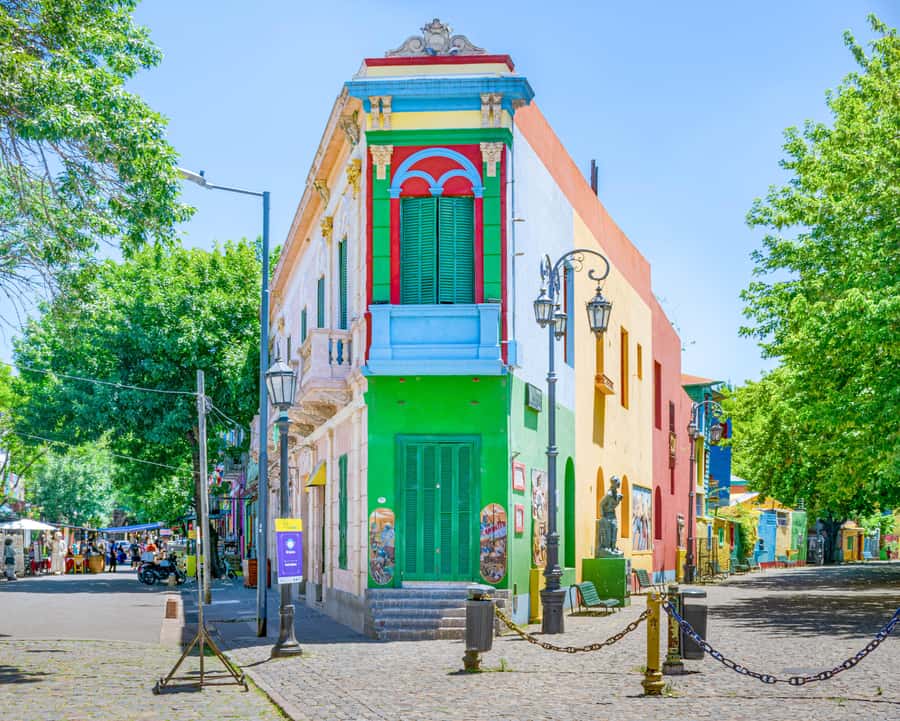
La Boca is easy to recognize but not as easy to understand. The brightly painted buildings and tango performers make an immediate impression, yet the visual drama can distract you from the neighborhood’s deeper story.
That is where this tour earns its modest price. Your guide does not simply point at colorful walls and pose you for photographs. You hear about the old conventillos, the area’s multicultural character, the growth of tango, and the role of art in shaping La Boca’s public image.
I like this approach because the neighborhood can otherwise become a short stop for pictures. With a guide, you begin to notice details in the painted façades, signs, murals, and decorative lettering. The tour turns a photogenic district into a place with a past and a present.
The guides also add a personal view of Argentina. Santiago is often praised for mixing history with stories about daily life in the country. Vito is described as lively and entertaining, while Victoria is praised for keeping the group comfortable and on schedule. Maria, Juan, Marianne, Maru, and other guides are also noted for clear explanations and an obvious affection for La Boca.
You should expect a group walking tour rather than a private, slow-paced art lesson. The pace is designed to cover several points in two hours, so some stops will be brief. Still, the schedule works well if you want an introduction before exploring La Boca on your own.
More Guided Walks in the world:
- Magical London: Harry Potter Guided Walking Tour
★ 4.7 · 22,044 reviews - History and Hauntings of Salem Guided Walking Tour
★ 5.0 · 14,564 reviews - Amsterdam Anne Frank: Small-Group Walking Tour & Local Guide
★ 4.8 · 12,789 reviews
Starting at Magallanes 808
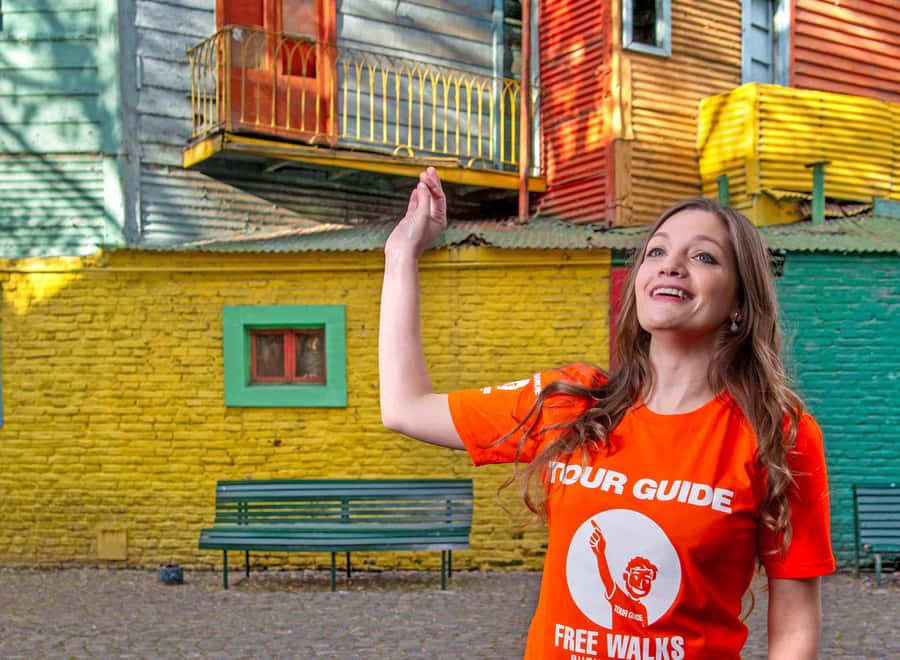
The meeting point is on the corner of Caminito and Magallanes Street, at Magallanes 808, near the entrance of the Cachafaz shop. Look for the orange T-shirt or orange umbrella.
That bright marker matters in a crowded tourist area. I would arrive a little early, especially because traffic can be heavy around La Boca. The guide waits 10 minutes at the meeting point, then moves to the first stop, only one block away near the riverside.
This is not a tour where you should cut timing close. A delayed taxi or slow traffic could mean you miss the group even though the first stop is nearby. If you do arrive after the guide has left, head toward the riverside rather than waiting at the shop.
The starting point places you right in the heart of the colorful part of La Boca. You do not spend the first part of the tour crossing a large section of the city. That makes the two-hour duration feel efficient, particularly if you have only a short time in Buenos Aires.
The tour is wheelchair accessible, which is useful information for anyone planning around mobility needs. The walk continues in rainy weather, so bring suitable clothing if the forecast is poor. Guides have also been praised for finding shade during very hot periods, but you should still prepare for sun and heat.
The conventillos and La Boca’s working-class story
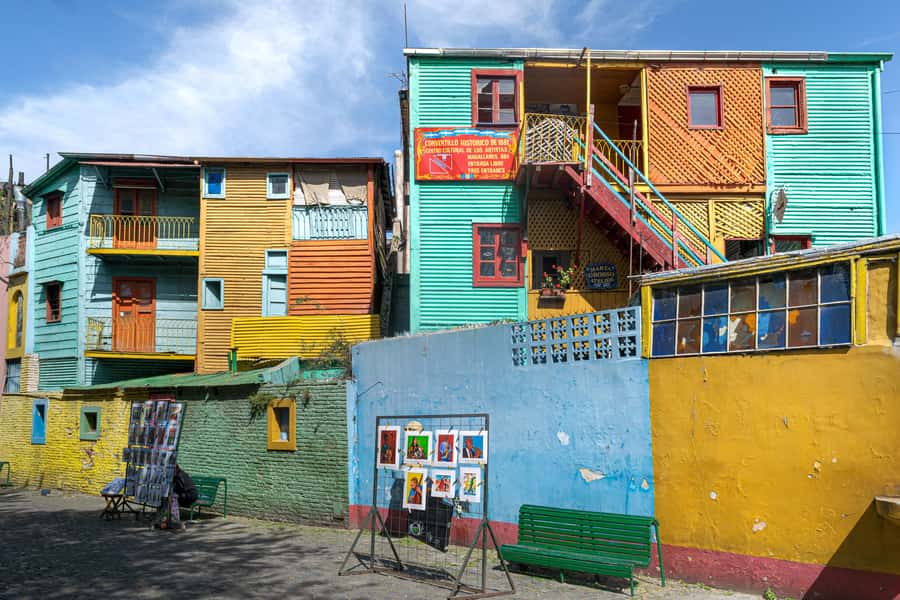
One of the most useful parts of the walk is the explanation of the conventillos. These colorful houses are more than a backdrop for holiday photographs. They reflect the way people lived together in a crowded, multicultural neighborhood.
Your guide uses the buildings to explain how La Boca changed over time. The area you see today is known for its bohemian feel and tourist appeal, but it also carries the marks of an older community. The best guides make that change clear without reducing the neighborhood to a simple before-and-after story.
I like hearing this context early in the tour because it changes the way you look at the architecture. The paint becomes part of a larger story about community, work, immigration, art, and identity. Instead of seeing a row of bright walls, you start asking why these buildings look this way and what they meant to the people who lived there.
Several people describe the guides as excellent storytellers, particularly Santiago and Victoria. That matters here. La Boca’s history includes many names, dates, and cultural references, and a flat lecture would quickly become tiring. The strongest guides use humor and small stories to keep the subject moving.
Do not expect every building to be presented as a museum piece. This is a neighborhood walk, not a formal architectural tour. Some sights are viewed from the street, and the appeal comes from the combination of setting, explanation, and local character.
The riverside and Puente Transbordador
The route includes Puente Transbordador, the old-style transporter bridge near the river. It gives the walk a change of scale after the close-up streets around Caminito and the conventillos.
The bridge is also a useful reminder that La Boca is tied to working life and the waterfront, not only tango and painted façades. Your guide explains the stop as part of the area’s development, helping you connect the riverfront with the neighborhood’s wider story.
This is one of the places where the guide’s role becomes especially clear. On your own, you might photograph the bridge and move on. With an explanation, it becomes part of the story of how La Boca functioned and how its identity was shaped.
The exact amount of time spent here can vary with the group and guide. The tour covers several points in two hours, so you should not expect a long, leisurely pause at every location. If you want detailed photographs, keep your camera ready and listen while the guide talks.
The route is not described as a strenuous walk, and one recent assessment specifically noted that there was not a huge amount of walking. That makes it a good fit if you want a substantial introduction without committing to a half-day outing.
A few more walks around the world worth a look
- Reykjavik Food Walk – Local Foodie Adventure in Iceland
★ 5.0 · 18,952 reviews - New Orleans Premier Ghost, Voodoo and Vampire Walking Tour
★ 4.5 · 12,856 reviews - Edinburgh: Harry Potter Magical Guided Walking Tour
★ 4.8 · 11,944 reviews - Edinburgh Castle: Guided Walking Tour with Entry Ticket
★ 4.7 · 11,699 reviews
Tango, street performances, and fileteado art
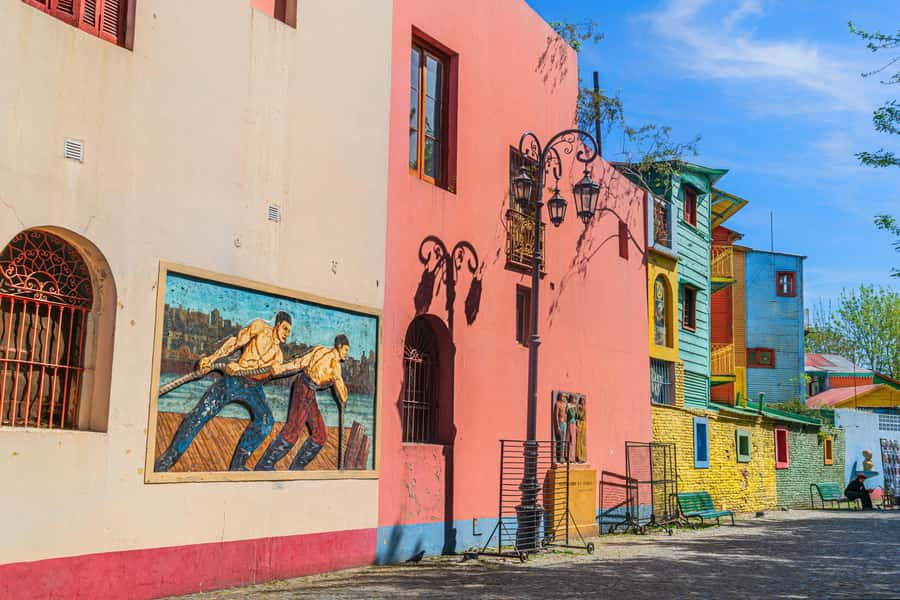
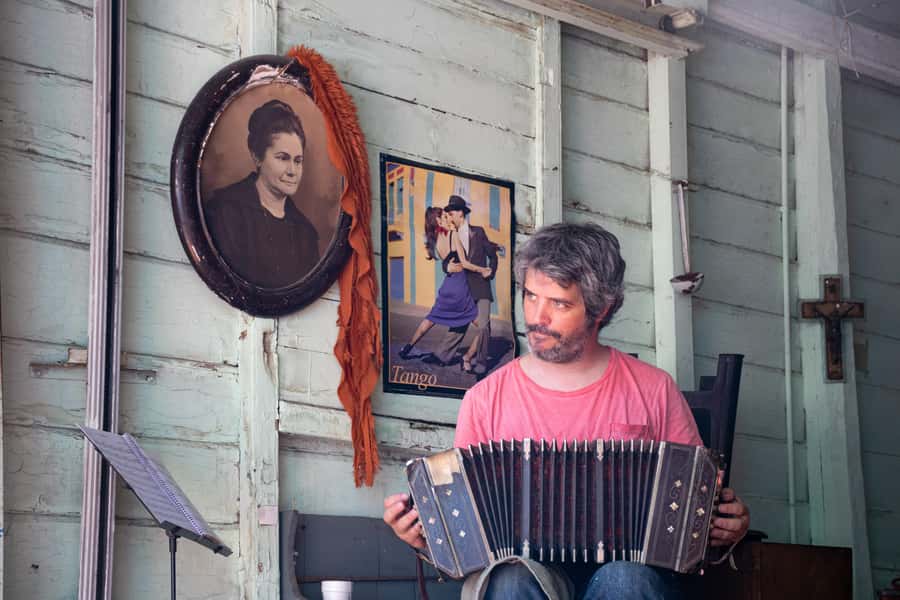
Tango is one of the tour’s central themes. As you move through La Boca, you may encounter dancers performing in the streets. These performances add movement and sound to the walk, but they should be treated as a possible bonus rather than a guaranteed show.
The guide explains tango’s origins and its connection to the neighborhood. That explanation helps you see why tango is more than a staged performance for cameras. It is part of Buenos Aires’ cultural identity, and La Boca is one of the places where that story is presented most visibly.
I like the balance here. You are not locked inside a theater for a formal tango production. You are walking through the district, watching the neighborhood work as a stage, and learning how the dance fits into the city’s past and present.
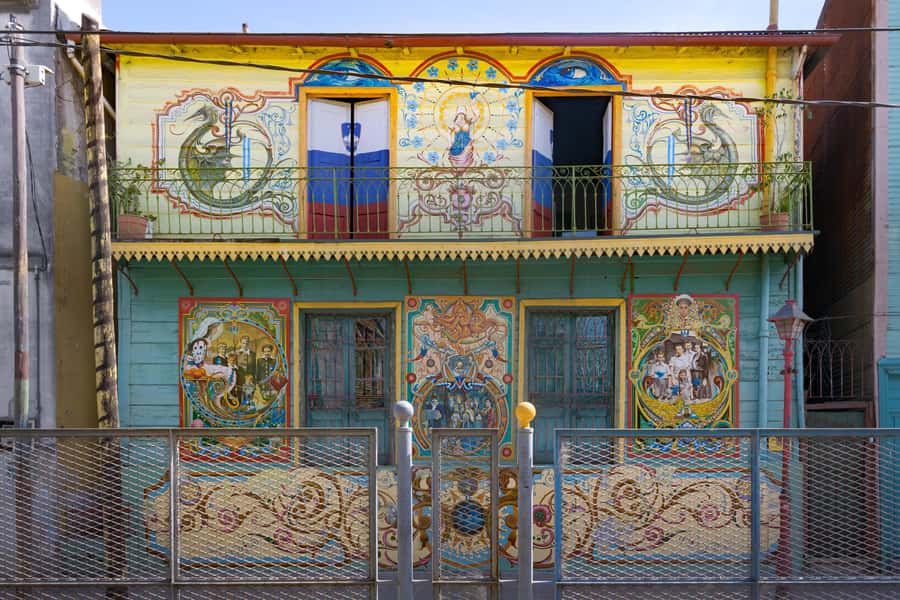
The tour also introduces you to fileteado, the decorative painted art associated with Buenos Aires. Look for ornate lettering, curled lines, strong colors, and signs that feel more like artwork than plain shop names. Your guide explains where this style came from and why it matters.
This is a particularly useful detail for anyone interested in design or photography. Fileteado can be easy to pass without a second look. Once you know what to watch for, the streets offer more visual detail than the famous conventillo façades alone.
The quality of this portion depends partly on the guide. Several guides receive praise for noticing small things that you might otherwise miss. Maria is described as adding historical context to details along the route, while Vito is praised for turning facts into engaging stories. That combination of observation and explanation is the real value.
La Bombonera and the Boca Juniors story
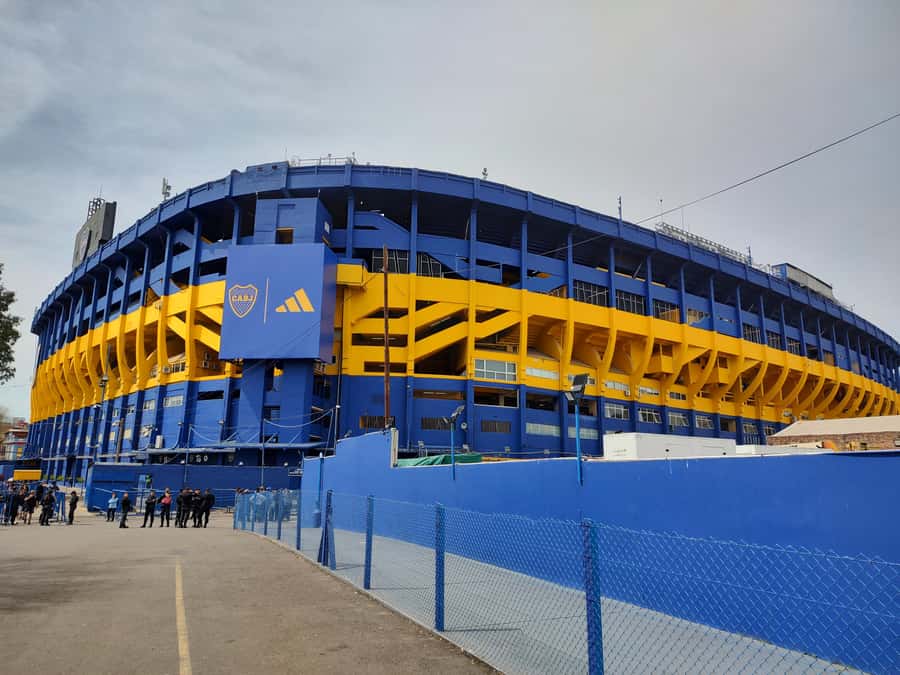
The walk finishes outside La Bombonera, the famous home of Boca Juniors, at Brandsen 801 to 831. This gives the tour a strong final chapter. After art, housing, tango, and the riverfront, you arrive at the football institution that shapes so much of La Boca’s public identity.
Your guide explains the history of Boca Juniors and why the club is so important in Argentina. Even if you are not a football fan, this stop helps explain another side of the neighborhood. La Boca is not only a place for tango dancers and colorful streets. It is also closely tied to intense local football culture.
The tour does not include entry to the stadium or the Boca Juniors Museum. You can add that visit afterward by purchasing admission separately. This is worth planning if you want more than an exterior view, but it means the advertised $13 price is not the final cost for a full stadium experience.
I see the separate ticket as a reasonable arrangement. Football fans can extend the outing, while others can finish the tour without paying for an attraction they do not want. The guided walk gives you the context first, so you can decide on the museum with a better sense of why the club matters.
If you plan to enter, allow extra time after the walk. The tour itself ends outside the stadium, not inside it. That distinction is easy to miss when planning a tight schedule.
What the guides do especially well
The strongest pattern across the experience is the quality of the guiding. Santiago receives especially warm praise for his humor, theatrical delivery, strong English, and ability to pack a great deal into two hours without making the tour feel lifeless.
One useful detail is his background in theatre, which helps explain why people describe him as engaging and expressive. He is also praised for giving recommendations at the end, including ideas for further exploration and dining. That can be valuable because the tour shows you enough of La Boca to decide where you want to spend more time.
Victoria is praised for clear storytelling, careful timing, and looking after the group in hot weather. Vito is repeatedly described as enthusiastic, entertaining, and well informed about local culture. Juan is praised for friendliness and for taking good care of the group.
Maria and Marianne are also singled out for thoughtful explanations and strong local stories. Maru receives praise for making the area’s past feel more meaningful. You may not get a particular guide, so I would treat these names as evidence of a strong guide team rather than a promise about your departure.
The best guides connect several subjects without losing the thread. One minute you are looking at a house, then you are discussing tango, art, football, or life in Argentina. That range is one reason the tour feels fuller than its low price suggests.
Price, pace, and practical value
At $13 per person, this is a very affordable way to get oriented in La Boca. You are paying for two hours of guided interpretation, not transportation, food, drinks, or stadium admission.
The value is strongest if you would otherwise walk through Caminito, take photographs, and leave without understanding the setting. The guide adds the context that turns a quick sightseeing stop into a proper neighborhood visit.
The tour is also efficient. Two hours is enough to cover the main themes without taking your entire day. I would schedule it early enough to leave time afterward for the museum, more exploring, or a meal in the area.
The main limitations are straightforward:
- Street tango performances may not happen during your visit.
- The Boca Juniors Museum and stadium admission cost extra.
- Traffic can make the meeting point harder to reach on time.
- The tour continues in rain, so weather will not necessarily cancel it.
- You may hear a great deal of information in a short period, especially with an energetic guide.
That last point can be either a strength or a weakness. If you enjoy fast-moving storytelling, Santiago, Vito, Victoria, and the other guides appear well suited to you. If you prefer long pauses and quiet observation, the schedule may feel busy.
Who should book this La Boca walk?

I would recommend it to first-time visitors who want La Boca explained rather than simply photographed. It suits anyone interested in tango, street art, local architecture, Argentine football, or the social history of Buenos Aires.
Families may also appreciate the short duration and the mix of subjects. You can see colorful buildings, watch for performers, hear stories, and finish at a football stadium without committing to a full-day cultural program.
It is a particularly good choice for visitors who do not speak Spanish confidently. The live guide speaks English, and the clear explanations help you catch details that could be lost during an independent walk.
Football fans should consider adding the Boca Juniors Museum afterward. Tango fans may want to use the tour as an introduction before booking a separate evening show, although this walking tour itself is not a full tango performance.
I would be less likely to recommend it to someone who has already spent considerable time in La Boca with a local guide or who wants a private, highly specialized architecture tour. For everyone else, the cost is low enough that the decision is easy.
FAQ
How long is the La Boca walking tour?
The guided walk lasts two hours.
Where does the tour meet?
The guide meets you on the corner of Caminito and Magallanes Street, at Magallanes 808, near the entrance of the Cachafaz shop. Look for the orange T-shirt or umbrella.
What happens if I arrive late?
Traffic can be heavy, and the guide waits 10 minutes at the meeting point. After that, the guide proceeds to the first stop, which is one block away near the riverside.
Is the Boca Juniors Stadium ticket included?
No. The guided walk finishes outside La Bombonera. Stadium and Boca Juniors Museum admission must be purchased separately.
Is the tour available in English?
Yes. The tour has a live English-speaking guide.
Does the tour run in bad weather?
Yes. The tour still takes place when it rains. It is also wheelchair accessible.
Should you book it?
Yes, if you want La Boca to make sense rather than simply look colorful. The $13 price buys a focused introduction to the conventillos, tango, fileteado art, Puente Transbordador, and Boca Juniors, with the option to add the stadium museum afterward.
Book it if you value a good storyteller. Guides such as Santiago, Victoria, Vito, Juan, Maria, Marianne, and Maru are praised for humor, local insight, clear English, and careful attention to the group. Arrive early, wear sensible shoes, and keep your schedule flexible after the final stop.
Skip it only if you want a private tour, a full tango show, or stadium admission included. For a short, affordable, culture-packed look at La Boca, this walk is a smart choice.
Just added around the world
- Walking Tour of Boston’s Freedom Trail★ 4.5 · 77 reviews
- Downtown Freedom Trail Walking Tour – History & Architecture★ 4.5 · 194 reviews
- Boston Seafood Lovers Food and History Walking Tour★ 5.0 · 208 reviews
- Boston “Death and Dying” Walking Ghost Tour★ 4.5 · 223 reviews
- Boston Food of the North End Private Walking Tour★ 5.0 · 174 reviews
- Boston Movie Mile Walking Tour★ 4.5 · 119 reviews
- 1 If By Land Walking Tours★ 5.0 · 95 reviews
- Boston History and Freedom Trail Private Walking Tour★ 5.0 · 117 reviews
Guided, compared.

Magical London: Harry Potter Guided Walking Tour
Read our review →
History and Hauntings of Salem Guided Walking Tour
Read our review →
Amsterdam Anne Frank: Small-Group Walking Tour & Local Guide
Read our review →

Edinburgh Castle: Guided Walking Tour with Entry Ticket
Read our review →
Anne Frank’s Story – Guided Walking Tour through Amsterdam
Read our review →