Review · JEWISH HERITAGE WALKING TOURS
Highlights of Jewish Ghetto And Trastevere Walking Tour
Rome gets more interesting when you leave the grand monuments behind. This walk connects the Jewish Ghetto and Trastevere, two neighborhoods where ancient ruins, religious tradition, medieval streets, and everyday Roman life meet. I especially like the focus on ordinary people and the practical food advice, not just famous buildings. The main consideration is the tip-based price model: the booking fee is tiny, but you are expected to pay the guide afterward.
The route is also praised for its guides, including Ivan, Iris, Max, Martina, and Skylar. Their style seems lively, personal, and often funny. Still, the tour covers difficult subjects, including persecution and the Holocaust, and its promise of politically incorrect humor will not suit every group.
Key points at a glance
- Ancient Rome meets Jewish Rome: See the Theatre of Marcellus, Portico d’Ottavia, the Great Synagogue, and Tiber Island in one compact walk.
- A strong storytelling tour: Guides such as Ivan, Iris, and Max are repeatedly praised for clear explanations, humor, and vivid delivery.
- Food advice is part of the experience: You receive recommendations for restaurants, bakeries, and places to eat in both neighborhoods.
- The route finishes in lively Trastevere: Santa Maria in Trastevere, Ponte Sisto, and Piazza Trilussa give you a useful introduction to the area.
- Expect a tip, not a truly free tour: The listed booking price is $3.77, but typical tips are given as €15 to $50.
- Plan for walking: The advertised duration is 87 minutes, though some groups report tours lasting two hours or more.
Why this route works so well in Rome
I like this tour because it joins two areas that are easy to visit separately but more meaningful together. The Jewish Ghetto shows how a community survived restrictions, discrimination, war, and political change. Trastevere then shifts the mood toward medieval lanes, church art, nightlife, and colorful local stories.
That change of tone gives the walk a natural rhythm. You begin with the weight of Jewish Roman history, cross the Tiber through a place tied to healing and refuge, and end among the social streets of Trastevere. It is not simply a list of sights. The guide helps connect each neighborhood to the lives of the people who used, endured, and changed it.
The tour is conducted in English and led by a live guide. A high rating of 4.8 from 233 ratings suggests strong consistency, though the experience can still depend on the individual guide and the size and pace of your group.
More City Highlights Walking Tours in Italy
- Rome: Guided City Center Evening Sightseeing Walking Tour
★ 4.4 · 953 reviews - Rome: Small-Group City Highlights Moonlight Walking Tour
★ 4.9 · 949 reviews - Rome: Guided Small Group Walking Tour of City Highlights
★ 5.0 · 682 reviews
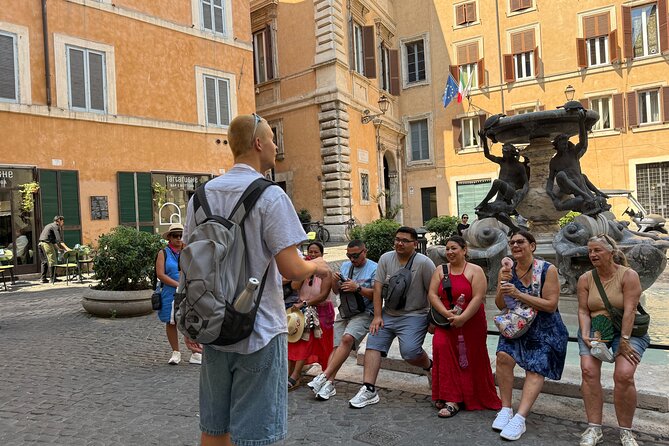
Starting at the Turtle Fountain
The meeting point is Fontana delle Tartarughe, the Turtle Fountain, in the Jewish Ghetto area. You meet by the fountain, where the guide holds a sign with the tour name.
This is a practical starting place because it gives you an attractive landmark to find rather than a vague street corner. The fountain also introduces the walk in a relaxed way before the guide moves into more serious subjects.
The first guided stop lasts about 10 minutes. Use this time to get close enough to hear clearly and to check your walking shoes. The streets become narrower as the walk continues, and traffic can be close in some sections.
The Jewish Ghetto and Rome’s oldest Jewish community
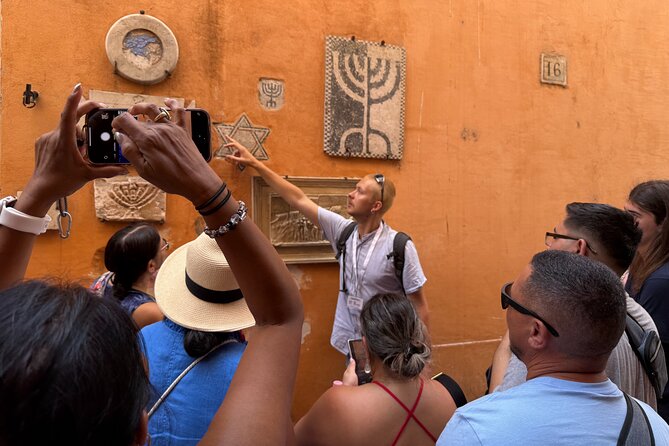
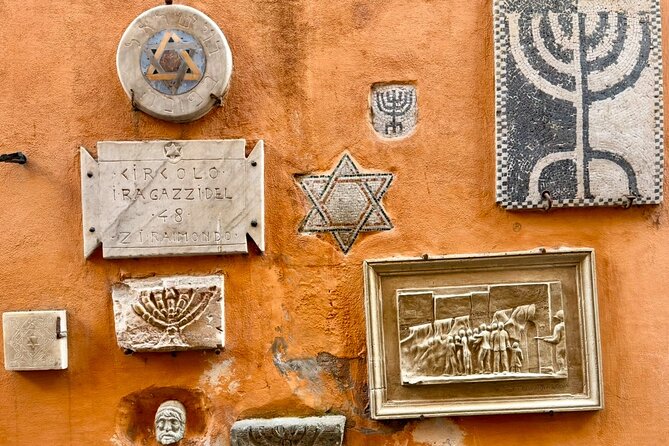
The Jewish Ghetto is the heart of the tour. It is described as the center of Western Europe’s oldest Jewish community, and the guide explains how this part of Rome changed from a prestigious ancient district into a restricted neighborhood under papal rule.
That background matters. The area is not just an attractive collection of old buildings. Its streets carry the memory of forced separation, limited movement, religious pressure, and the daily work of preserving a community’s identity. You learn how faith, family, food, and tradition helped people maintain continuity through long periods of hardship.
The tour also looks at life behind the ghetto walls. That focus on daily experience is one of the strongest reasons to book this walk. A guide can explain how political decisions affected homes, work, worship, and social life in ways that a quick self-guided visit may not reveal.
You should expect a serious section on the persecution of Jewish Romans and the events connected with World War II. Iris, one of the most frequently praised guides, is described as presenting this material with empathy and balance. Ivan is also praised for making difficult subjects understandable while keeping the group engaged.
The tone is not solemn every minute. The tour advertises dark humor and politically incorrect jokes, and several guides are praised for a sharp sense of humor. That can make a long historical explanation easier to follow, but it also means the style may not suit anyone looking for a quiet or strictly formal presentation.
Ancient ruins around the Portico d’Ottavia
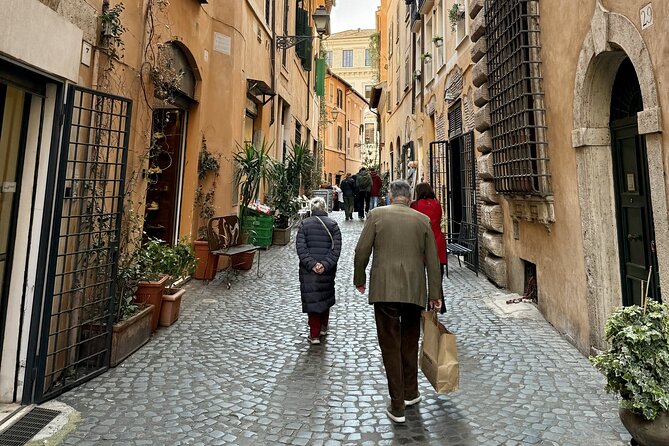
The route passes monumental remains including the Theatre of Marcellus and the Portico d’Ottavia. These ruins help explain why the neighborhood is such an unusual part of Rome: ancient Roman architecture sits beside later religious and residential history.
The Portico d’Ottavia is especially useful as a reference point because it shows how the area developed over many centuries. Your guide places the Jewish community within the larger story of Rome rather than treating it as an isolated subject.
The Theatre of Marcellus also gives you one of the walk’s clearest reminders that Rome is built in layers. You are not visiting a museum with neat boundaries. Ancient remains, religious buildings, homes, restaurants, and modern traffic all occupy the same streets.
Photo stops are built into the visit, but this is not a photography tour. The main value is the explanation of what you are seeing and why it matters.
More City Highlights Walking Tours in Rome
- Rome: City Highlights Walking Tour
★ 4.6 · 368 reviews - Rome Highlights & Hidden Gems Guided Walking Tour
★ 4.8 · 280 reviews - Rome: City Highlights Walking Tour
★ 4.8 · 124 reviews - Rome: Piazza del Popolo and City Sights Free Walking Tour
★ 4.8 · 83 reviews
The Great Synagogue of Rome
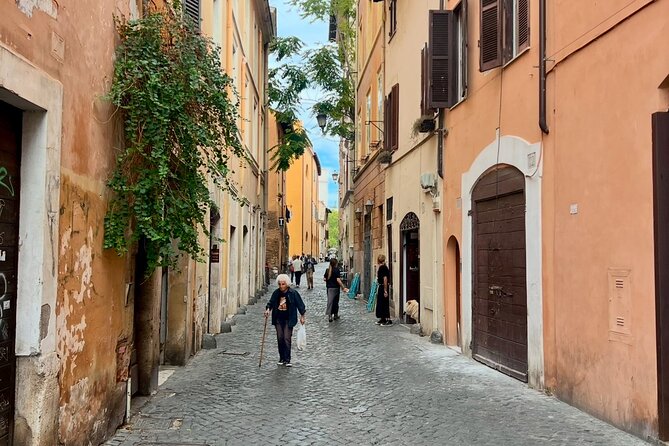
The Great Synagogue is another major stop, with time for a visit, sightseeing, and photographs. The guide uses it to discuss Jewish life in Rome and the meaning of religious continuity in the city.
You should keep your expectations realistic. The supplied details do not promise an interior tour or extended access inside the synagogue, so the experience may focus mainly on the exterior, surrounding area, and historical explanation. The important point is the context: this is not simply another impressive building. It represents the continued presence of a community that has lived in Rome for centuries.
For visitors interested in Jewish history, this part gives the walk its clearest focus. For everyone else, it adds a side of Rome that can be missed when an itinerary is limited to the Colosseum, Trevi Fountain, and Vatican.
Crossing Tiber Island, where myth met medicine
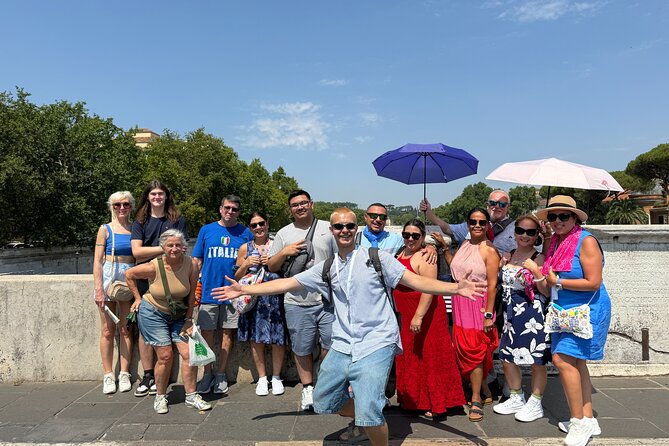
From the Jewish Ghetto, the group crosses toward Tiber Island. The stop is short, about five minutes, but the island gives the route a useful change of setting.
Tiber Island has long been associated with healing and refuge. The guide explains how ancient myth and medicine came together here before modern hospitals existed. That story adds variety after the concentrated discussion of Jewish Roman life.
The island also works well as a visual pause. You get a different view of the river and a chance to reset before entering Trastevere. Because the stop is brief, listen carefully and take photographs quickly if you want them.
Entering Trastevere through medieval streets
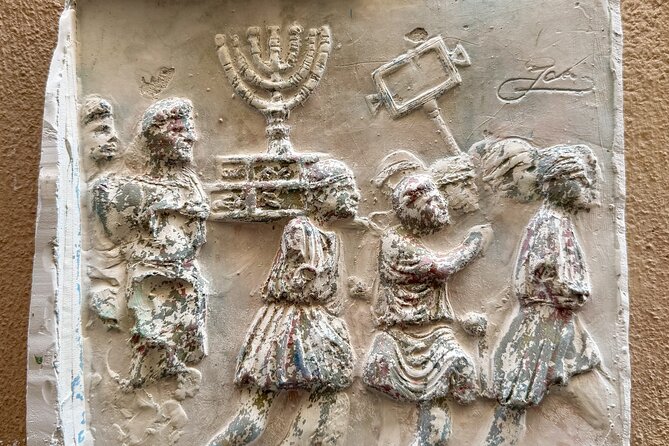
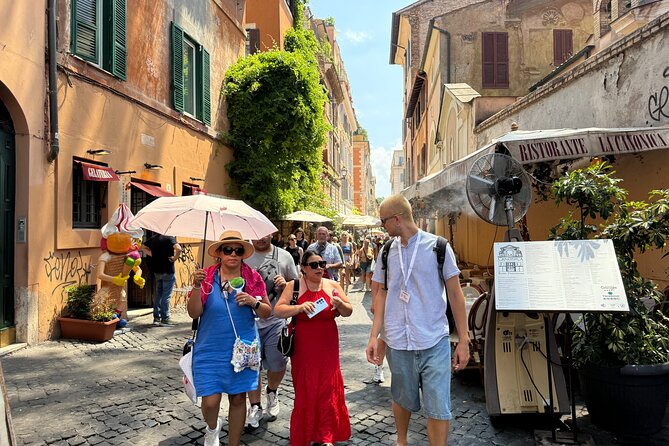
Trastevere is one of Rome’s most recognizable neighborhoods, but this walk aims to show more than its restaurants and evening crowds. The route uses medieval streets, ivy-covered buildings, and smaller stories to explain the area’s reputation for rebellion, passion, and nightlife.
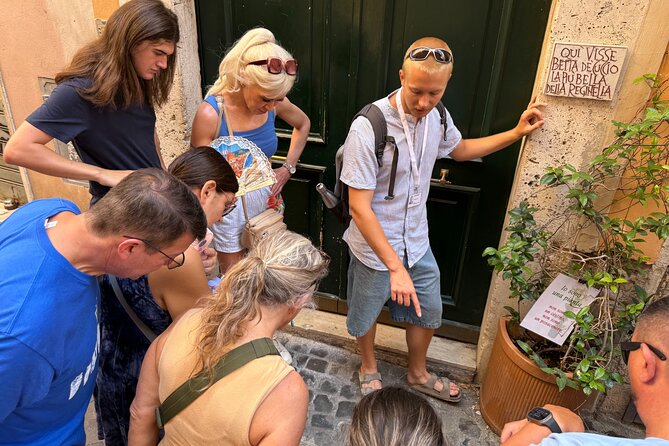
This is where the tour becomes lighter and more playful. The guide discusses legends and unexpected details, including the location associated with Raphael’s lover’s house and clues about the artist’s private life. The story adds Renaissance intrigue without turning the entire stop into an art lecture.
I like this part because Trastevere is best understood through atmosphere as much as monuments. The narrow streets and old façades help you see why the district feels different from the formal center of Rome. At the same time, you should know that the neighborhood can be crowded, especially around popular restaurants and evening gathering places.
Several guides are praised for making this section work for mixed groups. Iris is described as keeping teenagers interested, while Max is praised for being inclusive and making everyone feel involved. That matters if you are traveling with family members who may lose interest during long historical explanations.
Santa Maria in Trastevere and the final Roman atmosphere
Santa Maria in Trastevere is a short guided stop, listed at about five minutes. It gives the tour a clear religious and artistic landmark in the middle of Trastevere.
The visit is brief, so do not expect a full church tour or extended time for quiet inspection. Instead, the guide places the church within the neighborhood’s wider story and helps you notice details you might otherwise pass without understanding.
This part of the route also marks the shift from history lesson to practical Rome advice. Guides are praised for recommending restaurants, bakeries, and places to eat in both the Jewish Ghetto and Trastevere. Those suggestions can be especially useful because the two neighborhoods offer very different dining moods.
If food is a major reason you book the tour, keep in mind that this is not primarily a tasting experience. The included benefit is food recommendations, not a set meal or a series of tastings. One supplied comment refers to food at stops and gluten-free choices, but that appears to describe a separate food tour, so you should not assume food is included here.
Ponte Sisto and Piazza Trilussa
The walk continues to Ponte Sisto, a historic bridge with views over the Tiber. The stop lasts about five minutes and provides another good photo opportunity.
The tour finishes at Piazza Trilussa, a lively square in Trastevere. This is a useful ending because you are left in an area where you can continue walking, stop for a drink, or use the guide’s restaurant advice immediately.
Ending in Piazza Trilussa also makes the tour practical for evening plans. One group particularly enjoyed a 5 p.m. departure because the route moved from daylight into evening. That timing can give you two different views of the neighborhoods, though Rome’s heat and crowds will vary by season.
Guides, pace, and group experience
The most praised feature is the guide quality. Ivan is repeatedly described as funny, clear, well organized, and able to cover centuries of history without losing the group. Iris receives similar praise for her energy, empathy, and storytelling. Max is noted for warmth, humor, and strong command of the subject, while Martina is praised for making families with children feel included.
That range of comments suggests the company has several strong guides, not just one standout. Still, a walking tour is never identical from one departure to the next. The exact balance of history, jokes, questions, and restaurant advice will depend on who leads your group.
Pace deserves attention. Most comments describe a comfortable, manageable walk, but one participant found the group moving at roughly 3.7 to 4 miles per hour. Another described the experience as long on the feet. If you walk slowly, have mobility limits, or want plenty of time at every stop, tell the guide early and stay near the group.
The route is not described as accessible for wheelchairs or people with significant mobility limitations. It uses historic streets and lanes, so you should ask the provider directly if that is important for your plans.
What the $3.77 price really means
The listed price of $3.77 looks almost too low for a guided Rome walk. It is a booking fee, not the full expected cost.
This is a pay-what-you-want tour. The guides work for tips, and the stated usual amount ranges from €15 to $50. That broad range reflects different group sizes, guide performance, and personal budgets, but you should include a meaningful tip in your Rome budget before booking.
At the lower end, the tour can be excellent value for a compact introduction to two important neighborhoods. At the higher end, it costs more like a standard paid walking tour, but the guide may provide two hours or more of explanation and advice. Several groups report tours lasting longer than the advertised 87 minutes, including one that lasted over two hours and another described as 2.5 hours.
The model has one advantage: you can decide what the experience was worth. The drawback is less certainty about the final cost, and one comment shows that confusion about tipping can affect the end of the experience. Bring enough cash or be prepared to use the payment method available through the guide.
Who should book this walk?
I would recommend it to you if you want historical context, local food suggestions, and a first look at Trastevere without spending a full day on a formal museum tour.
It is especially well suited to:
- First-time visitors who want neighborhoods beyond Rome’s headline sights
- Visitors interested in Jewish history and the survival of communities
- Families with older children or teenagers who respond to humor and stories
- Food-minded visitors who want restaurant and bakery advice
- People who enjoy a guide with personality rather than a strictly academic lecture
You may want another option if you dislike dark humor, need a very slow pace, or want substantial time inside churches and monuments. You should also avoid assuming that the $3.77 booking price is your final expense.
Booking is flexible: you can cancel up to 24 hours in advance for a full refund, and reserve without paying immediately. Starting times vary, so check availability for your chosen date.
Should you book the Jewish Ghetto and Trastevere walk?
Yes, if you want a short but serious introduction to two neighborhoods that reveal a less polished, more human side of Rome. The Jewish Ghetto supplies the emotional and historical weight, while Trastevere brings medieval streets, legends, food advice, and evening energy.
The best reason to book is the quality of the storytelling. Ivan, Iris, and Max are repeatedly praised for making complicated history clear and entertaining. Just wear comfortable shoes, allow more than 87 minutes if the group runs long, and plan for a tip that reflects the guide’s work.
FAQ
Where does the Jewish Ghetto and Trastevere tour begin?
It begins at Fontana delle Tartarughe, also called the Turtle Fountain. The guide holds a sign with the name of the tour.
Where does the tour finish?
The walk finishes at Piazza Trilussa in Trastevere.
How long does the tour last?
The advertised duration is 87 minutes. Some departures have lasted two hours or more, so you should allow extra time.
What language is the tour offered in?
The live guided tour is offered in English.
Is the tour free?
It uses a pay-what-you-want model, but the booking price is listed as $3.77 per person. You are expected to tip the guide afterward.
How much should I tip the guide?
The stated usual tip is between €15 and $50. You can decide the final amount based on your budget and how you value the experience.
What sights are included?
The route includes Fontana delle Tartarughe, the Jewish Ghetto, the Great Synagogue of Rome, Tiber Island, Trastevere, Santa Maria in Trastevere, Ponte Sisto, and Piazza Trilussa.
Does the tour include food?
Food recommendations are included, but the experience does not state that meals or tastings are included.
Can I cancel the booking?
Yes. You can cancel up to 24 hours in advance for a full refund. You can also reserve now and pay later.
More Jewish Heritage Walking Tours in Rome
- Rome: Jewish Ghetto Walking Tour
★ 4.7 · 274 reviews - Rome: Trastevere and Roman Ghetto Guided Walking Tour
★ 4.7 · 79 reviews - Amsterdam Anne Frank: Small-Group Walking Tour & Local Guide
★ 4.8 · 12,789 reviews - Anne Frank’s Story – Guided Walking Tour through Amsterdam
★ 5.0 · 11,619 reviews
Just added around Rome
- Rome: Colosseum and Ancient Rome Guided Walking Tour★ 4.5 · 95 reviews
- Rome: Trevi Fountain, Spanish Steps & Pantheon Walking Tour★ 4.6 · 336 reviews
- Rome: Guided Walking Tour and Pantheon Priority Entry Ticket★ 4.3 · 317 reviews
- Rome Walking Tour: Pantheon, Trevi, Navona & Hidden Gems★ 4.8 · 501 reviews
- Rome: Trastevere Food Walking Tour with Beer and Wine★ 4.9 · 71 reviews
- Rome Trastevere Walking Food Tour★ 4.8 · 97 reviews
- Rome: Underground Trastevere Guided Walking Tour★ 4.8 · 87 reviews
- Rome: Trastevere and Roman Ghetto Guided Walking Tour★ 4.7 · 79 reviews
Jewish Heritage Walking Tours, compared.

Amsterdam Anne Frank: Small-Group Walking Tour & Local Guide
Read our review →
Anne Frank’s Story – Guided Walking Tour through Amsterdam
Read our review →
Jewish Quarter Walking Tour with Admission Tickets
Read our review →
Anne Frank Guided Walking Tour in DE/EN/IT/ES
Read our review →
Old Town and Jewish Quarter Guided Walking Tour
Read our review →

Anne Frank Walking Tour Amsterdam Including Jewish Cultural Quarter
Read our review →