Review · CITY HIGHLIGHTS WALKING TOURS
Rome: Piazza del Popolo and City Sights Free Walking Tour
Rome rewards curious walkers. This 2.5-hour tour links Piazza del Popolo with Castel Sant’Angelo while adding stories about ancient Rome, Christianity, architecture, and lesser-known sights. I like its central starting point and the chance to hear practical restaurant and nightlife advice from a local guide. The main consideration is simple: the advertised $3.54 price is not the full cost, since this is a tip-based tour.
I also like that the pace leaves room for questions, photos, and a short break for gelato, coffee, or the toilet, as one guest noted. Guides such as Lucio, Nick, Alessandro, Joan, and others have earned especially warm praise for their clear explanations and lively style. Still, this is a walking tour, not a ticketed monument tour, so you should not expect entry inside Castel Sant’Angelo or other attractions.
Key points to know before you go
- Piazza del Popolo gives you a dramatic start: Begin beside Ramesses II’s tall obelisk, surrounded by grand architecture and sculpture.
- The route connects famous and less obvious sights: You walk from the square through the Porto del Popolo area toward Castel Sant’Angelo.
- Guides are the main attraction: Lucio and Nick are especially praised for making Roman history easy to follow, while Joan was appreciated for pointing out important women in history.
- The tour is tip-based, not truly free: The displayed booking price is $3.54 per person, but you should budget an additional tip.
- It works best early in your stay: The restaurant, nightlife, and sightseeing advice can help shape the rest of your time in Rome.
- Expect a 2.5-hour outdoor walk: Wear comfortable shoes and allow time for stops, questions, and photographs.
Starting beneath the gates of Piazza del Popolo
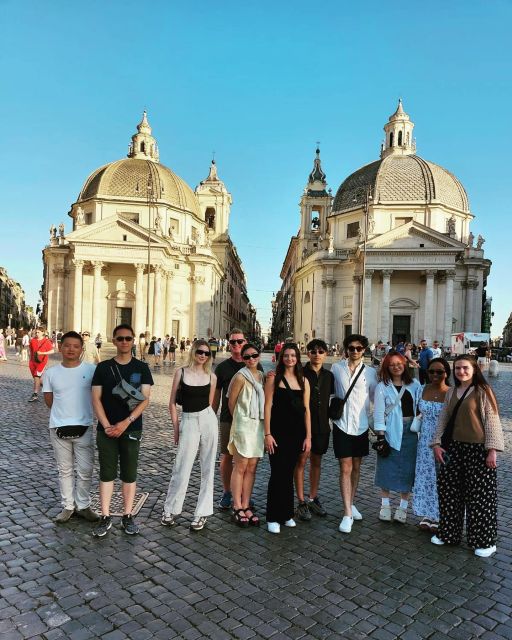
The meeting point is outside the arches and entry gates of Piazza del Popolo. This is a useful place to begin because the square is easy to recognize, spacious, and packed with clues about Rome’s past before the walk even starts.
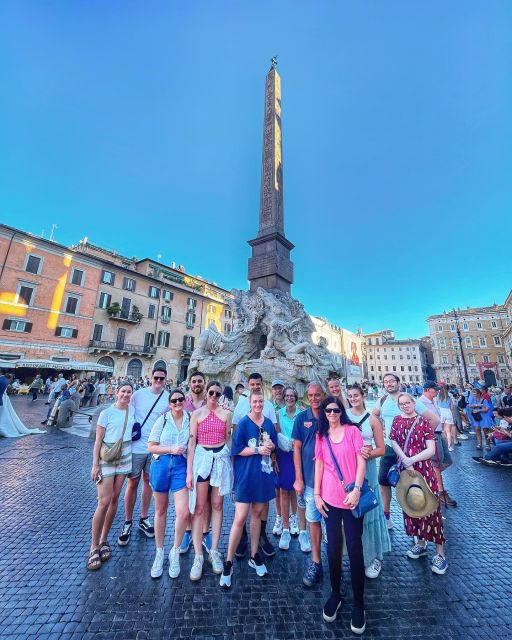
At the center rises the obelisk of Ramesses II, brought to Rome in antiquity. Around it, you can look up at marble columns, statues, churches, and the broad shape of one of the city’s grand public squares. I like this opening because it gives you a quick lesson in Rome’s habit of borrowing, adapting, and reusing objects from different periods.
Your guide begins with the city’s ancient past and the roots of Christianity. That matters because Rome can otherwise feel like a pile of separate monuments. A good explanation helps you connect the empire, the spread of Christianity, the city’s churches, and its later defensive buildings.
The square is also a good test of the guide’s style. You will be standing outdoors, listening while other people move around you, so clear speaking matters. Several guides have been praised for being easy to follow, friendly, and willing to answer questions. Nick, Lucio, and Alessandro are among the names that appear repeatedly in the tour feedback, though the guide assigned to your departure may be different.
More City Highlights Walking Tours in Italy
- Rome: Guided City Center Evening Sightseeing Walking Tour
★ 4.4 · 953 reviews - Rome: Small-Group City Highlights Moonlight Walking Tour
★ 4.9 · 949 reviews - Rome: Guided Small Group Walking Tour of City Highlights
★ 5.0 · 682 reviews
Understanding the Porto del Popolo
The route continues to the city gate known in the tour details as Porto del Popolo. It forms the boundary between Piazza del Popolo and Piazzale Flaminio and belongs to the Aurelian Walls, the great defensive circuit built around ancient Rome.
This stop is valuable because a gate can tell you how Rome functioned, not just how it looked. It marked movement into the city and connected the urban center with roads leading outward. The marble columns and statues add beauty, but the larger point is practical: Rome’s grand entrances were built to control traffic, impress visitors, and show power.
I would pay close attention here to the guide’s explanation of how the city changed over time. The tour promises amusing tales and lesser-known details, and this is the kind of place where a short story can make an ordinary-looking arch much more memorable.
The tour does not treat every stop as a rushed photo opportunity. One guest specifically appreciated having time for pictures, while another enjoyed being taken to places that were not on the usual must-see list. That balance is important in Rome. The major monuments are impressive, but smaller details often help you understand how the city fits together.
Stories of ancient Rome and early Christianity
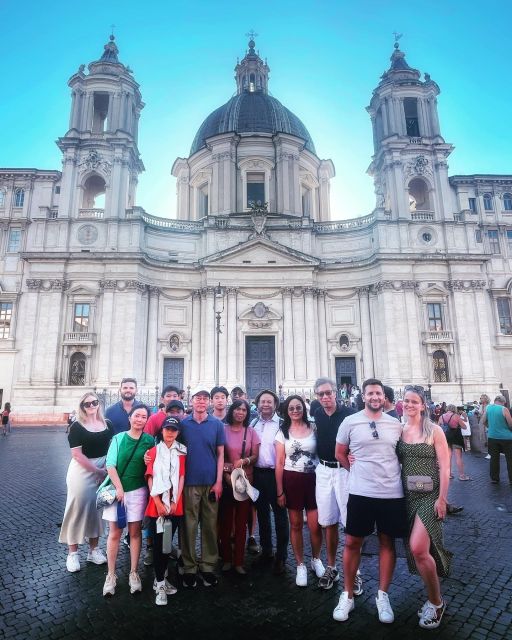
The historical part of the walk covers broad ground, from ancient Rome to the origins of Christianity. That gives the tour a useful role at the start of a visit. You are not simply collecting dates. You are building a framework for understanding why the city has so many layers.
The guides have been praised for explaining Roman architecture and history in a way that is easy to follow. Several people found the talks interesting for the full 2.5 hours, which is no small achievement on a walking tour. One person who normally loses interest after an hour said the guide kept the group engaged until the end.
The tone appears to be conversational rather than stiff. You can ask questions as you walk, and the guides are described as friendly, funny, and enthusiastic. Joan was singled out for pointing out historical women, an approach that adds welcome balance to a subject often dominated by emperors, generals, and popes.
Still, the value depends heavily on the individual guide. A walking tour has no audio system, museum exhibits, or printed displays to carry the experience. If the guide speaks clearly and tells a good story, the route feels lively. If the group is large or the street is noisy, you may need to stay close and listen carefully.
Walking toward Castel Sant’Angelo
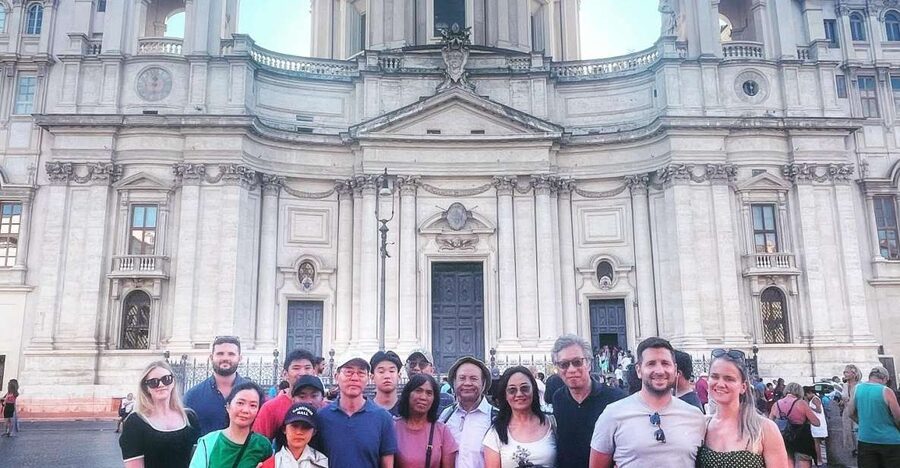
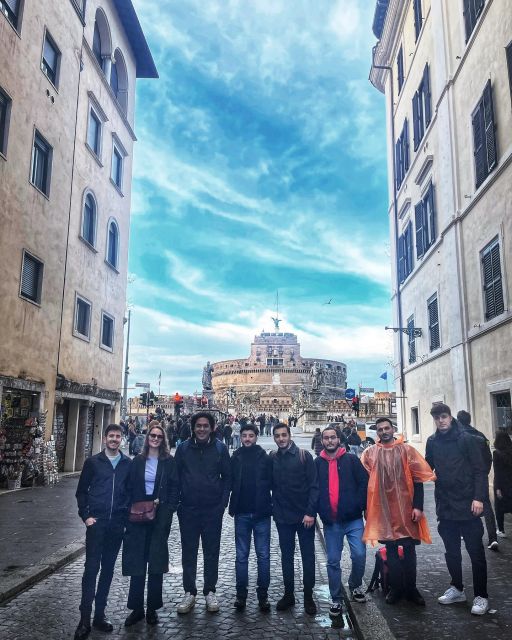
The tour’s major destination is Castel Sant’Angelo. Emperor Hadrian built it as a mausoleum, and it was later converted into a castle around the 14th century. That change of purpose captures Rome in one building: a monument can begin as an imperial tomb, then become part of the city’s military and political life.
You will appreciate the fortress more after hearing how its role changed. Its heavy form makes sense when you see it not only as a landmark, but also as a defensive building. The guide’s job is to connect the structure you see with the people and events that shaped it.
This tour takes you to the castle, but the supplied information does not include admission inside. Plan on viewing it from the route unless you arrange a separate visit. That is an important distinction for anyone comparing this walk with a paid Castel Sant’Angelo ticket or a guided interior tour.
The walk to the castle also gives you a chance to get your bearings in central Rome. Several people liked using the tour to learn which places deserved a second visit on their own. I find that one of the best uses of a first-day walking tour: you see the city once with a guide, then return later to explore the places that caught your attention.
More City Highlights Walking Tours in Rome
- Rome: City Highlights Walking Tour
★ 4.6 · 368 reviews - Rome Highlights & Hidden Gems Guided Walking Tour
★ 4.8 · 280 reviews - Highlights of Jewish Ghetto And Trastevere Walking Tour
★ 4.8 · 233 reviews - Rome: City Highlights Walking Tour
★ 4.8 · 124 reviews
Local food and nightlife advice
The tour includes tips on restaurants and suggestions for nightlife. These extras can be more useful than they sound, especially if Rome is new to you and you want advice beyond the standard sightseeing list.
Do not expect a full food tour. The information provided does not promise tastings, restaurant visits, or reservations. Instead, you receive local suggestions during the walk. Use the opportunity to ask direct questions about the kind of evening you want, since the usefulness of restaurant advice depends on your budget, location, and taste.
The same applies to nightlife. The guide can point you toward areas and options, but the tour does not promise entry to venues or a planned evening after the walk. Treat the advice as a starting point for your own plans.
I would save a note on your phone during the tour. Rome offers too many names, streets, and suggestions to remember all of them later. If your guide gives you a restaurant or neighborhood recommendation, ask for the name again before the tour ends.
Why the guides receive so much praise
The strongest part of this experience is the guide. Lucio is repeatedly praised for his historical and architectural explanations, his friendly manner, and his ability to keep the walk interesting. Nick receives similar praise for clear storytelling, passion, humor, and his ability to point out places that are easy to miss.
Other guides have also made a good impression. Alessandro was described as excellent, while Joan was appreciated for drawing attention to historical women. The range of positive comments suggests that the operator has several guides who know how to handle a history-focused walk.
What should you look for in a good guide? First, the ability to explain without turning the tour into a lecture. Second, enough flexibility to answer questions and adjust the pace. Third, a sense of humor that helps the information stick.
The feedback points to all three. People enjoyed asking questions, found the explanations easy to understand, and felt the time passed quickly. A small group was also praised for creating a pleasant atmosphere, although the exact group size is not specified and may vary.
The pace, break, and physical side
The tour lasts about 2.5 hours and takes place on foot. You will be outside for most of it, moving between public squares, streets, gates, and landmarks. Comfortable shoes are the sensible choice.
There is no detailed route map or elevation information, so I would not assume a completely flat or effortless walk. Rome’s central streets can be uneven, and you may spend time standing while the guide speaks. The activity is listed as wheelchair accessible, but you may still want to confirm the precise route and current conditions if you have mobility concerns.
One person noted a break for gelato, coffee, and the toilet. That is useful during a long city walk, though the details of the stop are not fixed in the tour information. Bring water, especially in warm weather, and leave room for photographs.
The schedule is long enough to provide substance but short enough to fit into a morning or afternoon. You should not plan another fixed activity immediately afterward, since the tour may finish close to its stated duration and you may want time for questions or a quick stop.
Is the $3.54 price really a bargain?
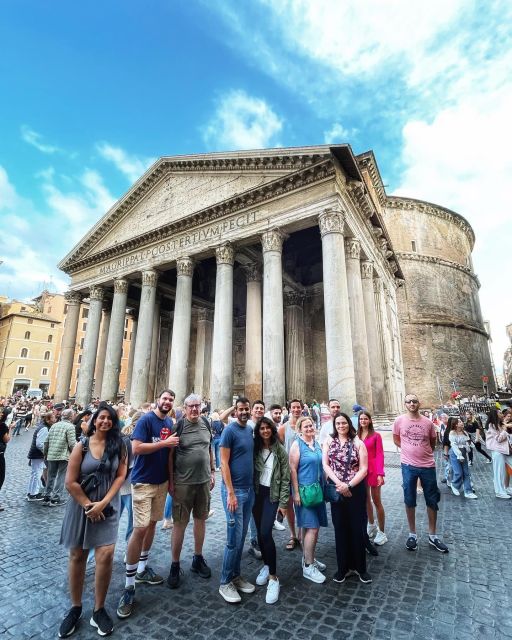
The displayed price is $3.54 per person, which looks extremely low for a 2.5-hour tour in central Rome. But this is a tip-based experience, so the booking price should not be treated as the final amount.
The better way to judge the value is to ask what you want from the walk. If you need a basic introduction to Rome, a route between important sights, and practical advice for the rest of your stay, the cost can be excellent. You are paying a small booking amount, then deciding what the guide’s work was worth through a tip.
That arrangement also gives you some flexibility. One person appreciated being able to choose how much to pay, especially after leaving early because some sights were already familiar. Still, you should budget fairly for the full 2.5-hour service rather than assuming the advertised price covers everything.
There are no attraction admissions included. The listed inclusions are the walking tour and the live English-speaking guide. You will need separate plans and tickets if you want to enter Castel Sant’Angelo or visit other paid sights.
Who should book this Rome walking tour?
I would suggest it to first-time visitors who want a clear introduction before tackling the Colosseum, Vatican, or other major attractions. The historical background can make later visits more meaningful, and the route helps you understand the relationship between Rome’s squares, gates, roads, and fortifications.
It also suits independent visitors who like to explore on their own but want a local orientation first. Several people used the tour to decide which areas to revisit later, and the restaurant and nightlife tips add practical value.
History fans should enjoy the focus on ancient Rome, Christianity, architecture, and the changing role of Castel Sant’Angelo. The tour also works for people who normally avoid formal sightseeing because they prefer an informal walk with questions and stories.
I would be more cautious if you want entry into monuments, a specialist Vatican or ancient Roman archaeology tour, or a fully scheduled food experience. This walk introduces the city from the outside. It does not replace a detailed tour inside the major sites.
Book it near the first or second day of your Rome stay if you can. That is when the orientation, local advice, and suggestions for later visits are most useful. English is the tour language, and free cancellation is available up to 24 hours before the start time. You can also reserve now and pay later, which helps if your schedule is still taking shape.
Should you book the Piazza del Popolo tour?
Yes, if you want a friendly introduction to central Rome with strong storytelling and useful advice for the rest of your trip. The best reasons to choose it are the central route, the mix of famous and less obvious sights, and guides such as Lucio and Nick, who are praised for keeping history clear and engaging.
Go in with the right expectations. This is a tip-based outdoor walk, not a paid-entry monument tour. Budget for a tip, wear comfortable shoes, stay close to the guide, and use the tour to mark places you want to explore later.
For first-time visitors, the low booking price and broad historical route make this an easy way to get oriented. For repeat visitors, it may still be worthwhile if you want a different angle on Piazza del Popolo, the Aurelian Walls, and Castel Sant’Angelo.
FAQ
Where does the tour meet?
Meet the guide outside the arches and entry gates into Piazza del Popolo.
How long does the tour last?
The walking tour lasts 2.5 hours.
What language is the tour in?
The live tour guide speaks English.
Is the tour free?
It is tip-based. The displayed price is $3.54 per person, but you should also plan to tip the guide.
What is included?
The walking tour and tour guide are included.
Does the tour enter Castel Sant’Angelo?
The tour walks to Castel Sant’Angelo, but the provided information does not include admission inside the fortress.
Is the tour wheelchair accessible?
Yes, the activity is listed as wheelchair accessible.
Can I cancel the booking?
Yes. You can cancel up to 24 hours in advance for a full refund.
Can I reserve now and pay later?
Yes. You can reserve your place and pay later to keep your plans flexible.
More Free Walking Tours in Rome
- Ghosts, Legends & Mysteries of Rome Tip-Based Walking Tour
★ 4.7 · 284 reviews - Paris City Center Free Walking Tour (Tip-Based)
★ 5.0 · 1,340 reviews - Budapest Historical Sightseeing – Free Walking Tour
★ 5.0 · 1,302 reviews - Discover Helsinki – Tip-based Tour by RED UMBRELLA – 2026
★ 5.0 · 368 reviews
Just added around Rome
- Rome: Colosseum and Ancient Rome Guided Walking Tour★ 4.5 · 95 reviews
- Rome: Trevi Fountain, Spanish Steps & Pantheon Walking Tour★ 4.6 · 336 reviews
- Rome: Guided Walking Tour and Pantheon Priority Entry Ticket★ 4.3 · 317 reviews
- Rome Walking Tour: Pantheon, Trevi, Navona & Hidden Gems★ 4.8 · 501 reviews
- Rome: Trastevere Food Walking Tour with Beer and Wine★ 4.9 · 71 reviews
- Rome Trastevere Walking Food Tour★ 4.8 · 97 reviews
- Rome: Underground Trastevere Guided Walking Tour★ 4.8 · 87 reviews
- Rome: Relics from the Passion of the Christ Walking Tour★ 4.9 · 84 reviews
City Highlights Walking Tours, compared.

Historic Charleston Guided Sightseeing Walking Tour
Read our review →
Dublin Highlights and Hidden Gems Guided Walking Tour
Read our review →
Guided Walking Tour of City Center Highlights
Read our review →

City Highlights Temple and Market Walking Tour
Read our review →
Montmartre Hidden Gems and Scenic Highlights Walking Tour
Read our review →