
Review · ITALY WALKING TOURS
Lucca: Renaissance City Walls Walking Tour
Lucca’s best viewpoint is also its old defense line. I like the tree-lined walkway for its easy pace and broad views over the historic center, and I like that this tour takes you inside the walls, where huge brick vaults and restored rooms reveal the practical side of Lucca’s past. At $17, it offers more than a simple stroll.
The main thing to consider is the bilingual format. Guides such as Roberta and Paola have been praised for their clear, lively explanations, but an English and Italian tour can take longer to cover the same ground. If the guide divides the two languages evenly, the two-hour experience may feel shorter in your chosen language.
Key points to know before you go
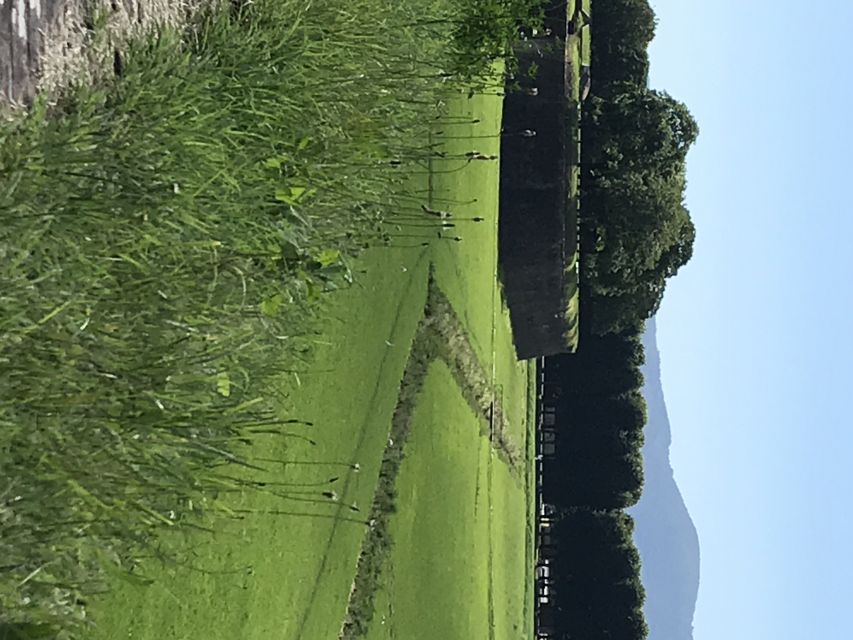
- The walls are a public park: You walk along a broad, tree-lined path that circles Lucca’s historic center.
- The interior is the real bonus: The tour enters bastions, galleries, and restored rooms that many independent walkers miss.
- The brick vaults once protected cannons: Their scale helps you understand how the fortifications worked.
- The walls were built in the Renaissance: Your guide explains the changes in Italian military engineering from the 13th to the 17th centuries.
- The tour costs $17 per person: That is a fair price for two hours with a live bilingual guide.
- Comfort matters: Wear good walking shoes, arrive 10 minutes early, and plan for rain or shine conditions.
Why Lucca’s walls are more than a pretty walk
Lucca is wrapped in one of Europe’s finest surviving systems of Renaissance fortification. Today, the walls form a wide public park around the historic center, but their present calm can hide their original purpose. They were designed to control movement, protect the city, and house heavy artillery.
I like this tour because it helps you see both sides of the monument. From above, the walls are pleasant and open, lined with different types of trees. Inside, they become solid, dark, and highly practical. You move between the city and its outer edge through spaces built for soldiers, weapons, and storage.
That contrast gives the visit its value. A casual walk shows you the shape of Lucca. A guided walk explains why the walls were built in that shape and how military technology changed over several centuries.
The tour lasts two hours, which is enough time to cover the main ideas without turning the experience into a full-day history lesson. You should still expect much of the visit to involve walking, standing, and listening, so comfortable shoes are important.
A few more walks around Italy worth a look
- Venice: Doge’s Palace and St Mark’s Basilica Walking Tour
★ 4.4 · 6,291 reviews - Milan: Guided Walking Tour & Last Supper Visit with Ticket
★ 4.7 · 5,409 reviews - Naples: Street Food Walking Tour with Local Guide
★ 4.9 · 4,976 reviews
Meeting the guide near the tourist information center
The meeting point is by the entrance of the tourist information center. You should arrive about 10 minutes before the scheduled start. That small buffer matters in Lucca, where the old center has many lanes and public spaces that can make a first meeting point less obvious than expected.
The activity returns to the same meeting point at the end. You do not need to arrange separate transport, and the tour fits neatly into a day built around Lucca’s historic center.
The guide speaks English and Italian. This makes the experience suitable for visitors from both language groups, but you should pay attention to how the explanation is delivered at the start. A bilingual format can mean that each point is explained twice. One review praised the guide’s expertise but found that only about 45 minutes of the 90-minute walking portion was in English. Another noted that the guide had to move quickly between languages.
The listed duration is two hours, so the exact balance may vary. If you want a full English presentation, ask at the beginning how the tour will be organized. That simple question can help you set expectations.
Walking the tree-lined path around Lucca
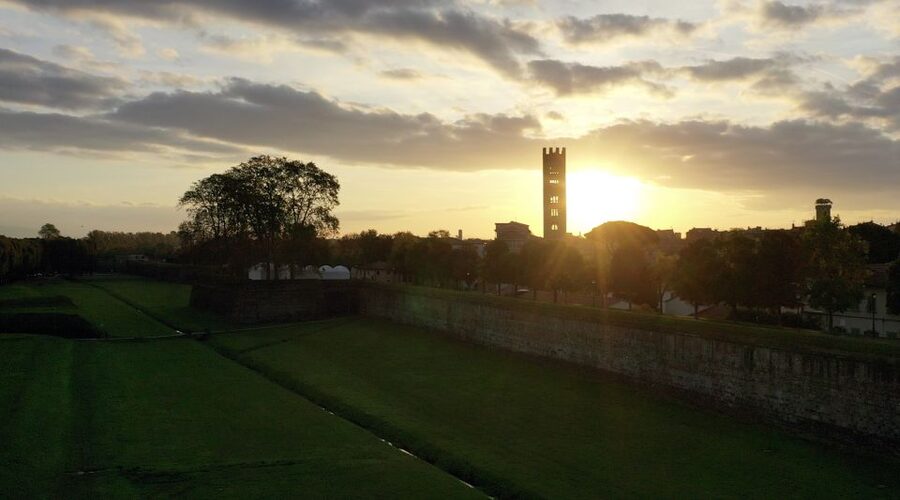
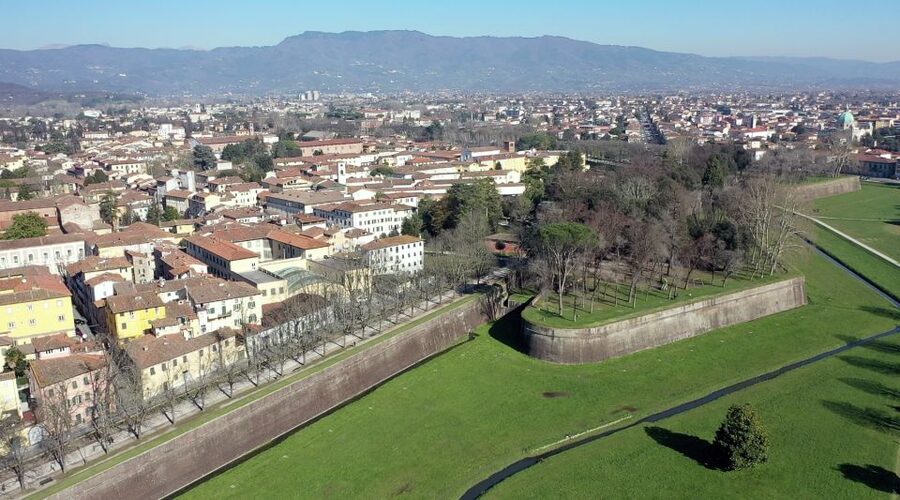
The first major part of the tour takes place on the walls themselves. Rather than walking beside a narrow stone barrier, you use a broad path that runs around the historic center. It functions as a public park, with trees along the route and room for a steady walking pace.
This is one of the most pleasant ways to get your bearings in Lucca. The walls define the city clearly, allowing you to understand the compact shape of the old center. Instead of seeing individual streets one at a time, you get a sense of how the entire city was enclosed and defended.
Your guide adds the details that a solo walk would miss. You learn about the wall’s development and the wider changes in Italian military engineering from the 13th through the 17th centuries. That time span is useful because the fortifications were not simply one project built in one moment. They reflect changing weapons, changing defensive ideas, and the growing need for stronger city boundaries.
The walk is not only about warfare. The walls now belong to daily Lucca. Their path is a place to stroll, pause, and look across the city. That present-day use helps you understand why the monument matters to local residents as well as visitors.
I would not treat this as a strenuous hike. Still, the tour takes place outdoors and continues in all weather. Bring shoes that are comfortable for two hours of walking, and dress for rain if the forecast looks uncertain. The activity runs rain or shine, so a light waterproof layer can save the day.
Entering the bastions and restored rooms
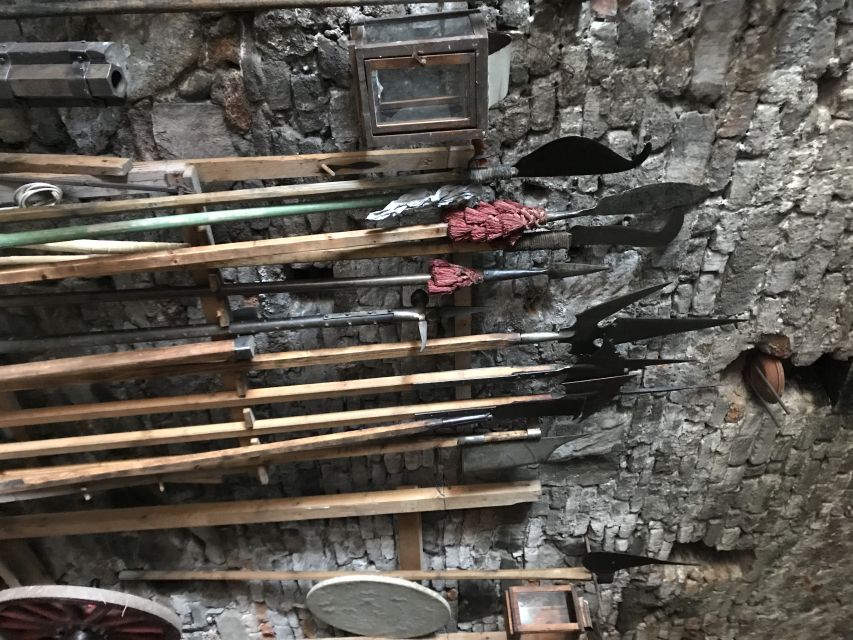
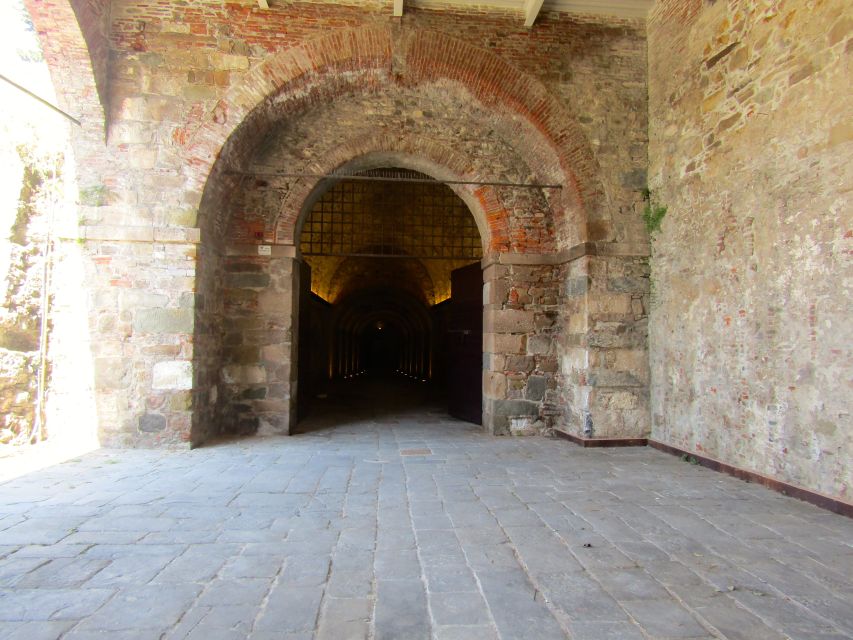
The most distinctive part of the experience comes when you leave the open path and enter the interior of the walls. The tour visits the bastions, galleries, and rooms recently restored for public access.
From the outside, a bastion can look like a broad mound or thick section of fortification. Inside, it becomes easier to understand the volume of material needed to protect a city. You see passages and rooms designed to connect the inner city with the outer side of the defenses.
The bastions have an interesting twist: they were never used for defensive purposes. That does not make them pointless. Their design still shows how military planners thought about angles, cover, movement, and artillery. Your guide can explain the difference between a structure built for defense and one that mainly supported a larger defensive system.
The restored rooms also give the tour a stronger sense of place. You are not only hearing about a monument from a path above it. You are entering the monument itself, moving through spaces that were once closed or difficult to access.
This is where the tour earns its price. You could walk on the walls without paying anything, but the interior requires interpretation. The guide connects the rooms to the larger story instead of leaving you to guess what each dark passage was for.
Same streets, a different way to see them:
- Florence: Highlights Walking Tour with Expert Guide
★ 4.6 · 4,662 reviews - Venice: San Marco to Rialto Walk & Spritz Like a Local
★ 4.2 · 3,651 reviews - Venice Walking Tour and Gondola Ride
★ 3.5 · 3,630 reviews - Uffizi & Accademia Timed Entry: Small Group Duomo Walking Tour
★ 4.5 · 3,630 reviews
Seeing the immense brick vaults
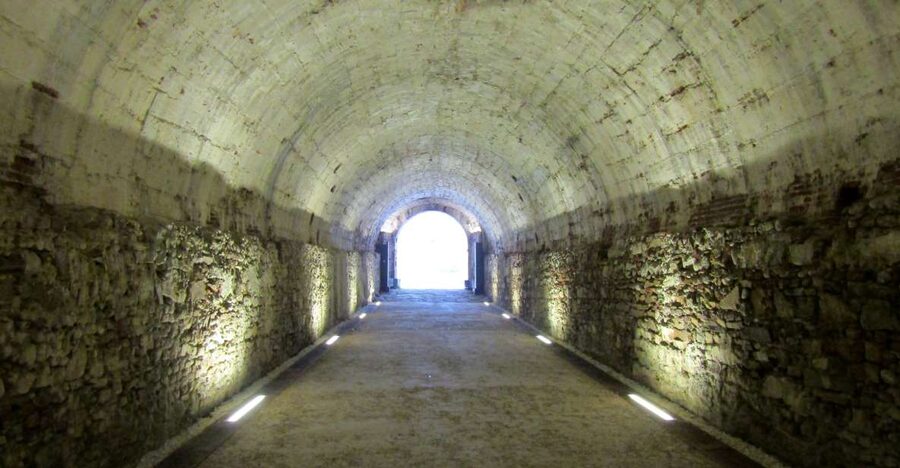
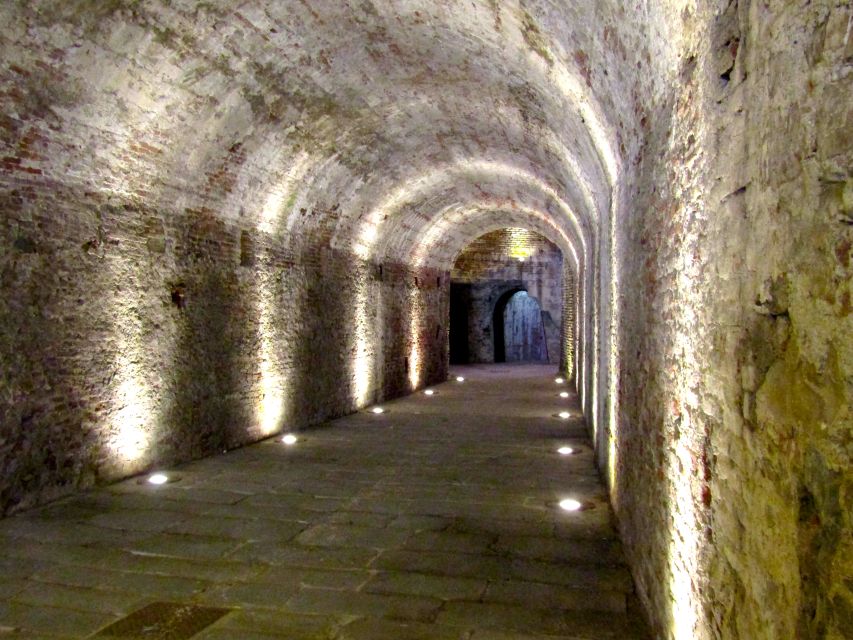
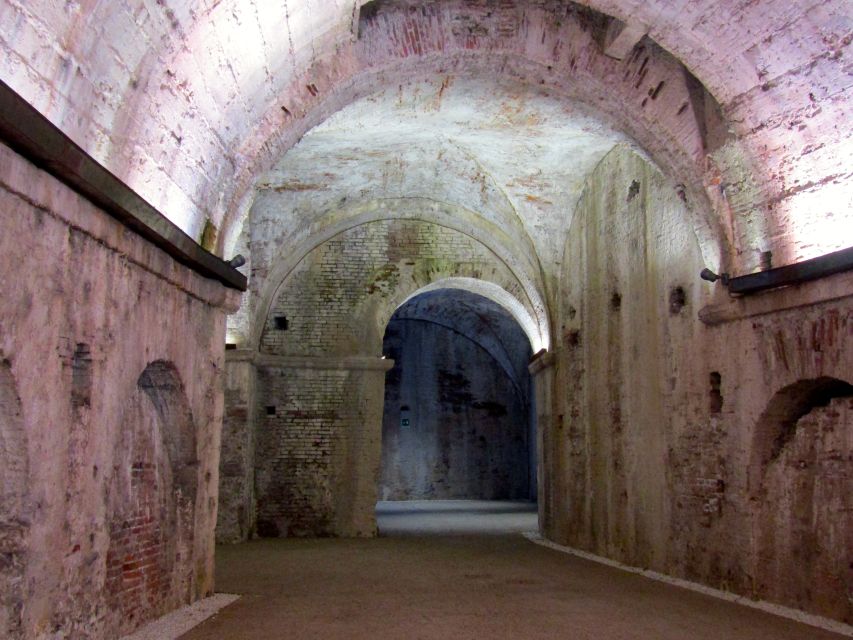
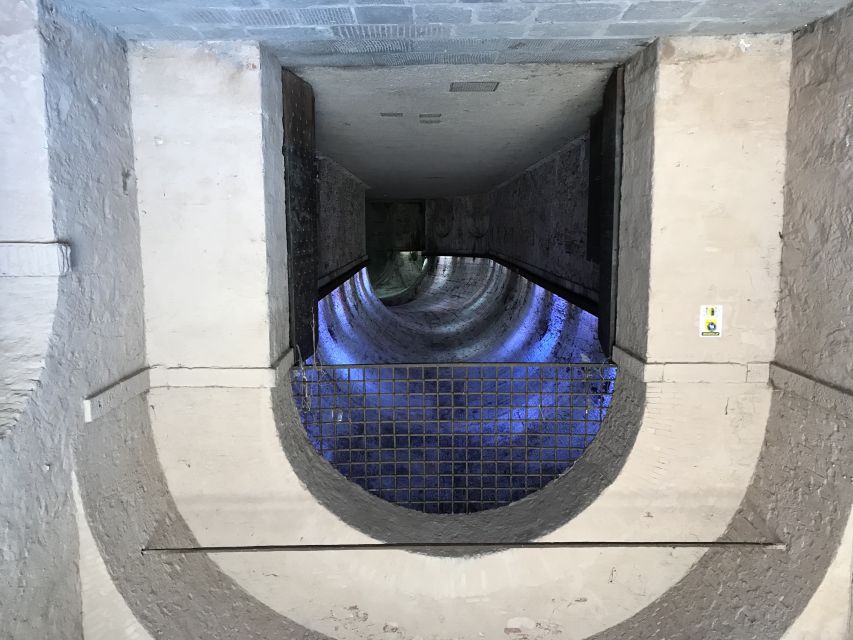
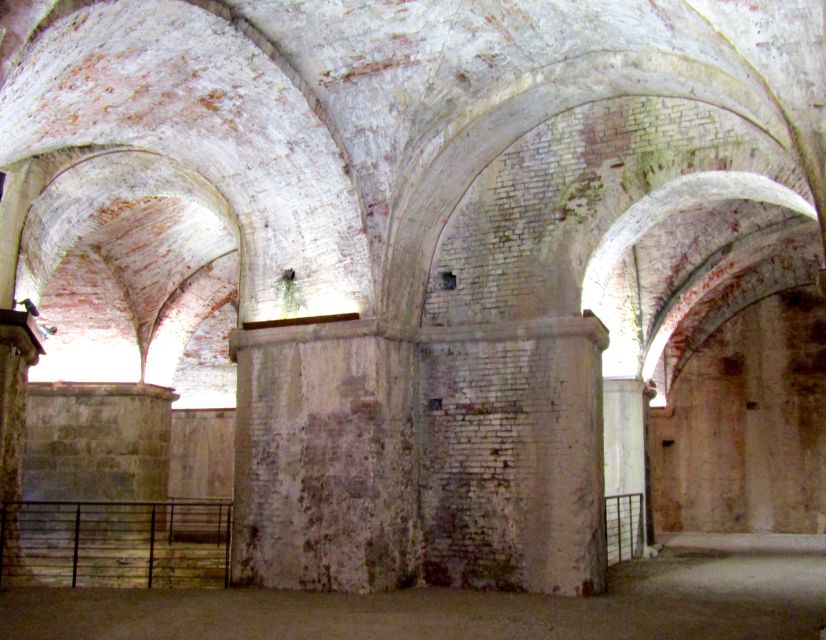
The interior galleries are the visual highlight. Their immense brick vaults were built to hide heavy bronze cannons. Even if you have little interest in military architecture, the scale of these rooms makes the purpose clear.
Brick was not used here as decoration. It formed a strong, practical structure that could cover large spaces and shelter weapons. The galleries show how much planning went into moving and protecting artillery inside a city wall.
I find this part especially useful because it corrects a common impression. From the outside, historic walls can look like simple barriers. Inside, they are systems of corridors, rooms, openings, and covered positions. The vaults reveal the engineering beneath the scenic walk.
Your guide is also important here. The interior may not explain itself easily. A local guide can point out why the galleries were shaped as they were and how they related to the cannons. Roberta and Paola have received particular praise for clear explanations and enthusiasm for Lucca, while another guide, Paula, was praised for explaining both the old and modern functions of the walls.
Because the interior areas may feel more enclosed than the walkway, listen carefully and take your time looking up and around. The brickwork is part of the experience, not just a backdrop for the history talk.
Understanding Lucca’s changing military engineering
The tour’s historical scope reaches from the 13th to the 17th century. That is a useful frame for understanding why Lucca needed substantial fortifications and why the walls took their final Renaissance form.
Your guide explains the evolution of Italian military engineering rather than presenting the walls as a single frozen object. As weapons improved, city defenses had to change. Thick walls, protected galleries, and spaces for artillery all became part of the answer.
You do not need prior knowledge to follow the tour. The best guides use the physical spaces to explain the subject. A passage can show how people moved through the fortification. A vaulted room can explain where cannons were kept. A bastion can show how the defensive plan extended beyond the central wall.
This approach also keeps the tour from becoming a list of dates. You are learning through the building itself. That makes the history easier to remember and gives you more to notice when you walk through Lucca later.
The tour is strongest when the guide connects past and present. The walls protected the city in another era, but today they are a public route and a much-loved part of local life. You get both meanings in one visit.
How the bilingual format affects the experience
The bilingual format is the one practical concern I would take seriously. A guide speaking English and Italian can serve both groups, but every explanation may take longer. That can produce a slower start and a quicker finish, especially if the guide is trying to cover a large amount of material.
One person found the tour slow at first, then much better once the history and interior sections began. That matches the structure of the experience. The opening walk may seem simple until the guide starts explaining the walls as a complete defensive system.
If you are comfortable listening in both languages, the format may not bother you. If you understand only one, you may prefer a tour where that language is used exclusively. The quality of the guide still matters greatly. A clear guide can keep both versions focused, while a rushed presentation can make the tour feel compressed.
Guides named Roberta, Paola, and Paula have been singled out for strong explanations, enthusiasm, and a good command of Lucca’s story. Since guide assignments can vary, I would not book solely around a particular name. Instead, treat those comments as a sign that the local guiding is an important part of the experience.
Is $17 a fair price?
At $17 per person, this is a good-value introduction to Lucca’s walls. The wall path itself is a public space, so the price is not paying for access to the entire walk. It pays for the guide, the historical explanation, and entry into the interior galleries and rooms.
That distinction matters. If you only want exercise and views, you can walk the walls independently. If you want to understand why the bastions exist and how the cannon galleries worked, the guided option makes more sense.
Two hours is also a useful length. It is long enough to go beyond a quick orientation but short enough to fit before lunch, after arriving in Lucca, or between visits elsewhere in Tuscany. The tour begins and ends at the same meeting point, which keeps the plan simple.
The value is strongest for first-time visitors and anyone interested in architecture, city planning, or military history. It is less necessary if you have already studied Lucca’s fortifications or only want a brief scenic walk.
The booking terms add flexibility. You can reserve now and pay later, and cancellation is allowed up to 24 hours before the activity for a full refund. Those policies are helpful when your Tuscany plans depend on trains, weather, or a crowded sightseeing schedule.
Who will enjoy this Lucca tour most?
I would recommend this experience to you if you want more than a postcard view of Lucca. It suits visitors who like to understand how a city works, especially when the explanation comes from the buildings and streets in front of them.
It is also a good choice for a short visit. The two-hour format gives you a structured introduction without taking over your entire day. Afterward, you can return to the historic center with a clearer idea of how the walls frame it.
Families and mixed-interest groups may also find the format useful. The outdoor path keeps the visit moving, while the interior galleries add a sense of discovery. The tour is wheelchair accessible, which makes it available to a wider range of visitors, though you should still check your own mobility needs when booking.
I would hesitate if you dislike bilingual tours or want a highly specialized architectural lecture. The guide may need to repeat information in two languages, and that can make the pace feel uneven. I would also avoid treating the tour as purely casual. Comfortable footwear is necessary, and the rain-or-shine policy means you need to prepare for the weather.
My recommendation: book it for the interiors
I recommend the Lucca Renaissance City Walls Walking Tour if you want context, not just a pleasant loop around town. The tree-lined path is enjoyable, but the interior bastions, restored rooms, and enormous brick cannon galleries are what make this experience different from walking the walls alone.
At $17, the cost is modest for two hours with a live guide and access to areas that are easy to overlook. Book it if you enjoy architecture, local history, or practical stories about how cities defended themselves.
Skip it only if you want a fast, independent walk or if listening to two languages would frustrate you. For everyone else, arrive early, wear sturdy shoes, prepare for the weather, and ask how the English and Italian portions will be divided.
FAQ
How long does the Lucca Renaissance City Walls Walking Tour last?
The tour lasts two hours. Starting times vary, so you should check availability when booking.
How much does the tour cost?
The price is $17 per person.
Where does the tour begin?
Meet your guide by the entrance of the tourist information center. Arrive 10 minutes before the activity begins.
Where does the tour end?
The activity ends back at the original meeting point.
Which languages are available?
The live tour guide speaks English and Italian. The tour is bilingual, so both languages may be used during the experience.
Does the tour enter the walls?
Yes. The experience includes the interior of the bastions, galleries, and restored rooms, including the large brick-vaulted galleries built to shelter bronze cannons.
Is the tour wheelchair accessible?
Yes, the activity is listed as wheelchair accessible.
What should I bring, and does the tour run in bad weather?
Bring comfortable shoes. The tour takes place rain or shine, so you should prepare for the weather forecast.
Just added around Italy
- Private Bologna Food & Market Tour with 6 Tastings & Wine★ 5.0 · 102 reviews
- Bologna Walking Tour with Audio and Written Guide★ 4.5 · 132 reviews
- Bologna historical art walking tour with hidden gems and tastings★ 5.0 · 108 reviews
- Bergamo: Digital guide made by a local for your walking tour★ 5.0 · 184 reviews
- Full Day Tour by Car and Walking among the Apulian Beauties★ 4.5 · 182 reviews
- The Original Street Food Walking Tour in Bari★ 4.5 · 226 reviews
- Bari Walking City Tour★ 4.5 · 511 reviews
- Bari: Street Food Walking Tour with a Local Guide★ 5.0 · 160 reviews
Italy Walking Tours, compared.
Doge’s Palace and St Mark’s Basilica Walking Tour
Read our review →
Guided Walking Tour & Last Supper Visit with Ticket
Read our review →
San Marco to Rialto Walk & Spritz Like a Local
Read our review →
Uffizi & Accademia Timed Entry: Small Group Duomo Walking Tour
Read our review →
Browse the lists this tour appears in