
Review · CANADA WALKING TOURS
Quebec City Walking Tour
History feels close in Old Québec. This two-hour walk gives you a useful first look at the city’s Upper and Lower Town, with small groups capped at 15 and guides who bring the past to life with humor and local pride. I like the downhill route, which is easier than climbing through the city, and I like the mix of famous sights and quieter courtyards, including the Ursuline monastery and Seminary of Québec.
The main drawback is the weather. The tour runs in rain, snow, and bitter cold, and much of it takes place outdoors. On a frigid day, even a good guide may need to shorten explanations or keep the group moving. I would book this early in your stay, but I would also check the forecast and dress for a serious walk.
Key Points to Know Before You Book
- A downhill route from Upper Town to Lower Town: The walk begins near Château Frontenac and finishes by the Old Québec Funicular, so you avoid a long uphill finish.
- A useful two-hour introduction: You see major sights such as Terrasse Dufferin, Place Royale, the fortifications, and Petit-Champlain without giving up an entire day.
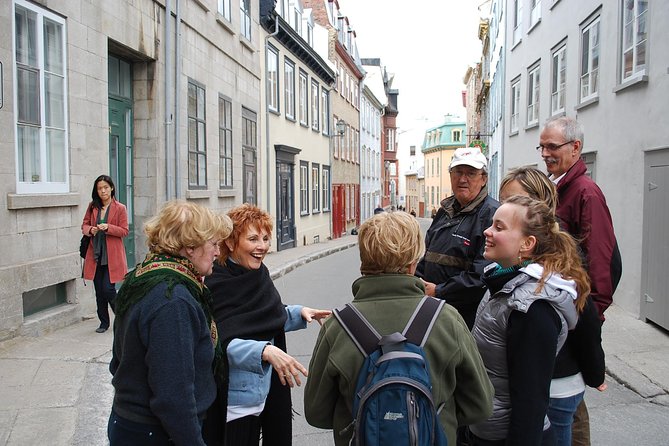
- Small groups make a difference: With a maximum of 15 people, it is easier to hear the guide and ask questions.
- Strong guide-led history: Guides such as Mark, Louise, Robert, Christian, Stefan, and Francis are praised for clear storytelling, humor, and practical advice.
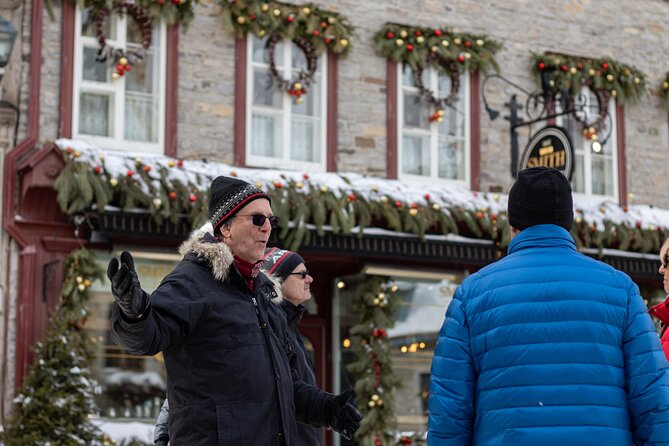
- Winter requires serious clothing: Several walks took place in temperatures near 10 to 12 degrees Fahrenheit, and warm boots, gloves, and layers were essential.
- A practical finish: The tour ends near the funicular and Petit-Champlain, putting you close to shops, restaurants, and the next part of your sightseeing day.
Why This Two-Hour Walk Works Well
Old Québec is compact, but it is not simple. The city’s streets climb and drop sharply, its landmarks belong to several different periods, and French and British history overlap at nearly every turn. A first visit can easily become a pleasant blur of stone walls, church towers, plazas, and photogenic streets.
This tour gives you a framework. You move from the Upper Town toward the Lower Town while the guide explains how Québec began in 1608, how the city was defended, how religious communities shaped daily life, and how the old fortress city functions today.
I especially like the pace. Two hours is long enough to provide context but short enough to leave room for your own museum visits, meals, and wandering. The tour is also a good orientation walk because guides often add restaurant suggestions, maps, and ideas for what to do next. Louise, in particular, is praised for answering questions and offering recommendations for food and other activities.
At $30.29 per person, the price is reasonable for a licensed guide, local taxes, and two hours of organized sightseeing. You are not paying for admission to major attractions, since the route mainly uses public streets, courtyards, and viewpoints. The value comes from understanding what you are seeing. Without that explanation, the fortifications may look like old stone walls and Place Royale may seem like another attractive square. With a good guide, each location gains a purpose.
A few more walks around Canada worth a look
- Old Quebec City: Grand Walking Tour with Private Option
★ 4.8 · 2,609 reviews - The Original Old Montréal Walking Tour by Guidatour
★ 4.5 · 2,217 reviews - Old Montreal Small-Group Walking Tour | Max 10 | by MTL Detours
★ 5.0 · 2,088 reviews
Starting Near Château Frontenac
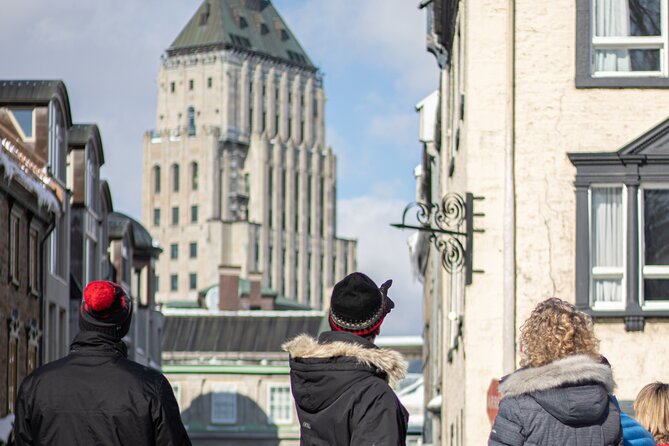
The meeting point is the Tours Voir Québec sales desk inside the Québec Tourist Information Centre at 12 Rue Sainte-Anne. It is across the park from Château Frontenac, one of the easiest buildings in the city to recognize.
The first stop is near the Samuel de Champlain Monument, honoring the founder of Québec City. This is a sensible place to begin because the story of Québec starts with settlement, trade, defense, and the city’s position along the St. Lawrence River.
Expect a brief introduction here before the group moves toward Terrasse Dufferin. The tour does not begin with a long lecture. Instead, the guide builds the story as you walk, adding details about the people who lived in the city and the forces that shaped it.
Arrive ready to walk rather than expecting a sightseeing vehicle. The route is outdoors and includes cobbled or uneven historic streets, stairways, and changes in elevation. The overall direction is downhill, but this is still an active two-hour outing.
Terrasse Dufferin and the Château Frontenac View
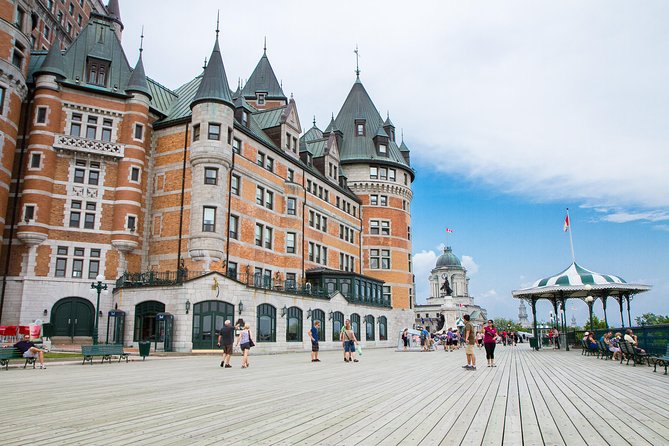
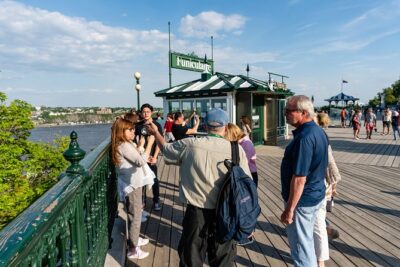
Terrasse Dufferin is one of Québec City’s best viewpoints and one of the most enjoyable parts of the route. This broad wooden promenade runs beside Château Frontenac, the grand hotel that dominates the city skyline.
From here, your guide explains what you can see across the river and around the city. The stop is also useful for placing Québec City in its setting. You can look beyond the decorative hotel façade and understand why this high ground mattered for settlement and defense.
The promenade can be exposed to wind, especially in winter. It is a fine place for photographs, but do not let the view distract you from the guide’s explanation. If you are visiting in cold weather, this is one of the spots where warm gloves and a hat matter.
The château itself is a visual anchor rather than a scheduled interior visit. You will learn about it and see it close up, but the tour is not a hotel tour.
The Ursuline Monastery and Québec’s Religious Past
The route passes the Ursuline monastery, where the Ursuline Sisters have been part of Québec City life since 1639. This stop adds depth to the walk because it shifts attention away from military history and grand public buildings.
If the chapel is open, the guide may take the group inside. That qualification matters. An interior visit is not guaranteed, so you should think of the chapel as a possible bonus rather than a promised feature.
The monastery also shows how much of Old Québec developed around religious institutions. The city’s story is not only about battles and governors. Schools, churches, convents, and charitable work helped shape everyday life for centuries.
The visit is brief, about ten minutes, but it is one of the stops that makes the tour feel less like a checklist of monuments. You get a glimpse of an institution that still connects the old city with its living culture.
Same streets, a different way to see them:
- Montreal Mile End Authentic Food Tour with 7 Delicacies Tastings
★ 5.0 · 2,598 reviews - Gastown Historic Walking Food Tour
★ 5.0 · 1,863 reviews - Old Quebec Classique Walking Tour with Funicular
★ 5.0 · 1,317 reviews - Old Quebec City Food Tour with 10+ Autentic Local Tastings
★ 5.0 · 1,288 reviews
Cathedral Courtyards and the Upper Town Squares
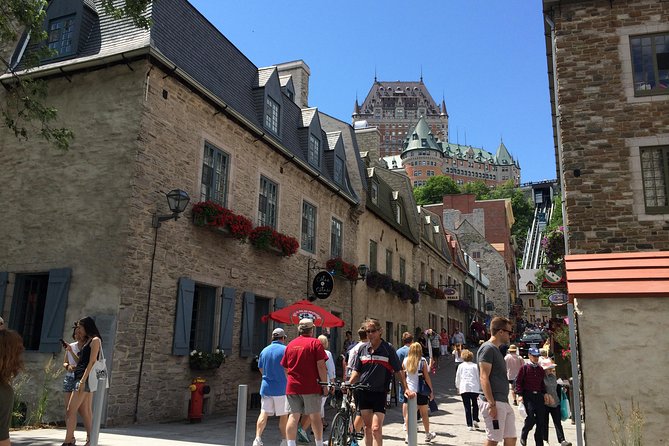
The tour continues to the Cathedral of the Holy Trinity, the first Anglican cathedral built outside the British Isles. The scheduled visit focuses on the courtyard, where the guide explains the building’s place in Québec’s British period.
This is a useful contrast with the French Catholic institutions nearby. Within a short walk, you are moving between different religious and political traditions, a pattern that helps explain Québec City’s unusual character.
The route then passes Hôtel de Ville de Québec and the surrounding city square. Your guide presents the major landmarks in this area, adding details about how the square functions as a civic center.
You may also see the Basilica Notre-Dame during the general walk through Old Québec. The tour does not promise an extended interior visit, so keep your expectations focused on orientation and explanation rather than detailed church architecture.
These short stops work best for people who want context in small portions. If you prefer to sit inside one building for an hour and study its art, you will need to return on your own. The tour gives you the reason to come back.
Fortifications and the Citadelle
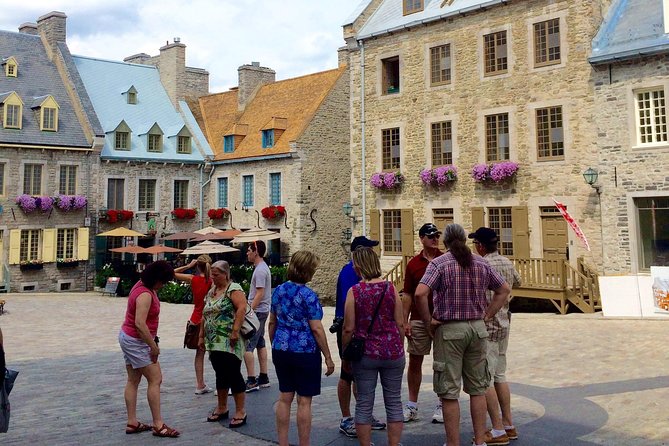
Québec City is the only walled city north of Mexico, and the fortifications are among the most important sights on the walk. The walls were not built simply for decoration. They formed part of a defense system that protected the city and its strategic position.
Your guide explains how the fortifications worked and why the high Upper Town mattered. This makes the stonework easier to read. You begin to notice gates, walls, elevation, and the relationship between the old city and the river below.
The route also brings attention to the Citadelle of Québec, an active military installation and official residence of both the Canadian monarch and the Governor General of Canada. This is an important distinction: the walking tour explains and points out the Citadelle, but it is not a dedicated Citadelle admission tour.
If you want to explore the Citadelle in detail, plan a separate visit. The walking tour gives you the background first, which can make that additional visit more meaningful.
Seminary Courtyard and a Step Back in Time
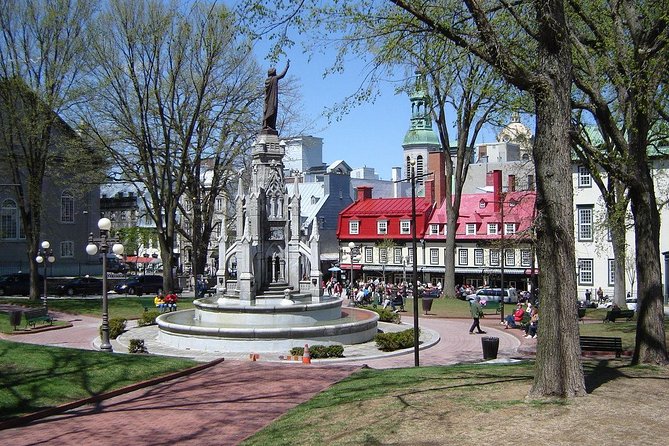
One of the more atmospheric stops is the courtyard of the Seminary of Québec. The setting gives you the feeling of stepping back into the eighteenth century, with old stone buildings arranged around a quiet interior space.
This is exactly the sort of place that can be easy to miss when you are exploring alone. The courtyard may not appear on every quick list of top attractions, but it helps you understand how institutions organized the old city.
The guide explains the Seminary’s role while the group pauses inside the courtyard. It is also a welcome break from exposed streets, especially in winter. Several cold-weather walks made use of indoor stops, and this sort of pause can help you stay comfortable without losing the thread of the tour.
The scheduled stop is short, so the value comes from the explanation rather than extended free time. Listen closely, then return later if you want to explore the surrounding area at a slower pace.
Place Royale and the Birthplace of French America
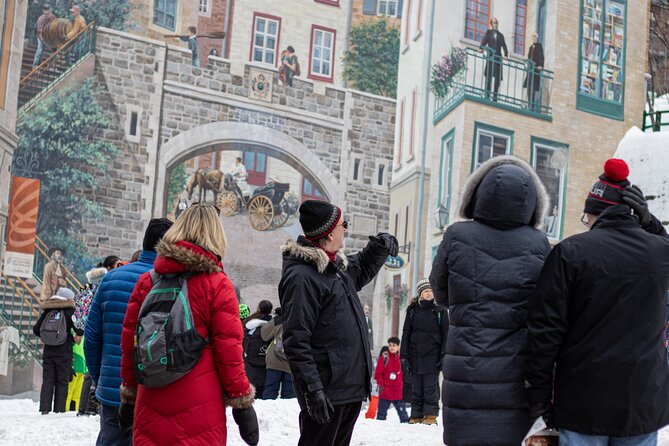
The route descends toward Place Royale, one of Québec City’s best-known public spaces. It is often called the birthplace of French America, and the guide explains why this location matters in the city’s early story.
Here, the old city feels more intimate. The architecture, narrow streets, and stone buildings create the European feel that draws so many people to Québec City. The square also shows how history and daily life overlap. It is not a preserved set piece with no modern purpose. People still pass through, shop nearby, eat in the district, and use the streets as part of ordinary city life.
The tour includes a short stop here, around five minutes. That is enough to establish the historical setting, but not enough for a detailed architectural study. I would mark Place Royale as a place to revisit after the walk, especially if you want photographs without needing to keep pace with the group.
Finishing on Petit-Champlain Street
The tour ends on Petit-Champlain Street near the Old Québec Funicular. This is a strong finish because you arrive in one of the most attractive and lively parts of the Lower Town with the rest of the day still ahead.
The street is known for its historic buildings, shops, and inviting atmosphere. It is also a practical place to continue exploring, stop for food, or use the funicular to return to Upper Town.
The downhill route is helpful here. You do not finish with a demanding climb after two hours of sightseeing. Still, remember that the walk includes a change in elevation and historic pavement, so comfortable shoes are important.
Because the tour ends in the Lower Town rather than returning to the start, you should plan your next move. That is not a problem, but it is worth knowing before you book. The finish is convenient if you want to explore Petit-Champlain and Place Royale, less convenient if you need to return immediately to a hotel in Upper Town.
The Guides Make or Break the Experience
The strongest part of this tour is the guide. Good guides connect dates and buildings to human stories, then answer questions without turning the walk into a formal classroom.
Mark is praised for his humor, clear explanations, and strong grasp of Québec’s history and culture. One particularly cold walk began around 12 degrees Fahrenheit, yet he continued answering questions after the official tour ended. Robert receives similar praise for enthusiasm, local recommendations, and adjusting the route so the group could warm up indoors.
Louise is valued for her warmth, city pride, and practical restaurant advice. Christian explains how earlier events shaped modern Québec culture. Stefan and Francis are praised for combining energy with historical detail, while Philippe has been willing to extend conversations and offer food suggestions.
The exact guide will vary, so you should not book solely because of one name. The broader pattern is encouraging: the company uses licensed professional guides, and the guide’s role is clearly more than pointing at buildings.
There was one serious problem reported during a walk when a couple became separated from the group and missed several stops. Keep close to the guide, especially in crowded streets, and speak up immediately if you lose sight of the group. A small group helps, but it does not remove the need to pay attention.
Winter Weather, Walking Effort, and What to Wear
The tour operates in all weather conditions. That can be a benefit because you do not need perfect skies, but it also means the experience changes sharply with the season.
In winter, wear insulated boots, warm socks, gloves, a hat, and several layers. The guide may use indoor stops to help the group warm up, but this remains an outdoor walking tour. Hand and toe warmers are available for purchase at the check-in desk, according to the tour information.
Cold weather affects the pace and the amount of explanation you can comfortably absorb. One person found the tour interesting but too cold to enjoy fully. Another said the guide kept the group moving at the expense of some information. That is a fair tradeoff when temperatures fall near 10 degrees Fahrenheit.
Spring, summer, and fall should make it easier to linger at viewpoints and courtyards, but rain remains possible. Bring weatherproof clothing rather than assuming the old city will shelter you all the way.
The tour calls for a moderate fitness level. You do not need to be an athlete, but you should be comfortable walking for two hours on historic streets and dealing with some slopes.
Who Should Book This Walking Tour?
I would choose this tour for a first visit to Québec City, especially if you want a clear introduction before exploring on your own. It suits couples, families, solo visitors, and anyone who prefers local explanation over wandering without a plan.
It is also a good fit if you enjoy history, architecture, churches, military sites, and city stories. The tour is heavy on history, but the guides use humor and practical examples to keep it approachable.
You may want something else if you dislike walking outdoors, need extensive time inside each attraction, or want a dedicated tour of the Citadelle or Château Frontenac. This experience is an overview, not a series of long interior visits.
The small group size is another reason to consider it. A maximum of 15 people is intimate enough for questions and easy listening, while still keeping the price moderate. The tour is offered in English and includes a mobile ticket, which keeps the arrangements simple.
Free cancellation is available up to 24 hours before the start time. Changes or cancellations inside that window are not refundable, and the tour requires a minimum number of participants. If that minimum is not met, an alternative or full refund is offered.
Should You Book the Québec City Walking Tour?
Book it if you want to understand Old Québec before you explore it independently. At $30.29, the tour gives you a solid two-hour orientation, a downhill route through the city’s main districts, and access to guide knowledge that can save you from missing the meaning behind the walls, churches, and courtyards.
I would book it near the beginning of your stay and use the final stop at Petit-Champlain to continue your own sightseeing. Choose warmer clothing in winter, stay close to the guide, and treat the Citadelle and major churches as places you may want to revisit.
If the forecast is brutally cold, consider waiting for a milder day. The history is worth hearing, but frozen fingers have a way of shortening even the best tour.
FAQ
How long is the Québec City Walking Tour?
The guided walk lasts approximately two hours.
Where does the tour begin?
It begins at the Tours Voir Québec sales desk inside the Québec Tourist Information Centre at 12 Rue Sainte-Anne, across the park from Château Frontenac.
Where does the tour end?
The walk ends near the Old Québec Funicular at 16 Rue du Petit Champlain in the Lower Town.
Is the tour offered in English?
Yes. The tour is offered in English.
How large is the group?
The tour has a maximum of 15 participants.
What happens if the weather is bad?
The tour operates in all weather conditions, so you should dress appropriately. Warm clothing is especially important in winter. If the minimum number of participants is not met, you will be offered an alternative or a full refund.
Just added around Canada
- The Banff Stargazing Tour – 2hr Walking Tour★ 5.0 · 189 reviews
- Toronto: Private Walking Tour with a Local★ 4.7 · 150 reviews
- Toronto: Dark History Nighttime Walking Tour★ 4.7 · 273 reviews
- Toronto: Distillery District Historic Walking Tour★ 4.8 · 267 reviews
- Toronto: City Walking Tour★ 4.9 · 185 reviews
- Toronto: 2-Hour Downtown Walking Tour★ 4.4 · 101 reviews
- Quebec City: Old Quebec Classic Walking Tour with Funicular★ 4.9 · 695 reviews
- Quebec City: Christmas Magic Walking Tour in Old Quebec★ 4.7 · 146 reviews
Canada Walking Tours, compared.
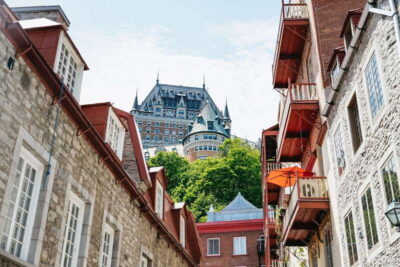
Old Quebec City: Grand Walking Tour with Private Option
Read our review →
Montreal Mile End Authentic Food Tour with 7 Delicacies Tastings
Read our review →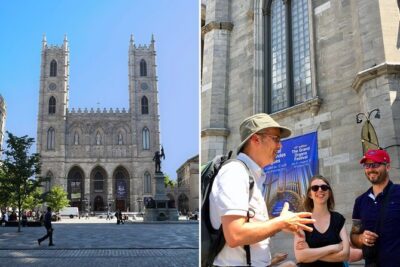
The Original Old Montréal Walking Tour by Guidatour
Read our review →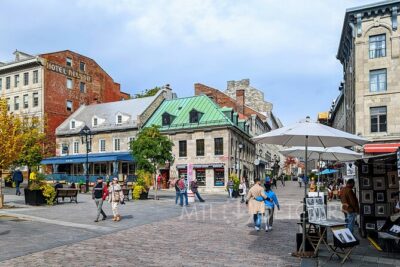
Old Montreal Small-Group Walking Tour | Max 10 | by MTL Detours
Read our review →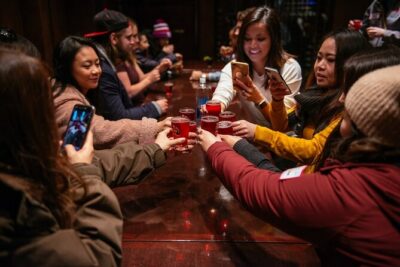
Old Quebec Classique Walking Tour with Funicular
Read our review →
Old Quebec City Food Tour with 10+ Autentic Local Tastings
Read our review →
Browse the lists this tour appears in