
Review · OLD TOWN WALKING TOURS
Riga: Guided Old Town Walking Tour
Riga rewards curious walkers. I like the way this two-hour tour links the Town Hall, House of Blackheads, churches, guild halls, and cobbled lanes into one clear story. I also like the practical local advice, from Latvian food to places worth returning to later.
The main consideration is the weather and footing. Winter cobblestones can be slippery, and cold, rainy days make the walk tougher, though guides such as Gita, Carlos, Guna, Rita, and Baiba have earned praise for keeping groups engaged and comfortable. Large groups can also make it harder to hear, even though many guides project well without headsets.
Key points to know before you go
- Eight centuries in two hours: You get a brisk introduction to Riga’s past, architecture, politics, and changing rulers.
- A strong first-day activity: The route helps you decide which churches, squares, and streets deserve a longer return visit.
- Excellent guide-led storytelling: Gita, Carlos, Guna, Rita, Baiba, and others are praised for clear delivery, humor, and local insight.
- A compact Old Town route: The walk covers Town Hall Square, St. Peter’s Church, St. James’s Cathedral, the guild halls, Swedish Gate, and the Three Brothers.
- Art Nouveau with local context: You hear how this design style arrived in Riga rather than simply photographing ornate façades.
- Good value at $22: The price is modest for two hours of live commentary in several languages, though entrance tickets are not included.
Why this Riga walk works best early in your stay
Riga’s Old Town is easy to admire and surprisingly easy to misunderstand. You can stroll past medieval façades, church towers, and narrow lanes without seeing how the pieces fit together. This tour gives you that framework.
For $22 per person, you receive a two-hour guided walk through the central sights. That is a fair price for a first orientation, especially if you are visiting Riga for a short break. You are paying for interpretation, not admission tickets or transport. The value rests on the guide’s ability to make the streets readable.
I would schedule it near the start of your stay. You will pass enough major sights to get your bearings, then receive suggestions about Latvian food and places to revisit. The walk does not attempt to take you inside every church or museum, so it works best as a foundation rather than a complete cultural program.
The tone appears to be friendly and flexible. Gita has been praised for combining facts with humor, while Carlos has been noted for clear explanations and, at times, adapting the route to suit the group. Guna has helped create a warm atmosphere in bad weather, and Rita is often praised for her energy and clear storytelling.
Guide quality naturally varies from one departure to the next. Still, the repeated praise for Gita, Guna, Rita, Carlos, Baiba, and Normunds points to a strong team rather than one lucky performance. If you enjoy stories about people, legends, and political change, you are likely to get more from this walk than from a map and a camera alone.
More Old Town Walking Tours in the world:
- Underground Vaults Walking Tour in Edinburgh Old Town
★ 4.5 · 8,506 reviews - Prague: 3-Hour Walking Tour of Old Town & Prague Castle
★ 4.7 · 5,696 reviews - Dubrovnik: Old Town Walking Tour
★ 4.8 · 5,174 reviews
Starting at Grecinieku Street 18
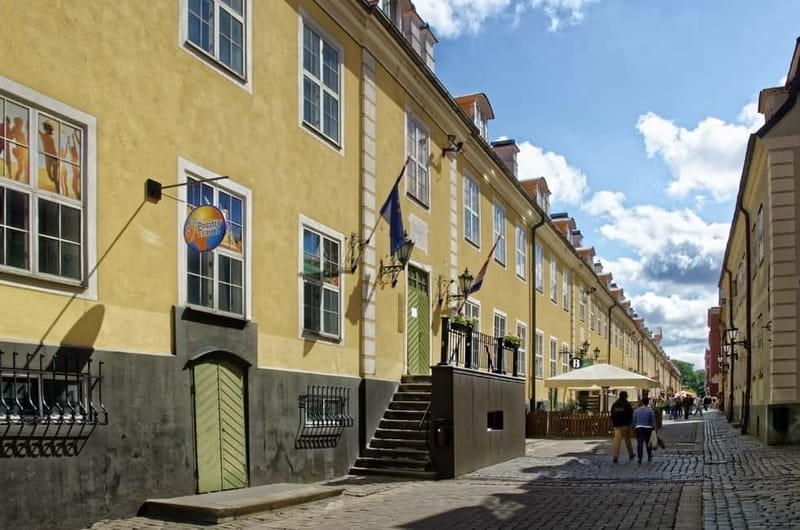
The meeting point is near Grecinieku Street 18, at a transparent door. Look for the guide holding a Riga city guide sign. This small detail matters because Old Town streets can feel confusing at first, especially when several lanes seem to lead toward the same square.
The walk begins near the Museum of Mentzendorff and then heads into the historic center. You should arrive ready to walk on uneven cobblestones. Large bags and luggage are not allowed, and smoking, food, drinks, alcohol, drugs, littering, and party groups are not permitted.
The route is listed as wheelchair accessible, but the qualification matters. From the beginning of October through the end of March, slippery cobblestones limit access. Wheelchair users joining in that period should bring someone who can assist them.
Town Hall Square and the House of Blackheads
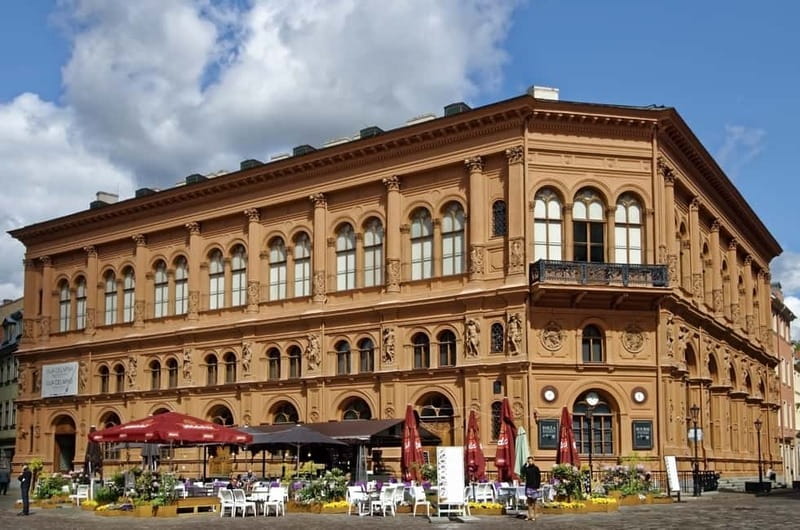
The first major stop is Riga Town Hall Square, with about ten minutes of guided commentary. This is a useful opening because the square introduces Riga as a trading city and gives you a sense of the Old Town’s formal center.
The House of Blackheads is one of the most memorable façades nearby. The tour helps you place it within the story of Riga rather than treating it as a single attractive building. You will hear about the people and institutions that shaped the square, which makes the ornate architecture easier to read.
Do not expect a long interior visit here. The route is focused on exterior sights and connected storytelling. That is both a strength and a limit. You cover a lot of ground, but you should plan separate visits if you want extended time inside museums or churches.
St. Peter’s Church and Riga’s changing skyline
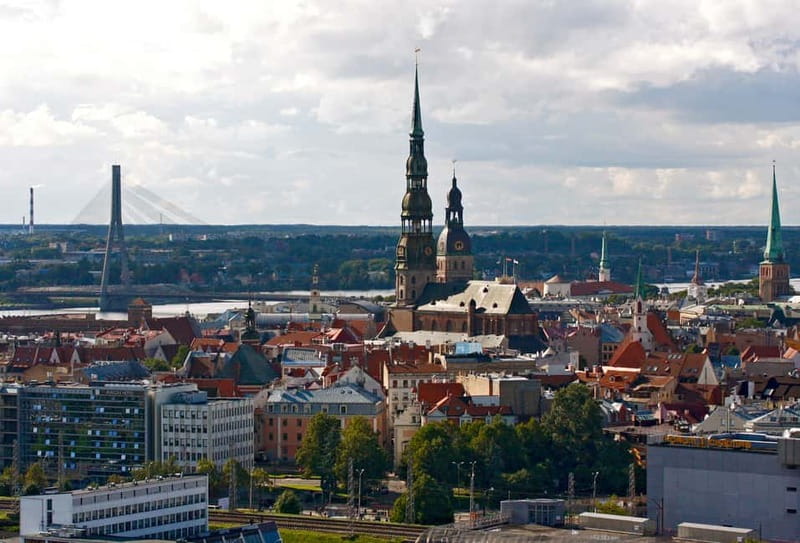
St. Peter’s Church receives another ten-minute stop. Its tower gives the Old Town a clear vertical marker, and the church helps explain how religious buildings shaped Riga’s historic center.
This is one of the places where a guide adds real value. A tower can be impressive on its own, but stories about the city’s growth, rebuilding, and architectural styles give it meaning. The tour’s wider discussion of Riga’s 800-year story places the church in a much longer timeline.
The stop is guided rather than an announced church admission. If you want to climb a tower or spend time inside, check separately and return later. The walking tour keeps moving, so your reward here is context and a close look at the building, not an extended visit.
More Guided Walks in the world:
- Magical London: Harry Potter Guided Walking Tour
★ 4.7 · 22,044 reviews - History and Hauntings of Salem Guided Walking Tour
★ 5.0 · 14,564 reviews - Amsterdam Anne Frank: Small-Group Walking Tour & Local Guide
★ 4.8 · 12,789 reviews - Edinburgh: Harry Potter Magical Guided Walking Tour
★ 4.8 · 11,944 reviews
St. James’s Cathedral and the medieval core
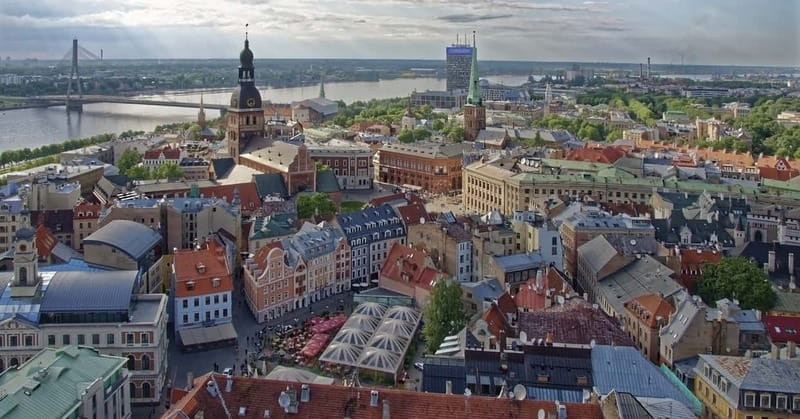
The route continues to St. James’s Cathedral, also called St. Jacob’s Cathedral in the tour description. You receive about ten minutes of commentary here.
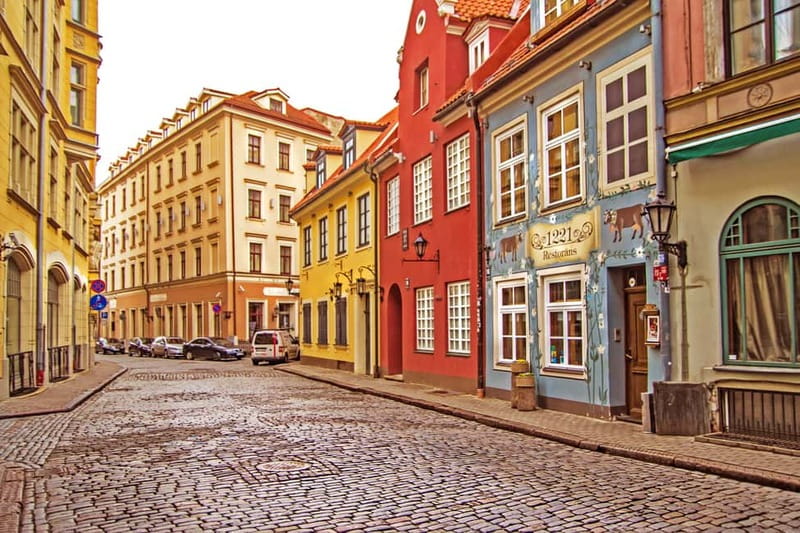
This part of the walk shifts you away from the biggest postcard view and toward the texture of the Old Town. The cathedral, nearby lanes, and surrounding medieval buildings show how compact Riga’s historic center is. The streets are not just a backdrop. Their bends, façades, and different building periods help explain how the city developed over time.
Guides also bring in local legends and everyday details. Normunds was praised for stories that held the attention of teenagers, a useful sign if you are traveling with older children who may not want a dry lecture. The best moments on a city walk often come from these short tales, especially when they connect a building with a person or old belief.
The Great and Small Guild Halls
The Great Guild and Small Guild receive their own ten-minute stop. These buildings offer a window into Riga’s commercial and social life, and they help balance the churches and civic monuments on the route.
The distinction between grand public institutions and the people who worked, traded, and organized inside the city gives the tour a useful human scale. You are not only looking at façades. You are learning how different groups helped shape Riga.
This section is also a good test of your guide’s delivery. Group walks can become a list of dates and names. The strongest guides keep the story moving with humor and clear comparisons. Baiba has been praised for speaking so everyone could hear and for encouraging questions, while Gita is often described as animated and easy to follow.
Swedish Gate and the feel of the cobbled lanes
The Swedish Gate is one of the route’s most atmospheric stops. You walk through or beside one of the Old Town’s historic gateways, with cobbled streets and tightly packed buildings around you.
This is where the tour feels least like a checklist. The gate is a small feature, but it gives you a strong sense of the old city’s scale and defensive character. You can pause for photographs, yet the guide also explains why the location matters.
The cobblestones are part of the charm and part of the practical warning. Wear firm, comfortable shoes. In colder months, ice and wet stone can make the walk more tiring. One winter group faced temperatures around minus 17 degrees Celsius and still found the tour worthwhile, but that experience should encourage you to dress seriously, not casually.
The Three Brothers and Riga’s architectural layers
The Three Brothers are among the most recognizable buildings on the route. The complex presents different medieval building forms close together, making it a useful visual lesson in how homes and streets changed across time.
This stop works particularly well for people who enjoy architecture but do not want a technical lecture. You can compare the buildings directly while the guide points out details you might miss alone. The surrounding streets also show the pleasing mixture of narrow medieval structures and later styles.
The tour then brings in Riga’s Art Nouveau movement. That contrast is important. Riga is not only an old medieval town. It is also a city where later architectural fashion made a strong mark. You hear how Art Nouveau arrived in Latvia and how the style altered the city’s look.
The famous Cat House is included in the broader route. It adds a lighter, more playful note after the churches and guild halls. Guides also connect architecture with local stories and urban myths, giving you more than a list of dates.
Twenty minutes through Old Riga’s center
The Old Town portion allows about twenty minutes, the longest single segment of the listed route. This is where the separate stops begin to form one picture.
You move through medieval streets, see the relationship between the main squares, and hear about Riga’s complex past, including foreign occupations, politics, and changes in identity. Guna has been praised for explaining architecture, churches, politics, and past occupations while adding personal stories and tales that may be true or legendary.
That mix is useful, provided you know what kind of history you are getting. This is a lively introduction, not a university seminar. You will hear broad context and memorable anecdotes rather than an exhaustive account of every period.
Several guides have also offered food suggestions. Lisa described receiving recommendations for places to eat and finding them worthwhile. The tour does not include food, but these tips can help you turn a history walk into a more useful first afternoon in Riga.
What the pace and group size feel like
The published duration is two hours, with roughly ten minutes at several major stops and twenty minutes devoted to the Old Town center. That creates a steady pace. You should be prepared to listen while standing, then walk again soon after.
The route is not described as a strenuous hike, but cold weather and uneven streets can make it feel more demanding. Warm clothing, gloves, and shoes with good grip matter in winter. In autumn and winter, the footing may also be difficult for wheelchair users unless an assisting companion is present.
Group size can vary. One group had 30 or more people, yet the guide’s strong voice made the commentary easy to hear. Another participant suggested earpieces for larger groups, particularly with street noise and groups of around 20 people. This is the main practical weakness to keep in mind. If you stand at the back, hearing every detail may be harder.
Arrive early enough to find the transparent meeting-point door and position yourself near the guide. You will get more from the walk if you can see the buildings while the explanation is happening.
Languages, flexibility, and overall value
The tour is offered in English, German, French, and Spanish. That makes it useful for mixed-language groups, and the English delivery has received especially strong praise for clarity.
The $22 price is easy to justify if you value local explanation. You cover a large part of central Riga, receive architectural and historical context, and get suggestions for the rest of your visit. It is less useful for someone who prefers to wander alone, read plaques, and spend long stretches inside individual buildings.
The tour includes a guide and walking tour only. Admission to sights is not listed, so budget separately if you decide to return to a church, museum, or tower. That arrangement keeps the cost low and gives you control over how much more time you spend at each place.
Free cancellation is available up to 24 hours before the start, and you can reserve now and pay later. Those terms help if your Riga schedule depends on weather or transport.
Who should book this Old Town walk
I would recommend it to first-time visitors, short-stay visitors, couples, families with older children, and anyone who wants Riga’s history explained in plain language. It is particularly useful for you if architecture, local legends, food advice, and political history all sound appealing.
It also suits a cold-weather visit more than you might expect, provided you dress properly. Several guides have made a point of finding warm spots when possible, but this remains an outdoor walk. Rain, wind, and icy streets will affect your comfort.
You may want a different format if you have limited mobility in winter, dislike group tours, or want long interior visits. You should also consider standing near the guide in a larger group so you can hear clearly.
Should you book the Riga Old Town Guided Walking Tour?
Yes, I would book it as an introduction to Riga, especially at $22. The route covers the right first sights, and the strongest guides bring humor, personal stories, food advice, and clear explanations to a complicated past.
Book it early in your stay, dress for the forecast, and wear shoes that handle cobblestones. If you want a slow architectural study or detailed church interiors, use this walk as your starting point, then return on your own. For a short, affordable orientation with a strong record of engaging guides, it is a sensible choice.
FAQ
How long does the Riga Old Town walking tour last?
The tour lasts two hours.
How much does the tour cost?
The price is $22 per person.
Where does the tour meet?
It meets near Grecinieku Street 18. Look for the transparent door and a guide holding the Riga city guide sign.
Which languages are available?
Live guiding is available in English, German, French, and Spanish.
Which sights are included on the route?
The route includes Riga Town Hall Square, St. Peter’s Church, St. James’s Cathedral, the Great Guild, the Small Guild area, Swedish Gate, the Three Brothers, the Cat House, the House of Blackheads, and other Old Town streets.
Is the tour wheelchair accessible?
The tour is listed as wheelchair accessible, but access is limited from the beginning of October through the end of March because cobblestones can be slippery. Wheelchair users joining in that period should bring someone to assist them.
Can I cancel or pay later?
You can cancel up to 24 hours in advance for a full refund. You can also reserve now and pay later.
Just added around the world
- Walking Tour of Boston’s Freedom Trail★ 4.5 · 77 reviews
- Downtown Freedom Trail Walking Tour – History & Architecture★ 4.5 · 194 reviews
- Boston Seafood Lovers Food and History Walking Tour★ 5.0 · 208 reviews
- Boston “Death and Dying” Walking Ghost Tour★ 4.5 · 223 reviews
- Boston Food of the North End Private Walking Tour★ 5.0 · 174 reviews
- Boston Movie Mile Walking Tour★ 4.5 · 119 reviews
- 1 If By Land Walking Tours★ 5.0 · 95 reviews
- Boston History and Freedom Trail Private Walking Tour★ 5.0 · 117 reviews
Old Town Walking Tours, compared.
Underground Vaults Walking Tour in Edinburgh Old Town
Read our review →
3-Hour Walking Tour of Old Town & Prague Castle
Read our review →
Old Town and Jewish Quarter Guided Walking Tour
Read our review →
Cartagena: Historic Center and Getsemaní Shared Walking Tour
Read our review →Browse the lists this tour appears in