Review · TOURS
Sarajevo: Grand Walking Tour Through Time and Cultures
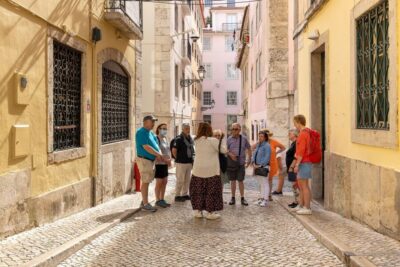
Sarajevo reveals its story one street at a time. This three-hour walk links Baščaršija, Latin Bridge, City Hall, and the Old Town while explaining how Ottoman, Austro-Hungarian, Yugoslav, and modern influences shaped the city. I like the clear sense of place, and I love that the route connects famous landmarks with markets, workshops, religious buildings, and everyday Sarajevo.
The tour is especially good for a first visit because it gives you a practical map of central Sarajevo, along with ideas for food and later sightseeing. Guides such as Kenan, Elma, Bojan, Masha, Tarek, and Hamza have been praised for warm storytelling, humor, and careful answers to questions. The main consideration is pace: three hours on foot covers a lot, and the route may be tiring for people with mobility limitations.
Key points to know before booking
- A $21 orientation to central Sarajevo: The price is modest for three hours with a licensed guide and a city map.
- The route crosses several centuries: You move from Ottoman streets and mosques to Austro-Hungarian buildings, Jewish and Christian landmarks, and modern memorial sites.
- Latin Bridge gives World War I context: The guide explains the assassination of Archduke Franz Ferdinand and why Sarajevo became central to European history.
- Baščaršija is more than a photo stop: You see coppersmiths, food stalls, traditional sweets, an old inn, and the wooden Sebilj Fountain.
- Storytelling is the main attraction: Guides have been praised for explaining difficult subjects clearly, adding family memories, local anecdotes, and humor without making light of painful events.
- You can choose your language and group style: Tours are offered in English, German, French, Italian, Spanish, Croatian, and Serbian, with private and small-group options available.
Why this Sarajevo walk works so well
Sarajevo can feel confusing at first. Its center changes character within a few blocks, and the shift from Ottoman lanes to grand Austro-Hungarian avenues is easy to miss without context. This tour gives you that context while keeping you moving.
I like the structure. It begins near the Miljacka River and the Latin Bridge, crosses toward the old Ottoman quarter, then returns through central religious and civic landmarks before ending at the Eternal Flame. That route makes Sarajevo feel like a connected story rather than a pile of separate sights.
The three-hour length also makes sense. You get far more than a quick stroll, but you are not committed to a full-day program. The guide’s explanation is the service you are paying for. A city map is included, but the real value comes from knowing what you are looking at and what deserves a second visit.
The experience is best treated as an introduction. You will see many major places from the outside or through brief visits, but you will not have time for long museum sessions. If you want detailed time inside the Jewish Museum, City Hall, or a mosque, plan to return later.
A few more walks around the world worth a look
- Magical London: Harry Potter Guided Walking Tour
★ 4.7 · 22,044 reviews - Reykjavik Food Walk – Local Foodie Adventure in Iceland
★ 5.0 · 18,952 reviews - History and Hauntings of Salem Guided Walking Tour
★ 5.0 · 14,564 reviews
Latin Bridge and the Sarajevo story
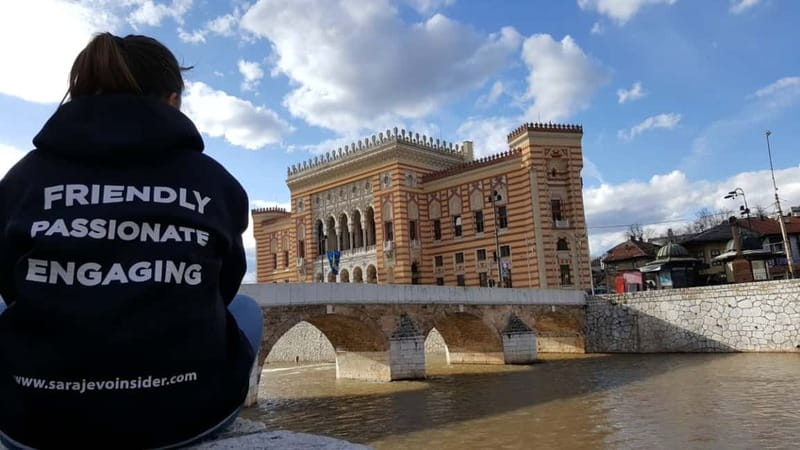
The walk begins at the Latin Bridge, one of Sarajevo’s most important historical locations. This is where the 1914 assassination of Archduke Franz Ferdinand and his wife, Sophie, took place, an event that helped trigger the First World War.
The value here is not simply taking a photograph beside an old bridge. A good guide can explain the setting, the route of the motorcade, and the way one local event became part of a much larger European crisis. Several guides have been praised for handling this subject with clarity and patience, especially when visitors arrive with strong interest in World War I.
If that is your main reason for visiting Sarajevo, this tour gives you a useful starting point. One participant who came mainly to follow the archduke’s route found that the experience covered that subject while also offering a broader introduction to the city. You should not expect a specialized military history program, but you will get the essential setting and connections.
From the bridge, the walk follows the river and introduces the mix of Sarajevo’s religious and architectural traditions. That progression is important. The city’s identity is not presented as one single story, but as many communities and periods sharing the same compact center.
The riverfront, Emperor’s Mosque, and Sarajevo Brewery
The Emperor’s Mosque adds an Ottoman-era landmark to the route. It helps explain the city’s development under Ottoman rule and gives you a chance to see how religious buildings fit into the older urban fabric.
The tour then passes the monastery and Sarajevo Brewery. These stops are fairly brief, usually about five minutes where specified, so you should think of them as guided orientation points rather than full visits. The guide’s explanation supplies the meaning, while the short format keeps the walk moving.
Sarajevo Brewery is also a useful reminder that the city’s story includes more than mosques and bazaars. The route keeps shifting between religious, commercial, and civic life. That balance prevents the Ottoman quarter from becoming a postcard-only experience.
You will want comfortable shoes and clothes. The route covers a large part of central Sarajevo on foot, and the day can feel hot and dry in warmer weather. One person specifically noted that the guide’s engaging explanations made the heat easier to handle, but sensible footwear still matters.
City Hall and the House of Spite
Sarajevo City Hall, known for its neo-Moorish design, is one of the visual high points of the tour. Its decorative exterior makes an immediate impression, but the guide’s explanation adds political and cultural context to the building.
The nearby House of Spite provides one of Sarajevo’s best-known local stories. The building is connected with the construction of City Hall and the refusal of one resident to move without protest. The tour passes by rather than treating it as a major interior visit, so expect a story and a look from the street.
These two places work well together. City Hall represents official power and grand urban planning, while the House of Spite brings the story back to an individual act of resistance. It is a small example of the local humor and stubbornness that guides often use to make Sarajevo’s past more personal.
A viewpoint follows, with about 15 minutes listed for the stop. This offers a pause in the walking and a chance to look across the city. The precise view depends on the route and starting option, but the stop helps you understand how closely Sarajevo’s central districts sit together.
Same streets, a different way to see them:
- New Orleans Premier Ghost, Voodoo and Vampire Walking Tour
★ 4.5 · 12,856 reviews - Amsterdam Anne Frank: Small-Group Walking Tour & Local Guide
★ 4.8 · 12,789 reviews - Edinburgh: Harry Potter Magical Guided Walking Tour
★ 4.8 · 11,944 reviews - Edinburgh Castle: Guided Walking Tour with Entry Ticket
★ 4.7 · 11,699 reviews
Bravadžiluk, Kazandžiluk, and the crafts of Baščaršija
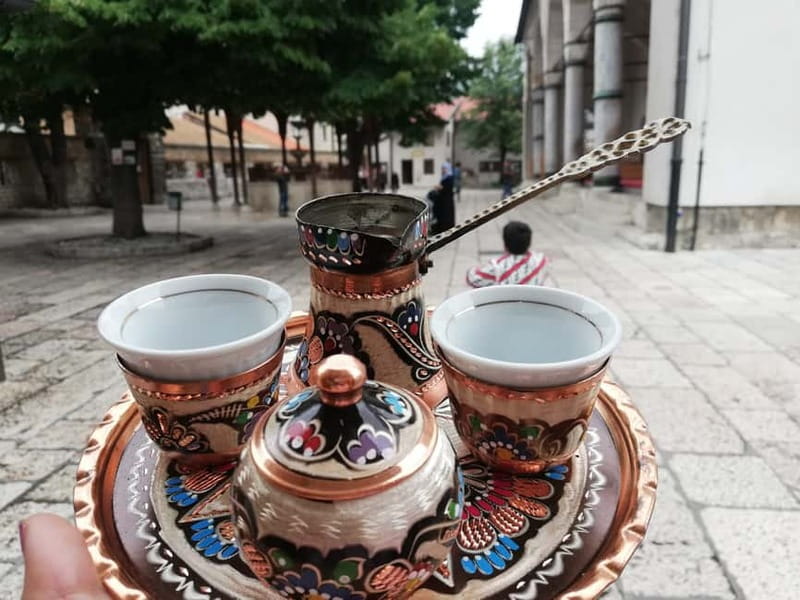
The route then enters Baščaršija, Sarajevo’s old market quarter. Bravadžiluk is associated with food and market life, while Kazandžiluk is the traditional coppersmith street. Here, you see the working side of the Old Town, not just its most photographed fountain.
The coppersmith quarter is one of the most distinctive parts of the walk. You may see traditional metalwork, decorative objects, and shops where the craft remains part of the street’s identity. The tour is not built around forced shopping, which is useful if you prefer to look without pressure. Still, the craftsmanship may tempt you to buy a small piece.
This is also where the tour’s local food advice becomes practical. Bravadžiluk helps place Bosnian dishes within the setting where people eat and sell them. Guides have offered suggestions for places to try food, coffee, and sweets, so keep a note on your phone if something catches your attention.
Sebilj Fountain and Morića Han
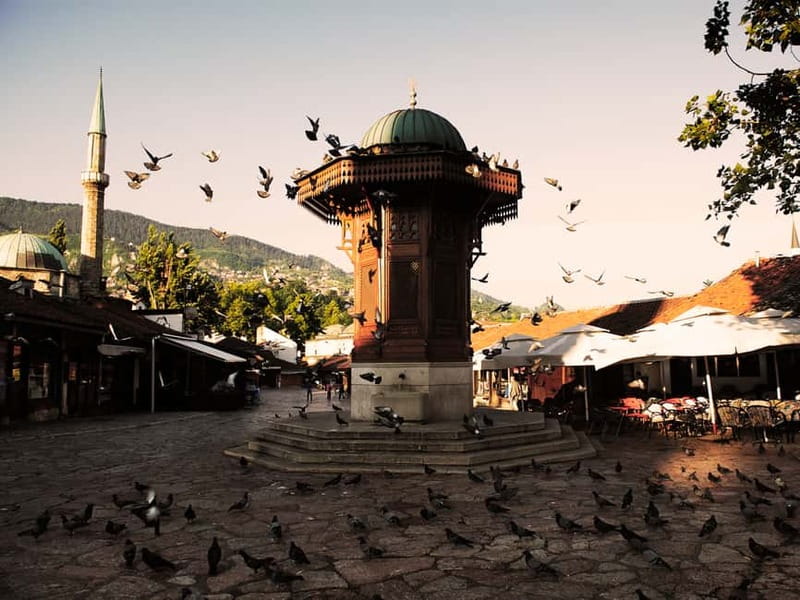
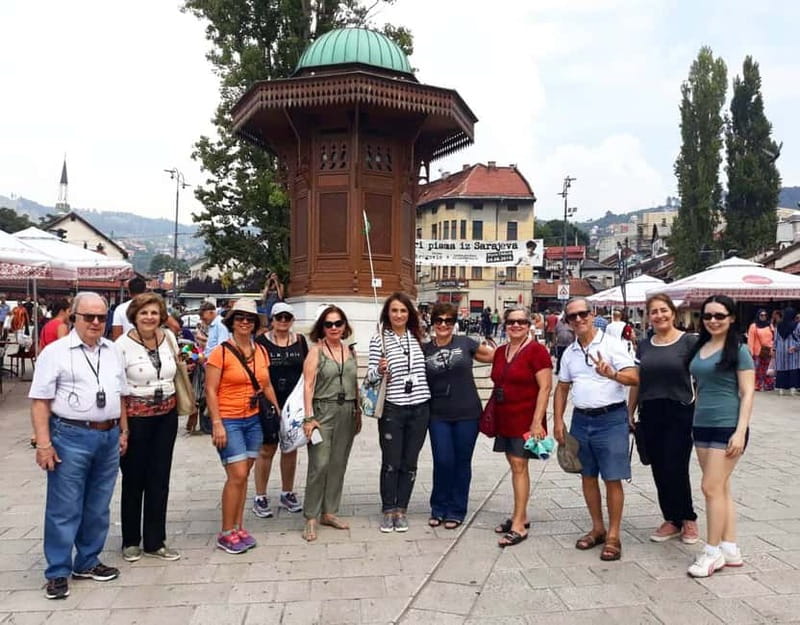
Sebilj is the wooden fountain at the heart of Baščaršija and one of Sarajevo’s most recognizable landmarks. It is an easy place to photograph, but it is also a useful meeting point for understanding the layout of the market quarter.
The square around it can be busy, especially during popular sightseeing hours. You will have time for photographs and explanation, but not necessarily a quiet moment. If you want a less crowded picture, ask your guide when the area is usually calmer.
Morića Han gives you another look at Ottoman-era commercial life. Historic inns such as this served merchants and their animals, offering a place to rest during long journeys. The stop helps you picture Baščaršija as a working trading district rather than only a collection of souvenir shops.
The guide’s stories matter here. The physical remains are appealing, but the explanation of who used these places and why they mattered turns a short stop into a useful lesson in Sarajevo’s urban life.
Baklava, Gazi Husrev-beg Mosque, and Sarajevo’s religious mix
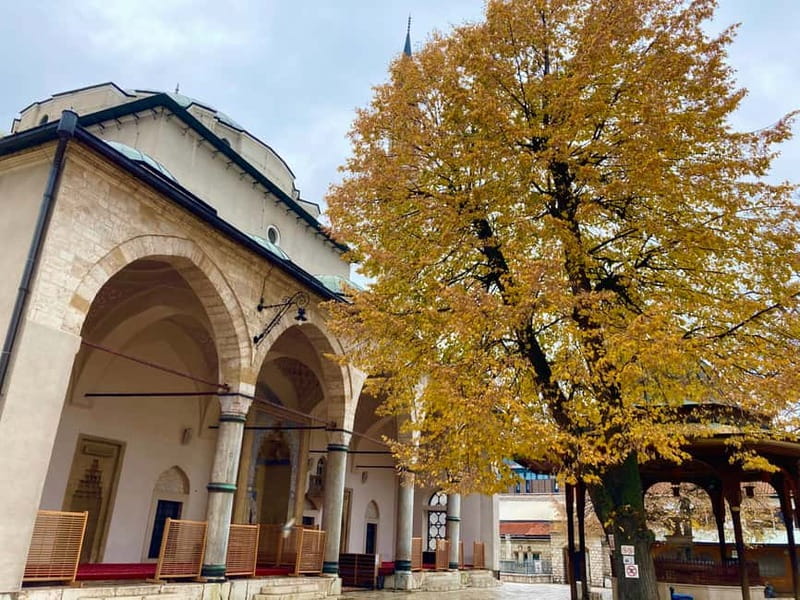
A baklava shop comes next, with time to look at one of Bosnia’s best-known sweets. Food stops are brief, and food and drinks are not included in the $21 price, so any purchase is your choice.
That arrangement suits some people. You are not locked into a tasting menu, and you can return later to buy what interests you. If you want a snack during the walk, carry some cash and plan for your own purchases.
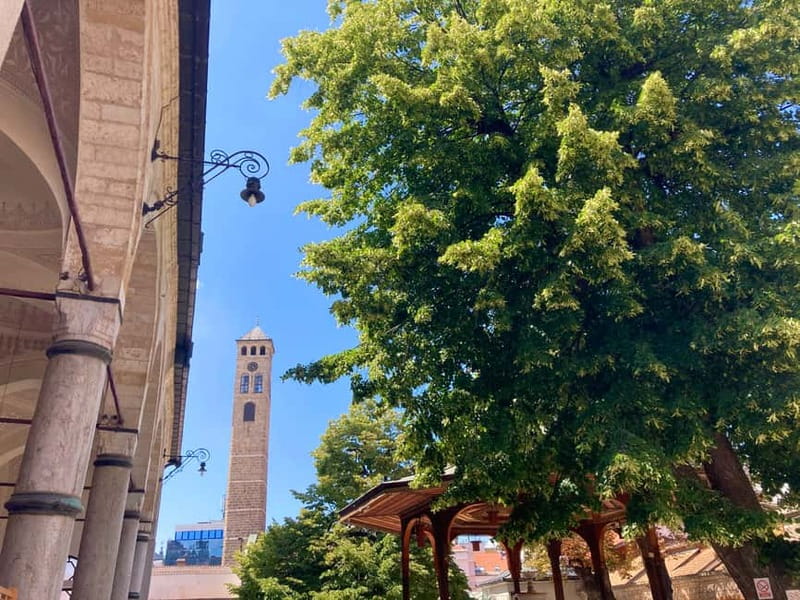
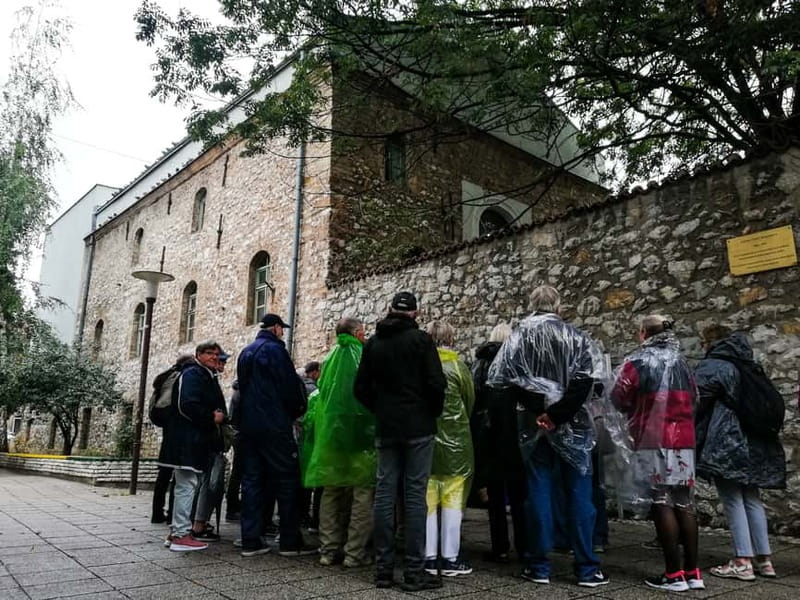
Gazi Husrev-beg Mosque is one of the central landmarks of the Old Town. The guide explains its place in Sarajevo’s Ottoman development and its continuing importance to the city’s Muslim community. As with the Emperor’s Mosque, the stop is primarily a guided visit and photo opportunity, so do not expect an extended religious tour.
Dress and behavior should be respectful at religious sites. The available information does not specify a detailed dress code, so ask your guide if you are unsure about entering. The guide can also clarify what is open during your visit.
The Sarajevo Meeting of Cultures comes next, marked by the point where the Ottoman-style Old Town meets the Austro-Hungarian part of the city. This is one of the best orientation points on the entire route. Look closely at the change in street design and building style, because the contrast is part of the lesson.
Jewish, Catholic, Orthodox, and civic Sarajevo
The tour continues to the Museum of the Jews of Bosnia and Herzegovina, the Sacred Heart Cathedral, and the Cathedral Church of the Nativity of the Theotokos. Together, these stops show why Sarajevo is often described as a meeting place of religions and cultures.
The key value is comparison. You are not seeing these buildings in isolation. You are moving between them within the same central area, which makes the city’s religious variety easier to understand.
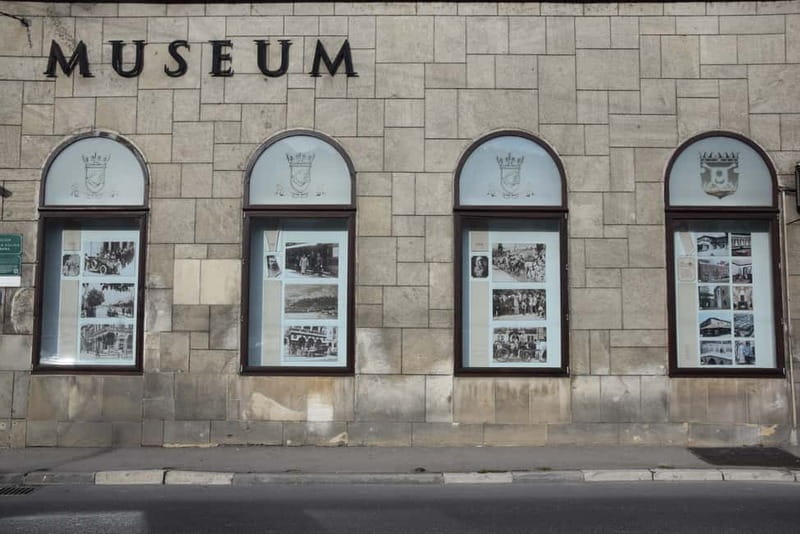
The museum stop is guided, but the itinerary does not promise a long interior visit. If Jewish Sarajevo is a major interest for you, ask how much time is available and consider returning independently. The same applies to the Catholic and Orthodox cathedrals.
This part of the tour also calls for a thoughtful guide. Sarajevo’s past includes cooperation, tension, coexistence, and war. The strongest guide style, reflected in comments about Elma, Bojan, Kenan, and others, is factual but human. Guides have been praised for discussing the 1992 to 1995 war, including personal and family effects, without turning the tour into a political speech.
City Market Hall and the Eternal Flame
The City Market Hall gives you a final look at Sarajevo’s everyday commercial life. The visit is short, around five minutes, but it provides another contrast with the craft streets of Baščaršija.
The last major stop is the Eternal Flame, a memorial that marks the end of the Second World War in Sarajevo. Ending here gives the tour a modern civic note after its long journey through Ottoman and Austro-Hungarian history.
The closing location is useful for the rest of your visit. From here, you are well placed to continue exploring central Sarajevo, return to the Old Town, or follow the guide’s suggestions for meals and other activities. Several guides have been praised for giving practical local recommendations at the end, which is one reason I would book this early in a Sarajevo stay.
Guides, group size, and the feel of the walk
The tour is available in English, German, French, Italian, Spanish, Croatian, and Serbian. Private and small-group formats are offered, though the exact setup depends on the option you choose.
Guide quality is central to this experience. Names praised in individual accounts include Kenan, Elma, Bojan, Masha, Tarek, Hamza, Suad, Emina, Muhamed, and others. The consistent strengths are clear English or other listed languages, patience with questions, local perspective, humor, and the ability to discuss difficult history without becoming grim or evasive.
The group experience can vary. One person found themselves alone and received a private tour, while another described a group of only three. That is a pleasant possibility, not something you should assume. A small group gives you more room for questions, while a larger group can make it harder to hear in noisy squares.
The pace has generally been described as relaxed and well planned, but the route is still ambitious for three hours. You will walk between many stops, spend time standing, and deal with the ordinary noise and crowds of a city center. People with serious mobility limitations should take the warning seriously, even though the activity is also described as wheelchair accessible. Ask the provider to confirm whether the specific departure and route suit your needs.
Is $21 good value?
At $21 per person, this is good value if you want a broad introduction rather than a specialist tour of one museum or period. You receive three hours with a licensed guide and a city map, and the route covers a large number of central sights.
The price does not include food or drinks. That keeps the base cost low, but you should budget separately for baklava, coffee, lunch, or anything you buy in the market. The tour also does not replace return visits to the City Hall, museums, mosques, or cathedrals if you want time inside.
I would compare the cost with the time it saves you. Without a guide, you can walk these streets for free, but you may miss the connections between the bridge, market, religious buildings, and Austro-Hungarian center. For a first morning or afternoon in Sarajevo, $21 is a sensible exchange for orientation and context.
Free cancellation up to 24 hours before the start and reserve-now, pay-later booking add flexibility. Starting times vary, so check availability when booking. The meeting point may also change with the selected option.
Who should book this Sarajevo tour?
I recommend it most strongly for first-time visitors, short-stay visitors, history fans, and anyone who wants a useful introduction before exploring alone. It suits solo visitors particularly well because the guide can provide both company and practical advice without requiring a full-day commitment.
It is also a good fit if you want World War I context but do not want a tour focused only on 1914. You will get the Latin Bridge story, then move into Sarajevo’s food, crafts, religious buildings, architecture, and modern identity.
You may want a different experience if you dislike walking, prefer long museum visits, or already know central Sarajevo well. People with mobility impairments should confirm route conditions before paying, since the general information gives both wheelchair accessibility and a warning that the activity is not suitable for people with mobility impairments.
Final verdict: book it early in your stay
I would book the Grand Walking Tour Through Time and Cultures near the beginning of a Sarajevo visit. Its greatest strength is the guide-led connection between places that might otherwise seem unrelated: a bridge linked to World War I, an Ottoman market, a neo-Moorish city hall, religious buildings, craft streets, and modern memorials.
You should book it if you value clear storytelling, local recommendations, and a broad look at Sarajevo for $21. You should skip it only if you need a slow, fully accessible route or want to spend most of your time inside museums. For most first-time visitors, it is a practical and thoughtful way to get your bearings fast.
FAQ
How long does the Sarajevo walking tour last?
The tour lasts three hours.
How much does the tour cost?
The listed price is $21 per person.
What is included in the price?
A licensed tour guide and a city map are included.
Are food and drinks included?
No. Food and drinks are not included.
Which languages are available?
The tour is offered in German, French, Italian, Spanish, English, Croatian, and Serbian.
Is the tour available as a private experience?
Yes. Private and small-group options are available.
Where does the tour start?
There are two possible starting options connected with UPN BiH and Insider City Tours and Excursions. The meeting point may vary depending on the option booked.
Where does the tour finish?
There are two possible drop-off locations connected with UPN BiH and Insider City Tours and Excursions.
What should I bring?
Bring comfortable shoes and comfortable clothes.
Can I cancel for a refund?
Yes. You can cancel up to 24 hours in advance for a full refund.
Just added around the world
- Walking Tour of Boston’s Freedom Trail★ 4.5 · 77 reviews
- Downtown Freedom Trail Walking Tour – History & Architecture★ 4.5 · 194 reviews
- Boston Seafood Lovers Food and History Walking Tour★ 5.0 · 208 reviews
- Boston “Death and Dying” Walking Ghost Tour★ 4.5 · 223 reviews
- Boston Food of the North End Private Walking Tour★ 5.0 · 174 reviews
- Boston Movie Mile Walking Tour★ 4.5 · 119 reviews
- 1 If By Land Walking Tours★ 5.0 · 95 reviews
- Boston History and Freedom Trail Private Walking Tour★ 5.0 · 117 reviews
Tours, compared.

Magical London: Harry Potter Guided Walking Tour
Read our review →
History and Hauntings of Salem Guided Walking Tour
Read our review →
New Orleans Premier Ghost, Voodoo and Vampire Walking Tour
Read our review →
Amsterdam Anne Frank: Small-Group Walking Tour & Local Guide
Read our review →
Edinburgh Castle: Guided Walking Tour with Entry Ticket
Read our review →
Anne Frank’s Story – Guided Walking Tour through Amsterdam
Read our review →