
Review · SAVANNAH WALKING TOURS
Savannah: Civil War Walking Tour
History comes alive on Savannah’s shaded squares. This 105-minute walk connects the city’s grand homes and military past, showing how Savannah fit into the wider Civil War story rather than treating the conflict as a list of dates. I like the focus on real places, especially the homes linked to William Hardee, James Bartow, and Joseph E. Johnston. I also like the stop connected with Sherman’s headquarters and Field Order #14, where the discussion reaches beyond battlefield strategy into freedom, land, and the political troubles that followed the war. The main drawback is simple: Savannah’s uneven sidewalks, heat, and humidity can make the walk tiring, and one reported departure began 15 minutes late.
The tour costs $20 per person, which is fair if you want context that a trolley ride cannot provide. The guides are the real value. Cathy has earned praise for her teaching style and extra detail, while Zack has been described as funny, lively, and strong on architecture as well as history. Expect an English-language tour with no transportation included, so arrive ready to walk.
Key points at a glance
- Starts at Warren Square: Meet at 22 Habersham Street, inside Savannah’s historic district.
- General’s homes: See houses associated with William Hardee, James Bartow, and Joseph E. Johnston.
- Sherman’s Savannah headquarters: Learn how the city figured into Sherman’s campaign and post-capture decisions.
- Field Order #14: Discuss the promise of 40 acres and a mule, issued in Savannah for formerly enslaved people.
- More than Civil War dates: Guides may connect the war to Savannah’s founding, the American Revolution, pirates, architecture, and later political effects.
- 105 minutes on foot: Wear comfortable shoes, dress for the weather, and budget extra time if the guide expands the discussion.
Starting at Warren Square on Habersham Street

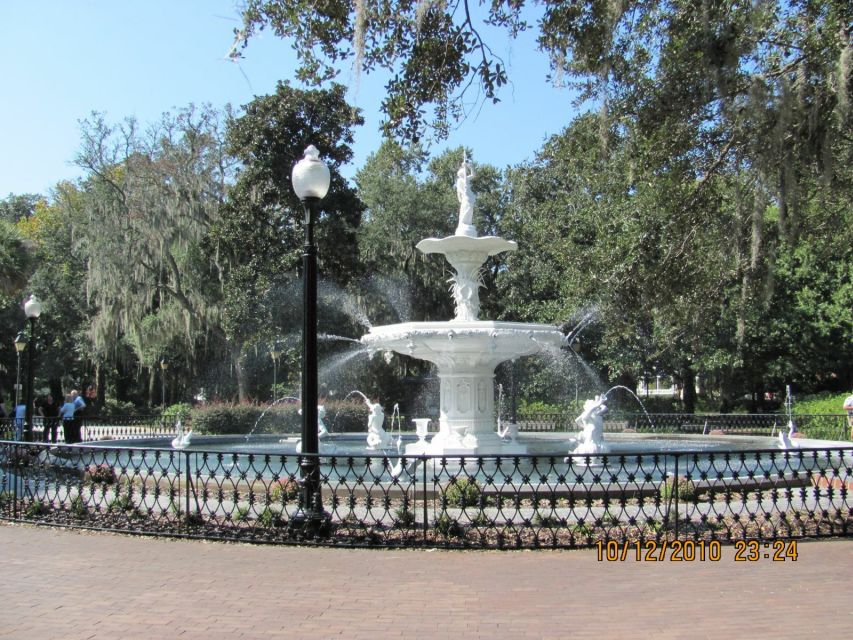
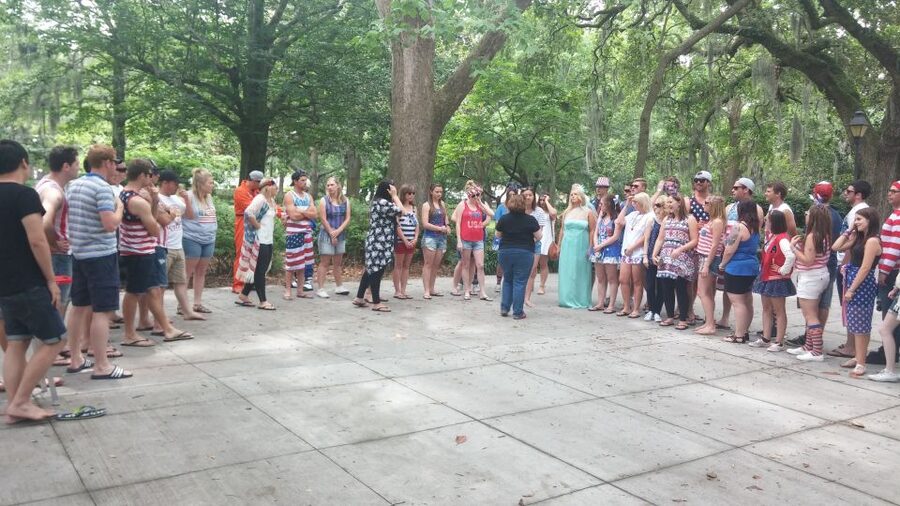
The tour begins at Warren Square, at 22 Habersham Street, enclosed by Congress and Habersham streets. This is a useful starting point because you are already inside Savannah’s historic district, surrounded by the city plan of squares, streets, and historic buildings.
Do not expect a bus or trolley to carry you between stops. The experience is entirely on foot, and the guide uses the streets themselves as the classroom. That matters in Savannah, where a house, square, or street corner can give a history talk a stronger sense of place.
Parking takes a little thought. Metered spaces are available around the departure area. A city garage is also located near Reynolds Square, a couple of blocks east of Warren Square, at Drayton and East Bryan streets, with entrances on Drayton and Abercorn streets. The listed rate is $1 for the first hour, 50 cents for each additional hour, and a maximum of $4 per day.
I would arrive early rather than circle the blocks looking for a space. The meeting point is specific, and a few spare minutes let you find Warren Square, check your shoes, and settle in before the guide begins.
A few more walks around Savannah worth a look
- Savannah History and Haunts Candlelit Ghost Walking Tour
★ 5.0 · 3,235 reviews - Savannah First Squares Culinary & Cultural Walking Food Tour
★ 5.0 · 3,229 reviews - Historic Savannah Guided Walking Tour
★ 5.0 · 2,918 reviews
How the tour builds Savannah’s Civil War story
This is not only a march from one famous house to another. The guide places Savannah’s wartime role inside the city’s longer story, which can include its founding, the American Revolution, pirates, architecture, and the social changes that shaped the city before 1861.
That broader approach is one reason the tour may appeal to you even if you are not a Civil War specialist. Several departures have included useful background on Savannah itself, and one guide was praised for adding architectural history along the route. Another extended the discussion into earlier centuries, starting with pirates.
The advantage is context. You learn why Savannah mattered, not simply which general lived at which address. The possible downside is that the advertised Civil War theme can stretch beyond the war. If you want only military campaigns and battlefield movements, some of the wider history may feel like a detour. If you want to understand the city as a living place, it adds welcome depth.
The generals’ homes and the human side of command
One of the clearest features of the walk is its attention to the homes of prominent Confederate generals. You pass buildings associated with William Hardee, James Bartow, and Joseph E. Johnston.
These stops help turn military names into people connected to Savannah’s streets. A house gives the guide a fixed point for discussing rank, influence, family life, and the city’s role in the Confederate cause. You are not simply hearing about armies moving across a map. You are standing where the city’s leading military figures lived and made decisions.
James Bartow is especially tied to Georgia’s Confederate story, while Hardee and Johnston help broaden the conversation beyond one local personality. The tour’s promise is not a full biography of each man, and you should not expect interior access to the homes. The value comes from seeing their places in the street plan and hearing how those figures fit into Savannah’s wartime politics and military strategy.
The guide’s ability to answer questions matters here. Cathy, one of the praised guides, has been described as patient with questions and strong at supplying extra context. That suits this kind of stop, where your interest may shift from a general’s military career to the building itself or the politics surrounding the city.
Sherman’s headquarters and the meaning of Field Order #14
The most important historical stop is the site associated with General William T. Sherman’s headquarters. Here, the discussion turns to Sherman’s presence in Savannah and the issuance of Field Order #14.
The order is remembered for promising 40 acres of good land and a mule to every freed slave in the area. That detail often enters popular memory as a simple promise. On this tour, it becomes a doorway into harder questions about emancipation, land ownership, military authority, and what happened when national policy changed after the war.
This is where the walk reaches beyond strategy. You hear about the war’s human cost and its political consequences, including the long disputes that continued well after the fighting ended. The subject asks you to think about what freedom meant in practical terms. Freedom without land, security, or political power was not a simple new beginning.
The stop also gives the tour a useful local angle. Savannah was not merely a backdrop to national events. Decisions made here carried meaning for formerly enslaved people and for the country’s postwar direction. If you want a Civil War tour that treats emancipation as central rather than as a brief final chapter, this section is likely to be the strongest part.
Same streets, a different way to see them:
- Savannah’s Ghost City “Dead of Night” Walking Night Tour
★ 4.5 · 2,482 reviews - Southern Flavors Food, Pub Crawl, and History Walking Tour
★ 4.5 · 1,623 reviews - Genteel and Bard’s Savannah Dark History and Ghost Encounter Walking Tour
★ 5.0 · 1,546 reviews - Bonaventure Cemetery Walking Tour with Transportation
★ 5.0 · 1,467 reviews
Military strategy without a lecture-hall feel
The advertised focus on strategy is handled through conversation about Savannah’s position, the movement of armies, and the choices made by military leaders. The exact balance depends on the guide and the questions asked, but the tour is designed as a live talk rather than a silent walk behind a flag.
That format has clear benefits. A good guide can stop when a question comes up, explain a confusing point in plain language, and connect a military choice to a building or street nearby. Past departures led by Cathy and Zack have been praised for humor, steady pacing, and strong command of the subject.
You may also get more than the scheduled 105 minutes. One guide continued beyond the planned time to cover extra points of interest. That is useful if you enjoy a detailed conversation, though it can make the day run longer than expected. If you have a dinner reservation or another timed activity immediately afterward, leave a buffer.
The tour is not a battlefield excursion. It does not include transportation to distant sites, and the supplied details do not promise artifacts, museum entry, or indoor visits. Its strength is the combination of streets, buildings, and spoken explanation.
What the guides add to the experience
The strongest praise centers on the guides’ delivery. People who enjoyed the tour describe the leaders as funny, engaging, enthusiastic, and able to keep the group moving while covering a large amount of information.
Cathy has received particularly strong praise for an educator’s approach. She has been described as open to questions, generous with extra explanations, and willing to give the group more time. Zack has also been praised for mixing Civil War material with architectural history. Other departures have featured guides who used small details and lesser-known facts to keep the walk lively.
That variety is worth noting. A walking tour depends heavily on the person holding the conversation together. The subject can become dry if it turns into a string of names and dates. Here, the best reports point to guides who use humor and stories without losing the main historical thread.
There is one service issue to keep in mind. One departure started 15 minutes late, and the guide did not introduce himself at the beginning. The same account still described the guide as enthusiastic and well informed, but the opening was not as polished as it could have been. A separate comment about calling the group a chick tour was also inappropriate. That appears to be an isolated complaint, but it is fair to note when judging the professionalism of a guided experience.
Walking conditions, pace, and family fit
Wear comfortable walking shoes. Savannah’s sidewalks can be uneven, and one family found a stroller difficult to use. A four-year-old completed the tour, but some walking was required. That makes the experience possible with children, though it is not designed around young kids.
You also need to dress for the weather. Savannah can be hot and humid, and the tour lasts nearly two hours. The pace is described as steady, with enough movement to cover the area while still allowing time for explanations. The guide may pause at houses, squares, and historic sites, but you should still expect to be on your feet for most of the experience.
Small groups can make a major difference. One morning departure had only a few participants and felt almost private. The experience does not guarantee a small group, but a lighter booking can give you more room to ask questions and shape the conversation.
History lovers will get the most from the tour, especially people interested in the Civil War, Reconstruction, military decisions, or Savannah’s built environment. First-time visitors can also use it to get their bearings in the historic district. If you prefer a purely visual sightseeing tour with little talking, this may feel too information-heavy.
Is $20 a fair price?
At $20, the tour is priced below many longer guided city experiences, and the 105-minute duration gives you a solid amount of time with a live guide. Transportation is not included, but that is not a serious weakness here because the central value lies in walking through the historic district.
I consider the price good when the guide is prepared and willing to answer questions. You are paying for interpretation, not admission to a landmark. That distinction matters. The houses and streets are visible from public areas, but the guide gives them meaning and connects them to military strategy, emancipation, and postwar politics.
The value is also stronger for couples or small groups who want something more focused than a general city overview. If you already plan to explore Warren Square, Reynolds Square, and the surrounding streets, the tour adds a clear purpose to that walk.
Tips are not included, so bring a little extra if you feel the guide earned it. The tour also offers free cancellation up to 24 hours before departure and a reserve-now, pay-later option, which can help if your Savannah schedule is still shifting.
Who should book this walk?
I would choose this tour if you want a serious but approachable look at Savannah’s Civil War role. It works especially well for:
- History fans who want military and political context
- Visitors interested in emancipation and the aftermath of the war
- First-time Savannah visitors who want to explore the historic district on foot
- Families with older children who can manage a 105-minute walk
- Anyone who prefers an interactive guide to a recorded narration
I would think twice if you have limited mobility, dislike uneven sidewalks, or need a very tightly timed itinerary. I would also skip it if you want only battlefield tactics and no discussion of the American Revolution, Savannah’s founding, architecture, or earlier local history.
FAQ
Where does the Savannah Civil War Walking Tour start?
It departs from Warren Square at 22 Habersham Street, Savannah, Georgia 31401. The square is enclosed by Congress and Habersham streets.
How long does the tour last?
The scheduled duration is 105 minutes.
How much does the tour cost?
The price is $20 per person.
Is transportation included?
No. Transportation is not included, so you need to reach Warren Square on your own and walk between the stops.
What language is the tour offered in?
The tour is conducted in English with a live guide.
Which historic figures are connected to the stops?
The walk includes homes associated with William Hardee, James Bartow, and General Joseph E. Johnston. It also visits the area connected with General Sherman’s headquarters.
What is Field Order #14?
The tour discusses Field Order #14, issued in Savannah, which promised 40 acres of good land and a mule to every freed slave in the area.
What should I wear?
Wear comfortable walking shoes and dress for the weather. The route includes uneven sidewalks, and a stroller may be difficult to use.
Should you book the Savannah Civil War Walking Tour?
Book it if you want Savannah’s Civil War story explained in the places where it unfolded. The general’s homes, Sherman’s headquarters, and Field Order #14 give the walk a strong local focus, while the guides add strategy, architecture, and political context.
At $20, it is a sensible choice for history-minded visitors who can handle nearly two hours on foot. Go early in the day if possible, allow extra time after the tour, and arrive ready for a conversation rather than a quick sightseeing loop. For a more personal experience, a smaller departure may be worth choosing when available.
Just added around Savannah
- Savannah: Highlights Off the Beaten Path Guided Walking Tour★ 4.8 · 112 reviews
- Savannah: Ghosts, Asylums, Voodoo, and Horror Walking Tour★ 4.5 · 383 reviews
- Savannah: Terrors, Ghosts, and Ghouls Walking Tour★ 4.3 · 171 reviews
- Savannah: History and Culture Walking Tour★ 4.6 · 149 reviews
- Savannah: Local Favorites Walking Food Tour★ 4.7 · 147 reviews
- Savannah: Historic District Foodie Walking Tour★ 4.8 · 613 reviews
- Haunted Savannah Booze and Boos Ghost Walking Tour★ 5.0 · 1,186 reviews
- 2-Hour Bonaventure Cemetery Walking Tour★ 5.0 · 1,270 reviews
Savannah Walking Tours, compared.
Savannah History and Haunts Candlelit Ghost Walking Tour
Read our review →
Savannah First Squares Culinary & Cultural Walking Food Tour
Read our review →

Savannah’s Ghost City “Dead of Night” Walking Night Tour
Read our review →
Southern Flavors Food, Pub Crawl, and History Walking Tour
Read our review →
Genteel and Bard’s Savannah Dark History and Ghost Encounter Walking Tour
Read our review →
Bonaventure Cemetery Walking Tour with Transportation
Read our review →
Browse the lists this tour appears in