

Review · HIDDEN GEMS WALKING TOURS
Savannah: Highlights Off the Beaten Path Guided Walking Tour
Savannah rewards slow walking. This $25 tour pairs the city’s famous squares with quieter streets, ornate ironwork, grand homes, and local stories that are easy to miss on your own. I especially like the route through Forsyth Park and Jones Street, plus the chance to ask questions instead of simply following a script.
The guides, including Dee and Dean, earn repeated praise for clear storytelling, good pacing, and useful restaurant and sightseeing advice. The main drawback is simple: two hours gives you a strong introduction, not a complete tour of Savannah. Restroom access is limited, and warm weather can make even flat streets feel tiring.
Key points to know before you book
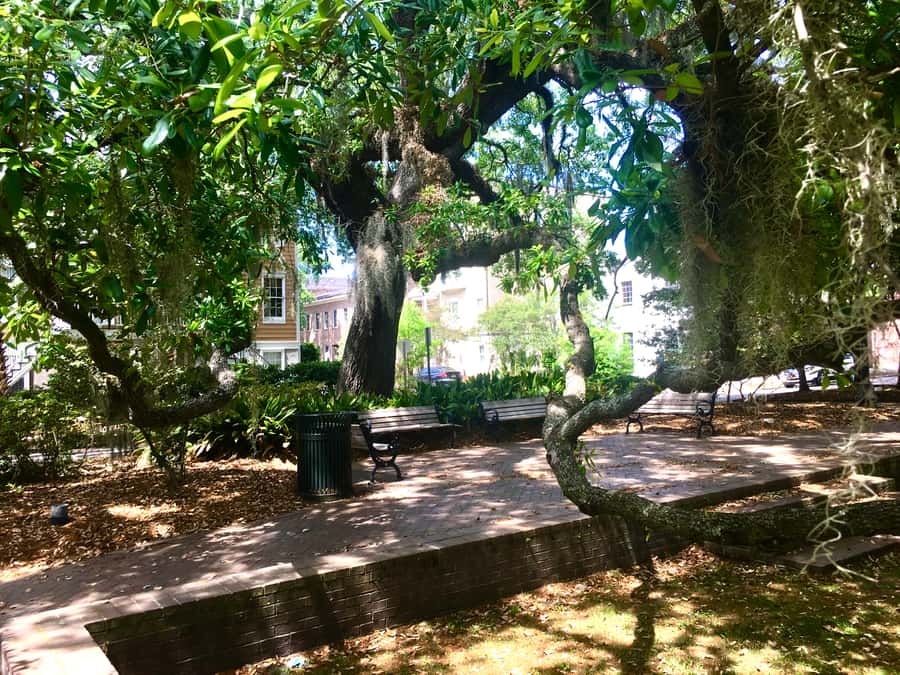
- Start at Forsyth Park: Meet at the northwest corner near Gaston and Whitaker Streets, across from Hodgson Hall.
- See famous squares and quieter streets: The route includes Monterey, Madison, Lafayette, and Chippewa Squares, plus Jones Street.
- Expect history with local detail: Guides connect architecture, botany, true crime, civic life, and Savannah’s changing neighborhoods.
- Allow two hours on foot: The ground is mostly flat but can be uneven, and the tour runs in light to medium rain.
- Best value for first-time visitors: At $25, the tour gives you orientation, context, and practical ideas for the rest of your stay.
- Bring water and weather gear: An umbrella, camera, and suitable clothing are sensible choices.
Starting beneath the live oaks in Forsyth Park
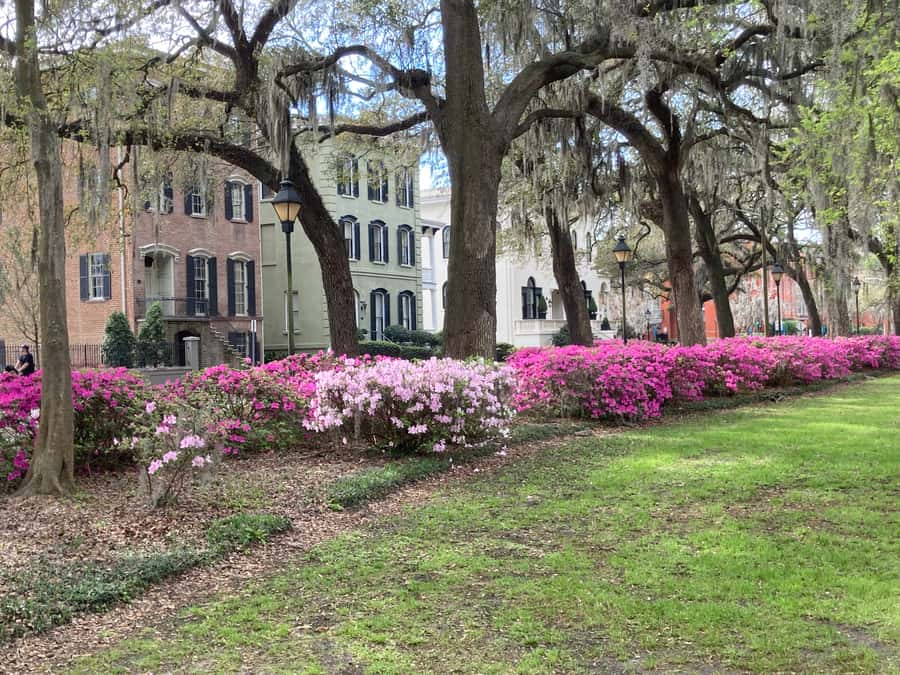
The tour begins at the northwest corner of Forsyth Park, where Gaston Street meets Whitaker Street. Look for the guide wearing a blue tour guide ID. Hodgson Hall, the Georgia Historical Society headquarters at 501 Whitaker Street, is across the road and makes a useful landmark.
Forsyth Park gives you an immediate sense of Savannah’s design. The 30-acre park sits inside the historic district, with broad green space and a canopy of live oaks. It is a calm place to meet before turning toward the denser sequence of squares and buildings.
If you drive, parking is available on side streets south of Gaston Street without meters. Gaston Street itself has meters, so I would aim for the side streets rather than circle the block looking for a closer space.
The opening walk also sets the tone for the tour. You are not simply moving from one photo stop to another. The guide uses the streets, trees, houses, and public spaces to explain how Savannah fits together. That matters because the city can look almost too pretty at first glance. Without context, it is easy to see only moss, mansions, and fountains.
More Hidden Gems Walking Tours in Savannah:
- Dublin Highlights and Hidden Gems Guided Walking Tour
★ 5.0 · 6,020 reviews - Explore Berlin: See All The Iconic Sights & Some Hidden Gems
★ 5.0 · 4,429 reviews - Kyoto Geisha Walking Tour: Gion District & Hidden Gems
★ 4.7 · 3,273 reviews
Monterey Square brings architecture and a famous mystery
Monterey Square is the first major stop. The square is lined with handsome homes and monuments, and it gives the guide room to explain how Savannah’s residential streets developed around public green spaces.
The Mercer House is the attention getter here. Its connection to a notorious local true crime mystery adds a darker edge to an otherwise elegant setting. The story also connects with the world surrounding Midnight in the Garden of Good and Evil, whose characters and places appear later in the city’s cultural conversation.
Across the square, you can admire a striking Gothic synagogue, described as one of the oldest in the United States. That pairing is part of what makes the stop worthwhile: one square brings together domestic architecture, religious history, public memory, and a crime story that shaped how many outsiders first encountered Savannah.
The guide’s role is especially useful here. A self-guided walk might identify the Mercer House and synagogue, but it may not explain why the square feels so different from the streets around it. Dee has been praised for bringing neighborhoods and buildings to life, while also answering questions in detail. That kind of exchange is valuable if you want more than a list of dates.
Savannah’s ironwork is easy to miss
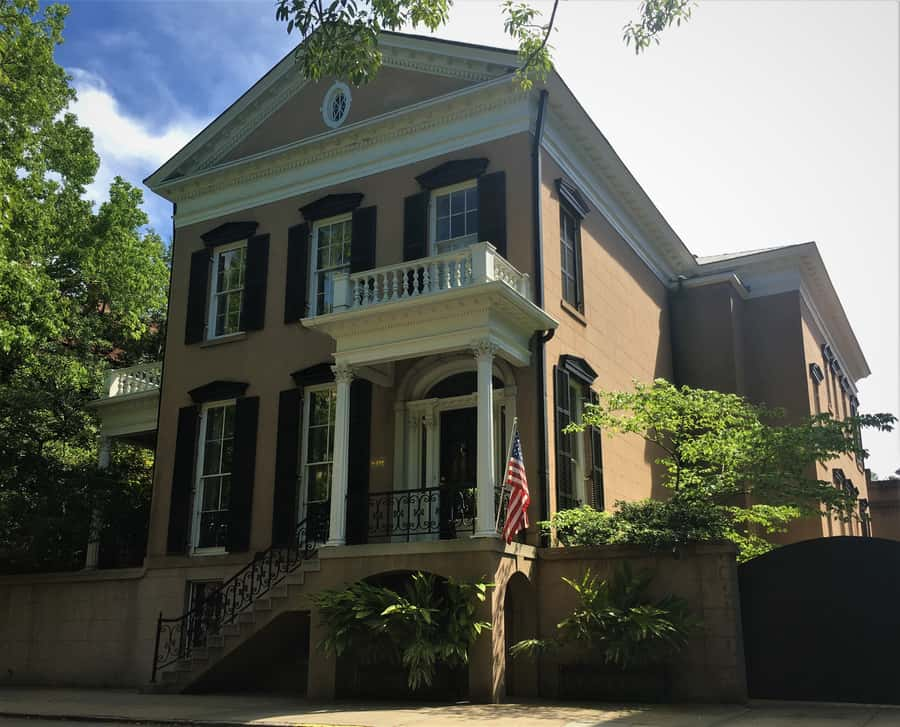
Near Monterey Square, the route turns attention toward ironwork. Look for cast iron, woven wire, wrought iron, and hand-forged gates. Some details are large enough to catch your eye right away, while others sit at the edge of a garden path or entrance.
This is one of the strongest off-the-main-route parts of the walk. Savannah’s buildings tend to get the attention, but gates and fences reveal plenty about taste, security, craftsmanship, and the way private homes meet public sidewalks.
The tour points out contemporary hand-wrought gates as well as older examples. That gives you a more useful view of the district than a simple parade of preserved façades. Savannah is not frozen in one historical period. Old streets continue to support modern homes, shops, institutions, and art-related activity.
Bring a camera, but also look carefully before taking it out. A phone can capture a gate, but it cannot replace the explanation of what you are seeing. This is the sort of detail you might walk past without a guide.
Jones Street offers Savannah at its prettiest
Jones Street is one of the visual highlights. A canopy of live oaks stretches over the road, with Spanish moss hanging above historic homes. Flowers and colorful foliage soften the architecture and make this one of the most enjoyable stretches for a relaxed walk.
The guide explains the houses and the street while keeping the pace comfortable. That balance matters. You have time to look upward at the trees, study the façades, and take photographs without feeling pushed from one stop to the next.
Spanish moss also gives the guide a chance to correct a common misunderstanding. It is not Spanish, and it is not moss. It is an epiphyte, a plant that grows on another plant without taking its food from that host. One guide even pointed out its small spring bloom, a fine example of the extra detail you can gain from someone who pays attention to the city’s plants as well as its buildings.
Jones Street is also a good reason to schedule this walk early in your Savannah visit. Once you have seen it with some explanation, you can return later at your own pace. The tour helps you identify the streets you will want to revisit for photographs or a quieter stroll.
More City Highlights Walking Tours in Savannah:
- Historic Charleston Guided Sightseeing Walking Tour
★ 5.0 · 6,216 reviews - Vienna: Guided Walking Tour of City Center Highlights
★ 4.7 · 4,989 reviews - Florence: Highlights Walking Tour with Expert Guide
★ 4.6 · 4,662 reviews - Bangkok: City Highlights Temple and Market Walking Tour
★ 4.5 · 3,990 reviews
Madison Square adds civic buildings and breathing room
Madison Square changes the mood again. Here, the route takes in civic buildings, monuments, stately houses, and the square’s shaded benches.
This is a practical pause in the walk. You can sit beneath the oaks, enjoy the surroundings, or stop at a nearby café for a refreshment. The tour does not appear to treat every minute as a race toward the next landmark, which is helpful in a city where the best moments often come from lingering.
The square also gives the guide space to discuss Savannah’s public life. The buildings and monuments are not isolated decorations. They show how the city used its central spaces for civic identity and memory.
I would use this part of the tour to ask questions. The guides are repeatedly praised for explaining architecture, people, local customs, plants, restaurants, and the city’s past. If you have already taken a broad historical tour, this is a good point to ask for more detail or clarification rather than waiting for the next stop.
Lafayette Square blends religion, history, and Girl Scout origins
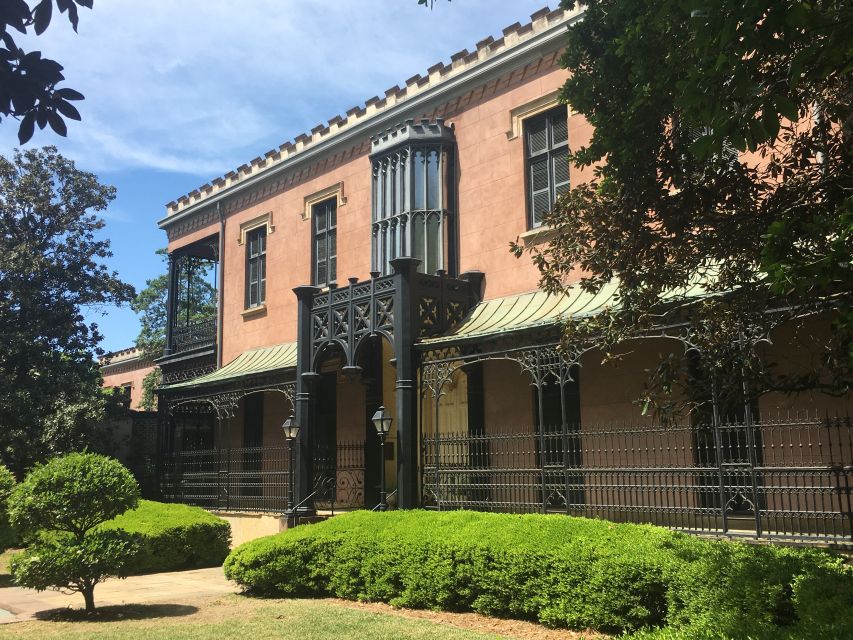
Lafayette Square is another handsome green space, lined with important buildings. Its cathedral is the main architectural feature, and the guide explains the origins of the Girl Scouts here.
That combination makes the stop more interesting than a standard church visit. You get religious architecture, local civic history, and a connection to an organization known far beyond Savannah.
The square is also one of the places where the city’s layout becomes easiest to understand. Savannah’s historic center is built around squares, each with its own buildings, monuments, trees, and character. Walking between them helps you see the plan as a connected system rather than a collection of unrelated attractions.
The route is wheelchair and stroller accessible, though the tour includes flat and sometimes uneven ground. If you use a wheelchair or stroller, the access note is encouraging, but you should still expect ordinary historic-district surfaces rather than perfectly smooth pavement.
Churches and art add a modern note
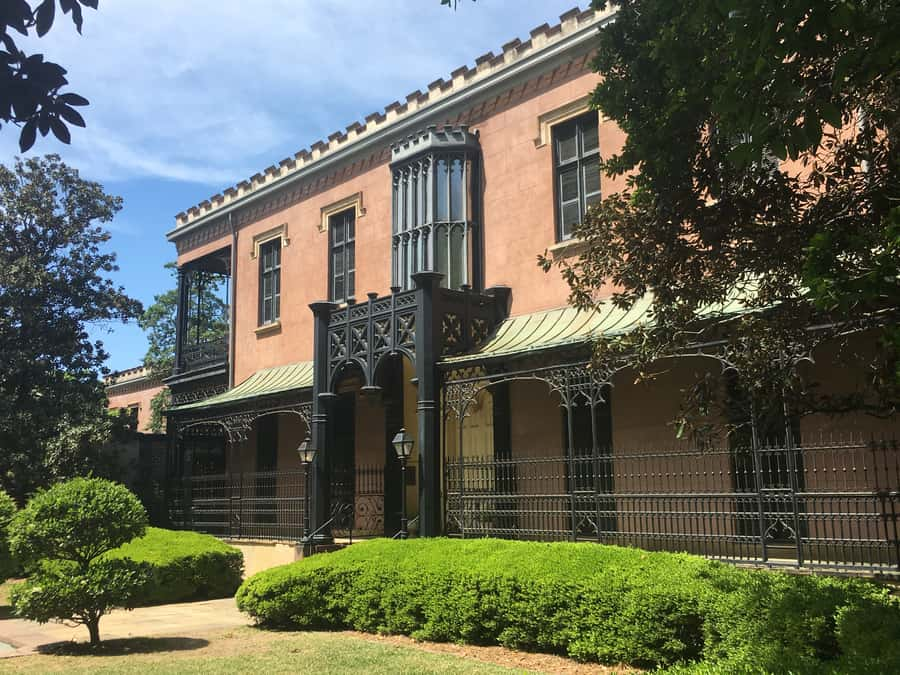
The walk passes the church known locally as the Jingle Bells church, then continues by Savannah College of Art and Design. These stops broaden the story beyond old homes and monuments.
The church adds another recognizable piece of Savannah’s religious and architectural identity. The art college points toward the city’s present-day creative life and its role in keeping historic buildings in active use.
This transition is useful because Savannah can be presented too narrowly as a preserved Southern town. The route shows a place where old structures, public institutions, design, education, and tourism exist side by side.
You may not spend long inside any one building, and the tour is not a museum visit. Instead, the guide uses what you see from the street to explain the city’s character. If you want interior access or long visits at individual landmarks, you will need separate plans.
Chippewa Square closes the loop with James Oglethorpe
The final major stop is Chippewa Square, where you meet James Oglethorpe, Savannah’s founder, in statue form. The guide explains his unusual design for the city and the logic behind its squares.
This is a fitting ending because the earlier stops make more sense once you understand the plan. The parks, streets, monuments, and homes were not arranged at random. Oglethorpe’s design gave Savannah a structure that still shapes the way you explore it today.
Chippewa Square is also familiar from popular culture, which gives the stop an extra point of interest. Still, the city’s planning story is the more useful takeaway. It helps you navigate the historic district and recognize why Savannah feels different from a typical grid-based downtown.
The tour ends back at the meeting point, according to the activity details. Before you leave, ask the guide for ideas on restaurants, museums, shops, and further walks. This practical follow-up is one of the tour’s best features. Dee has been especially praised for restaurant suggestions and for pointing people toward walks they could continue on their own.
What $25 gets you in practical terms
At $25 per person, this is inexpensive for a two-hour guided walk through Savannah’s historic district. You are paying less for admission to a single attraction and more for interpretation, route planning, and local advice.
The value is strongest if you are visiting Savannah for the first time. The guide helps you decide which squares deserve a return visit, which streets are worth exploring slowly, and where to continue after the tour. You also avoid spending your first morning trying to decode a map while missing small architectural details.
The price is less compelling if you only want a quick photo walk. You can see several of these squares on your own, and the tour does not include hotel pickup, food, museum admission, or access inside every building.
Still, the combination of famous sights and less obvious details gives the walk a sensible balance. You get landmarks such as the Mercer House, cathedral, squares, and Chippewa Square, along with gates, plants, side streets, and local stories.
Pace, weather, and comfort on the route
The tour lasts two hours and involves light exercise. The route is mostly flat, but some ground is uneven. Good walking shoes are sensible, especially if you plan to continue exploring afterward.
Savannah’s weather deserves attention. The tour runs in light to medium rain, so bring an umbrella and wear weather-appropriate clothing. A camera is also recommended, though I would add water and sun protection as practical choices for a warm day.
Restroom access is limited. Use facilities before meeting the guide, since you should not count on frequent stops during the walk.
Dogs are welcome but must remain on leashes. That makes the tour more flexible for people traveling with a dog, though you still need to manage the animal around streets, crowds, and historic surfaces.
Who will get the most from this Savannah walk?
I would choose this tour for a first visit, a short stay, or the first full morning of a longer trip. It gives you a clear sense of the historic district before you spend time revisiting favorite squares or entering museums.
It also suits curious walkers who like asking questions. Dee and Dean are praised for explaining history, architecture, plants, restaurants, culture, and nearby Southern cities. The best experience will come from treating the walk as a conversation, not just a moving photo stop.
Families can benefit from the variety of subjects. A true crime story, a Gothic synagogue, unusual gates, live oaks, the Girl Scouts, and a city-planning lesson give the guide several ways to hold attention.
You may want another activity if you have mobility limits that make uneven pavement difficult, dislike walking in heat or rain, or want extensive interior visits. The tour is accessible for wheelchairs and strollers, but the route is still outdoors and restroom access is limited.
Should you book the Off the Beaten Path Walking Tour?
Book it if you want an affordable introduction that mixes Savannah’s famous sights with details you might miss alone. The strongest reasons are the two-hour route, the local guide, the practical recommendations at the end, and the focus on streets and features beyond the usual postcard views.
Skip it if you need transportation, indoor attractions, or a full survey of the entire city. Two hours cannot cover all of Savannah, but it can give you a well-chosen start and a better plan for the rest of your visit.
The 4.8 rating from 112 reviews fits the experience described here: the guides are praised for warmth, clear explanations, thoughtful pacing, and useful advice. With free cancellation up to 24 hours before the start and a reserve-now, pay-later option, the $25 price is an easy commitment for most visitors.
FAQ
How much does the Savannah walking tour cost?
The tour costs $25 per person.
How long does the tour last?
The guided walk lasts two hours.
Where does the tour begin?
Meet at the northwest corner of Forsyth Park, at Gaston Street and Whitaker Street. Hodgson Hall, at 501 Whitaker Street, is across the street.
Where does the tour end?
The activity ends back at the meeting point.
What language is the tour offered in?
The live guided tour is offered in English.
Is hotel pickup included?
No. Hotel pickup and drop-off are not included.
Is the walking tour wheelchair accessible?
Yes. The tour is wheelchair and stroller accessible, though the route includes flat and sometimes uneven ground.
Do dogs have to stay on a leash?
Yes. Dogs are welcome, but they must be kept on leashes.
Does the tour operate in rainy weather?
Yes. The tour takes place in light to medium rain or shine.
What should I bring?
Bring an umbrella, a camera, and weather-appropriate clothing. Restroom access is limited, so plan accordingly.
Just added around Savannah
- Savannah: Ghosts, Asylums, Voodoo, and Horror Walking Tour★ 4.5 · 383 reviews
- Savannah: Terrors, Ghosts, and Ghouls Walking Tour★ 4.3 · 171 reviews
- Savannah: History and Culture Walking Tour★ 4.6 · 149 reviews
- Savannah: Civil War Walking Tour★ 4.3 · 90 reviews
- Savannah: Local Favorites Walking Food Tour★ 4.7 · 147 reviews
- Savannah: Historic District Foodie Walking Tour★ 4.8 · 613 reviews
- Haunted Savannah Booze and Boos Ghost Walking Tour★ 5.0 · 1,186 reviews
- 2-Hour Bonaventure Cemetery Walking Tour★ 5.0 · 1,270 reviews
Hidden Gems Walking Tours, compared.
Dublin Highlights and Hidden Gems Guided Walking Tour
Read our review →
Explore Berlin: See All The Iconic Sights & Some Hidden Gems
Read our review →
Kyoto Geisha Walking Tour: Gion District & Hidden Gems
Read our review →
Ben Youssef, Secret Garden, & Souks Walking Tour
Read our review →
Montmartre Hidden Gems and Scenic Highlights Walking Tour
Read our review →
Guided Walking Tour of City Highlights & Hidden Gems
Read our review →
Paranormal Night Walking Tour & Secret Backstreets
Read our review →Browse the lists this tour appears in