
Review · JEWISH HERITAGE WALKING TOURS
Seville: Small-Group Jewish Quarter Discovery Walking Tour
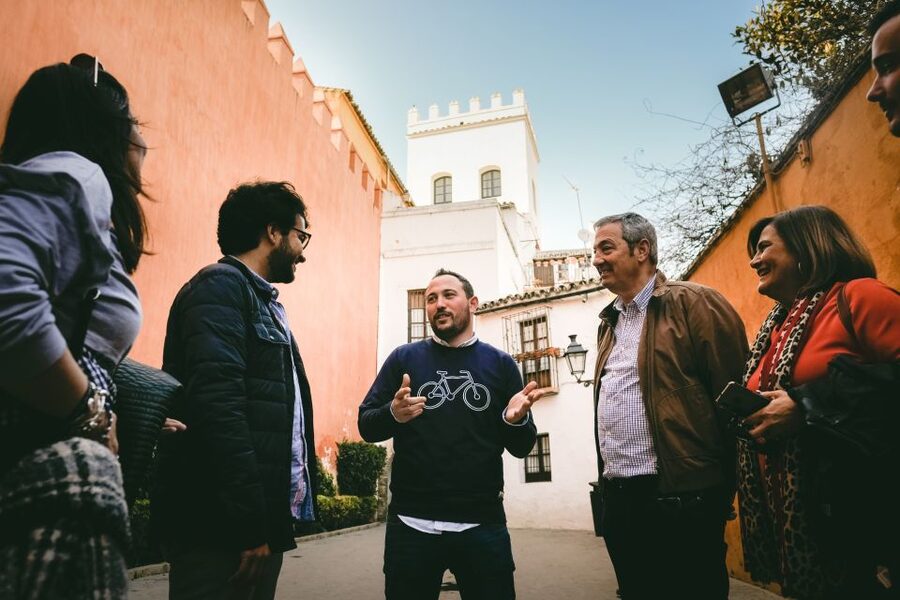
Seville’s past is tucked into narrow streets. I like this small-group walking tour because it connects the former Jewish Quarter to the wider story of Seville, rather than treating Jewish history as a separate footnote. I also like the local guides, including Bárbara, Carmen, Marta, and Valentín, who are praised for clear storytelling and thoughtful answers.
The main tradeoff is time. At 1.5 hours, this is an introduction rather than a full study of Sephardic history. You will see former synagogue locations and physical traces, but entry tickets are not included, and much of the value comes from listening closely as you walk.
Key points to know before booking
- Small groups capped at 10: You can ask questions without shouting across a crowd.
- A focused route through Santa Cruz: The walk includes Plaza del Triunfo, Patio de Banderas, Plaza de Doña Elvira, Callejón del Agua, Santa Cruz Square, and Jardines de Murillo.
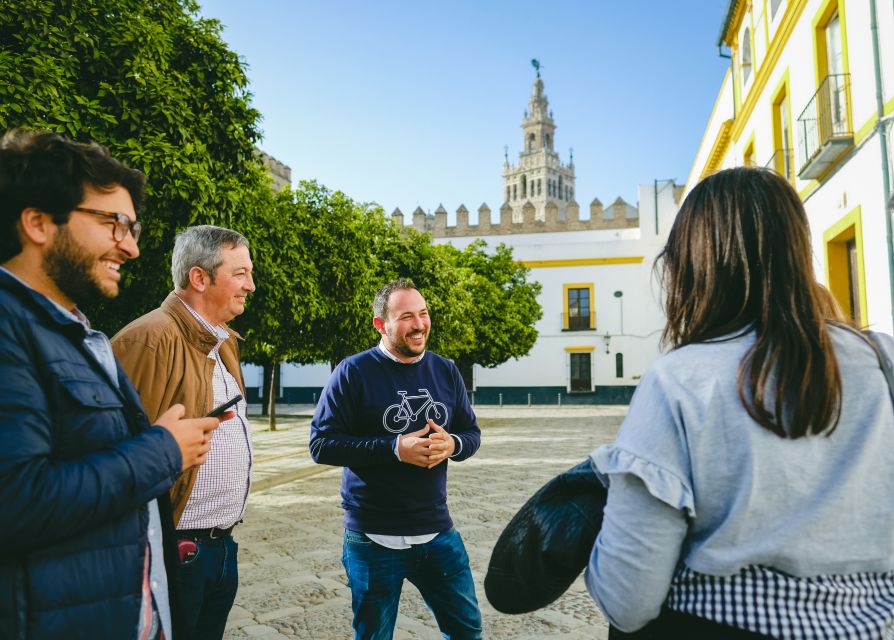
- Strong local guiding: Guides such as Carmen, Marta, Bárbara, Miguel, and Valentín are praised for clear English, warm personalities, and a real command of Seville’s past.
- Former synagogue sites and lesser-known remains: The route goes beyond pretty lanes to discuss places connected with the former Jewish community.
- Good value at $29: For a short, guided introduction with a maximum of 10 people, the price is reasonable, especially if you want context you would not get from simply wandering.
- Outdoor sightseeing in all weather: Wear comfortable shoes, arrive early, and be ready to walk on cobbles and through narrow lanes.
Why this small-group walk is worth your time
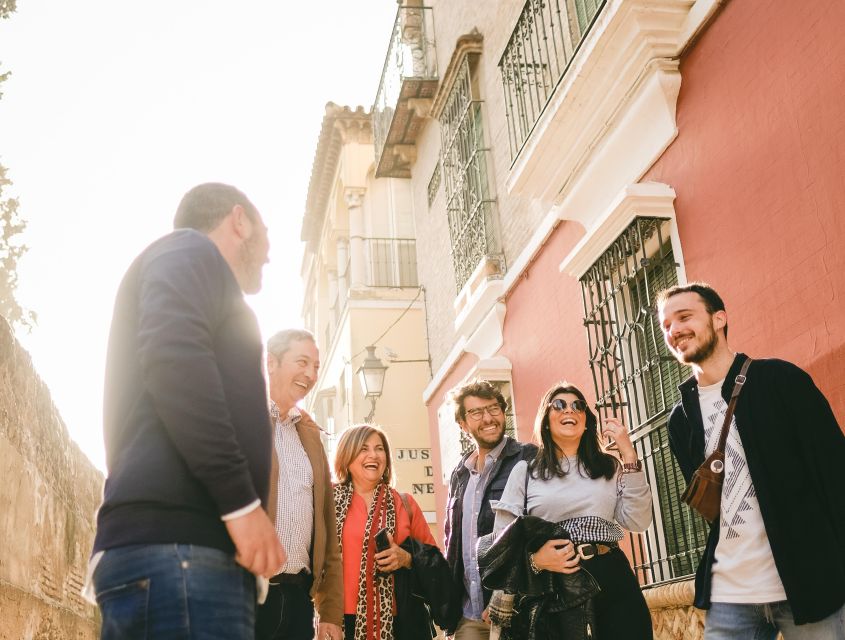
Seville’s former Jewish Quarter is now part of the Santa Cruz district, one of the city’s most photogenic areas. Its whitewashed lanes, small squares, and winding passages are easy to enjoy at face value. The trouble is that pretty streets do not explain themselves.
This tour gives those streets a human story. Your guide discusses how Jewish people lived in medieval Spain, where synagogues once stood, and how different communities shaped the city over time. The emphasis is not only on buildings that survive. It is also on traces that have been altered, covered, or absorbed into modern Seville.
I especially like the scale of the group. With no more than 10 participants, you have a better chance to hear the guide in a narrow lane and ask a question at the right moment. Several visitors ended up with only two, five, or eight people in their group, which can make the walk feel almost private.
The guides also seem to adjust well to different audiences. Carmen has handled groups ranging from young children to older adults, while other guides have spent extra time answering questions when the group was tiny. That matters on a subject that can become either too academic or too simplified. The best guides make the past understandable without flattening it.
More Jewish Heritage Walking Tours in Seville:
- Seville Jewish Quarter walking tour: Santa Cruz District
★ 4.8 · 104 reviews - Seville: Santa Cruz Old Jewish Quarter Walking Tour
★ 4.7 · 87 reviews - Amsterdam Anne Frank: Small-Group Walking Tour & Local Guide
★ 4.8 · 12,789 reviews
Meeting at the Monumento a la Inmaculada Concepción
The walk begins at Plaza del Triunfo, beside the large Monumento a la Inmaculada Concepción. This is a sensible starting point because the square sits near several major Seville sights, including the cathedral area and the Royal Alcázar surroundings.
Look for a guide wearing a white lanyard and carrying a white bag marked Seville Unique Experiences. Tour details may also arrive by WhatsApp, text message, or email, so check those messages before setting out.
Arrive early. The group leaves on time, and latecomers cannot join once the walk has begun. That rule is worth taking seriously in this part of Seville, where a few minutes of confusion can quickly become a wrong turn through a maze of lanes.
The guide begins with a short introduction before leading you into the former Jewish Quarter. This opening is useful because it sets up the difference between what survives physically and what is known through records, urban clues, and local tradition.
Plaza del Triunfo and Patio de Banderas
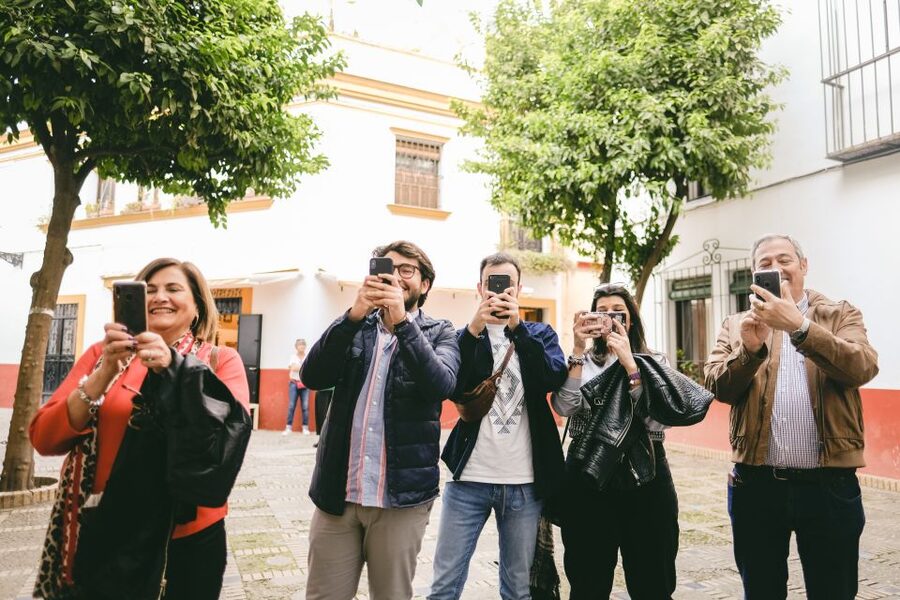
The first stop, Plaza del Triunfo, gives you a broad setting for the story. Rather than rushing directly into the narrow lanes, the guide can explain how the former Jewish Quarter fits beside some of Seville’s best-known monuments.
The stop is scheduled for about 15 minutes. That is enough time to look around, take photographs, and hear the basic historical framework. It also prevents the tour from becoming a quick photo walk with a few dates attached.
From there, the route continues to Patio de Banderas. This area helps you picture the old city as a connected network of quarters, gates, religious buildings, homes, and working streets. The guide’s job here is to link the grand monuments with ordinary urban life.
That connection is one of the tour’s strengths. You are not only hearing about rulers and religious buildings. You are also considering how people lived, moved through the city, and shared or divided urban space.
Plaza de Doña Elvira and the pleasure of getting lost
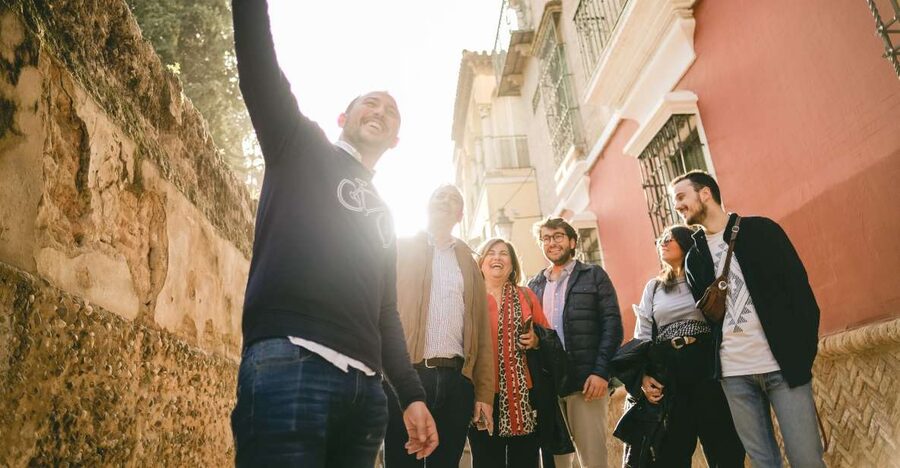
Plaza de Doña Elvira is one of the most attractive stops on the walk. It has the classic Santa Cruz look: a compact square, traditional details, and lanes that seem designed to encourage a slow wander.
This is a good place for photographs, but the visual charm is not the whole point. Your guide uses the square and surrounding streets to explain the former Jewish Quarter and share specific anecdotes connected with Seville.
I would pay attention here rather than treating it as a photo break. The details may be easy to miss on your own, especially when the area is busy. A local guide can direct your eyes toward features that do not appear in a standard guidebook.
The narrow streets also affect the pace. You will not cover large distances quickly, and that is part of the appeal. The route allows time to look up, check corners, and notice how the district’s layout still shapes your experience.
More Small-Group Walking Tours in Seville:
- Seville: Small-Group City Highlights Walking Tour
★ 5.0 · 1,204 reviews - Boston: Freedom Trail History Small Group Walking Tour
★ 5.0 · 6,450 reviews - New Orleans Food Walking Tour of the French Quarter with Small-Group Option
★ 5.0 · 6,118 reviews - Barcelona Tapas and Wine Experience Small-Group Walking Tour
★ 5.0 · 5,804 reviews
Callejón del Agua and former synagogue locations
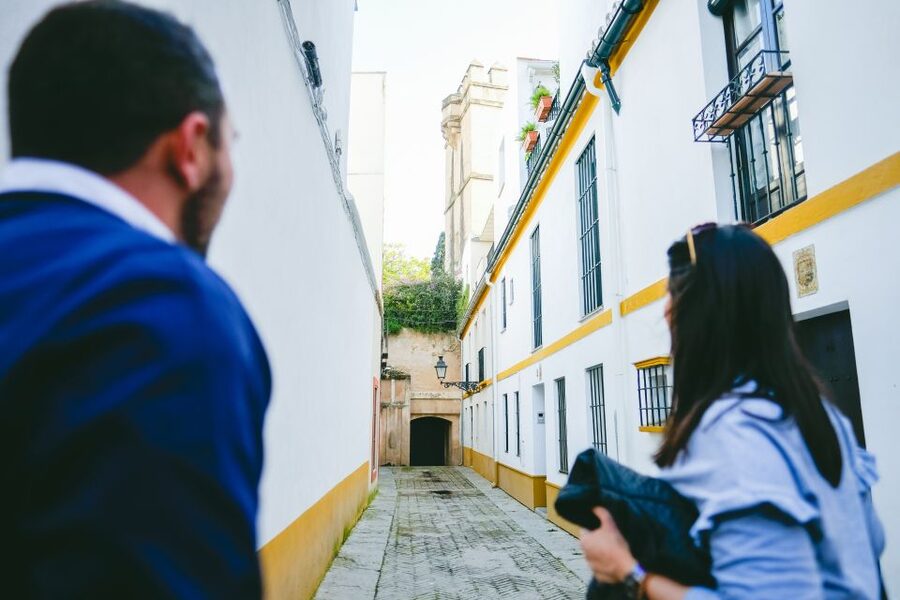
Callejón del Agua is among the tour’s most atmospheric passages. Its name refers to the water channel that once ran alongside the old city wall, and the lane gives you a strong sense of how closely the historic quarter is built.
The guide discusses the area’s past and points out locations tied to the former Jewish community, including places where synagogues once stood. Do not expect a series of intact synagogue interiors. The appeal is understanding how a religious and residential district has changed across centuries.
This is where the tour can correct a common misunderstanding. A Jewish Quarter is not simply a collection of preserved monuments. Much of the story survives through location, street pattern, fragments, and historical interpretation.
Some particularly unusual details have been included on past walks, such as a hidden tomb in an underground parking area and a recently discovered mikvah beneath a restaurant that was still being completed. These examples show why a guide can add real value. You might walk past a modern building without realizing what lies below or nearby.
Because entry tickets are not included, do not book this expecting indoor visits to museums or synagogues. This is primarily an outdoor walk. The historical information is carried by the guide and the streets themselves.
Santa Cruz Square and the wider story of Seville
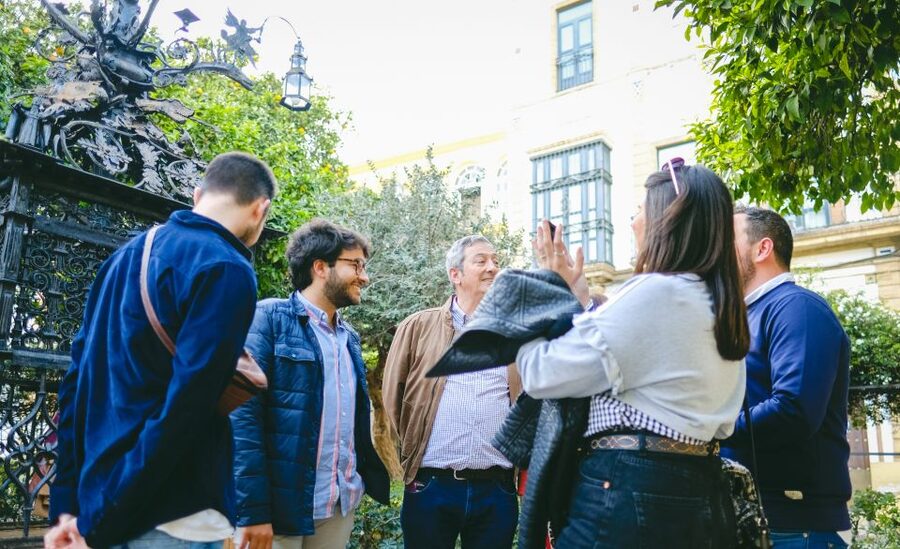
Santa Cruz Square brings the route into one of the district’s most recognizable spaces. It is easy to see why people come here, but the tour gives you a reason to look beyond the surface.
Your guide places the Jewish community within the broader story of Seville, Andalusia, and Spain. That wider context is important. The history of Jewish life here cannot be understood only through one neighborhood, and the strongest guides explain how different cultures left marks on the same city.
Past guests have especially appreciated guides who could connect Jewish history with the story of Seville as a whole. Valentín, for example, has been praised for discussing the Barber of Seville alongside the city’s past. That kind of connection helps the tour feel like a city walk with a clear focus, not a narrow lecture.
The subject also calls for care. Carmen has been praised for treating the history of the Jewish community with compassion and sensitivity. That is an important quality when discussing persecution, displacement, cultural loss, and the complicated legacy of medieval Spain.
Jardines de Murillo and the final stretch
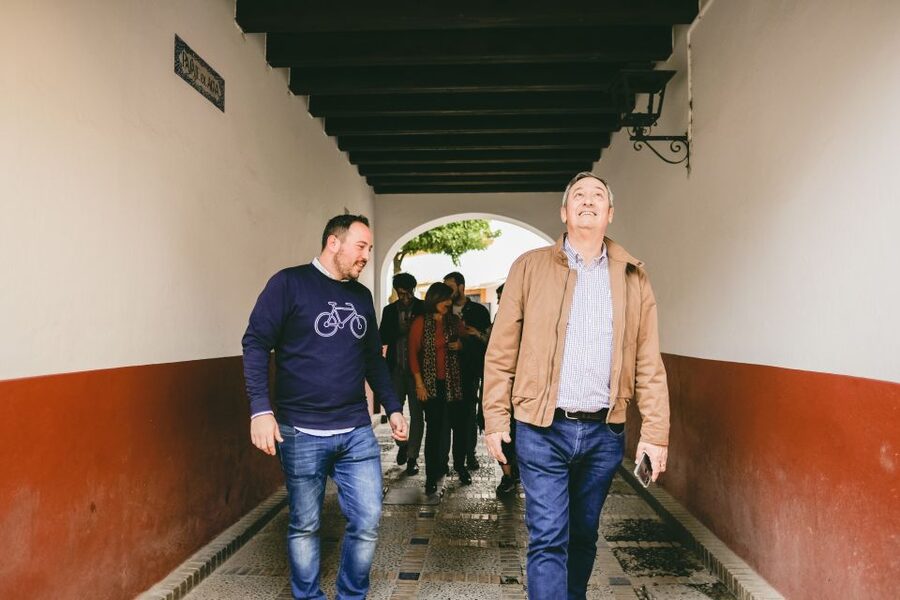
The route then reaches Jardines de Murillo, a more open setting after the tight lanes of Santa Cruz. The gardens give you room to pause and absorb the material before the walk finishes.
This stop is listed at about 15 minutes, like the earlier main points. That structure creates a steady rhythm: walk, listen, look around, and continue. It also gives you enough time for questions without turning the tour into a rushed march.
The walk ends near Iglesia de Santa María la Blanca after about 1.5 hours. Finishing here is useful because you remain in the Santa Cruz area, with plenty of options for continuing your sightseeing.
The final location also reinforces the tour’s focus on religious and cultural layers. You may not enter the church as part of this experience, since entry tickets are not included, but you finish with a better sense of how buildings and streets in Seville have carried different meanings over time.
The guides make the biggest difference
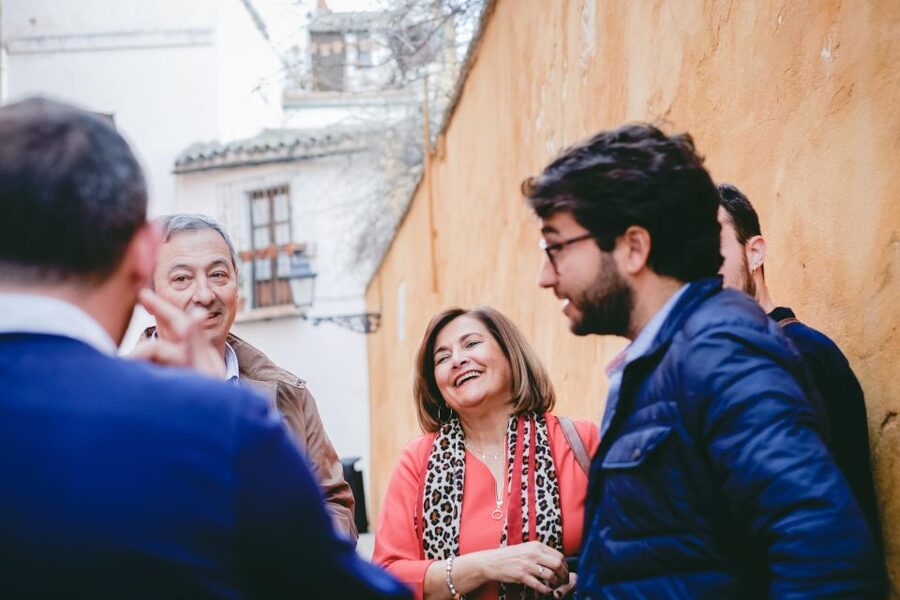
The guide is the heart of this experience. The strongest praise goes to guides who combine facts with stories, answer questions directly, and explain complicated events in plain English.
Bárbara is praised for her historical training and easy conversation. Marta is repeatedly described as warm, thorough, and passionate about Sephardic Jewish history. Carmen receives high marks for making information simple without stripping away context.
Valentín is often described as energetic, personal, and entertaining. Miguel has been praised for giving people enough time at each stop to observe, take pictures, and ask questions. Other guides, including Guillermo, Cristina, Laura, José, Claudio, and Guillemo, have also been singled out for clear explanations and strong local knowledge.
Guide assignments can change, so you should not book on the assumption that one particular person will lead your walk. Still, the range of positive experiences suggests that the provider has several capable guides rather than relying on one star performer.
I also like that the guide may offer suggestions for the rest of your stay. That is not the main purpose of the walk, but it can be useful early in a Seville visit, when you are still deciding what deserves your time.
Price, pace, and practical comfort
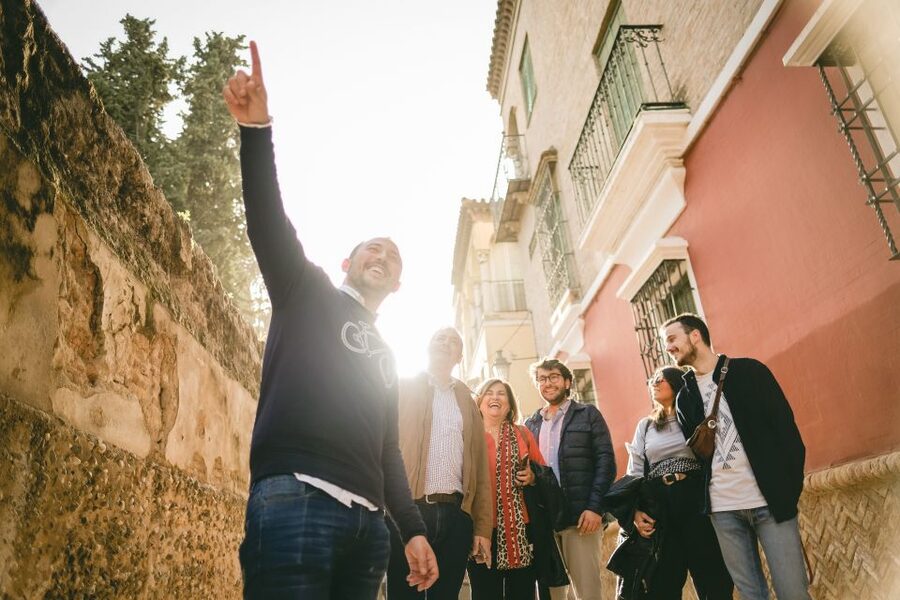
At $29 per person, the tour is fairly priced for a 90-minute guided walk with a maximum of 10 people. You are paying for interpretation, not admission to a major monument, so the value depends on how much you want historical context.
If you enjoy reading a guidebook and exploring independently, you may find the route short. If you want someone to point out former synagogue sites, explain street patterns, and answer questions as you go, the cost is easier to justify.
The walk is wheelchair accessible, but the route includes cobbled streets, narrow lanes, and historic urban spaces. Accessibility does not mean every surface will feel smooth. Comfortable footwear is sensible, and you should prepare for rain or sun because the tour runs in all weather.
There are no transport arrangements involved. You meet at the starting point and walk to the finish near Santa María la Blanca. The 1.5-hour length makes it easy to fit before lunch, after visiting a nearby monument, or during your first day in Seville.
Who should book this Seville walking tour?
I would recommend it to anyone curious about Jewish life in medieval Spain, especially if you want a focused alternative to a general Seville sightseeing walk. It also suits people who enjoy architecture, urban history, and stories tied to ordinary streets.
You do not need to be Jewish to find the subject worthwhile. The walk explains an important part of Seville’s past and shows how cultural memory can survive even when original buildings no longer do.
Families can manage the route, though the historical subject may suit older children and adults best. The small group also works well for solo visitors, couples, and anyone who prefers conversation over a guide speaking to a large crowd.
I would choose a different experience if you want extensive interior visits, a long academic lecture, or a full-day treatment of Jewish history in Andalusia. This is a compact, outdoor introduction with a strong local focus.
Should you book it?
Book this tour if you want to see Santa Cruz with more purpose than simply admiring its lanes. At $29, it offers a good balance of price, personal attention, and historical context, especially when the group is well below the 10-person limit.
The best reason to go is the combination of beautiful streets and details you might otherwise miss, including former synagogue locations and less visible remains. Arrive early, wear good shoes, and keep your schedule flexible enough to listen and ask questions.
Skip it only if you have little interest in history or need substantial indoor sightseeing. For most visitors who want to understand Seville beyond its postcard views, this is a smart, focused walk.
FAQ
How long is the Seville Jewish Quarter walking tour?
The tour lasts about 1.5 hours.
How much does the tour cost?
The listed price is $29 per person.
What language is the tour conducted in?
The guided tour is conducted in English.
Where does the tour begin?
The meeting point is next to the large statue at Plaza del Triunfo, the Monumento a la Inmaculada Concepción.
How do I identify the guide?
The guide will wear a white lanyard and carry a white bag marked Seville Unique Experiences.
Where does the tour finish?
The walk finishes near Iglesia de Santa María la Blanca.
How large is the group?
The small group is limited to a maximum of 10 participants.
Are entry tickets included?
No. Entry tickets are not included in the tour price.
Can I join if I arrive late?
No. You must be punctual because latecomers cannot join once the group leaves the meeting point.
Just added around Seville
- Seville: Sunset Roof Top Walking Tour★ 4.2 · 131 reviews
- Seville: Tapas Walking Tour with Traditional Flamenco Show★ 4.9 · 100 reviews
- Seville: Santa Cruz Old Jewish Quarter Walking Tour★ 4.7 · 87 reviews
- Seville: Paranormal and Legends Guided Walking Tour★ 4.7 · 336 reviews
- Seville: Guided Walking Tour with Optional Breakfast★ 4.7 · 71 reviews
- Seville Jewish Quarter walking tour: Santa Cruz District★ 4.8 · 104 reviews
- Seville: Panoramic Cruise, Hop-On-Hop-Off Bus & Walking Tour★ 4.0 · 147 reviews
- Seville: 1-Hour Walking Tour Barrio de Santa Cruz★ 4.5 · 131 reviews
Jewish Heritage Walking Tours, compared.

Amsterdam Anne Frank: Small-Group Walking Tour & Local Guide
Read our review →
Anne Frank’s Story – Guided Walking Tour through Amsterdam
Read our review →
Jewish Quarter Walking Tour with Admission Tickets
Read our review →
Anne Frank Guided Walking Tour in DE/EN/IT/ES
Read our review →
Old Town and Jewish Quarter Guided Walking Tour
Read our review →
Anne Frank Walking Tour Amsterdam Including Jewish Cultural Quarter
Read our review →
Anne Frank’s Last Walk & See Anne Frank House in Virtual Reality
Read our review →Browse the lists this tour appears in