
Review · NETHERLANDS WALKING TOURS
The Hague: Courtyard Walking Tour
Courtyards hide in plain sight. This 90-minute walk leads you behind The Hague’s walls and houses, where old living quarters, quiet gardens, and charitable foundations reveal a side of the city most people miss. I like the small-group format and the chance to see how a Dutch housing tradition from the 16th century still shapes city life.
I also like the price: $9 per person is a fine deal for a live guided walk. Guides such as Hans and Kees bring warmth and plenty of local information, though the tour is conducted in Dutch, and you may see fewer actual courtyards than expected because the route also includes nearby monuments and streets.
- The courtyards date from the 16th century: These enclosed spaces reflect an old Dutch response to poverty, housing, and charity.
- The route reveals a quieter side of central The Hague: Many courtyards sit behind walls and are easy to miss from the street.
- The tour lasts 1.5 hours: That is enough time for historical context without taking over your day.
- The group is limited to 10 people: You get a more personal walk and a better chance to hear the guide.
- The guide speaks Dutch: This is best for Dutch speakers or anyone comfortable following a Dutch-language tour.
- The price is unusually low: At $9, the walk offers strong value if you care more about local character than major sights.
Why The Hague’s courtyards are worth your time
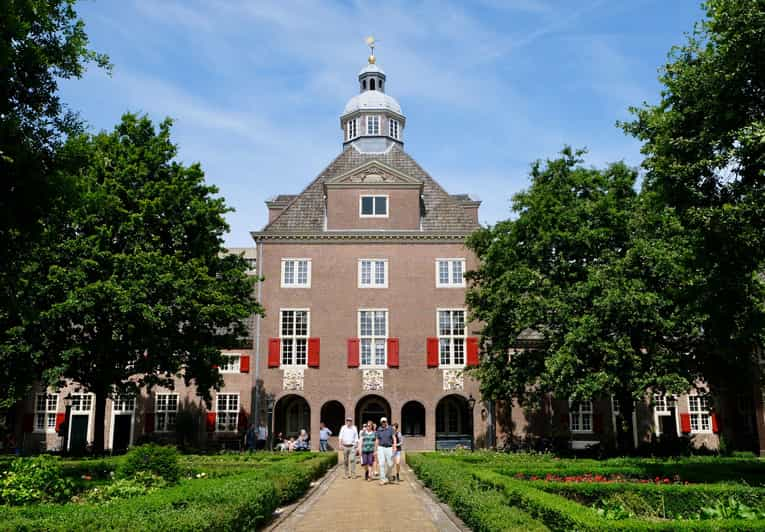
The Hague is known for government buildings, grand avenues, royal connections, and major museums. Yet the city also has a quieter domestic story. Behind ordinary facades are enclosed courtyards where people once lived in small homes arranged around a shared open space.
This form of housing dates to the 16th century. The courtyards were often connected with charity, providing homes for poor or elderly people. That detail gives the walk a human focus. You are not only looking at attractive architecture. You are seeing how a city tried to care for people with limited means.
Today, the courtyards are peaceful residential places. The city outside may be active, but inside these enclosed spaces the mood changes. Walls block much of the street noise, and the layout creates a sense of separation from the surrounding center.
I like this kind of city walk because it makes you pay attention to details you would otherwise pass. A plain doorway can lead to a carefully kept courtyard. A wall may conceal a whole community. The experience rewards curiosity rather than a checklist of famous sights.
Meeting at ’t Goude Hooft
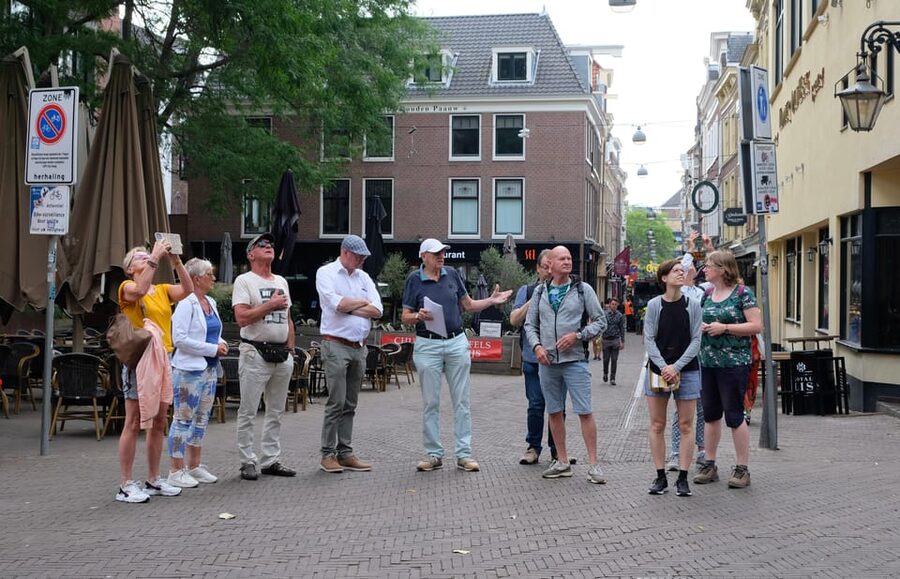
The walk begins at ’t Goude Hooft, at the small square beside it. This gives you a clear central meeting point and places the start within the city center.
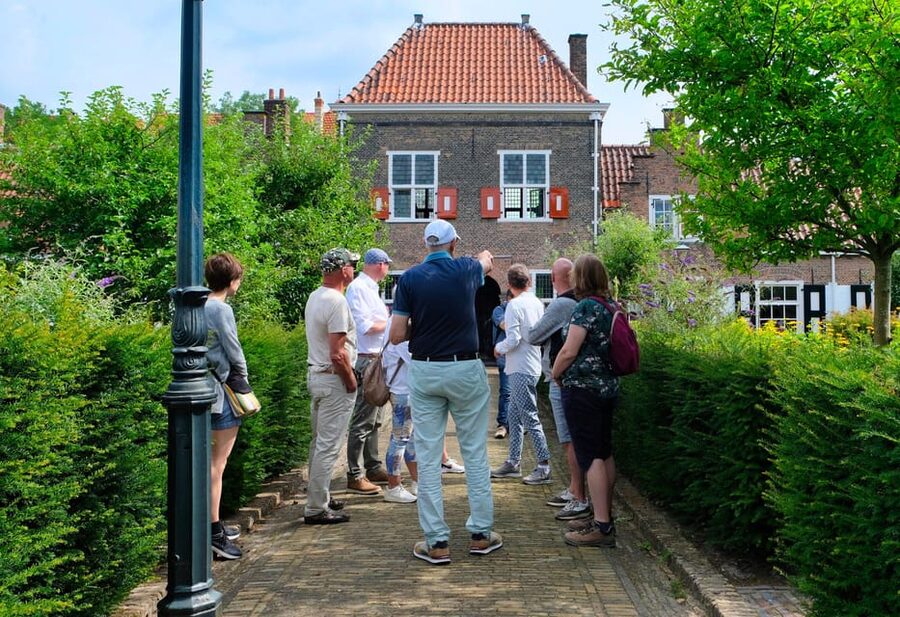
You should arrive with enough time to identify the guide and settle in before departure. Since this is a small group of no more than 10 people, the meeting should feel more personal than a large coach or mass walking tour. A small group also matters in narrow entrances and enclosed courtyards, where a crowd can quickly make the space feel cramped.
The provider is Gilde Den Haag, a local organization offering guided city walks. The guide leads on foot and explains the history or special feature of the places along the route. Guides Hans and Kees have received especially strong praise for their enthusiasm, clear storytelling, and command of local details.
One useful detail is the guide’s willingness to adapt. Hans adjusted the Dutch presentation for two foreign participants, making the walk more accessible to people who were not native speakers. That does not turn the tour into an English-language experience, but it suggests that a polite request for clarification may be worthwhile.
A few more walks around the Netherlands worth a look
- Amsterdam Anne Frank: Small-Group Walking Tour & Local Guide
★ 4.8 · 12,789 reviews - Anne Frank’s Story – Guided Walking Tour through Amsterdam
★ 5.0 · 11,619 reviews - Absolutely Amsterdam – the Essential Introductory Walking Tour
★ 5.0 · 3,629 reviews
Entering courtyards hidden behind city walls
The central idea of the walk is simple: look beyond the street frontage. The courtyards are often barely visible from outside, so the guide’s role is important. You need someone who knows where the entrances are and understands why these spaces matter.
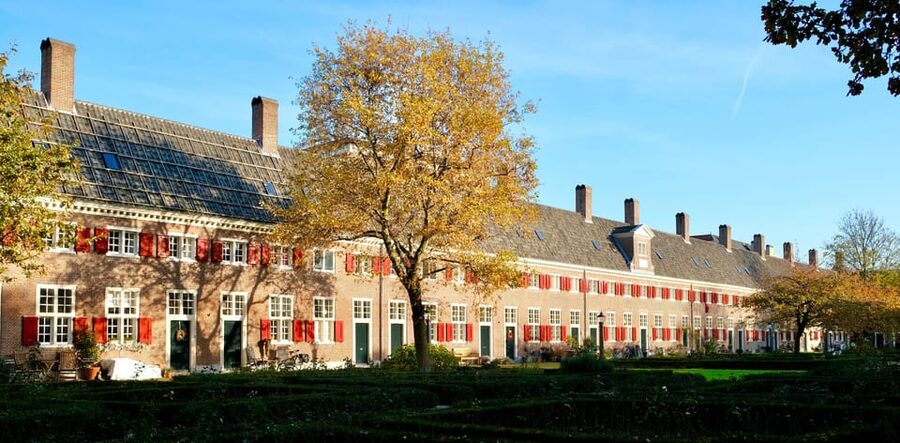
Once inside, you can expect a different atmosphere from the surrounding streets. These are not grand palace gardens or formal museum courtyards. Their appeal comes from their scale, privacy, and connection to daily life.
The buildings were created as homes for poor and elderly residents. Their charitable purpose is part of what makes them interesting. They show a practical side of Dutch history, where housing, religion, private donations, and civic responsibility could meet in one small architectural setting.
The walk also gives you a chance to consider how these places have changed. The residents now enjoy quiet surroundings while still living close to the center. A courtyard that once served people in difficult circumstances remains a lived-in space, not merely a preserved monument.
You should keep your expectations measured. One participant hoped to see more truly traditional courtyards and felt that the route included fewer of them than expected. The rest of the walk made up for that disappointment, but the point is worth noting: this is not a nonstop procession through courtyard after courtyard.
Renaissance details and practical city history

Renaissance design is one of the listed themes, but the experience is broader than a lesson in architectural terms. The guide connects buildings and monuments to the history of the city, giving you context as you walk between the courtyards.
You may hear about the purpose of a building, the people connected with it, or a feature that is easy to miss. The exact stops can vary with the route, so it is better to think of the tour as a guided introduction to a district rather than a fixed museum visit.
That flexibility is useful. You are not simply moving from one famous point to another. You are learning how different locations fit together. A courtyard, a monument, and an ordinary street can all help explain how The Hague developed.
I appreciate the balance between architecture and social history. The Renaissance label may attract visitors interested in design, but the charitable purpose of the courtyards gives the walk more substance. You see how beauty and need could exist side by side.
The guide’s storytelling also matters here. Kees has been praised for his enthusiasm and broad local knowledge, while Hans is noted for his respectful handling of the courtyards and their residents. That respect is important because these are not empty displays. People still live in and around these spaces.
A quiet contrast with central The Hague
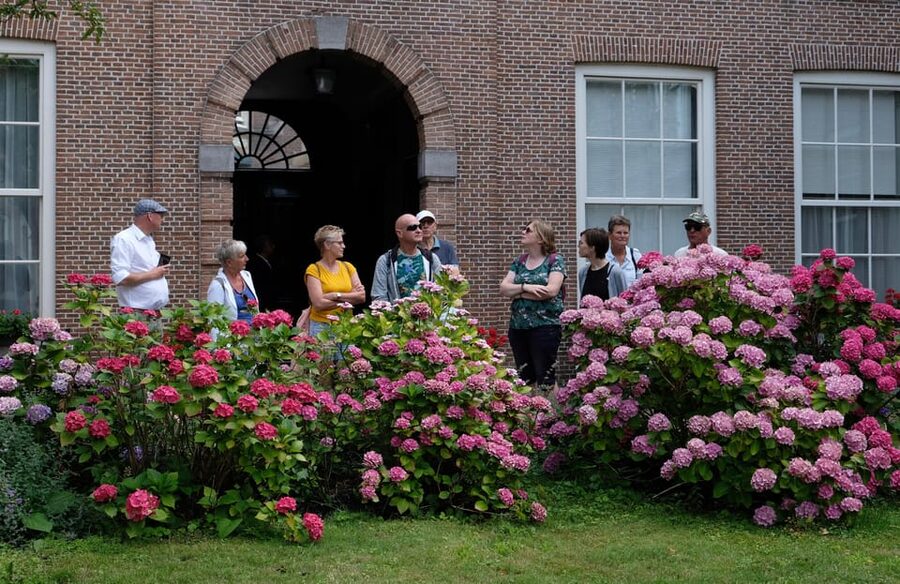
The best part of the route is the change in mood. You begin in a public city setting, then move through entrances that lead to more private places. The contrast helps you understand the courtyards better than a photo or plaque would.
The quiet is not just pleasant. It explains why this form of housing still appeals after 400 years. Residents can remain close to shops, streets, and city services while enjoying a calmer home setting.
For you, that means the walk offers a break from The Hague’s grander sights. If you have already visited major museums or government buildings, this route supplies a more local-scale experience. It shows how people lived, rather than only where important events took place.
The guide also points out other interesting locations and monuments along the way. This is useful if you want more than courtyards alone. It also explains why some participants found the full route satisfying even when the number of courtyard visits felt lower than expected.
The tradeoff is clear. You get a broader introduction to an area of the city, but the experience is not focused exclusively on entering courtyard after courtyard. If that is your only goal, ask at the start how many such spaces the day’s route is likely to include.
Same streets, a different way to see them:
- Amsterdam: Anne Frank Guided Walking Tour in DE/EN/IT/ES
★ 4.9 · 3,107 reviews - Amsterdam: Anne Frank Guided Small Group Walking Tour
★ 4.8 · 2,722 reviews - Amsterdam: Cultural Highlights Walking Tour
★ 4.9 · 2,629 reviews - Amsterdam: Ganja Walking Tour
★ 4.2 · 2,127 reviews
What the Dutch-language format means for you
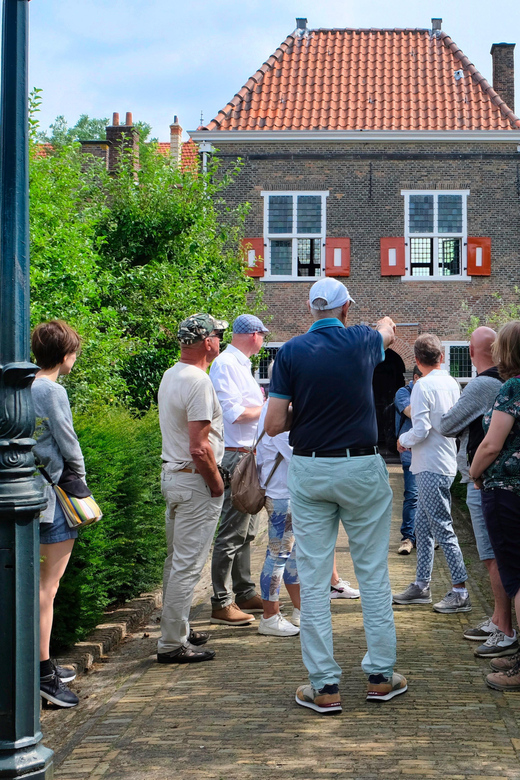
The live guide speaks Dutch. That is the most important practical limitation to understand before booking.
If you speak Dutch, the format should suit you well. The guide can explain small historical points, local names, and social details without translation slowing the walk. The strong ratings, including a 4.5 score from 71 reviews, reflect the appeal of that local-language presentation.
If you do not speak Dutch, the walk may still work if you are comfortable following visual cues and general explanations, but you should not book it expecting an English tour. The guide may adjust the pace or wording, as Hans did for two foreign participants, but English is not listed as an available tour language.
I would recommend this experience to Dutch speakers first, and to bilingual couples or groups who can help one another. It may be less suitable if you want detailed explanations in English or need every historical point translated.
How much walking and time to allow
The duration is 1.5 hours. That makes this an easy addition to a day in The Hague. You can fit it between other activities without giving up half a day.
The route is on foot, and the appeal depends on moving through streets, entrances, and courtyards. Comfortable shoes are sensible, even though the supplied information does not specify the exact walking distance or surface conditions.
The tour is wheelchair accessible, which is a valuable feature for visitors who need step-free access. Still, courtyards and historic entrances can vary, so it is sensible to confirm any specific mobility needs when booking. Accessibility does not mean every historic detail will be equally easy to reach.
There is no indication of a scheduled food, drink, or museum admission stop. The $9 price covers the guided walk itself. Plan accordingly if you need refreshments before or after the tour.
The $9 price and what you receive
At $9 per person, this is one of the easier sightseeing choices to justify. You receive a 1.5-hour walking tour with a live Dutch-speaking guide, a small group limited to 10, and access to places you might not locate on your own.
The value comes from orientation and access rather than expensive admissions. You are paying for local direction, historical explanation, and the chance to notice entrances that are easy to overlook.
That low price also keeps expectations in the right place. This is not a private tour, a full-day excursion, or a museum package. You will not receive transportation, meals, or a multilingual guide as part of the experience.
For a visitor with limited time, the walk works especially well as an introduction to central The Hague. It can help you see the city with sharper eyes afterward. Once you understand that courtyards may sit behind plain walls, you are more likely to notice similar architectural clues elsewhere.
Free cancellation up to 24 hours before the start and the option to reserve now and pay later add flexibility. Those policies are useful if your schedule in The Hague is still changing.
The pet rule deserves attention
Pets are not allowed, except for assistance dogs. This is the official rule and should guide your planning.
One booking created confusion because telephone information had suggested that dogs could join. At the meeting point, the rule was explained differently, and the guide made an exception for a dog named Bruno. Another participant found the presence of a dog uncomfortable because of a fear of dogs.
The practical advice is simple: do not assume a regular pet can come along. If you have an assistance dog, confirm the arrangements in advance. If you are uneasy around dogs, remember that an exception may occasionally be made, even though pets are not normally permitted.
Who will enjoy this walk most
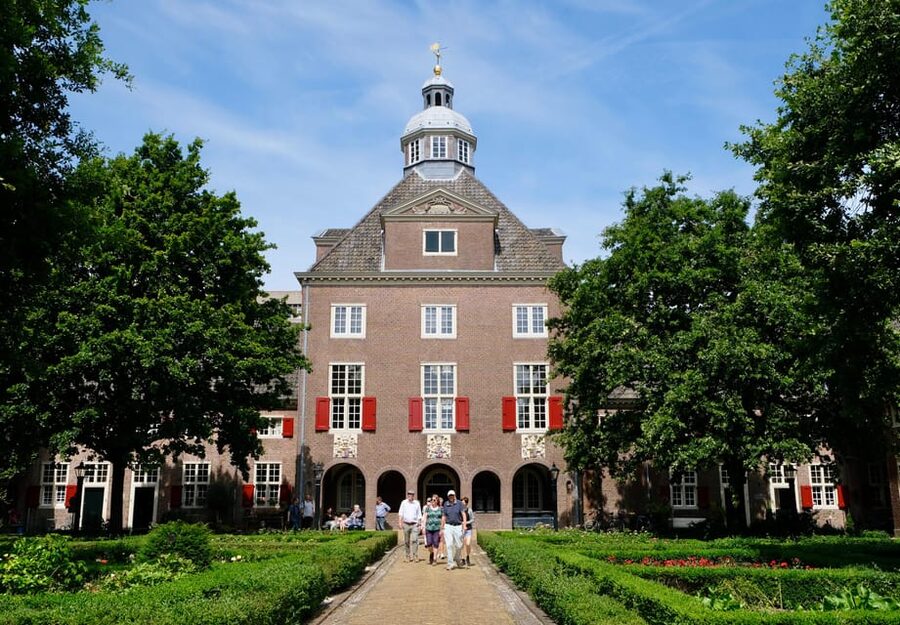
I would choose this tour if you like architecture, social history, and small details. It is especially appealing if you have already seen The Hague’s major attractions and want to understand its residential side.
It also suits Dutch-speaking visitors who enjoy local guides rather than audio commentary. The small group and lively style of Hans and Kees should appeal to people who prefer conversation and explanation over a fixed script.
Families with older children may appreciate the contrast between the busy street and quiet courtyard. The tour is also a practical choice for visitors who want an accessible, short activity in the city center.
I would be more cautious if you want a long list of major sights, a tour in English, or a route devoted only to courtyards. The experience includes other streets, monuments, and points of interest, which is part of its value but may not match a narrowly focused plan.
Should you book The Hague Courtyard Walking Tour?
Book it if you want a low-cost, local look at The Hague’s old charitable housing and quieter corners. The small group, skilled guides, and $9 price make it a strong choice for Dutch speakers, especially if you enjoy social history as much as architecture.
Go in knowing that the route is broader than its name may suggest. You may see fewer traditional courtyards than hoped, but the surrounding monuments and stories add useful context. Confirm the Dutch-language format, follow the pet rule, and ask about the day’s courtyard stops if that is your main reason for booking.
FAQ
How long is The Hague Courtyard Walking Tour?
The tour lasts 1.5 hours.
How much does the tour cost?
The price is $9 per person.
Where does the tour meet?
The meeting point is ’t Goude Hooft, at the small square beside it.
What language is the tour conducted in?
The live tour guide speaks Dutch.
How many people can join the tour?
The group is limited to 10 participants.
Is the tour wheelchair accessible?
Yes, the activity is listed as wheelchair accessible.
Are pets allowed on the tour?
Pets are not allowed. Assistance dogs are permitted.
Can I cancel the booking?
Yes. You can cancel up to 24 hours in advance for a full refund. You can also reserve now and pay later.
Just added around the Netherlands
- Small Group Walking Tour in Amsterdam with Friendly and Fun Guide★ 5.0 · 281 reviews
- Amsterdam: Private Introduction Walking Tour (TOP RATED)★ 5.0 · 223 reviews
- Humans of Amsterdam: Cultural Walking Tour incl. meeting 2 locals★ 5.0 · 320 reviews
- Amsterdam Private Historical Walking Tour★ 5.0 · 75 reviews
- Private Tour: Amsterdam City Walking Tour and Canal Cruise★ 4.5 · 142 reviews
- Anne Frank and Jewish Quarter Amsterdam Private Walking Tour★ 5.0 · 684 reviews
- Small Group Walking Tour – Hello Amsterdam★ 5.0 · 505 reviews
- Amsterdam: Anne Frank and World War II Walking Tour (TOP RATED)★ 4.5 · 72 reviews
Netherlands Walking Tours, compared.

Amsterdam Anne Frank: Small-Group Walking Tour & Local Guide
Read our review →
Anne Frank’s Story – Guided Walking Tour through Amsterdam
Read our review →
Absolutely Amsterdam – the Essential Introductory Walking Tour
Read our review →
Anne Frank Guided Walking Tour in DE/EN/IT/ES
Read our review →



Anne Frank Walking Tour Amsterdam Including Jewish Cultural Quarter
Read our review →Browse the lists this tour appears in