
Review · DUBLIN WALKING TOURS
1916 Rebellion Walking Tour
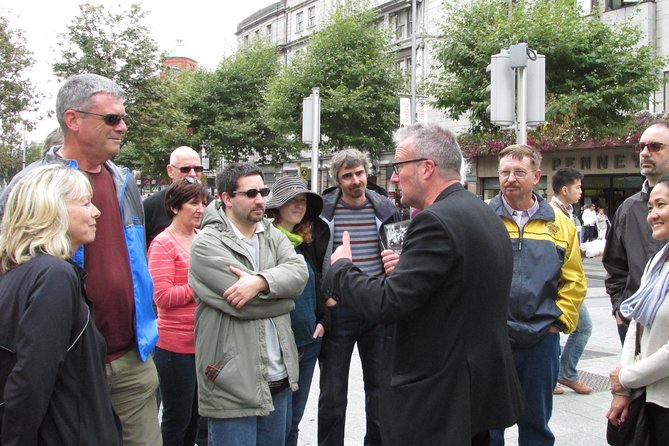
History feels different when you can still see the damage. This walking tour connects Dublin’s 1916 Rising to the Famine, labor movement, War of Independence, and Civil War, giving you a clear story rather than a pile of dates. I especially like the street-level setting and the guide’s use of songs, personal stories, and humor. The main concern is timing: although advertised at about two hours, some groups have taken closer to three.
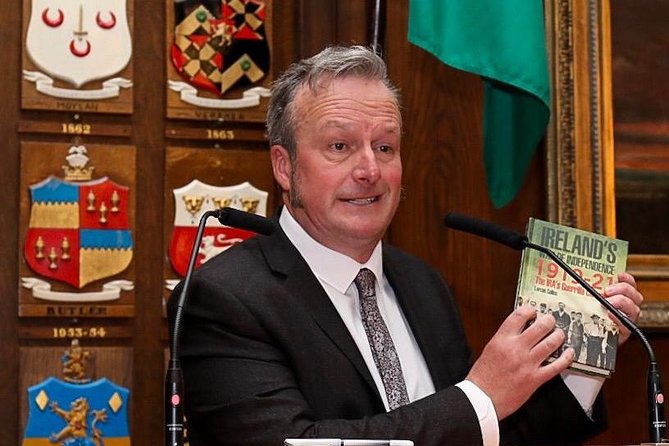
I also like that you do not need prior knowledge. Guides such as Lorcan Collins, Liz, Phelim, Donal, and Elaina explain the political background in plain language, while making room for questions. The group can reach nearly 30 people, so the experience may feel less personal on a busy day, but the 4.9 rating from 1,604 reviews shows how consistently well it works.
Key Points Before You Book

- Begins at the International Bar on Wicklow Street: You can arrive early for a drink and read the introductory material before the walk begins.
- Covers the full revolutionary period: The story starts with the Great Hunger of the 1840s and moves through 1916, the War of Independence, and the 1922 Civil War.
- Includes Dublin’s most important Rising sites: Stops can include City Hall, Dublin Castle, the Four Courts, the GPO, Moore Street, and more.
- The GPO receives the most attention: Expect about 30 minutes here, with a detailed explanation of the Proclamation and Easter Week.
- Guide quality is a major strength: Lorcan Collins has led the tour since 1996, and guides are praised for clear delivery, humor, passion, poetry, and rebel songs.
- Allow extra time: The stated duration is about two hours, but the route and questions can stretch the walk to three hours.
Why the 1916 Rising Makes a Good Walking Tour
The 1916 Easter Rising can be hard to follow if you only read about it in a museum. There were many groups, changing alliances, different political aims, and a short rebellion that helped reshape Ireland. This tour makes those events easier to grasp by placing you at the buildings and streets where decisions and battles unfolded.
You begin with the background. The guide explains the Great Hunger of the 1840s, the long relationship between Ireland and British rule, and the growth of nationalist and labor movements. That opening matters because the Rising did not appear out of nowhere. You get the political and social setting before reaching the famous buildings.
The tour also reaches beyond Easter Week. You hear about the War of Independence and the Civil War, including the conflict surrounding the Four Courts in 1922. That wider view helps you understand why the Rising mattered, while also showing that Irish independence was not a simple, tidy story.
I would not book this as a light sightseeing stroll with a few historical comments. It is a proper history tour delivered while walking through central Dublin. If you enjoy asking questions and following a story across several decades, the format works very well.
A few more walks around Dublin worth a look
- Dublin Highlights and Hidden Gems Guided Walking Tour
★ 5.0 · 6,020 reviews - Dublin: Highlights and Hidden Gems Walking Tour
★ 4.9 · 2,140 reviews - 90 Minute Dublin Walking tour and Sightseeing tips
★ 5.0 · 916 reviews
Starting at the International Bar on Wicklow Street
The meeting point is the International Bar at 23 Wicklow Street, close to public transportation. This is more than a place to gather. It gives the tour a pub-based beginning, with the option to arrive early, buy a drink, and read the introductory material supplied by the guide.
The tour’s founder and long-time guide is Lorcan Collins, who has been running the 1916 Tour since 1996. His name is closely linked with the experience, though the guide on your date may be someone else. Past guides include Liz, Phelim, Phelan, Donal, Donald, Phil, Adam, Elaina, and Fallon.
The introduction is useful for first-time visitors to Irish history. You can ask questions before the group heads out, and the guide explains the route for the day. Since the route changes, you may not visit every possible stop listed below. That variation helps keep the walk from becoming mechanical, but it also means you should not treat the route as a fixed checklist.
Alcohol is available to purchase at the bar, but it is not included in the tour price. I would keep the drink optional. The real value begins once the guide puts the pub, the city, and the rebellion into context.
City Hall and Dublin Castle: Power in the Center of Dublin
City Hall is one of the first important stops. The Irish Citizen Army occupied it during the 1916 Rising, giving the guide a chance to explain the role of this smaller but significant force in the rebellion.
This is where the labor side of the story becomes easier to see. The Rising was not only about constitutional nationalism or military action. Working-class politics and social conditions also shaped the revolutionary period. The stop gives useful space for that part of the story.
From there, the route reaches Dublin Castle. For centuries, the castle was the center of British administration in Ireland. During the Rising and the War of Independence, it represented the authority the revolutionaries were challenging.
You may recognize the castle from the film Michael Collins, but the tour gives it a more useful role than a film location. The guide explains how the castle functioned politically and why control of Dublin’s institutions mattered. Seeing City Hall and Dublin Castle close together also helps you picture the geography of power in the city.
Four Courts and the Road Toward Civil War
The Four Courts was occupied by revolutionaries during the 1916 Rising and again in the period leading to the Irish Civil War in 1922. The building is usually viewed from a bridge over the River Liffey rather than approached directly.
That viewpoint is practical. From the bridge, you can see the building as part of the city rather than as an isolated monument. The guide uses the stop to explain both the Rising and the later split among Irish nationalists.
This is one of the more demanding parts of the tour because the political details can become complicated. The guide’s job is to explain the Civil War without losing the main thread. If you want only the familiar story of Pearse and the GPO, this section may feel like extra detail. I think it earns its place because it shows what followed independence efforts and why 1916 cannot be understood on its own.
Same streets, a different way to see them:
- Dublin Historical Centre Food Tour with 8 Food Tastings & Drinks
★ 5.0 · 1,718 reviews - 2-Hour Historical Walking Tour from Dublin
★ 5.0 · 875 reviews - Historical 2-Hour Guided Walking Tour of Dublin
★ 4.7 · 865 reviews - Dublin: Mythology, Folklore and Legends Walking Tour
★ 4.9 · 703 reviews
Bullet Holes at the O’Connell Monument
At the O’Connell Monument, the group examines bullet holes left from the Rising. Physical marks like these can make the events feel immediate in a way that a date on a timeline cannot.
The guide explains where the British and Irish forces were positioned and how the monument fit into the fighting. This is also a good example of the tour’s main strength: you are not just hearing about a building or statue, you are being shown evidence on the object itself.
The stop is short, but it helps break up the longer explanations. You get a concrete detail to remember, along with a better sense of how fighting spread across central Dublin.
Jim Larkin, James Connolly, and the Working Class
The statue of Jim Larkin provides a clear link to Ireland’s labor movement. Larkin, a union organizer from Liverpool, was a close comrade of James Connolly and an important figure for Dublin’s working class.
This stop adds needed balance. A tour focused only on military leaders can make the Rising seem like the work of a small group of men with rifles and speeches. The discussion of Larkin and Connolly brings social inequality, workers, and organizing into the picture.
The tour also gives space to the role of women in Irish social and political history. Elaina, one of the guides praised for this subject, is noted for explaining women’s contribution in a way that works well for visitors unfamiliar with Irish history. The amount of time devoted to this topic can vary by guide, but it is a welcome part of the broader story.
The General Post Office: The Tour’s Main Event
The General Post Office is the most important stop on the route. It served as headquarters for the revolutionaries in Dublin, and Patrick Pearse read the Proclamation of the Irish Republic here.
The group spends about 30 minutes at the GPO, longer than at most other locations. That extra time is justified. The guide explains what happened during Easter Week, identifies the building’s role, and places the Proclamation within the political mood of the time.
The GPO is also one of the strongest visual stops. Its connection to the Rising is obvious, and the building remains part of Dublin’s daily life rather than being hidden away in a distant memorial complex. You can listen to the history while standing in the center of the city where the rebellion unfolded.
Guides often make this section memorable through performance. Past tours have included poetry and rebel songs, with guides such as Phil and Phelim using music to show how the Rising entered Irish memory. This is not a concert, and the singing will depend on the guide, but it gives the walk a human quality that a standard lecture lacks.
The tone is generally serious, but not grim from start to finish. Good guides use humor at suitable moments, then return to the weight of the events. That balance is one reason the tour works for people who want real history without a dry classroom presentation.
Moore Street and the Last Stand of the GPO Garrison
If time allows, the route continues to Moore Street. This is where the GPO garrison made its final stand during Easter Week.
The stop adds a sense of movement to the story. You have heard about the GPO as headquarters, and Moore Street helps show what happened as the rebels were forced from the building. The guide can connect the streets, the fighting, and the final stage of the Rising.
This is also where the variable route matters most. Moore Street may not be included on every walk, depending on timing and the guide’s chosen route. If seeing it is especially important to you, ask about the day’s plan at the start.
The Old Parliament and Trinity College
The Bank of Ireland, often called the Old Parliament, may also be included. Its role in Irish political history is discussed along with neighboring Trinity College.
This stop broadens the tour again. The GPO represents open rebellion in 1916, while the Old Parliament points to older systems of political power and Ireland’s constitutional past. The proximity of Trinity College adds another layer to the city’s political and intellectual story.
Because the route changes, this may be a shorter stop or may not appear at all. That is not a flaw, but you should book the tour for its overall treatment of Dublin’s revolutionary period, not for a guaranteed visit to every building.
What the Guides Do Best
The strongest part of this experience is the delivery. The guides do more than recite dates. They tell stories, answer questions, connect places, and adjust the explanation for people who may be hearing the subject for the first time.
Lorcan Collins is known for his long association with the tour and for a direct, passionate style. Liz is praised for fitting a large amount of material into a short period. Phelim and Phelan are noted for clear explanations, humor, and singing. Donal and Donald are praised for enthusiasm and strong storytelling, while Elaina brings special attention to women’s roles.
The guide names matter because the experience can vary by person. Still, the consistently high score suggests a dependable standard. You should expect a lively delivery rather than a quiet audio-guide approach.
The format also encourages questions. That makes the tour useful for both beginners and people who already know the basic story. If you have Irish family connections or have studied the Rising, you can ask about details. If you are new to the subject, you can get the basic structure without feeling lost.
Pace, Group Size, and Practical Comfort
The walk is advertised at about two hours, with many stops lasting 15 minutes. The GPO usually receives about 30 minutes. In practice, allow three hours if you want to avoid a rushed afternoon, especially if the guide takes questions or the group is close to the maximum size of 30.
A larger group can make it harder to hear in noisy streets. Several guides are praised for speaking clearly and loudly, but you should still stay near the guide and keep an eye on the group at crossings and crowded areas.
The tour requires walking between central Dublin sites and takes place outdoors. It requires good weather, and poor weather can lead to a different date or a full refund. Children must be accompanied by an adult, and most people can participate.
The tour ends back at the meeting point. That is handy if you want to leave bags at your accommodation nearby or continue with a pub visit, meal, or another central Dublin activity afterward.
Is the $27.81 Price Good Value?
At $27.81 per person, I consider this good value for a two-hour guided history walk, particularly because the experience includes a professional guide and several major Dublin landmarks without separate admission charges.
The real value comes from interpretation. You can walk past City Hall, Dublin Castle, the GPO, and the O’Connell Monument for free, but you will not automatically understand what happened at each place. The guide turns ordinary city streets into connected scenes from Ireland’s revolutionary period.
The price is less attractive if you want a short, fixed route with no extra discussion. A group that runs closer to three hours may be a problem if you have a tight schedule, though many people will see the added time as a benefit. Alcohol at the starting pub costs extra, so factor that in only if you plan to order a drink.
Free cancellation is available up to 24 hours before the start time. Changes or cancellations made less than 24 hours before the tour do not qualify for a refund.
Who Should Book This Dublin History Walk?
You should book it if you want to understand why 1916 matters, not just take photographs of the GPO. It suits history buffs, visitors with Irish family connections, and anyone who likes a guide who can tell a story with energy.
It is also a good choice if you know very little about Ireland. The opening explanation builds the background carefully, and the guide can answer basic questions without making you feel unprepared.
I would be more cautious if you have limited walking time or want a quiet sightseeing tour. The route can run long, the group may reach 30 people, and the subject includes battles, executions, political conflict, and civil war. It is engaging, but it is not casual entertainment alone.
Should You Book the 1916 Rebellion Walking Tour?
Book it if you want a serious but lively introduction to modern Irish political history. The GPO, bullet holes at the O’Connell Monument, City Hall, Dublin Castle, and the Four Courts create a strong sequence of places, while the guides add songs, poetry, humor, and personal detail.
Go in with two expectations: the route may change, and the two-hour estimate may stretch. If you can spare the extra time and stay engaged with the story, the $27.81 price is well spent. For a first visit to Dublin, this is one of the better ways to understand how the city’s streets became part of Ireland’s national story.
FAQ
Where does the 1916 Rebellion Walking Tour begin?
It begins at the International Bar, 23 Wicklow Street, Dublin, D02 VH59, Ireland.
Where does the tour end?
The tour ends back at the meeting point on Wicklow Street.
How long does the tour last?
The advertised duration is approximately two hours. The walk can take closer to three hours, depending on the route, group size, and questions.
What language is the tour offered in?
The tour is offered in English.
What is included in the price?
A professional guide is included. Admission tickets for the listed outdoor stops are free.
Are drinks included?
No. Alcoholic drinks are available to purchase at the meeting point, but they are not included in the tour price.
Do I need prior knowledge of Irish history?
No. The tour begins with background on the Great Hunger and the events leading to the 1916 Rising, so beginners can follow the story.
What sites might the tour visit?
Possible stops include City Hall, Dublin Castle, the Four Courts, the O’Connell Monument, the Jim Larkin Statue, the General Post Office, Moore Street, the Bank of Ireland, and Trinity College. The route varies.
How many people can join the tour?
The maximum group size is 30 people.
Can I cancel for a refund?
Yes. You can cancel at least 24 hours before the start time for a full refund. If poor weather causes the tour to be canceled, you will be offered another date or a full refund.
Just added around Dublin
- Dublin: North Quay Guided Ghost Walk★ 4.2 · 144 reviews
- Dublin: Traditional Pub Walking Tour★ 4.6 · 295 reviews
- Dublin: Macabre History Walking Tour★ 4.9 · 95 reviews
- Dublin: Mythology, Folklore and Legends Walking Tour★ 4.9 · 703 reviews
- Dublin: Traditional Pubs Walking Tour with Local Guide★ 4.9 · 112 reviews
- Dublin: Delicious Walking Food Tour★ 4.9 · 137 reviews
- Dublin: Irish Music Walking Tour with Live Performance★ 4.8 · 137 reviews
- Dublin: Highlights and Hidden Corners Walking Tour★ 4.8 · 79 reviews
Dublin Walking Tours, compared.
Dublin Highlights and Hidden Gems Guided Walking Tour
Read our review →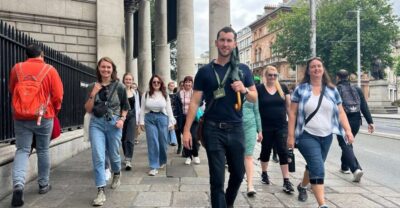

Dublin Historical Centre Food Tour with 8 Food Tastings & Drinks
Read our review →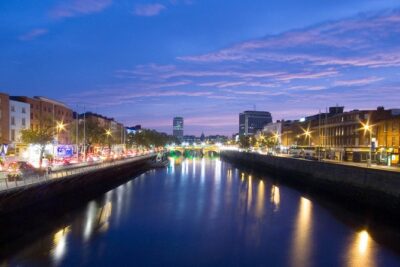
90 Minute Dublin Walking tour and Sightseeing tips
Read our review →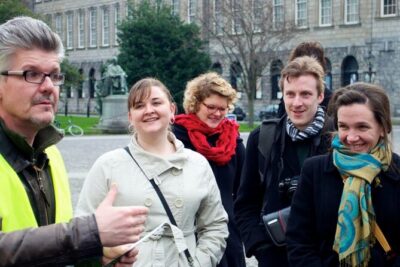
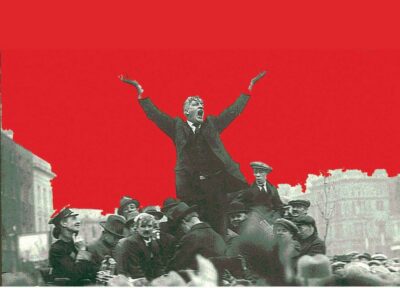
Historical 2-Hour Guided Walking Tour of Dublin
Read our review →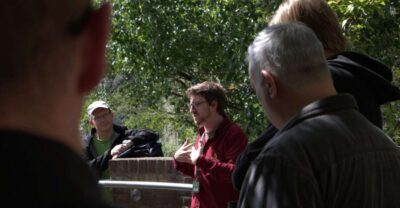
Dublin Highlights: 2.45-Hour Walking Tour in Italian
Read our review →Browse the lists this tour appears in