

Review · CULTURAL WALKING TOURS
Amsterdam: Cultural Highlights Walking Tour
Amsterdam reveals itself best on foot. This two-hour cultural tour links Dam Square, canal houses, Begijnhof, and the Amstel with stories about daily life, war, art, and modern Amsterdam. I like the clear city overview and the useful advice on food, districts, and getting around by bike. The main drawback is that two hours gives you a broad introduction, not much time inside any one sight.
I also like the range of voices among the guides. Sonja, Francesco, Lili, Alex, Deborah, Stephanie, and others have earned praise for friendly delivery, humor, and thoughtful answers. The walk is a good first-day choice, though wet weather and crowded streets can make finding the group or hearing every word harder.
Key points to know before you go
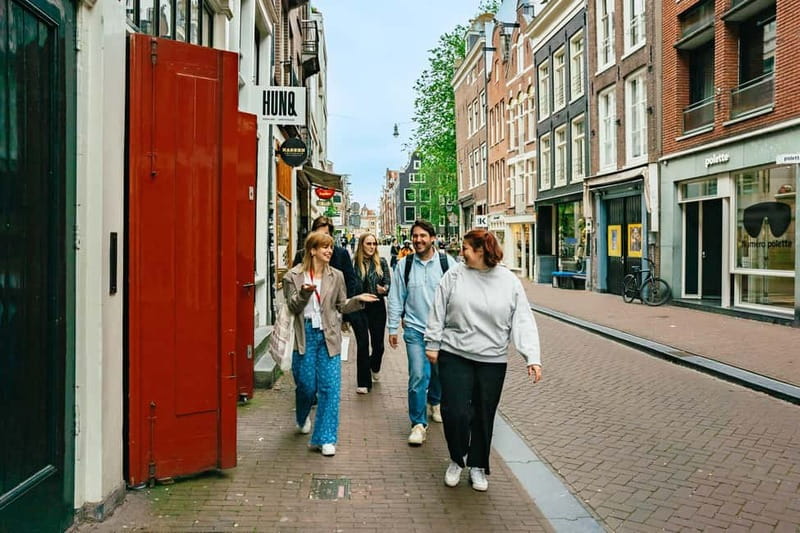
- A practical first look at central Amsterdam: The route covers major squares, canals, monuments, and old neighborhoods without admission fees.
- History tied to real places: You hear how merchants, poor residents, artists, wartime events, and colonial-era figures shaped the city.
- A strong guide-led experience: The best feedback centers on guides who explain clearly, answer questions, and adjust the walk to the group.
- A steady pace with frequent stops: You walk for about two hours, but pauses at landmarks keep it from feeling like a forced march.
- Useful advice beyond the sightseeing: Expect tips on Dutch food, restaurants, shopping, bike-friendly districts, and local life.
- Good for many ages and mobility needs: Children are welcome, and the tour is listed as wheelchair accessible.
Why this walk works as an Amsterdam introduction
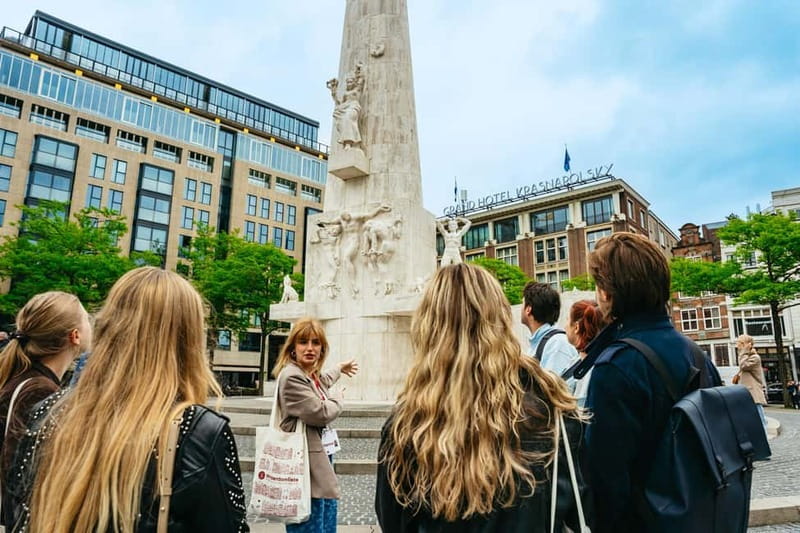
Amsterdam can feel confusing at first. The canals bend, the streets have similar-looking houses, bicycles appear from every direction, and the city center mixes royal buildings with narrow lanes and old commercial spaces. This walk gives you a basic map in your head before you start exploring alone.
The price is $30 per person, which is fair if your guide delivers the history well and gives useful local advice. You are not paying for entry to a museum or palace. You are paying for two hours of explanation, orientation, and access to a human point of view. Since the route includes free outdoor sights, the value depends heavily on the guide.
That seems to be the strongest part of the experience. Guides such as Francesco, Alex, Deborah, Stephanie, Lili, and Santina have been praised for making complicated subjects easy to follow. One guide combined politics, food, culture, history, and daily life in a relaxed two-hour walk. Another tailored the route to the group’s questions. Those are exactly the qualities I want from an introductory city tour.
The route is not a strenuous hike. You stop often for photos and short talks, and one person found the walk lighter than expected. Still, wear comfortable shoes. Central Amsterdam has hard paving, bridges, and busy streets, and rainy weather is common enough that an umbrella and water belong in your day bag.
More City Highlights Walking Tours in the Netherlands
- Amsterdam Highlights Walking Tour: Small Group Experience
★ 5.0 · 1,132 reviews - Amsterdam: Highlights & History Walking Tour
★ 4.8 · 266 reviews - Amsterdam Highlights Small-Group Walking Tour
★ 4.5 · 227 reviews
Meeting at the National Monument on Dam Square
You meet on the stairs of the National Monument, the tall white pillar at Dam Square. Look for a guide wearing a red name tag around the neck.
Give yourself a few minutes to locate the correct person. One past participant had trouble finding the guide because several tour leaders wore similar tags. A brightly marked umbrella or larger sign would make the meeting point easier to spot, so keep the guide’s name and the exact meeting instructions handy.
The National Monument is also where the tour ends. It was first built to remember people who died in World War II and later became a memorial to those killed in wars around the world. That gives the walk a serious opening and closing point, rather than treating Amsterdam as only pretty canals and amusing architecture.
Dam Square, the Royal Palace, and the city’s commercial core
Dam Square is the natural place to begin. Amsterdam grew around the dam on the Amstel River, and the square still brings together royal power, religious history, commerce, and public memory.
The guide spends about 15 minutes here, enough time to explain the city’s beginnings and point out the National Monument. You also see the Royal Palace and the New Church, or Nieuwe Kerk. The palace gives you a look at Amsterdam’s civic and royal past, while the church adds another layer to the square’s long public role.
You should expect exterior explanations and photo stops, not a palace visit. That is important when planning your day. If you want to see the interiors, you will need to visit separately, but the tour helps you understand why these buildings matter before you do.
The Royal Palace is followed by the Beurs van Berlage, the former exchange building. The stop lasts about 15 minutes. Here, the story turns toward trade, merchants, and the financial energy that helped Amsterdam grow. This is one of the better places for the guide to connect grand city history with ordinary business: salesmen, workers, and the poor all depended on the same commercial city, though they experienced it in very different ways.
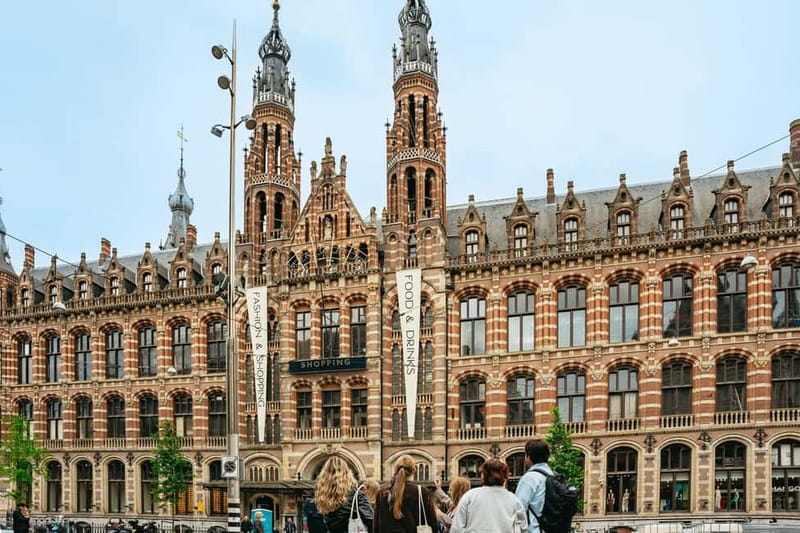
Magna Plaza comes next, with a shorter five-minute stop. The former main post office is useful for discussing architecture and changing city functions. Buildings in Amsterdam often outlive their original purpose, and this stop helps you notice how the center has been reused rather than frozen in the past.
The tiny house and the story of Multatuli
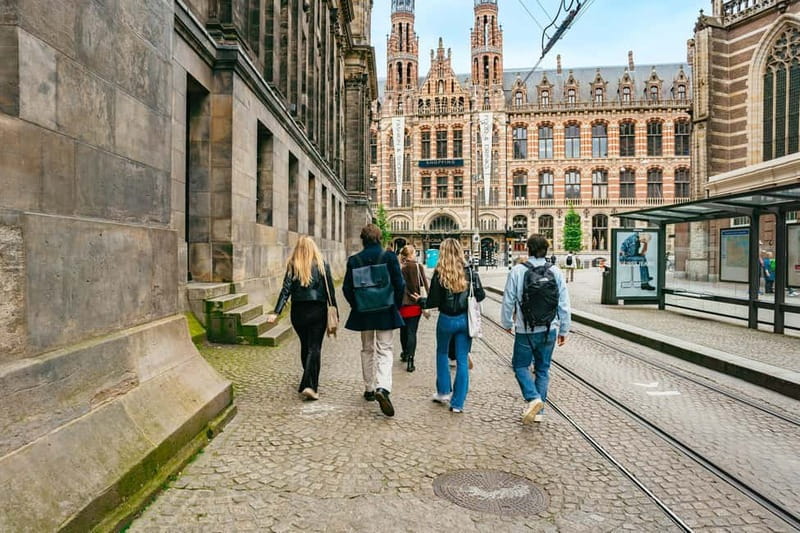
The walk continues toward the Torensluis Bridge and the statue of Multatuli. You spend about 15 minutes here, making it one of the more substantial stops.
The guide points out one of Amsterdam’s tiniest houses. It is a small detail, but it gives the walk some personality. Amsterdam’s narrow houses are not just postcard scenery. Their shapes reflect limited space, old taxes, changing property use, and the practical needs of a dense trading city.
The Multatuli statue opens a different conversation. You hear about the colonial era and the writer Multatuli, whose work criticized abuses in the Dutch colonial system. This is a valuable part of the route because it keeps the city’s past from becoming a neat story about trade and art alone.
A good guide should handle this subject with care, and the strongest accounts of the experience praise guides for discussing difficult history with sensitivity. You can also ask questions here, especially if you want more context about colonialism, literature, or how Amsterdam presents its past today.
More Cultural Walking Tours in Amsterdam:
- Anne Frank Walking Tour Amsterdam Including Jewish Cultural Quarter
★ 5.0 · 1,879 reviews - Amsterdam: Food and Culture Walking Tour with Tastings
★ 4.9 · 838 reviews - Humans of Amsterdam: Cultural Walking Tour incl. meeting 2 locals
★ 5.0 · 320 reviews - Amsterdam: Cultural Highlights in English/German/Italian
★ 5.0 · 164 reviews
Anne Frank Monument, Westerkerk, and the city’s wartime memory
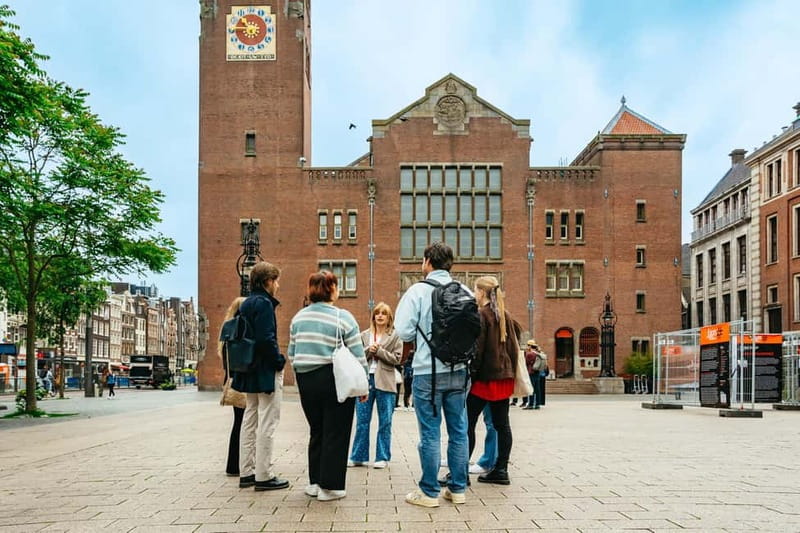
The Anne Frank Monument is another 15-minute stop. The route does not include entry to the Anne Frank House, and no admission fees are needed anywhere on the walk. Instead, the guide places Anne Frank’s story within the wider experience of Amsterdam during World War II.
That distinction matters. You get an outdoor introduction and historical context, but not the detailed interior visit that many people associate with Anne Frank. If the Anne Frank House is a priority, treat this tour as background, not a substitute.
The nearby Westerkerk receives a shorter, five-minute stop. Its tower and church help you connect the neighborhood’s architecture with the wartime story and the canal district around it. The schedule is brief, so expect a quick explanation and photo opportunity rather than a full architectural lecture.
This part of the walk may feel more reflective than the opening stops. The tour presents Amsterdam as a city changed by war, not simply a beautiful old town. That balance is one of its strengths.
Homomonument, the Nine Streets, and present-day Amsterdam
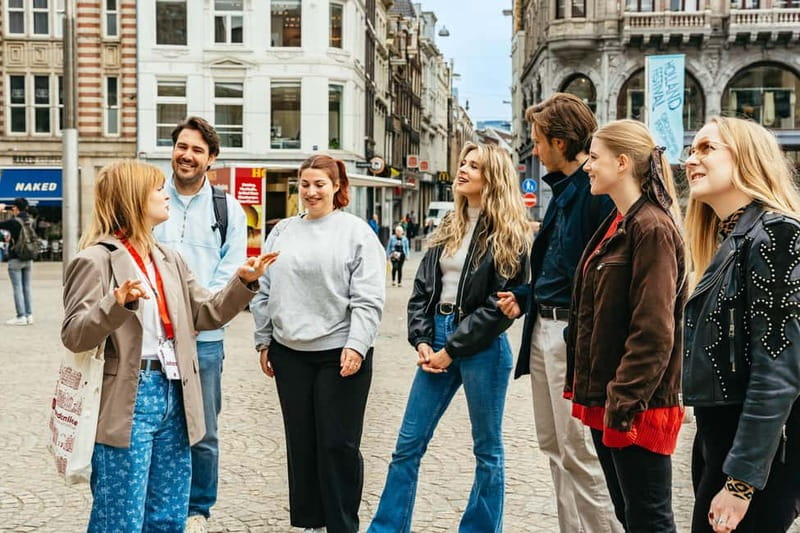
The Homomonument gets about 15 minutes. This is where the tour’s discussion of tolerance and the city’s multicultural character becomes more direct. You learn about Amsterdam today, including what it can feel like to live in a city shaped by many communities and changing social attitudes.
The stop adds needed range to the tour. Without it, the route could focus too heavily on royal buildings, merchants, and Golden Era art. Instead, you get a clearer idea of how Amsterdam connects its older identity with current affairs and social life.
The Nine Streets, or De Negen Straatjes, receives a shorter five-minute explanation. The area is known for its canals, small shops, and attractive old buildings. Since the tour does not include shopping time, use the guide’s comments to decide if you want to return on your own.
The route is particularly useful for first-time visitors who want ideas for the rest of their stay. Guides have offered advice about restaurants, shopping, bitterballen, and districts worth exploring by bike. Write down recommendations as you go. In a two-hour walk, good tips can pass quickly.
Begijnhof, one of the quietest stops

Begijnhof is often the emotional change of pace. After busy squares, public monuments, and active streets, this enclosed courtyard feels quieter and more private.
The tour allows about 15 minutes here. You hear about the women who lived in the Begijnhof and see a different kind of Amsterdam architecture. The setting also shows why you should not judge the city by its main streets alone. A calm courtyard can sit just steps from a crowded shopping area.
Be respectful here. It is a historic residential place, not only a photo backdrop. The guide can explain the setting, but you should keep your voice down and follow any posted rules.
The stop works well near the end because it gives you a slower look at city life before the route returns toward Dam Square. If you enjoy architecture, courtyards, and small details more than big monuments, Begijnhof may be your favorite part.
Returning along the Amstel and closing at the monument
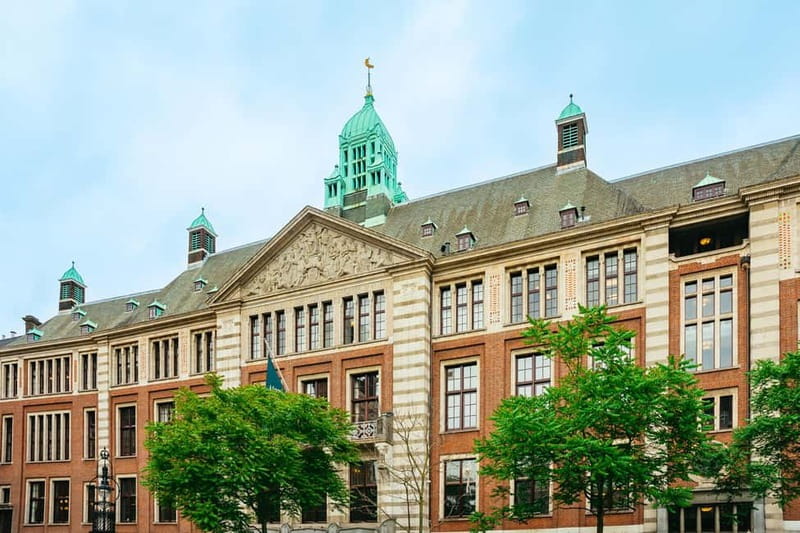
On the way back, you see the river that gave Amsterdam its name, the Amstel. The route also includes canal-side houses and architectural details that are easy to miss when you are walking without a guide.
This is when the earlier stories begin to connect. The river explains the city’s name and location. The canals show how the city managed space and trade. The houses reveal how wealth, building styles, and daily life appeared along the water.
The tour finishes at the National Monument. Ending at a memorial to war victims brings the walk back to public memory and modern responsibility. It is a more thoughtful finish than simply stopping beside a shop or transit station.
What the guide quality means for your experience
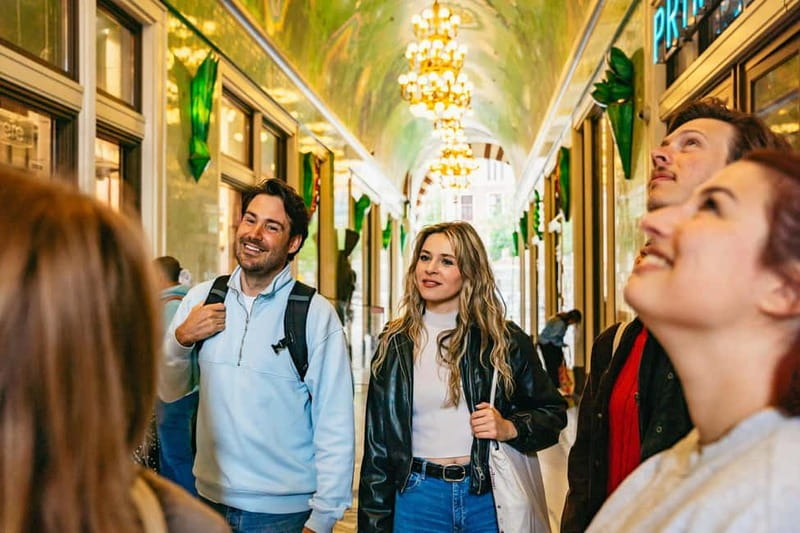
The rating is 4.9 from 2,629 reviews, and the praise is remarkably consistent about the guides. People highlight clear explanations, humor, patience, and a willingness to answer questions.
Francesco has been praised for his enthusiasm and strong command of Amsterdam’s past. Alex has been described as friendly and entertaining, with useful advice about local food. Deborah receives credit for combining historical and current-day information, while Stephanie has been praised for warmth and careful answers.
You may also get a guide with a personal connection to the city. One guide was a student who now called Amsterdam home, which gave the walk a less formal feel. Another made the route personal for a small group of only four people. Group size can vary, so do not assume you will always receive a private-style experience, but a small group can make questions easier.
The clearest warning concerns weather and sound. Rain did not stop one guide from making the walk interesting, but you will be more comfortable with waterproof clothing and an umbrella. On busy streets, stay close enough to hear. Some guides have accents, and one participant found a strong German accent slightly hard to follow.
The tour is available in English, German, and Italian. A private group option is also listed. Children are welcome, and the tour is wheelchair accessible, though the outdoor central-city route still means you should consider your own comfort with streets, bridges, and crowds.
Who should book this $30 walk?
I would choose this tour early in a first Amsterdam visit. It gives you names, neighborhoods, historical context, and practical ideas before you spend time exploring alone. It also suits anyone who prefers a human explanation to reading plaques or moving from sight to sight without context.
It is a good match for families because the route is short, the stops are varied, and children can see palaces, canals, monuments, tiny houses, and a quiet courtyard in one outing. It also works for adults who want history without a full-day museum commitment.
I would be less likely to book it if you already know central Amsterdam well or want a specialized focus on art, architecture, World War II, or the Anne Frank House. This is a wide-ranging introduction. Its strength is variety, not detailed study of one subject.
Should you book the Amsterdam Cultural Highlights Walking Tour?
Book it if you want a friendly orientation to central Amsterdam for $30, especially on your first day. The route covers more than pretty canals: it addresses trade, social class, colonial history, wartime memory, LGBTQ history, food, cycling, and present-day city life.
The best reason to go is the guide. A strong guide can turn a short route into a useful framework for the rest of your visit, and the consistently high praise for people such as Francesco, Alex, Deborah, Stephanie, Lili, and Sonja is encouraging.
Skip it if you need interior visits or a specialist tour. Otherwise, bring good shoes, water, and an umbrella, arrive early at the white monument, and keep the guide’s restaurant and neighborhood tips ready for later.
FAQ
How long is the Amsterdam Cultural Highlights Walking Tour?
The tour lasts two hours.
How much does the tour cost?
The listed price is $30 per person.
Where does the tour meet?
Meet on the stairs of the National Monument in Dam Square. The monument is a large white pillar or obelisk.
How will I recognize the guide?
The guide will be wearing a red name tag around their neck.
Which languages are available?
The tour is available in English, German, and Italian.
Is the tour wheelchair accessible?
Yes, the activity is listed as wheelchair accessible.
Are children allowed to join?
Yes, the tour is suitable for children.
Do I need to pay admission fees during the walk?
No. The tour does not include admission fees because the sights visited during the walk can be seen for free.
What should I bring?
Bring comfortable shoes, an umbrella, and water. Food and drinks are not included.
More City Highlights Walking Tours in Amsterdam
- Historic Charleston Guided Sightseeing Walking Tour
★ 5.0 · 6,216 reviews - Dublin Highlights and Hidden Gems Guided Walking Tour
★ 5.0 · 6,020 reviews - Vienna: Guided Walking Tour of City Center Highlights
★ 4.7 · 4,989 reviews - Florence: Highlights Walking Tour with Expert Guide
★ 4.6 · 4,662 reviews
Just added around Amsterdam
- Small Group Walking Tour in Amsterdam with Friendly and Fun Guide★ 5.0 · 281 reviews
- Amsterdam: Private Introduction Walking Tour (TOP RATED)★ 5.0 · 223 reviews
- Humans of Amsterdam: Cultural Walking Tour incl. meeting 2 locals★ 5.0 · 320 reviews
- Amsterdam Private Historical Walking Tour★ 5.0 · 75 reviews
- Private Tour: Amsterdam City Walking Tour and Canal Cruise★ 4.5 · 142 reviews
- Anne Frank and Jewish Quarter Amsterdam Private Walking Tour★ 5.0 · 684 reviews
- Small Group Walking Tour – Hello Amsterdam★ 5.0 · 505 reviews
- Amsterdam: Anne Frank and World War II Walking Tour (TOP RATED)★ 4.5 · 72 reviews
Cultural Walking Tours, compared.

Savannah First Squares Culinary & Cultural Walking Food Tour
Read our review →
Tokyo Tsukiji Fish Market Food and Culture Walking Tour
Read our review →
New Orleans French Quarter, Voodoo and Culture Walking Tour
Read our review →
Anne Frank Walking Tour Amsterdam Including Jewish Cultural Quarter
Read our review →
Southernmost Food & Cultural Walking Tour by Key West Food Tours
Read our review →
Ultimate Melbourne Walking Tour: History, Laneways & Culture
Read our review →

Valletta: Street Food and Culture Walking Tour
Read our review →Browse the lists this tour appears in