
Review · NIGHT WALKING TOURS
Granada: Albaicín and Sacromonte Guided Sunset Walking Tour
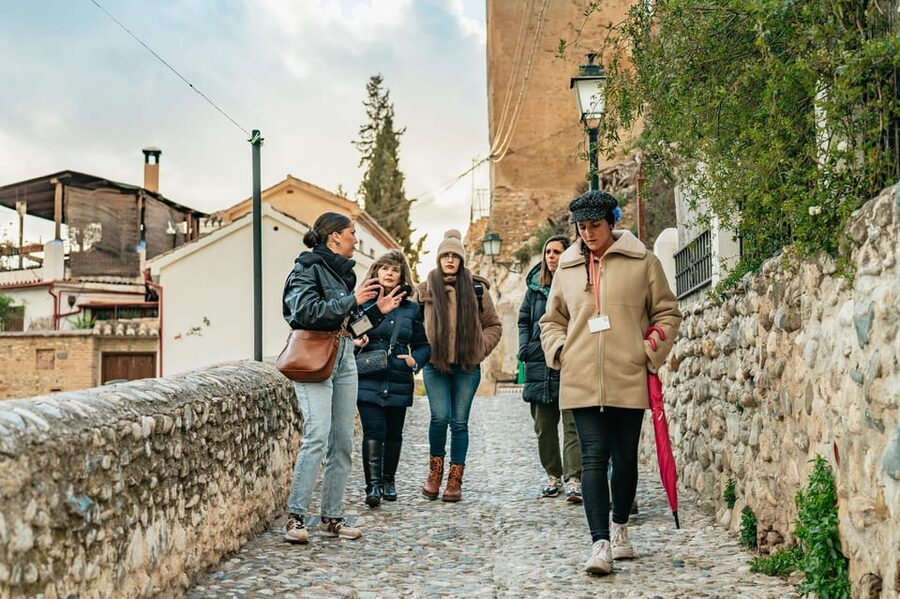
Granada glows at sunset. This walking tour takes you through Albaicín’s maze of lanes and Sacromonte’s cave-lined quarter while the evening light settles over the Alhambra. I like the mix of grand views and local history, especially the stops at San Nicolás and the quieter viewpoints beyond it. I also like the guides’ warm, story-led style, with Paula, Lorena, Antonio, Paloma, and Sandra earning especially high praise for making the past easy to follow.
The main catch is simple: this is a steep, cobbled walk with stairs and uphill streets. You should be comfortable walking for two to two and a half hours, and you should bring water and proper shoes. The route is not suited to people with limited mobility or certain heart conditions.
Key points at a glance
- Sunset timing changes: The start time is adjusted to match the season and the day’s sunset.
- San Nicolás is only one viewpoint: The walk includes several places for Alhambra and Granada views, not just the famous plaza.
- Albaicín comes first: You climb through the UNESCO-listed quarter before continuing toward Sacromonte.
- Expect a local history lesson: Guides explain Islamic Granada, the Nasrid period, the city’s changing communities, cave homes, and flamenco traditions.
- The walk is uphill but paced with breaks: Recent groups were often small, with stops for photos, questions, and rest.
- The price is modest: At $17 per person, the tour offers a useful introduction to two difficult-to-navigate districts without taking up a full day.
Why this sunset walk works so well in Granada
Granada is often treated as a one-sight city. People come for the Alhambra, admire the palace, and move on. That misses two of the city’s most atmospheric districts.
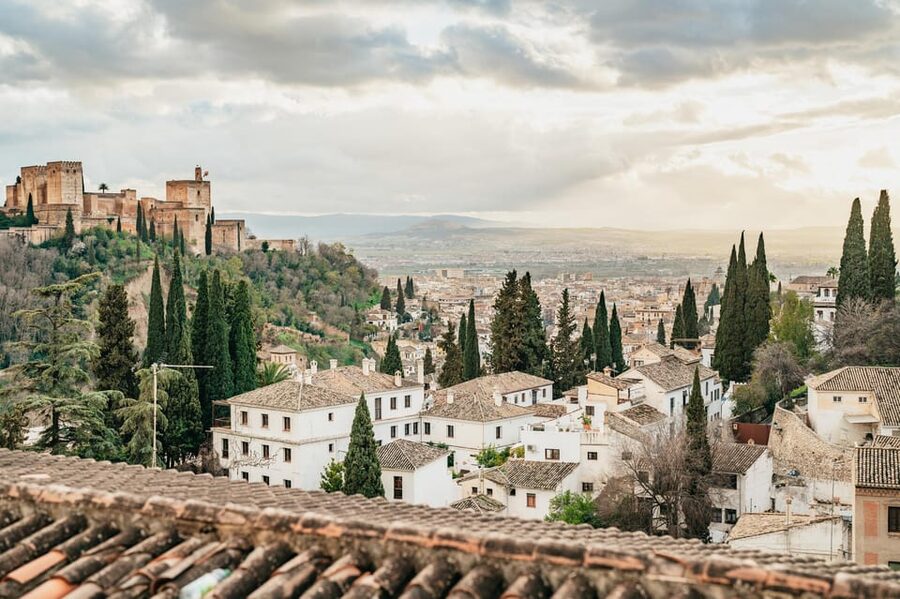
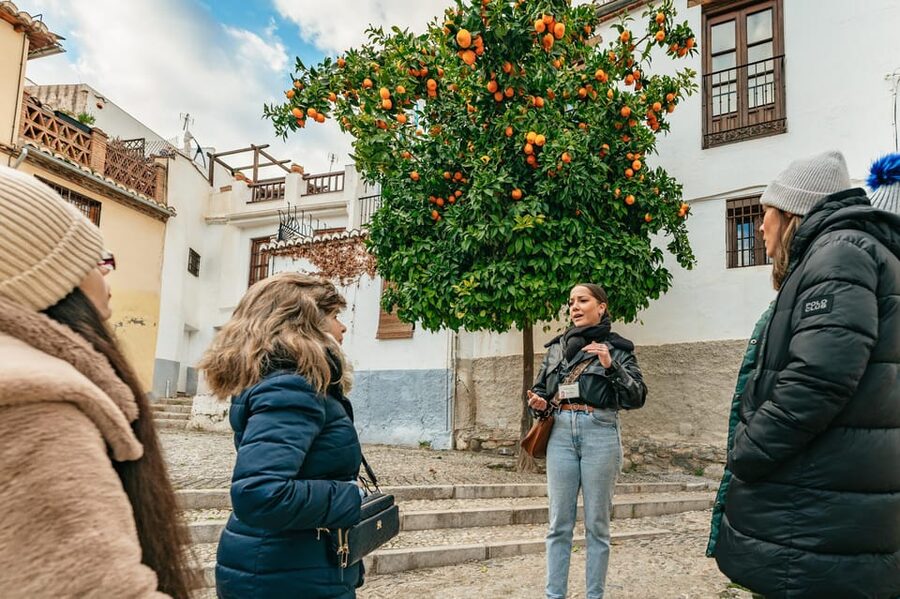
Albaicín climbs the hill opposite the Alhambra. Its streets twist past whitewashed houses, small plazas, old walls, and viewpoints that open suddenly across the valley. Sacromonte continues farther into the hillside, with a strong connection to cave homes, flamenco, and the city’s Romani culture.
I like this tour because it gives you a way to connect those places. You are not simply taken from one photo stop to another. The guide explains how Granada developed, why the streets look the way they do, and how different cultures shaped the city over time.
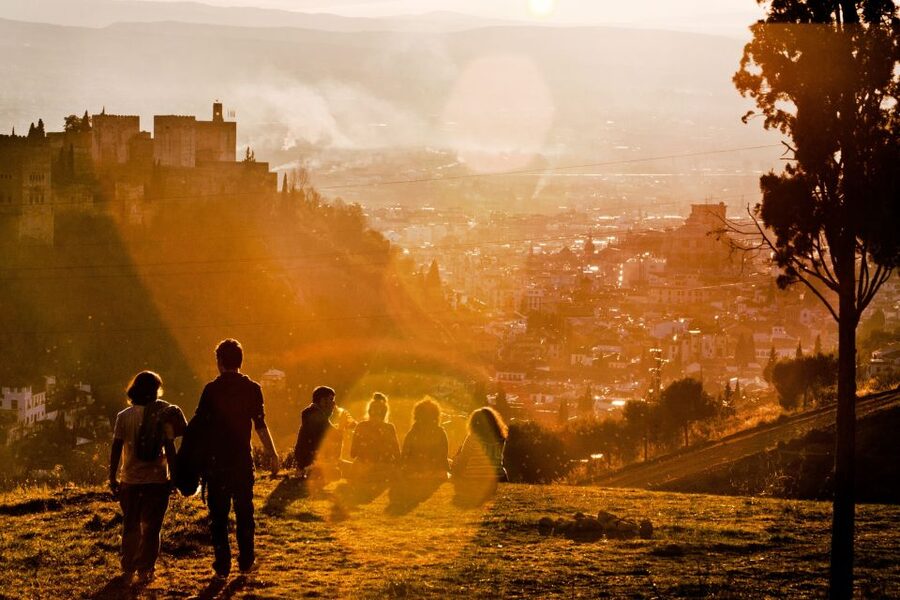
The sunset setting adds something real, not just pretty lighting. At San Nicolás, the Alhambra changes color as daylight fades. Later, Granada’s lights begin to appear below you. In Sacromonte, the atmosphere becomes quieter and more rural, with views into the valley and across the hill.
The tour lasts about two to two and a half hours. That is long enough to give you context without swallowing your whole evening. At $17, it is particularly good value if this is your first visit to Granada or your first evening in the city.
More Night Walking Tours in Spain:
- Madrid by Night Small Group Tour: Stories, Sights and Tapas Bites
★ 5.0 · 1,956 reviews - Madrid: Spanish Inquisition and Legends Evening Walking Tour
★ 4.7 · 1,396 reviews - Barcelona: Dark History Night Walking Tour
★ 4.8 · 344 reviews
Starting at Plaza Nueva and climbing into Albaicín
The usual meeting point is near the Fuente de la Plaza Nueva, though the exact point can depend on the option you book. This central square is a practical place to begin, close to the lower part of the old city and within reach of the major sights.
From Plaza Nueva, the route heads toward Albaicín. The first part gives the guide a chance to explain Granada’s place in Andalusia and introduce the city’s Islamic past. You begin at street level, then gradually climb into the older quarter.
Albaicín is best understood slowly. The district is a web of narrow lanes rather than a neat collection of monuments. That is also the challenge. Streets are cobbled, routes can be steep, and vehicles may pass through cramped sections. Sandra was praised for keeping an eye on group safety, while several guides were noted for maintaining a pace that worked for mixed-age groups.
You should not expect a flat stroll. The first hour includes a serious climb toward the higher viewpoints. Still, the walking is broken into short stops. Guides pause for photographs, stories, and questions, which makes the uphill sections easier to manage.
The reward is the changing view. At lower points, you see fragments of old houses and street life. Higher up, the Alhambra begins to appear between buildings. The view is not always the main event, and that is part of the appeal. You get a sense of the district itself rather than racing straight to a lookout.
El Bañuelo and the Islamic character of Granada
The route includes a brief stop near El Bañuelo, one of the city’s notable historic buildings. The visit is listed as a short photo and sightseeing stop, so you should not expect a long interior visit or a full museum presentation.
Even a short pause here helps explain the city’s Islamic character. The guide can connect the building and surrounding streets to the systems, architecture, and urban traditions that shaped Granada before and after Christian rule. Several guides use maps or laminated photographs to make these changes easier to picture.
That visual help matters. Granada’s history covers several periods, and it can become a blur if you only hear names and dates while walking uphill. Antonio, for example, was praised for using photographs and maps during a wet evening, making his explanations clearer when the weather was poor.
The best guides also avoid turning the walk into a lecture. Paula was repeatedly praised for combining historical detail with humor, while Lorena was noted for explaining the social and political setting of different generations. That approach gives you more than dates. It helps explain how people lived in the homes and streets around you.
San Nicolás at golden hour
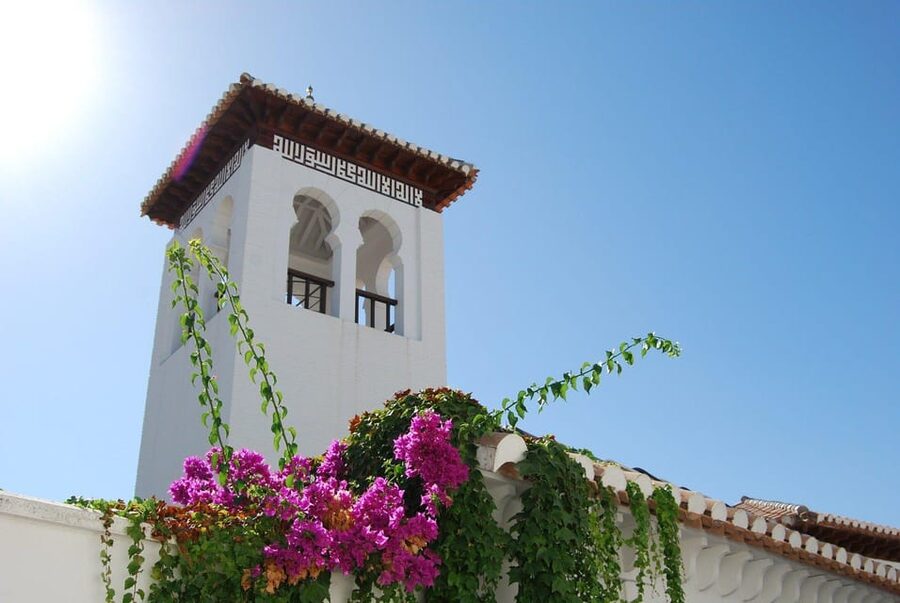
The San Nicolás viewpoint is the tour’s big moment. From here, you face the Alhambra across the valley, with the Sierra Nevada behind it when conditions allow. The timing is planned around sunset, though the exact hour changes through the year and can shift with the group.
You get a short break at the viewpoint for photographs and scenery. This pause is important because San Nicolás can be crowded, and a guided visit gives you some structure rather than leaving you to fight for a place at the edge.
The view is impressive even in poor weather. One group reached the viewpoint during drizzle and cloud, yet still caught a sunset. Other groups saw the Alhambra in golden light and later watched it become illuminated after dark.
Do not assume San Nicolás is the only scenic stop. The tour includes several viewpoints, sometimes four or more, according to the route and guide. These additional stops can be just as useful because they show the Alhambra and Granada from different angles.
You may have only a few minutes at the main viewpoint, so keep your phone ready. A charged smartphone is specifically recommended. If you want a long, quiet photography session, this is not the right format. The purpose is to combine scenery with a moving history lesson.
More Guided Walks in Spain:
- Madrid: Tapas & Wine Tasting Tour with Local Guide
★ 4.8 · 2,171 reviews - Madrid: Royal Palace Skip-the-Line Guided Tour
★ 4.5 · 2,140 reviews - Madrid: Welcome to Madrid Guided Walking Tour
★ 4.9 · 1,738 reviews - Barcelona: City Walking Tour with a Local Guide
★ 4.9 · 1,384 reviews
The Great Mosque and Granada’s changing identity
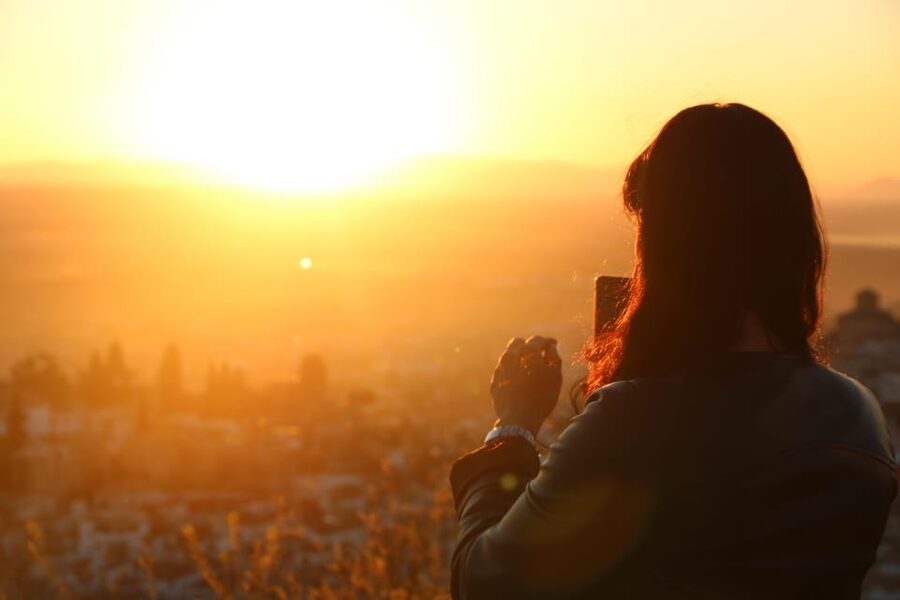
The walk continues toward the Mezquita Mayor de Granada, or Granada’s Great Mosque. This is another short stop for sightseeing and photographs, with the guide explaining the area’s religious and architectural background.
This section helps make sense of Granada as a city shaped by more than one tradition. The streets around Albaicín show Islamic design and older urban patterns, while later buildings and institutions reflect the changes that followed the Christian conquest.
I value this kind of explanation because it keeps the tour from becoming a simple view-hunting exercise. You are seeing famous places, but you are also being shown how power, religion, and daily life altered the city.
The exact depth depends on your guide. Paula, Laura, Lorena, Antonio, and Paloma were all praised for making the material engaging and clear. Some guides use funny local stories; others focus more on political context or the way homes and communities developed. The common thread is that the history is presented in a conversational way.
Sacromonte, cave homes, and flamenco
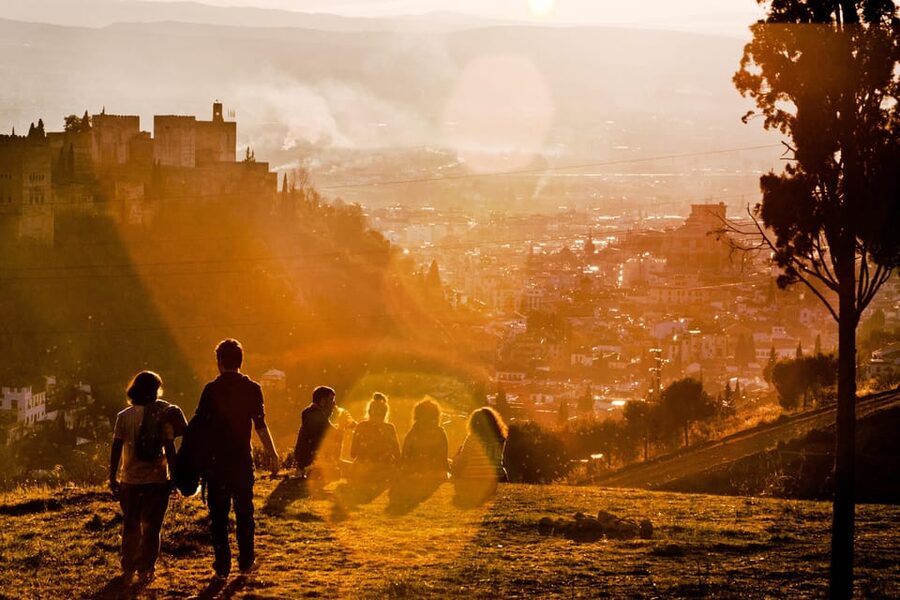
From Albaicín, the route moves toward Sacromonte. This part lasts roughly 35 minutes, followed by more walking and scenic stops. Sacromonte feels different from the tighter lanes below. The hill opens toward the valley, and the district is strongly linked with cave homes and flamenco.
Some groups have the chance to see a cave home or receive an explanation of cave-house architecture. This is a useful contrast with the formal palaces and religious buildings elsewhere in Granada. The focus shifts from rulers and monuments to ordinary homes, working communities, and the ways people adapted to the hillside.
The flamenco background is another strong point. Guides explain how the music developed in relation to Sacromonte and the communities that lived there. Laura was praised for giving a detailed explanation of flamenco’s history, while Lorena helped one group understand the music on a deeper level before an evening show.
The walking route does not include a flamenco performance. That is worth noting. However, guides may offer suggestions for shows or cave venues afterward. One group received a recommendation for Cuevas Los Perrones, and another continued to a cave flamenco show after the walk.
Sacromonte is also where the tour feels most atmospheric. As the sun drops, you look across the valley while the city begins to glow behind you. The route can be uneven and steep, so comfortable clothing and closed-toe shoes are sensible.
Guides make the difference
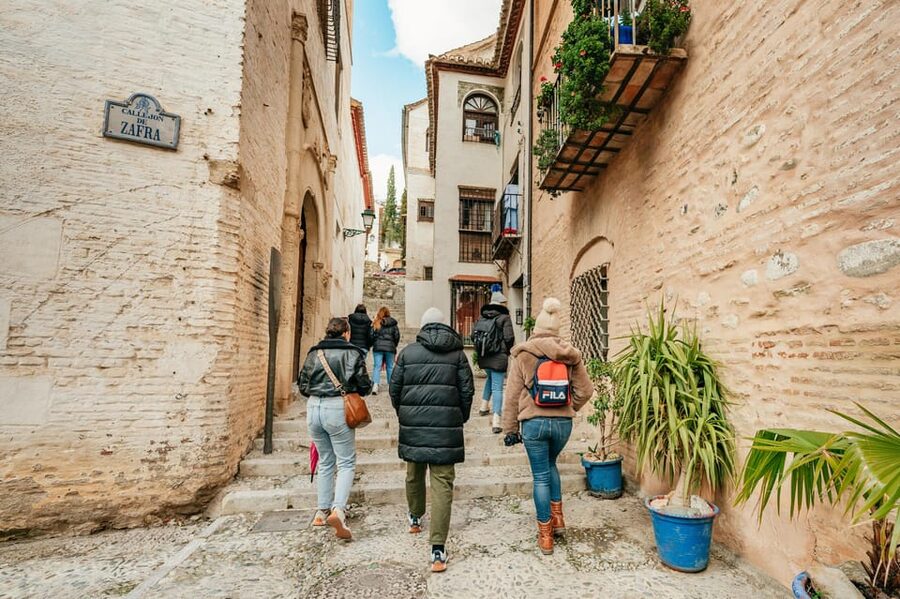
A walking tour depends heavily on the person leading it. This one has received particularly strong praise for its guides, including Paula, Lorena, Antonio, Paloma, Sandra, Laura, Alejandra, Carmen, Carolina, and others.
Paula is often praised for humor, historical detail, and a talent for choosing a good sunset viewpoint. Lorena is known for explaining the political and social background of Granada, as well as flamenco. Antonio uses visual material and takes time with questions. Sandra has been praised for group management and safety, especially on narrow streets.
You cannot choose a particular guide unless that is offered when booking, so you should not book solely for one name. Still, the repeated pattern is encouraging. The guides are described as warm, patient, lively, and willing to explain rather than rush.
Group size can vary. Some groups have been around eight to ten people, while private options are also available. A small group makes the stops easier and gives you more opportunity to ask questions. A private group may suit families or friends who want a more flexible pace.
Is $17 a good value?
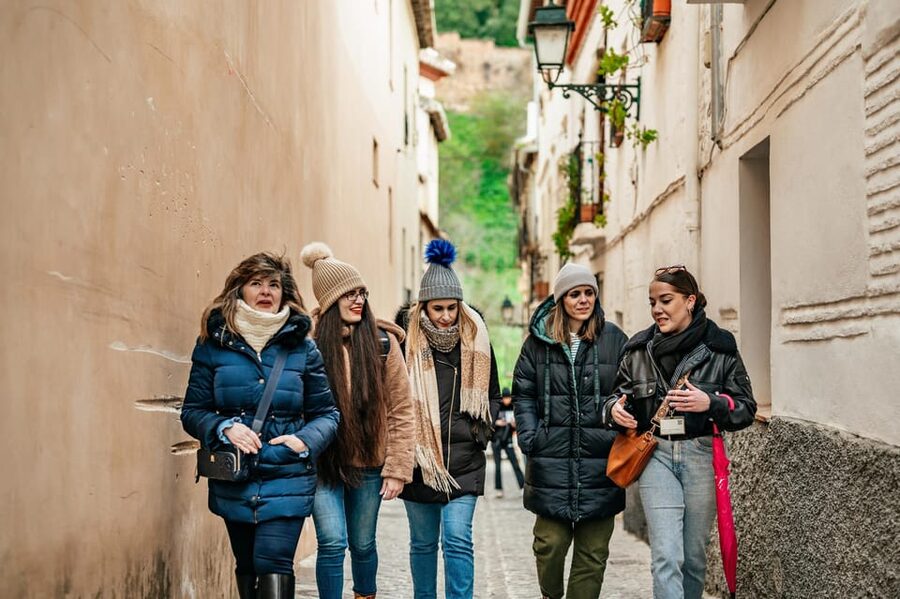
At $17 per person, this is a low-cost way to get oriented to two of Granada’s most distinctive districts. You are paying for a live guide and a walking route, not entrance tickets, transport, or hotel pickup.
That matters because the experience is built around streets and viewpoints that are free to access. The value comes from the interpretation, route planning, sunset timing, and local suggestions. Without a guide, you can reach San Nicolás on your own, but you may miss the connections between Albaicín, Sacromonte, Granada’s Islamic past, and flamenco culture.
The price is less compelling if you want entry into several monuments or a long formal tour of historic interiors. The visit to El Bañuelo and the mosque area is brief, and the tour does not include a meal, a flamenco show, or transportation.
For a first evening, though, I think the cost is easy to justify. You get a scenic orientation, useful restaurant and viewpoint suggestions, and a clearer sense of where to return during the rest of your stay.
Who should book this walk?
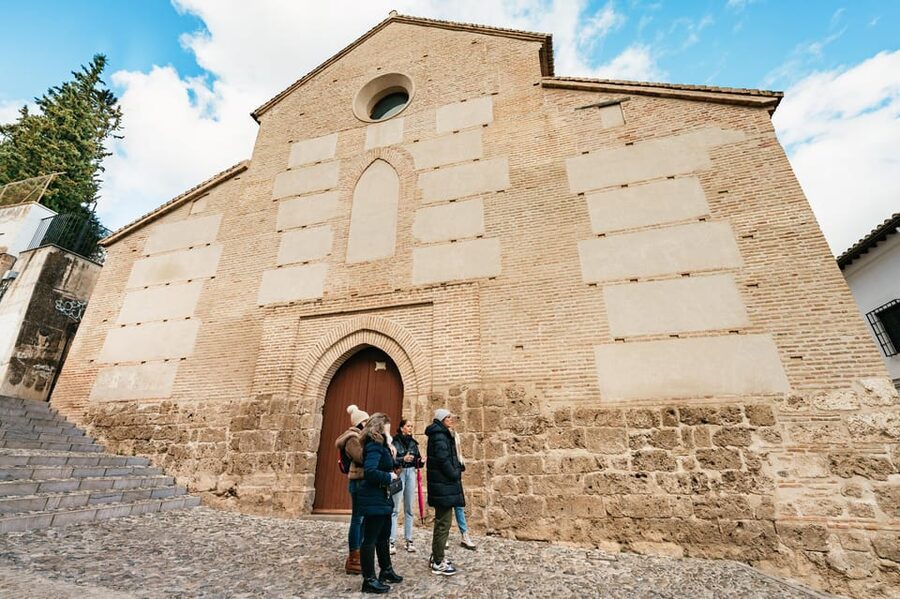
I would choose this tour if you want to understand Granada beyond the Alhambra. It is especially useful on your first day because the route gives you a feel for the city’s layout and points you toward places to explore later.
Families can manage it if children are comfortable with hills and stairs. One family described the walk as challenging but enjoyable, while another left early because of children and a long drive. That is a fair warning: the route is manageable, but it is not effortless.
You should also consider the weather. Sunset walks can be beautiful in winter, but rain and cold may make the cobbled streets harder. Bring water, wear closed-toe shoes, and carry a charged phone. Comfortable clothing is more important than dressing for a polished evening out.
The tour is not suitable for people with mobility impairments, and it is not recommended for people with limited mobility or heart conditions. There are numerous steep hills and stairs, so be honest about your fitness before booking.
If the sunset time does not work for your dinner plans, check the schedule carefully. The start changes with the season, and the activity may adjust its timing to match the day’s light.
Should you book the Albaicín and Sacromonte sunset tour?
Book it if you want Alhambra views plus context, not just a viewpoint photograph. The guides add real value by explaining Granada’s Islamic architecture, changing communities, cave homes, and flamenco traditions in a way that remains light and easy to follow.
Skip it if steep hills, stairs, and cobbles will make two hours uncomfortable. Also skip it if you want a long monument visit or an included flamenco performance.
For most reasonably fit visitors, this is a smart $17 introduction to Granada. Schedule it early in your stay, bring water, and leave room afterward for dinner or a flamenco show. The sunset may be memorable, but the bigger reward is learning how Albaicín and Sacromonte fit into the story of the city.
FAQ
How long does the Granada sunset walking tour last?
The tour lasts approximately two to two and a half hours.
Where does the tour begin?
There are two possible starting location options listed: the Fuente de la Plaza Nueva and the Alhambra. The exact meeting point may depend on the option you book.
What languages are available?
A live guide is available in Spanish or English.
Does the tour include hotel pickup and drop-off?
No. Hotel pickup and drop-off are not included.
What should I bring?
Bring comfortable or closed-toe shoes, comfortable clothes, water or another drink, and a charged smartphone.
Is the walk suitable for people with limited mobility?
No. The route includes numerous steep hills and stairs and is not recommended for people with limited mobility or certain heart conditions.
Can I cancel or pay later?
You can cancel up to 24 hours in advance for a full refund. A reserve-now, pay-later option is also available.
Just added around Spain
- Bilbao Food Tour – Basque Gastronomy Experience★ 5.0 · 79 reviews
- Bilbao´s Old Town Responsible Free Walking Tour★ 4.5 · 98 reviews
- Bilbao Walking Small Group Tour★ 5.0 · 203 reviews
- Barcelona Private Food Tour: Tapas, Paella & 8+ Food Tastings★ 5.0 · 164 reviews
- Barcelona Gothic Quarter Walking Tour with Tapas★ 5.0 · 248 reviews
- Picasso Museum and Walking Tour Plus Optional Wine & Food Tasting★ 5.0 · 596 reviews
- Private Barcelona Old Town and Gothic Quarter Walking Tour★ 5.0 · 134 reviews
- Barcelona Architecture Walking Tour With Casa Batlló Upgrade★ 5.0 · 137 reviews
Night Walking Tours, compared.

Private Street Food Evening Walking Tour in Ho Chi Minh City
Read our review →
Bremen: Walking Tour in German with Night Guard
Read our review →
Ghosts of Charleston Night-Time Walking Tour with Unitarian Church Graveyard
Read our review →
Savannah’s Ghost City “Dead of Night” Walking Night Tour
Read our review →
Gion Magical Night Walking Tour with Geisha Trivia
Read our review →
Browse the lists this tour appears in