
Review · OLD TOWN WALKING TOURS
Munich Old Town – Guided Walking Tour in English
Munich’s center tells two very different stories. This 150-minute walk brings together Bavarian beer culture and royal power, from Hofbräuhaus to the former residences of the Wittelsbach rulers. I like the clear route through the city’s main sights, and I especially like that the tour does not avoid Munich’s difficult role in the rise of Nazism. One point to consider: the historical discussion gives notable attention to the Third Reich, so this may feel heavier than a purely cheerful introduction to Bavaria.
The meeting point is easy to identify: the main gate of St. Peter Church, where your guide waits with a yellow Walkative umbrella. The price is $29 per person, and that is good value if you want a structured introduction rather than simply wandering from Marienplatz to Hofbräuhaus on your own.
Guides such as Jean, Alex, Patrick, Noel, and Lima have been praised for clear English, humor, local suggestions, and a friendly manner. The quality may vary with the individual guide, but the repeated strength is the storytelling. You get facts, context, food tips, and help deciding what to see next.
Key points at a glance
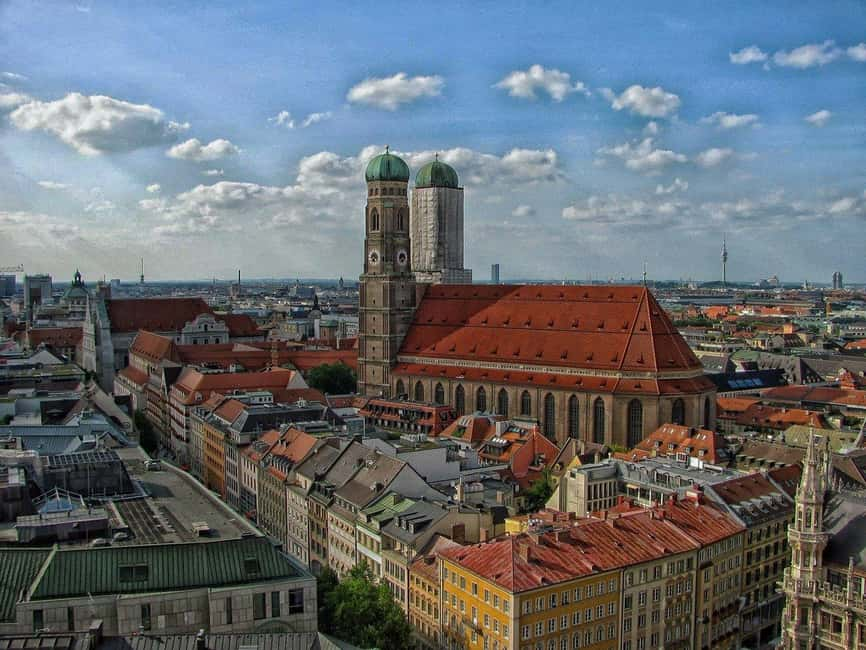
- A 150-minute route through Old Town: See Marienplatz, Hofbräuhaus, Odeonsplatz, the State Opera, Max Joseph Platz, and the former royal residence area.
- History with both light and dark chapters: The walk covers Roman beginnings, the Wittelsbach dynasty, Bavaria’s place in Germany, and Munich’s role in the Nazi movement.
- Beer culture explained on location: Hofbräuhaus is more than a large beer hall here. You learn why beer became so central to Bavarian identity.
- A strong first-day activity: The tour helps you understand places, food, symbols, and local customs before you explore alone.
- Guides add practical value: Several guides have offered restaurant ideas, sightseeing suggestions, and local tips after the walk.
- Good paid walking-tour value: Your $29 covers the reservation and guide payment in advance, with no extra payment required on site.
Starting at St. Peter Church and Marienplatz
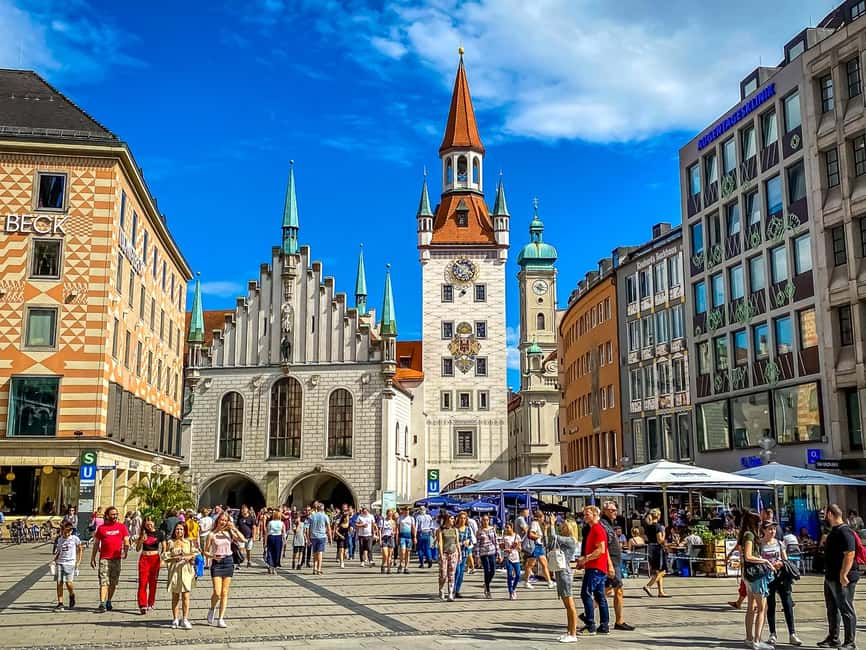
The tour begins at the main gate of St. Peter Church, a sensible place to start because it puts you right beside Marienplatz, Munich’s central square. Look for the yellow Walkative umbrella. In a busy city center, that small detail matters.
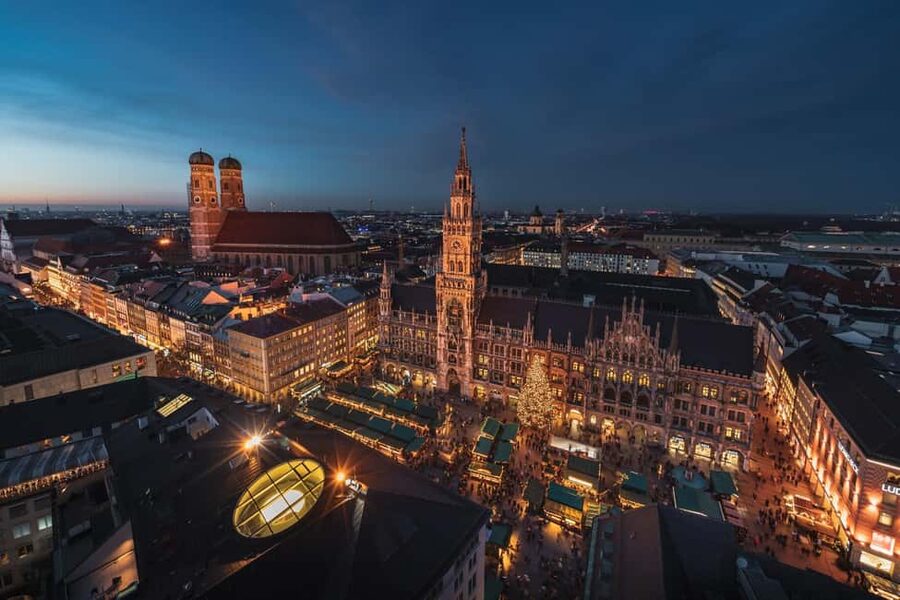
Marienplatz gives you an immediate lesson in Munich’s public image. The square is framed by the New Town Hall and Old Town Hall, two buildings that show how the city grew from a medieval center into the capital of Bavaria. Your guide can connect the architecture to the city’s political and religious power rather than treating the square as just a photo stop.
The New Town Hall is the more dramatic building, with its elaborate Gothic appearance and famous carillon. At a set time, figures appear and reenact events through a mechanical display. The tour presents this honestly as one of Munich’s less impressive attractions. That frankness is useful. You can enjoy the show as a charming old-fashioned feature, but you should not expect a grand theatrical performance.
The Old Town Hall offers a useful contrast. Together, the two town halls show how Munich wanted to present itself at different points in its development. Allow yourself time to look up at the façades, but listen for the smaller details too, including local symbols and the Munich child that appears on city emblems, flags, and logos.
More Old Town Walking Tours in Germany
- Munich: Old Town & Viktualienmarkt City Walk in German
★ 4.7 · 2,304 reviews - Munich Old Town Walking Tour
★ 4.5 · 1,287 reviews - Munich: Walking Tour Old Town and Viktualienmarkt
★ 4.7 · 839 reviews
Roman beginnings and 700 years of Wittelsbach rule
One of the strongest parts of this walk is the way it places Munich inside the larger story of Bavaria. You are not only being shown buildings. You are hearing how the city developed from its Roman beginnings and how one family, the Wittelsbachs, ruled Bavaria for roughly 700 years.
That long period helps explain why Munich has so many churches, palaces, ceremonial squares, and royal buildings packed into a relatively compact center. The city’s grand appearance was not created in one burst. It grew through centuries of dynastic rule, religious influence, and royal ambition.
The guide also discusses German unification under Bismarck in the 19th century. This gives you a useful distinction between Bavaria and Germany. The familiar image of Germany with beer, lederhosen, feathered hats, and Oktoberfest is, more precisely, a Bavarian image. Munich is the place to understand that difference.
I like this approach because it prevents the tour from becoming a list of dates. You see why Bavarian identity feels so strong and why Munich can seem culturally distinct from other German cities. The storytelling also connects old politics with modern Munich, a city associated with industry, technology, automobiles, art, and football.
Hofbräuhaus and the Bavarian beer story
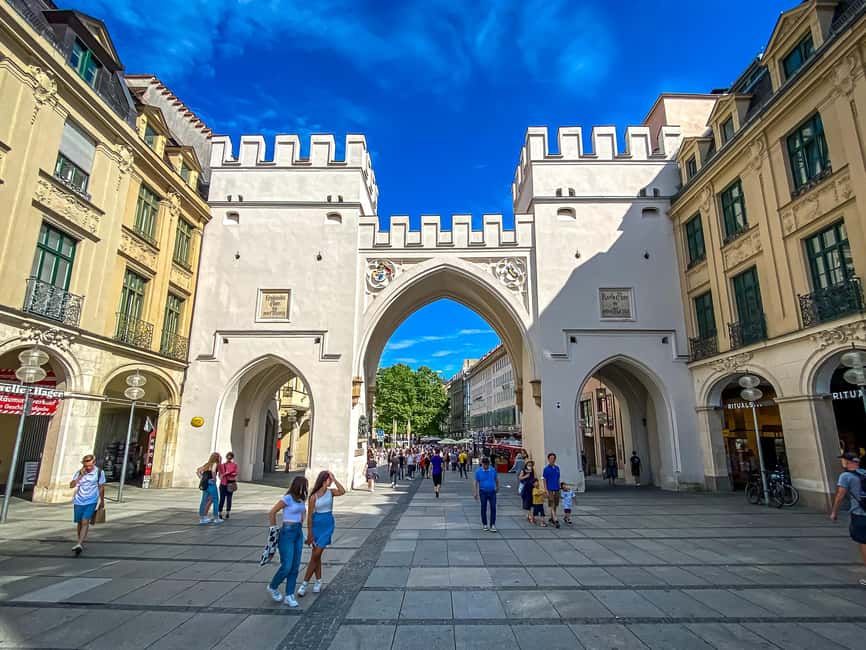
Hofbräuhaus is one of the major stops, and it is central to the tour’s explanation of Munich’s beer culture. You will not simply be pointed toward a famous beer hall and told to take a photograph. The guide explains how beer became part of Bavarian life and why the drink carries so much cultural weight.
For many visitors, Hofbräuhaus is their first close look at the famous Munich beer-hall image: large mugs, traditional food, music, and a lively public atmosphere. It can feel theatrical, but the historical context makes the place more interesting. You begin to see beer not only as a tourist product, but also as a social institution tied to local identity.
The tour also touches on the Beer Hall Putsch of 1923, when Adolf Hitler attempted to seize power in Munich. This is where the beer hall becomes part of a much darker story. The guide places the event in the setting of Munich’s political life and explains its consequences, including Hitler’s imprisonment and the writing of Mein Kampf.
That subject needs careful handling, and the strongest guides appear to manage it with restraint. Jean, Alex, and others have been praised for explaining difficult events in a sensitive way, while still keeping the walk accessible. If you want only beer, churches, and royal architecture, this section may feel too serious. If you want to understand Munich properly, it is necessary.
From Nazi origins to a difficult civic memory
Munich was the birthplace of the NSDAP and an important setting in the early growth of Nazism. The walk identifies places connected with that story rather than allowing the city’s cheerful Bavarian image to hide its past.
This is one of the tour’s main strengths. Munich can easily be reduced to Oktoberfest, luxury cars, football, and ornate churches. The darker material shows you the cost of ignoring the political history beneath the postcard image.
The tour does not treat the Nazi period as an isolated chapter. It connects the Beer Hall Putsch, Hitler’s later rise, and the movement’s impact on Germany and World War II. You get enough context to understand why particular locations matter, rather than hearing disconnected references.
At the same time, the balance may not suit everyone. One person found the war-related material heavier than expected, even while praising the guide and the rest of the walk. I would recommend this tour to anyone comfortable with serious history, but if your priority is a light architectural stroll, ask yourself if a fuller historical treatment is right for your day.
More Old Town Walking Tours in Munich:
- Munich: Old Town Walking Tour
★ 4.7 · 589 reviews - Munich: Old Town Guided Walking Tour
★ 4.6 · 479 reviews - Underground Vaults Walking Tour in Edinburgh Old Town
★ 4.5 · 8,506 reviews - Prague: 3-Hour Walking Tour of Old Town & Prague Castle
★ 4.7 · 5,696 reviews
Odeonsplatz, the State Opera, and royal Munich
The route continues toward Odeonsplatz, the National Theater and State Opera, and Max Joseph Platz. These places show Munich as a capital of ceremony, music, and royal display.
Odeonsplatz is especially useful for understanding the city’s grand public spaces. It feels more formal than the narrow streets around Marienplatz, and the surrounding buildings reflect Bavaria’s former political importance. The National Theater and State Opera add a cultural layer, reminding you that Munich’s identity is not built around beer alone.
Max Joseph Platz leads you toward the former residence of the Bavarian kings and emperors. The buildings associated with the Wittelsbachs make the earlier discussion of dynastic rule concrete. You see where royal power was displayed and how the city was shaped around that authority.
The tour does not appear to include an extended interior visit to the royal residence. That is important when planning your day. You will see and understand the exterior setting, but if you want palace rooms and collections, you should arrange a separate visit.
Local details, food tips, and the Munich child
The best city walks give you useful information beyond the official sights. This one can introduce you to local food, including Leberkäse sandwiches sold at Viktualienmarkt. That suggestion may be especially helpful if you are tired of ordering only schnitzel or pork knuckle.
A guide may also point out places to eat and offer ideas for what to do after the walk. Patrick, Noel, and Jean have been praised for giving practical recommendations, and Noel has even followed up with additional suggestions after the tour. Those small details can add real value, especially on a first visit.
The local symbols are another welcome touch. Learning about the Munich child that appears in city logos, flags, and emblems gives you a way to recognize the city as you continue exploring. It is the sort of detail you might otherwise walk past without noticing.
I would take notes on food and sightseeing suggestions during the final part of the walk. The tour is a useful orientation, but it is also a chance to build a plan for the rest of your stay.
Guide quality and the pace of the walk
The guide is the main variable in any walking tour. Here, the feedback points to a broad team with different personalities but similar strengths: clear explanations, a friendly tone, and an ability to make history easier to follow.
Jean has been praised for speaking clearly, using humor, and explaining Munich in several languages, including French, German, English, and Spanish. Alex is often described as personable and well organized. Patrick is valued for answering questions patiently and sharing local advice. Noel brings an Irish sense of humor, while Lima is known for an energetic style.
The walking pace appears to suit a general sightseeing group. The route lasts 2.5 hours, with regular stops and time to look at churches and take photographs. It is not a rushed sprint from one landmark to the next, but you should still wear comfortable shoes and expect to remain on your feet for most of the session.
Group size can affect the feel of the experience because this joins a general pay-as-you-wish walking tour. The $29 fee covers your reservation and the guide’s payment in advance, so you do not need to pay again at the end. If you want a smaller, private tour, you must contact the supplier before booking to arrange that option.
Is $29 a fair price?
At $29, this tour sits in a useful middle ground. You could walk around Munich’s Old Town without paying for a guide, but you would miss the connections between the buildings, the food, the royal family, Bavarian identity, and the Nazi past.
The price is strongest for a first visit. In 150 minutes, you get a route through the central sights plus a narrative that helps you decide where to return later. You also avoid paying on site because the reservation fee and guide payment are already covered.
The value depends on your style. If you prefer wandering alone, reading plaques, and setting your own pace, you may find the group format restrictive. If you want someone to explain what you are seeing and answer questions, $29 is reasonable.
You can cancel up to 24 hours in advance for a full refund, and the reserve-now, pay-later option lets you hold a place without paying immediately. Starting times vary, so check availability when choosing your date.
Who should book this Munich walk?
I would choose this tour for a first-time visitor who wants to understand Munich before visiting museums, churches, markets, or beer halls on their own. It is also a good fit if you enjoy history that includes both royal ceremony and uncomfortable political subjects.
Families with older children may appreciate the mix of visual landmarks, stories, food, and unusual details. The guide-led format can make the Old Town easier to follow than a map alone, though the Nazi history may require some preparation for younger participants.
You may want a different option if you need a private group, dislike standing for 150 minutes, or want a tour devoted only to architecture and food. You should also set aside another visit for the interiors of the royal residence and other major buildings.
Should you book it?
Book this walk if you want a well-priced introduction to Munich that goes beyond beer halls and pretty façades. The strongest reasons are the central route, the careful treatment of difficult history, and the guides’ practical local advice.
I would schedule it near the beginning of your stay. Afterward, you will know which places deserve a longer visit, where Bavarian food fits into your plans, and why Munich feels both proudly local and deeply tied to Germany’s national story.
FAQ
Where does the Munich Old Town tour meet?
The tour meets at the main gate of St. Peter Church. Look for the guide holding a yellow Walkative umbrella.
How long does the walking tour last?
The tour lasts 150 minutes, or 2.5 hours.
What language is the tour offered in?
The tour is offered in English and German. Some guides may speak additional languages, but English and German are the stated tour languages.
What sights are included?
The route includes Marienplatz, the New Town Hall, the Old Town Hall, Hofbräuhaus, Odeonsplatz, the National Theater and State Opera, Max Joseph Platz, and the former residence area of the Bavarian rulers.
Does the tour cover Munich’s Nazi history?
Yes. The guide discusses the Beer Hall Putsch, the early Nazi movement in Munich, Adolf Hitler’s imprisonment, and the wider role of the city in the development of Nazism.
Is another payment required during the tour?
No. The $29 payment covers the reservation fee and the guide’s payment in advance. No additional payment is required on site.
Can I cancel the booking?
Yes. You can cancel up to 24 hours in advance for a full refund.
Just added around Munich
- Munich: Walking Tour Old Town and Viktualienmarkt★ 4.7 · 839 reviews
- Munich: Raven Black Witches and Executioners Walking Tour★ 4.7 · 294 reviews
- Munich : Private Walking Tour with A Guide (Private tour)★ 4.5 · 85 reviews
- Munich: Guided Food Walking Tour with Beer Tasting★ 4.7 · 183 reviews
- Munich: Old Town Guided Walking Tour★ 4.6 · 479 reviews
- Munich: Old Town Walking Tour★ 4.7 · 589 reviews
- Munich: Birthplace of the Third Reich Guided Walking Tour★ 4.6 · 771 reviews
- Discover Munich 2-Hour Small Group Walking Tour★ 4.6 · 491 reviews
Old Town Walking Tours, compared.
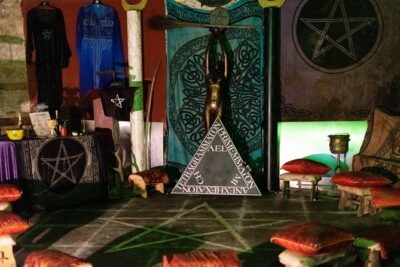
Underground Vaults Walking Tour in Edinburgh Old Town
Read our review →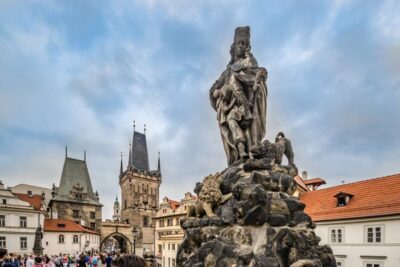
3-Hour Walking Tour of Old Town & Prague Castle
Read our review →
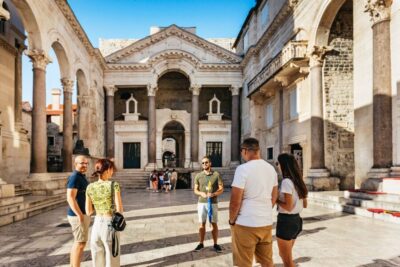
Old Town and Jewish Quarter Guided Walking Tour
Read our review →
Cartagena: Historic Center and Getsemaní Shared Walking Tour
Read our review →Browse the lists this tour appears in