
Review · PARIS WALKING TOURS
Paris: Illuminated Walking Tour
Paris glows best after sunset. This low-cost evening walk links Opera Garnier, the Champs-Élysées, Les Invalides, and the Seine, giving you a broad look at the city without paying monument entrance fees. I like the $14 price and the way the route strings together famous Paris sights in one outing.
I also like the choice of adding a Seine cruise, which can turn a good walking tour into a fuller night out. The main drawback is simple: you see the monuments from outside, and the walk lasts two to three hours, so comfortable shoes are not optional. Guides such as Maria and Marisela have earned praise for clear explanations, humor, and warm group care.
Key points to know before booking
- Start near Opera Garnier: The meeting point is LOOKEVEN at 10 Place de l’Opéra, though the exact location can vary by booking option.
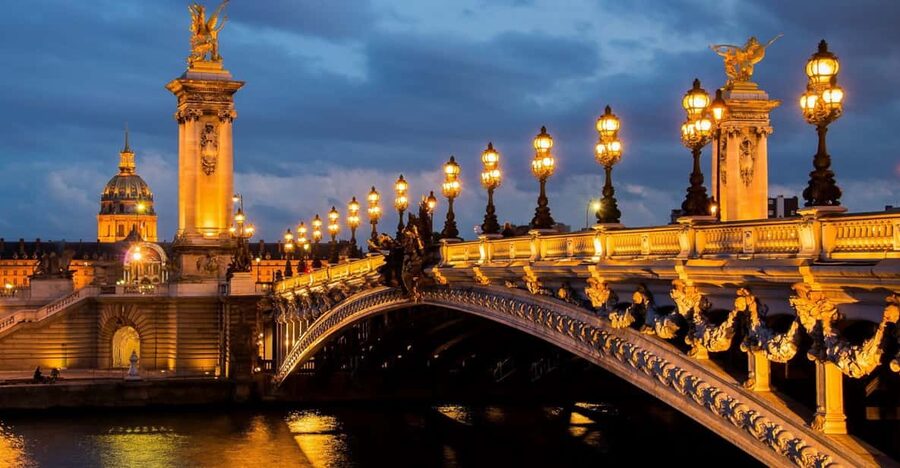
- A grand outdoor route: You pass La Madeleine, Place de la Concorde, the Champs-Élysées, Grand Palais, Pont Alexandre III, and Les Invalides.
- Strong guide-led storytelling: English and Spanish guides explain the city’s past, with Maria praised for her effort and Marisela for her charisma.
- No monument admissions: This is an exterior walking tour, so you will not enter Opera Garnier, Les Invalides, or any other site.
- Optional Seine cruise: You can add a boat ride, with both covered and open-air seating, subject to availability.
- Flexible booking: Cancel up to 24 hours before the activity for a full refund, and reserve now while paying later.
Paris begins at Opera Garnier
The walk starts near LOOKEVEN, at 10 Place de l’Opéra. That puts you beside the Palais Garnier, one of Paris’s most theatrical buildings and a fitting place to begin an evening route.
You get about 15 minutes here for a photo stop, a visit around the exterior, and guide commentary. The building’s elaborate design works especially well after dark, when lighting brings out its curves, sculpture, and grand entrance. You should think of this as an introduction rather than a proper Opera Garnier visit. Entrance is not included, so anyone wanting the famous interior will need a separate ticket.
Starting at the opera also helps you get your bearings. From here, the route moves through central Paris in a clear westward line. You are not spending the evening zigzagging between disconnected sights. Instead, each stop leads naturally toward the Seine.
The guide’s role matters right away. This is not simply a walk past illuminated façades. You are paying for the explanation of why the buildings matter, how they fit into Parisian life, and what to look for in the architecture. The strongest feedback points to guides who make that information lively instead of turning it into a school lecture.
A few more walks around Paris worth a look
- Paris Top Sights Half Day Walking Tour with a Fun Guide
★ 5.0 · 2,893 reviews - Montmartre Hidden Gems and Scenic Highlights Walking Tour
★ 5.0 · 2,684 reviews - Montmartre Hill French Gourmet Food and Wine Tasting Walking Tour
★ 5.0 · 2,588 reviews
La Madeleine and the city’s grand scale
The next stop is La Madeleine Church, with roughly 15 minutes for a visit, photographs, and commentary. The church is memorable because of its Roman-style appearance, with a broad colonnade that makes it look more like an ancient temple than a typical Paris church.
At dusk, La Madeleine gives you one of the first clear examples of how this tour works. You are not entering a single attraction and spending an hour indoors. You are seeing how major buildings shape public squares and avenues. The outdoor setting lets you compare the church with the surrounding city, traffic, lights, and evening movement.
I find this kind of stop useful early in a Paris visit because it helps explain the city’s taste for monumental design. A short guide talk can give you enough context to recognize the building later, even if you do not return for an interior visit.
Still, keep your expectations in check. Fifteen minutes is enough for an overview and photographs, not a close study of the church. If religious art or interiors are your main interest, this tour will leave you wanting more.
Place de la Concorde after dark
Place de la Concorde is the next major pause. The square is one of Paris’s largest and most important public spaces, and its scale becomes easier to appreciate when you are standing in it rather than viewing it through a car window.
Here, your guide can help connect the square with the wider story of Paris. The stop is also a useful transition: the route shifts from the Opera district toward the ceremonial heart of the city. You can expect another 15-minute photo and explanation stop.
The square is visually powerful, but it can feel open and exposed. There is little shelter from weather, and the group will likely remain outdoors while the guide speaks. Bring a light layer if the evening is cool, and remember that the cruise option does not remove the need to complete the full walk first.
For photographs, dusk is the point. You get a mix of fading natural light and the first strong illumination of the monuments. That changing light is one reason this experience is more appealing than a daytime sightseeing walk for visitors who have already spent their day in museums.
Walking the Champs-Élysées
The route then reaches the Champs-Élysées, perhaps the most famous avenue in Paris. The tour gives you about 15 minutes here for photographs and explanation rather than a full-length stroll along every part of the avenue.
This is a good place to understand the difference between a landmark and an experience. The Champs-Élysées is famous, but its value on this tour comes from seeing it connected to the monuments around it. The avenue helps frame the city’s ceremonial side, linking major squares and public buildings.
You will not be stopping for shopping, food, or a long café break. Food and drinks are not included, and this is a guided route with a steady schedule. If you want to linger over dinner on the avenue, plan to do that after the tour, not during it.
That said, the short stop keeps the evening moving. You get the iconic setting without allowing one avenue to swallow the whole outing. The guide’s historical explanation is especially useful here because the avenue can otherwise seem like a polished shopping street rather than part of Paris’s grand civic design.
Same streets, a different way to see them:
- Authentic Parisian Gourmet Food Tour with 10 Local Dishes & Wines
★ 5.0 · 4,754 reviews - Paris: Montmartre Highlights Walking Tour with a Local Guide
★ 4.9 · 2,318 reviews - Paris Île de la Cité and Notre-Dame Walking Tour With Crypt
★ 5.0 · 2,272 reviews - Paris: Montmartre Cheese, Wine & Pastry Guided Walking Tour
★ 4.8 · 2,255 reviews
Grand Palais and Petit Palais
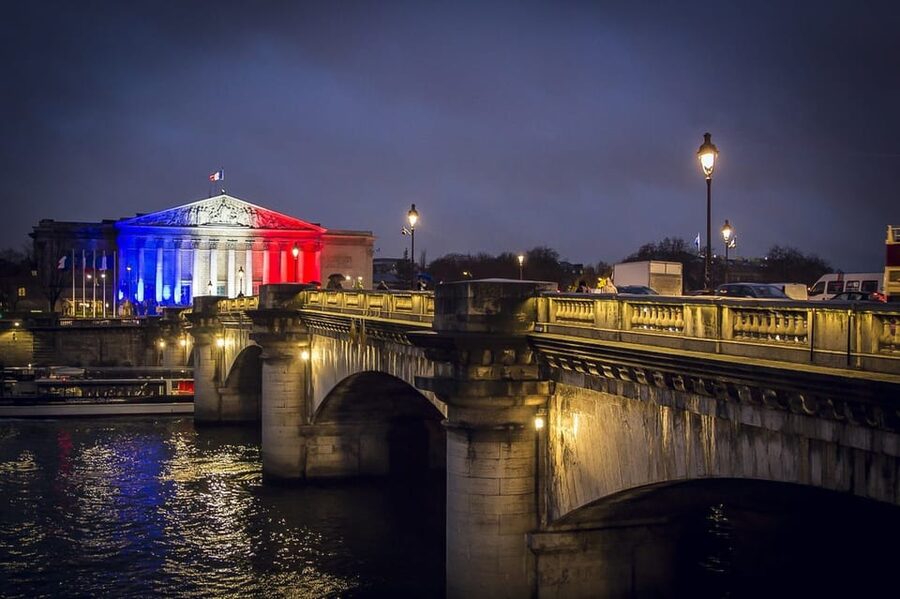
The walk continues toward the Grand Palais and Petit Palais. The supplied route lists the Grand Palais as a 15-minute stop, while the surrounding area also includes the Petit Palais. Together, these buildings create one of the most impressive architectural stretches on the walk.
The Grand Palais is known for its monumental form and large glass roof, while the Petit Palais has a more intimate decorative character. Even from outside, the pair gives you a strong sense of Paris’s appetite for grand public buildings.
This section rewards people who enjoy architecture and city planning. You can look beyond one façade and see how the buildings relate to the avenue, open space, and nearby bridge. The illumination adds drama without requiring an entrance ticket.
Again, you are not going inside. That limitation is important if you are hoping to visit exhibitions or study the interiors. The tour gives you a well-framed exterior view and a guide’s context, but it is not a museum visit.
Pont Alexandre III, one of the evening highlights
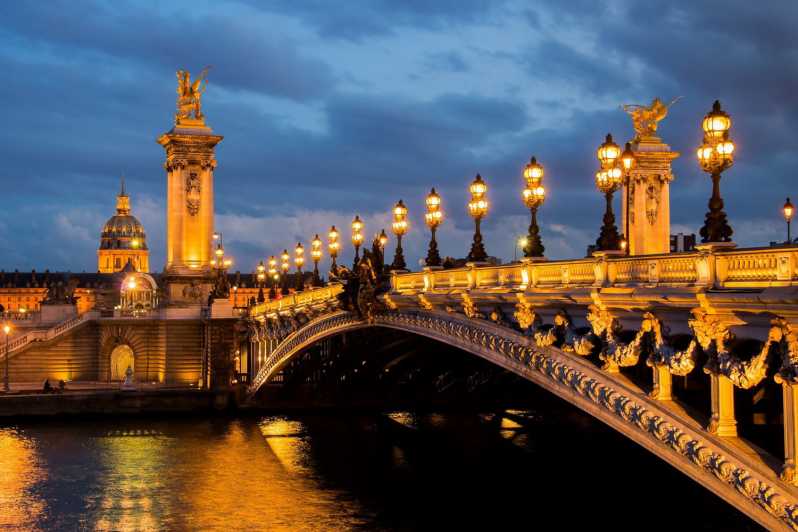
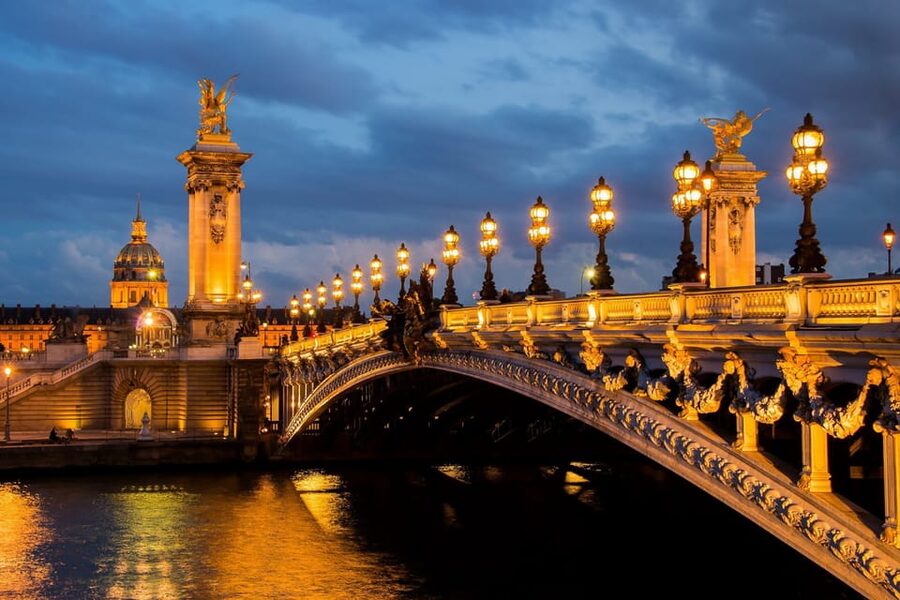
Pont Alexandre III is likely one of the most photogenic stops of the night. The bridge is decorated with ornate lamps, sculptures, and details that become especially effective when lit. The tour allows about 15 minutes here for photographs and a guided visit.
This is where the City of Lights idea becomes most convincing. The bridge is not merely functional. It is designed to be seen, and evening lighting brings out the decorative features that can get lost in daylight.
The bridge also offers a sense of movement. You are crossing toward the Invalides area while looking back toward the river and the monumental buildings nearby. Depending on the exact pace and light, this may be one of the best moments for wide photographs.
A practical note: bridges can be busy, and the group needs to stay together. Wear shoes with good support, especially if you want to stop for pictures without slowing everyone down. The tour is wheelchair accessible, but the walking format still means you should check the exact meeting and route details when booking.
Les Invalides and Napoleon’s tomb
The final major monument on the route is Les Invalides, the National Palace of the Invalides. The site is closely linked with France’s military past and is where Napoleon’s remains are found.
The tour allows about 15 minutes for a photo stop, exterior visit, and explanation. The illuminated dome makes Les Invalides a powerful closing monument. It has a different mood from the opera, churches, avenues, and bridges earlier in the evening. The building feels solemn and monumental rather than theatrical.
This is another exterior stop, so entrance to the complex is not part of the price. If Napoleon, military collections, or the interior church are high on your list, set aside another visit. The walking tour gives you the setting and basic context, but not the full museum experience.
Ending near Les Invalides also gives the route a satisfying shape. You have moved from entertainment and royal-style architecture through public squares and ceremonial avenues to a site tied to national memory. The guide’s storytelling is most valuable when it shows these stops as connected parts of Paris, not just a checklist of famous names.
Finishing by the Seine
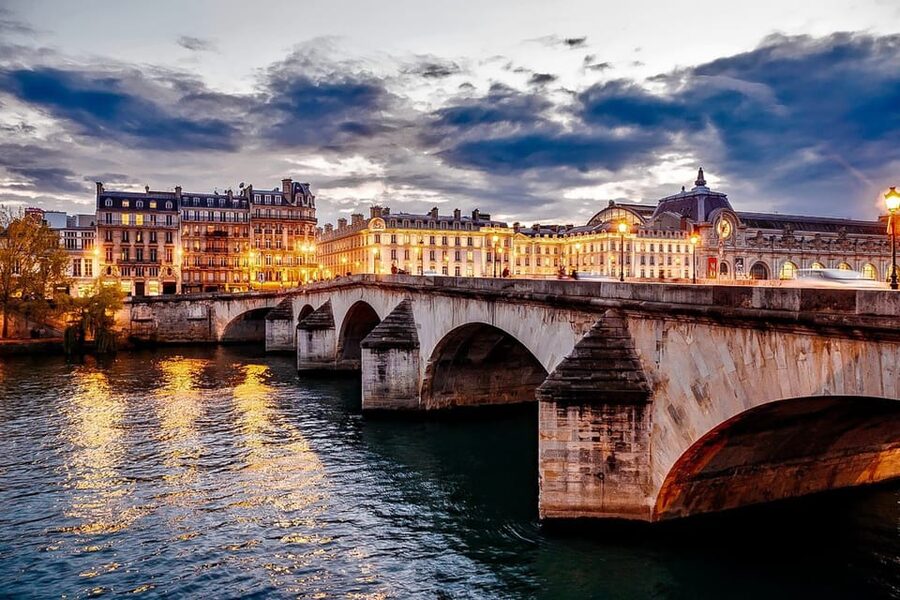
The walk ends at the beautiful Soul Bridge, which crosses the Seine. The name and exact endpoint should be checked carefully with your selected booking option, since the meeting point may vary by modality.
At the river, the city opens up. After several stops among buildings and avenues, you get a broad view across the water and a natural pause at the end of the walking portion. This is also where the optional Seine cruise becomes relevant.
The cruise is not automatically part of every booking. You must choose the option that includes it, and the boat ride is subject to availability after the walk. If there is no place immediately afterward, you can use the cruise tickets at another time and day. The tickets can be used that same day if space is available, or during the following two years.
That flexibility is useful, but you should not assume the boat will depart the moment the walking tour ends. If you have dinner reservations or a fixed evening plan, leave room for a timing change. The cruise has both covered and uncovered options, which helps in changing weather and gives you a choice between shelter and a clearer open-air view.
A Seine ride also changes the way you see the city. On foot, you notice façades, squares, and street-level details. From the water, you get longer views of the riverbanks and illuminated buildings. The two parts complement each other, though the cruise is best treated as an optional extra rather than a guaranteed immediate finale.
What the guide quality adds
The guide can make or break a route like this. The stops are famous, but a list of names is not enough. You need someone who can explain what you are seeing while keeping the group moving through a two to three hour walk.
The strongest guide feedback points to warmth, humor, and clear history. Maria is praised for working hard to communicate with the entire group, knowing her subject, and being polite and accommodating. That matters if the group includes different language levels or people who need a little extra help following the commentary.
Marisela is praised for her charisma and explanations. Another English-language guide is described as giving an informative history presentation. These details suggest that the experience is at its best when the guide treats the route as a shared walk rather than a speech delivered at each stop.
Tours are offered in English and Spanish. If you want detailed commentary in one of those languages, select the right option when booking. The activity is not designed as a private tour, and no group size is provided, so the atmosphere may depend on the departure you choose.
Is $14 good value?
At $14 per person, this is inexpensive for a guided introduction to several of Paris’s best-known evening sights. The value comes from the route and the guide, not from admission to attractions. You are paying for organized walking, historical explanation, and a chance to see the monuments illuminated without arranging the route yourself.
I would consider it especially good value if you are new to Paris, have only one free evening, or want a simple way to connect the Opera area with the Seine. It can also work well near the start of a longer stay, when a broad overview helps you decide which places deserve a return visit.
The price is less compelling if you want to enter buildings, spend long periods at each sight, or move at your own pace. You will not receive monument admissions, food, drinks, or transport. The cruise is an additional booking choice, not something to assume is included in the basic rate.
The free cancellation window up to 24 hours before the activity and the option to reserve now and pay later reduce the risk of planning ahead. Still, check the exact package, meeting point, language, and cruise inclusion before paying.
Who should book this evening walk?
I would recommend it to first-time Paris visitors who want a fast introduction to the city’s monumental center. It also suits couples, families, and solo visitors who prefer a guide to handle the route while they focus on the views.
It is a good match for anyone who likes architecture, public squares, photography, and short historical explanations. The optional cruise adds value if you want both street-level and river-level views in one evening.
I would be more cautious if you have limited mobility that makes a two to three hour walk difficult, even though the activity is listed as wheelchair accessible. I would also choose a different experience if your priority is entering the Opera Garnier, touring Les Invalides, or spending serious time inside museums.
Bring comfortable shoes and some cash. Since food and drinks are not included, you may want to eat before or after the walk. The route is built around outdoor viewing, so a layer suitable for the evening is sensible, though the activity details do not specify a dress code or weather policy.
Should you book the Paris Illuminated Walking Tour?
Book it if you want a low-cost, guide-led introduction to Paris after dark, with a route that covers major monuments rather than one single attraction. The best reasons are the $14 price, the broad lineup of stops, and the chance to add a flexible Seine cruise.
Skip it if you want interior access, a private pace, or a food-focused night. For most visitors, this works best as a first-look tour. Let the guide show you the city’s illuminated frame, then return later for the museums and monuments you want to explore properly.
FAQ
Where does the Paris Illuminated Walking Tour start?
The listed starting point is LOOKEVEN at 10 Place de l’Opéra, near Palais Garnier. The meeting point can vary depending on the option you book, so check your confirmation.
How long does the walking tour last?
The activity lasts two to three hours. Each listed monument stop allows about 15 minutes for photographs, an exterior visit, and guide commentary.
Which languages are available?
The tour is offered with a live guide in English or Spanish.
Does the tour include entrance to the monuments?
No. Entrance to the monuments is not included. The experience focuses on exterior views and guided explanations.
Is a Seine cruise included?
A Seine cruise is available as an option when booking. It is subject to availability after the walking tour, and the tickets may be used that day if available or during the following two years.
Is the Seine boat covered?
Yes. The cruise has both covered and uncovered options.
What should I bring?
Wear comfortable shoes because this is a walking tour. Cash is also listed as something to bring. Food and drinks are not included.
Just added around Paris
- The Official Emily in Paris Locations Walking Tour★ 4.9 · 383 reviews
- Paris: Montmartre Food Tasting Walking Tour with Secret Dish★ 4.8 · 107 reviews
- Paris: Emily Inspired Walking Tour★ 4.9 · 312 reviews
- Saint-Germain: Gourmet Chocolate & Pastry Walking Food Tour★ 4.8 · 495 reviews
- Paris: Walking Tour of Montmartre★ 4.7 · 470 reviews
- Paris: Ghosts, Legends & Mysteries Evening Walking Tour★ 4.5 · 241 reviews
- Paris: Walking Tour with Notre Dame or Ste-Chapelle Access★ 4.4 · 198 reviews
- Paris Top Sights Half Day Walking Tour with a Fun Guide★ 4.9 · 92 reviews
Paris Walking Tours, compared.

Authentic Parisian Gourmet Food Tour with 10 Local Dishes & Wines
Read our review →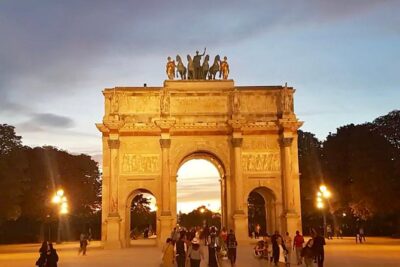
Paris Top Sights Half Day Walking Tour with a Fun Guide
Read our review →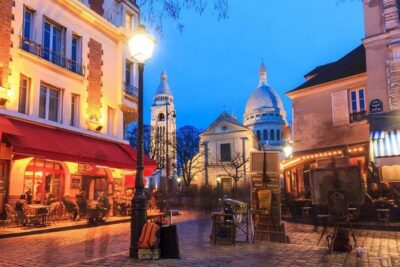
Montmartre Hidden Gems and Scenic Highlights Walking Tour
Read our review →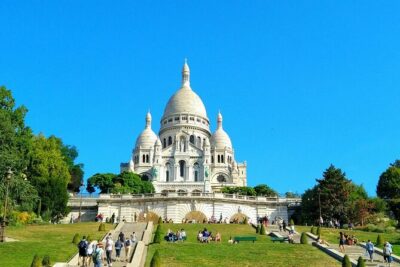
Montmartre Hill French Gourmet Food and Wine Tasting Walking Tour
Read our review →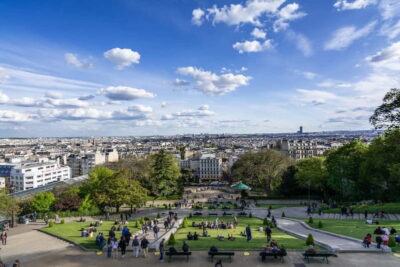
Montmartre Highlights Walking Tour with a Local Guide
Read our review →
Paris Île de la Cité and Notre-Dame Walking Tour With Crypt
Read our review →
Montmartre Cheese, Wine & Pastry Guided Walking Tour
Read our review →
Paris in a Day: Louvre or Orsay, Eiffel Tower, City Walk & Cruise
Read our review →Browse the lists this tour appears in