
Review · ROME WALKING TOURS
Rome: Relics from the Passion of the Christ Walking Tour
Rome’s sacred trail runs through quiet churches. This three-hour walking tour brings you to relics linked by Christian tradition to Jesus’ Passion, including the wood of the Cross, a nail, thorns from the Crown, and the Holy Steps. I like the small groups of up to 10 and the way guides such as Daniel, Paul, Tom, and Thomas bring together faith, art, and Roman history.
I also like the chance to pause for prayer rather than rush through each church as if it were another box to tick. The main drawback is the packed schedule: five major sites in three hours leaves limited time, and one visitor found there was not enough time to see the relics at Santa Croce.
This is a serious religious pilgrimage, not a general sightseeing walk. You need comfortable shoes, covered shoulders and knees, and a willingness to treat the churches and relics with respect. At $100 per person, the value rests heavily on the guide, and the repeated praise for Daniel and Paul suggests that a strong guide can make this tour far more rewarding.
Key points to know before you go
- Five important churches in three hours: The route links Santa Maria Maggiore, Santa Prassede, the Scala Sancta, San Giovanni in Laterano, and Santa Croce.
- Relics tied to the Passion: You may see a piece of the Cross, a crucifixion nail, two thorns, part of the inscription placed above Jesus, and other objects connected with Jerusalem.
- Small-group format: With no more than 10 people, it should be easier to hear explanations and ask questions.
- Guides are the main strength: Daniel, Paul, Tom, and Thomas have been praised for their command of church history, Roman history, and Catholic tradition.
- Dress rules are strict: Shoulders and knees must be covered. Bring a shawl or light cover in warm weather.
- Expect a real walking tour: There is no transport between stops, and the golf cart option is recommended if mobility is limited.
Why this Rome tour is different
Rome has plenty of famous churches, but this route gives them a clear purpose. You are not simply touring beautiful buildings. You are following a sequence of places connected to the life, trial, death, and burial of Jesus according to Christian tradition.
The story begins with the infancy of Christ at Santa Maria Maggiore, moves to the suffering of Jesus at Santa Prassede and the Scala Sancta, passes through the cathedral of Rome, and ends with the relics of the Passion at Santa Croce. That order gives the three hours a strong spiritual shape.
I would choose this tour for someone who wants more than photographs and architectural facts. It is especially suited to Catholic pilgrims, practicing Christians, and visitors who want to understand why certain objects and churches matter to the faithful.
You should also know what this tour is not. It is not a neutral museum presentation of authenticated archaeological objects. Several relics are held and venerated through long Christian tradition, and your guide will explain their religious and historical setting. If you expect every object to come with modern scientific proof, some parts may leave you with questions.
A few more walks around Rome worth a look
- Rome: Guided Food Walking Tour with Wine in Trastevere
★ 4.9 · 3,105 reviews - Rome: Trastevere & Campo de Fiori Street Food Walking Tour
★ 4.9 · 2,768 reviews - Rome: Paranormal Night Walking Tour & Secret Backstreets
★ 4.9 · 1,921 reviews
Santa Maria Maggiore and the wood of the manger
Meet at the fountain in the piazza in front of Santa Maria Maggiore. The guide carries an orange Roman Vacations sign, so finding the group should be straightforward. Arrive 15 minutes early, since the tour leaves on time and late arrivals are not refunded.
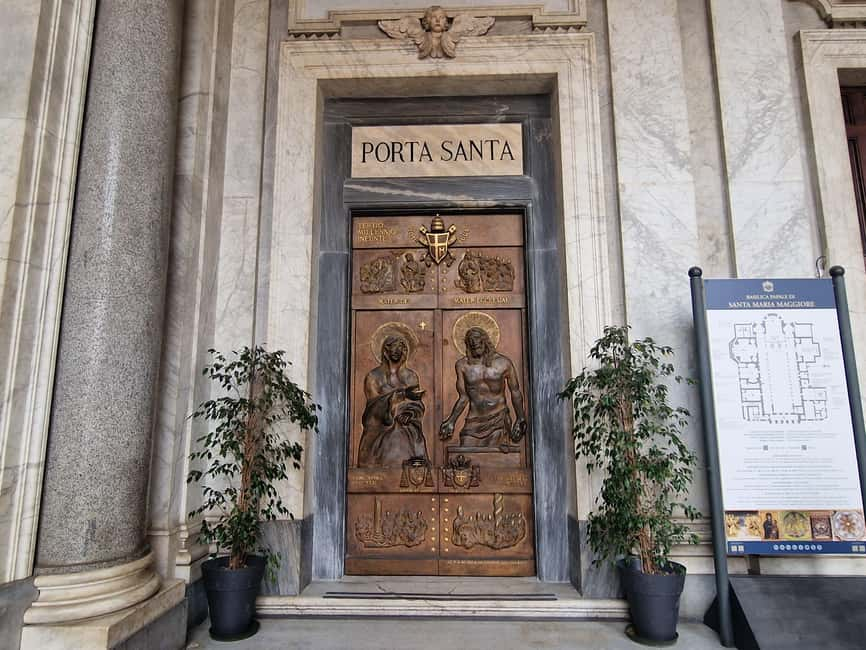
Santa Maria Maggiore is one of Rome’s oldest churches dedicated to Mary, the mother of Jesus. It is an excellent first stop because it introduces both the central role of Mary and the long history of Christian devotion in Rome.
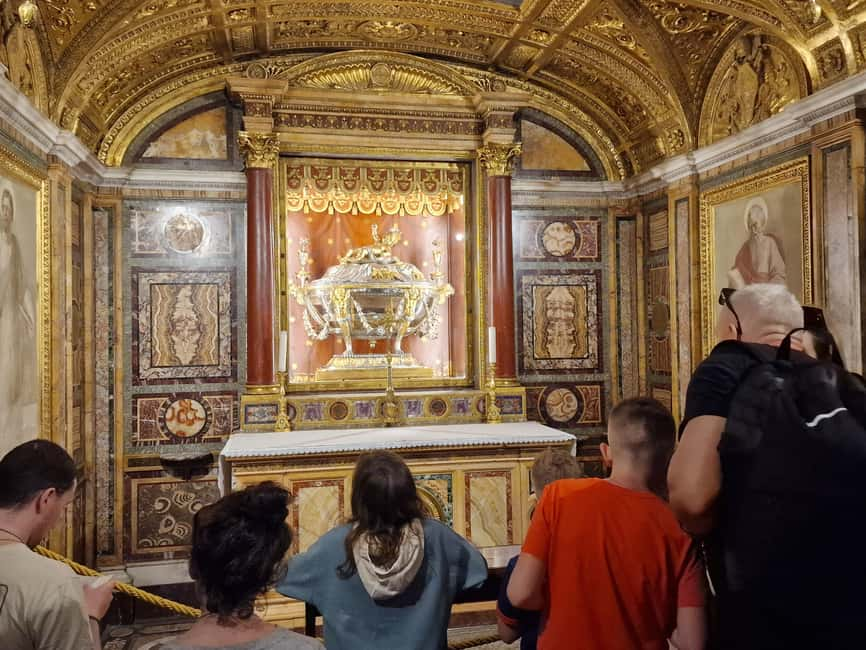
Beneath the main altar, the basilica preserves wood traditionally connected with the manger of Bethlehem. This gives the opening stop a different mood from the later sites. You begin not with torture or death, but with the birth of Jesus.
The church also carries layers of Italian art from different periods. Your guide may point out how the building changed over time and how art helped communicate Christian teaching to people who could not read.
One unusual detail is the tomb of Gian Lorenzo Bernini, the great Baroque sculptor and architect. Bernini is often associated with grand Roman monuments, but his burial here is modest compared with the scale of his work.
Give yourself a moment to look up before following the group onward. The basilica can feel like a rapid-fire stop if you focus only on the relic. Its mosaics, chapels, altar, and changing styles help explain how Rome preserved and reshaped Christian worship across many centuries.
Santa Prassede and the column of scourging
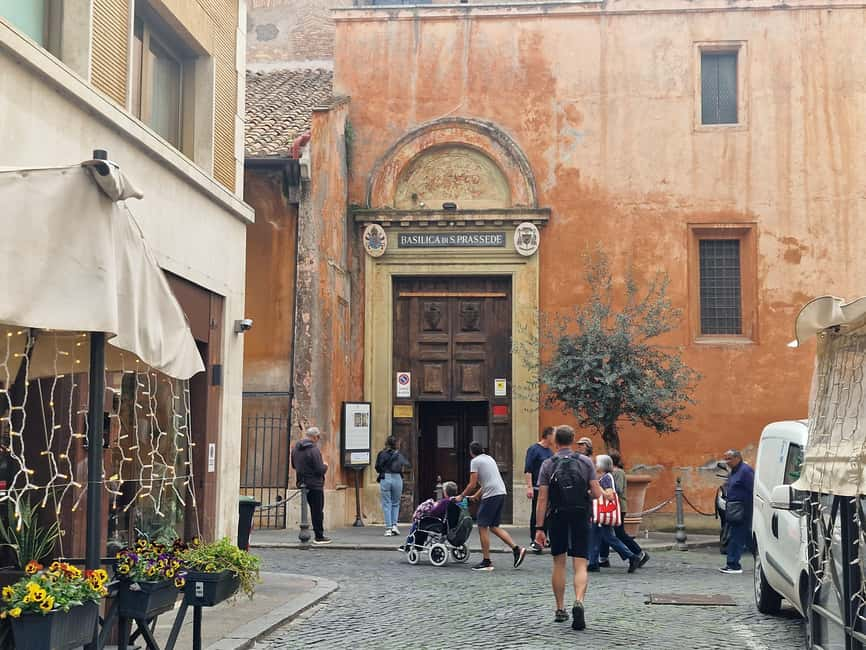
The next stop is Santa Prassede, a smaller and more intimate church with remarkable ninth-century mosaics. Compared with the grand scale of Santa Maria Maggiore, this church can feel quieter and more focused.
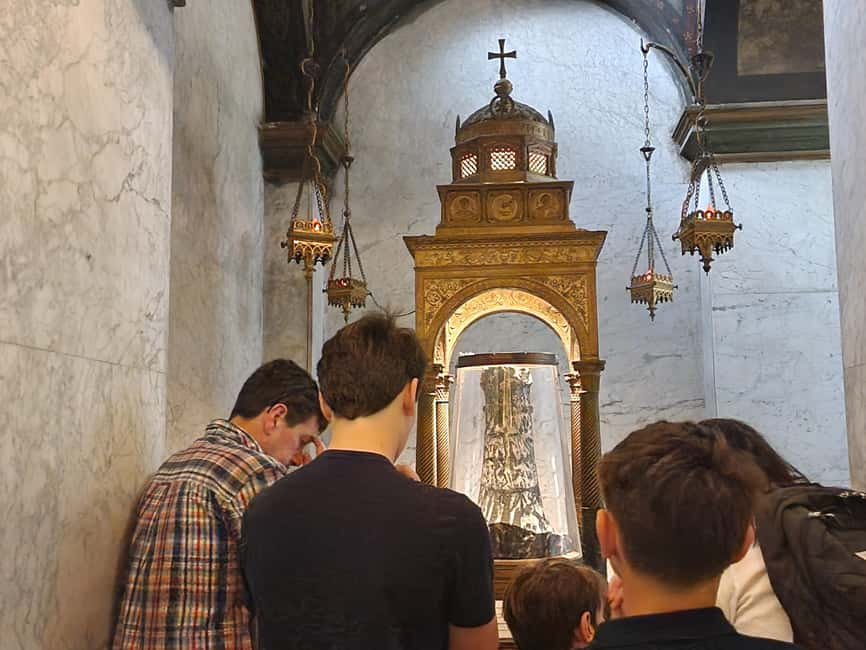
The key object here is a stone pillar traditionally identified as the column used to scourge Jesus. It was brought from Jerusalem to Rome in the thirteenth century, according to the church’s tradition.
This is where a good guide matters. The object itself is small and plain, so its meaning comes from the story, the devotional practice, and the historical setting. Paul and Daniel have been particularly praised for explaining both the religious meaning and the wider Roman context without losing sight of the sacred purpose of the visit.
The mosaics are also worth your attention. Their gold surfaces and early medieval style offer a useful reminder that Rome’s Christian art is not limited to the Renaissance and Baroque periods most visitors know.
The tradeoff is time. With five sites ahead and behind you, you may get only a short period to study the mosaics. If this church interests you as an art lover, note its name and return later at your own pace.
The Scala Sancta and the steps linked to Pilate
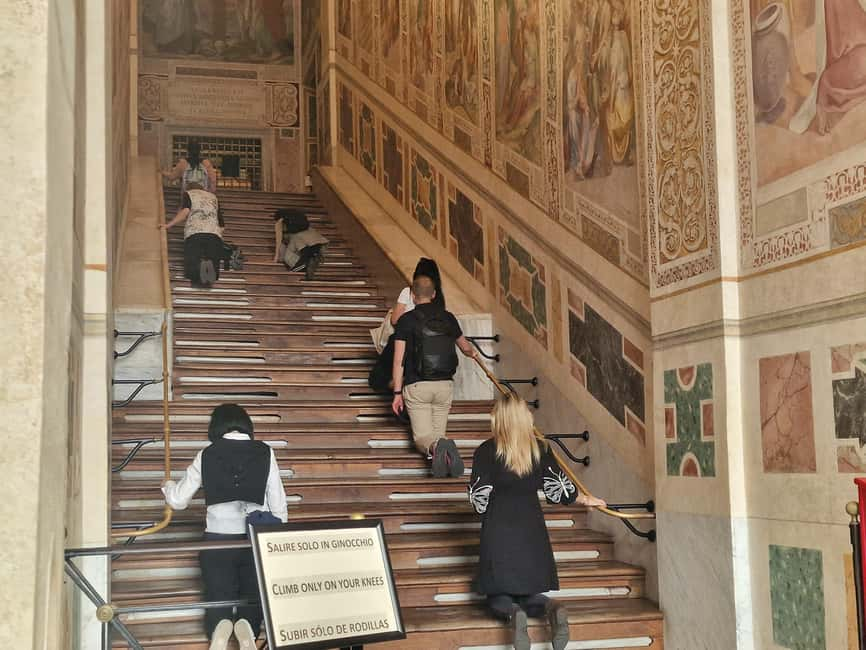
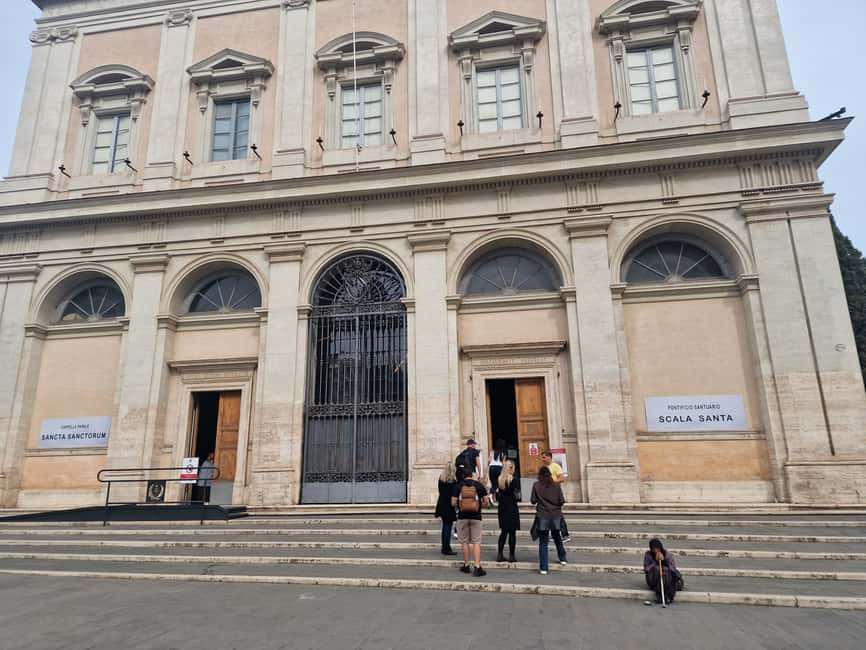
From Santa Prassede, the route continues to the Scala Sancta, or Holy Steps. Christian tradition identifies these marble steps as the staircase Jesus climbed during his judgment before Pontius Pilate. Saint Helena, the mother of Emperor Constantine, is said to have brought them to Rome in the fourth century.
The steps are one of the most physically direct parts of the pilgrimage. Devout visitors traditionally climb them on their knees, stopping to pray as they go. You will not have enough time to make that full practice part of this guided schedule, but you can still see the staircase and understand why it carries such weight for pilgrims.
At the top is the Holy of Holies, which contains an icon traditionally attributed to Saint Luke. The tour gives you a chance to look toward this sacred space and hear how it fits into the devotional life of Rome.
This stop may be especially moving if you value ritual and physical acts of prayer. It also calls for quiet behavior. The building is not merely an attraction, and the presence of people praying should shape how you move through it.
If stairs are difficult for you, take the walking warning seriously. The tour operator specifically advises people with limited mobility to book the golf cart option instead. Even visitors who walk well should wear shoes with good support.
Same streets, a different way to see them:
- Rome: Colosseum Arena, Roman Forum & Palatine Hill Tour
★ 4.5 · 1,874 reviews - Rome: Trastevere Street Food Walking Tour with Local Expert
★ 4.8 · 1,784 reviews - Rome: Small-Group Guided Day or Night Walking Tour
★ 4.8 · 1,009 reviews - Rome by Night Walking Tour – Legends & Criminal Stories
★ 4.5 · 1,003 reviews
San Giovanni in Laterano, Rome’s cathedral
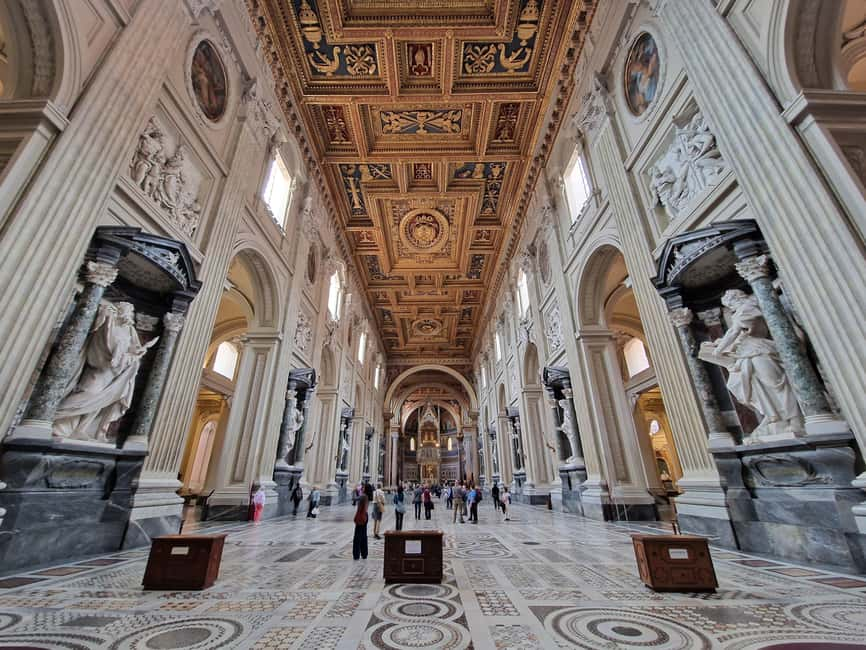
The route then reaches the Basilica of Saint John Lateran, known in Italian as San Giovanni in Laterano. This is the cathedral of Rome, a fact that surprises many people who assume Saint Peter’s Basilica holds that title.
The basilica gives the guide room to explain how the bishop of Rome and the papacy developed within the city. It also provides a shift in focus from individual relics to the structure and symbolism of the church itself.
You will see architectural work associated with Francesco Borromini and a striking mosaic program. Your guide can help you read the symbols rather than simply admire the colored stone and gold surfaces. That makes a difference in a church where the decoration can otherwise blur into a grand visual display.
Above the high altar are the skulls traditionally identified as those of Saints Peter and Paul. The tradition connects the basilica to the earliest leaders of the Christian church and adds another layer to the pilgrimage.
This is also one of the stops where timing matters most. San Giovanni is large, and a three-hour route cannot cover every chapel or architectural detail. I would focus on the cathedral’s role, the mosaic, the high altar, and the relic tradition rather than trying to remember every name and date.
Santa Croce and the main relics of the Passion
The final stop is the Basilica of the Holy Cross in Jerusalem, or Santa Croce in Gerusalemme. It was built on earth brought from Calvary in the fourth century, linking the Roman church symbolically to the place of Christ’s Crucifixion.
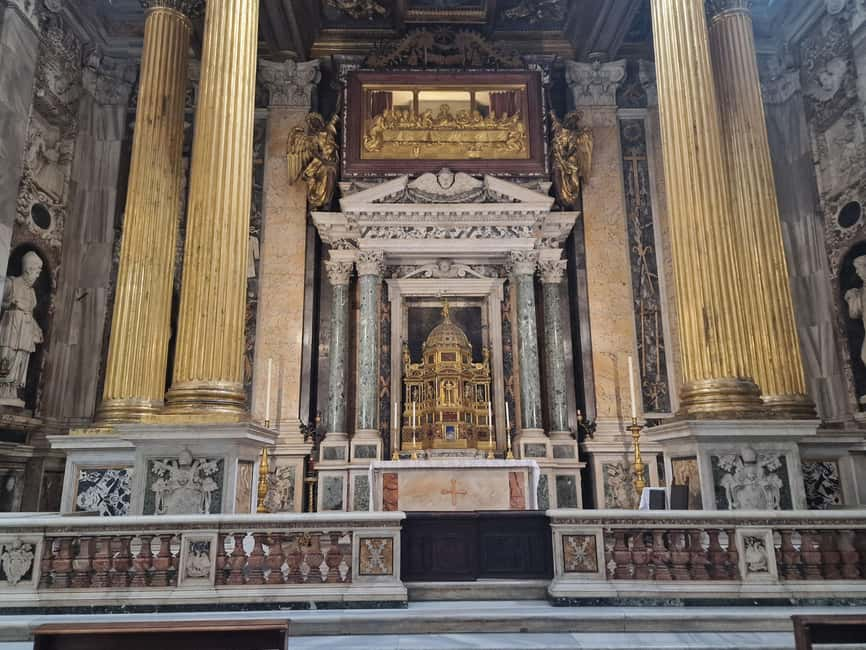
This is the tour’s main destination. The chapel preserves objects associated with the Passion, including:
- A piece of the wood of the Cross
- A nail associated with the Crucifixion
- Two thorns from the Crown of Thorns
- A small walnut board bearing the words Jesus the Nazarene, King of the Jews
- Fragments associated with the Holy Sepulcher
- Material connected with the Cave of Bethlehem
These objects are presented within a Catholic devotional tradition. Your guide should explain what each item is said to represent and how the relics reached Rome. The value of the stop lies not only in seeing the objects but also in understanding how Saint Helena and later generations shaped Rome as a second Jerusalem for Christian pilgrims.
The tour includes time to reflect and pray here. That pause is important. Without it, the route could feel like a long list of sacred objects. With it, the final church becomes a place to gather the story together.
There is one practical concern. The schedule may not allow enough time at Santa Croce, especially if the church is busy or the group has moved slowly earlier in the morning. One person specifically felt the relics here deserved more priority. If Santa Croce is the main reason you are booking, ask the guide at the start how much time is planned for the relic chapel.
The guides make the difference
The strongest part of this experience is the guide. The route covers theology, Roman history, art, architecture, relic tradition, and pilgrimage practice. A guide who simply recites dates would make the churches blur together.
Daniel has been praised for his reverence, clear English, patience, and ability to answer questions. Paul is described as both friendly and deeply informed, with a strong grasp of world history, Italian history, Roman history, and Catholic tradition. Tom has been praised for his broad command of the subject and engaging style, while Thomas is noted for clear explanations and patience.
That range matters because the group may include committed Catholics, other Christians, families, and people who are curious about the subject without sharing the faith. A good guide can speak respectfully to all of them.
The small group limit of 10 is another benefit. You can ask about the relics, the art, or the traditions without trying to interrupt a large crowd. One family found the format almost like walking with a parish priest, and teenagers enjoyed it too. That suggests the tour is not only for older pilgrims.
Is $100 a fair price?
At $100 per person, this is not a cheap church walk. The price includes entry to each site and an English-speaking local guide, but it does not include food, drinks, or transport to and from the meeting point.
I see the price as reasonable if you value interpretation. You could visit some of these churches independently, but you would need to research the relic traditions, understand the route, and connect the sites into one story. The guide also saves you the work of navigating between five important locations.
The value drops if you prefer slow independent visits. Three hours is efficient, but it is not leisurely. You will see a lot, yet you may want to return to Santa Maria Maggiore, Santa Prassede, or Santa Croce on another day.
The free cancellation up to 24 hours before the start and the option to reserve now and pay later make planning easier. Those policies are useful in Rome, where church closures and special events can sometimes alter the order of a visit.
What to wear and how to prepare
Dress for a church, not a summer sightseeing stroll. Shoulders and knees must be covered, so avoid shorts, short skirts, and sleeveless shirts. In warm weather, carry a light cover for your shoulders.
Wear comfortable walking shoes. The route is on foot, continues in all weather, and includes several substantial church visits in a short period. Bring water, sunscreen, a hat, and an umbrella as needed.
The visit can proceed in cold weather, so bring an extra layer in winter. A valid photo ID may be requested for each person in your group.
Church closures or special events can change the order of the stops. That does not necessarily reduce the value of the tour, but it means you should treat the sequence as flexible.
Who should book this pilgrimage?
I would recommend it to:
- Catholic pilgrims visiting Rome for the first time
- Christians interested in relics and Passion traditions
- Visitors who want church history explained in plain language
- Families with older children or teenagers who can manage the walking
- Repeat Rome visitors seeking churches beyond the usual headline sights
- People who prefer a small group and time for questions
I would be more cautious if you have limited mobility, dislike religious interpretation, or want long periods for photography and quiet architectural study. The golf cart option may be better for mobility concerns, but the information provided here does not give its price or exact format.
Should you book the Relics from the Passion of the Christ tour?
Book it if the relics, prayer, and Christian history are central to your reason for visiting Rome. The combination of five important churches, a small group, included admission, and strong guides such as Daniel and Paul gives the tour real value.
Before paying, be honest about your pace. This is a brisk three-hour walk, and Santa Croce may receive less time than you hope. If you can accept that limitation, this is a focused way to connect Rome’s churches with the story of Christ’s Passion.
FAQ
How long does the tour last?
The tour lasts three hours.
Where does the tour begin?
It begins at the fountain in the piazza in front of the entrance to the Basilica of Santa Maria Maggiore.
How do I find the guide?
The guide will be holding an orange sign marked Roman Vacations.
What language is the tour in?
The tour is conducted in English with a live guide.
How large is the group?
The group is limited to 10 participants.
What is included in the price?
Admission to each site and an expert local guide are included.
Is transportation included?
No. Transport to and from the tour is not included, and the tour itself is a walking tour.
What clothing is required?
Your shoulders and knees must be covered to enter the churches. Shorts, short skirts, and sleeveless shirts are not allowed.
Can I cancel the booking?
Yes. You can cancel up to 24 hours in advance for a full refund.
Just added around Rome
- Rome: Colosseum and Ancient Rome Guided Walking Tour★ 4.5 · 95 reviews
- Rome: Trevi Fountain, Spanish Steps & Pantheon Walking Tour★ 4.6 · 336 reviews
- Rome: Guided Walking Tour and Pantheon Priority Entry Ticket★ 4.3 · 317 reviews
- Rome Walking Tour: Pantheon, Trevi, Navona & Hidden Gems★ 4.8 · 501 reviews
- Rome: Trastevere Food Walking Tour with Beer and Wine★ 4.9 · 71 reviews
- Rome Trastevere Walking Food Tour★ 4.8 · 97 reviews
- Rome: Underground Trastevere Guided Walking Tour★ 4.8 · 87 reviews
- Rome: Colosseum, Palatine Hill, & Roman Forum Walking Tour★ 4.7 · 423 reviews
Rome Walking Tours, compared.

Guided Food Walking Tour with Wine in Trastevere
Read our review →
Trastevere & Campo de Fiori Street Food Walking Tour
Read our review →
Paranormal Night Walking Tour & Secret Backstreets
Read our review →
Colosseum Arena, Roman Forum & Palatine Hill Tour
Read our review →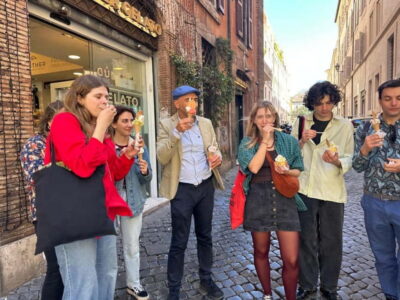
Trastevere Street Food Walking Tour with Local Expert
Read our review →
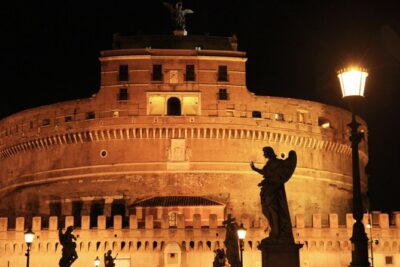
Rome by Night Walking Tour – Legends & Criminal Stories
Read our review →
Rome Food Tour in the Historic Centre with 8+ Food Tastings
Read our review →Browse the lists this tour appears in