
Review · JEWISH HERITAGE WALKING TOURS
Rome: Trastevere and Roman Ghetto Guided Walking Tour
Rome rewards walkers who follow its neighborhood stories. This $41 tour links Trastevere with the Roman Jewish Ghetto, giving you art, architecture, local legends, and ancient ruins in one compact outing. I like the clear route and the chance to see several central districts without spending the day inside major museums.
I also like the small-group feel reported by several participants, with some tours limited to only two or three people. The main drawback is the steady walking: there is no hotel pickup, no stated restroom stop, and the route is not suitable for wheelchair users or people with mobility impairments.
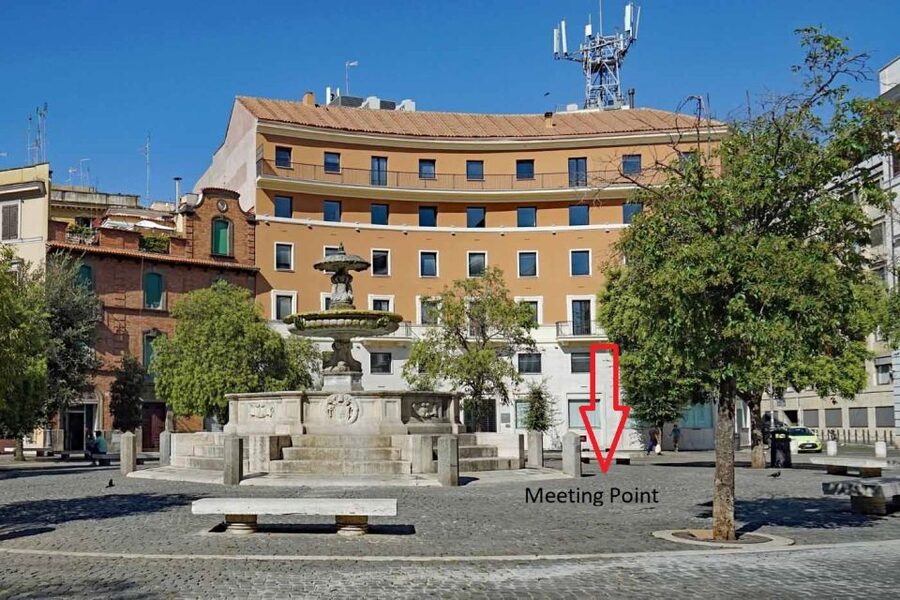
- Piazza Mastai begins the tour in the heart of Trastevere, with the guide waiting by the fountain.
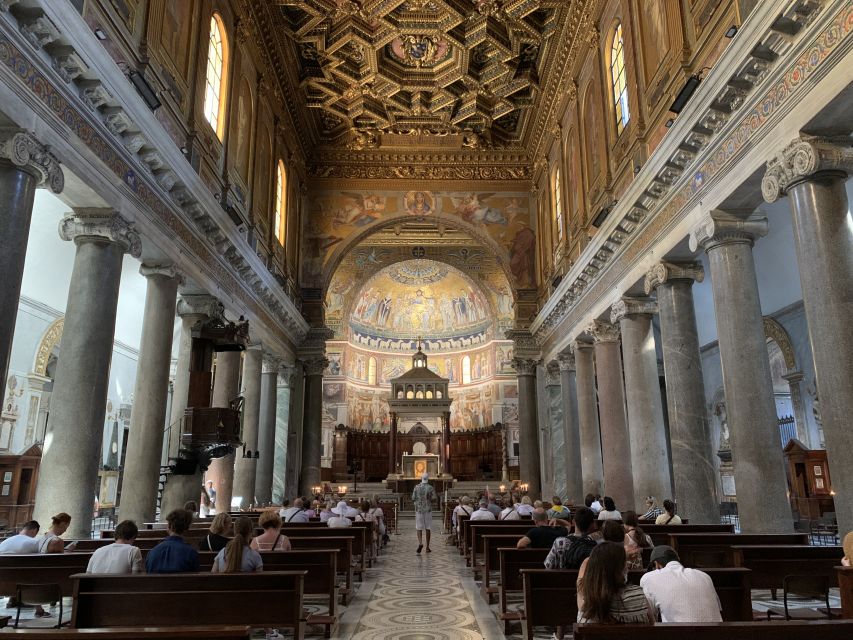
- Santa Maria in Trastevere brings you face to face with medieval mosaics and one of Rome’s most attractive squares.
- Piazza Trilussa offers a glimpse of modern Roman street life, poetry, and public gathering places.
- Campo de’ Fiori connects the city’s market culture with some of its harder historical memories.
- The Jewish Ghetto and Great Synagogue add serious cultural context to the walk.
- The Theatre of Marcellus closes the route with a striking piece of ancient Rome.
What This Rome Walking Tour Does Well
This is a neighborhood tour rather than a greatest-hits sprint. You will not enter the Colosseum, Roman Forum, or Vatican Museums. Instead, you move through streets where churches, fountains, markets, synagogues, theaters, and everyday Roman life sit close together.
That makes the experience useful early in your visit. A good guide can help you understand how Rome’s districts fit together, and several guides named by participants, including Estefi, Celia, Sarah, Gabriella, Giuseppe, and Fabiano, received praise for clear explanations and friendly conversation.
The guides seem to be the heart of the experience. Estefi helped one small group understand both Trastevere and the Jewish Ghetto, took photos, and offered food suggestions. Giuseppe adjusted the pace for hot weather and looked for shade. Sarah connected well with teenagers, while other guides answered questions instead of simply delivering a memorized speech.
The tour earns a 4.7 rating from 79 reviews, which fits the pattern: the strongest praise goes to the guides, the relaxed pace, and the amount of context packed into two to two and a half hours.
Meeting at Piazza Mastai in Trastevere
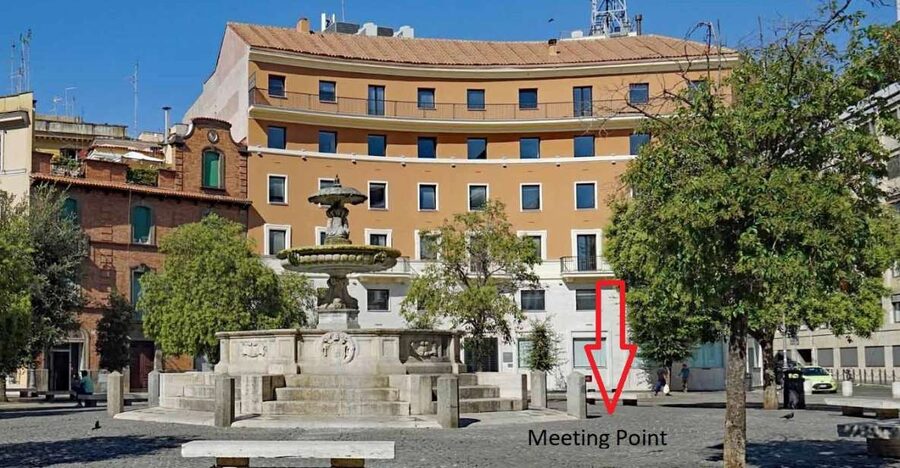
Your starting point is Piazza Mastai, a useful introduction to Trastevere’s broad, social character. Arrive about 15 minutes early and look around the main fountain for a guide holding a sign with the tour name.
You will meet your guide and the rest of the group here. Since the route is on foot, this is the time to fill your water bottle and use the restroom before setting off. The tour information specifically recommends bringing water and a reusable bottle.
The group size can shape the experience. Several people had only two or three participants, and one comment refers to a maximum of nine per guide. Smaller groups make it easier to ask about food, architecture, or family history, and they reduce the need for audio equipment.
If the group grows beyond 10 people, headsets are provided so you can hear the guide. That is practical on Roman streets, where traffic, scooters, and conversation can quickly swallow a soft voice.
More Jewish Heritage Walking Tours in Rome:
- Rome: Jewish Ghetto Walking Tour
★ 4.7 · 274 reviews - Highlights of Jewish Ghetto And Trastevere Walking Tour
★ 4.8 · 233 reviews - Amsterdam Anne Frank: Small-Group Walking Tour & Local Guide
★ 4.8 · 12,789 reviews
Santa Maria in Trastevere and Medieval Rome
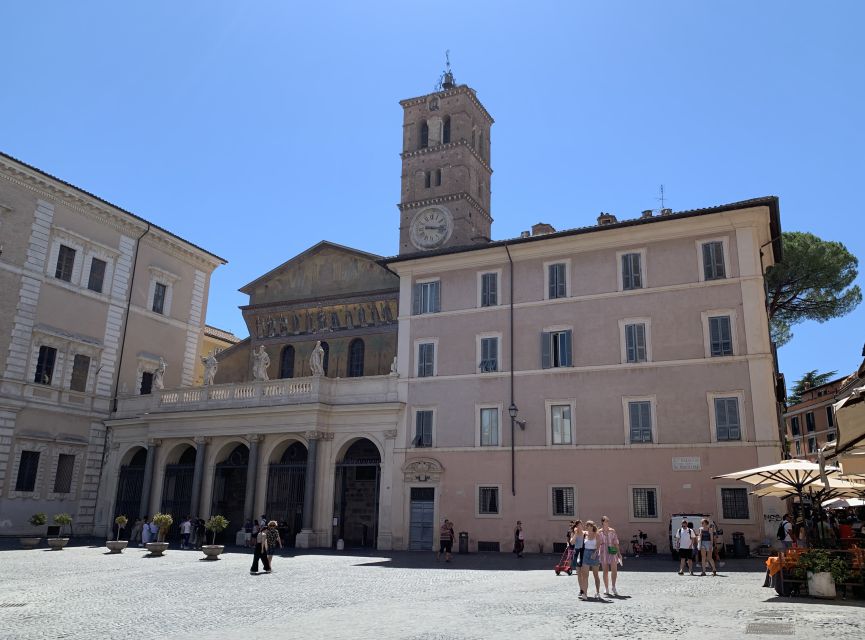
The first major stop is Piazza di Santa Maria in Trastevere, home to the Basilica of Santa Maria. The church dates to the 12th century and is known for its mosaics, while the fountain gives the square a calm center.
This stop helps explain why Trastevere is more than a pretty place for an evening meal. The neighborhood has a long religious and civic story, and its streets combine old churches with the informal atmosphere of a Roman quarter.
Expect about 20 minutes of walking from the starting point to this square. Your guide will explain the building and its art from outside or during the guided visit, depending on the conditions of the tour. The supplied details do not promise a special interior admission, so do not book this outing expecting an extended church tour.
I like this early stop because it gives you a strong visual reward without requiring a long detour. You get mosaics, stonework, a fountain, and a lively square before the tour moves into the rest of central Rome.
Piazza Trilussa and Everyday Roman Life
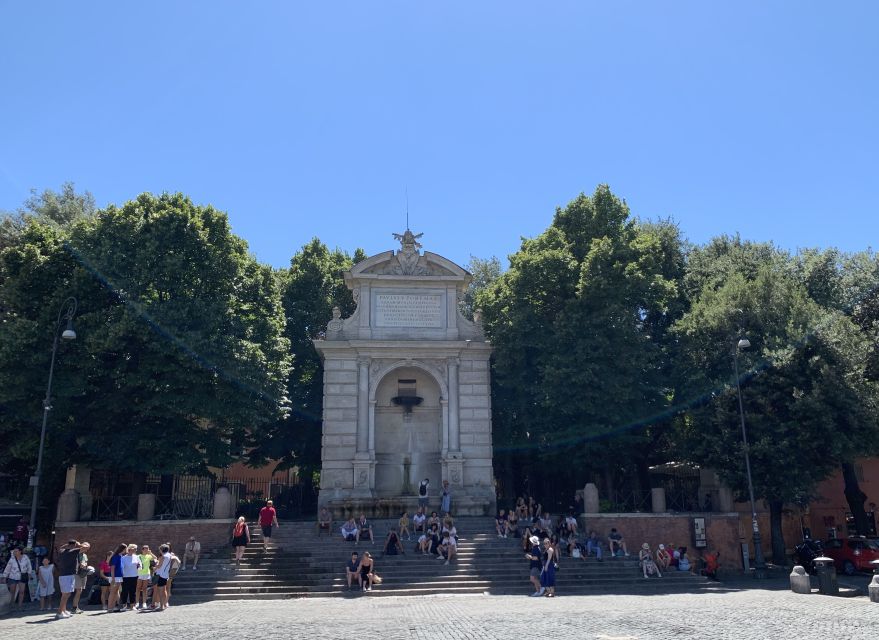
From Santa Maria, the route continues toward Piazza Trilussa, another walk of about 20 minutes. The square honors Carlo Alberto Salustri, the Roman satirical poet better known as Trilussa.
This is a good place to listen for the city’s less formal voice. Street performers and local activity give the square a different feel from the solemn church nearby. The guide’s explanation of Trilussa adds a cultural layer that you could easily miss if you simply passed through on the way to dinner.
Piazza Trilussa also shows why a walking tour can be more useful than a taxi ride between sights. You notice changes in the streets and public spaces as you go. The route does not treat Rome as a series of isolated monuments. It links the monuments to the neighborhoods around them.
The pace is described as relaxed, with time to take in each area. That suits this route. You will want a moment for photos, and the square is also a natural place to pause and watch Roman life unfold.
Campo de’ Fiori Between Market and Memory
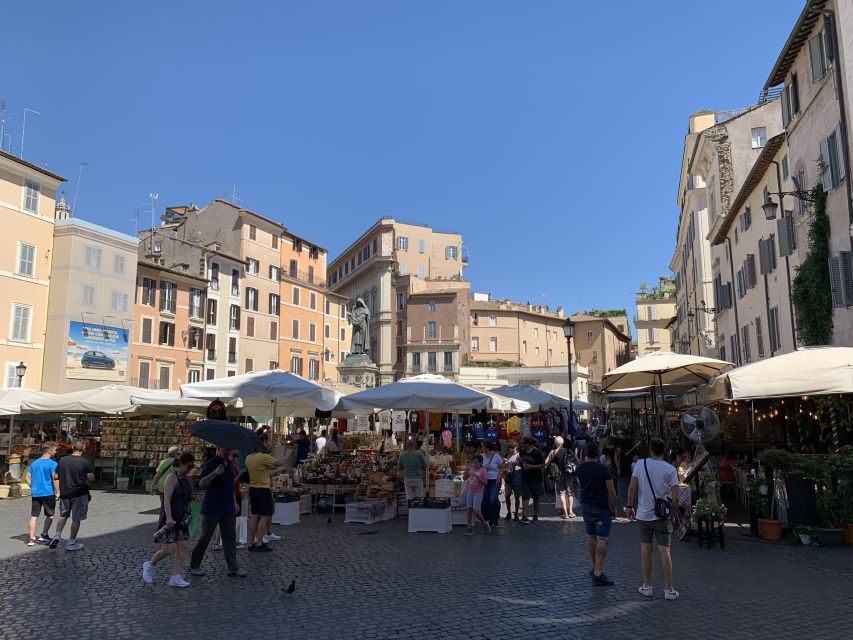
The walk then reaches Campo de’ Fiori. The square is known for its market atmosphere, but it also carries serious historical weight.
A guide is especially useful here because the square’s present-day energy can distract you from its past. You may see market activity and people moving through the center, yet the guide can connect the setting to Rome’s political and cultural story.
The route description allows roughly 20 minutes of walking between stops, but the total outing lasts 2 to 2.5 hours. That means the exact timing at each square can vary. If you want time to browse every stall or stop for a full snack, you may need to return on your own later.
One participant appreciated having time to pick up coffee and juice at the market. That detail suggests the tour is not run as a rigid march. Still, food and drinks are not included, so budget separately if you want a market break.
This is one point where a practical plan helps. Eat lightly before the tour, bring water, and save a larger meal for after the final stop. The route keeps moving, and there is no promised lunch or restroom break in the middle.
More Guided Walks in Rome:
- Rome: Guided Food Walking Tour with Wine in Trastevere
★ 4.9 · 3,105 reviews - Rome: Small-Group Guided Day or Night Walking Tour
★ 4.8 · 1,009 reviews - Rome: Guided City Center Evening Sightseeing Walking Tour
★ 4.4 · 953 reviews - Rome: Guided Small Group Walking Tour of City Highlights
★ 5.0 · 682 reviews
Entering the Roman Jewish Ghetto
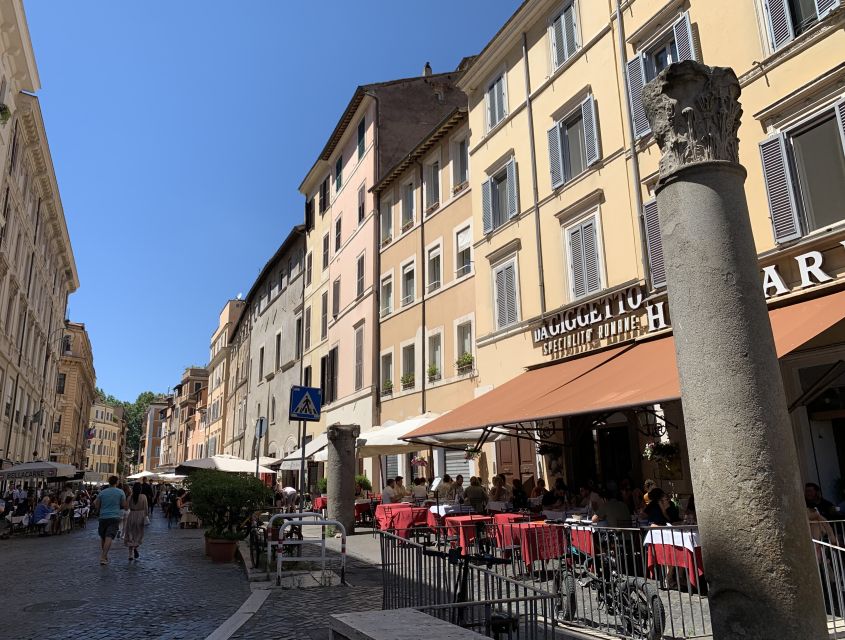
The Jewish Ghetto is the most significant part of the tour for many people. Its streets carry the story of Rome’s Jewish community, including hardship, endurance, and centuries of cultural life.
This section benefits greatly from a guide who can provide careful context. Without explanation, you might see a compact old quarter and a few major buildings. With explanation, the streets become a place where religious identity, city restrictions, community life, and survival all meet.
The experience is not only about ancient Rome. It asks you to consider a much later and more difficult chapter of the city’s past. That change in subject gives the tour emotional range. You move from church mosaics and public squares to a community whose story deserves attention and respect.
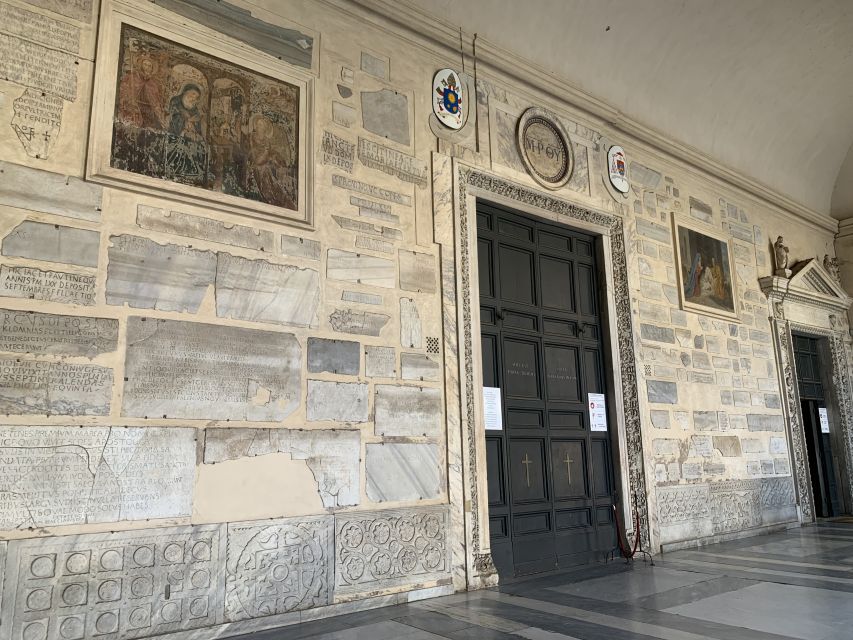
The Great Synagogue of Rome is a central sight here. It is described as an architectural symbol of strength and resilience. The tour information does not promise entry inside, so expect to learn about the building and its meaning as part of the walking route rather than assume a full synagogue visit.
This is also a place to listen closely and ask questions. The strongest guides appear to welcome questions, and a smaller group gives you more room for a thoughtful exchange.
The Theatre of Marcellus and Ancient Rome
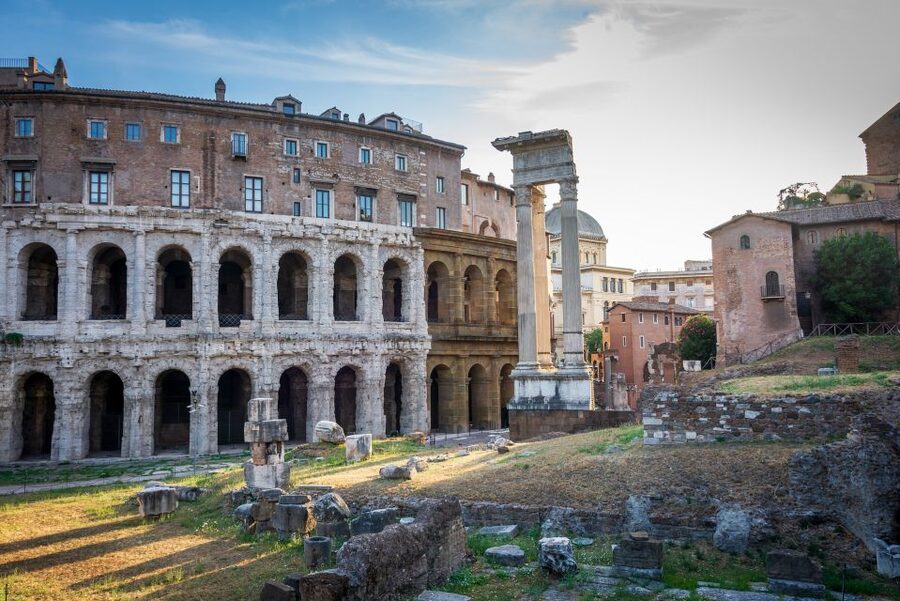
The final destination is the Theatre of Marcellus, an ancient Roman amphitheater dating to 13 BC. It is an impressive closing point because it brings the tour back to the city’s ancient foundations.
The theater also reinforces the main strength of the route: Rome’s eras sit on top of one another. In a single walk, you encounter medieval church art, Roman poetry, market life, Jewish history, and an ancient entertainment structure.
The Theatre of Marcellus is not the Colosseum, and this tour is not a substitute for visiting Rome’s major archaeological sites. Its value is different. You see an ancient monument within the modern city, rather than spending hours in a large archaeological complex.
By ending here, the tour leaves you near another part of central Rome, with the historical thread still intact. The supplied information does not give a precise final meeting point or onward transport plan, so check your map before the tour and allow time to orient yourself afterward.
Guide Quality Makes the Difference
The most consistent strength is the people leading the walks. Estefi was praised for kindness, attention, photos, and restaurant suggestions. Celia was described as friendly and well informed. Sarah made the tour work for teenagers, and Gabriella gave a very small group plenty of time for questions.
Other names appear in the feedback as well. Frincasco was praised for humor and broad knowledge of the districts, while Giuseppe adjusted the tour around the heat. Fabiano received particular praise for explanations of local architecture and history.
That variety matters because this route depends on storytelling. The buildings are already there, but the guide determines how much you understand and remember. The best experience will feel like a conversation with someone who knows how to connect a church, a poet, a square, and a synagogue.
The group size may also change from one departure to another. A small group can mean no headsets and more direct conversation. A larger group may require the provided headsets once there are more than 10 people.
Timing, Walking, and Comfort
The total duration is two to two and a half hours. Each listed section includes about 20 minutes of walking, so you should expect a continuous outdoor experience rather than long indoor visits.
Wear comfortable shoes. The information provided does not give an exact distance or a detailed surface description, so you should plan for ordinary city walking and allow for uneven Roman streets.
The tour is not suitable for wheelchair users or people with mobility impairments. That is important to check before booking, since the route crosses several historic districts and includes extended walking.
Summer heat can also affect your comfort. Giuseppe reportedly looked for shade when the weather was hot, but you should still bring water, use sunscreen, and choose light clothing. The tour does not include hotel pickup or drop-off, so you must reach Piazza Mastai yourself.
Languages offered are English, Spanish, and French. Select the language that lets you follow historical details without strain, since the explanations are the main reason to take this walk.
Is $41 a Fair Price?
At $41 per person, this is not the cheapest way to see Rome’s streets, but it can be good value if you want interpretation rather than a self-guided stroll.
You are paying for a live guide, a planned route, local context, and the chance to ask questions. The tour also covers five distinct areas in one outing: Piazza Mastai, Santa Maria in Trastevere, Piazza Trilussa, Campo de’ Fiori, the Jewish Ghetto, and the Theatre of Marcellus.
The value is strongest for a first visit or for anyone who wants help connecting Rome’s different eras. It is weaker if you prefer to set your own pace, spend a long time inside churches, shop at the market, or stop often for food.
The flexible booking terms also reduce some risk. You can cancel up to 24 hours before the tour for a full refund, and you can reserve now and pay later. Those terms are useful when your Rome schedule is still changing.
Who Should Book This Walk?
I would recommend it to first-time visitors who want a readable introduction to central Rome without committing to a full-day tour. It also suits families with older children and teenagers, especially when the guide uses stories and humor to keep the route moving.
It is a strong choice for people interested in Jewish history, Roman architecture, urban culture, and neighborhood life. It works particularly well as an early trip activity, when you want to learn where several districts are and collect ideas for later meals and walks.
I would be more cautious if you have limited mobility, dislike walking in warm weather, or need regular restroom stops. You may also prefer a different tour if your main goal is entry into famous monuments rather than outside interpretation and neighborhood context.
FAQ
How long does the tour last?
The tour lasts approximately 2 to 2.5 hours.
Where does the tour start?
It starts at Piazza Mastai in Trastevere.
How do I find the guide?
The guide waits around the main fountain of Piazza Mastai, holding a sign with the tour name. Arrive about 15 minutes before the start.
What places does the tour visit?
The route includes Piazza di Santa Maria in Trastevere, Piazza Trilussa, Campo de’ Fiori, the Roman Jewish Ghetto, and the Theatre of Marcellus.
Is the Great Synagogue of Rome included?
The Great Synagogue is encountered in the Jewish Ghetto section of the walk. The tour information does not promise entry inside.
What languages are available?
The tour is offered in English, Spanish, and French.
Are headsets provided?
Headsets are provided when the group has more than 10 people.
Is hotel pickup included?
No. Hotel pickup and drop-off are not included.
Can I cancel the booking?
Yes. You can cancel up to 24 hours in advance for a full refund. You can also reserve now and pay later.
Should You Book It?
Book this tour if you want Rome explained through its neighborhoods rather than checked off through major monuments. The route offers a thoughtful mix of Trastevere’s churches and squares, Campo de’ Fiori’s public life, the Jewish Ghetto’s difficult past, and the Theatre of Marcellus’s ancient remains.
The guide matters most, and the available evidence points to a strong standard across several named guides. Bring water, arrive early, expect steady walking, and keep your schedule flexible after the finish. At $41, it is a sensible buy for a small-group introduction to parts of Rome that are easy to pass through but far more rewarding when someone tells you what you are seeing.
Just added around Rome
- Rome: Colosseum and Ancient Rome Guided Walking Tour★ 4.5 · 95 reviews
- Rome: Trevi Fountain, Spanish Steps & Pantheon Walking Tour★ 4.6 · 336 reviews
- Rome: Guided Walking Tour and Pantheon Priority Entry Ticket★ 4.3 · 317 reviews
- Rome Walking Tour: Pantheon, Trevi, Navona & Hidden Gems★ 4.8 · 501 reviews
- Rome: Underground Trastevere Guided Walking Tour★ 4.8 · 87 reviews
- Rome: Trastevere Food Walking Tour with Beer and Wine★ 4.9 · 71 reviews
- Rome Trastevere Walking Food Tour★ 4.8 · 97 reviews
- Rome: Relics from the Passion of the Christ Walking Tour★ 4.9 · 84 reviews
Jewish Heritage Walking Tours, compared.

Amsterdam Anne Frank: Small-Group Walking Tour & Local Guide
Read our review →
Anne Frank’s Story – Guided Walking Tour through Amsterdam
Read our review →
Jewish Quarter Walking Tour with Admission Tickets
Read our review →
Anne Frank Guided Walking Tour in DE/EN/IT/ES
Read our review →
Old Town and Jewish Quarter Guided Walking Tour
Read our review →

Anne Frank Walking Tour Amsterdam Including Jewish Cultural Quarter
Read our review →
Anne Frank’s Last Walk & See Anne Frank House in Virtual Reality
Read our review →Browse the lists this tour appears in