
Review · OLD TOWN WALKING TOURS
Salzburg 2.5-Hour Walking Tour: Mozart, Old Town & More
Salzburg reveals itself one street at a time. This 150-minute walk connects Mirabell Palace, Mozart landmarks, Getreidegasse, historic squares, and Old Town churches in a useful first look at the city. I like the route because it gives you both sides of the Salzach River, and I like the way guides add stories about Salzburg’s archbishops, musicians, buildings, and daily life instead of simply naming monuments.
The tour also earns points for its flexible ending. You can finish with an optional panoramic view from Mönchsberg Hill, and you receive an additional 30 minutes at no extra charge if the walk runs longer. The main consideration is pace: you cover a great deal in a short time, and the opening section around Mirabell Palace may feel slower than the Old Town portion.
Key points to know before booking
- Mirabell Palace starts the story: Learn how Prince Archbishop Wolf Dietrich von Reitenau built the palace for Salome Alt and their 15 children.
- The route crosses both sides of Salzburg: Walk from the New Town over the Makartsteg bridge into the Old Town.
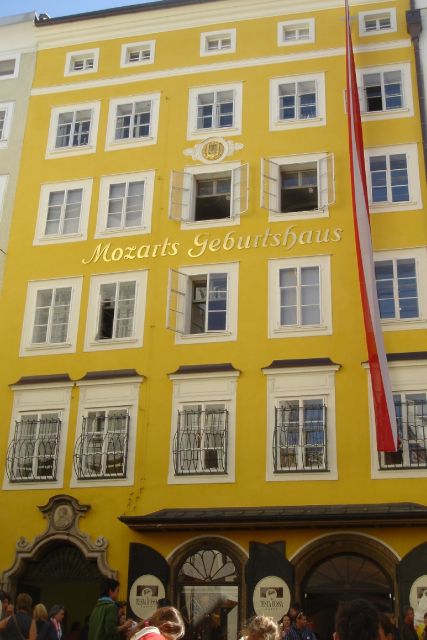
- Mozart gets proper attention: See the Mozart Residence at Makartplatz and Mozart’s Birthplace on Getreidegasse.
- Churches add atmosphere: The route may include one or two churches, with several guides offering extra musical or historical insight.
- Mönchsberg is optional: The final viewpoint requires a separate €4 elevator fee per person.
- Guides are the heart of the experience: Junko, also called June in several comments, receives especially warm praise for her stories, patience, singing, and ability to tailor the walk.
Why this Salzburg walking tour works well on a first day
Salzburg is compact in its center, but its history can feel crowded at first. Mozart, the archbishops, baroque churches, medieval buildings, film locations, and the riverfront all compete for your attention. A good guide gives those pieces an order.
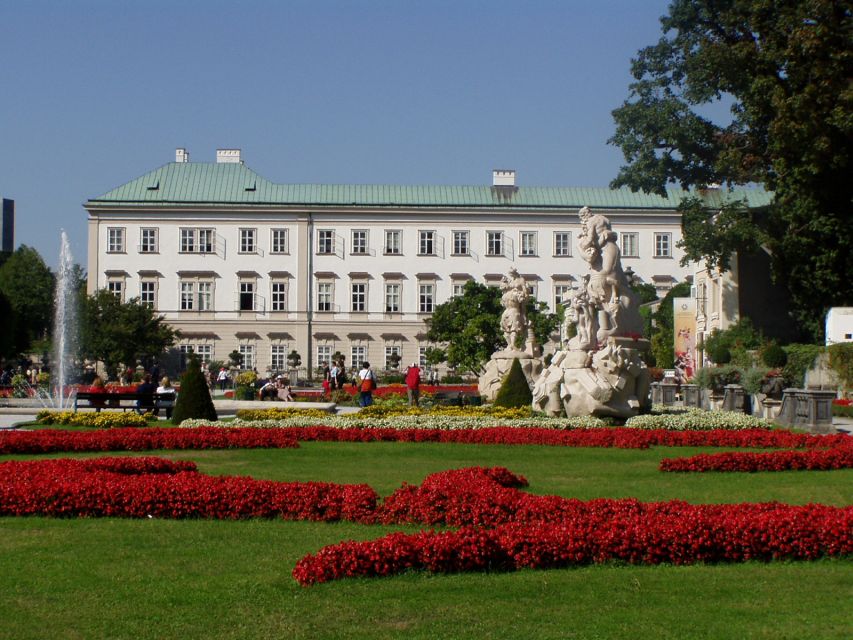
This tour begins at Schloss Mirabell, Mirabellplatz 4, directly in front of the main entrance on the street side. That meeting detail matters. The palace has more than one approach, so do not simply wait somewhere inside the gardens or plaza. Check the exact street-side location before setting out.
I especially like using this walk early in a Salzburg stay. One person described it as a good way to get a lay of the city on arrival, while another used it as a first-day introduction and came away with ideas for the rest of the visit. That is the right way to think about it. This is not a full tour of every museum or interior. It is a guided orientation that helps you decide where to return.
The advertised duration is 150 minutes, though the experience includes another 30 minutes free if needed. That gives the guide room to answer questions, stop for photographs, or spend more time in a church. Still, plan for about two and a half to three hours rather than squeezing another fixed appointment immediately afterward.
More Old Town Walking Tours in Austria:
- Vienna Historic Center Small Group Walking Tour
★ 5.0 · 1,746 reviews - Salzburg: Old Town, Mozart, & Mirabell Gardens Walking Tour
★ 4.8 · 461 reviews - Underground Vaults Walking Tour in Edinburgh Old Town
★ 4.5 · 8,506 reviews
Mirabell Palace and the Wolf Dietrich story
The first stop is Mirabell Palace, one of Salzburg’s most useful starting points because it brings architecture and personal drama together. The palace was built during the rule of Prince Archbishop Wolf Dietrich von Reitenau for Salome Alt, his mistress, and their 15 children.
That detail makes the building more than a polished baroque landmark. It opens a window onto the unusual power held by Salzburg’s prince archbishops, who governed both church and territory. Your guide can use Mirabell to explain how religious authority, political power, and private life overlapped in Salzburg.
The tour begins here rather than plunging straight into the famous Old Town. That is a sensible choice, though it may feel like a slow start if you already know the palace and gardens. One person found the early part less engaging, then became much more interested once the group moved toward the center. If you want a fast route to Mozart and Getreidegasse, keep that in mind.
The benefit is context. By the time you cross the river, you have already heard why Salzburg’s rulers shaped the city so heavily. You are not just looking at elegant façades. You are beginning to understand who paid for them and why.
Makartplatz, Mozart Residence and the New Town
From Mirabell, the walk continues toward Makartplatz and the Mozart Residence. This section covers Salzburg’s New Town, the part of the city on the same side of the Salzach River as Mirabell.
The Mozart Residence adds a second Mozart address to the day. Later, on Getreidegasse, you will see Mozart’s Birthplace. Seeing both locations helps separate the musician’s family story from the larger legend that surrounds his name. If Mozart is one of your main reasons for coming to Salzburg, this is a helpful introduction before you decide if you want to pay for a more detailed museum visit.
The route also gives you a practical sense of the city’s layout. Salzburg is not one single postcard square. It extends across the river, and the New Town has its own landmarks and character. You may hear about other local figures and subjects too. One guide was praised for connecting Mozart with Doppler, Austrian history, and present-day Salzburg, rather than treating the city as a one-person museum.
The strongest guides adjust their emphasis to the group. Some people want music and architecture. Others want politics, local customs, or recommendations for food and later sightseeing. Junko, also referred to as June, was repeatedly praised for answering questions, suggesting photo spots, and offering places to visit afterward. That kind of help is especially useful when you have only a short stay.
Crossing the Makartsteg into the Old Town
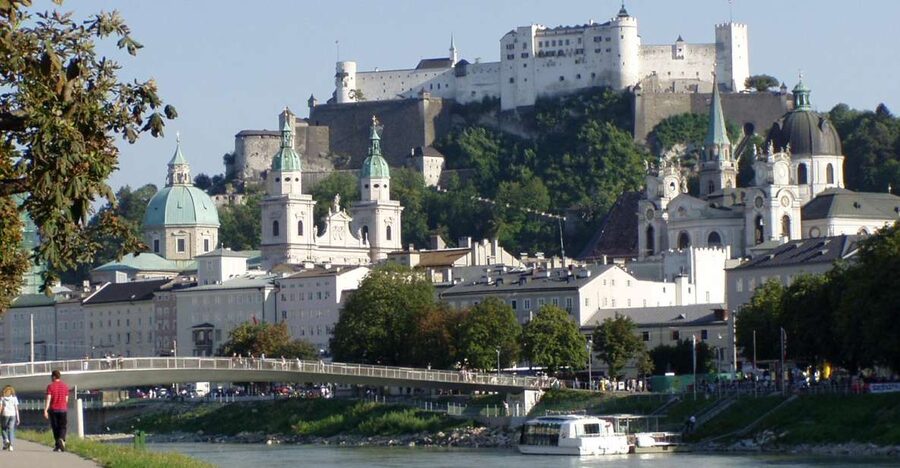
The Makartsteg bridge marks the transition from New Town to Old Town. It is a simple but effective point in the route because the river provides a clear break between the two parts of Salzburg.
Once across, the setting becomes more concentrated. Streets narrow, old façades close in, and the famous center begins to feel like the Salzburg most people picture. You will be walking, not riding in a vehicle, so you can stop when the guide points out a doorway, sign, church detail, or building that would be easy to miss from a bus.
Wear comfortable shoes. The tour covers the compact central area, but two and a half hours on city streets still adds up. Large bags and luggage are not permitted, and assistance dogs are allowed while other pets are not. Bring a passport or identification card, with a copy accepted according to the tour information.
A few more walks around Austria worth a look
- Vienna: Guided Walking Tour of City Center Highlights
★ 4.7 · 4,989 reviews - Vienna: Vienna Central Cemetery Guided Walking Tour
★ 4.8 · 3,307 reviews - Vienna: Guided Walking Tour of City Highlights & Hidden Gems
★ 4.9 · 2,180 reviews - Vienna: Viennese Underworld Guided Walking Tour
★ 4.7 · 1,865 reviews
Getreidegasse and Mozart’s Birthplace
Getreidegasse is the route’s most recognizable street. It is known for its wrought-iron trade signs, which hang above the narrow passageways and shops. These signs once helped people identify businesses before widespread literacy and modern storefront advertising. Today, they give the street much of its visual charm.
This is also where you find Mozart’s Birthplace. The building is one of Salzburg’s headline sights, so expect this section to attract attention. The guide can place Mozart’s early life within the city rather than leaving you with a single famous address and a few dates.
I like this part of the walk because it balances a major attraction with ordinary urban detail. You see the celebrated birthplace, but you also notice the old shop signs, upper floors, and narrow street pattern that make Getreidegasse feel like a real city street rather than a museum corridor.
Do not expect a long museum visit during the walking tour. The focus is on seeing the location and understanding its place in Salzburg. If you want the full Mozart exhibition, arrange that separately and allow additional time.
Churches, squares and Salzburg’s layered past
After Getreidegasse, the route continues through the Old Town, where medieval apartments and churches sit beside later baroque buildings. The tour may enter one or two churches, depending on the day and the guide’s route.
This is where the experience can become more personal. Several people praised Junko or June for singing inside a church, including a memorable performance of Ave Maria and other vocal moments. That singing is not listed as a guaranteed part of the tour, so treat it as a possible extra rather than a promised feature. If it happens, it can change the mood of the walk in a lovely way, especially inside a church with strong acoustics.
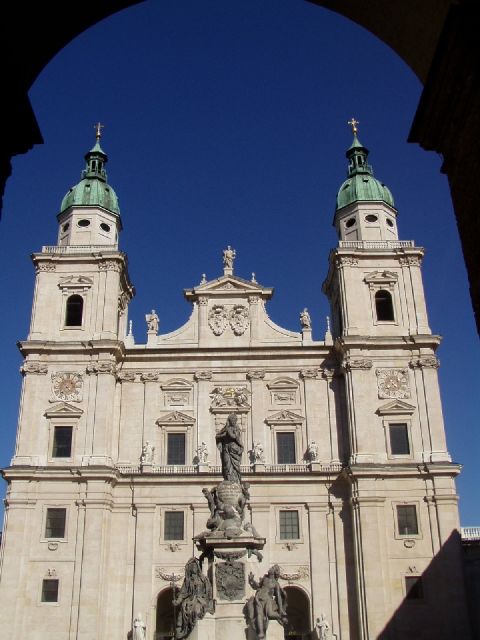
The church stops also make the political history easier to grasp. Salzburg’s appearance was shaped by its prince archbishops, who commissioned religious buildings and grand baroque projects. Your guide may explain how the city changed from its medieval form into the ornate center you see today.
The experience does not depend on a single church or one fixed interior. That flexibility can help when weather changes or when a building is unavailable. One guide adjusted the route when conditions shifted, while another tailored the walk to the group’s interests. The trade-off is that the exact sequence may vary, so do not treat every listed sight as a guaranteed extended stop.
You will also pass through historic squares and streets tied to Salzburg’s public life. The guide may include Sound of Music locations, Christmas markets in season, or other local references. These additions are useful if you enjoy the city’s popular culture, though people seeking a dedicated Sound of Music experience may want a separate tour.
The optional Mönchsberg panorama
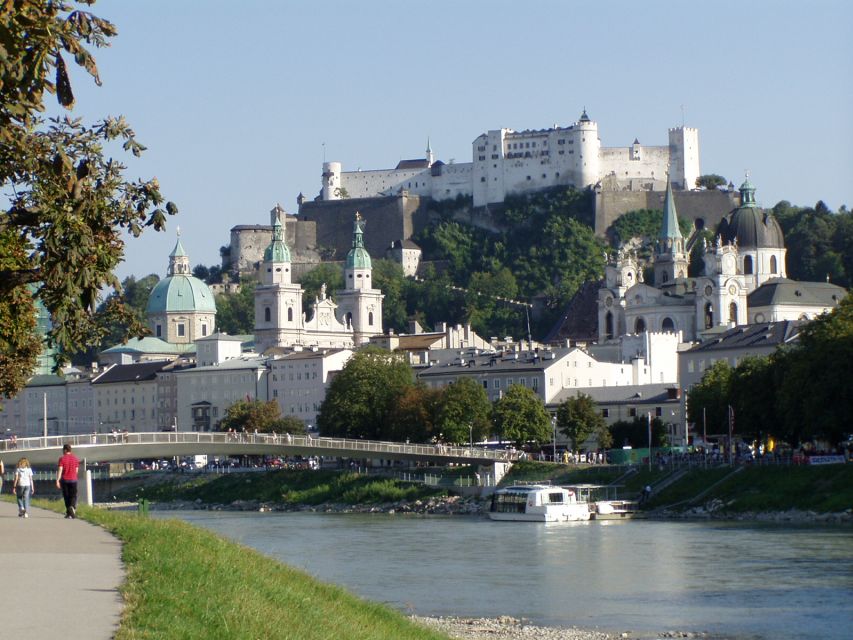
The tour can conclude with a view from Mönchsberg Hill. This is an optional ending, reached by elevator for €4 per person. The elevator charge is not included in the tour price.
The viewpoint gives you a different reading of Salzburg. From street level, the Old Town can feel dense and enclosed. From above, you can understand how the river, historic center, and surrounding area fit together. It is a worthwhile choice if you want photographs or a final orientation before exploring on your own.
The word optional matters. If you are tired, traveling with someone who prefers to avoid extra steps, or have another appointment, you can finish without it. Ask your guide how the timing works on the day. The additional 30 minutes are available free, but the exact length of the tour can depend on questions, stops, and the group’s pace.
The guides make the difference
The most praised feature of this tour is the guiding. Across many bookings, people describe their guides as friendly, patient, lively, and deeply familiar with Salzburg. Junko, also called June, receives the most repeated praise, especially for her clear explanations, personal warmth, music, and willingness to stay longer.
Other guides named in the feedback include Christine, Julia, Melody, Aisleen, and Annabell. That tells you the experience is not built around one guaranteed individual, so the guide assigned to your date will shape the tone. The shared pattern is a personal approach rather than a scripted march from monument to monument.
One guide helped a visitor find a remedy when a partner felt unwell. Another offered restaurant advice. Several took photographs or suggested the best places for pictures. Those small gestures matter because they make a city walk more useful beyond the two and a half hours.
The language options are English and German. A guide may lead in both languages, but if you need a particular language, check availability when choosing a departure.
Price, pace and practical value
At $53 per person, this is not the cheapest way to walk around Salzburg. You can see many streets and squares without paying anything. The question is what you gain for the fee.
You are paying for a planned route, live explanation, local recommendations, and the time saved by connecting sights in a sensible order. If you are new to Salzburg, that can be good value. A guide helps you understand why Mirabell matters, how the river divides the city, where Mozart fits into the story, and how church architecture reflects political power.
The price is harder to justify if you already know Salzburg well or prefer to read plaques and explore independently. It is also not a museum admission package. You should budget separately for any interior attractions you choose to visit and for the €4 Mönchsberg elevator.
The overall rating is 4.2 from 987 bookings, which suggests a strong but not flawless experience. The main caution is the variable opening pace and the amount covered in a short period. Some people loved the brisk overview, while one person found the start almost boring before the Old Town section improved. That is a fair warning for anyone who wants a slow architectural study.
Who should book it?
I would choose this tour if you are visiting Salzburg for the first time, have limited time, or want historical context before exploring alone. It suits couples, families with older children, and anyone who wants the basic city map in one sitting.
It is especially useful on your first day. Afterward, you can return to Mozart’s Birthplace, a church, the Mönchsberg view, or another area that caught your interest. The guide’s restaurant and sightseeing suggestions can also help shape the rest of your stay.
I would be more cautious if you dislike group walking tours, want long museum visits, or are specifically seeking a Sound of Music tour. The route may include film-related sights, but its main subject is Salzburg itself: its rulers, music, streets, churches, and changing architecture.
Plan for comfortable shoes, light luggage, and weather-appropriate clothing. The tour is outdoors for much of its duration, and the optional hill viewpoint adds another reason to dress for walking.
Should you book this Salzburg walking tour?
Book it if you want a well-organized first look at Salzburg with a guide who can explain the city instead of simply pointing at it. The route covers the key central sights, crosses the river, includes both major Mozart addresses, and leaves room for questions and personal recommendations.
Skip it if you already have a strong plan for the Old Town and would rather spend $53 on museum admissions or explore at your own pace. For most first-time visitors, though, the combination of Mirabell, Getreidegasse, churches, history, and the optional Mönchsberg view makes this a sensible introduction. The possibility of hearing a guide such as Junko sing inside a church is a memorable bonus, but the real value is leaving with a clearer sense of how Salzburg fits together.
FAQ
Where does the Salzburg walking tour meet?
The meeting point is in front of the main entrance of Schloss Mirabell at Mirabellplatz 4, 5020 Salzburg. The meeting location is on the street side, not inside the palace or gardens.
How long does the tour last?
The scheduled duration is 150 minutes, or two and a half hours. An additional 30 minutes is available free if needed.
Which languages are available?
The tour is offered in English and German.
Does the tour visit Mozart’s Birthplace?
Yes. The route includes Mozart’s Birthplace on Getreidegasse. It also passes the Mozart Residence near Makartplatz.
Is the Mönchsberg elevator included?
No. The optional elevator ride to Mönchsberg Hill costs €4 per person.
What should I bring?
Bring comfortable shoes and a passport or identification card. A copy of your identification is accepted.
Can I bring luggage or pets?
Large bags and luggage are not permitted. Pets are not allowed, but assistance dogs are permitted.
Just added around Austria
- The unknown Vienna City- a guided walking tour in 3 hours★ 4.7 · 137 reviews
- Hungry in Vienna? A Food Lover’s Coffee & Market Walk★ 4.9 · 276 reviews
- Salzburg: Old Town, Mozart, & Mirabell Gardens Walking Tour★ 4.8 · 461 reviews
- 3-Hour Walking Tour of Vienna Central Cemetery★ 4.7 · 71 reviews
- Hallstatt: 2-Hour Guided Walking Tour with Photographer★ 5.0 · 152 reviews
- Vienna: City Center Guided Walking Tour★ 4.8 · 99 reviews
- Private Hidden Vienna Walk — Stories Behind Quiet Corners★ 5.0 · 137 reviews
- Vienna at First Glance a Private Walking Tour for First Timers★ 5.0 · 131 reviews
Old Town Walking Tours, compared.
Underground Vaults Walking Tour in Edinburgh Old Town
Read our review →
3-Hour Walking Tour of Old Town & Prague Castle
Read our review →
Old Town and Jewish Quarter Guided Walking Tour
Read our review →
Cartagena: Historic Center and Getsemaní Shared Walking Tour
Read our review →Browse the lists this tour appears in