
Review · CASTLE AND PALACE WALKING TOURS
Split: 1.5-Hour Walking Tour and Diocletian’s Palace
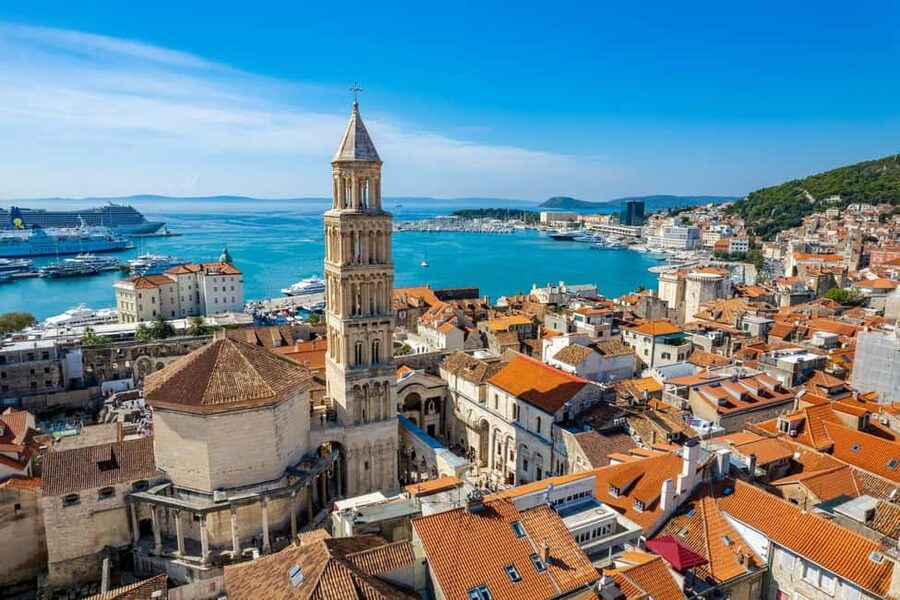
Split’s ancient center is a city inside a palace. This 90-minute to two-hour walk brings you from Diocletian’s Roman cellars to the Riva waterfront, with plenty of local stories along the way. I like the clear route through the old town and the chance to see how Roman walls, medieval lanes, Venetian buildings, and modern life all share the same space.
I also like the local point of view. Guides such as Sandra, Ana, Ivan, Jelena, and Anna have been praised for pairing solid history with personal stories, restaurant suggestions, and practical advice. The main consideration is that this is a walking tour over uneven old-town surfaces, and the experience is not recommended for people with limited mobility.
Key points to know before booking
- Roman cellars beneath Diocletian’s Palace: See the preserved lower level of the emperor’s enormous retirement palace and understand the shape of the buildings above.
- A useful first look at Split: The route covers the Golden Gate, People’s Square, Fruit Square, Riva, Peristyle, Vestibul, and Saint Domnius Cathedral.
- Local guides add the human side: Several guides are praised for explaining modern Croatian life, local customs, food, and the changes facing Split.
- The 8 a.m. start has a practical advantage: One review found the early departure cooler and less crowded, making it easier to get oriented before exploring further.
- Some entrance fees cost extra: The guide is included, but paid access inside certain sights is not.
- English and Spanish tours are available: Check the selected departure carefully, since the meeting point can vary by booking option.
Why Diocletian’s Palace is more than one monument
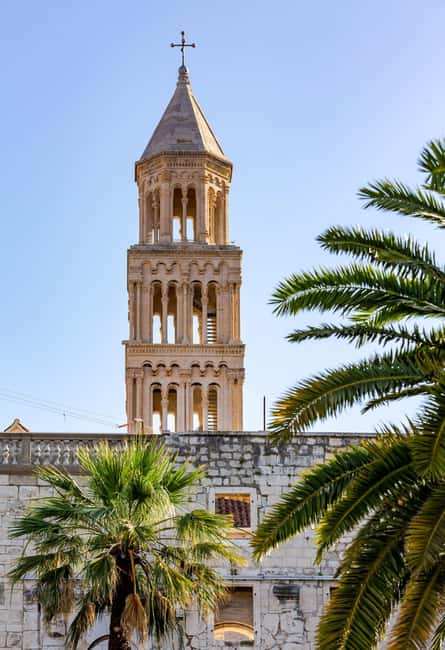
The name Diocletian’s Palace can fool you. You might picture a single grand building with a ticket desk and a tidy path through its rooms. In Split, the palace is woven into the old town. People live, work, eat, shop, and meet friends among walls first planned for a Roman emperor.
Diocletian built the complex at the turn of the fourth century AD. He chose the site near the sea in Dalmatia, and the palace was both a fortified residence and a place for retirement. Over time, later residents altered it, built into it, and used its spaces in new ways.
That layering is the best reason to take a guided walk. Without help, you can see handsome stone streets but miss why one arch is Roman, why another wall belongs to a later period, or why the palace feels more like a working neighborhood than a museum.
The tour also gives you a useful map of central Split. Afterward, you should know how the palace connects to the squares, the market area, and the waterfront. That practical orientation matters, especially if you have only a short stay.
More Castle and Palace Walks in Split:
- Split: Old Town and Diocletian Palace Walking Tour
★ 4.9 · 4,727 reviews - Walking Tour of Split and Diocletian’s Palace
★ 5.0 · 2,588 reviews - Split & Diocletian’s Palace Walking Tour
★ 5.0 · 1,125 reviews
Starting at the South Gate and reaching the Golden Gate
The exact meeting point depends on the option you book, with South Tours Travel Agency listed as the main starting point. Confirm your departure details before setting out. Once the walk begins, the guide leads you through the old center toward the Golden Gate.
The Golden Gate, or North Gate, is one of the palace’s major entrances. It gives you a sense of the original scale and defensive purpose of the complex. The route here is not simply a stop for a photograph. Your guide can explain how people entered the palace and how the structure later became part of Split’s urban fabric.
The walk then passes the Game of Thrones Museum for a brief look. This is a short sightseeing stop rather than a full museum visit, so do not expect an extended screen-tour experience. Its value is as a quick link between modern popular culture and Split’s recognizable historic setting.
The show brought new attention to parts of the old town, but the Roman and later Croatian stories are much bigger than filming locations. I would treat this stop as a small extra, not the main reason to book.
People’s Square and the changing face of Split
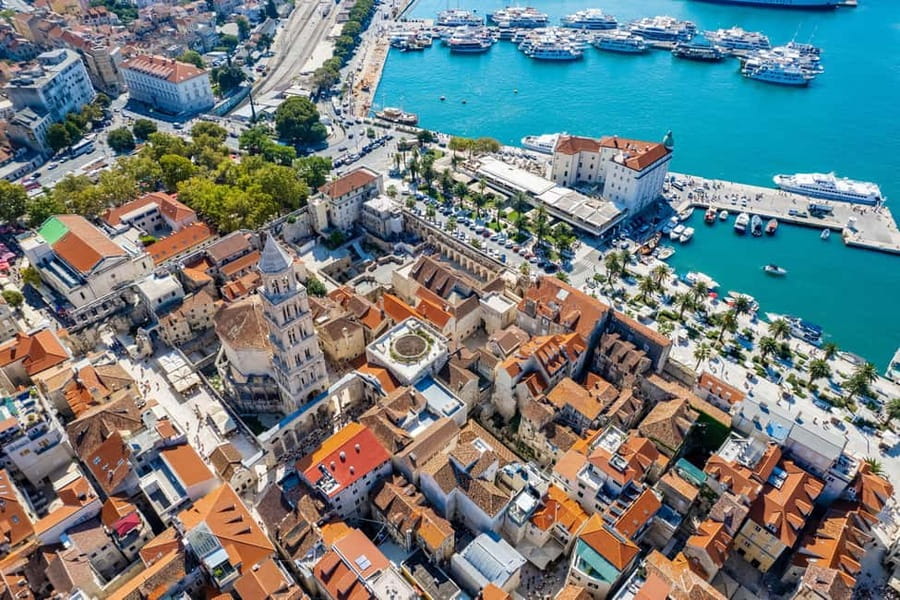
People’s Square offers a useful change of mood. Here, the palace is no longer the only story. The square reflects the later growth of Split and the way public life moved beyond the original Roman walls.
You will see architecture from different periods close together. That mix is one of the pleasures of the walk. A Roman remnant may sit beside a medieval feature, while a more recent building fills the next gap. The guide helps you read those changes rather than seeing the center as one uniform block of old stone.
The tour allows about ten minutes here. That is enough for an explanation and a few photographs, but not enough for a long architectural study. If you enjoy design and building details, pay close attention and ask questions while the group is together.
The guides have received especially strong praise for explaining Split as a living city, not just a collection of monuments. Anna, Sandra, Ivan, and Jelena have each been described as warm, clear, and generous with local context. That personal approach is important here because the square makes most sense when connected to daily life.
Fruit Square, local life, and the route to Riva
The next stop is Voćni Trg, known as Fruit Square. Its name points to its former use as a fruit market. The square is a good reminder that Split’s public spaces have practical roots. Markets, trade, work, and social life shaped the city as much as emperors did.
You are not only walking through an archaeological site. You are passing places where people still meet and move through their day. The tour’s emphasis on Mediterranean life works best in these ordinary urban spaces, where the setting feels less like a preserved exhibit.
Several guides have also offered suggestions for local taverns, authentic food, and other things to do in Croatia. Those tips can be useful, but remember that food and drinks are not included in the tour. You will need to arrange those separately after the walk.
From Fruit Square, the route continues toward the Riva. The contrast is refreshing. Inside the old town, you follow narrow lanes and compressed spaces. On the waterfront, you have more room to look out toward the sea and Marjan Hill.
A few more walks around Split worth a look
- Krka Waterfalls tour with Trogir Walking tour and Krka panoramic boat cruise
★ 5.0 · 1,659 reviews - Walking Tour of Split with a ‘Magister’ of History
★ 5.0 · 1,122 reviews - Split Walking Tour with Professor of History
★ 5.0 · 926 reviews - Split: Diocletian Palace & Old Town Guided Walking Tour
★ 4.7 · 882 reviews
The Riva and views toward Marjan Hill
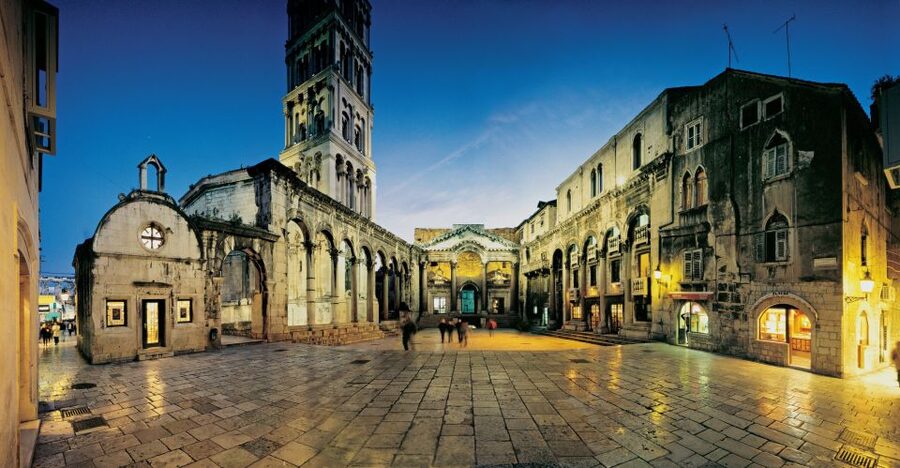
Split’s Riva promenade is a natural pause in the walk. The guide explains the waterfront and its current role while you take in views toward Marjan Hill. This is one of the tour’s more relaxed sections, since you are no longer focused only on doorways, stones, and small lanes.
The Riva also helps you understand Split’s setting. The city is not an inland Roman ruin. It grew beside the water, with the harbor, palace, and surrounding hills shaping its identity. The view toward Marjan gives you a wider frame after the close quarters of the old town.
A morning departure can work well here. One person specifically found the 8 a.m. tour cooler and less crowded, and that timing also gave a useful introduction before continuing independently. If you are visiting during a hot period, an early start may make the walking more comfortable.
The advertised duration is 90 minutes to two hours. That range likely reflects group pace, questions, and the exact route. You should allow the longer end of the estimate if you want time for explanations and photographs.
Entering Diocletian’s Palace and its Roman cellars

The palace section is the heart of the tour. You walk through the palace grounds from the South Gate toward the cellars and central square. The lower level is especially valuable because its layout helps explain the rooms and streets above.
The cellars date to the Roman period and preserve the basic plan of the imperial complex. They also make the palace easier to understand. Instead of seeing isolated fragments, you can connect the underground spaces with the gates, courtyards, and upper levels.
The guide is included for the full walk, but entrance fees are not. The supplied information does not specify which paid areas are entered on each departure, so check what your selected option includes. Do not assume every interior space is covered by the $41 price.
At this price, the value depends on what you want. If you mainly need directions and a short introduction, you may find the tour more than enough. If you want a detailed explanation of Roman planning, later building changes, and local life, the guide’s context makes the fee reasonable, especially on a small departure.
Several people have praised guides for explaining the palace with humor and memorable anecdotes. Sandra was singled out for enthusiasm and strong historical storytelling. Ivan was described as relaxed and well informed, while Jelena was praised for making a large amount of history easy to follow.
Peristyle, the black granite sphinx, and Saint Domnius
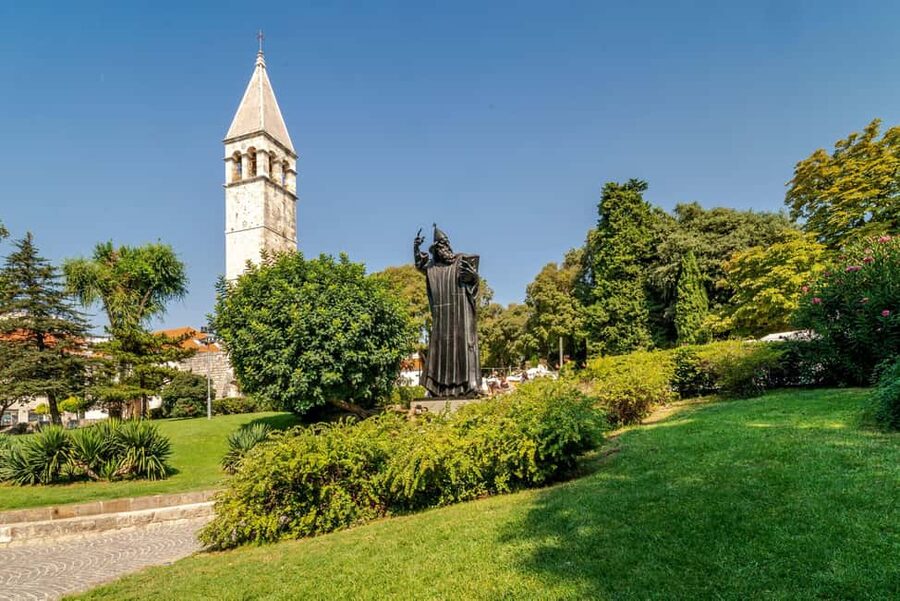
Peristyle is the palace’s main ceremonial square and one of the route’s strongest stops. This is where the imperial character of the complex becomes easiest to picture. The open space, surrounding stonework, and grand proportions feel very different from the tight lanes nearby.
The tour points out the remaining Egyptian sphinx carved from black granite. It is a striking detail, and it shows how far Roman power reached in Diocletian’s time. The sphinx is also a good example of why a guide helps. Without an explanation, you might notice an unusual statue but miss its connection to imperial taste and ancient Egypt.
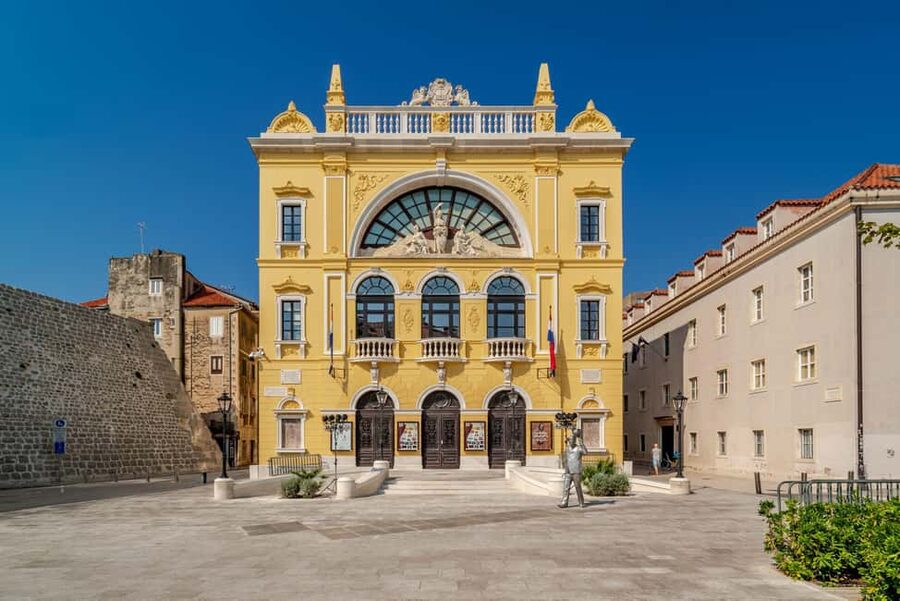
The route then reaches the Cathedral of Saint Domnius. The building was formed from Diocletian’s imperial Roman mausoleum, giving it an unusual identity. It is both a Christian cathedral and a structure rooted in the emperor’s original palace complex.
The experience describes it as the oldest Catholic cathedral in the world. The tour allows around ten minutes here, so expect an introduction rather than a long visit focused on every interior detail. Entrance fees are not included, which is important if you want to access paid sections.
This is one place where your questions can improve the experience. Ask the guide how the mausoleum became a cathedral and how the building relates to the surrounding palace. The short stop becomes much more meaningful when you connect the Roman purpose with its later religious use.
Vestibul and the final look at palace life
Vestibul is another memorable palace space, with time for a photograph, a guided explanation, and a walk through the area. It helps complete the picture of how visitors once moved through the imperial complex.
The route includes the North Gate and West Gate as well as the South Gate area, so you get a broad sense of the palace’s boundaries. That is useful because the old town can feel like a maze at first. By the end, you should have a better idea of how the entrances, squares, waterfront, and inner lanes fit together.
The tour returns to South Tours Travel Agency. Since the walk begins and ends in the central area, you can continue exploring on your own afterward. Some guides have also pointed out shortcuts, restaurants, viewpoints, and sights worth your time, which adds practical value beyond the formal history lesson.
The guides make the biggest difference
The strongest pattern in the guide feedback is not one particular script. It is the combination of historical command, warmth, and local perspective.
Sandra has been praised for passion, energy, and personal insight into Split. Ana has been described as patient, frank, and especially good at connecting the city’s past with present-day Croatian life. Ivan’s calm manner and broad knowledge helped make the history approachable, while Jelena was praised for lively presentation and interesting facts.
Spanish is available as well as English. One departure received a lower score because English and Spanish speakers were placed together, which made the pace less effective. If language clarity is important to you, confirm the language of your selected tour rather than assuming every group will be single-language.
The guides also seem willing to adjust when circumstances require it. One guide helped a person affected by heat, and another made an effort to explain an alternative route for a wheelchair user. Still, the official information says the tour is not suitable for people with mobility impairments. The old town’s surfaces and walking demands should be taken seriously.
Timing, footwear, and the $41 price
At $41 per person, you are paying for a guided introduction rather than a full-day program. The price includes 90 minutes to two hours with a live guide, in English or Spanish. It does not include food, drinks, or entrance fees.
I consider the price fair if you want history explained in place and need help finding your way around Split. The tour covers several key areas in a short period, which is useful on a cruise stop or a brief city visit. It also saves you from trying to assemble the palace’s story from scattered signs.
The main limitation is the short format. One person felt the tour needed more time for Saint Domnius Cathedral and Jupiter’s Temple. Jupiter’s Temple is mentioned in that feedback, but it is not listed as a regular stop in the route provided here, so do not book this tour expecting a full visit there.
Wear comfortable walking shoes. The route passes through old streets and palace spaces, and heat can be an issue. A morning departure may suit you best if you want cooler conditions and fewer people around.
Free cancellation is available up to 24 hours before the tour for a full refund. You can also reserve and pay later, which gives you some flexibility if your Split plans are still changing.
Who should book this Split walking tour?
I would choose this tour if you want a clear first look at Split, enjoy history told through stories, and prefer walking to a long indoor presentation. It suits couples, families with older children, and anyone who wants useful local suggestions along with Roman history.
It is also a good fit if you have limited time. The route reaches the main palace gates, central squares, waterfront, cellars, Peristyle, Vestibul, and Saint Domnius without requiring you to plan the sequence yourself.
I would hesitate if you need a fully accessible route, dislike walking in heat, or want extended time inside every monument. Paid entrances are extra, and the tour’s short format means some stops receive only a brief explanation.
Should you book it?
Book this tour if you want strong orientation, Roman history, and local guidance in one compact walk. The repeated praise for guides such as Sandra, Ana, Ivan, Jelena, and Anna suggests that the human side of the experience is a major part of its value.
Choose an early departure when possible for cooler conditions and a calmer start. Bring comfortable shoes, confirm the meeting point and language, and budget separately for entrance fees. If you want a friendly introduction before exploring Split on your own, this tour is a sensible choice at $41.
FAQ
How long does the Split walking tour last?
The tour lasts between 90 minutes and two hours, depending on the departure and pace of the group.
What language is the tour offered in?
Live guiding is available in English and Spanish. Check the selected option to confirm the language for your departure.
Are entrance fees included?
No. Entrance fees are not included in the tour price. Food and beverages are also separate.
Where does the tour meet?
The meeting point can vary by the option booked. South Tours Travel Agency is listed as a starting location, so confirm the exact details before arriving.
Is the tour suitable for people with limited mobility?
The tour is not recommended for people with limited mobility. Comfortable walking shoes are advised, and the route through the old town includes walking across historic streets and palace areas.
Can I cancel the booking for a refund?
Yes. You can cancel up to 24 hours in advance for a full refund. The activity also offers a reserve-now, pay-later option.
Just added around Split
- Split: Food Tasting Walking Tour★ 4.9 · 102 reviews
- Split: Local History and Culture 90-Minute Walking Tour★ 5.0 · 194 reviews
- Split: Diocletian Palace & Old Town Guided Walking Tour★ 4.7 · 882 reviews
- Split: Walking tour of Split with a ‘Magister’ of History★ 5.0 · 110 reviews
- From Split: Krka Waterfalls Cruise & Trogir Walking Tour★ 4.7 · 681 reviews
- Split: History and Heritage Walking Tour★ 4.9 · 650 reviews
- Diocletian’s Palace and Old Town SMALL GROUP Walking Tour★ 5.0 · 502 reviews
- Split: City Walking Tour w/ Game of Thrones Locations★ 4.9 · 318 reviews
Castle and Palace Walking Tours, compared.

Edinburgh Castle: Guided Walking Tour with Entry Ticket
Read our review →
Doge’s Palace and St Mark’s Basilica Walking Tour
Read our review →
3-Hour Walking Tour of Old Town & Prague Castle
Read our review →Edinburgh Castle: Guided Walking Tour with Entry Ticket
Read our review →
Edinburgh Castle Guided Walking Tour in English
Read our review →
Walking Tour of Split and Diocletian’s Palace
Read our review →Browse the lists this tour appears in