

Review · OLD TOWN WALKING TOURS
Tbilisi: Old Town Walking Tour – Must-See Attractions
Tbilisi rewards curious walkers. This three-hour tour packs the city’s churches, fortress views, old lanes, religious landmarks, and modern icons into a useful first look at Georgia’s capital. I especially like the small-group format, which keeps the guide close enough for questions, and the route’s mix of famous sights with less obvious stops such as the Bath District waterfall and Meidan Bazaar.
I also like how guides such as Oksana, Gio, Jonah, Tamar, and Alex have shaped the walk around each group. They explain architecture, religion, Soviet-era changes, daily life, food, wine, and good photo spots rather than simply naming buildings. The main drawback is physical: this is a real city walk, with uneven paving, slopes, and a climb toward Narikala Fortress. It is not suitable for wheelchair users, people with mobility impairments, or families bringing strollers.
Key points to know before you book

- Narikala delivers the big view: The fortress and Mother of Georgia area give you a broad look across Tbilisi, but reaching the high point involves uphill walking or an optional cable-car ride.
- You cover a lot in three hours: Anchiskhati Basilica, Sioni Church, Metekhi Church, the Bath District, Meidan Bazaar, Freedom Square, Peace Bridge, and several religious sites all fit into the route.
- The guide makes the difference: Past guides including Oksana, Gio, Jonah, Tamar, Alex, and Khatuna have been praised for clear explanations, humor, patience, and local recommendations.
- It is more than a monument checklist: The walk connects Georgian, Byzantine, Oriental, Armenian, Jewish, Muslim, and European influences across the Old Town.
- Photo help is part of the experience: Guides regularly point out strong viewpoints and may take photos for you.
- The price is strong for a first orientation: At about $16 per person, you receive a live guide and entrance fees, though the cable car costs extra.
Starting at Freedom Square with a useful city overview
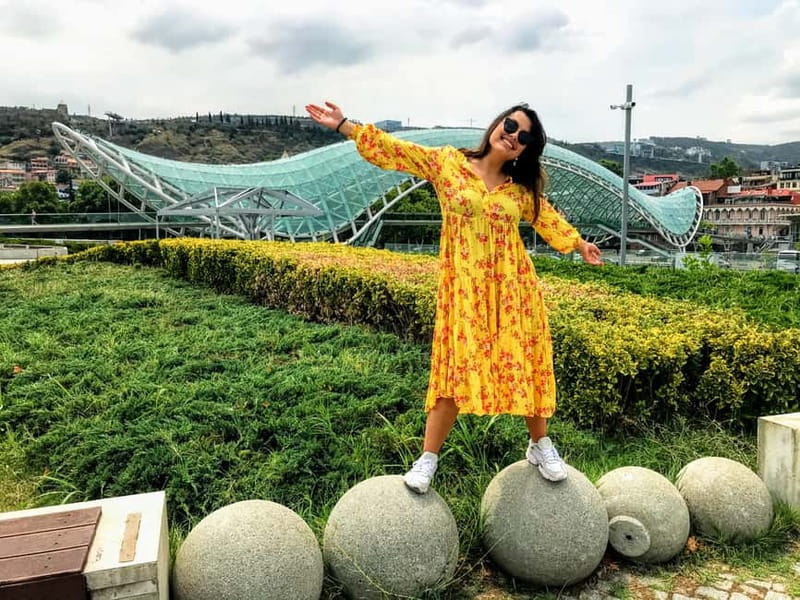
The meeting point is outside the Burberry store at Freedom, also called Liberty, Square. This is a central and easy-to-recognize place, but arrive early. The guide will wait no longer than 10 minutes, and a delayed arrival could mean missing the group.
Freedom Square is a fitting place to begin. It links modern Tbilisi with the older streets below, and it gives your guide a natural starting point for explaining how the capital has changed over time. The tour focuses not only on buildings but also on Georgia’s changing political, cultural, and religious identity.
That wider context is one of the strongest parts of the experience. Guides have explained Soviet rule, contemporary Georgia, local customs, architecture, and everyday life in a conversational way. You get facts, but you also get the small stories and odd details that help the city feel more understandable.
The group size is limited to 10 or fewer, with private tours also available. A small group gives you a better chance to ask about food, wine, neighborhood suggestions, or a place you noticed along the way. If you book privately, the guide can adjust the pace and route more easily. One private group even arranged the walk around a booked bath visit.
More Old Town Walking Tours in the world:
- Underground Vaults Walking Tour in Edinburgh Old Town
★ 4.5 · 8,506 reviews - Prague: 3-Hour Walking Tour of Old Town & Prague Castle
★ 4.7 · 5,696 reviews - Dubrovnik: Old Town Walking Tour
★ 4.8 · 5,174 reviews
Anchiskhati Basilica and the oldest streets
Anchiskhati Basilica is one of the important early stops. It is described as Tbilisi’s oldest church, and it introduces you to the city’s Georgian Orthodox tradition before the walk moves through the tighter lanes of the Old Town.
The value here is not only the building itself. Your guide can explain how religious sites fit into the city’s long development and point out architectural details that are easy to miss when walking alone. This is the sort of stop that benefits from a local explanation, especially if you do not know the difference between Georgian, Byzantine, Oriental, and European neoclassical influences.
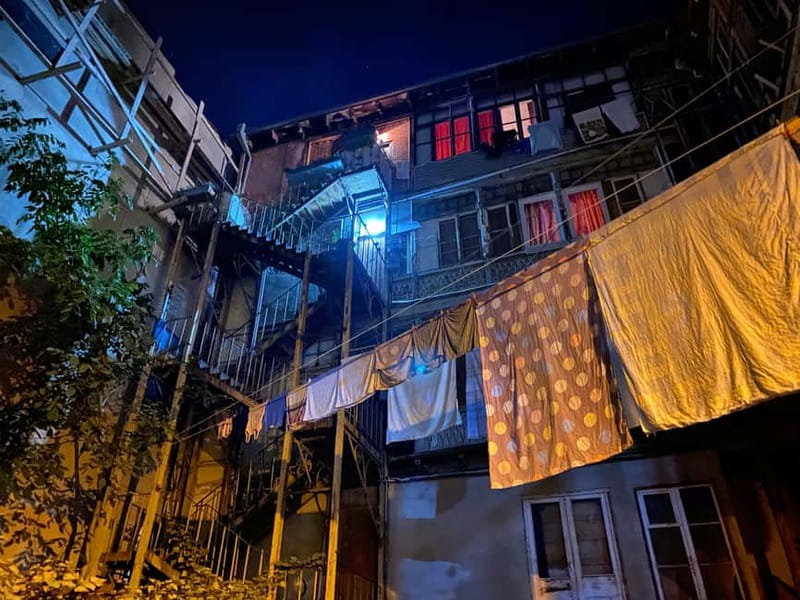
The surrounding streets are part of the attraction. Tbilisi’s Old Town is not a polished museum district. You see layers of age, repair, religious history, and modern life pressed together. The uneven surfaces are part of that character, but they also make comfortable shoes essential.
Sioni and Metekhi: churches with a larger story
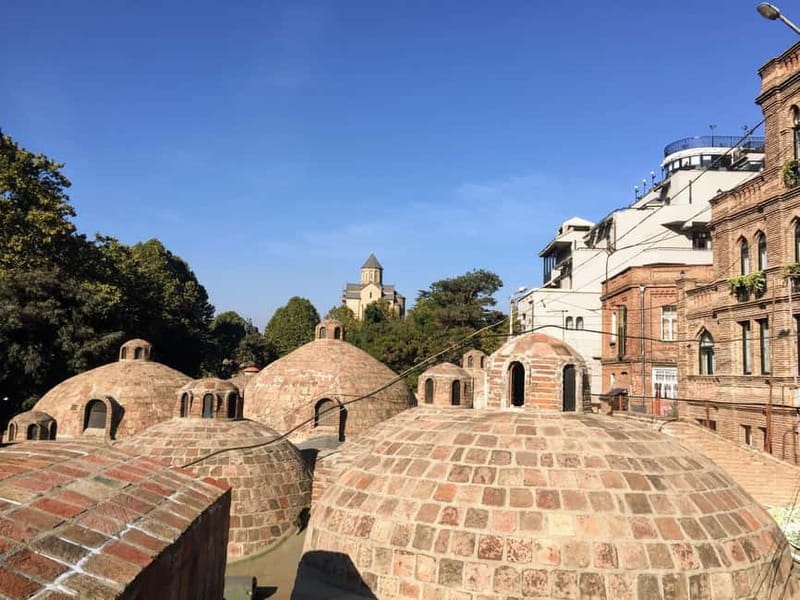
Sioni Church and Metekhi Church add two major religious landmarks to the route. Both connect the Old Town walk to medieval Georgia and help explain why Tbilisi has such a strong religious presence.
Your guide will usually place these churches within the city’s wider story instead of treating them as isolated photo stops. This is where the tour’s mix of architecture and history is most useful. You can ask about traditions, construction, changes over time, and the relationship between faith and public life.
Dress respectfully for churches and other places of worship. Shorts and sleeveless tops are not allowed, and both men and women need to cover their knees and shoulders. This is worth planning for on a hot day, since the clothing rule may affect what you choose to wear for a long walk.
Tbilisi’s religious mix in a short distance
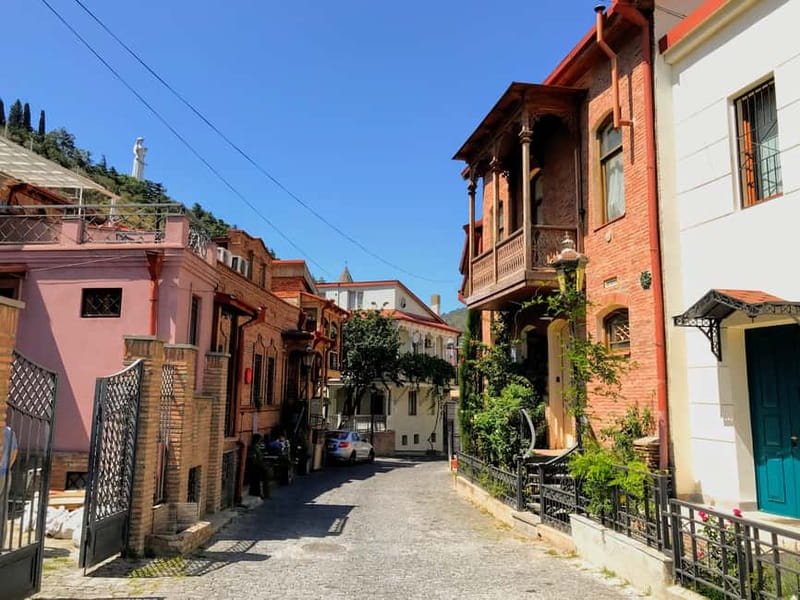
One of the most interesting parts of the route is its look at several faiths in and around the Old Town. The walk includes a synagogue, an Armenian church, and a mosque, alongside Georgian Orthodox churches.
That combination gives the tour more depth than a standard list of landmarks. Tbilisi has long been shaped by different communities, and seeing these places close together makes that point practical and visible. Your guide can help you understand the city as a meeting point of Georgian, Armenian, Jewish, Muslim, Byzantine, Oriental, and European influences.
This section also suits people who enjoy architecture. Each religious building adds another style and set of details to the walk. You will want to pause, look up, and listen rather than rush from one pin on a map to the next.
More City Highlights Walking Tours in the world:
- Historic Charleston Guided Sightseeing Walking Tour
★ 5.0 · 6,216 reviews - Dublin Highlights and Hidden Gems Guided Walking Tour
★ 5.0 · 6,020 reviews - Vienna: Guided Walking Tour of City Center Highlights
★ 4.7 · 4,989 reviews - Florence: Highlights Walking Tour with Expert Guide
★ 4.6 · 4,662 reviews
Meidan Bazaar and the Bath District waterfall
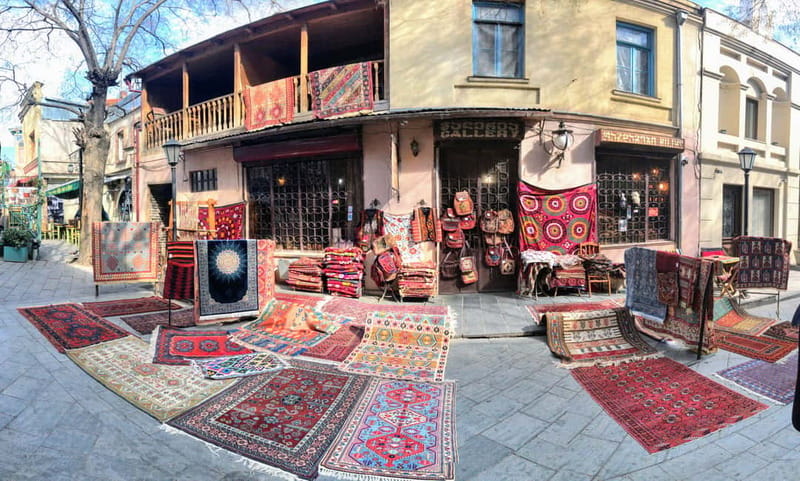
Meidan Bazaar brings you into one of the Old Town’s livelier historic areas. It is a useful stop for understanding Tbilisi as a place of trade, food, crafts, and social life. Guides also use the area to suggest places for meals, drinks, and souvenirs.
The Bath District gives the walk a different mood. Tbilisi is famous for its baths, and the route reaches a small waterfall in this historic quarter. The waterfall is an easy-to-miss feature if you stay only on the main streets, so this is one of the places where following a local guide pays off.
The route can be adjusted if you have another appointment, including a bath booking. Still, do not expect a gentle stroll through flat streets. Old Tbilisi has slopes, rough paving, steps, and narrow passages. The walk feels at times like a city hike, especially as it rises toward the fortress area.
Narikala Fortress and the Mother of Georgia
Narikala Fortress is the visual high point of the tour. Set above the city, it gives you broad views over Tbilisi and a clear sense of the city’s position around the river and hills. It is the place to bring your camera, and the guide can help with photo angles and timing.
The route may include a walk uphill, or you can use the cable car for one way. The cable car is not included and costs 2.5 GEL for one direction. Some groups have ridden up to see the Mother of Tbilisi and then continued on foot.
The Mother of Georgia statue is more than a photo stop. It represents hospitality and resilience, ideas your guide can connect to Georgian culture and the city’s past. From this height, the contrast between old churches, dense historic streets, newer structures, and the surrounding hills becomes much clearer.
Expect the conditions to vary. Rain, construction, or other unexpected problems may change the exact route. A good guide will adapt, but you should treat the listed stops as the main plan rather than a guarantee that every point will be visited in the same order.
Peace Bridge and modern Tbilisi
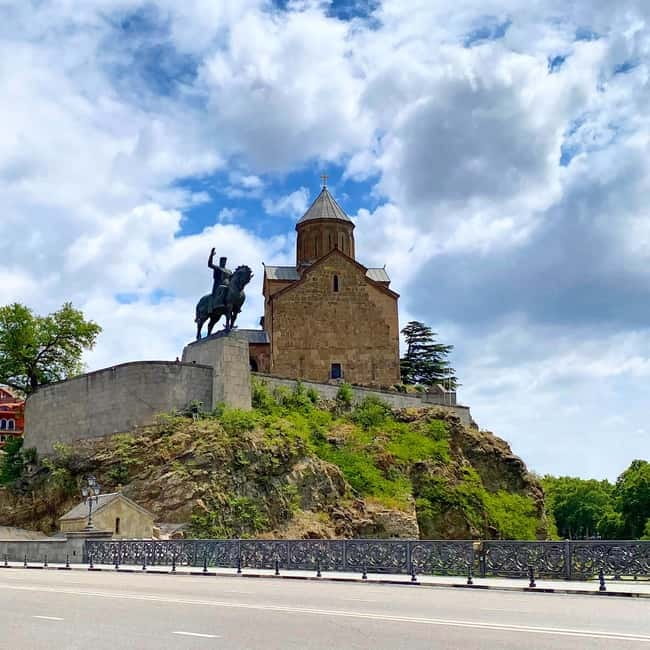
The Peace Bridge provides a sharp contrast with the older parts of the tour. Its contemporary design represents modern Tbilisi, and crossing it after the historic churches, fortress, and old lanes makes the city’s changes easy to see.
This old-and-new contrast is one reason the tour works well for a first day. You are not only looking backward at medieval buildings. You are also seeing how Tbilisi presents itself today, with modern public spaces set beside older neighborhoods.
The walk can finish with a better sense of direction than you would get from visiting separate landmarks on your own. You may still want more time at the bridge, fortress, churches, or bath area, but the tour gives you a map in your head and ideas for returning later.
What the guide adds to the three hours
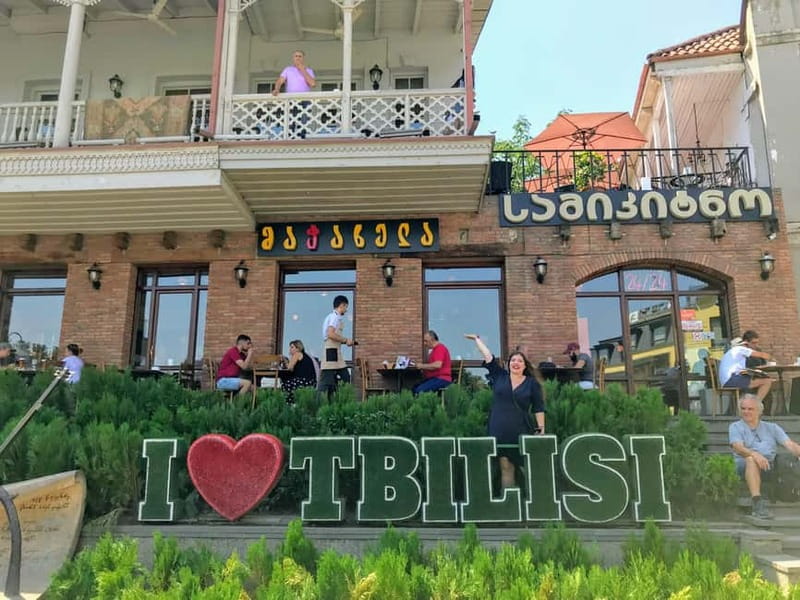
The guide is the main reason this tour earns strong marks. Oksana has been praised for clear storytelling, flexible routing, restaurant suggestions, and a friendly manner. Gio is known for answering questions, explaining old and new Tbilisi, and helping groups keep a comfortable pace. Jonah has been singled out for his command of Georgian history, architecture, religion, and local tips.
Other guides, including Tamar, Alex, Khatuna, Nini, Nina, Khato, and Koba, have also been praised for warmth, humor, patience, and personal attention. That range matters because the experience will naturally vary with your guide, but the repeated pattern is encouraging: you can expect a person who is prepared to explain more than the bare facts.
Several guides have taken photos for participants. One guide helped locate particularly good picture spots, while another ended the experience at a wine shop where the group sampled Georgian wine. That wine stop is not listed as a fixed part of every tour, so do not book expecting it, but it shows how the route may gain a local touch depending on the day.
The tone is usually relaxed rather than lecture-like. You can ask about food, current life, history, religion, architecture, or practical plans for the rest of your stay. For me, that is more useful than a guide who recites dates and moves on.
Is $16 good value for Tbilisi?
At around $16 per person, this is a strong value if you want an introduction to Tbilisi. The fee includes a local guide and entrance fees, so you are paying mainly for direction, explanation, and access to a well-planned route.
The tour also saves you from spending your first day figuring out how the Old Town fits together. You see the major landmarks, get restaurant and shopping suggestions, and learn which places deserve a return visit. That practical information can easily make the price worthwhile.
The displayed price may change with the day, season, group size, and promotional discounts. Private tours cost differently, and the cable car is an extra 2.5 GEL for one way. If you are comparing options, remember that a larger bus tour may cost less but will not offer the same chance to ask questions or adjust the pace.
Who will enjoy this walking tour most?
I would choose this tour for a first visit to Tbilisi, especially if you want orientation before exploring alone. It suits history fans, architecture lovers, photographers, and people who prefer a local conversation to a formal presentation.
It is also a good choice for a short stay. In three hours, you cover enough of the Old Town to decide where to spend your free time afterward. The route gives you food, wine, churches, views, modern design, and local stories in one compact outing.
You should think twice if you dislike hills, uneven surfaces, or a brisk sightseeing pace. The tour is not suitable for wheelchair users, people with mobility impairments, or those bringing baby strollers. Comfortable shoes are essential, and large bags or luggage are not allowed.
Booking, timing, and practical tips
The tour lasts three hours, with starting times depending on availability. I would book it early in your Tbilisi stay, since the restaurant, bath, and neighborhood suggestions can help shape the rest of your visit.
Wear clothing that works for both walking and entering churches. Cover your shoulders and knees, and avoid relying on a large bag. Bring water and keep your hands free for uneven streets, though water is not listed as an included item.
Free cancellation is available up to 24 hours before the tour for a full refund, and you can reserve now and pay later. The tour is offered in English, Russian, and Ukrainian. Check the exact meeting time carefully, then arrive at Freedom Square well before the 10-minute waiting limit.
Should you book the Tbilisi Old Town walking tour?
I would book it if you want a compact, well-priced introduction to Tbilisi with a real local guide. The best features are the route’s range, the small groups, the Narikala views, and the chance to ask practical questions about food, wine, daily life, and later sightseeing.
I would skip it only if the walking conditions are a serious problem for you or if you prefer to explore at your own pace without a fixed route. For most first-time visitors who can handle hills and rough paving, this is a smart way to get your bearings fast and see why Tbilisi is much more than a collection of old churches.
FAQ
How long does the Tbilisi Old Town walking tour last?
The tour lasts three hours.
Where is the meeting point?
Meet at the entrance of the Burberry store at Freedom, also called Liberty, Square.
How long will the guide wait at the meeting point?
The guide will not wait for more than 10 minutes, so arrive early.
What does the tour price include?
The price includes entrance fees and a local guide.
Is the cable car included?
No. The cable car costs 2.5 GEL for one way.
Which languages are available?
The tour is available in English, Russian, and Ukrainian.
Can I book a private tour?
Yes. Private and small-group options are available.
Is the tour suitable for wheelchair users?
No. The tour is not suitable for wheelchair users or people with mobility impairments because of uneven surfaces.
What should I wear?
Wear comfortable shoes and clothing that covers your knees and shoulders for places of worship and selected museums. Shorts and sleeveless tops are not allowed in those areas.
Can I bring luggage or a large bag?
No. Luggage and large bags are not allowed on the tour.
Just added around the world
- Bern Private Walking Tour with a Local★ 4.5 · 75 reviews
- Berlin Walking Tour★ 4.5 · 378 reviews
- Bern Walking Tour: Explore Top Sights & Hidden Gems★ 5.0 · 108 reviews
- Small Group Walking Tour of East Berlin with a French Guide★ 5.0 · 176 reviews
- Berlin Street Art Walking Tour – Off The Grid★ 5.0 · 270 reviews
- Berlin Highlights Private Guided Walking Tour★ 4.5 · 89 reviews
- Private Walking Tour: World War 2 and Cold War Sites in Berlin★ 5.0 · 230 reviews
- The History of Berlin: WWII PRIVATE Walking Tour With Locals★ 5.0 · 209 reviews
Old Town Walking Tours, compared.
Underground Vaults Walking Tour in Edinburgh Old Town
Read our review →
3-Hour Walking Tour of Old Town & Prague Castle
Read our review →

Old Town and Jewish Quarter Guided Walking Tour
Read our review →
Cartagena: Historic Center and Getsemaní Shared Walking Tour
Read our review →Browse the lists this tour appears in