
Review · FLORENCE WALKING TOURS
Florence: Heart of Florence Guided Walking Tour
Florence rewards walkers with good timing. This guided route connects the Medici district, the Duomo, Via Calzaioli, and Piazza Signoria in one steady tour, giving you a useful first look at the city’s religious and political center. I like the clear progression through Florence’s main quarters, and I like the small touches, such as rubbing the porcellino’s nose for luck. The main drawback is that guide quality can vary, and one booking reported finding no guide at the meeting point.
At $27 per person, this is a reasonable way to get your bearings before exploring Florence on your own. The walk lasts from 1.5 to 2.5 hours, so you cover plenty without giving up an entire day. Still, you should wear comfortable shoes, confirm the meeting point carefully, and remember that some groups may receive the tour in two languages at once.
Key points to know before booking
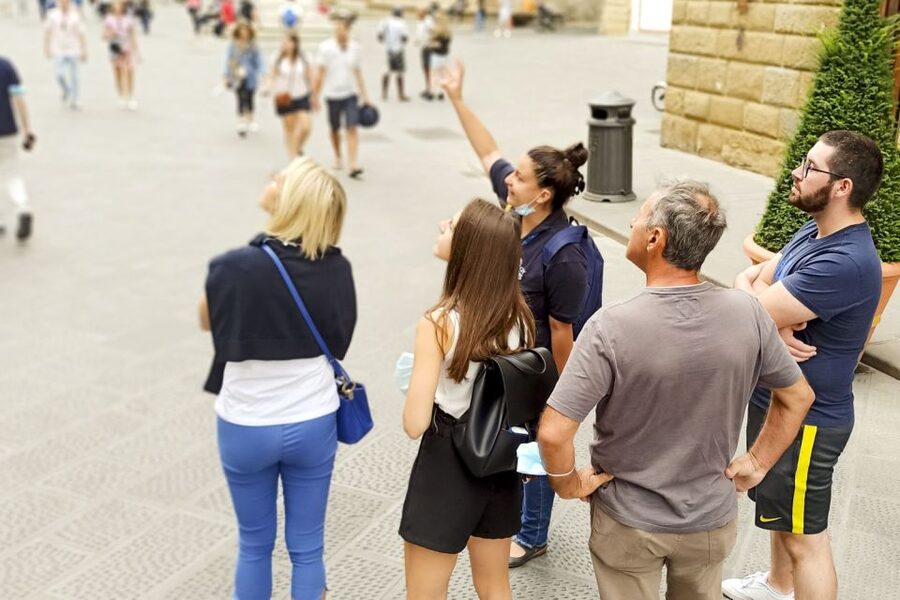
- The route links Florence’s main historic districts: You walk from San Lorenzo and the Medici family area to the Duomo, Via Calzaioli, and Piazza Signoria.
- Brunelleschi’s dome is a major highlight: You see the cathedral complex, Baptistery, Gates of Paradise, and Giotto’s bell tower.
- This is mainly an orientation walk: The schedule centers on streets, squares, exteriors, courtyards, and explanations rather than a long indoor museum visit.
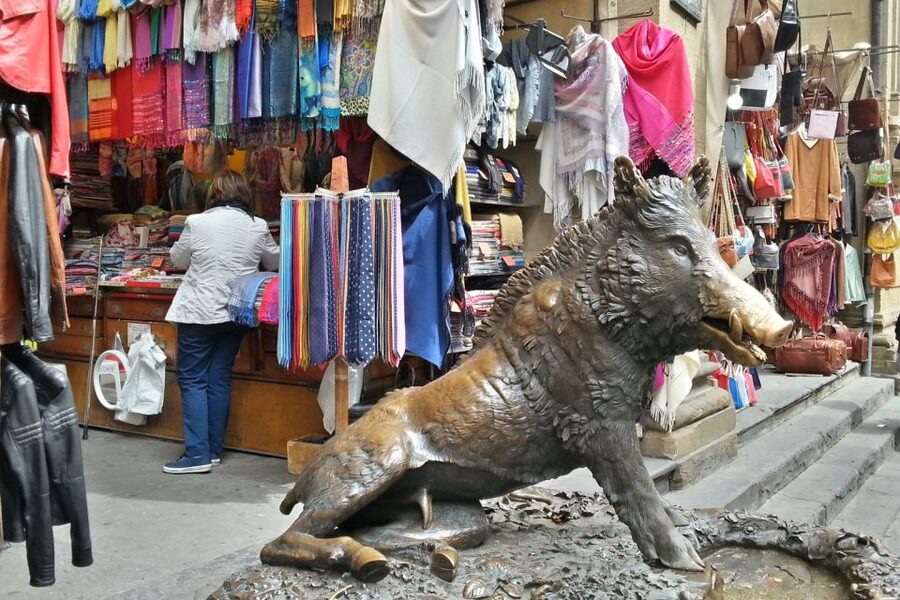
- The porcellino adds a playful local ritual: Rub the bronze pig’s nose at the Mercato della Paglia for good luck.
- Guide performance matters: Several bookings praise guides who give abundant information, while others note rushed speech, weak communication, or late staff.
- The route can be combined with major museums: A separate combo option pairs the city walk with the Uffizi and a guided Duomo visit.
San Lorenzo and the Medici family quarter
The walk begins in Florence’s old Medici district, around San Lorenzo. This is a smart starting point because the Medici family shaped much of the city’s art, politics, and building program, and the narrow streets still give you a sense of how closely their power sat beside ordinary urban life.
You pass the Palazzo Medici Riccardi and learn about the residences connected with the family. The route also points out the Medici Chapels and the Church of San Lorenzo. Even if you do not enter every building, seeing these places together helps you understand Florence as more than a collection of famous facades. The family’s influence appears in the churches, palaces, public spaces, and artistic commissions along the way.
I like this opening because it gives the tour a human story. You are not simply ticking off a palace and a church. You are following the footprint of a ruling family through the city streets.
The route description refers to touching the stones used to build the Medici residences. Treat that as a way of paying attention to the old fabric of the quarter, not as a formal hands-on activity. Florence is full of worn stone, tight lanes, and buildings that reward a slower look.
More Guided Walks in Florence:
- Florence: Highlights Walking Tour with Expert Guide
★ 4.6 · 4,662 reviews - Florence: Duomo Complex with Tickets & City Walk Guided Tour
★ 4.7 · 2,057 reviews - David & Accademia Guided Tour with Time Entry Ticket
★ 4.5 · 1,705 reviews
The Duomo complex and Brunelleschi’s great dome
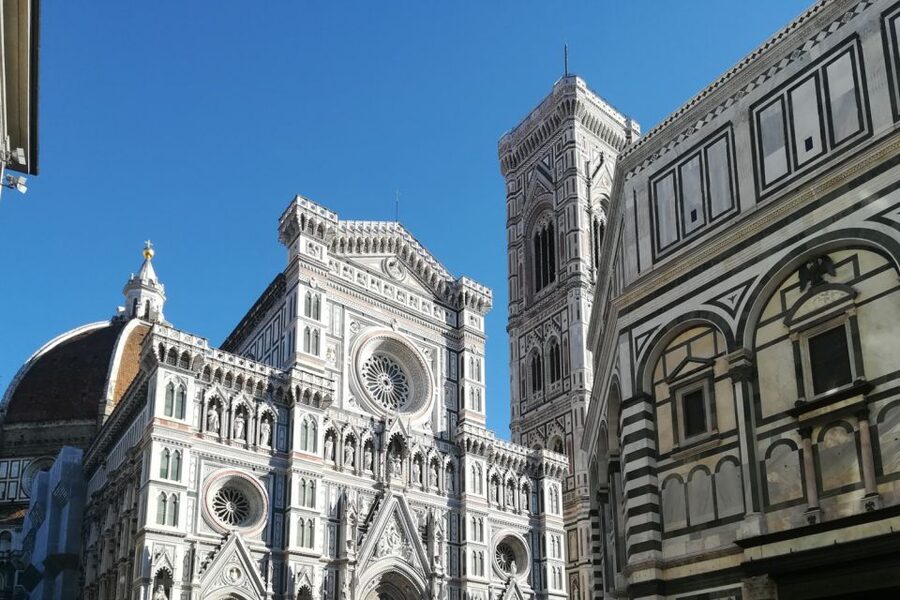
From San Lorenzo, the walk moves to Piazza del Duomo, Florence’s religious center. This is the part many people anticipate most, and it delivers a powerful first view of the Cathedral of Santa Maria del Fiore, Brunelleschi’s dome, Giotto’s bell tower, and the Baptistery of San Giovanni.
The guide explains the relationship among these buildings, which is useful because the square can feel visually crowded at first. The cathedral, dome, bell tower, and Baptistery are close together, but each has a different role and appearance. A guide helps you sort out what you are seeing instead of letting the whole complex blur into one grand picture.
The Baptistery’s Gates of Paradise are another key stop. Their name refers to the celebrated bronze doors, which are among Florence’s best-known works of art. The tour highlights them as part of the Duomo visit, but you should check the exact option you book if you are hoping to enter buildings or see particular interiors. The supplied details describe a guided walking route, not a guaranteed climb of the dome or a full cathedral admission.
That distinction matters. If you want Brunelleschi’s dome climb, the Baptistery interior, or a long visit inside the cathedral, you may need a separate ticket and more time. This tour is better for learning how the buildings fit together and for getting an informed look at the complex before deciding where to return.
During visits to places of worship, you need to follow the dress code. Dress modestly enough for church access, even if most of the walk takes place outdoors.
Via Calzaioli and the city’s everyday center
The route continues along Via Calzaioli, one of Florence’s best-known connecting streets. It leads between the Duomo area and Piazza Signoria, so it is both a sightseeing path and a useful piece of city geography.
Along the way, the guide points out the Orsanmichele Church. This building is particularly interesting because the walk places it within the movement between Florence’s religious and civic centers. You also reach the Mercato della Paglia, where the bronze porcellino has become one of Florence’s most familiar small traditions.
Rubbing the pig’s nose is a light moment in a tour filled with churches, dynasties, and political power. It gives you a simple ritual to remember and a chance to pause between major monuments. The market area also helps keep the walk connected to ordinary city life rather than turning the entire route into a parade of grand buildings.
This middle section may be especially useful on a first visit. You learn how the major squares connect, which makes it easier to return later for shopping, a meal, or a second look at the churches. The tour is not just about isolated sights. It shows you how to walk between them.
Piazza Signoria, Palazzo Vecchio, and Florence’s open-air museum
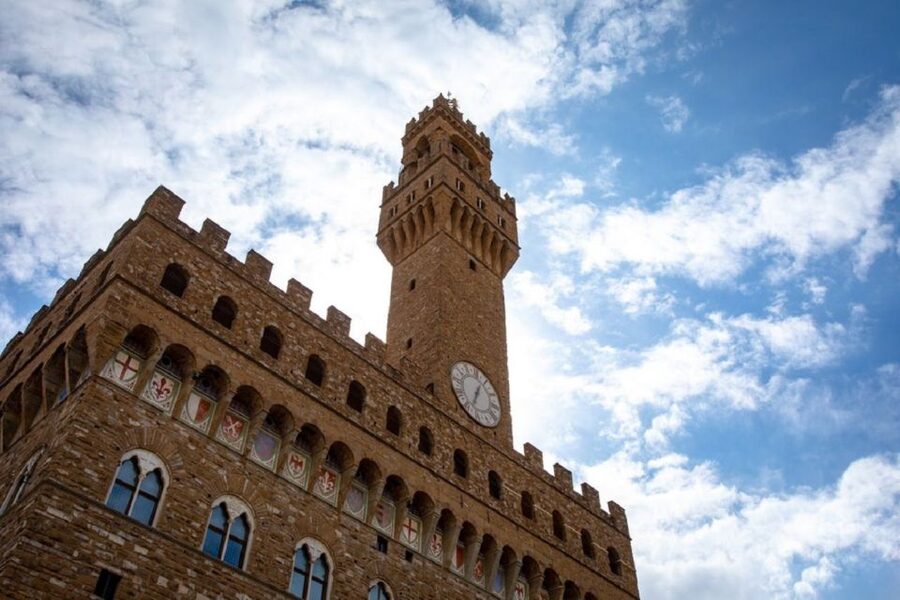
Piazza Signoria is the political heart of the route. Here, the tour shifts from Medici residences and religious buildings to the public stage of Florentine government.
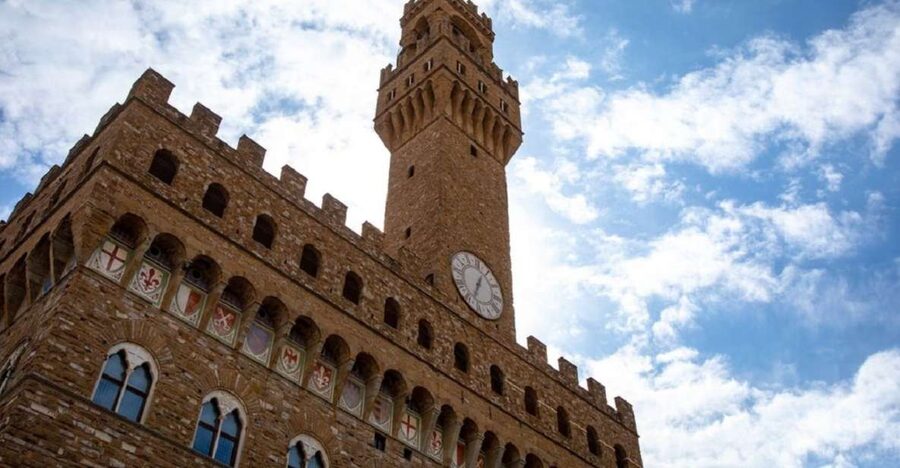
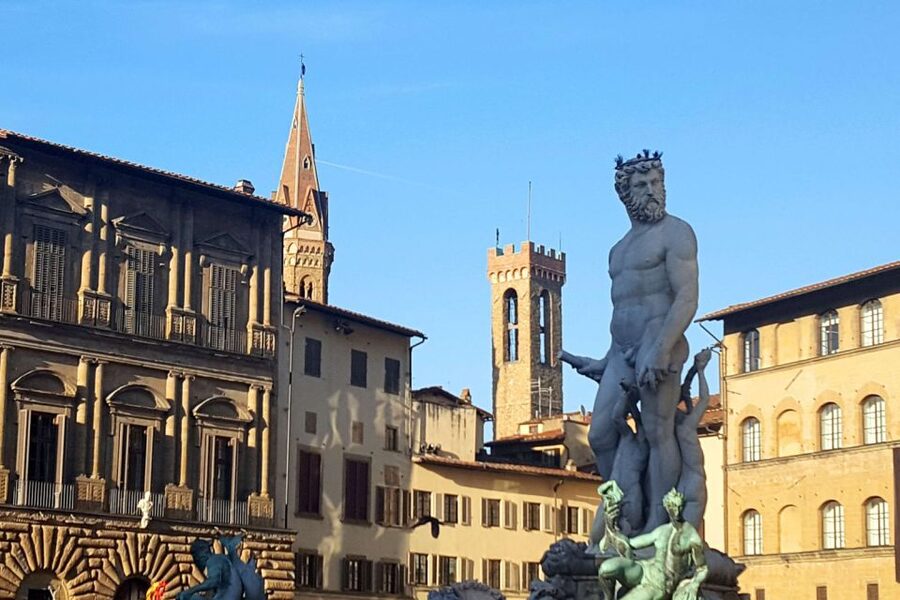
The square functions like an open-air museum. You see the Fountain of Neptune, the Loggia dei Lanzi, and Palazzo Vecchio with its Arnolfo tower. The guide explains the role of the square and helps identify the sculptures and architectural features around it.
The Loggia dei Lanzi is particularly well suited to a walking tour because its sculptures are displayed outdoors beneath a covered arcade. You can take in the works without the slower pace and admission process of a conventional museum. The Fountain of Neptune adds another major landmark, while Palazzo Vecchio gives the square its political weight.
The visit also includes the Michelozzo courtyard. This offers a closer look at the palace’s architectural detail and gives you a sense of the transition from public square to formal government building. The route information does not promise a full Palazzo Vecchio interior visit, so I would treat the courtyard as the main architectural look included in this portion.
The value here comes from the guide’s explanation. Without context, Piazza Signoria can become a place where you photograph statues and move on. With a good guide, the square becomes a lesson in how Florence presented power in stone, bronze, and public ceremony.
A few more walks around Florence worth a look
- Uffizi & Accademia Timed Entry: Small Group Duomo Walking Tour
★ 4.5 · 3,630 reviews - Florence: Guided Walking Tour
★ 4.6 · 1,602 reviews - Florence: Renaissance and Medici Tales Guided Walking Tour
★ 4.8 · 1,549 reviews - Florence: Uffizi & Accademia Small Group Walking Tour
★ 4.7 · 1,380 reviews
The Ponte Vecchio finale
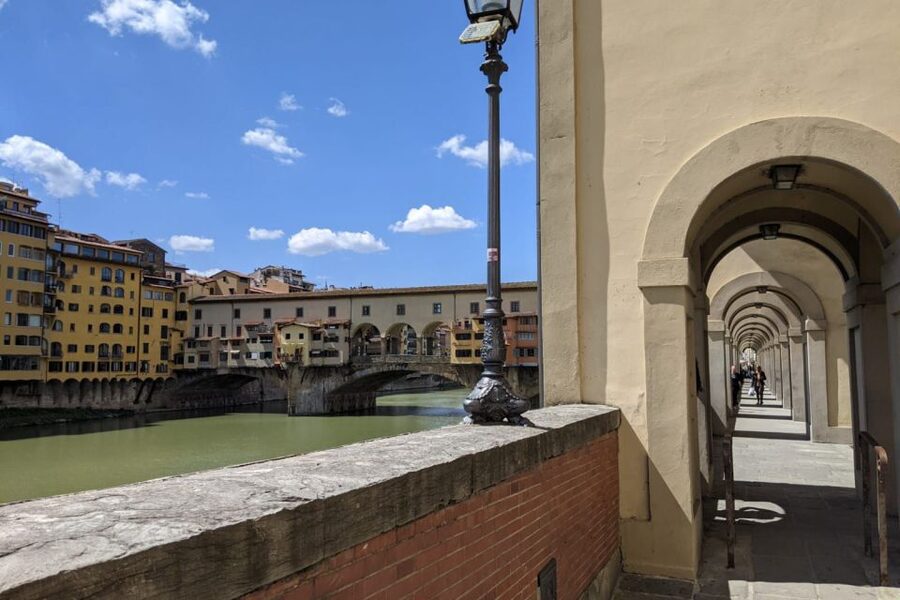
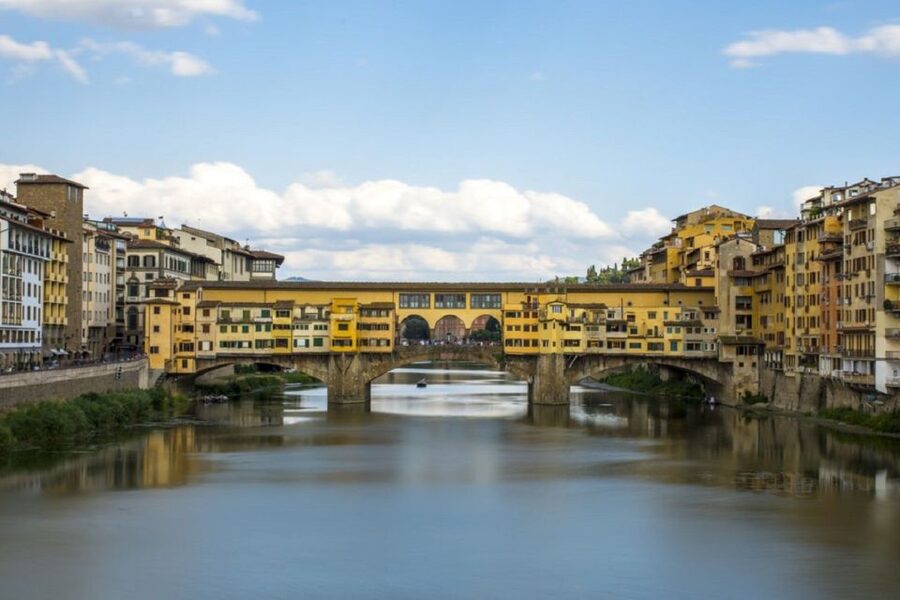
The walk reaches the Ponte Vecchio, Florence’s oldest bridge, with its well-known jewelry shops. It is one of the city’s most recognizable views, but the bridge is more enjoyable when you understand that it connects the historic center across the Arno and forms part of the city’s daily walking routes.
The jewelry shops give the bridge its distinctive character. You will not get a quiet, empty postcard scene, but you do get one of Florence’s classic urban views. Look along the bridge and beyond it, not only at the shop windows. The structure, river crossing, and dense historic center are what make this stop memorable.
The route order may change. That is worth keeping in mind if you are expecting the Ponte Vecchio to be the final stop or want to plan lunch immediately afterward. The tour may also run from 1.5 to 2.5 hours, so leave some flexibility around the end time.
What the guide adds, and where the tour can falter
A walking tour lives or dies by its guide. The strongest feedback praises guides who provide a large amount of information, keep a comfortable pace, and offer suggestions for other places to visit. One booking described the guide as exceptional, while another gave the experience a full ten out of ten. Those comments point to the tour’s best possible version: a well-paced walk that gives you both facts and useful next steps.
Guide Greta received a more mixed assessment. The information was there, but the delivery was described as quick and less engaging, with little commentary between the main stops. That gap matters. The streets between the monuments are part of Florence too, and a good guide keeps the story moving while you walk.
Some bookings also describe guides speaking very slowly or in a rushed and compressed way. The tour may sometimes be provided in two languages at once, which can make the experience longer or less fluid. From April through October, the tour is described as monolingual, but you should still confirm the language and option when booking.
There was also a serious meeting-point problem in one case, with no guide present after the group waited. That appears to be an exception, but it is a reason to arrive early, keep your booking details handy, and verify the meeting point because it can vary by option. A late staff arrival and an argument over the delay also caused frustration in another booking.
These issues do not make the tour a poor choice, but they do lower the certainty. You are paying for a live guide, so the person leading your group has a direct effect on the value.
How much value do you get for $27?
At $27, the tour is priced fairly for a guided introduction to Florence’s central sights. You receive a local professional guide, multilingual assistance at the meeting point, and headphones for groups of more than ten participants. The headphones should help in a larger group, though they do not solve every problem if the guide speaks too quickly or gives little explanation between stops.
The cost makes the most sense if you are visiting Florence for the first time, have limited time, or want the city’s main districts explained in one sitting. You walk past several major landmarks without paying for a long museum entry or spending half a day inside one building.
The value is lower if you already know the historic center well or want detailed access to the Duomo and Palazzo Vecchio. In that case, you may prefer a ticketed interior visit or a more specialized art tour.
An optional self-guided mobile city guide is included only if you select that option. A separate combo option adds a guided historic-center walk, a morning Uffizi visit, and an early afternoon guided Duomo visit. That package is aimed at a full sightseeing day, not a light introduction.
There is also a lunch option with a three-course Tuscan set menu in a typical restaurant in central Florence. Drinks are not included, and children aged five and under do not receive lunch as part of the option. You can buy drinks or food for those children on the spot.
Who will enjoy this Florence walk most?

I would suggest this tour to first-time visitors who want a clear map of central Florence. It is also a good fit if you prefer learning outdoors and moving between places rather than sitting through a long indoor presentation.
Families may appreciate the porcellino stop and the changing scenery, though the walk still requires steady attention and comfortable shoes. Art lovers who want a quick look at famous public works will enjoy the Loggia dei Lanzi, the Gates of Paradise, and the Duomo complex, but should not mistake this for a full museum tour.
The route suits people who want context before exploring alone. Afterward, you will know where San Lorenzo, the Duomo, Via Calzaioli, Piazza Signoria, and the Ponte Vecchio fit in relation to one another.
You should be cautious if you need a highly polished, tightly controlled experience. The meeting point can vary, the order can change, and guide quality is not perfectly consistent. Confirm your option, arrive early, wear proper church clothing, and keep room in your schedule.
Free cancellation is available up to 24 hours before the start, and the reserve-now, pay-later option can help if your plans are still changing.
Should you book the Heart of Florence tour?
Book it if you want an affordable first orientation to Florence, especially if you value stories, city geography, and major landmarks more than extended interior visits. The route covers an impressive amount in under three hours, and the best guides add useful recommendations along with the history.
I would skip it if your main goal is climbing Brunelleschi’s dome, spending serious time inside the cathedral, or studying Renaissance art in detail. For those plans, choose a ticketed specialist visit instead.
For most first visits, this is a sensible introduction with strong potential value. Just confirm the meeting point, allow for changes in the route, and hope your group gets a guide who keeps talking between the monuments.
FAQ
How long does the Heart of Florence walking tour last?
The tour lasts between 1.5 and 2.5 hours. Starting times vary, so you should check availability for your chosen date.
What sights are included on the walking route?
The route includes the San Lorenzo and Medici family district, Palazzo Medici Riccardi, the Medici Chapels and Church, Piazza del Duomo, Brunelleschi’s dome, the Baptistery of San Giovanni, the Gates of Paradise, Giotto’s bell tower, Via Calzaioli, Orsanmichele Church, the Mercato della Paglia, Piazza Signoria, Palazzo Vecchio, the Loggia dei Lanzi, and the Ponte Vecchio.
Is the tour offered in English?
Yes. Live guide languages include English and Spanish.
Can the tour be provided in more than one language?
Yes. The tour is sometimes provided in two languages at once. From April through October, it is described as a monolingual tour.
Do I need special clothing?
You need to follow the dress code when visiting places of worship. Comfortable shoes are also recommended for the walking route.
Are headphones provided?
Headphones are provided for groups of more than ten participants.
Can I cancel the booking?
Yes. You can cancel up to 24 hours in advance for a full refund. A reserve-now, pay-later option is also available.
Just added around Florence
- Florence: The Medici Family Guided Walking Tour★ 4.7 · 129 reviews
- Florence: Tuscan Food and Wine Guided Walking Tour★ 4.8 · 72 reviews
- Florence Walking Tour & Skip-the-Line David at Accademia★ 4.7 · 159 reviews
- Florence: Walking Tour with David, Duomo & Uffizi Gallery★ 4.7 · 414 reviews
- Florence: Pitti Palace and Boboli Gardens Walking Tour★ 4.6 · 182 reviews
- Florence: Small Group Guided Walking Tour★ 4.7 · 176 reviews
- Florence Street Food Walking Tour with Wine in Duomo Area★ 4.9 · 76 reviews
- Florence: Private Walking Tour with a Local★ 4.6 · 126 reviews
Florence Walking Tours, compared.
Uffizi & Accademia Timed Entry: Small Group Duomo Walking Tour
Read our review →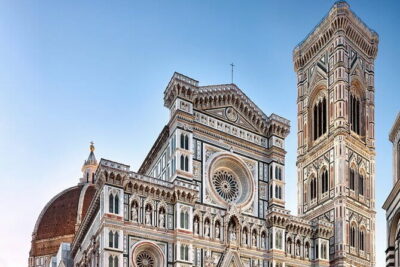
Duomo Complex with Tickets & City Walk Guided Tour
Read our review →
Michelangelo’s David, Accademia & Uffizi Small Group Tour
Read our review →
David & Accademia Guided Tour with Time Entry Ticket
Read our review →
Browse the lists this tour appears in