
Review · OLD TOWN WALKING TOURS
Ramblas, Old Town, Gothic and Gaudi Architecture Walking Tour
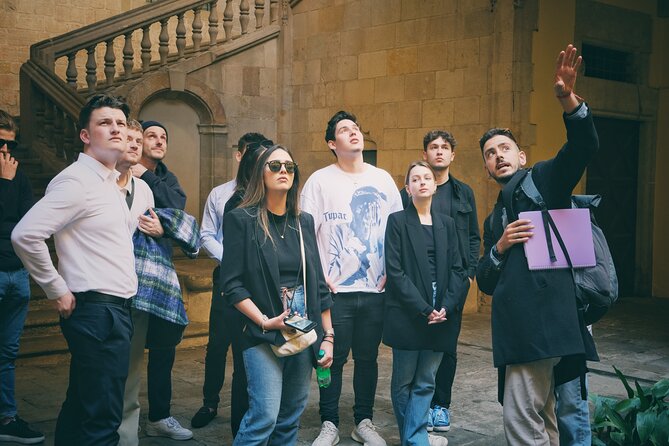
Barcelona reveals itself one street at a time. This small-group walking tour links the Gothic Quarter’s Roman ruins and medieval lanes with Gaudí’s playful façades along Passeig de Gracia. I like the way it connects Barcelona’s oldest streets with its modernist architecture, and I like the guides’ lively storytelling, with names such as Yannis, Christian, Filipa, and Henrietta praised for making the city easy to understand. The main consideration is pace: you cover a lot in 2 hours and 15 minutes, and the tour stays outside the major monuments.
I also like the practical orientation. You finish near Casa Batlló and La Pedrera, with a better sense of where the old and new parts of Barcelona meet. The tradeoff is that you need to pay separately for monument admission, bring or buy a short metro ticket, and pay €1 for a radio headset. Still, at $35.37 per person, the price is fair if you want context and city basics before exploring on your own.
Key points at a glance
- Two sides of Barcelona in one walk: Move from Roman remains and medieval churches to Gaudí’s fanciful façades.
- Small group of up to 15 people: The size allows more questions and makes it easier to stay with the guide.
- A useful first-day activity: You get a working map of the Gothic Quarter, Las Ramblas, and Eixample.
- Mostly exterior sightseeing: The route shows you where to go, but monument entry is not included.
- Guides make the difference: Yannis, Christian, Filipa, Henrietta, Anna, and others are praised for humor, local knowledge, and good pacing.
- Expect real walking: The route includes narrow lanes, broad avenues, a short metro ride, and plenty of standing.
Why this route works for a first look at Barcelona
Barcelona can feel like several cities at once. The Gothic Quarter is a tight maze of old streets, while Eixample is broad, planned, and lined with bold modernist buildings. This tour gives you a simple way to connect those pieces.
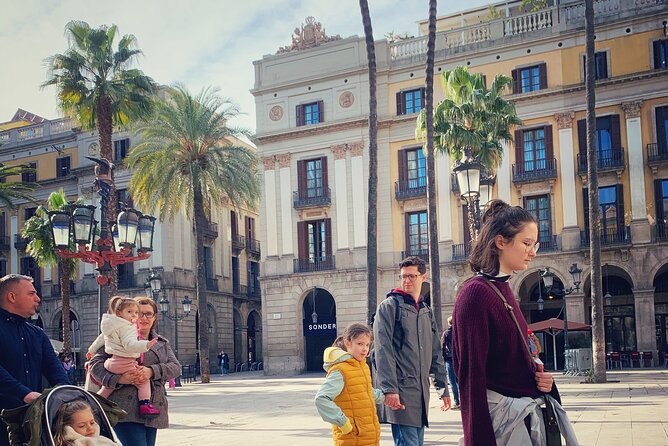
You begin near Plaça de Catalunya, a useful starting point between the old city and the newer districts. From there, the route moves through the Gothic Quarter, crosses Las Ramblas, pauses at several old-town squares, and then heads toward Passeig de Gracia and Gaudí’s major buildings.
I like this order because it gives you a clear change of mood. In the Gothic Quarter, the interest is in layers: Roman remains, medieval churches, courtyards, and narrow alleys. Along Passeig de Gracia, the focus shifts to design, wealth, and the Modernisme style that shaped Barcelona in the late 19th and early 20th centuries.
The tour is not meant to replace a full visit to the cathedral, Casa Batlló, or La Pedrera. Instead, it helps you decide which buildings deserve more of your time and money later.
More Old Town Walking Tours in Spain
- Barcelona Helicopter, Sailboat & Old Town Private Walking Tour
★ 5.0 · 1,395 reviews - Barcelona: Old Town and Gothic Quarter Walking Tour
★ 4.8 · 1,393 reviews - Barcelona Old Town & Gothic Quarter Small Group Tour
★ 5.0 · 1,308 reviews
Roman walls and medieval lanes in the Gothic Quarter
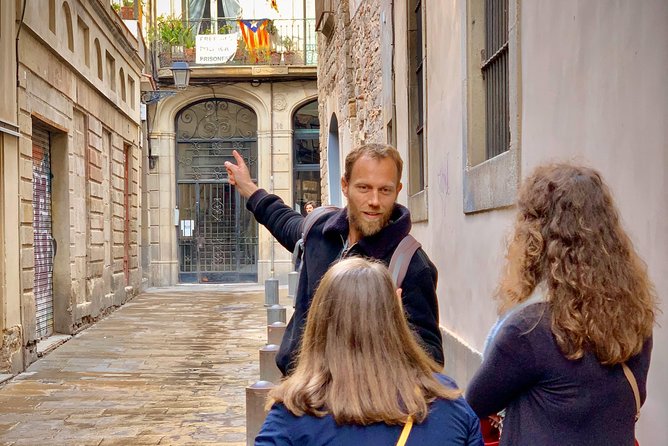
The Gothic Quarter receives about 30 minutes, though the walking and commentary continue as the route moves through the old city. This is the section where a guide adds the most value because the streets can look like a jumble without some explanation.
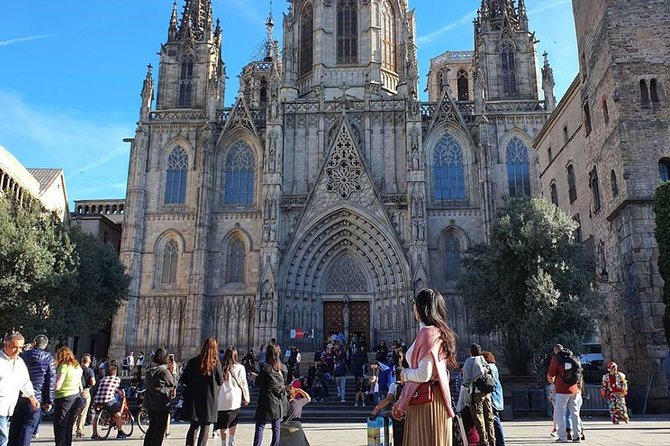
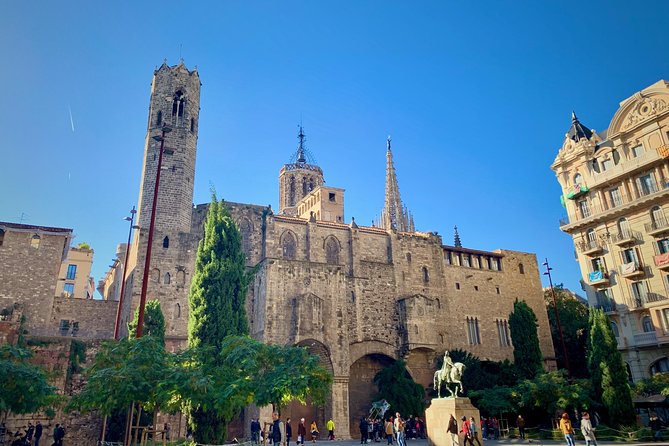
You see the oldest part of Barcelona, Roman ruins, medieval churches, small courtyards, and irregular alleys. The Barcelona Cathedral is part of this setting, with its Gothic form anchoring the district.
The pleasure here is not simply ticking off old buildings. It is understanding how Barcelona grew around earlier layers. A guide can point out how Roman foundations sit beneath later construction and how the tight street plan differs from the organized avenues of Eixample.
The Gothic Quarter also rewards your attention at eye level. Look for carved stone, quiet courtyards, church details, and sudden views into small squares. This is a place where the guide’s stories matter as much as the buildings themselves.
The limitation is time. Thirty minutes is enough for an introduction, not a full study of the district. If you enjoy medieval architecture, return later and wander without a schedule.
A quick look at Las Ramblas and the old city squares
Las Ramblas receives only about two minutes, so think of it as a crossing point rather than a full guided visit. It is Barcelona’s famous central promenade, lined with markets, restaurants, and bars.
That brief stop makes sense within the larger route. Las Ramblas is easy to find on your own, while the nearby squares are less obvious and more rewarding for a short walking tour.
Plaça Sant Felip Neri is one of the most memorable pauses. Tucked into the old city, it has an intimate feel that contrasts with the crowds and noise of the main promenade. The square’s worn walls and quiet atmosphere invite a slower look.
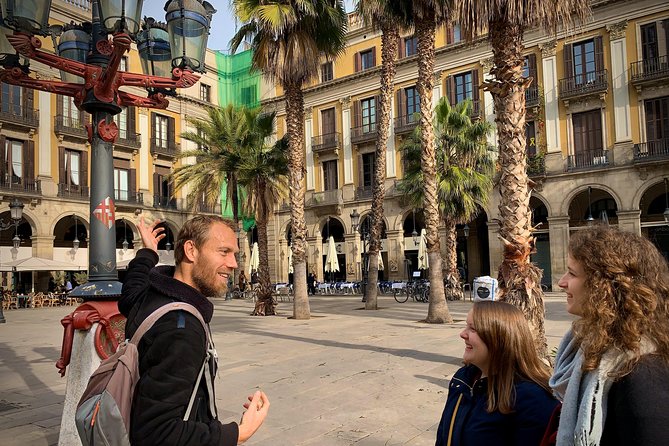
Plaça Reial gives you another change of tone. Its arcaded edges, palm trees, restaurants, and evening energy create a grand urban room. You get five minutes here, enough to understand the layout and note it as a place to revisit for food or nightlife.
I appreciate that the route does not spend too long on the city’s most famous street. You see it, then move toward places that reveal more character.
Barcelona Cathedral and what you do not see inside
The Barcelona Cathedral receives a short three-minute stop, and admission is not included. The point is to place this major Gothic church within the old-town route rather than provide a full interior visit.
That distinction matters. If you want cloisters, chapels, and a closer look at the cathedral’s interior, you will need to return independently and buy your own ticket if required. The guide can give you historical and architectural context, but this is not an admission tour.
The same rule applies to the other major buildings. The tour is strongest as an outdoor introduction. You see the façades, hear the stories, and learn how the buildings fit into Barcelona’s streetscape.
More Old Town Walking Tours in Barcelona:
- Barcelona 1.5h Private Old Town, Gothic & Ramblas Walking Tour
★ 5.0 · 318 reviews - Barcelona: Ramblas, Old Town & Gaudí Houses Walking Tour
★ 4.9 · 239 reviews - Barcelona: Old Town Private Walking Tour of Past and Present
★ 5.0 · 160 reviews - Private Barcelona Old Town and Gothic Quarter Walking Tour
★ 5.0 · 134 reviews
Gaudí outside: Casa Batlló and La Pedrera
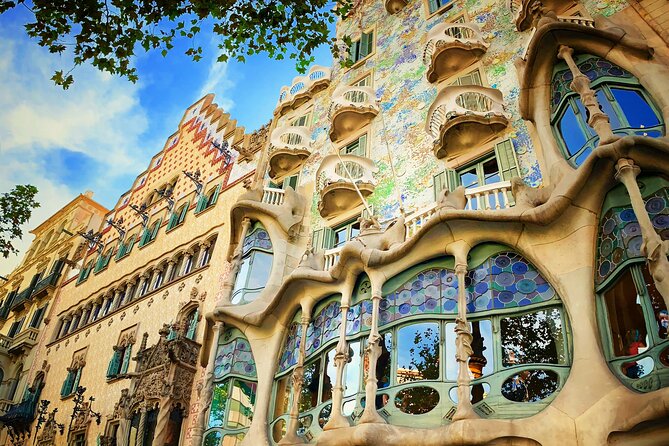
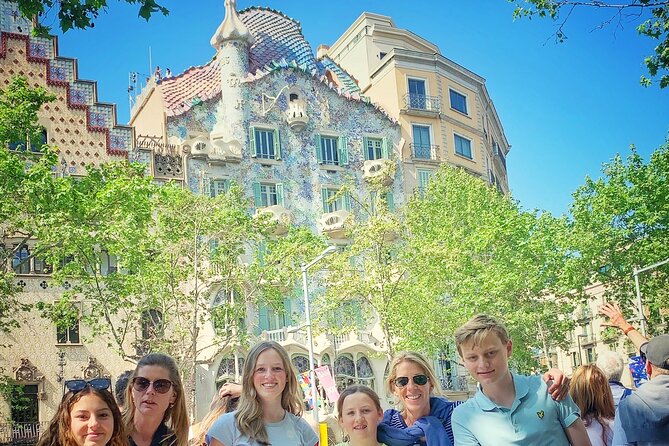
The route’s modernist section begins to feel more theatrical at Casa Batlló. The building is often described through images of bones, dragons, fairy tales, and dreamlike fantasy. Those comparisons make sense when you study the irregular windows, curved surfaces, and unusual roofline.
You spend about 10 minutes here, outside only. That is enough to appreciate the façade and hear why Casa Batlló is among Gaudí’s best-known works. It is not enough to inspect the rooms, stairways, roof terrace, or interior details, so plan a separate visit if the building interests you.
La Pedrera, also called Casa Milà, receives about five minutes. It was a private home built for the Milà family and is often associated with its stone-like, mountain-inspired form. From the street, the façade can look heavy and sculpted, a strong contrast to Casa Batlló’s more playful appearance.
Again, no admission is included. I see this as a benefit for people who do not want to commit to several expensive architectural entries in one day. You get a guided preview, then choose later whether one interior visit deserves the time.
Passeig de Gracia and Barcelona’s modernist showcase
The longest section is Passeig de Gracia, with about 45 minutes of walking and commentary. This is the tour’s main bridge between individual buildings and the wider architectural movement.
Passeig de Gracia is Barcelona’s grandest shopping avenue, but its real appeal is the collection of Modernisme buildings, decorative paving, lamps, tiles, and grand façades. The street itself shows how the city changed as it expanded beyond the old walls.
Casa Batlló and La Pedrera are the major names, but they are not the only reason to pay attention. The guide can help you compare different architects and styles instead of treating every ornate building as Gaudí’s work.
Casa Amatller is an especially useful comparison. Designed by Puig i Cadafalch, it sits next to Casa Batlló and has its own distinctive modernist language. Seeing the two side by side makes the differences easier to understand.
This is where the tour can sharpen your eye. You start noticing balconies, rooflines, colored tiles, sculptural details, and the relationship between private homes and the avenue outside. For architecture fans, the value is not just seeing famous façades. It is learning what to look for.
Guides, group size, and the quality of the walk
The maximum group size is 15 people, which is a good balance for a city walk. You still have a social group, but the guide can usually hear questions and keep the route together without the impersonal feel of a large coach tour.
Guide quality appears to be the strongest part of the experience. Yannis is praised for turning Catalan and Barcelona history into an entertaining story, while Christian is noted for local perspective and humor. Filipa is described as patient with children, and Henrietta receives praise for her pacing and useful suggestions for later in the day.
Other named guides include Anna, Loic, Evan, Tyler, Hanna, Melanie, Cristina, and Creasy. The recurring strengths are clear: lively delivery, historical context, questions welcomed, and practical recommendations about food, safety, and places to visit after the walk.
You should not expect every guide to use the same style. Some may focus more on architecture, while others lean into history, local stories, or humor. That variety is normal on a guided city walk, but the consistently high praise suggests the company places real weight on guide quality.
The radio headset costs €1 per person and is paid to an outside provider at the start. It may feel like a small extra, but it helps when the group is moving through noisy streets. Bring a small amount of cash, though credit card payment was also accepted in at least one reported experience.
Walking, the metro connection, and practical comfort
This is an active tour. You walk through narrow old-town streets, open squares, and the long stretch of Passeig de Gracia. You also take a short metro ride during the route, so bring a public transport ticket or purchase one through the guide.
That metro connection is practical because it links the old town and Eixample without making you walk every block between them. It also means the tour is not a pure walking loop. Keep your ticket ready and stay close during the transfer.
The walk appears manageable for most people, but it is not ideal if you want a seated sightseeing experience. One family found the route workable with a stroller, and another person appreciated the steady pace and breaks. Even so, wear comfortable shoes and be ready to stand while listening.
Rain does not necessarily end the experience, but the activity requires suitable weather and can be canceled if conditions are poor. If the operator cancels, you can choose another date or receive a full refund.
Price, timing, and what the $35.37 covers
At $35.37 per person, this is a reasonable price for a small-group orientation with a professional guide. You are paying for interpretation, route planning, and the convenience of covering several districts without figuring out the connections yourself.
The price does not include entry to the cathedral or Gaudí buildings. That keeps the basic cost down, especially if you only want to see the exteriors. On the other hand, if you already know you want to visit Casa Batlló or La Pedrera inside, you need to budget separately and arrange those visits yourself.
The 2-hour-15-minute length is enough to give you a useful city framework without consuming an entire day. I would schedule it early in your Barcelona stay, then return to the buildings that caught your attention.
It is also worth booking ahead. The tour is often reserved about 36 days in advance, and the 15-person limit can make popular departures fill early.
Who should book this Barcelona walk?
I would choose this tour if you are visiting Barcelona for the first time, want history and architecture together, or prefer a guide to explain what you are seeing. It works especially well for couples, solo visitors, families, and small groups who want a friendly introduction before exploring independently.
Families may appreciate the short stops and story-based approach. The route has also worked well for people arriving alone because the group setting is welcoming without requiring you to join a private tour.
Architecture fans should see it as a primer, not a detailed building tour. You will learn where the main modernist façades are and how to compare them, but you will not go inside.
I would think twice if you dislike city walking, need long visits at each monument, or want a tour devoted only to Gaudí. This route spreads its attention across Roman, medieval, modernist, and everyday Barcelona.
Should you book it?
Book it if you want a lively first orientation, strong guide commentary, and a smart connection between the Gothic Quarter and Passeig de Gracia. The small group, useful city geography, and outside views make the $35.37 fee good value.
Skip it if you want included monument entry or a slow architectural study. For most first-time visitors, though, this is a sensible way to get your bearings, learn what makes Barcelona different, and decide where to spend the rest of your sightseeing time.
FAQ
How long does the tour last?
The tour lasts approximately 2 hours and 15 minutes.
What language is the tour offered in?
The tour is offered in English.
Where does the tour begin?
It begins at Foot Locker, Plaça de Catalunya, 20, in Barcelona’s Ciutat Vella.
Where does the tour end?
It ends on Carrer del Consell de Cent, 310, in Eixample, near Casa Batlló and Casa Milà.
Are monument admission tickets included?
No. Tickets for the Barcelona Cathedral, Casa Batlló, La Pedrera, and other monuments are not included.
Is a headset required?
A radio headset is an extra €1 per person, paid at the start to an outside provider. It allows you to hear the guide more clearly.
Do I need a public transport ticket?
Yes. The route includes a short metro ride, and you should bring your own ticket or obtain one from the guide.
What happens if the weather is poor?
If the tour is canceled because of poor weather, you can choose a different date or receive a full refund. Free cancellation is also available when you cancel at least 24 hours before the start time.
Just added around Barcelona
- Barcelona Gothic Quarter Walking Tour with Tapas★ 5.0 · 248 reviews
- Barcelona Private Food Tour: Tapas, Paella & 8+ Food Tastings★ 5.0 · 164 reviews
- Picasso Museum and Walking Tour Plus Optional Wine & Food Tasting★ 5.0 · 596 reviews
- Private Barcelona Old Town and Gothic Quarter Walking Tour★ 5.0 · 134 reviews
- Barcelona Architecture Walking Tour With Casa Batlló Upgrade★ 5.0 · 137 reviews
- Montjuïc Walking Tour With Optional Flamenco Show★ 5.0 · 196 reviews
- Semi-Private Montserrat Monastery, Funicular & Scenic Nature Walk★ 5.0 · 172 reviews
- Gothic Quarter Donation-Based Walking Tour in English★ 5.0 · 72 reviews
Old Town Walking Tours, compared.
Underground Vaults Walking Tour in Edinburgh Old Town
Read our review →
3-Hour Walking Tour of Old Town & Prague Castle
Read our review →
Old Town and Jewish Quarter Guided Walking Tour
Read our review →
Cartagena: Historic Center and Getsemaní Shared Walking Tour
Read our review →Browse the lists this tour appears in