
Review · UK WALKING TOURS
Belfast Political Tour-Conflicting Stories Walking Tour
Belfast’s walls still have stories to tell. This three-hour walk brings you between the Falls and Shankill Roads, where former political prisoners explain the conflict from opposing viewpoints. I like the two-guide format, and I like that the tour reaches memorials and murals you could easily miss on your own. The main drawback is simple: you spend the full three hours outdoors, often beside busy roads.
The tour begins near Divis Tower and finishes on the Lower Shankill Road. I especially appreciate the direct storytelling from guides such as Paul, Ian, Jack, and Mark on different departures, along with the chance to ask questions. Still, this is serious material, and some accounts are blunt, emotional, and politically charged.
Key points to know before you go
- Two sides of the peace wall: You visit both the nationalist Falls area and the loyalist Shankill area, with a separate guide for each side.
- Personal accounts, not just plaques: Former political prisoners connect murals, memorials, and streets to their own lives.
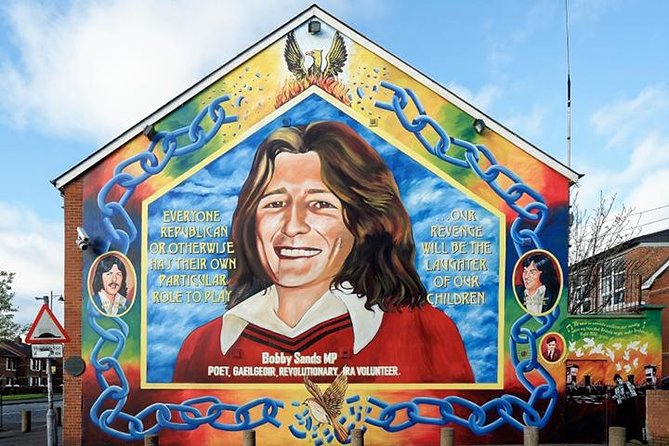
- Bobby Sands and Bombay Street: The Falls section includes major republican symbols, the International Wall, the Bobby Sands mural, and the D Company memorial garden.
- Shankill memorials and bomb sites: The second half covers the UVF Memorial, Somme Memorial, Bayardo bombing site, and Frizzells Fish Shop bombing.
- Allow three hours outside: The route is not hilly, but it involves steady walking, wind, traffic noise, and many standing stops.
- Good value at $36.05: Two 90-minute walking sections, local guides, and access to a difficult part of Belfast’s past make the price fair for visitors who want more than a quick photo stop.
Why this Belfast walk matters
You can see Belfast’s famous murals from a taxi window. You can also read a short account of the Troubles in a museum. This tour gives you something different: the geography of the conflict, explained while you are standing in the streets where memories remain close to the surface.
The experience takes place in West Belfast, between the Falls Road and Shankill Road. The two communities are close together, yet the peace wall still separates them. Gates in the wall are closed at night, including around 8 p.m., a practical reminder that the peace process has not erased old fears.
I find that setting important. The tour is not only about what happened decades ago. It also shows how political identity, grief, suspicion, and remembrance still shape daily life. The guides speak from their own backgrounds, and that means you will hear strong opinions. The point is not to receive one tidy answer. The point is to understand why the conflict remains so hard to explain in a single paragraph.
The tour is often led in two parts, with one guide representing the republican or nationalist view and another explaining the loyalist or unionist experience. The guides may include former members of opposing groups. That arrangement can feel uncomfortable, but it is also the heart of the experience.
A few more walks around Belfast worth a look
- A History of Terror – Belfast City Centre Walking Tour
★ 5.0 · 2,883 reviews - Belfast: Political Conflict 3-Hour Walking Tour
★ 4.6 · 2,215 reviews - Belfast: A History of Terror Walking Tour
★ 4.9 · 854 reviews
Starting near Divis Tower and the Falls
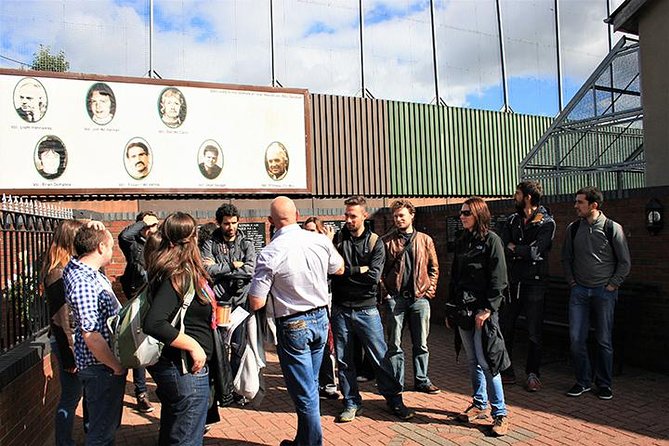
The meeting point is at Divis Tower, Belfast BT12 4QA. From there, the first section moves through the nationalist part of West Belfast. Plan to arrive ready to walk, since this is not a coach tour with long rests between stops.
The Falls section lasts about 90 minutes. You stop often, so the pace is generally manageable, but you will be on your feet for much of the time. Good shoes matter more than speed. The route is not described as hilly, yet three hours of pavement and standing can still wear you down.
Your first guide introduces the republican side of the conflict and places the murals in their political setting. This is where the tour gains its strongest personal quality. Instead of treating the images as colorful street art, the guide explains who is pictured, what they represented, and how local people understood the events around them.
You should listen with an open mind, but you do not need to accept every interpretation. Some guide accounts are plainly partisan. That is part of the stated format, and the second half gives you a chance to hear a contrasting account.
The International Wall and Bobby Sands mural
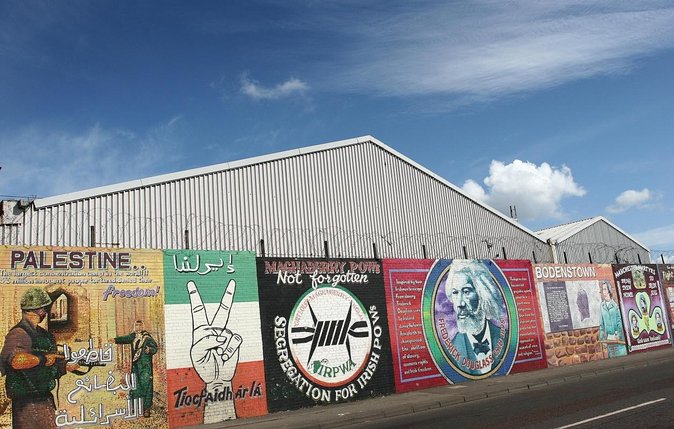
The International Wall is one of the best-known stretches of political artwork in Belfast. It connects local politics with causes and movements from outside Northern Ireland. Your guide explains the messages rather than simply pointing out the paintings, giving you a clearer sense of why murals became such a strong public form of communication.
The Bobby Sands mural is another major stop. Sands remains one of the most recognizable republican figures connected with the Troubles, and the mural carries a powerful political meaning. This is not a quick photo stop. The guide uses it to discuss republican memory, sacrifice, imprisonment, and the way political figures are remembered in the neighborhood.
The personal stories can be difficult. You may hear about imprisonment, loss, and violence in language that does not soften the facts. That direct approach is one reason the tour appeals to people who want more than a polished version of Belfast’s past. It can also be unsettling if you prefer a neutral, academic presentation.
D Company memorial garden and Bombay Street
The D Company memorial garden adds another layer to the Falls section. Memorial gardens in Belfast are not simply historical displays. They are places where communities honor their dead and present their own version of the past.
Bombay Street is especially important because it helps you understand the conflict through a neighborhood rather than a timeline. The name is linked with violence and displacement, and standing there gives physical meaning to events that can feel abstract in a book.
This part of the walk is strongest when you pay attention to the relationship between place and memory. A mural, a garden, and a row of homes are not separate attractions. Together, they show how political identity became attached to streets, families, and local landmarks.
Depending on the guide and the size of the group, you may have time for questions at each stop. Guides such as Jack and Paul have been praised for explaining the republican side with detail and personal conviction. At the same time, you should expect a personal point of view rather than an entirely detached lecture.
Same streets, a different way to see them:
- Belfast: The Troubles Walls & Bridges Guided Walking Tour
★ 4.8 · 583 reviews - Best of Belfast Walking Tour
★ 5.0 · 399 reviews - Belfast Eclectic Walking City Center Experience, The Marti Way
★ 5.0 · 348 reviews - Belfast Centre Food Tour of 12+ Local Irish Dishes & Drinks
★ 5.0 · 266 reviews
Crossing to the Shankill Road
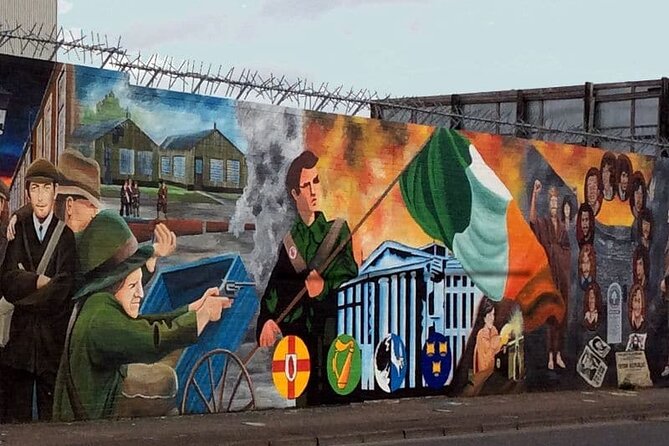
The second 90-minute section covers the loyalist side around Shankill Road. The change in emphasis is clear. The guide discusses unionist and loyalist identity, the connection with Britain, the fear of attack, and the losses suffered by Protestant communities.
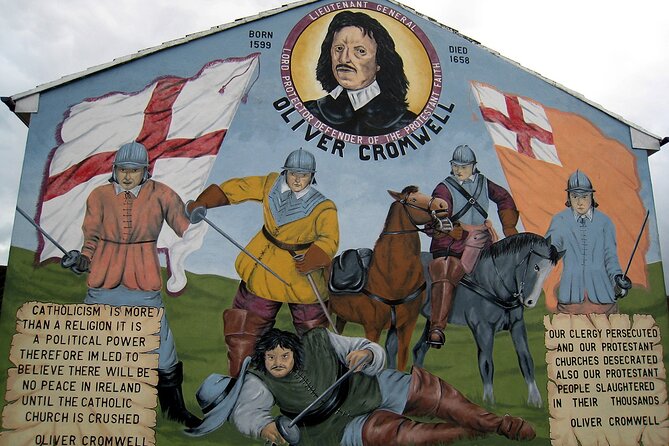
This section helps correct a common mistake. It is easy to see one side only as an aggressor when you visit its rival neighborhood first. The Shankill guide explains how many local people understood their own actions, fears, and loyalties. That does not excuse violence, but it does help you understand how ordinary people were drawn into a conflict that touched homes, schools, workplaces, and friendships.
Guides such as Ian and Mark have been described as direct and personal when discussing childhood friends and neighbors lost during the Troubles. That approach can make the history feel close. It can also produce a less polished experience, since the guide may focus more on lived memory than on a full political timeline.
One practical issue is sound. Parts of Shankill Road are busy, with traffic including buses and larger vehicles. A group standing beside the road can struggle to hear if the guide’s microphone is poorly positioned or if the speaker is facing away. Stay close enough to hear, and ask the guide to repeat a point if traffic swallows the explanation.
Shankill Memorial Garden and the UVF Memorial
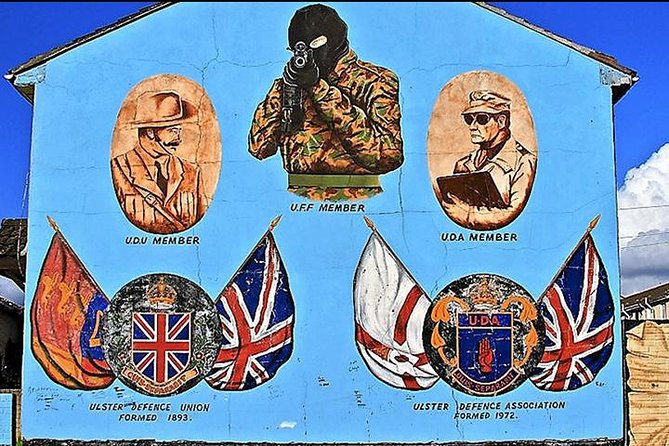
The Shankill Memorial Garden presents the loyalist community’s remembrance of people killed during the conflict. The symbolism is different from the republican memorials, but the basic human themes are familiar: grief, loyalty, anger, and the need to honor the dead.
The UVF Memorial is one of the places where the tour becomes most politically sensitive. You are not being shown a neutral monument in the usual museum sense. You are being shown how a community remembers members of a paramilitary organization.
That distinction matters. The guide can explain the meaning of the memorial to local people without asking you to approve of the organization or its actions. I find this one of the most useful parts of the walk because it shows how memory can preserve identity as well as sorrow.
The two guides generally speak for their own communities while also expressing a commitment to peace. That combination is worth hearing. It shows that a person can explain a past affiliation, defend a community’s fears, and still reject a return to violence.
Bayardo bombing and Frizzells Fish Shop
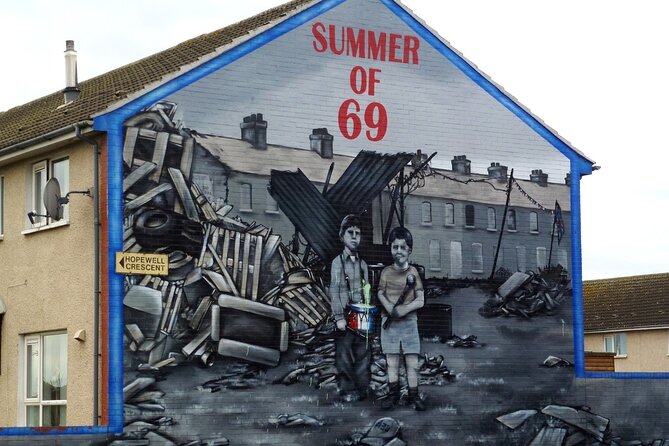
The Shankill route also includes the Bayardo bombing site and the location associated with the Frizzells Fish Shop bombing. These stops focus on civilian casualties and the cost of violence in ordinary commercial streets.
The effect is different from looking at a mural. A mural is a public statement. A bombing site is a place where people were shopping, working, or passing through. The guide gives names and circumstances behind the deaths, helping you understand that the conflict was not only fought by organized groups. It reached families who had no control over the decisions being made in their name.
This section can be emotionally heavy. You may hear about men, women, and children killed in attacks. If you are sensitive to descriptions of violence, be prepared to take the walk slowly and give yourself some quiet time afterward.
There is usually an opportunity for a short comfort break during the Shankill portion, with the chance to get a drink. Do not count on a full meal stop. Bring water, and consider a small snack if you know three hours on foot will leave you hungry.
The Somme Memorial and the end of the walk
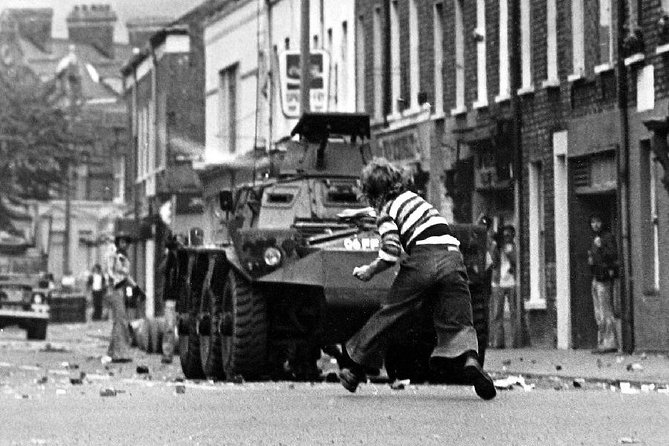
The Somme Memorial brings the tour back to the older roots of unionist identity and remembrance. It connects local loyalist memory with the First World War and the Battle of the Somme, an event that carries major meaning for many unionists in Northern Ireland.
This stop helps explain why British identity is not just a modern political preference for many people in the Shankill area. It is tied to family stories, military service, sacrifice, and remembrance. You may still disagree with the political conclusions, but the historical connection becomes easier to understand.
The tour ends at 154 Shankill Road, on the Lower Shankill. From there, it is about an eight-minute walk back toward the starting point and roughly 15 minutes to Belfast city centre. The guide can help with directions or assist you in arranging a taxi.
That finish is useful because you are not left in an unfamiliar area without help. It also gives you a natural chance to continue thinking about what you have heard before moving on to another attraction.
How the two-guide format works
The best feature of this experience is the contrast. One guide tells you how the conflict looked from the republican side. The other explains the loyalist view. You hear different memories attached to the same city, sometimes only streets apart.
This is not a debate show. The guides do not necessarily argue directly with one another, and the tour does not promise a final political solution. Instead, you move from one community to the other and listen to how each side describes fear, identity, loss, and responsibility.
That arrangement can produce a more honest understanding than a single-voice tour. It also requires patience. A guide may say something you find unfair or difficult to accept. Try to separate hearing an explanation from endorsing it.
The most effective departures have guides who give dates, names, and wider context while still telling personal stories. Some departures may feel stronger in one half than the other. One section may offer a clearer history lesson, while the other may rely more heavily on memorials and individual accounts.
Price, group size, and practical value
At $36.05 per person, the tour is fairly priced for a three-hour guided walk with two local speakers and access to both sides of West Belfast’s political story. You are paying for interpretation and personal experience, not entry to a museum or a scenic attraction.
The maximum group size is 20 people. That is small enough to keep the walk manageable, though you may need to stand close to the guide at busy roadside stops. A smaller group should also make questions easier, but the actual feel will depend on how many people book that day.
The tour is offered in English and includes a mobile ticket. It is near public transport, and most people can participate, but the route requires a good deal of walking and standing. Service animals are allowed.
Dress for the weather, not the calendar. Wind can make Belfast feel colder than expected, especially beside the peace wall and on exposed streets. Wear layers, choose comfortable footwear, and bring water. A pen is useful if you want to sign the peace wall, as some people do.
The tour requires suitable weather. If poor weather causes cancellation, you can choose another date or receive a full refund. You can also cancel for a full refund up to 24 hours before the start time. Later cancellations and changes are not accepted.
Who should book this experience?
I would choose this walk if you want to understand Belfast through local memory and physical place. It suits adults and older teenagers who can handle serious discussions of political violence, imprisonment, bombing, and death.
It is especially useful after visiting central Belfast, where the Troubles may feel like a subject from the past. Here, the peace wall, murals, gates, memorial gardens, and divided neighborhoods show that the story is still present.
You may prefer a different option if you want a quick overview, a comfortable vehicle, or a strictly neutral guide. You may also find the experience frustrating if you expect both guides to offer the same historical balance. The strength of this walk is its conflicting voices, and that is also its risk.
Should you book the Belfast Political Tour?
Yes, if you are willing to listen carefully and accept an uncomfortable hour or two. The two perspectives make this more useful than a one-sided look at the murals, while the personal stories give the conflict a human scale.
Book it early if possible, since it is commonly reserved about a month ahead. Wear warm layers, stay near the guide on busy streets, and leave space in your day afterward to think about what you heard. At $36.05, this is a strong choice for a serious, direct introduction to Belfast’s divided past and unfinished peace.
FAQ
How long does the Belfast Political Tour last?
The tour lasts approximately three hours, with about 90 minutes in the Falls area and 90 minutes around Shankill Road.
Where does the tour begin?
It begins at Divis Tower, Belfast BT12 4QA.
Where does the tour finish?
The tour ends at 154 Shankill Road, Belfast BT13 2BE, on the Lower Shankill Road.
Is the tour about both sides of Belfast’s conflict?
Yes. The route covers the nationalist area around the Falls Road and the loyalist area around Shankill Road, with separate guides explaining each perspective.
Which political sites are visited in the Falls area?
The Falls section includes the International Wall, Bobby Sands mural, D Company memorial garden, and Bombay Street.
Which sites are visited around Shankill Road?
The Shankill section includes the Shankill Memorial Garden, Bayardo bombing site, UVF Memorial, Frizzells Fish Shop bombing site, and Somme Memorial.
Are the guides former political prisoners?
The experience includes ex-political prisoners who share personal accounts of the conflict. Guide names can vary by departure.
Is the walking tour difficult?
Most people can participate, and the route has no hills mentioned in the tour details. However, you should expect three hours of walking and standing, sometimes in windy areas and beside busy roads.
Is the tour offered in English?
Yes, the tour is offered in English.
Can I cancel for a refund?
You can cancel at least 24 hours before the start time for a full refund. If bad weather causes the operator to cancel, you will be offered another date or a full refund.
Just added around Belfast
- Belfast Eclectic Walking City Center Experience, The Marti Way★ 5.0 · 348 reviews
- The Real Eclectic Belfast City Walking Tour/Experience.★ 5.0 · 152 reviews
- The Real Story of Belfast walking tour with a local guide★ 5.0 · 144 reviews
- Best of Belfast Walking Tour★ 5.0 · 399 reviews
- Belfast Centre Food Tour of 12+ Local Irish Dishes & Drinks★ 5.0 · 266 reviews
- Belfast Troubles Murals Street Art and Peace Wall Walking Tour★ 5.0 · 163 reviews
- Belfast: Best of Belfast History, Culture & Art Walking Tour★ 4.9 · 158 reviews
- Belfast Walking Tour with a Local – History & Craic★ 4.9 · 130 reviews
UK Walking Tours, compared.

Magical London: Harry Potter Guided Walking Tour
Read our review →
Edinburgh Castle: Guided Walking Tour with Entry Ticket
Read our review →
Underground Vaults Walking Tour in Edinburgh Old Town
Read our review →
Oxford University Walking Tour With University Alumni Guide
Read our review →Edinburgh Castle: Guided Walking Tour with Entry Ticket
Read our review →
Edinburgh Castle Guided Walking Tour in English
Read our review →Browse the lists this tour appears in