Review · CITY HIGHLIGHTS WALKING TOURS
Berlin Highlights Private Guided Walking Tour
Berlin gives you a lot to process fast. This private walk links the city’s major political, Nazi, Cold War, and royal landmarks in one focused route. I like the one-to-one format, which lets your guide adjust the pace and answer your questions, and I like the broad sweep from Brandenburg Gate to Museum Island. The main caution is simple: this is a serious walking tour, and the pickup wording can be confusing if you expect a car.
The price is $417.23 for a group of up to 15, so the value improves sharply with a larger party. The four-hour schedule also looks generous, but one account says the actual tour lasted closer to three hours, while others found the time passed quickly. Confirm the meeting point, walking plan, and expected duration before you set out.
Key points at a glance
- Twelve major Berlin sights in one route: You cover Brandenburg Gate, the Reichstag, the Holocaust Memorial, Checkpoint Charlie, Bebelplatz, Museum Island, and more.
- Private guiding for up to 15 people: Your group does not share the guide with strangers, and the route can be shaped around your interests.
- A strong history focus: The walk connects Prussian Berlin, Nazi dictatorship, World War II, the Berlin Wall, and reunification.
- The guide makes or breaks the experience: James, Ben, Pip, Joana, Johnny, Jesse, Marcos, Sebastien, and others have been praised for storytelling, patience, and flexibility.
- Expect real walking: Comfortable shoes are essential. One complaint involved a traveler who expected a vehicle and needed to pay separately for a taxi.
- Good for first-time visitors with limited time: It gives you a useful map of central Berlin, but it does not include admission to museums or the Reichstag dome.
What this private Berlin walk does well
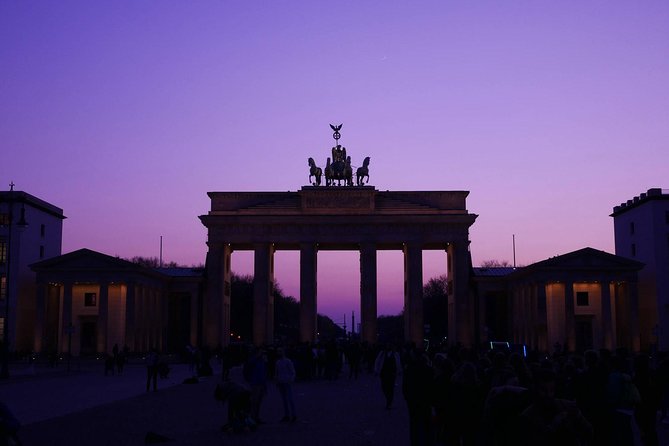
I like the way this experience treats central Berlin as one connected story rather than a pile of unrelated photo stops. You begin at the Brandenburg Gate, move through the symbols of German government and Nazi rule, then continue into the Cold War era and the older royal center around Unter den Linden and Museum Island.
That sequence matters. Berlin’s past is not tucked away in one museum district. It is written into squares, empty plots, reconstructed buildings, memorials, and streets that once carried very different names and meanings. A good guide can help you read those changes as you walk.
The private format is the strongest feature. With only your own group, you can ask for more World War II detail, spend longer on photography, move at a slower pace, or give more attention to architecture and culture. Joana is praised for asking about interests and timing before shaping the tour. James is described as easy to follow and good at pointing out small details that are easy to miss. Pip is praised for making the history entertaining, while Jesse adjusted the pace and helped with public transport after the walk.
The guide quality is not identical every day, of course. But the repeated praise for James and Ben, along with positive comments about Johnny, Joana, Pip, Jesse, Marcos, and Sebastien, suggests that the strongest part of the experience is the human connection. You are not just being marched between landmarks.
More City Highlights Walking Tours in Germany
- Berlin Historical Highlights Walking Tour
★ 4.9 · 657 reviews - Berlin: Sightseeing Walking Tour of the Top 20 Attractions
★ 4.5 · 196 reviews - Berlin: Walking Tour of the Top 10 Sightseeing Attractions
★ 4.7 · 150 reviews
Starting at Pariser Platz and the Brandenburg Gate
The usual starting point is Pariser Platz, at Brandenburg Gate. This is one of Berlin’s grandest urban spaces, with the gate at the end of Unter den Linden and the broad square opening toward the former royal center.
The Brandenburg Gate began as a royal entrance for the Prussian Hohenzollern family. It is also one of the few surviving city gates from a former set of 18 entrances. Napoleon passed through Berlin, World War II damaged the city around it, and the Berlin Wall later ran nearby. For almost three decades, the gate sat in a restricted border zone and became a potent symbol of division.
Today, the same structure represents German unity. That change in meaning is exactly the sort of point a guide can make better than a plaque. Give yourself time for photographs, but expect this area to be busy and open. The private format helps here because your guide can position the group and explain the setting without a large crowd forming around a flag or a headset.
The Reichstag and the political center of Berlin
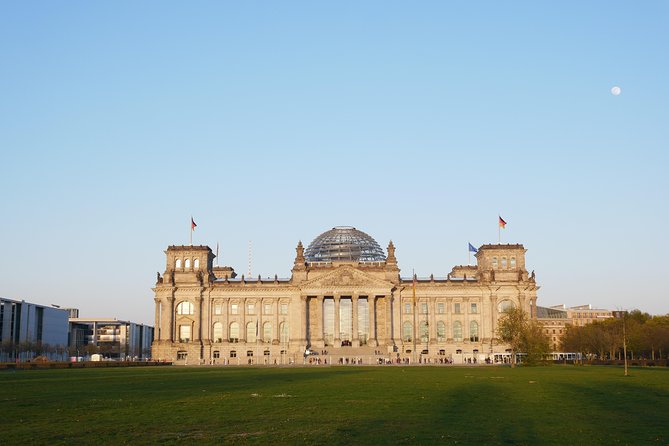
The short stop at the Reichstag gives you a look at Germany’s parliament building and an opening to discuss the political collapse of the Weimar Republic. The 1933 Reichstag fire became a tool for the Nazi government as Hitler moved toward total control.
The building was also fought over during the Battle of Berlin, when German and Soviet forces battled through the city at the end of World War II. Its modern glass dome, designed by British architect Norman Foster, gives the old building a very different appearance today.
Do not confuse this stop with a visit inside the dome. The tour information describes an exterior visit, and admission is listed as free for the walking stops. If entering the Reichstag is important to you, ask about arrangements before booking rather than assuming the four-hour walk includes it.
Facing the Holocaust Memorial and the Führerbunker site
The Memorial to the Murdered Jews of Europe is one of the most important stops on the route. Its field of concrete stelae changes as you walk through it, with the ground rising and falling around you. The design does not provide a simple lesson or a single viewpoint. It asks you to experience disorientation and uncertainty in physical space.
The tour allows about 20 minutes here, making it one of the longer scheduled stops. That is useful, since this is not a place to rush through for a photograph. The memorial honors the six million Jewish people murdered by the Nazi regime in concentration and extermination camps across Europe.
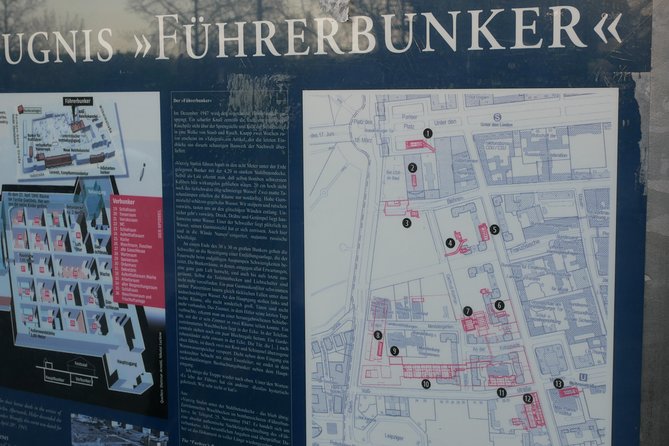
Nearby, the former Führerbunker site is now a parking area with a plain information sign. That lack of spectacle is part of the point. Hitler spent his final days there, married Eva Braun, and killed himself during the last days of the war in Europe. A thoughtful guide can explain the final collapse of the Nazi regime without turning the location into a shrine.
The subject matter is heavy. Families with children can still take the tour, but you should decide in advance how much detail is right for your group. One family with a 12-year-old and a 20-year-old found the storytelling engaging, though each child will respond differently to the Nazi sites.
More Private Walking Tours in Berlin
- Berlin Private Complete History All Day Walking Tour
★ 5.0 · 474 reviews - Private Walking Tour Berlin Third Reich Hitler and World War II
★ 5.0 · 360 reviews - Private Berlin: Iconic Sights and Hidden Gems Walking Tour
★ 5.0 · 292 reviews - Berlin Private Half-Day Walking Tour: Discover the German Capital’s History
★ 5.0 · 244 reviews
Potsdamer Platz and Berlin’s rebuilt future
Potsdamer Platz provides a sharp change of mood. In the 1920s, it was one of Europe’s busiest traffic intersections, with more than 20,000 cars crossing each day. World War II left it almost destroyed, and the area was rebuilt during the 1990s and early 2000s as a modern commercial district.
This is where the tour shows you that Berlin is not only a city of memorials. It is also a city repeatedly forced to rebuild itself. The modern architecture can feel disconnected from the older center, but that contrast is useful. Your guide can explain how an empty or damaged zone became a new part of central Berlin.
The scheduled stop is brief, around 10 minutes. Treat it as a visual pause and a chance to understand the scale of post-Cold War rebuilding, not as a full architectural tour.
Berlin Wall history around the former Nazi government district
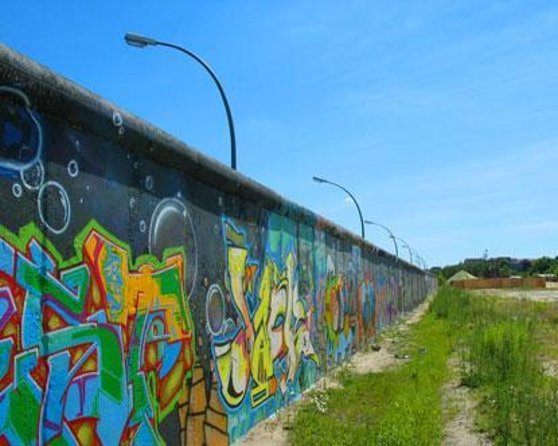
The route then turns toward a remaining stretch of the Berlin Wall. The stop is especially layered because it sits near the former SS and Gestapo headquarters and across from the former Nazi Luftwaffe headquarters.
That combination puts two periods of dictatorship in the same view. The Nazi regime used this area to organize terror and war. After the war, Berlin became the front line of the Cold War, and the wall cut through the city for nearly 30 years.
A surviving piece of wall can be visually underwhelming if you see it without context. The concrete section is not the whole story. You need the guide to explain who controlled the area, why the border was built, and how daily life changed on each side. This is one reason the private format is useful: you can stop and ask questions instead of moving on with a large group.
Checkpoint Charlie and the divided city
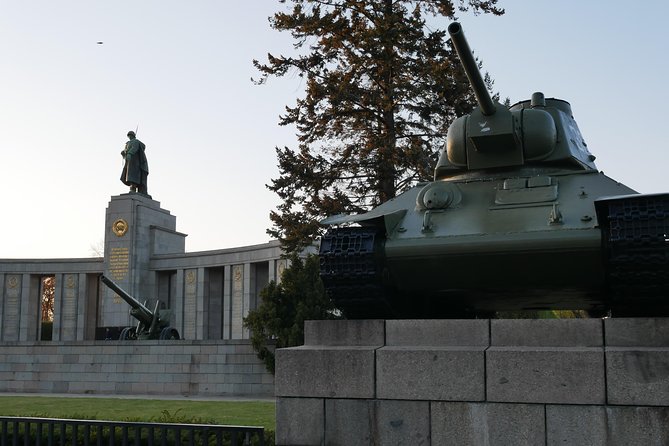
Checkpoint Charlie was the best-known Allied crossing point between East and West Berlin. American and Soviet forces faced one another here during the Cold War, and the site became a symbol of the larger confrontation between the two powers.
The area today is easy to misunderstand. It is famous, but the modern surroundings do not recreate the old border crossing in full. Use the stop as a starting point for discussion about escape attempts, military tension, foreign access, and the daily reality of a divided city.
The scheduled time is about 10 minutes. That is enough for an introduction and photos, but not enough for a long treatment of Cold War Berlin. If the wall or Cold War politics is your main interest, tell your guide early. The private setup may let you trade some less important stops for more time here, though you should agree on that before or at the beginning of the walk.
Gendarmenmarkt and Bebelplatz
Gendarmenmarkt is one of Berlin’s most pleasing squares, framed by the French Cathedral, German Cathedral, Concert House, gardens, and statues. It offers a welcome architectural counterpoint to the stark memorials and modern blocks earlier in the walk.
The tour then reaches Bebelplatz, formerly known as Frederick’s Forum. The square is surrounded by Humboldt University, the opera house, the former Royal Library, and St. Hedwig’s Cathedral. It is also the site of the Nazi book burning on May 10, 1933.
Look down into the underground memorial in the square. The empty bookshelves recall the works destroyed by the Nazis, and the quiet design makes the event feel more serious than a simple historical date. Your guide’s explanation is valuable here because the location can look like an elegant public square until you know what happened beneath and around it.
These stops also show the range of Berlin’s past. You move from royal ambition to cultural life, then to state censorship and political terror, all within a short distance.
Unter den Linden and Museum Island
Unter den Linden is Berlin’s old royal boulevard, running from Brandenburg Gate toward Museum Island and the City Palace. The name refers to the linden trees planted along the route. It is a useful spine for understanding how Berlin expanded from a royal center into a modern capital.
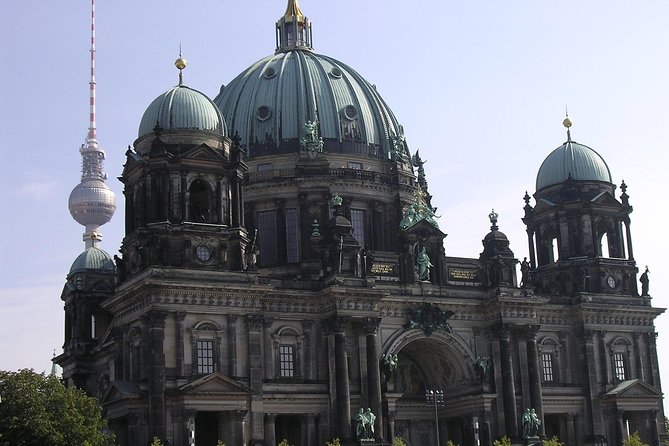
The final major area is Museum Island, a UNESCO World Heritage Site with six world-class museums, Berlin Cathedral, and the newly rebuilt Hohenzollern city palace. The tour does not include museum admission, but the outside view helps you decide how to spend the rest of your stay.
This ending works well because it leaves you near several major cultural attractions. You can ask your guide which museum best fits your interests, though the information provided does not promise museum planning beyond the walk. The activity ends back at the meeting point, so confirm the exact end arrangement if you have an evening reservation or train to catch.
How much ground do you cover in four hours?
Twelve stops in roughly four hours means the pace must be purposeful. The listed stop times add up to about two hours and 40 minutes, leaving the rest for walking, explanations, questions, photographs, and transitions.
That is a useful way to understand the schedule. You are not receiving 15 to 20 minutes of detailed teaching at every location. You are getting a broad central Berlin orientation with selected pauses for deeper discussion.
The walking distance is not stated, so I would not book this casually if you have a knee problem or limited mobility. The activity asks for moderate physical fitness and comfortable walking shoes. One complaint came from a person who expected transport because the description used terms such as pickup and drop-off. The guide explained that the experience required walking, and the group paid separately for a taxi during part of the route.
The safest approach is to treat it as a walking tour from the start. Ask the provider whether pickup means meeting at your accommodation or chosen location, not vehicle transport. Service animals are allowed, and public transport is nearby, but neither point removes the need to walk.
Price, group size, and guide quality
At $417.23 per group of up to 15, the price is expensive for one or two people. For a full group, the cost works out to about $28 per person before any currency conversion, which makes the private format much easier to justify.
The value depends heavily on how much you want personal attention. A couple who only needs a quick introduction may find a public walking tour cheaper. A family, reunion group, or party with different interests can get more from a private guide because the pace and subject matter can shift.
The strongest praise centers on storytelling and patience. James is repeatedly described as excellent at explaining the past and answering many questions. Ben is praised for patience, public transport help, and clear answers. Johnny is noted for allowing plenty of time for photographs, while Jesse helped a group navigate the train station and airport after the tour. Those details matter because they show the guide’s role can extend beyond reciting dates.
There are also real service risks. One group waited in the cold after a guide called in sick 30 minutes after the scheduled start. Another complaint involved a double booking and a dispute over reimbursement. These appear to be exceptions rather than the normal experience, but the non-refundable policy means you should check your date, time, meeting point, and group details carefully before paying.
Who should book this experience?
I would choose this walk if you are visiting Berlin for the first time and want a strong central orientation in one morning or afternoon. It is especially useful if you care about World War II, the Nazi period, the Cold War, architecture, or the way Berlin rebuilt after destruction.
It also fits families and private groups that want to ask questions without feeling rushed by strangers. The guide can explain difficult subjects at a level your group can handle, and several guides have shown a willingness to adjust the pace.
I would choose something else if you want entry to several museums, a vehicle-based sightseeing tour, or a slow photography walk. You also need to be comfortable with substantial walking and emotionally serious sites. The route is broad rather than leisurely.
Book only after confirming that the tour is on foot and clarifying where the guide will meet you. Since the activity is non-refundable and cannot be changed after booking, that small check is worth your time.
Should you book the Berlin Highlights Private Guided Walking Tour?
Yes, if you want a private guide to connect Berlin’s main landmarks into one clear story. The route covers more than postcard sights. It places the Brandenburg Gate, Reichstag, Holocaust Memorial, Führerbunker site, Berlin Wall, Checkpoint Charlie, Bebelplatz, and Museum Island into a single timeline.
I would book it for a group of four or more, especially if history is a shared interest. I would also request a guide such as James, Ben, Pip, Joana, Johnny, Jesse, Marcos, or Sebastien if the provider can accommodate that request, though guide assignment is not guaranteed.
I would skip it if you need a low-walking option or expect a van. Confirm those details first. For the right group, this is a useful and often absorbing way to get your bearings in central Berlin, with enough flexibility to feel personal rather than mechanical.
FAQ
Where does the Berlin Highlights Private Guided Walking Tour start?
The stated starting point is Brandenburg Gate on Pariser Platz, 10117 Berlin. Pickup can also be arranged from your accommodation or another chosen meeting point.
Where does the tour finish?
The activity ends back at the meeting point.
How long does the tour last?
The advertised duration is approximately four hours. One account reported a tour closer to three hours, so confirm the expected duration with the provider before starting.
Is this a walking tour or a vehicle tour?
It is a private guided walking tour. Comfortable walking shoes are recommended, and participants should have a moderate level of physical fitness.
How many people can join the private tour?
The price covers one group of up to 15 people. Only your group participates.
Is admission to the sights included?
The listed stops show free admission. The experience covers outdoor landmarks and explanations, but it does not state that entry to the Reichstag dome or the museums on Museum Island is included.
Is the tour offered in English?
Yes. The experience is offered in English and includes a mobile ticket.
More City Highlights Walking Tours in Berlin
- Berlin Highlights in 2 Hours: Express Walking Tour
★ 5.0 · 120 reviews - Berlin : Must-see attractions Walking Tour
★ 4.8 · 83 reviews - Explore Berlin History and Highlights Sightseeing Walking Tour
★ 5.0 · 81 reviews - Historic Charleston Guided Sightseeing Walking Tour
★ 5.0 · 6,216 reviews
More Private Walking Tours in Germany
- Private Walking Tour: World War 2 and Cold War Sites in Berlin
★ 5.0 · 230 reviews - The History of Berlin: WWII PRIVATE Walking Tour With Locals
★ 5.0 · 209 reviews - Berlin Private Walking Food Tour With Locals: the 10 Tastings
★ 4.5 · 139 reviews - Kreuzberg Berlin: Off the Beaten Track PRIVATE Walking Tour
★ 5.0 · 128 reviews
Just added around Berlin
- Berlin Walking Tour★ 4.5 · 378 reviews
- Small Group Walking Tour of East Berlin with a French Guide★ 5.0 · 176 reviews
- Berlin Street Art Walking Tour – Off The Grid★ 5.0 · 270 reviews
- East Meets West: Berlin Food Culture & Street Art★ 5.0 · 157 reviews
- Private Walking Tour: World War 2 and Cold War Sites in Berlin★ 5.0 · 230 reviews
- Kreuzberg Berlin: Off the Beaten Track PRIVATE Walking Tour★ 5.0 · 128 reviews
- The History of Berlin: WWII PRIVATE Walking Tour With Locals★ 5.0 · 209 reviews
- Gruseltour Berlin Haunted Ghost Walk 90-minute at Berlin Mitte city center★ 5.0 · 75 reviews
City Highlights Walking Tours, compared.

Historic Charleston Guided Sightseeing Walking Tour
Read our review →
Dublin Highlights and Hidden Gems Guided Walking Tour
Read our review →
Guided Walking Tour of City Center Highlights
Read our review →

City Highlights Temple and Market Walking Tour
Read our review →
Montmartre Hidden Gems and Scenic Highlights Walking Tour
Read our review →