
Review · CITY HIGHLIGHTS WALKING TOURS
Berlin: Walking Tour of the Top 10 Sightseeing Attractions
Berlin reveals itself on foot. This two-hour walking tour links Berlin’s major sights with lively stories, Berlin humor, and a clear route through the government district, Unter den Linden, and Museum Island. I like the efficient design: you cover about 4 kilometers and get a useful first look at the city without spending half a day on one museum.
I also like the human touch. Guides such as Max make room for questions and photo stops, while the small-group format keeps the experience more personal. The main drawback is the pace. Two hours is enough for an overview, not a close look at every landmark, and the long route may feel brisk if you prefer slow sightseeing.
Key points at a glance
- Starts opposite the Federal Chancellery: Meet at the Paul-Löbe-Haus, with modern government Berlin right in front of you.
- Covers the city’s major symbols: The route includes the Reichstag, Brandenburg Gate, Holocaust Memorial, Gendarmenmarkt, Bebelplatz, Berlin Cathedral, and Museum Island.
- About 4 kilometers in 120 minutes: Wear good shoes and expect a steady walking pace with short stops.
- History comes with humor: The guides connect Prussian power, Nazi crimes, the Cold War, and German reunification without turning the tour into a dry lecture.
- Good for a first day in Berlin: You finish near Friedrichsbrücke, close to Museum Island and central sights.
- Available in three languages: Tours run in English, Spanish, and German, with private and small-group options.
Why this two-hour route works well

Berlin is spread out. Its key sights do not gather around one compact old town, so a walking tour can save you time and help you understand how the pieces fit together. This route moves from the modern government district to royal Berlin, then through places marked by Nazi persecution, the Cold War, and reunification.
You are not simply ticking off monuments. The guide’s job is to explain why each place matters and how Berlin changed around it. That broad view is the real value here. After two hours, you should know which areas deserve a longer return visit.
The tour covers about 4 kilometers. That is manageable for most people, but the schedule is full. You will stop often, yet this is not a leisurely stroll with long café breaks. If you want time to study every inscription or take a dozen photos at each stop, you may feel hurried.
The advertised price is $82 per person. That is not a bargain-basement walking tour, but it can be fair if you value a certified local guide, a small group, and a tightly planned route. You are paying for interpretation and orientation rather than transportation or entry to a museum. For a first morning in Berlin, that can be useful, especially if you want to decide what to explore on your own later.
More City Highlights Walking Tours in Germany
- Berlin Historical Highlights Walking Tour
★ 4.9 · 657 reviews - Berlin: Sightseeing Walking Tour of the Top 20 Attractions
★ 4.5 · 196 reviews - Berlin Highlights in 2 Hours: Express Walking Tour
★ 5.0 · 120 reviews
Starting at the Paul-Löbe-Haus and the government district
The meeting point is in front of the main entrance to the Paul-Löbe-Haus on Konrad-Adenauer-Straße 1, opposite the Federal Chancellery. Look for the TourguideMe guide.
This is a smart starting point because it shows you present-day Berlin before the tour moves into the city’s older layers. From here, you can see the Federal Chancellery, Berlin Central Station, and the Bell Tower in Tiergarten. The architecture is open, modern, and tied to the federal government that took shape in Berlin after reunification.
The first stretch gives the guide room to explain the government district and the role of the Reichstag. You will walk rather than enter the buildings, so this part is about setting the scene. If you arrive early, take a moment to get oriented. The meeting point is not at Brandenburg Gate, and first-time visitors may need extra time to find the Paul-Löbe-Haus.
The Reichstag and Berlin’s modern political story

The Reichstag is the seat of the German Parliament and one of Berlin’s key landmarks. Its history connects imperial Germany, the Nazi period, wartime destruction, division, and the restored capital of reunified Germany.
The guide helps place the building in that longer story. You should expect an exterior explanation and sightseeing stop, not a parliamentary visit. That distinction matters because the tour does not promise entry to the Reichstag or its dome.
This is one of the places where a good guide adds real value. A building can look impressive from the outside, but the surrounding political changes give it meaning. The route lets you see the Reichstag as part of a working government quarter rather than as an isolated monument.
Brandenburg Gate, Berlin’s best-known symbol
From the Reichstag, the route continues to Brandenburg Gate. This is the tour’s big photo stop, and rightly so. The gate has represented power, division, and unity at different points in Berlin’s story.
You will also get views toward the American and French embassies, the Hotel Adlon, the Victory Column, and the Soviet War Memorial. Those sight lines help you read Berlin as a city shaped by international power. The guide can point out how much political weight is packed into one area.
Brandenburg Gate can be crowded, so expect people, cameras, and city traffic around the square. The advantage of joining a guide is that you receive the historical explanation while still having time for photos. Trevor from Canada specifically praised Max for answering questions and allowing time to take pictures and absorb the information. That is the sort of pacing you want at this stop.
More City Highlights Walking Tours in Berlin:
- Berlin Highlights Private Guided Walking Tour
★ 4.5 · 89 reviews - Berlin : Must-see attractions Walking Tour
★ 4.8 · 83 reviews - Explore Berlin History and Highlights Sightseeing Walking Tour
★ 5.0 · 81 reviews - Historic Charleston Guided Sightseeing Walking Tour
★ 5.0 · 6,216 reviews
The Holocaust Memorial and the difficult parts of Berlin’s past
The route then reaches Berlin’s Memorial to the Murdered Jews of Europe, commonly called the Holocaust Memorial. This is a serious stop, and the subject calls for quiet attention.
The tour connects this place with the Nazi era and the broader story of how Berlin confronts its past. Expect interpretation and sightseeing rather than a long private period inside the memorial. The guide’s tone matters here. Humor may suit other parts of the walk, but this section should be handled with care.
This stop also gives the tour balance. Berlin is not only grand boulevards and restored buildings. Its central sights include places that force you to face the damage caused by the German state. A short tour cannot explain every part of that history, but it can give you the context needed to return with more understanding.
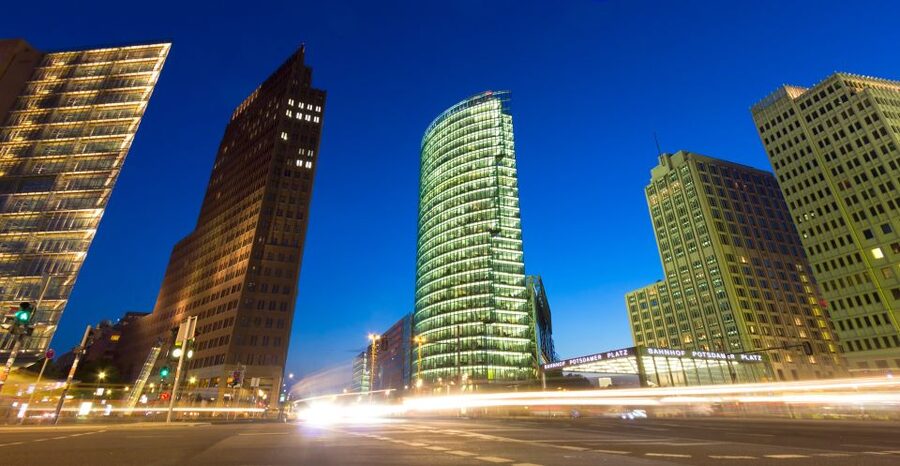
Potsdamer Platz and the changing city
Potsdamer Platz shows another side of Berlin: reconstruction and rapid change. The stop fits the tour’s larger theme of a city that has repeatedly been rebuilt, divided, and reshaped.
The walk does not list a long museum visit here. Instead, you get a guided look at the area as part of the route. This is useful because Potsdamer Platz can otherwise feel like a collection of modern buildings without a clear connection to the rest of Berlin.
The stop may be less emotionally powerful than Brandenburg Gate or the Holocaust Memorial, but it helps connect the twentieth-century story to the city you see today. It also breaks up the older architectural sequence before the tour reaches the grand squares of central Berlin.
Gendarmenmarkt and the elegance of old Berlin
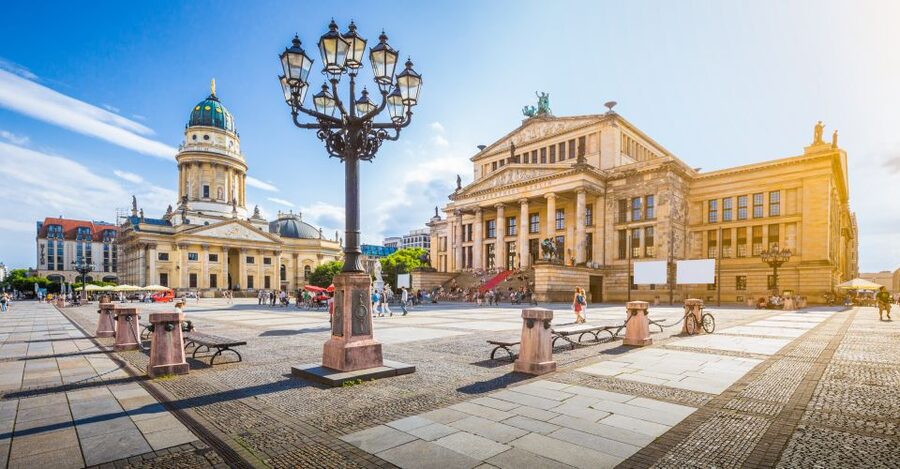
Gendarmenmarkt is one of the most attractive squares on the route. Its main features are the German Cathedral, the French Cathedral, and the Konzerthaus. Together, they create a formal architectural setting that feels very different from the government quarter.
The guide explains the square’s place in Berlin’s development and Prussian-era identity. You will have a chance to admire the buildings, take photographs, and compare the two cathedral facades.
One practical point: the itinerary is built around exterior sightseeing. If you want to tour the interiors of the cathedrals or attend a performance at the Konzerthaus, plan a separate visit. The walking tour gives you orientation, not a full architectural inspection.
Bebelplatz, Unter den Linden, and a sobering pause
Bebelplatz brings the tour to one of Berlin’s most important memorial sites. It is linked to the Nazi book burning of 1933, when books were destroyed in a public demonstration of censorship and political control.
This stop is especially valuable because the square looks calm and elegant. Without an explanation, you could easily pass through without understanding what happened there. The guide points out the connection between the setting and the event, giving the place its proper weight.
The route also uses Unter den Linden, Berlin’s famous boulevard. Walking along it helps you see how imperial ambition, military power, public ceremony, and modern city life overlap. You get the grand scale without needing a separate bus ride.
Bebelplatz may include some free time, but do not count on a long pause. The tour still needs to reach Museum Island within its two-hour schedule. If this memorial matters especially to you, note its exact location and return later for a quieter look.
Lustgarten, Berlin Cathedral, and Museum Island
The final stretch reaches Lustgarten, Berlin Cathedral, and Museum Island. Lustgarten is tied to Prussian history, while the cathedral gives the route one of its most striking architectural views.
From this area, you can also see the reconstructed Berlin City Palace and the TV Tower in the distance. That view places old royal Berlin and the former East Berlin skyline in the same frame. It is a useful visual lesson in how different periods remain visible side by side.
Museum Island is one of Berlin’s great cultural areas, but this tour only gives you an outside introduction. It is not a substitute for visiting the museums. If you want to enter the Pergamon Museum, Neues Museum, or another institution, set aside a separate block of time and check opening details independently.
The tour ends at Friedrichsbrücke. That is a convenient finish for continuing around Museum Island, the Lustgarten, or nearby central Berlin. You are not dropped back at the starting point, so check the route before booking if you need to return to the government district.
Guides, group size, and the style of the walk
The guides speak English, Spanish, and German. The presentation is built around stories, facts, anecdotes, and a touch of Berlin humor. That combination should suit you if you want history explained in plain language rather than delivered as a formal academic talk.
The strongest praise goes to the guides’ willingness to answer questions. Max is singled out for his clear explanations and for allowing time to take photos. German-speaking participants also praised guides for being friendly, well informed, and responsive. One guide even continued beyond the scheduled time, which is generous, though you should not assume every tour will run long.
Private and small-group formats are available. A private tour gives you more control over questions and pace, while a small group should feel more personal than a large city walk. The experience is also listed as suitable for families, groups, older people, and people using wheelchairs.
Even so, accessibility does not remove every practical concern. The route is about 4 kilometers, and the tour runs outdoors in all weather. A wheelchair-accessible route can still feel tiring over two hours, so check the specific group format and current conditions if that is important for you.
When to book and what to bring
Tours run daily at 10:00 AM and 2:00 PM. The morning departure is useful if you want to continue sightseeing after lunch. The afternoon option works well if you arrive in Berlin later or prefer a slower start.
Bring comfortable walking shoes, water, and a camera. Weather can affect the experience because the tour operates in all conditions. A rain jacket or sun protection is sensible, depending on the forecast.
The tour offers free cancellation up to 24 hours before the start, and you can reserve now and pay later. Those terms help if your Berlin plans are still changing. The booking also lists skip-the-ticket-line access, but the walking route itself focuses on outdoor landmarks rather than extended museum visits.
Who will get the most from this Berlin walk
I would choose this tour for a first visit, especially if you have only a short time in Berlin. It gives you a map in your head: government Berlin, Brandenburg Gate, the memorial sites, Gendarmenmarkt, Unter den Linden, and Museum Island.
It also suits you if you prefer a guide who mixes facts with personality. The humor can make a heavy subject easier to follow, while the stops at the Holocaust Memorial and Bebelplatz keep the tour from becoming a simple parade of pretty buildings.
I would be more cautious if you dislike a brisk pace or want to enter several landmarks. Two hours cannot provide a full museum visit, a detailed tour of the Reichstag, and extended time at every memorial. In that case, use this as an orientation walk, then return independently to the places that catch your interest.
Should you book this $82 walking tour?
Book it if you want a fast, well-organized introduction to Berlin’s central sights and you value a live guide who can answer questions. The route is particularly useful on your first day, when you need context before choosing which museums and memorials deserve more of your time.
Think twice if your priority is slow photography, indoor visits, or a deep examination of one period. At $82, the value depends on using the guide’s explanations and the efficient route, not on the number of minutes spent at each monument.
For most first-time visitors with two hours to spare, I see this as a practical way to get your bearings. Arrive ready to walk, expect a full schedule, and save Museum Island and the Reichstag interiors for later.
FAQ
How long is the Berlin walking tour?
The tour lasts two hours, or 120 minutes.
How far will I walk?
The route covers approximately 4 kilometers.
Where does the tour start?
It starts in front of the main entrance to the Paul-Löbe-Haus at Konrad-Adenauer-Straße 1, opposite the Federal Chancellery.
Where does the tour finish?
The tour finishes at Friedrichsbrücke.
What time does the tour begin?
Tours are offered daily at 10:00 AM and 2:00 PM. You should check availability for the date you want.
Which sights are included?
The route includes the German Chancellery, Reichstag, Brandenburg Gate, Holocaust Memorial, Potsdamer Platz, Gendarmenmarkt, Bebelplatz, Lustgarten, Berlin Cathedral, Museum Island, and the New City Palace area.
Which languages are available?
The tour is available in English, Spanish, and German.
Is the tour wheelchair accessible?
Yes, the activity is listed as wheelchair accessible.
Can I cancel or pay later?
You can cancel up to 24 hours in advance for a full refund. Reserve now and pay later is also available.
Just added around Berlin
- Berlin Walking Tour★ 4.5 · 378 reviews
- Small Group Walking Tour of East Berlin with a French Guide★ 5.0 · 176 reviews
- Berlin Street Art Walking Tour – Off The Grid★ 5.0 · 270 reviews
- Berlin Highlights Private Guided Walking Tour★ 4.5 · 89 reviews
- Private Walking Tour: World War 2 and Cold War Sites in Berlin★ 5.0 · 230 reviews
- East Meets West: Berlin Food Culture & Street Art★ 5.0 · 157 reviews
- Kreuzberg Berlin: Off the Beaten Track PRIVATE Walking Tour★ 5.0 · 128 reviews
- The History of Berlin: WWII PRIVATE Walking Tour With Locals★ 5.0 · 209 reviews
City Highlights Walking Tours, compared.

Historic Charleston Guided Sightseeing Walking Tour
Read our review →
Dublin Highlights and Hidden Gems Guided Walking Tour
Read our review →
Guided Walking Tour of City Center Highlights
Read our review →

City Highlights Temple and Market Walking Tour
Read our review →
Montmartre Hidden Gems and Scenic Highlights Walking Tour
Read our review →
Browse the lists this tour appears in