
Review · ITALY WALKING TOURS
Bologna: City Center Walking Tour
Bologna rewards curious walkers. This two to three hour tour gives you a clear first look at the city’s grand squares, leaning towers, food market, churches, and long university story. I especially like the route’s useful mix of major sights and everyday Bologna, from the Basilica of San Petronio to the Quadrilatero Market. I also like that strong guides such as Ricardo, Maria, Nicola, and Michaela add local food advice and small details you could easily miss alone.
The main tradeoff is pace. A great deal is packed into a short visit, and one guide, Ricardo, spoke so quickly that some of his history was hard to absorb. Group size can also vary. Some departures are small and easy to follow, while one group reached 28 people, making crowded streets and squares a little less relaxed.
What makes this Bologna walk worth your time
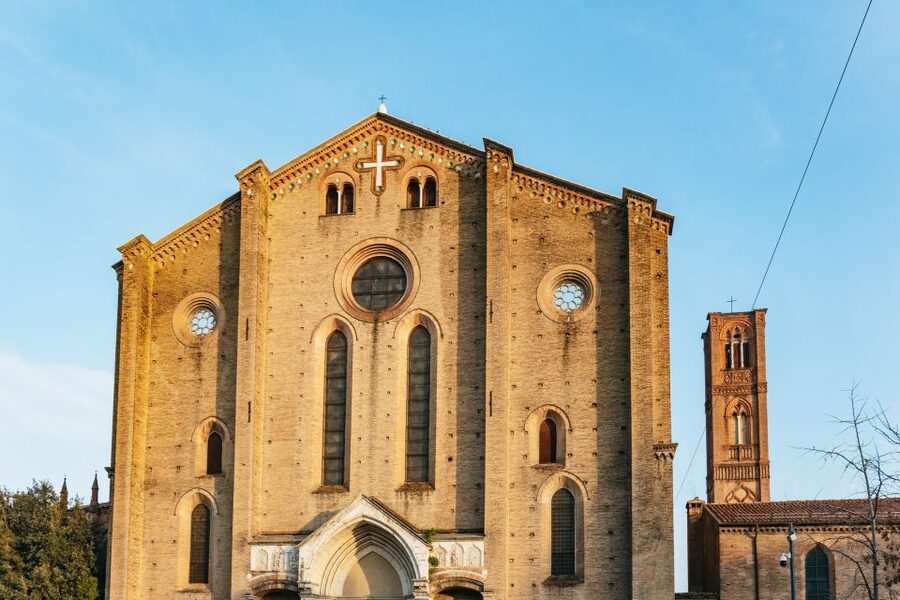
- San Petronio gives the tour a powerful centerpiece: Bologna’s main church is far more impressive once you understand its place in the city.
- The Two Towers explain Bologna’s unusual skyline: The Asinelli Tower and its companion are not just photo stops. They point to the power struggles of medieval Bologna.
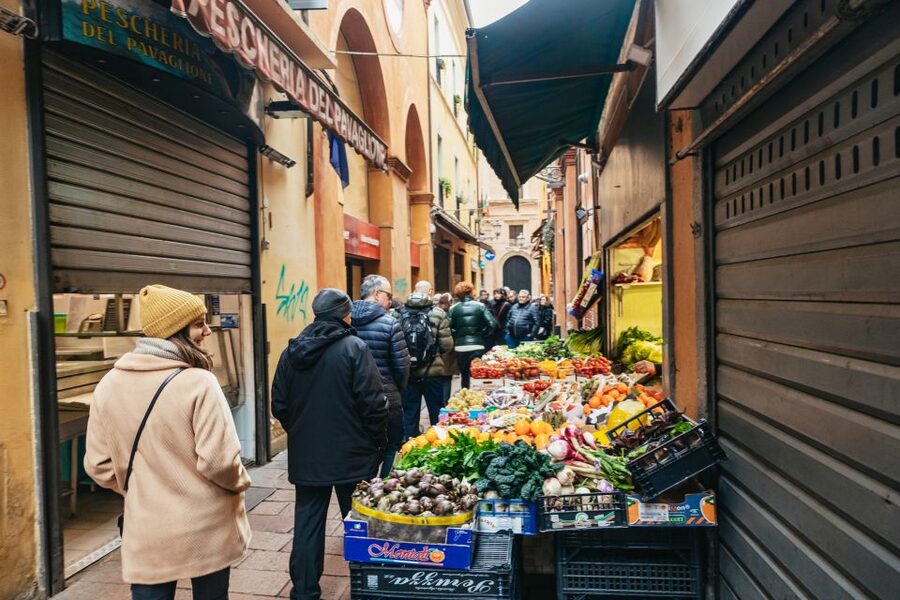
- The Quadrilatero brings food into the story: This old market quarter helps connect the city’s history with its daily life and dining culture.
- The guides are the main strength: Several guides, including Victoria, Maria, Riccardo, Nicola, and Michaela, are praised for clear storytelling, humor, and local advice.
- The route is active but not punishing: You walk through the historic center with frequent stops, rather than marching from sight to sight.
- It works especially well early in your stay: You finish with a better sense of where to eat, what to revisit, and how Bologna’s center fits together.
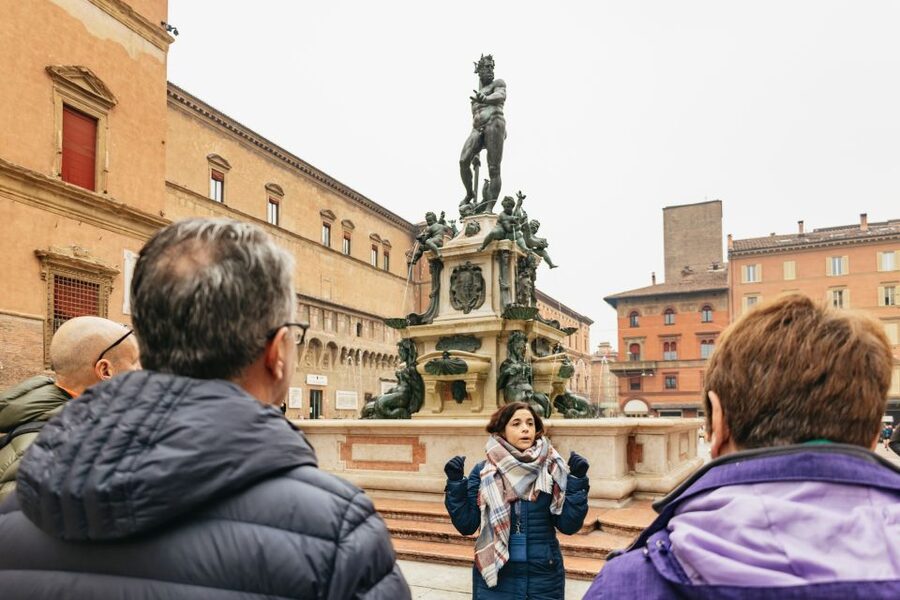
Starting at Neptune’s Fountain
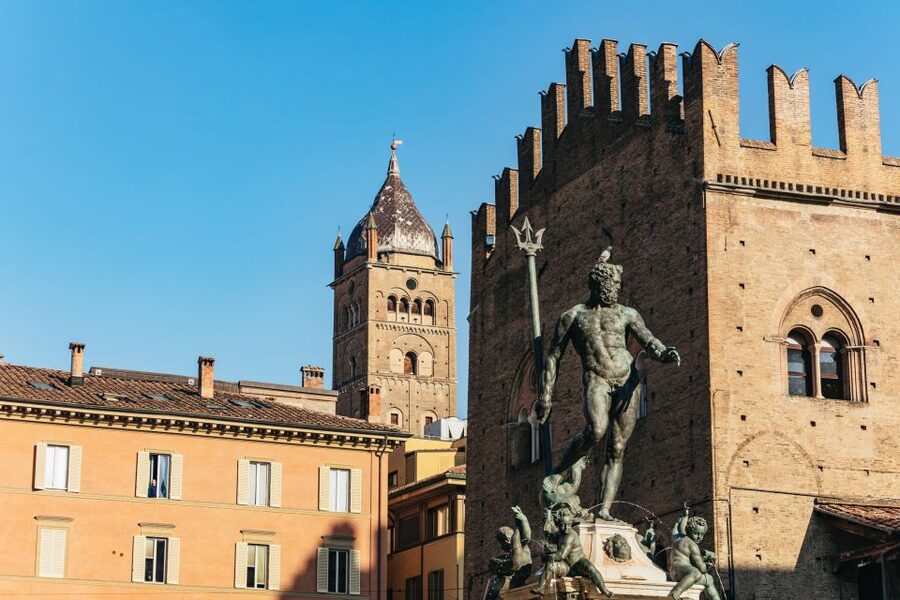
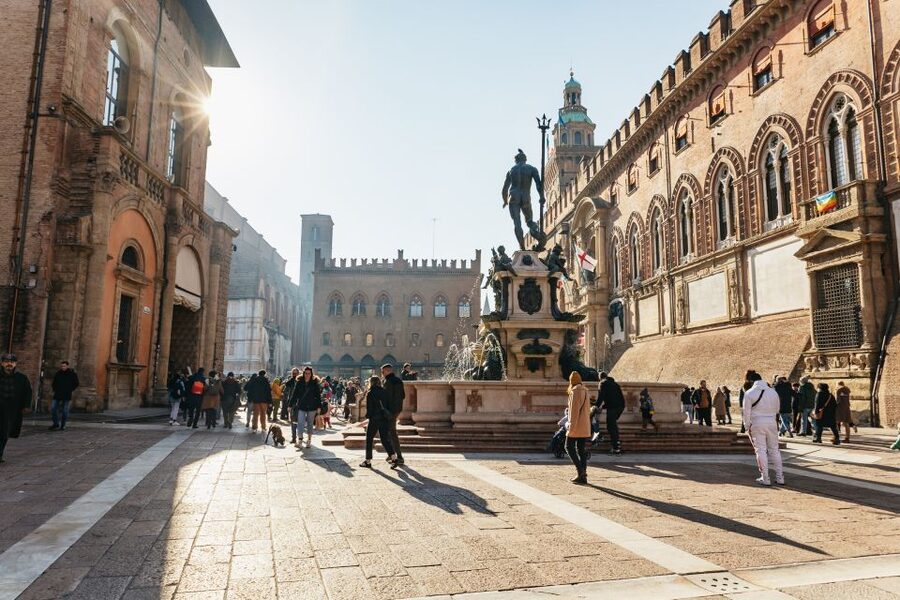
Most versions of the walk begin near the Fountain of Neptune, though the exact meeting point can change with the option you book. Check your confirmation carefully so you are not hunting for the group in one of Bologna’s busiest central squares.
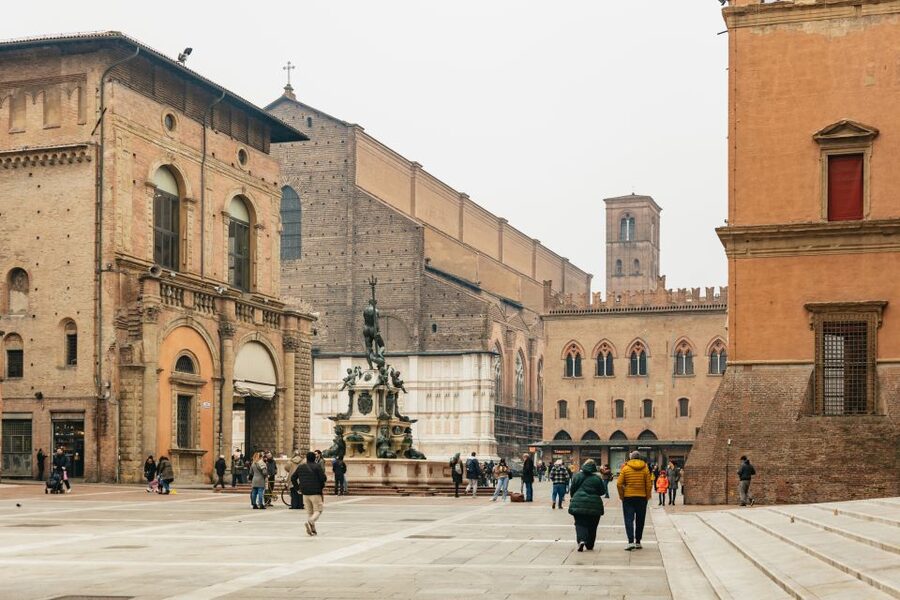
Neptune is a good starting point. The fountain sits beside the heart of the city, surrounded by imposing buildings and open pedestrian space. Your guide can introduce Bologna here as a city of civic power, university life, churches, towers, and food. The famous fountain also comes with a small ritual: make a wish and see if it comes true.
That playful moment helps keep the tour from becoming a string of dates and architectural labels. Guides often use the first part of the walk to explain how Bologna developed and why its central buildings matter. The best guides, such as Maria and Riccardo, appear to make the city feel personal rather than simply reciting facts.
The opening section may also include Palazzo Re Enzo or nearby civic buildings. One particularly enthusiastic guide spent a little too much time around Palazzo Re Enzo for one participant’s taste. That is a useful reminder that the exact balance can depend on your guide and the group’s questions.
A few more walks around Italy worth a look
- Venice: Doge’s Palace and St Mark’s Basilica Walking Tour
★ 4.4 · 6,291 reviews - Milan: Guided Walking Tour & Last Supper Visit with Ticket
★ 4.7 · 5,409 reviews - Naples: Street Food Walking Tour with Local Guide
★ 4.9 · 4,976 reviews
Palazzo d’Accursio and Piazza Maggiore
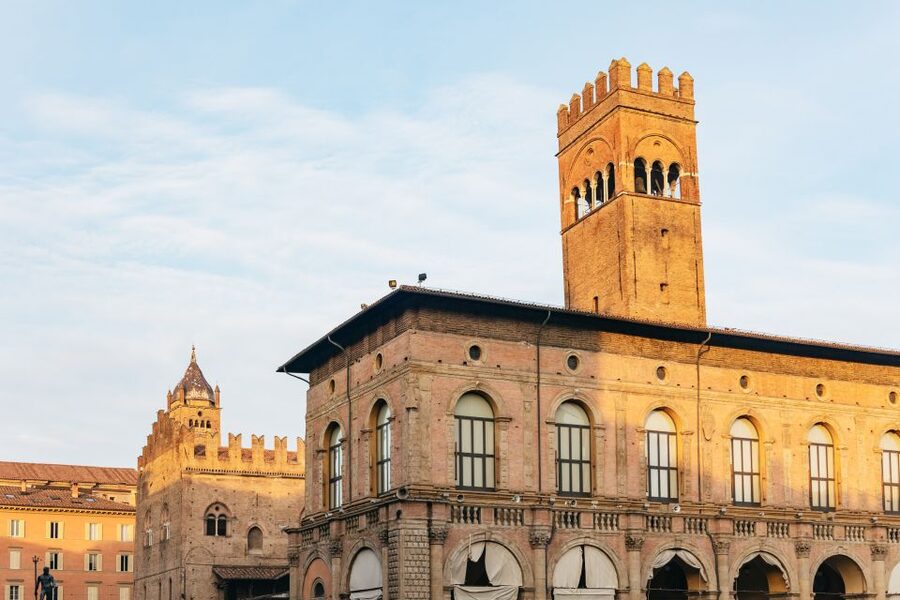
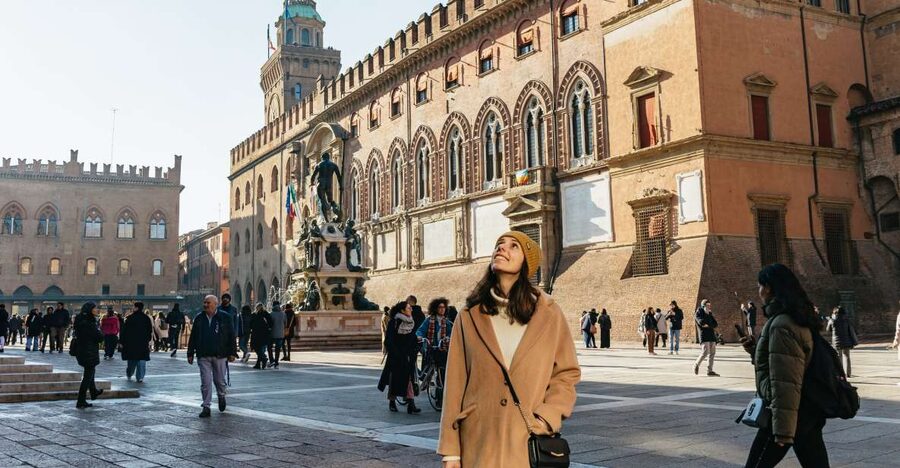
From Neptune’s Fountain, the route moves toward Palazzo d’Accursio and Piazza Maggiore. This is Bologna’s great public stage, and it gives you the strongest sense of the city’s scale.
Palazzo d’Accursio has long been tied to local government. Its broad facade and position beside the main square make it easy to understand why this area became the center of civic life. Your guide can point out details that blur into the background when you are walking alone.
Piazza Maggiore is where Bologna’s major themes come together: public authority, religion, sculpture, commerce, and student life. It is also one of those places where a guide earns the fee by explaining the relationships between buildings rather than simply naming them.
You will likely spend time looking across the square toward San Petronio. The view is especially useful before going inside, since the church’s unfinished exterior tells part of the story. The enormous facade looks grand, but its unfinished upper section is a reminder that Bologna’s ambitions were larger than its budget and political circumstances allowed.
The square can be crowded, especially during popular visiting hours. Stay close to the guide, listen for meeting instructions, and take photos during pauses rather than while the group is moving. Headphones are used on at least some departures, and they are a real help when you want to step aside briefly for a picture without losing the commentary.
Inside the Basilica of San Petronio
San Petronio is the tour’s main religious and architectural highlight. The building is imposing from the outside, but the interior gives the visit its full weight.
Appropriate clothing matters here. You should wear clothing that covers your shoulders and knees. Vests, tops, shorts, and miniskirts are not permitted, so pack a light long-sleeved shirt if your sightseeing clothes are more casual.
Inside, your guide explains why San Petronio matters to Bologna and points out the parts that deserve your attention. Several people particularly enjoyed this stop, and one visitor described it as the highlight of the walk. That reaction makes sense: the basilica is not just a large church to photograph. It is a place where the city’s religious, artistic, and political ambitions meet.
The amount of time inside can vary. One participant would have preferred less time at Palazzo Re Enzo and more at the Basilica Santuario Santo Stefano later in the walk. If you are especially interested in church interiors, ask your guide how much time is planned at each one.
This is also where a strong guide can make a major difference. Maria was praised for detailed explanations, while another guide brought humor into the historical material. The experience is at its best when the guide gives you enough context to look closely, but does not bury the building under a lecture.
Through the Quadrilatero Market
The Quadrilatero is one of the most enjoyable parts of the route because it shifts the mood from grand civic architecture to food and street life. This old market area is packed with small shops, food counters, and places to eat.
The walk does not appear to be a formal food tour, so do not arrive expecting a full tasting menu. Still, food is part of the conversation. Several guides offer restaurant suggestions, and one guide combined local dishes and wine with the historical commentary. That combination is useful in Bologna, where deciding where to eat can be as important as choosing which museum to visit.
I would pay close attention here and note the names of any shops or restaurants your guide recommends. One participant followed a guide’s restaurant advice and had an excellent meal. The market is also a good place to return after the tour, when you can browse at your own pace instead of trying to keep up with a group.
The drawback is crowding. Narrow market streets can be difficult for a large group, especially when other people stop to shop or eat. Headphones help, and a small-group departure is worth considering if you prefer a quieter experience.
Same streets, a different way to see them:
- Florence: Highlights Walking Tour with Expert Guide
★ 4.6 · 4,662 reviews - Venice: San Marco to Rialto Walk & Spritz Like a Local
★ 4.2 · 3,651 reviews - Uffizi & Accademia Timed Entry: Small Group Duomo Walking Tour
★ 4.5 · 3,630 reviews - Venice Walking Tour and Gondola Ride
★ 3.5 · 3,630 reviews
Piazza della Mercanzia and Bologna’s towers

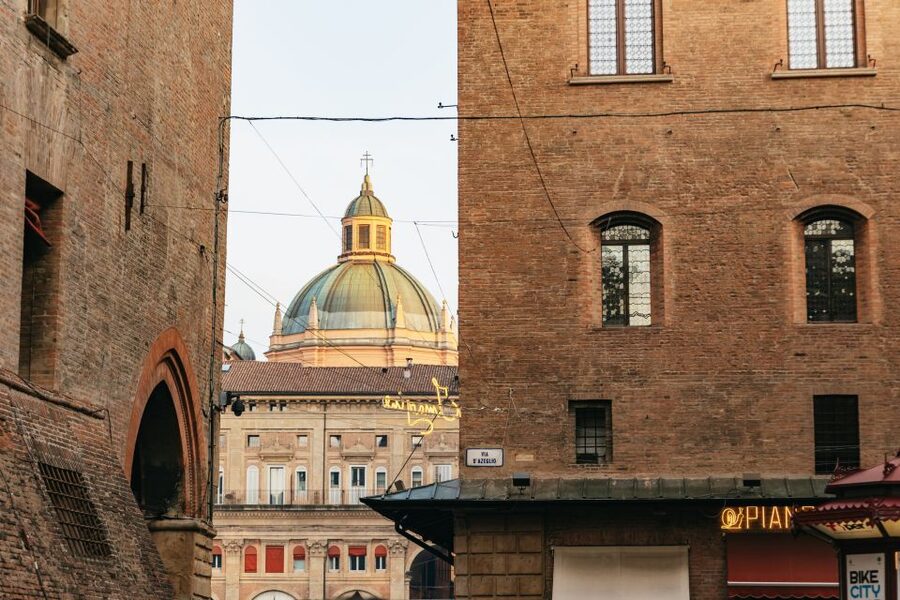
The route continues toward Piazza della Mercanzia and then the Two Towers, Bologna’s most recognizable landmarks. The towers are a strong visual payoff because they rise sharply above the surrounding streets.
The Asinelli Tower is the taller and more famous of the pair. Your guide explains the towers’ importance and the role they played in Bologna’s past. You do not climb the tower as part of this walking tour, so this is a viewing and storytelling stop rather than a tower ascent.
That distinction matters if you are booking the tour mainly for a high viewpoint. The tour gives you background and a close look from street level, but it does not include a climb. For most first-time visitors, that is still valuable because the towers make more sense once you know why medieval Bologna was filled with them and what they said about family power.
Piazza della Mercanzia adds another layer to the story. It is a smaller architectural setting than Piazza Maggiore, and the change helps prevent the walk from feeling like one long stop at a single monumental square.
Piazza Santo Stefano and the church setting
Piazza Santo Stefano brings the route to one of Bologna’s most atmospheric spaces. The square is known for its linked religious buildings and quieter sense of enclosure.
This is one of the places where the tour’s stop-and-explain format works well. You can look at the different facades and hear how the complex developed, rather than trying to understand it from a quick glance. Several people enjoyed seeing contrasting churches during the walk, and this square helps provide that contrast with San Petronio.
The exact amount of time here may depend on the guide. One person wanted more time at the Basilica Santuario Santo Stefano, so visitors with a strong interest in religious art or church architecture may want to return independently. Think of the tour as an introduction, not a substitute for a careful visit to every interior.
A few guides also add nearby sights when time allows. One participant was pleased to see the Archiginnasio Palace and the halls of Bologna’s old university, even though that stop is not guaranteed by the core route. If seeing the Archiginnasio is important to you, ask before booking or plan a separate visit. Do not assume every departure includes it.
How the guiding affects the experience
The strongest feature here is the human one. The route is useful, but the guide determines how much you take away.
Several guides receive praise for making complex subjects easy to follow. Victoria was described as an excellent storyteller. Maria is noted for detailed explanations. Nicola is praised for pointing out interesting facts at each stop. Michaela made the walk feel light and entertaining, while Ricardo brought the energy of a historian and offered broad advice about Bologna’s culture, politics, and food.
That range is worth keeping in mind. You are not booking a single fixed personality or presentation. Some guides may focus more on history, some on food, and some on jokes and local stories. That variety can be a plus, though the pace may differ.
The audio equipment used on some tours is a practical advantage. You can move a little away from the guide to take a photograph and still hear the explanation. That is particularly helpful in Piazza Maggiore, around the towers, and in crowded market streets.
The main caution is information overload. One guide packed in so many facts and spoke so quickly that slowing down would have improved the experience. If the presentation moves fast, ask questions during stops and take a moment to look around before the group moves on.
Walking effort, group size, and timing
This is a city walking tour, but it is not described as strenuous. The route includes plenty of stops, and one participant found the walk easy with a good amount of time to pause.
You still need comfortable shoes. Bologna’s center is best explored on foot, and the tour keeps you moving between squares, churches, market streets, and tower viewpoints. People with limited mobility may find the route difficult, and the activity is not recommended for those with mobility impairments.
Group size is not fixed. Small-group departures are available, which should make it easier to hear the guide and move through narrow streets. A larger group can still work well, but you need to stay alert at crossings and crowded sights. One group of 28 was managed successfully, though that size naturally feels less personal than a small group.
The walk lasts two to three hours. That is enough time to get oriented without using an entire day. I would schedule it early in your Bologna stay, as several guides provide useful suggestions for restaurants and later sightseeing.
Is $26 a fair price?
At $26 per person, this is a sensible price for a guided introduction to central Bologna. You are paying for a certified guide, organized access to the main route, and the time saved by understanding what you are seeing as you go.
The value is strongest if this is your first visit. In two or three hours, you see Neptune’s Fountain, Palazzo d’Accursio, Piazza Maggiore, San Petronio, the Quadrilatero, Piazza della Mercanzia, Piazza Santo Stefano, and the Two Towers. You return to Neptune’s Fountain with a basic map of the center in your head.
The price is less compelling if you already know Bologna well or prefer to explore silently at your own pace. It also does not appear to include a full food tasting, a tower climb, or a guaranteed Archiginnasio visit. Those are separate interests you may need to arrange on your own.
Flexible booking adds practical value. You can cancel up to 24 hours before the tour for a full refund, and you can reserve now and pay later. The available guide languages are Italian, English, Spanish, and French.
Who should book this Bologna tour?
I would recommend it to first-time visitors, solo visitors who want a useful orientation, couples, and anyone who enjoys history told through buildings and streets. It is also a good first-day choice because the route helps you decide where to return for food, churches, and further sightseeing.
Families with older children may also find the short stops and tower stories easier than a long museum visit. The fountain wish and market streets add variety, so the walk is not all formal architecture.
You should think twice if you have limited mobility, dislike group pacing, or want a slow architectural study of every church. You should also choose a small group if possible, especially during busy periods.
Final verdict: book it for a first look at Bologna
Book this tour if you want a practical introduction to Bologna with a strong mix of monuments, market streets, churches, and local advice. The city can seem spread out and slightly confusing at first, but this route gives you a useful framework without taking up a full day.
The guides are the reason the experience earns its good reputation. Look for a departure in a language you follow comfortably, wear suitable clothing for San Petronio, and use the tour to collect ideas for the rest of your stay. If you already know the center, spend your money on a focused food experience or a longer interior visit instead.
FAQ
Where does the Bologna walking tour begin?
The usual starting area is the Fountain of Neptune in central Bologna. The exact meeting point may vary according to the option booked, so check your booking details before arriving.
How long does the tour last?
The tour lasts between two and three hours. Starting times vary, so you need to check availability for the date you want.
What languages are available?
The tour is offered in Italian, English, Spanish, and French.
Is this a small-group tour?
Small-group options are available. Group size can vary, and some departures may be larger.
Which main sights are included?
The route includes the Fountain of Neptune, Palazzo d’Accursio, Piazza Maggiore, the Basilica of San Petronio, Piazza della Mercanzia, Piazza Santo Stefano, and Bologna’s Two Towers.
Does the tour include a climb of the Asinelli Tower?
The tour includes a stop to see and learn about the Two Towers. A tower climb is not listed as part of the activity.
What should I wear?
Wear comfortable shoes and bring a long-sleeved shirt. Appropriate clothing is required for places of worship, including covered shoulders and knees. Vests, tops, shorts, and miniskirts are not permitted.
Is the tour suitable for people with limited mobility?
No. The tour is not recommended for people with limited mobility or mobility impairments.
Can I cancel the booking?
You can cancel up to 24 hours in advance for a full refund. The activity also offers a reserve-now-and-pay-later option.
Just added around Italy
- Bergamo: Digital guide made by a local for your walking tour★ 5.0 · 184 reviews
- Full Day Tour by Car and Walking among the Apulian Beauties★ 4.5 · 182 reviews
- The Original Street Food Walking Tour in Bari★ 4.5 · 226 reviews
- Bari: Street Food Walking Tour with a Local Guide★ 5.0 · 160 reviews
- Bari Walking Tour with Pasta Experience★ 4.5 · 270 reviews
- Bari Walking City Tour★ 4.5 · 511 reviews
- Assisi Private Walking Tour including St. Francis Basilica★ 5.0 · 124 reviews
- Private St. Francis Basilica of Assisi and City Walking Tour★ 5.0 · 114 reviews
Italy Walking Tours, compared.
Doge’s Palace and St Mark’s Basilica Walking Tour
Read our review →
Guided Walking Tour & Last Supper Visit with Ticket
Read our review →
San Marco to Rialto Walk & Spritz Like a Local
Read our review →
Uffizi & Accademia Timed Entry: Small Group Duomo Walking Tour
Read our review →
Private 3 hrs Venice Tour: St Mark’s, Walking tour & Boat tour
Read our review →Browse the lists this tour appears in