
Review · CASTLE AND PALACE WALKING TOURS
Budapest: Castle District Walking Tour
Castle Hill rewards a slow look. This two-hour walking tour gives you a clear route through Buda’s old quarter, linking the Royal Palace, Matthias Church, Fisherman’s Bastion, medieval lanes, wartime ruins, lookout terraces, and stories that are easy to miss on your own. I especially like the local guide commentary and the tour’s ability to connect grand buildings with everyday Hungarian, German, and Jewish life. I also like the clever details, from the Disney connection at Fisherman’s Bastion to the meaning of crosses with one, two, or three bars.
The main catch is the climb. You face about 10 minutes uphill, followed by stairs and more uneven walking around Castle Hill. The tour is not suitable for wheelchair users, and a stroller could be a serious nuisance. The $2.27 price is eye-catching, but it is mainly a booking and administration fee, so you should also budget for a tip, commonly around €10 per person.
Key points at a glance
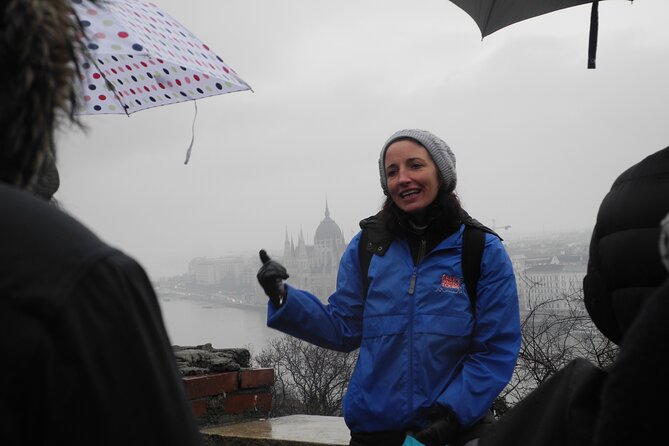
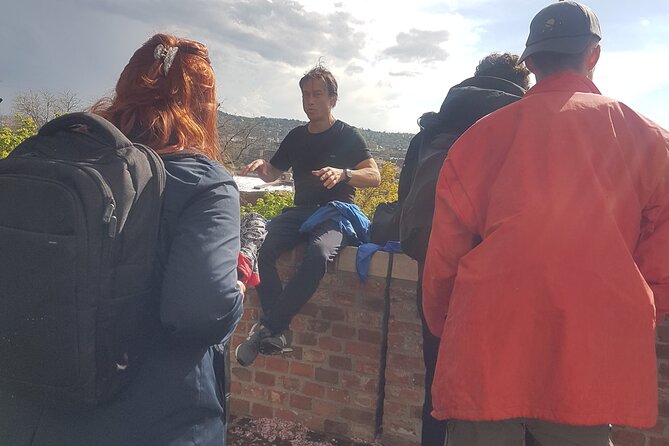
- Start at Batthyány tér: Meet by the metro exit, about 15 meters from St. Anna Church, with a guide holding a royal blue flag.
- See the essential Castle District sights: The route includes Buda Castle, Matthias Church, Fisherman’s Bastion, the Royal Palace, lookout terraces, and several lesser-known sites.
- Expect a real uphill walk: Allow for a 10-minute climb, stairs, and a moderate level of fitness.
- Hear 800 years of local history: The guide covers wars, occupations, royal life, religious communities, World War II destruction, and the Cold War era.
- Plan for a tip-based cost: The listed $2.27 covers the booking fee. A tip of about €10 per person is commonly expected for the guide.
- Finish where you began: The tour returns to the Batthyány tér meeting point after two hours.
Starting at Batthyány tér and climbing Castle Hill

The meeting point is practical. Batthyány tér sits beside the Danube on the Buda side, and the metro exit makes it easy to find. Look for the blue flag near St. Anna Church, roughly 15 meters from the church. There are public toilets and a food market nearby, useful if you arrive early or need a quick snack before the climb.
The route begins with an uphill walk of about 10 minutes. That does not sound dramatic on paper, but it sets the tone for the rest of the outing. You will be walking on hills, steps, and historic streets rather than flat city pavements. A guide named Andras reportedly paused to let everyone catch up before continuing, and that is the kind of pacing that helps a mixed group.
Wear shoes with a firm sole. Bring water, and dress for the weather. Rain did not stop guide Gary from keeping the tour lively, but wet stone and stairs can make the route harder. The walk is not a mountain hike, yet you should be comfortable with moderate physical effort.
More Castle and Palace Walks in Budapest:
- Budapest: Buda Castle Walk with Saint Stephen’s Hall
★ 4.5 · 3,012 reviews - Budapest: Buda Castle District Walking Tour
★ 4.6 · 2,108 reviews - Budapest: 3-Hour Grand City Tour and Castle Walk
★ 4.3 · 1,437 reviews
Reading the Castle District as a living neighborhood
The Castle District is more than a palace and a viewpoint. It is a compact historical quarter shaped by royal rule, Ottoman occupation, war, rebuilding, and modern government. A good guide helps you see those layers instead of treating the area as a string of pretty facades.
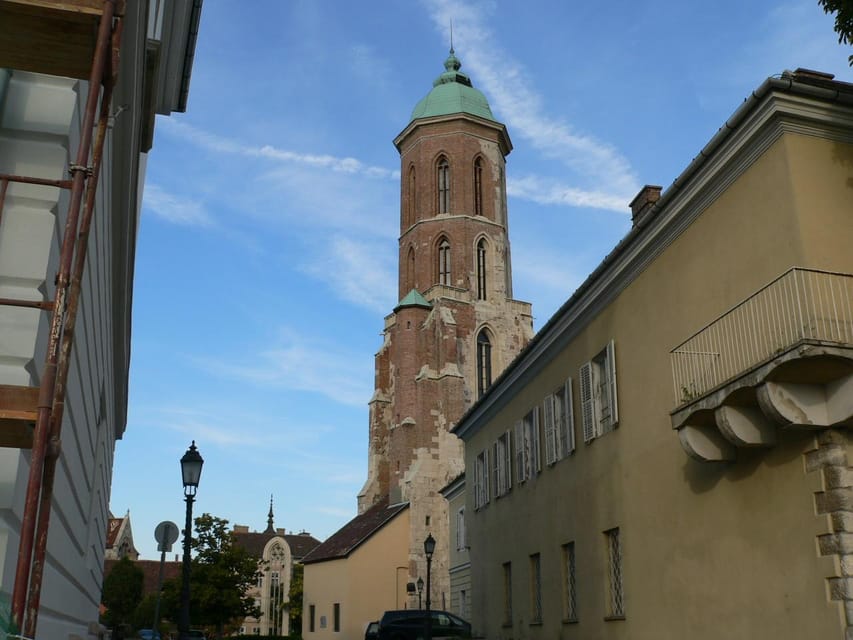
The tour looks at the Royal Palace, Matthias Church, Fisherman’s Bastion, the Maria Magdalena Church Tower, residential buildings, public art, and terraces above the Danube. You also hear about where the president’s and prime minister’s offices are located. The value here is the connection between the sights. You are not simply told what a building is called. You learn why the hill mattered and how its role changed over time.
I like the way the tour includes ordinary residents alongside kings and soldiers. The guide discusses the German, Jewish, and Hungarian communities that lived in the district. That makes the Castle District feel less like a museum set and more like a neighborhood shaped by people with different languages, faiths, and daily routines.
Matthias Church, crosses, and the symbols of Buda
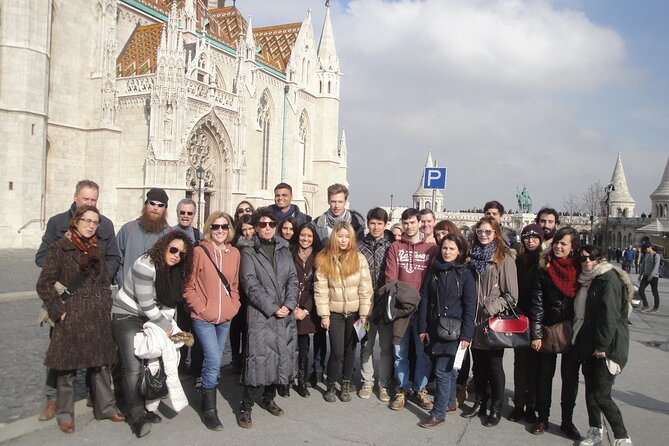
Matthias Church is one of the best-known buildings on Castle Hill, and the tour uses it as a doorway into Hungarian religious and political history. You should not expect a long interior visit to be the main feature, since this is a walking tour rather than an entry-focused church tour. The useful part is the explanation of the building’s role and the details around it.
The guide also explains the difference between a cross with one, two, or three bars. That small point is exactly the sort of detail you might pass without asking about. It gives you a quick lesson in religious and national symbolism while helping you read statues, monuments, and church features elsewhere in Hungary.
The Maria Magdalena Church Tower adds another layer. The district has been rebuilt many times, and the surviving fragments and towers make more sense when you understand how often war damaged the hill. Bring your camera, but give yourself time to listen. The strongest parts of this tour come from noticing why a fragment remains, not just photographing it.
Fisherman’s Bastion and the best Danube views
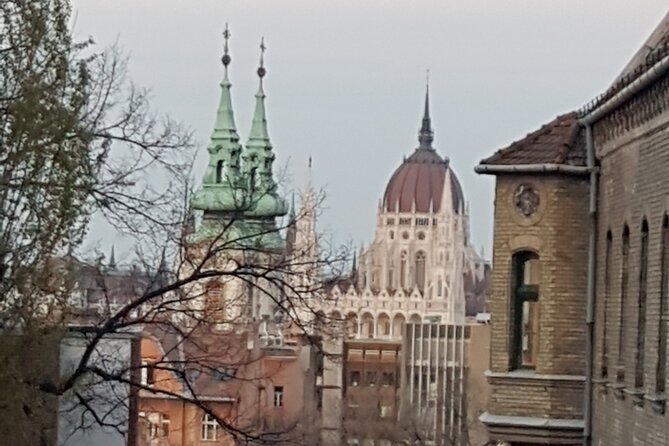
Fisherman’s Bastion is the grand photo stop. Its terraces look across the Danube toward Pest, with the river and city spread below. The tour includes time for the panorama, and the guide explains the site rather than treating it as a quick photo break.
You will hear about the curious connection between Fisherman’s Bastion and Walt Disney. That detail adds a light touch to a site that can otherwise feel formal and monumental. The guide may also test you with questions about Castle Hill landmarks and Hungarian life. This keeps the walk interactive, especially if you enjoy being asked to look closely rather than simply follow a flag.
The free-view advice is useful. Castle Hill has paid and free viewing areas, and a guide can show you where to enjoy the panorama without paying for every terrace. The views are a major reason to make the climb, but keep in mind that some viewpoints can become crowded and that you may not receive a long stretch of independent photo time. One person wished for more free time at the top, so photographers should set expectations accordingly.
A few more walks around Budapest worth a look
- Big Bus Budapest Hop-On Hop-Off Bus and Walking Tour
★ 3.5 · 2,206 reviews - Budapest City Landmarks Walking Tour in 2 Hours
★ 5.0 · 2,048 reviews - 3-Hour Orientation Walking Tour of Buda and Pest
★ 4.8 · 1,834 reviews - Budapest Historical Sightseeing – Free Walking Tour
★ 5.0 · 1,302 reviews
The Jewish Prayer House and baroque residential streets
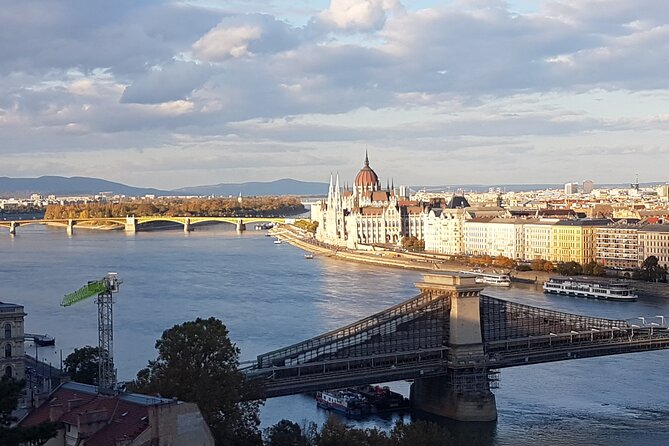
The Medieval Jewish Prayer House is one of the more meaningful stops because it shifts attention away from the headline sights. The surrounding baroque homes show how the district worked as a place of residence, not only as a royal compound.
Here, the guide can explain the presence of Jewish residents and the wider mixture of communities on Castle Hill. The subject is especially valuable because the polished facades do not reveal the full story by themselves. You need context to understand who lived behind those walls and how war and occupation changed the neighborhood.
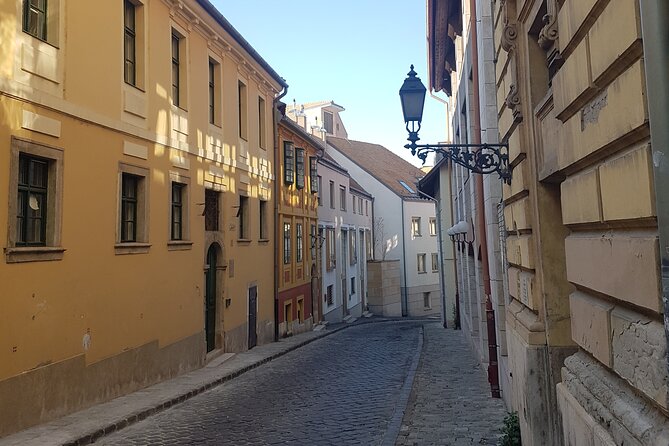
The baroque streets also provide a welcome change from the large palace complex. You get a closer look at the scale of daily life, with residential architecture, narrow streets, and smaller details. If you prefer local stories to a march between famous monuments, this part may be one of the tour’s strongest sections.
War, occupation, and the underground Castle Hill
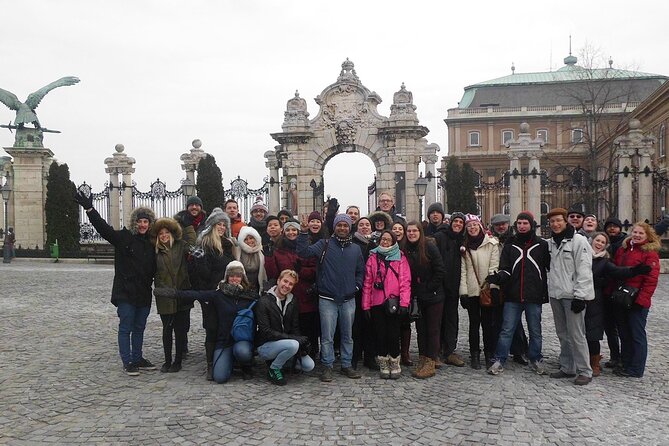
Castle Hill has been fought over for centuries, and the tour spends time on its defensive role. You learn about the 800 years of conflict and occupation that shaped the district, including the massive destruction during World War II and the location of the Nazi stronghold.
The underground world is another unusual feature. The guide discusses the caves, labyrinths, and tunnels beneath the hill, explaining how underground spaces aided defense and affected life in the district. You should understand that this is a walking tour about the underground system, not necessarily a cave-entry experience. The details still help you interpret the streets above.
The wartime sections give the grand buildings a harder edge. A pretty square can sit above a place tied to siege, shelter, or military use. I value that balance. The tour does not leave you with only royal legends and postcard views. It shows how destruction, occupation, and rebuilding are part of the Castle District’s identity.
Royal Palace, Hungarian legends, and public art
The former residence of the Hungarian kings is the largest architectural stop. The palace has been rebuilt many times after war damage, so its present appearance represents several periods rather than one untouched royal age. The guide explains those changes and points out where modern government offices now operate.
You also hear about the mythical bird associated with Hungary. That gives the palace and its monuments a link to national identity, rather than presenting them as grand buildings without meaning. The eagle-like Turul figure is a familiar Hungarian symbol, and learning its place in national stories helps you recognize it during the rest of your visit.
The walk includes small public art monuments and what the description calls some of Budapest’s funniest statues. These lighter moments keep two hours of dates and battles from becoming heavy. You also learn about the huszar, the famed light cavalry fighters, including their reputation as womanizers. It is a good example of how the guides mix serious history with human and sometimes cheeky details.
Gül Baba, Ottoman traces, and life beyond the postcard route
The tour also reaches the story of Gül Baba, an Ottoman Turkish monk and soldier associated with a Muslim pilgrimage site. This broadens the picture of Budapest beyond its Christian churches and Habsburg-era buildings.
The inclusion matters because Buda’s past is not one straight national story. Ottoman rule left its mark on the city, and a guide can point out connections that are easy to miss if you only visit the palace and church. The route’s wider focus gives you a better sense of Buda as a contested European city.
Some of these less familiar locations may not have the instant visual impact of Fisherman’s Bastion. Their value comes from the explanation. If your priority is a short list of spectacular buildings, the side stories may feel like a detour. If you want to understand how the district changed hands and communities over time, they are worthwhile.
Guide quality and group size
The guide is the key variable in a walking tour, but the feedback points to a strong pattern. Gary is praised for detailed explanations, enthusiasm, and useful recommendations after the walk. Dora is described as warm, funny, and well informed. Boulash, sometimes written as Gulash, receives repeated praise for making the tour enjoyable while explaining the history clearly.
Rita is particularly good at explaining background and offering restaurant and sightseeing suggestions. Odea and Odia are noted for structured storytelling, questions, and even teaching basic Hungarian words. Udit is praised for summarizing Hungarian history clearly, while Judith is described as personable, funny, and welcoming. Zsolt is credited with mixing information, humor, and practical help.
That range of guide names suggests the company has several strong personalities rather than one fixed host. Your exact experience will depend on who leads your departure, but the format gives the guide room to answer questions and add personal stories.
The maximum group size is 30. That is not a tiny private walk, and you may need to stand close to hear at busy stops. The guide’s use of a blue flag helps you stay together. Groups of eight or more cannot book, even if they try to split the reservation into smaller bookings, so this suits couples, families under that limit, and solo visitors rather than large organized parties.
Price, tipping, and what the tour is really worth
At $2.27 per person, the advertised cost looks almost too low for a two-hour guided walk. The important detail is that this is a booking fee paid to GetYourGuide for administration and marketing. The guide relies on tips, and the stated typical amount is about €10 per person.
That makes the practical cost closer to a tip-supported walking tour than a $2 attraction. I would treat the initial price as a way to reserve a place, not as the full price of the experience. You are encouraged to tip according to the value of the tour, and the guides’ work depends heavily on that income.
For the likely result, the value is good if you want an orientation to Castle Hill before exploring alone. You receive a route, historical context, photo stops, practical advice, and answers to questions. You do not receive a private guide, guaranteed quiet at every monument, or a long block of independent time at the summit.
Free cancellation up to 24 hours ahead and reserve-now, pay-later booking make it easier to fit into a changing Budapest schedule. The tour is offered in English only, so you should be comfortable following a two-hour historical explanation in English.
Who should book this Castle District walk?
I would choose this tour if you are visiting Budapest for the first time and want the Buda side to make sense quickly. It suits history fans, architecture fans, solo visitors who want company, and anyone who prefers stories to wandering with a guidebook.
It is also a good first-day activity if you want restaurant suggestions and practical ideas for the rest of your stay. Guides such as Rita and Gary are praised for offering useful advice beyond the route, which can save time later.
I would think twice if you have limited mobility, dislike hills, or need a stroller-friendly route. The stairs are not a minor footnote. One four-star assessment specifically warns that strollers make it hard to keep up, and another notes that the climb can challenge some people. The official information says the activity is not suitable for wheelchair users and asks participants to consider their ability to complete the uphill walk.
Should you book it?
Book it if you want a lively, story-filled introduction to Buda Castle Hill, especially if this is your first time in Budapest. The route covers the famous sights but also adds the Medieval Jewish Prayer House, underground history, Ottoman connections, public art, palace symbolism, and wartime context.
Skip it if you want a flat walk, a private pace, or plenty of free time for photographs. For everyone else, the tour offers a strong orientation at a low upfront cost, provided you remember that the expected tip is the real payment for the guide’s work.
FAQ
Where does the Castle District walking tour start?
It starts at the Batthyány tér metro exit, about 15 meters from St. Anna Church. Look for a local Hungarian guide holding a royal blue flag.
How long does the tour last?
The walking tour lasts two hours. Starting times depend on availability when you book.
What language is the tour offered in?
The live tour guide speaks English.
Is the tour physically demanding?
You should have moderate physical fitness. The route includes about a 10-minute uphill walk, stairs, and walking around Castle Hill.
Is the tour suitable for wheelchair users?
No. The activity is listed as unsuitable for wheelchair users.
What sights are included?
The route includes Buda Castle and the Royal Palace, Matthias Church, Fisherman’s Bastion, the Maria Magdalena Church Tower, lookout terraces, public art, historic residential buildings, and sites connected with the underground Castle Hill system.
Is the $2.27 price the full cost?
The $2.27 charge is a booking, administration, and marketing fee paid to GetYourGuide. Guides rely on tips, and the commonly suggested amount is about €10 per person.
Just added around Budapest
- Budapest: Street Art and Underground Movements Walking Tour★ 5.0 · 365 reviews
- Jewish Quarter of Budapest Walking Tour★ 4.7 · 369 reviews
- Budapest 3-Hour Walking Tour in Italian★ 4.6 · 217 reviews
- Budapest: Buda Castle District Walking Tour with a Historian★ 4.9 · 867 reviews
- Budapest: Walking Tour to the Shoes Memorial and Parliament★ 4.7 · 151 reviews
- Budapest: Jewish History Guided Walking Tour with Historian★ 4.8 · 205 reviews
- Budapest Guided Food Walking Tour with Drinks Included★ 4.8 · 472 reviews
- Budapest: Walking Tour and Photoshoot with Digital Photos★ 4.7 · 82 reviews
Castle and Palace Walking Tours, compared.

Edinburgh Castle: Guided Walking Tour with Entry Ticket
Read our review →
Doge’s Palace and St Mark’s Basilica Walking Tour
Read our review →
3-Hour Walking Tour of Old Town & Prague Castle
Read our review →Edinburgh Castle: Guided Walking Tour with Entry Ticket
Read our review →
Edinburgh Castle Guided Walking Tour in English
Read our review →

Walking Tour of Split and Diocletian’s Palace
Read our review →Browse the lists this tour appears in