
Review · HISTORY WALKING TOURS
Budapest: Jewish History Guided Walking Tour with Historian
History comes alive on Budapest’s side streets. This 2.5-hour walk makes the city’s Jewish Quarter easier to understand, moving from centuries of Jewish life to the horrors of the wartime ghetto and the neighborhood’s present-day culture. I especially like the small group limit of 10 and the chance to hear difficult history explained by a historian rather than reduced to a few dates.
I also like the thoughtful finish: coffee or a soft drink with flódni, a traditional Jewish-Hungarian cake. The main limitation is important to know upfront: all three synagogues are viewed from outside, so you will need a separate visit if you want to see their interiors.
Key Points Before You Book
- A historian leads the walk: Guides such as Gabor, Noemi, András, Daniel, Maggie, and Barbara have been praised for clear explanations, warmth, and strong storytelling.
- Three major synagogue exteriors: See the Dohány Street, Rumbach Street, and Kazinczy Street synagogues from the outside.
- Wartime stories have a human focus: Learn about Raoul Wallenberg, Carl Lutz, and others who helped save Jewish lives in 1944 and 1945.
- The route covers more than World War II: You hear about Jewish life, migration, restrictions, religious movements, the former ghetto, and the community today.
- A local sweet is included: The tour ends with flódni and coffee or a soft drink in a local cafe.
- Good value at $63: The price makes the most sense if you want context, guiding, and a small group rather than only a walk past buildings.
Starting at Erzsébet Square
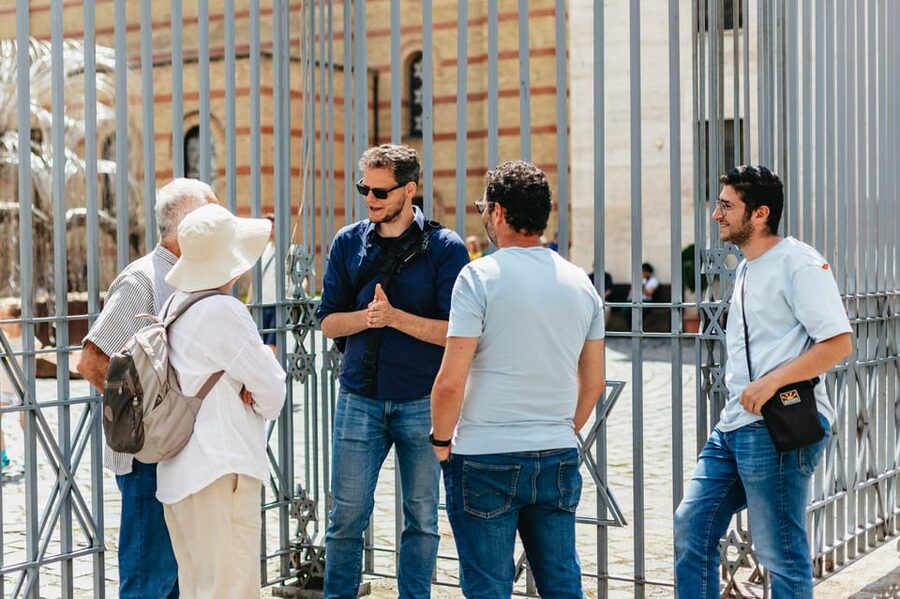
The meeting point is in front of the Kempinski Hotel Corvinus Budapest, facing the Ferris wheel on Erzsébet Square. This is a handy place to begin because Deák Ferenc tér is one of Budapest’s main transport hubs. You can reach it by the M1, M2, or M3 metro lines, along with several buses and trams.
I would arrive a little early. The square is open and busy, and a guide can be harder to spot than expected if you are looking only for a formal tour sign. The meeting point is central, though, so it is easy to pair this tour with time around central Pest.
The walk then heads toward the 7th district, often called Erzsébetváros. Jewish culture has been part of this area for more than 200 years. Today, the district mixes synagogues, kosher businesses, restaurants, nightlife, street art, apartments, and ruin pubs. That mix is part of the point. You are not visiting a preserved museum quarter. You are walking through a living part of the city with a difficult past and an active present.
More Jewish Heritage Walking Tours in Budapest:
- Jewish Quarter of Budapest Walking Tour
★ 4.7 · 369 reviews - Amsterdam Anne Frank: Small-Group Walking Tour & Local Guide
★ 4.8 · 12,789 reviews - Anne Frank’s Story – Guided Walking Tour through Amsterdam
★ 5.0 · 11,619 reviews
Setting the Scene for Hungarian Jewish Life
One of the tour’s strongest features is its broad opening story. You do not begin with World War II and stop there. Guides explain how Hungary’s borders and political systems changed, how Jewish communities moved through the region, and how laws shaped daily life.
One particularly useful explanation concerns the pressure placed on Jewish people to convert. This helps you understand that discrimination did not suddenly begin in 1944. Restrictions, political hostility, and social pressure had already affected Jewish life for generations.
For visitors who know little about Hungarian history, this groundwork matters. Hungary’s place in Central Europe has shifted many times, and a short explanation can make the district’s buildings and communities far easier to read. Several guides have been praised for using maps or visual material to show how Hungary’s territory changed and how those changes affected its people.
The tone is serious, but it is not only grim. The tour also addresses Jewish culture, traditions, community life, and the ways Jewish identity has continued in Budapest. I appreciate that balance. A tour focused only on tragedy can leave you with a distorted picture of a community that existed long before the Holocaust and still exists today.
The Three Synagogues of the Jewish Quarter
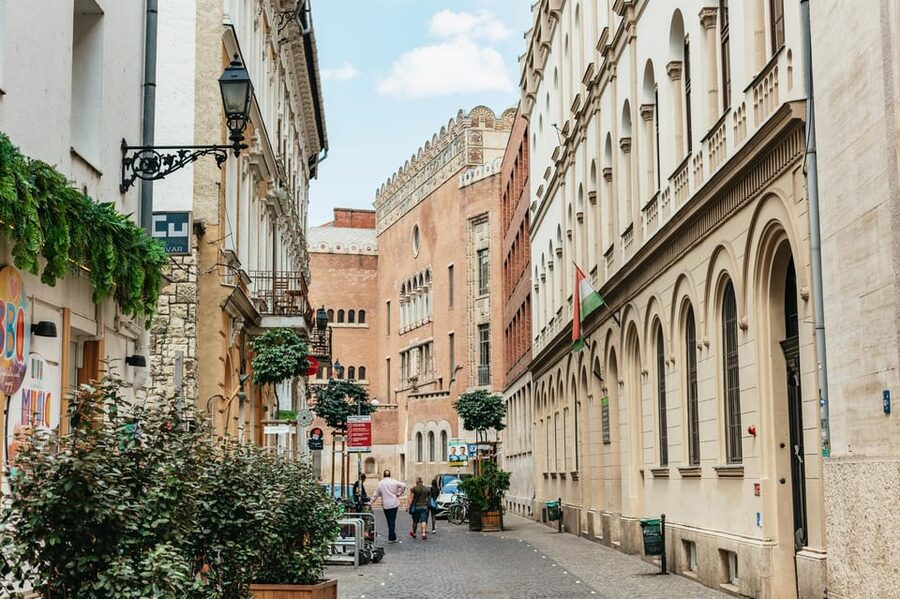
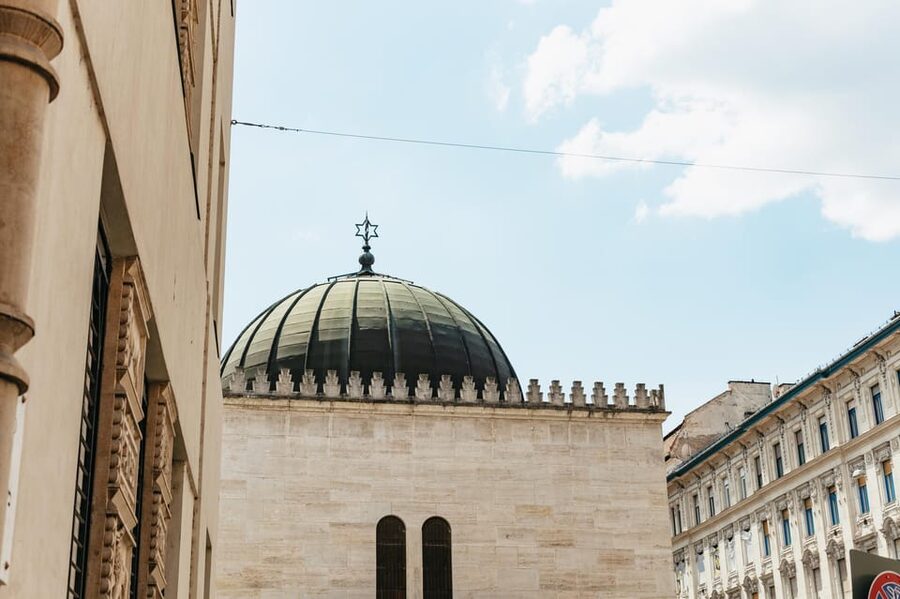
The route takes you past the exteriors of Budapest’s three major synagogues. Each represents a different religious tradition and architectural story.
The Dohány Street Synagogue is the grandest of the three and one of the most recognizable buildings in the district. It is often described as the largest synagogue in Europe. From the outside, its scale and ornament are impressive, but the guide adds the essential context: this was not just a grand building. It was a center of Jewish life in Budapest and later became closely tied to the suffering of the wartime Jewish population.
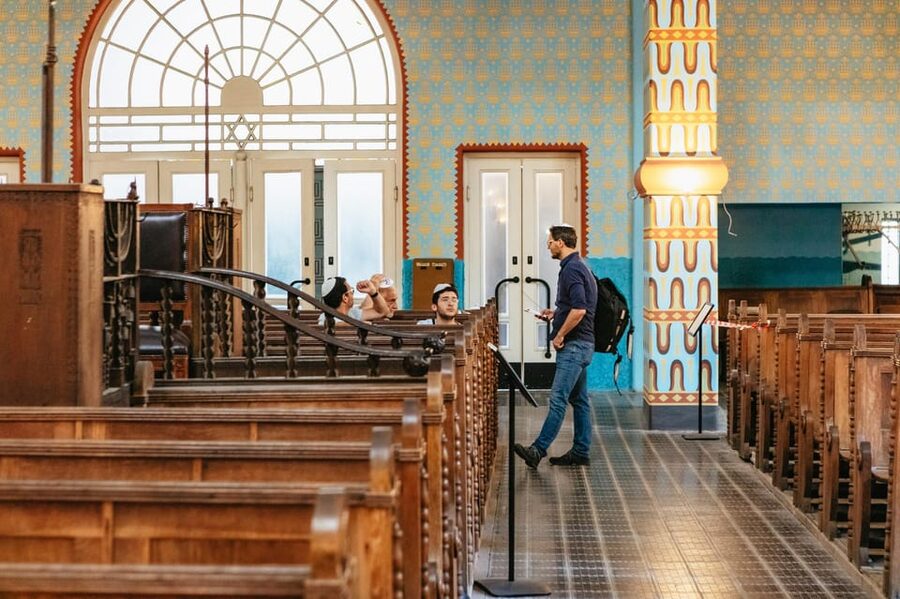
If you want to tour the interior, plan that separately. Admission to any synagogue is not included here, and the walking tour does not provide an interior visit.
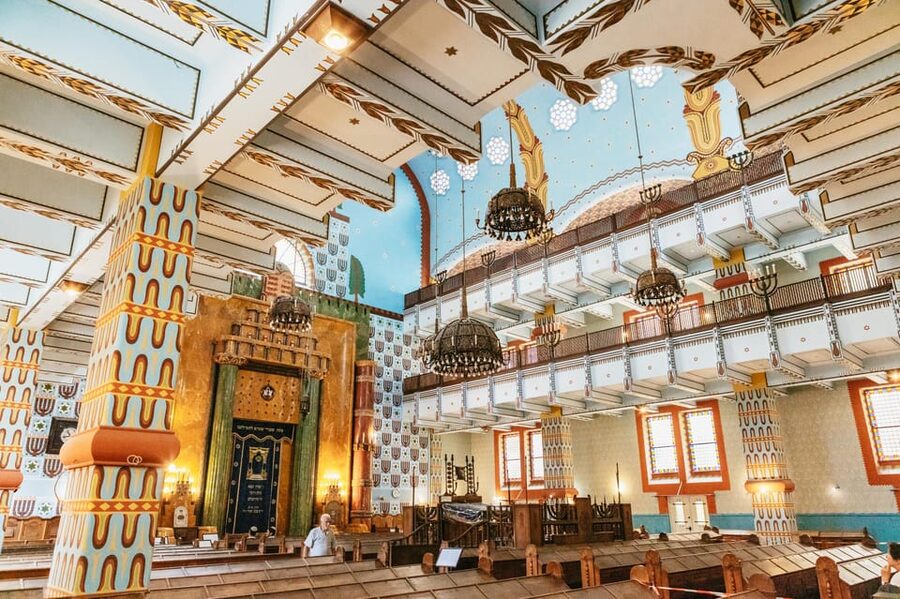
The Rumbach Street Synagogue dates from 1872 and was designed by Viennese architect Otto Wagner. Its exterior gives you a chance to compare a different design approach with the Dohány building. The guide explains the religious and community divisions that shaped the city’s synagogues, so the buildings become more than attractive facades.
The Kazinczy Street Orthodox Synagogue adds another part of that story. Seeing the three in sequence helps you understand that Budapest’s Jewish population was not a single, uniform group. Different traditions had their own institutions, customs, and places of worship.
The practical drawback is that exterior viewing can feel incomplete if architecture is your main interest. You will learn what each building means, but you will not get the interior details, decorations, or prayer spaces. I would book this walk for historical context, then visit one or more synagogues on your own if time allows.
Walking Through the Former Ghetto
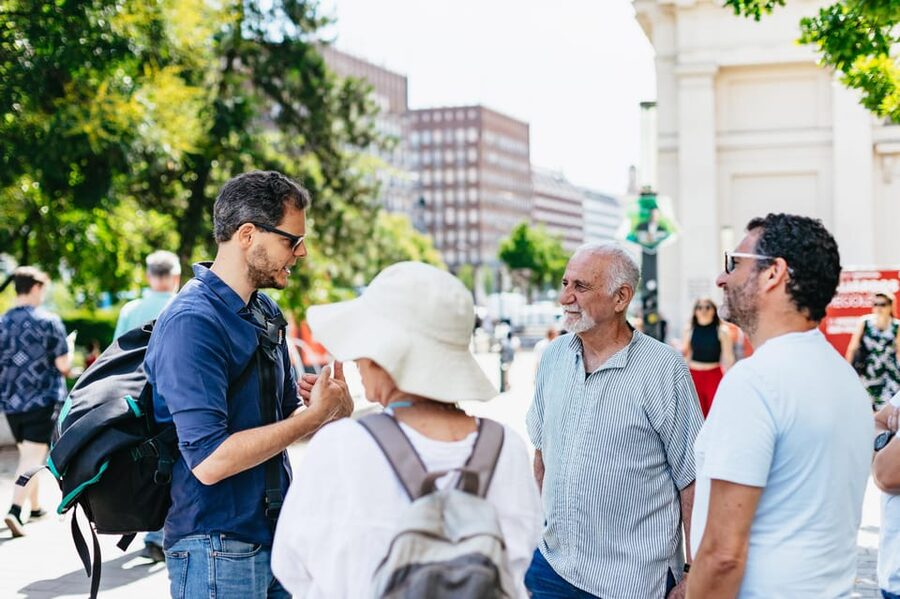
The route continues along streets associated with the former Budapest ghetto. This is where the tour’s history becomes more physical. You pass buildings, walls, memorials, and narrow streets while hearing how the area was controlled and how people were forced into increasingly dangerous conditions.
A remaining section of the original ghetto wall helps show the scale and speed of what happened. The ghetto existed for less than two months, yet its impact was enormous. That short time span is hard to grasp from a textbook. Standing near a surviving section of wall gives the story a fixed point.
The guide also explains how the Jewish Quarter functioned during the war and how Hungary participated in the persecution of Jewish people. This direct treatment is one of the best reasons to choose a historian-led walk. The subject is not softened into vague language, and the darker parts of the story are not skipped for comfort.
At the same time, this is a city walk, not a memorial tour conducted in silence from start to finish. The route passes ordinary streets and modern businesses. That contrast can feel jarring, but it also shows how Budapest continues to live with its past.
More History Walking Tours in Budapest:
- Budapest Historical Sightseeing – Free Walking Tour
★ 5.0 · 1,302 reviews - BloodThirsty Hungary: Walking tour & Dark Historical Stories
★ 4.9 · 633 reviews - History and Hauntings of Salem Guided Walking Tour
★ 5.0 · 14,564 reviews - Lisbon: History, Stories and Lifestyle Walking Tour
★ 4.8 · 10,902 reviews
Raoul Wallenberg, Carl Lutz, and Acts of Rescue
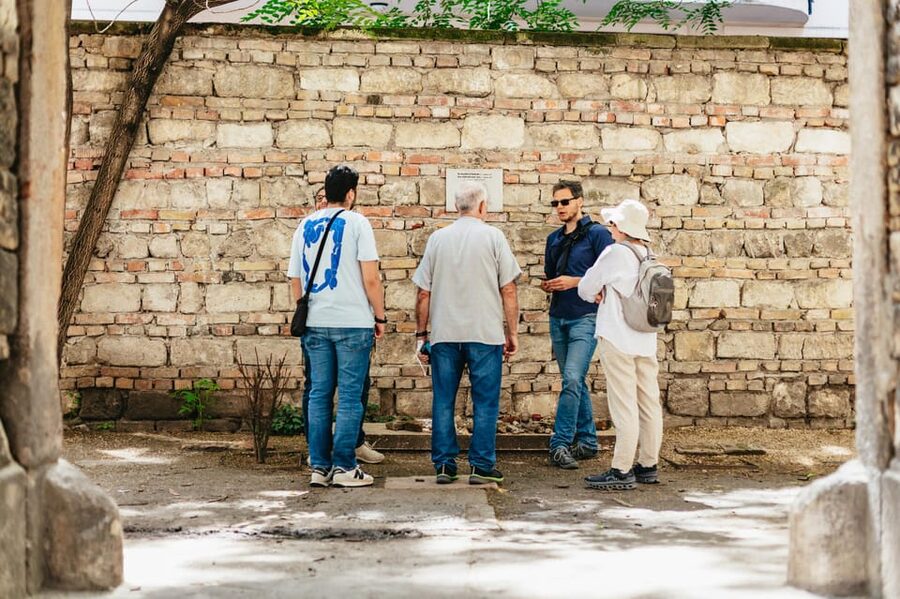
The wartime section focuses not only on victims and systems of persecution, but also on people who resisted and helped save lives.
At memorials connected with Raoul Wallenberg and Carl Lutz, you hear about the work they carried out during the winter of 1944 and 1945. Both are associated with the title Righteous Among the Nations, awarded to people who helped Jewish people during the Holocaust.
These stories give the tour a more personal shape. Instead of treating the period as a list of institutions and political decisions, the guide can show how individual choices mattered. The emphasis is not that rescue erased the scale of the crimes. It is that courage existed even under extreme pressure.
The guides have also been praised for answering questions about Hungary’s political and social development. If you are interested in how ordinary people responded to political change, this part of the walk is especially useful.
Gozsdu Passage, Street Art, and Modern Erzsébetváros
The Jewish Quarter is not frozen in the past. The route passes through the lively Gozsdu Passage and points out examples of Budapest’s street art. You also hear about the district’s ruin pubs and nightlife.
This modern layer gives the walk variety. After hearing about synagogues and the ghetto, you see how the same district now attracts restaurants, bars, creative projects, and younger residents. The street art is not just a colorful extra. It helps you notice how the neighborhood tells new stories on old walls.
The nightlife tips are useful if you plan to spend more time in the 7th district. The guide can help you understand the difference between the main tourist routes and the side streets that are easier to miss. Just remember that this is still a Jewish history walk, not a dedicated pub crawl. The nightlife discussion supports the neighborhood story rather than replacing it.
Flódni and a Pause at a Local Cafe
After about two hours and 15 minutes of walking and sightseeing, the group takes a 15-minute break for coffee or a soft drink and flódni. This traditional cake commonly combines layers with fillings such as poppy seed, walnut, apple, and plum.
The food stop is modest, but it is well chosen. A local Jewish cake gives you something concrete to connect with the culture discussed during the walk. It also gives your feet a short rest and creates space for final questions.
Do not book this expecting a full meal. The included treat is a small cultural stop, not lunch. If you need more food, plan a separate meal before or after the tour. The guide can also point out kosher restaurants and shops in the quarter.
Pace, Group Size, and Guide Quality
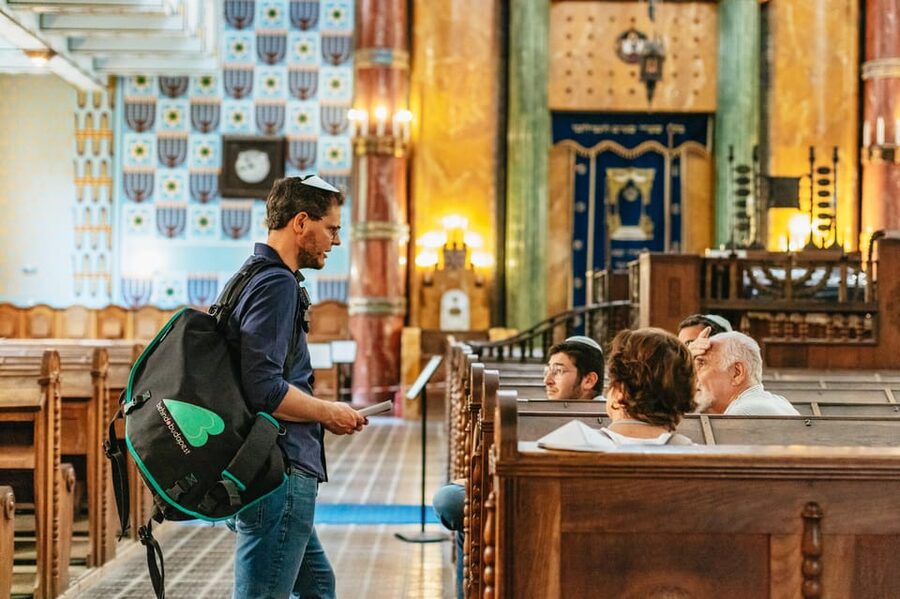
The tour lasts 2.5 hours and involves steady walking through city streets. One visitor described it as a lot of walking on a hot day, which is fair. The distance is not presented as extreme, but the experience is not suitable for someone seeking a seated overview.
The group is limited to 10 people. That size is a real advantage. You can usually hear the guide more easily, ask questions, and keep the group moving without the stop-and-start feel of a large coach tour. Small groups also make it easier for the guide to adjust the pace. One guide, Noemi, was specifically praised for making accommodations for individual needs.
Guide quality is the tour’s strongest point. Gabor has been praised for humor, clear explanations, and an ability to handle questions. Noemi has received repeated praise for her passion and careful treatment of the subject. András, Daniel, Maggie, Barbara, Judit, Zsolt, and others have also been described as engaging and well informed.
The exact personality of your guide will vary, of course. That is worth keeping in mind when booking any guided experience. Still, the repeated pattern is encouraging: the guides explain difficult material with care, answer questions, and connect Jewish history with Hungarian history as a whole.
Weather, Clothing, and Practical Planning
The tour runs in all weather, so dress for the forecast. Budapest summers can make a walking route tiring, while winter wind and rain can change the experience quickly. Comfortable shoes are essential, and a water bottle is sensible on warm days.
The walk takes place outdoors and the synagogue visits are exterior only. Bring an umbrella or rain jacket when needed, and do not assume a nearby indoor stop will be available whenever you want one.
English is the tour language. The experience is best for you if you are comfortable listening to historical explanation while walking. It is also a good first or second-day activity because the guide provides useful orientation to the 7th district, restaurants, shops, street art, and nightlife.
The cancellation policy is flexible: you can cancel up to 24 hours before the start for a full refund. You can also reserve now and pay later, which helps if your Budapest schedule is still changing.
Is $63 a Fair Price?
At $63 per person, this is not the cheapest way to walk around the Jewish Quarter. You can see the streets and synagogue exteriors on your own for little or no cost.
The price becomes easier to justify when you count what you are actually buying: a historian guide, a carefully ordered route, explanations of Hungarian and Jewish history, memorial stops, local recommendations, a small group, and flódni with a drink. You are paying for interpretation, not simply access to buildings.
For a first visit, I think the price is fair if history matters to you and you want to ask questions. It is less compelling if you mainly want synagogue interiors, photography, or a quick orientation. In that case, a self-guided walk paired with paid synagogue entry may suit you better.
Who Should Book This Walk?
I would recommend it to first-time visitors who want to understand Budapest beyond its grand avenues and thermal baths. It also suits anyone interested in Jewish history, World War II, Central European politics, architecture, or the changing life of city neighborhoods.
Families can benefit from the small group and clear storytelling, though younger children may find the wartime material difficult. The walk also works well for adults who know little about Hungary and want a basic framework before exploring on their own.
I would not choose it as your only synagogue experience. Since the buildings are seen from outside, add an interior visit if that matters to you. I would also avoid scheduling it immediately before a formal meal if you expect the cake stop to fill you up.
Should You Book the Budapest Jewish History Walk?
Book this tour if you want context, honest history, and a small group. The best parts are the guide-led explanations, the connection between past and present, and the focus on people such as Raoul Wallenberg and Carl Lutz.
Skip it if you want a short photo stop, synagogue interiors, or a relaxed cafe outing. For most visitors with a serious interest in Budapest’s Jewish Quarter, though, the 2.5-hour route offers a useful and respectful introduction. Wear good shoes, prepare for all weather, and leave room in your schedule for a separate synagogue visit.
FAQ
Where does the tour begin?
It begins in front of the Kempinski Hotel Corvinus Budapest, facing the Ferris wheel on Erzsébet Square.
How can I reach the meeting point?
You can reach the hotel by the M1, M2, or M3 metro lines, as well as several buses and trams. Get off at Deák Ferenc tér.
How long does the tour last?
The full experience lasts 2.5 hours. The Jewish Quarter sightseeing portion takes about 2 hours and 15 minutes, followed by a 15-minute coffee and dessert stop.
Are the synagogues visited inside?
No. The three synagogues are viewed from the outside only, and entry is not included.
Which synagogues can I see?
The route includes the exteriors of the Kazinczy Street Orthodox Synagogue, the Rumbach Street Synagogue, and the Dohány Street Synagogue.
What food is included?
You receive a Jewish cake called flódni along with coffee or a soft drink at a local cafe.
Is the tour offered in English?
Yes. The live guide speaks English.
What happens if the weather is bad?
The tour runs in all weather conditions, so you should dress appropriately for the forecast.
Just added around Budapest
- Budapest: Street Art and Underground Movements Walking Tour★ 5.0 · 365 reviews
- Jewish Quarter of Budapest Walking Tour★ 4.7 · 369 reviews
- Budapest 3-Hour Walking Tour in Italian★ 4.6 · 217 reviews
- Budapest: Buda Castle District Walking Tour with a Historian★ 4.9 · 867 reviews
- Budapest: Walking Tour to the Shoes Memorial and Parliament★ 4.7 · 151 reviews
- Budapest: Castle District Walking Tour★ 4.8 · 223 reviews
- Budapest Guided Food Walking Tour with Drinks Included★ 4.8 · 472 reviews
- Budapest: Walking Tour and Photoshoot with Digital Photos★ 4.7 · 82 reviews
History Walking Tours, compared.
History and Hauntings of Salem Guided Walking Tour
Read our review →
Freedom Trail History Small Group Walking Tour
Read our review →
Historic Charleston Guided Sightseeing Walking Tour
Read our review →
Tapas Walking Tour with Food, Wine, and History
Read our review →
Savannah History and Haunts Candlelit Ghost Walking Tour
Read our review →
A History of Terror – Belfast City Centre Walking Tour
Read our review →Browse the lists this tour appears in