
Review · ITALY WALKING TOURS
Cagliari: Underground Cagliari Walking Tour
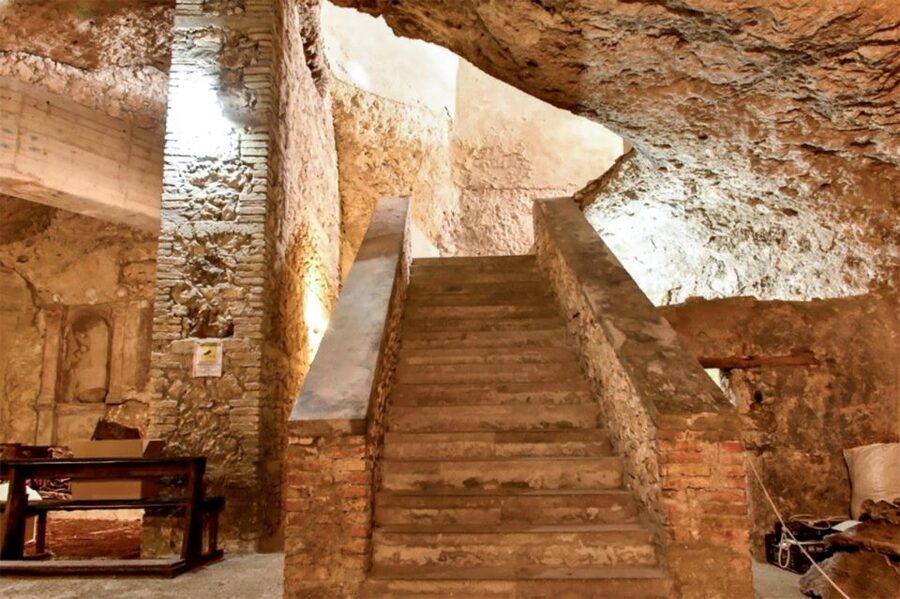
Cagliari keeps its best stories below street level. This tour links a candle-lit WWII shelter, a centuries-old crypt, and Roman remains beneath Saint Eulalia, giving you three very different views of Sardinia’s capital. I like the sharp contrast between recent war history and ancient archaeology, and I like that the route also takes you through Stampace and Marina instead of keeping you underground all day. The main drawback is the dual-language format, which can make explanations slower in a large group.
At $35 per person, the tour offers solid value because the price includes a guide and admission to three underground sites. I also like the choice of adding an Old Town walk or a food and wine option. Just note that the wine add-on may be modest: one guest found it closer to a glass of wine with Sardinian snacks than a full tasting.
The guides receive especially strong praise for clear explanations and friendly pacing. Francesca, Valentina, Frederico, and Silvia are among the guides singled out for making the past easy to follow. Allow two to four hours, wear proper shoes, and arrive 10 minutes early.
Key points to know before you book
- Three different underground settings: Visit the Salesian School shelter, the crypt of Santa Restituta, and the archaeological area below Saint Eulalia.
- A 120-meter WWII tunnel: The private shelter has a candle-lit atmosphere and shows how Cagliari’s residents sought safety during air raids.
- Roman remains beneath a church: Saint Eulalia includes a paved Roman road and other archaeological remains below the modern city.
- A walking tour between sites: Short outdoor walks connect Stampace, Marina, and the underground stops.
- Flexible finishing options: Choose an Old Town walk or a food and wine add-on, depending on the booking option.
- Good value with one caution: Entry fees are included, but the tour uses both English and Italian, and larger groups may move more slowly.
Why Cagliari’s underground tells a better story
Cagliari is easy to read from above. Its old quarters climb across the city, while churches, narrow lanes, and broad squares point to different eras. But the most revealing pieces are often under your feet.
This tour works because it does not focus on one period. You move from a modern bomb shelter to a Christian crypt and then to Roman remains. That sequence gives you a simple lesson in how cities grow: new streets and buildings keep rising above older layers.
I especially like the mix of scale. The WWII tunnel feels close and personal. Santa Restituta is darker and more atmospheric. Saint Eulalia gives you a wider archaeological view, with a Roman road that makes the ancient city feel practical rather than distant.
The tour is led in English and Italian. That is useful for mixed groups, but you should expect the guide to switch languages throughout the visit. In a group of about 25 people, one guest found that separate language groups would have made things easier. A private group is available if you want a more focused pace.
A few more walks around Italy worth a look
- Venice: Doge’s Palace and St Mark’s Basilica Walking Tour
★ 4.4 · 6,291 reviews - Milan: Guided Walking Tour & Last Supper Visit with Ticket
★ 4.7 · 5,409 reviews - Naples: Street Food Walking Tour with Local Guide
★ 4.9 · 4,976 reviews
Starting at the Salesian School tunnel
The first stop is the Istituto Salesiano Don Bosco on Via Sant’Ignazio da Laconi. The guided visit lasts about 40 minutes and centers on a private tunnel shelter beneath the school.
The tunnel runs for about 120 meters. During World War II, it served as a bomb shelter. Today, the candle-lit setting gives the visit a quiet, slightly eerie mood, but the value is not just atmosphere. This is a place connected to ordinary people facing a very real threat in the city.
I like beginning here because the story is easy to grasp. You are not looking at a remote ruin. You are seeing a space used in living memory, one that links Cagliari to the wider wartime experience of Italy.
The shelter is not a long physical challenge, but the tour does involve underground passages and walking. If enclosed spaces make you uncomfortable, this may be the point where you decide the experience is not for you. People with claustrophobia, mobility impairments, wheelchair users, and people with visual impairments are advised not to book.
Bring comfortable shoes. You may also want a light layer, since underground spaces can feel different from Cagliari’s sunny streets, though no specific temperature is given.
A short walk through Stampace
After the first underground visit, you walk for about 10 minutes through Stampace. This is not a bus transfer or a long march. It is a short connection between the sites, with the guide helping place the tunnel within the old city.
That outdoor stretch matters. The experience is not entirely underground, and the movement between districts gives you a better sense of Cagliari as a layered city. You leave one historic setting, cross an old neighborhood, and enter another site with a different purpose.
Stampace is one of the districts named in the route, and it forms part of the broader historic center. The walk also gives you a chance to reset after the darker tunnel before entering the crypt.
If rain is in the forecast, bring an umbrella. The route includes outdoor walking, and the weather can affect your comfort even though several stops are indoors.
Santa Restituta and the sound of dripping water
The crypt of Santa Restituta is the second main stop, with about 40 minutes of guided explanation. It offers a different mood from the wartime shelter.
Here, you see surviving frescoes and hear water dripping through the underground space. The crypt also preserves evidence of pagan worship dating to the fifth century. The result is a place where religious and pre-Christian layers sit close together.
I like this stop for its atmosphere, but the guide matters more here than at the tunnel. Dark spaces and old walls can blur together without context. A strong explanation helps you understand what the frescoes represent and why the site mattered before and after Christian use.
Several guides have been praised for making Cagliari’s past easy to follow. Angela described her guide as articulate and patient, while other guests praised Valentina’s enthusiasm and Frederico’s use of humor. Those details are worth noting because the tour depends heavily on spoken explanation. You are not simply walking through a series of rooms and reading signs.
The crypt may be especially appealing if you enjoy religious sites, archaeology, or places with a strong sense of atmosphere. It may be less satisfying if you prefer large, brightly lit museums with many objects and long written displays.
Same streets, a different way to see them:
- Florence: Highlights Walking Tour with Expert Guide
★ 4.6 · 4,662 reviews - Venice: San Marco to Rialto Walk & Spritz Like a Local
★ 4.2 · 3,651 reviews - Uffizi & Accademia Timed Entry: Small Group Duomo Walking Tour
★ 4.5 · 3,630 reviews - Venice Walking Tour and Gondola Ride
★ 3.5 · 3,630 reviews
Marina and the route to Saint Eulalia
From Santa Restituta, the group walks for about 10 minutes through the Marina district. Again, this is part of the experience rather than dead time.
The route connects two old districts, Stampace and Marina, and shows how the underground sites fit into the city’s present-day streets. You get a few minutes outdoors, move through the historic center, and then reach the next archaeological stop.
This portion also explains why the total time can vary. The three guided underground visits add up to roughly two hours, while the walks, group pace, explanations, and optional extension can bring the experience closer to four hours.
You should plan your day with some flexibility. The advertised duration is two to four hours, and the meeting point may vary depending on the option you book. Several starting details are tied to the Salesian School, but check your confirmation carefully rather than assuming every version begins in exactly the same place.
Roman roads below Saint Eulalia
The final major stop is the MUTSEU Museum of the Treasury and Archaeological Area of Saint Eulalia. The guided portion lasts about 40 minutes.
The main draw is the Roman archaeology beneath the church, including a paved Roman road. That road is a useful detail because it makes the ancient city easier to picture. You are not only looking at fragments. You can see how people moved through the Roman settlement and how later buildings were placed above it.
The Saint Eulalia stop also appears to have practical value for visitors who plan to see the archaeological museum. One guest was pleased to find that the archaeological area was already part of the tour. If you have limited time in Cagliari, combining admission and explanation in one outing can save you from arranging another visit.
The site is a good finale because it brings the tour furthest back in time. Starting with wartime history and finishing with Roman remains gives the whole route a clear shape.
Opening hours can affect the plan. If one underground site is unavailable, an alternative may be substituted. That flexibility is useful, but it also means you should not treat every stop as guaranteed in exactly the same form on every date.
Adding the Old Town walk
If you choose the Old Town option, the tour continues after the three underground visits. Your guide takes you through the historic center and points out key sights along the streets.
This is a good choice if you are new to Cagliari and want a broad introduction in one booking. The underground sites explain what lies below the city, while the walk helps you understand the streets and districts above it.
I would choose this option if you have just arrived and want help getting oriented. It also suits anyone who prefers a full half-day activity rather than a shorter archaeological visit.
The walk is not the same as a private, specialist tour of every church and monument. Think of it as a useful extension that connects the underground history with the visible city. The exact end point can vary, with listed drop-off locations including Piazza Yenne, Via del Collegio, and the Saint Eulalia area.
The food and wine option, with realistic expectations
Some booking versions include wine tasting and a snack. This can be a pleasant way to finish, especially if you want a taste of Sardinian food after the walking route.
Keep your expectations measured. One guest found the option to be a single glass of wine with Sardinian snacks rather than a broad tasting of several wines. That does not make it poor value, but the wording can suggest something more extensive than what you receive.
I would choose the wine option for the social finish and the local bite, not as a serious winery visit. If wine is your main reason for booking, ask yourself if the Old Town walk would give you more useful sightseeing time.
Price, timing, and group size
At $35 per person, the base experience is fairly priced for a two to four hour guided route with admission to three underground sites. Paying separately for each entry and arranging your own explanations could easily make the day less simple, even if the exact individual admission prices are not provided here.
The strongest value comes from the combination of sites. You are not paying for one crypt or one small archaeological area. You get three stops with different periods and purposes, plus the connecting walks.
The main value question is group size. In a small or private group, the bilingual format should be easier to follow. In a large group, English and Italian explanations can lengthen each stop, and you may stand farther from the guide. A private group costs more than the basic shared option, but it may suit you if you care about questions, pace, or language clarity.
The tour requires at least two adults per booking. Free cancellation is available up to 24 hours before the start, and you can reserve now and pay later. Those terms are helpful if your Cagliari plans depend on weather or changing port schedules.
Who should book this underground tour?
I would recommend it to you if you enjoy history but do not want a full museum day. The route is varied, guided, and compact enough to fit into a Cagliari visit.
It is also a good fit if you like places that feel different from standard sightseeing stops. The tunnel, crypt, and Roman road each offer a distinct mood. The tour gives you a clearer sense of the city’s past than a simple walk through the main squares.
Families with older children may find the WWII shelter and underground passages more memorable than a traditional church visit. The amount of walking is moderate, but the route is not suitable for wheelchair users or people with significant mobility limits.
You should think twice if you dislike enclosed spaces, need a completely English-only tour, or want a relaxed food tasting with several wines. For those priorities, the dual-language format and modest tasting may disappoint.
Should you book it?
Book this tour if you want an efficient introduction to Cagliari’s past, with three very different underground settings and a guide to connect the pieces. At $35, it is a strong deal for the base route, especially if you value included entry fees and clear historical context.
Choose the Old Town extension if you want city orientation. Choose the wine option only if a simple glass and snack sound appealing. Arrive early, wear comfortable shoes, allow up to four hours, and remember that the best part of this experience is the contrast between the candle-lit wartime tunnel, Santa Restituta’s damp crypt, and the Roman road below Saint Eulalia.
FAQ
How much does the Underground Cagliari Walking Tour cost?
The tour costs $35 per person. The price includes the guide and entry fees for the three underground sites.
How long does the tour last?
The experience lasts between two and four hours, depending on the option selected, walking pace, and any added Old Town walk or food and wine experience.
Which sites are visited?
The route includes the tunnel shelter at the Salesian School, the crypt of Santa Restituta, and the archaeological area beneath Saint Eulalia.
Is the tour entirely underground?
No. The tour includes short outdoor walks between the sites, including routes through Stampace and Marina.
What languages are available?
The tour is conducted in English and Italian. It uses a dual-language format.
Is a private group available?
Yes. A private group option is available when booking.
What should I bring?
Wear comfortable shoes. An umbrella is suggested if rain is expected because part of the tour takes place outdoors.
Is the tour suitable for wheelchair users?
No. The experience is not suitable for wheelchair users, people with mobility impairments, people with claustrophobia, or people with visual impairments.
Can I add a walking tour or wine tasting?
Yes. Depending on the option selected, you can add a guided walk through the Old Town or a food and wine experience with wine and a snack.
Just added around Italy
- Bergamo: Digital guide made by a local for your walking tour★ 5.0 · 184 reviews
- Full Day Tour by Car and Walking among the Apulian Beauties★ 4.5 · 182 reviews
- The Original Street Food Walking Tour in Bari★ 4.5 · 226 reviews
- Bari Walking Tour with Pasta Experience★ 4.5 · 270 reviews
- Bari Walking City Tour★ 4.5 · 511 reviews
- Bari: Street Food Walking Tour with a Local Guide★ 5.0 · 160 reviews
- Assisi Private Walking Tour including St. Francis Basilica★ 5.0 · 124 reviews
- Private St. Francis Basilica of Assisi and City Walking Tour★ 5.0 · 114 reviews
Italy Walking Tours, compared.
Doge’s Palace and St Mark’s Basilica Walking Tour
Read our review →
Guided Walking Tour & Last Supper Visit with Ticket
Read our review →
San Marco to Rialto Walk & Spritz Like a Local
Read our review →
Uffizi & Accademia Timed Entry: Small Group Duomo Walking Tour
Read our review →
Browse the lists this tour appears in