
Review · GHOST AND HAUNTED WALKING TOURS
Paris by Night Walking Tour: Ghosts, Mysteries and Legends
Paris gets darker after sunset. This two-hour walk turns central Paris into a stage for stories about murder, plague, war, torture, and royal intrigue. I like the small groups of 20 or fewer and the route’s focus on places many daytime tours rush past, including the Conciergerie and Square du Vert-Galant. The main drawback is clear: despite its title, this is often more a dark-history walk than a true ghost tour.
I also like the low price, about $18.10 per person, and the chance to see familiar streets in a different mood. Guides such as Sophia, Daniel, Thelma, Sylvia, and Ami have been praised for clear storytelling and friendly interaction. Still, you should expect plenty of walking, roughly 10,000 steps, and some long stretches between stops where the story may lose momentum.
Key points at a glance
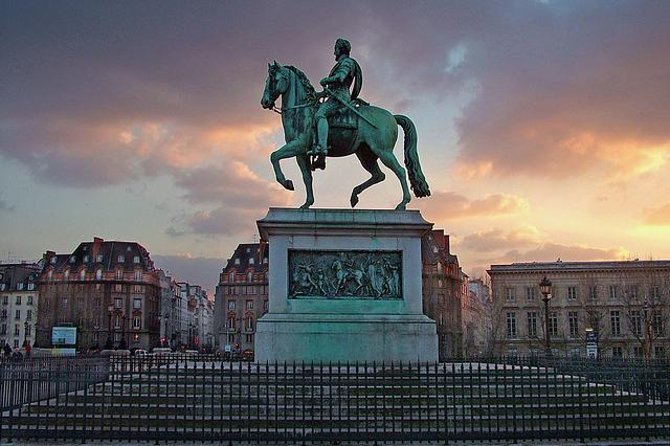
- The route begins beside Pont Neuf: Meet at the Equestrian Statue of Henri IV on Île de la Cité, one of the most atmospheric parts of central Paris.
- The Conciergerie anchors the royal and revolutionary story: Marie Antoinette was imprisoned here before her execution.
- Square du Vert-Galant has a pleasant setting and grim past: The park is linked to the execution of the last Knights Templar.
- Saint-Germain-l’Auxerrois brings religious violence into focus: The church is tied to the St. Bartholomew’s Day Massacre of 1572.
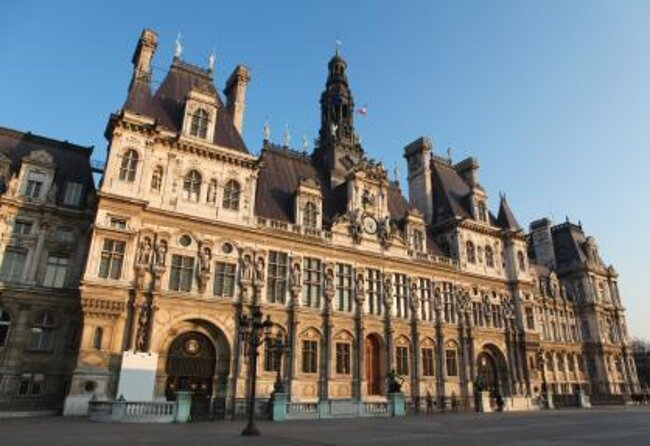
- The tour ends near Hôtel de Ville: This square hosted celebrations, public events, and executions over several centuries.
- Expect history more than horror: Some guides add ghostly tales, but the experience usually centers on documented violence and political drama.
What kind of night walk is this?
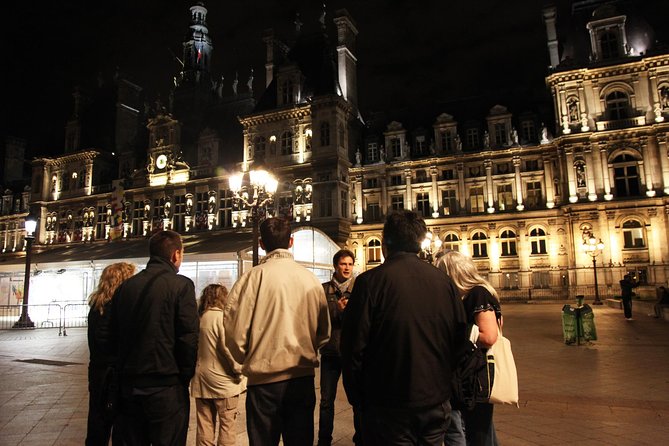
Paris is famous for romance, art, and grand boulevards. This tour asks you to look at the same city through its harsher past. You move through the historic center while hearing about royal power, religious conflict, public punishment, disease, occupation, and political unrest.
The title promises ghosts, mysteries, and legends. The actual experience appears to depend heavily on the guide. Sophia has been praised for spooky stories and warm interaction. Daniel has been praised for keeping a steady pace and making historical facts entertaining. Thelma and Sylvia also received strong marks for clear delivery.
But you should set your expectations carefully. Several people found the walk informative without finding it frightening. Some described it as a history lesson about murder and executions, with few actual ghost stories. If you want theatrical scares, haunted buildings, or supernatural tales at every stop, this may feel too restrained.
If you enjoy the darker side of French history, the fit is better. You will hear about real events that need little embellishment: massacres, royal prisoners, beheadings, torture, and public executions. In that sense, the factual material can be more unsettling than a made-up ghost story.
More Ghost Walking Tours in Paris:
- Paris: Dark History and Ghostly Guided Walking Tour
★ 4.7 · 1,000 reviews - Paris: Ghosts, Legends & Mysteries Evening Walking Tour
★ 4.5 · 241 reviews - New Orleans Premier Ghost, Voodoo and Vampire Walking Tour
★ 4.5 · 12,856 reviews
Starting at Henri IV beside Pont Neuf
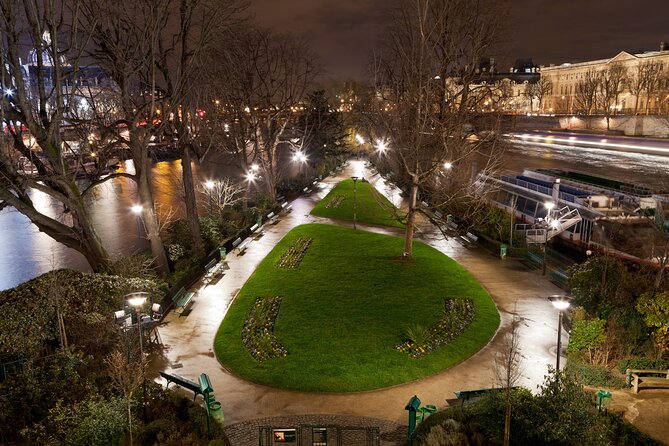
The meeting point is the Equestrian Statue of Henri IV at 15 Place du Pont Neuf. This puts you near the western end of Île de la Cité, the island at the center of the Seine.
It is a sensible starting point. The island was the site of the Roman governor’s fortress in the fourth century, and it remains one of the best places in Paris to connect the modern city with its medieval and royal past. At night, the river and bridges give the opening section a strong atmosphere before the darker material begins.
Henri IV also becomes an important figure in the stories. The nearby Square du Vert-Galant was created in his honor, and the square’s name refers to his reputation for romantic adventures and mistresses. The guide uses this more polished image of the king as a contrast to the violence associated with the same area.
Because the tour is conducted in English, you should have no trouble following the main narration if you are comfortable with conversational English. Group size is limited to 20, which should make it easier to hear the guide than on a large city walk. Still, stay close at street corners and listen for instructions as the group moves through central Paris.
Square du Vert-Galant and the Knights Templar
The first listed stop is Square du Vert-Galant, a small green space at the tip of Île de la Cité. The setting is pleasant and calm, which makes the story attached to it especially sharp.
Here, you hear about the last Knights Templar being burned at the stake. The stop lasts about five minutes and has no admission charge. You do not enter a museum or attraction, so the value comes from the guide’s explanation and the contrast between the park’s peaceful appearance and its grim association.
This is a good example of the tour’s method. You are not simply shown famous monuments. You are given a darker interpretation of ordinary public spaces. A staircase or riverside park can carry a very different meaning once you learn what supposedly happened there.
You should also approach highly specific historical details with some caution. One participant with specialist training in medieval and 16th-century French history raised concerns about several claims made during the walk, including the exact location associated with the Templar execution. That does not erase the broader story, but it means you should treat the tour as accessible storytelling rather than an academic lecture.
Saint-Germain-l’Auxerrois and religious violence
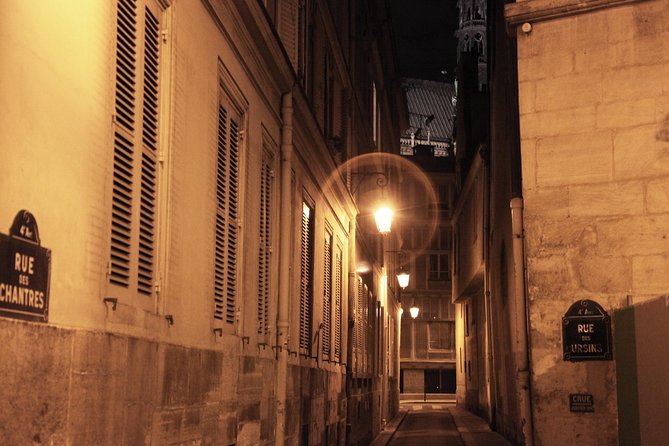
The walk continues to Église Saint-Germain-l’Auxerrois, a church with origins reaching back to the seventh century. It sits near the Louvre and is easy to overlook amid the grander monuments of central Paris.
The guide explains the church’s role in the events surrounding the St. Bartholomew’s Day Massacre in 1572. Around 30,000 Huguenots, French Protestants, were killed during a wave of violence that spread through Paris and other parts of France.
This is one of the strongest stops for understanding why religion and politics were so dangerous in early modern France. The story involves Catholics, Huguenots, royal marriage plans, factional power, and fear of rebellion. Even if you know the basic outline, hearing it on a dark street beside the old church can make the conflict feel less remote.
The five-minute stop is short, so do not expect a full lecture on the French Wars of Religion. The guide gives you the main dramatic points and moves on. That keeps the walk lively, but it can also lead to simplified explanations.
For that reason, I would enjoy this stop most if I wanted a memorable introduction, not a full historical account. If you already know the period well, you may want to check some details afterward.
More Crime and Mystery Walks in Paris:
- Prague: Ghost Walking Tour Where Legends Come To Life
★ 4.4 · 5,253 reviews - Edinburgh Darkside Walking Tour: Mysteries, Murder and Legends
★ 5.0 · 3,862 reviews - Historical Walking Tour: Legends of Bruges
★ 5.0 · 2,541 reviews - Historical Walking Tour: Legends of Antwerp
★ 5.0 · 1,837 reviews
The Conciergerie and Marie Antoinette
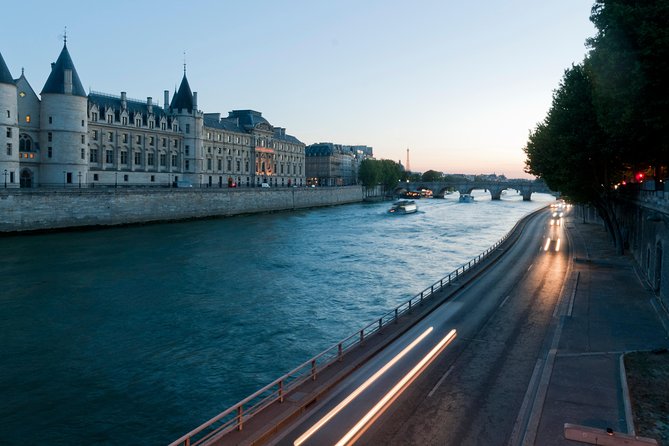
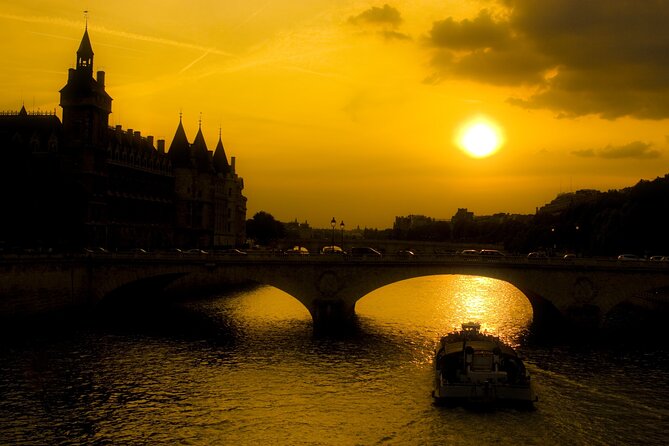
The Conciergerie is one of the tour’s most meaningful sights. This former royal palace later became a prison, and Marie Antoinette was held there during the French Revolution.
The walk does not appear to include an indoor visit. You pass by the building and hear about its role in the revolutionary justice system. That distinction matters. You get the setting and the story, but not the cells, exhibits, or interior spaces available on a paid museum visit.
Even from outside, the Conciergerie helps connect the personal fate of Marie Antoinette with the wider machinery of the Revolution. The building was not only associated with one famous prisoner. It was part of a system in which accused people could be tried and sent to the guillotine.
If you have already visited the Conciergerie during the day, the evening stop gives it a different character. If you have not visited inside, you may leave wanting a separate daytime visit. The tour provides context, but it does not replace the museum.
Palais de Justice and the spectacle of punishment
At the Palais de Justice de Paris, the focus turns to the courts and public executions of the French Revolution. The building received the Grand Prix de l’Empereur as the greatest work of art produced in France during that decade, yet its history also includes judgment, imprisonment, and sentences to the guillotine.
That contrast is central to the tour. Paris often presents beauty and power side by side. A magnificent building can also be linked to fear, punishment, and political theater.
The guide describes how people were judged guilty and sentenced before cheering crowds. Kings, revolutionaries, and ordinary prisoners could all become part of the public spectacle. The story is not simply about death. It is about the crowd, the court, and the use of punishment to display state power.
This section may be difficult for younger children. One person specifically advised against bringing young kids, and that seems sensible given the subjects of torture, massacre, execution, and murder.
Place de l’Hôtel de Ville and the final stories
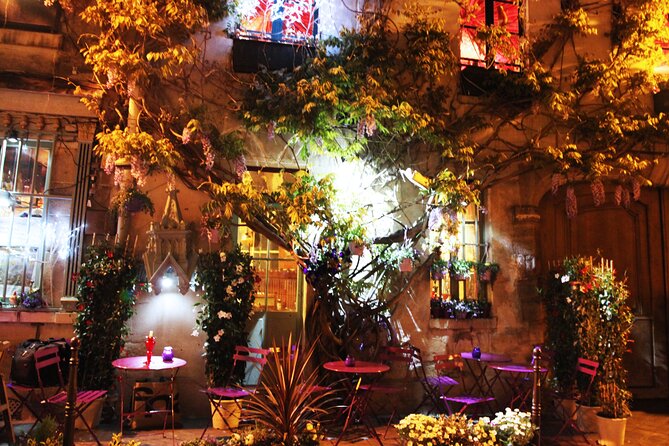
The route ends near Place de l’Hôtel de Ville, beside the Hotel La Ville at 70 Rue de Rivoli. The square has served very different purposes over time.
Municipal celebrations took place here, including events linked to royal births and marriages. Yet the same area was also used for executions from 1310 to 1830. The names associated with these punishments include François Ravaillac, who assassinated Henri IV, and Marie-Madeleine-Marguerite de Brinvilliers, who was executed for poisoning.
This is a fitting ending because the square brings together the tour’s main ideas: public celebration, royal authority, crime, punishment, and spectacle. You finish close to central transport links and within easy reach of more restaurants and bars, which is useful after two hours on foot.
The ending may feel less dramatic if you expected a final supernatural encounter. It works better as a historical closing point than as a horror finale.
Walking distance, pace, and group size
The walk lasts about two hours, but the physical effort may be greater than the duration suggests. One detailed account estimated roughly 10,000 steps. Comfortable shoes are not optional if you want to enjoy the stories instead of thinking about your feet.
The route includes stops, but you also walk between them. Some people found these in-between sections too long, with little happening beyond movement from one site to the next. A strong guide can fill those gaps with extra stories, questions, or local details. A less engaging guide may leave the group simply following along.
The maximum group size is 20. That is small enough for a more personal feel, though the quality of the experience will still depend on whether the guide speaks clearly and includes the full group. Sophia was praised for answering questions and offering suggestions for other places to visit, including Père-Lachaise Cemetery.
The tour is near public transportation, and most people can participate. Hotel pickup and drop-off are not included, so you need to reach the statue at Pont Neuf on your own and arrange your own return from Hôtel de Ville.
Guide quality can shape the whole evening
The strongest praise is aimed at the guides. Sophia is repeatedly described as friendly, engaging, and good at tying stories together. Daniel is praised for humor, historical detail, and a comfortable pace. Thelma, Sylvia, Ami, and Kritika also received positive comments for clear and personable presentations.
That range of guide names tells you something practical: the experience is not identical every night. Some guides may lean into ghosts and hauntings. Others may focus on the documented history of executions, royal intrigue, massacres, and political conflict.
A weaker presentation can change the mood quickly. One account described a guide who spoke mainly to a few people rather than involving the full group. Another found the pace too fast. These are not minor details on a walking tour. The guide is the entertainment, the historian, and the link between the streets and the stories.
I would book this with an open mind rather than expecting a fixed theatrical show. You may get a spooky evening full of legends, or you may get a lively overview of Parisian violence and power.
Is $18.10 good value?
At about $18.10 per person, this is inexpensive for a two-hour guided walk in central Paris. You are paying for an English-speaking local guide, a small group, and a themed route that connects several major historic sites.
The value is strongest if you are new to Paris or want an easy first look at the city’s darker past. You cover several important locations without paying separate admission fees. The tour also gives you a useful outline for later visits to the Conciergerie, Saint-Germain-l’Auxerrois, or Père-Lachaise Cemetery.
The value is weaker if you have spent a week studying French history or already know the main stories of Henri IV, Catherine de’ Medici, the Templars, the Revolution, and the St. Bartholomew’s Day Massacre. One specialist also raised serious concerns about historical accuracy, including claims about Catherine de’ Medici, Henri IV, the royal wedding connected to the massacre, and the Templar execution site.
That criticism matters. The walk can be fun and atmospheric, but I would not use it as your only source for complex historical events. Think of it as an entertaining introduction, then verify details that interest you.
Who should book this Paris night walk?
This tour suits you if you want an affordable evening activity, enjoy walking, and prefer stories about real crimes and political violence to standard sightseeing. It is also a good choice if you have already seen the major monuments and want a different angle on the central city.
It works especially well for first-time visitors who want several landmarks tied together by one theme. Teenagers may enjoy the darker material if they are comfortable with stories of torture, executions, and massacres.
You may want to skip it if you want a genuinely frightening ghost tour, a supernatural investigation, or a short route with little walking. You should also choose something else if precise historical scholarship matters more to you than atmosphere and storytelling.
The free cancellation policy allows a full refund if you cancel at least 24 hours before the start time. Changes or cancellations made less than 24 hours before the start are not accepted, and the tour requires a minimum number of participants.
FAQ
How long does the Paris by Night Walking Tour last?
The tour lasts approximately two hours.
Where does the tour begin?
It begins at the Equestrian Statue of Henri IV, 15 Place du Pont Neuf, 75001 Paris, near Pont Neuf.
Where does the tour end?
The tour ends near Hotel La Ville at 70 Rue de Rivoli, 75004 Paris, close to Place de l’Hôtel de Ville.
Is this a true ghost tour?
The tour includes ghosts, mysteries, and legends in its theme, but much of the content focuses on dark historical events such as murders, massacres, torture, plagues, and executions.
How large is the group?
The maximum group size is 20 people.
What is included in the price?
The price includes a local English-speaking guide and the guided walking experience. Hotel pickup and drop-off are not included.
Should you book it?
Book this tour if you want a low-cost, two-hour walk through Parisian history after dark, and you are happy with gruesome facts as well as ghostly legends. The route is atmospheric, the central locations are worthwhile, and a good guide can make the evening both funny and unsettling.
Do not book it expecting a nonstop scare show. The safest expectation is a guided walk about Paris’s dark past, with the amount of supernatural material depending on the guide. Wear comfortable shoes, arrive ready for about 10,000 steps, and treat the historical claims as an introduction rather than the final word.
More Night Walking Tours in Paris
- Private Street Food Evening Walking Tour in Ho Chi Minh City
★ 5.0 · 3,175 reviews - Granada: Albaicín and Sacromonte Guided Sunset Walking Tour
★ 4.9 · 2,962 reviews - Bremen: Walking Tour in German with Night Guard
★ 4.7 · 2,922 reviews - Ghosts of Charleston Night-Time Walking Tour with Unitarian Church Graveyard
★ 4.5 · 2,835 reviews
Just added around Paris
- The Official Emily in Paris Locations Walking Tour★ 4.9 · 383 reviews
- Paris: Montmartre Food Tasting Walking Tour with Secret Dish★ 4.8 · 107 reviews
- Paris: Emily Inspired Walking Tour★ 4.9 · 312 reviews
- Saint-Germain: Gourmet Chocolate & Pastry Walking Food Tour★ 4.8 · 495 reviews
- Paris: Walking Tour of Montmartre★ 4.7 · 470 reviews
- Paris: Ghosts, Legends & Mysteries Evening Walking Tour★ 4.5 · 241 reviews
- Paris: Walking Tour with Notre Dame or Ste-Chapelle Access★ 4.4 · 198 reviews
- Paris Top Sights Half Day Walking Tour with a Fun Guide★ 4.9 · 92 reviews
Ghost and Haunted Walking Tours, compared.
New Orleans Premier Ghost, Voodoo and Vampire Walking Tour
Read our review →

Ghost Walking Tour Where Legends Come To Life
Read our review →
Savannah History and Haunts Candlelit Ghost Walking Tour
Read our review →

Ghosts of Charleston Night-Time Walking Tour with Unitarian Church Graveyard
Read our review →
New Orleans Haunted Ghost, Voodoo & Vampire Walking Tour
Read our review →Browse the lists this tour appears in