
Review · ROME WALKING TOURS
Best of Rome Walking Tour including Trevi Fountain
Rome makes a fine first impression on foot. This short walking tour connects Piazza Barberini, the Trevi Fountain, the Pantheon area, Sant’Ignazio, the Temple of Hadrian, and Piazza Navona in roughly 90 minutes to two hours. I like the route because it gives you a quick sense of central Rome without requiring a full day or a punishing pace.
I also like the pay-what-you-wish format, with a listed booking price of about $4.62 per person, and the chance to hear local stories from guides such as Camilla, Angela, Etienne, Fabiana, Laura, and Axel. The main drawback is that you do not go inside the Pantheon, and the tour can feel rushed or hard to hear when Rome’s crowds are at their thickest.
- Trevi Fountain is a major photo stop, with time intended for pictures and the traditional coin toss.
- The route links several central sights without requiring public transport between them.
- The Pantheon is explained from outside, but interior admission is not included.
- Small groups are possible, although the maximum group size is 20 people.
- The guide quality matters greatly, since some guides add stories and practical tips while others may offer only basic commentary.
What this Rome walk is really designed to do
Think of this experience as an orientation walk, not a substitute for Rome’s major museum and archaeological tours. You get a useful introduction to the city center, a handful of famous monuments, church interiors or exteriors where applicable, and practical advice for the rest of your stay.
The route is especially useful on your first day. You can see where the main squares and fountains sit in relation to one another, note restaurants and cafés recommended by your guide, and decide which places deserve a return visit. If you have only one day in Rome, this can also fit well around a separate Colosseum or Roman Forum visit.
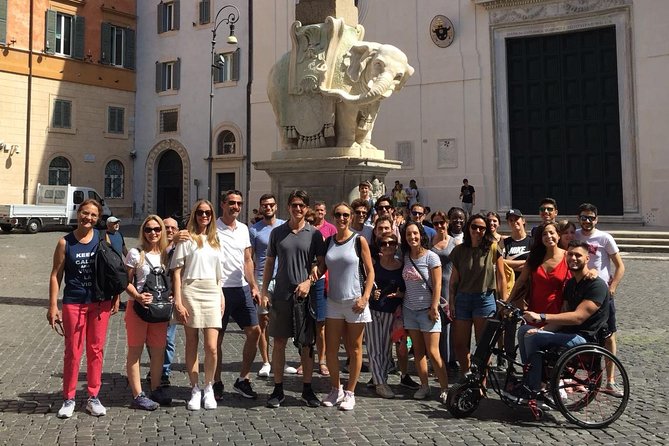
The tour is offered in English and operates with a maximum of 20 people. That is not an intimate private walk, but the actual group may be much smaller. One group had nine people, which made it easier to ask questions and keep in touch with the guide.
The pace is generally described as comfortable rather than strenuous. Still, you will be walking on Rome’s hard streets and standing in crowded squares, so wear sensible shoes. The company operates in all weather, making a light rain layer and sun protection useful depending on the season.
Meeting at Piazza Barberini and the Triton Fountain
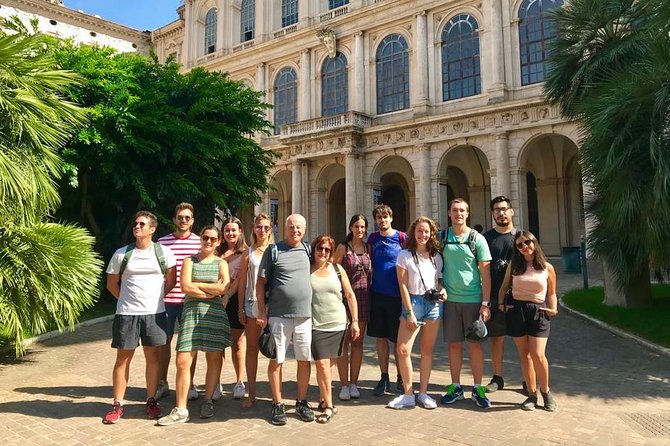
The official starting point is Piazza Barberini, at P.za Barberini. The meeting area is associated with the Fountain of Triton, a dramatic Baroque work by Gian Lorenzo Bernini.
This is a logical place to begin. Piazza Barberini sits close to several central sights, and the fountain gives you a recognizable landmark. In practice, the square can be confusing because several tour groups may gather there at the same time. Arrive early, check the meeting instructions carefully, and look for the guide rather than assuming the first person holding a sign is yours.
The guide may contact you before the tour. Camilla, for example, was praised for sending a helpful message before meeting the group. That sort of communication matters here, especially if you are unfamiliar with Rome or arriving during a crowded part of the day.
The tour provider says its chat feature is not instant. If you need help close to departure, call or send a WhatsApp message instead of waiting for an app reply.
A few more walks around Rome worth a look
- Rome: Guided Food Walking Tour with Wine in Trastevere
★ 4.9 · 3,105 reviews - Rome: Trastevere & Campo de Fiori Street Food Walking Tour
★ 4.9 · 2,768 reviews - Rome: Paranormal Night Walking Tour & Secret Backstreets
★ 4.9 · 1,921 reviews
Trevi Fountain: Rome’s grandest photo stop
The Trevi Fountain is the emotional center of the walk. It is large, theatrical, and almost always busy. The water, stone figures, and tight surrounding streets create a powerful first look at Rome, but this is not a quiet place for reflection.
Your guide should explain the fountain and then give you time for pictures. Several accounts praise the chance to take photos and toss coins, while one especially useful guide warned the group about pickpockets. Keep your phone and wallet secure, particularly when you are focused on a selfie or trying to move through the crowd.
Trevi is also where timing differences become most noticeable. A well-paced tour may pause long enough for everyone to take pictures. A hurried group might receive only a quick explanation before moving on. If seeing the fountain is your top priority, tell the guide early. The company’s own description promises the stop, but crowd conditions and the day’s pace can affect how long you remain there.
One practical point: do not expect to wander freely around the fountain basin. The experience is about viewing, listening, and taking photos from the permitted public areas.
Sant’Ignazio and Rome’s church tradition
Chiesa di Sant’Ignazio di Loyola adds a welcome change from outdoor squares. The church is known for its striking interior and illusionistic decoration, and the tour allows about 15 minutes here with free admission listed.
This stop gives the walk more depth. Rome is not only ancient ruins and famous fountains. Its churches reveal how art, faith, architecture, and politics shaped daily life in the city. A good guide can point out details you might pass without noticing and explain why a church in an ordinary-looking street deserves attention.
Dress carefully if the route enters a place of worship. Shorts and sleeveless tops are not allowed, and both men and women must cover their knees and shoulders. You can risk being refused entry if your clothing does not meet the rules. This is worth planning for even on a warm day.
The church visit also shows why the tour is better understood as a broad introduction than a single-subject history lesson. You move from Baroque Rome to ancient monuments and then to major public squares, with the guide providing the links.
The Pantheon from the outside
The Pantheon is one of Rome’s essential sights, but this experience does not include entry. Recent rules require each person to make an individual reservation under their own name, and the tour company cannot arrange those reservations in advance for the group.
The guide will explain the building from outside, which still gives you useful context. You can study the enormous columns, the front façade, and the way the ancient structure sits among modern streets and cafés. You can then return later if you want to see the interior, making your own reservation.
This limitation should be clear before you book. If standing beneath the Pantheon’s famous dome is central to your plans, schedule a separate visit. Do not assume the tour will take you through the doors.
The exterior explanation can still be worthwhile, particularly when your guide connects the Pantheon with Rome’s changing religious and political life. Guides such as Angela and Fabiana were praised for telling stories that made the city’s past easier to understand. That storytelling is the difference between simply seeing a building and knowing why it matters.
Same streets, a different way to see them:
- Rome: Colosseum Arena, Roman Forum & Palatine Hill Tour
★ 4.5 · 1,874 reviews - Rome: Trastevere Street Food Walking Tour with Local Expert
★ 4.8 · 1,784 reviews - Rome: Small-Group Guided Day or Night Walking Tour
★ 4.8 · 1,009 reviews - Rome by Night Walking Tour – Legends & Criminal Stories
★ 4.5 · 1,003 reviews
The Temple of Hadrian and the city’s layered past
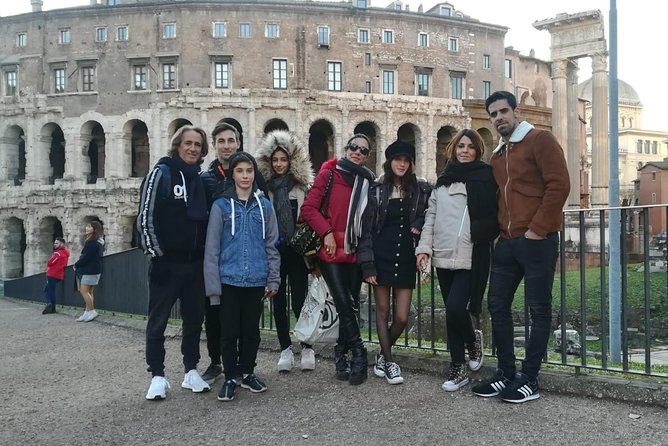
The Temple of Hadrian offers another glimpse of ancient Rome built into the modern center. Its surviving columns sit along a busy urban street, a good example of how Rome’s past is not isolated behind museum walls.
This is a short viewing stop rather than a full archaeological visit. You will not get the scale of the Colosseum or Roman Forum here, but you will see how ancient remains appear in everyday city life. That contrast is one of the pleasures of walking Rome.
A guide can make this stop more meaningful by explaining what survives, what has disappeared, and how the monument fits into the surrounding neighborhood. If you are expecting a long archaeological lecture, you may find the treatment brief. If you want a quick city-center introduction, the stop fits the purpose well.
Piazza Navona and Bernini’s fountains
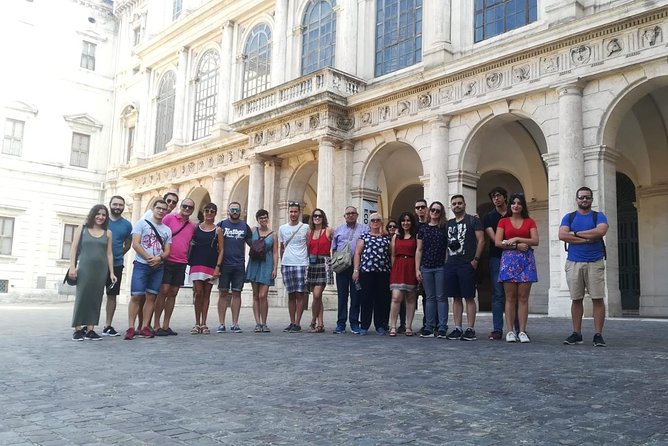
The walk ends at Piazza Navona, one of Rome’s largest and most recognizable squares. Its long shape follows the outline of an ancient stadium, while its fountains and surrounding buildings give it an energetic public character.
Bernini’s Fountain of the Four Rivers is the visual centerpiece. This is a good final stop because the square offers plenty to look at after the formal tour ends. You can stay for photos, return to a nearby sight, or continue exploring on your own.
The endpoint is useful for planning the rest of your day. From here, you are near the Pantheon and other central streets, so you can revisit the Pantheon interior if you have made your own reservation. You may also use the guide’s suggestions for coffee or authentic local food, a detail several participants valued.
Guide quality and the sound problem
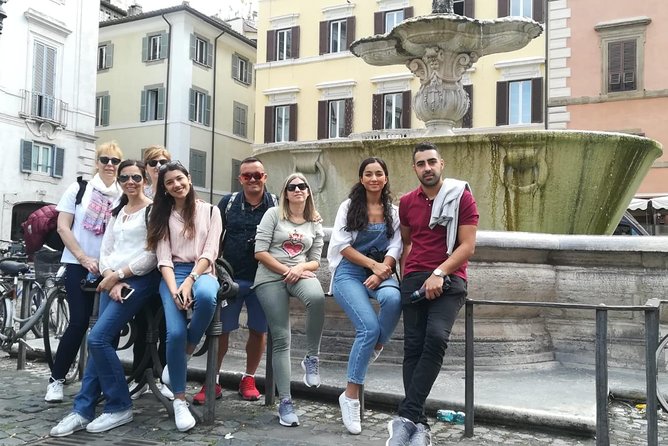
The strongest part of this experience is the guide. Positive accounts describe guides who were friendly, funny, flexible, and full of historical and cultural details. Angela was singled out for making Rome’s past engaging, while Camilla was praised for organization, restaurant tips, safety advice, and clear communication. Etienne, Fabiana, Laura, Axel, and Arkaprovo also received praise for their explanations and personable manner.
That range of names also tells you something important: the experience can vary by guide. Most feedback is very positive, with a 4.6 rating and 90 percent of participants recommending it, but there are clear cautions.
Some people felt rushed and did not get enough time at the sights. One person could barely see the Trevi Fountain because the group had to move on. Another found the commentary too limited between stops and had trouble hearing because the guide used no communication device.
Crowds are the key problem. A guide may be excellent, but if you are standing behind a large cluster of people in a noisy square, a soft voice is difficult to follow. Some guides handle this by waiting for the group to gather, but the experience is easier when the guide uses a flag, visual marker, or audio system. This tour does not promise headphones or another listening device, so stay close and speak up if you cannot hear.
Price, tips, and the real value
The listed price is about $4.62 per person, and the tour uses a pay-what-you-wish model. That makes the basic booking cost unusually low for a guided introduction to central Rome.
The low price does not mean the experience is entirely free. The booking information says there is no extra charge after booking apart from an optional tip if you liked the tour. Tipping is not included, so bring that into your budget when deciding what the tour is worth to you.
The value is strongest when you use the walk as a starting point. You get route planning, history, safety reminders, and restaurant or café suggestions for a small initial cost. The value is weaker if you expect museum entry, a full Pantheon visit, extensive archaeological detail, or a private guide.
Group discounts are available, and mobile tickets make the booking easy to carry. Free cancellation is allowed up to 24 hours before the start time for a full refund. Changes or cancellations inside that 24-hour window are not accepted for a refund, and the experience may be canceled if its minimum number of participants is not reached.
Who should book this Rome walking tour?
I would choose this tour if you are visiting Rome for the first time, want a short introduction, or need help arranging the historic center in your head. It also suits families and mixed-age groups because the walk is not generally described as strenuous, and one family found it engaging for an 11-year-old.
It works well as an afternoon follow-up to a morning Colosseum visit. It can also be a good first-night activity, when you want to see Trevi Fountain and Piazza Navona without committing to a long formal tour.
I would think twice if you dislike crowds, need guaranteed quiet audio, or want detailed interior visits. You should also avoid booking it as your only major Roman history experience. Pair it with a separate Colosseum, Roman Forum, Vatican, or Pantheon visit according to your interests.
Should you book it?
Book it for orientation, stories, and value, especially if this is your first time in Rome. The route covers several major central sights, the price is modest, and the best guides add practical advice you can use for the rest of your trip.
Go in with realistic expectations. You will walk through crowded areas, the Pantheon is exterior only, and the quality depends on the guide and the group’s ability to stay together. Arrive early at Piazza Barberini, wear comfortable shoes, dress properly for the church, protect your belongings at Trevi Fountain, and tell the guide if you need more time or cannot hear.
FAQ
How long does the Best of Rome Walking Tour last?
The tour lasts approximately 1 hour 30 minutes to 2 hours.
Where does the tour begin?
It begins at Piazza Barberini, P.za Barberini, 00187 Roma RM, Italy. The meeting area is associated with the Fountain of Triton.
Where does the tour end?
The tour ends at Piazza Navona, 00186 Roma RM, Italy.
Is the Pantheon interior included?
No. The guide explains the Pantheon from outside, but the tour does not enter it. You may visit the interior afterward by making your own individual reservation.
What language is the tour offered in?
The tour is offered in English.
Is food or drink included?
No. Food and drinks are not included.
Are tips included in the price?
No. Tips are not included. The booking information says there should be no additional cost after booking apart from an optional tip if you liked the tour.
How many people can join the tour?
The maximum group size is 20 people. Actual groups may be smaller.
What should I wear?
Wear comfortable walking shoes and dress appropriately for the weather. If the route enters a church or another place of worship, knees and shoulders must be covered, and shorts or sleeveless tops are not allowed.
Just added around Rome
- Rome: Colosseum and Ancient Rome Guided Walking Tour★ 4.5 · 95 reviews
- Rome: Trevi Fountain, Spanish Steps & Pantheon Walking Tour★ 4.6 · 336 reviews
- Rome: Guided Walking Tour and Pantheon Priority Entry Ticket★ 4.3 · 317 reviews
- Rome Walking Tour: Pantheon, Trevi, Navona & Hidden Gems★ 4.8 · 501 reviews
- Rome: Underground Trastevere Guided Walking Tour★ 4.8 · 87 reviews
- Rome: Trastevere Food Walking Tour with Beer and Wine★ 4.9 · 71 reviews
- Rome Trastevere Walking Food Tour★ 4.8 · 97 reviews
- Rome: Relics from the Passion of the Christ Walking Tour★ 4.9 · 84 reviews
Rome Walking Tours, compared.

Guided Food Walking Tour with Wine in Trastevere
Read our review →
Trastevere & Campo de Fiori Street Food Walking Tour
Read our review →
Paranormal Night Walking Tour & Secret Backstreets
Read our review →
Colosseum Arena, Roman Forum & Palatine Hill Tour
Read our review →
Trastevere Street Food Walking Tour with Local Expert
Read our review →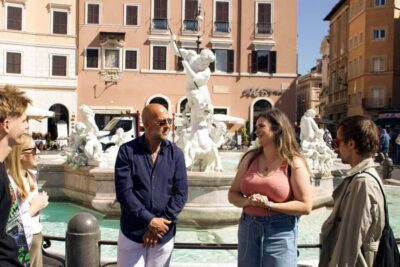

Rome by Night Walking Tour – Legends & Criminal Stories
Read our review →
Rome Food Tour in the Historic Centre with 8+ Food Tastings
Read our review →Browse the lists this tour appears in