
Review · CRIME AND MYSTERY WALKING TOURS
Rome by Night Walking Tour – Legends & Criminal Stories
Rome gets stranger after sunset. This 90-minute walking tour trades grand daytime monuments for murder tales, haunted bridges, Inquisition stories, and quiet piazzas glowing under streetlights. I like its evening timing, which brings cooler air and fewer crowds, and I like the route from Corso Vittorio to Campo de’ Fiori and Castel Sant’Angelo. The $14.48 price also makes it an easy add-on to a Rome trip.
The main drawback is the depth of the storytelling. Some guides turn the tales into lively theater, while some sections may feel brief or light on historical detail. This is more of a dark-history stroll than a serious ghost investigation, so set your expectations accordingly.
Key points to know before booking
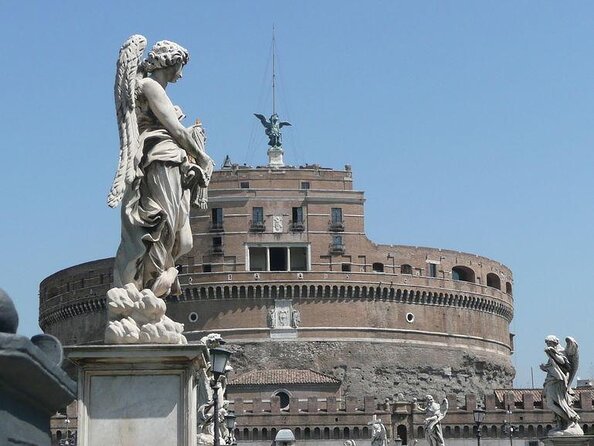
- The route links major sights after dark: You pass Piazza Farnese, Campo de’ Fiori, the Tiber, and Castel Sant’Angelo.
- The stories focus on Rome’s darker side: Expect tales of murder, executions, poison, prisons, superstition, and the Inquisition.
- Night improves the setting: Illuminated monuments and quieter streets give familiar Rome a different mood.
- The guides make or break the experience: Alberto, Maria, Semi, Sammy, Rob, Althea, Maryam, and others have been praised for humor, energy, and storytelling.
- The walk ends in a useful place: Castel Sant’Angelo puts you near restaurants, bars, taxis, and public transport.
- The group can reach 20 people: That is manageable, though a large group may make it harder to hear in busy streets.
Why Rome’s dark side works best after sunset
Rome is full of beauty, but its past was not always beautiful. Behind the churches, fountains, and Renaissance palaces are stories of suspicion, public punishment, family betrayal, religious persecution, and gruesome crime.
This tour uses that contrast well. You see famous places you may already know, but your guide changes the focus. Instead of discussing only architecture, the commentary asks what happened in these squares after dark, who was punished there, and how ordinary people responded to fear.
That shift is the appeal. You are not simply looking at monuments under lights. You are hearing how people once used them, feared them, damaged them, or attached strange legends to them.
I especially like the timing for a first or last night in Rome. On your first evening, the tour gives you a useful orientation to central Rome and points out places you can revisit later. On your final night, it offers a compact way to see more of the city without committing to another long museum visit.
The tour is conducted in English and lasts about an hour and a half. That is long enough to cover several neighborhoods without turning into an exhausting march.
More Night Walking Tours in Rome
- Rome: Paranormal Night Walking Tour & Secret Backstreets
★ 4.9 · 1,921 reviews - Rome: Small-Group Guided Day or Night Walking Tour
★ 4.8 · 1,009 reviews - Rome: Guided City Center Evening Sightseeing Walking Tour
★ 4.4 · 953 reviews
Starting near Corso Vittorio and Sant’Andrea della Valle
The meeting point is Piazza di S. Andrea della Valle, near Corso Vittorio. This is a practical central starting point, and public transport and taxis are available nearby.
The opening section sets up the mood by looking at Rome between the imperial period and the Renaissance. Medieval Rome was not the polished city shown on postcards. It was marked by poverty, political tension, religious suspicion, and people trying to survive by any means available.
Your guide may explain how monuments were damaged or stripped by people desperate to sell valuable material. That detail helps you see Rome’s ruins differently. A broken column or altered building was not always the result of time alone. Sometimes it was the result of need, greed, or deliberate destruction.
This is also where the quality of the guide matters most. A strong storyteller can make a familiar church or palace feel newly unsettling. Guides such as Alberto, Maria, and Rob have been praised for making people comfortable while keeping the pace and story moving.
The group size can reach 20 people. That is not enormous, but Rome’s streets are noisy, and a guide speaking softly may be hard to hear. Stay close at the start, especially if you are walking with older family members or anyone who has difficulty keeping up.
One useful point from the tour feedback is that guides have adjusted their pace when asked. Semi was specifically praised for slowing down for older people in the group, and Althea was noted for walking at a comfortable speed for someone with back trouble. Still, tell your guide early if you need a slower walk.
Campo de’ Fiori and stories of punishment
The route continues toward Campo de’ Fiori, one of central Rome’s most famous squares. In daylight, it is associated with market stalls, restaurants, and the statue of Giordano Bruno. At night, the same space carries a more serious mood.
The tour places the square within Rome’s history of public punishment and religious control. You hear about heretics being burned and about the machinery of the Inquisition, which could turn neighbors against one another.
This part is useful because it moves beyond the simple image of the Inquisition as a distant institution. The stories show how suspicion could affect daily life. Accusations were not just matters for officials and prisoners. They could involve families, neighbors, and anyone viewed as a threat to accepted belief.
The experience does not present itself as a full academic lecture. The storytelling is designed to keep you walking, listening, and looking. Some people will appreciate that pace. If you want dates, long explanations, and detailed historical debate, you may find the treatment too short.
The Campo de’ Fiori section can also be emotionally heavy. The subject includes execution and religious persecution, though the tour is not described as graphic at every stop. I would not choose it for very young children unless they are comfortable with dark historical themes.
Piazza Farnese and Rome’s grand public spaces
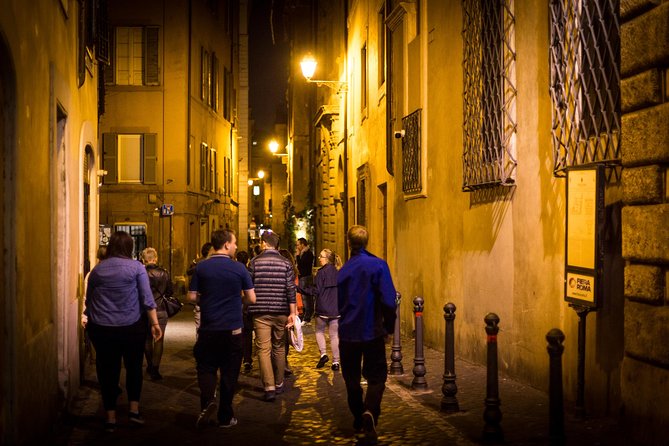
Piazza Farnese brings a different kind of setting. Its grand architecture and broad shape show the power of Renaissance Rome, but the tour uses the square to remind you that beauty and cruelty often shared the same streets.
You might hear about citizens taking apart or desecrating monuments in search of anything they could sell. The story gives the piazza a human scale. Great palaces were not simply admired by everyone around them. They were also part of a city where poverty could make marble, metal, and stone seem like useful commodities.
This stop works best when you look closely at the buildings while listening. The tour encourages you to notice details that are easy to miss during a daytime sightseeing rush. You may also learn about messages and symbols placed around Rome, including religious images used in attempts to discourage crime.
That detail is one of the tour’s more unusual ideas. The city tried to control behavior not only through courts and punishments, but also through public reminders of faith. A painting of the Virgin Mary placed on a street corner was intended to make people think twice before committing a crime.
The story is memorable because it connects Rome’s religious art with practical street-level concerns. You begin to see small religious images around the city as part of a system of public messaging, not only as decoration.
More Crime and Mystery Walks in Rome:
- Dark Heart of Rome – Facts, Legend & Mystery Walking Tour
★ 4.5 · 329 reviews - Ghosts, Legends & Mysteries of Rome Tip-Based Walking Tour
★ 4.7 · 284 reviews - Rome Night Mysteries Guided Walking Tour
★ 4.9 · 119 reviews - Prague: Ghost Walking Tour Where Legends Come To Life
★ 4.4 · 5,253 reviews
Crossing the Tiber and the haunted bridge
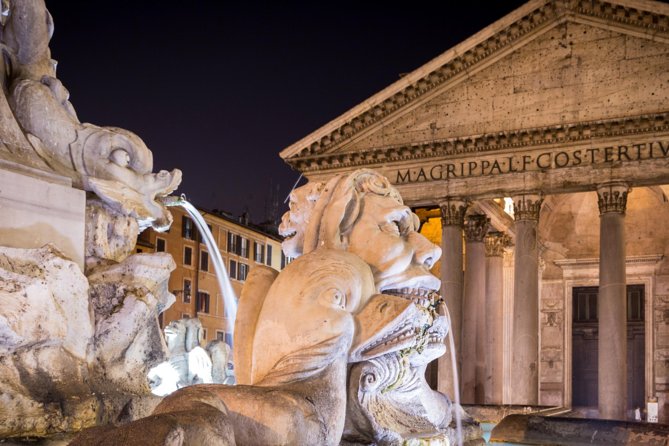
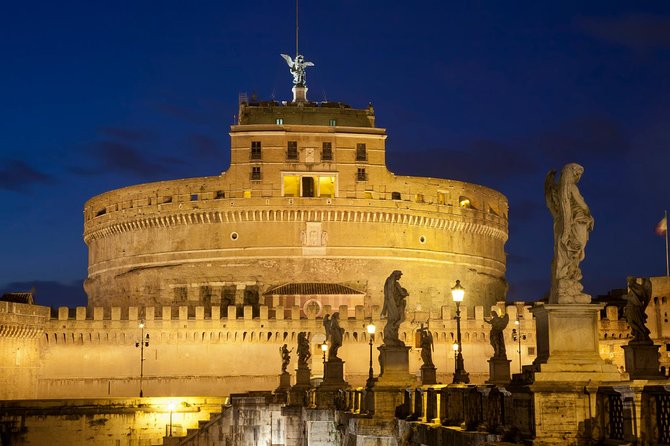
The walk then reaches the Tiber River. Crossing the river gives the tour a natural change of pace. The water, bridges, and illuminated buildings create some of the prettiest views of the evening, even as the stories become darker.
One tale centers on a young girl who was wronged by her family and the Pope. Her spirit is said to haunt a bridge. The story combines family conflict, power, injustice, and local superstition, which is exactly the kind of tale that works better at night than in a bright afternoon crowd.
Do not expect a theatrical haunted-house attraction. The tour is not described as using actors, special effects, or jump scares. Its atmosphere comes from the setting and the guide’s delivery.
That distinction matters. Some people want a genuine ghost tour with frightening moments. This experience is better understood as Rome’s history told through crime, legend, and supernatural belief. One part of the route may feel more like a standard city walk with spooky subject matter than a scary event.
The bridge crossing also brings a practical issue: city noise. Cars, pedestrians, and nearby activity can make it hard to hear every line. Sam was praised for being enthusiastic, but even a good guide cannot always overcome traffic and street noise. Stay within speaking distance and ask for a repeat if you miss an important point.
The Inquisition, crime, and everyday fear
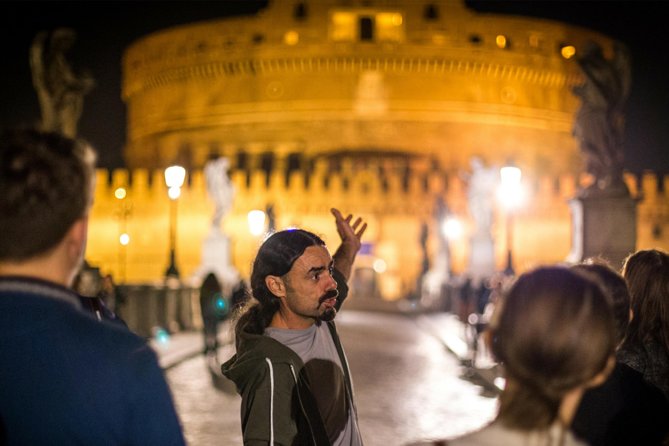
The Inquisition material gives the tour some of its strongest historical weight. You hear about heretics being punished, neighbors informing on neighbors, and efforts to suppress crime through public religious imagery.
Rome’s authorities were trying to control a city that could be unruly and dangerous. The methods were often severe. Public executions, accusations, and religious pressure were part of an attempt to make fear do the work of law.
The tour’s value here is not that it covers every detail. It gives you a memorable framework for understanding how power operated in earlier Rome. Punishment was public because authorities wanted people to see it. Religious symbols appeared in public because authorities wanted people to feel watched.
I would listen for the connections between the stories rather than treating each tale as an isolated horror story. The route shows a city where crime, faith, family loyalty, and politics often overlapped.
Guides praised for this tour include Inti, Sammy, Elizabeta, and Maryam. They have been described as friendly, interactive, funny, and able to answer questions. Sammy in particular was praised for speaking clear English and involving the group, while Maryam was appreciated for both her walking pace and storytelling.
The guide style may vary from one departure to another. Some guides are theatrical, like Rob, whose delivery was praised for making the stories come alive. Others may give a simpler presentation. That variation is normal for a storytelling walk, but it means your experience depends heavily on who leads it.
Rome’s most notorious murderer
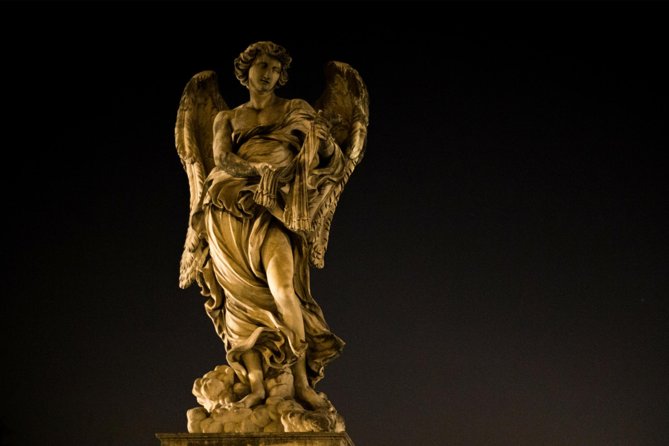
One of the final stories concerns the home of Rome’s most notorious murderer. The tale is not presented as a simple portrait of evil. Instead, the guide explains why this bloody figure was also seen as surprisingly empathetic.
That contradiction gives the story more bite. Rome’s criminals were not always distant monsters. They lived in recognizable homes, moved through familiar streets, and could be understood by some people around them.
This is a good example of what the tour does best: it adds human conflict to places you might otherwise pass without a second thought. You may not remember every name or date, but you are likely to remember the tension between crime and sympathy.
At the same time, this is where the tour may feel too brief for some people. One part of the experience has been criticized as offering only a few stories without enough detail. If you want a full account of each criminal case, this is not the right format.
You are getting a selection of stories, not a complete crime-history course. The tradeoff keeps the walk moving and makes it manageable after a day of sightseeing.
Finishing at Castel Sant’Angelo
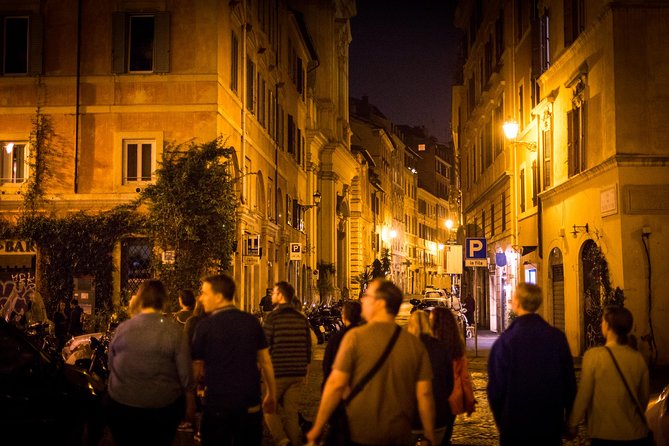
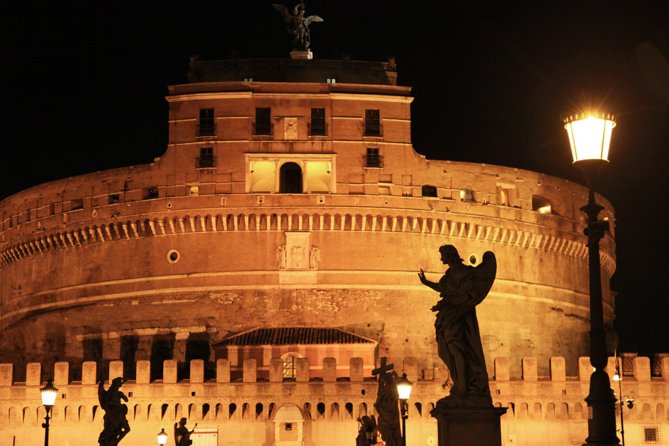
The tour ends near Castel Sant’Angelo on Lungotevere Castello. This is a strong finishing point because you are still in central Rome, with access to restaurants, bars, taxis, public transport, and more historic streets.
The ending also fits the subject. Castel Sant’Angelo has its own links to power, imprisonment, religion, and political drama, so the final setting continues the mood rather than breaking it.
I like tours that finish somewhere useful instead of leaving you beside an isolated meeting point. You can continue the evening with dinner, find a drink, or walk through the surrounding area at your own pace.
Some guides, including Rob and one of the guides praised for helping people after the walk, have offered practical help with onward plans. Do not count on personal taxi assistance as a promised feature, but the location itself is convenient.
Because the route ends near restaurants and bars, booking an early enough departure can help if you want dinner afterward. A later departure, such as the 9:15 p.m. option mentioned in the feedback, may offer the best darkness and atmosphere, but you should expect the evening to finish quite late.
Price, walking pace, and group size
At $14.48 per person, this is one of the easier Rome activities to justify. You are paying for a guide, a planned route, and about 90 minutes of evening entertainment. There are no museum admissions or complicated extras included, so the price is low because the experience is built around walking and storytelling.
The value is strongest if you want something simple after a full day of sightseeing. You do not need to spend another large sum, and you get a fresh look at several central areas.
The value is weaker if you expect a fully staged ghost show or a detailed historical seminar. Some people found the stories too short or not frightening enough. A group of 20 can also feel large when the guide is speaking beside traffic or a crowded square.
Wear comfortable shoes. The tour is a continuous city walk, and the route includes streets, piazzas, river crossings, and busy public areas. Public transport and taxis are available near both the start and end, but hotel pickup and drop-off are not included.
Most people can take part, but the experience still involves steady walking. If you have back, knee, or mobility concerns, tell the guide at the beginning. The evidence from the guide feedback suggests that pace adjustments are possible, but it is better to raise the issue early.
Free cancellation is available if you cancel at least 24 hours before the start time. Cancellations or changes made later are not refunded or accepted, and the tour requires a minimum number of participants.
Who should book this Rome night walk?
I would choose this tour if you enjoy local legends, crime stories, religious history, and atmospheric sightseeing. It suits first-time visitors who want to get oriented, repeat visitors looking for a different angle, and anyone who prefers a short evening activity over another formal attraction.
It is also a good choice if daytime heat and crowds wear you down. Rome’s central streets can be far more comfortable at night, and the lighting changes the character of the monuments.
Families with older children may enjoy it, but the subjects include murder, torture, executions, and persecution. Use your judgment. It is not a gentle bedtime ghost story.
I would skip it if you need extensive historical detail, dislike walking in a group, or want a genuinely frightening ghost attraction. You may also be disappointed if you expect every story to receive equal attention.
Should you book Rome by Night Walking Tour?
Book it for the setting, the low price, and the chance to see familiar Rome through crime and legend. The strongest guides, including Rob, Sammy, Alberto, Maria, Althea, and Maryam, appear to bring real energy and humor to the route.
Go in expecting an entertaining history walk, not a scare show. Stay near the guide, choose a later departure if you want darker streets, and keep your evening open after the finish near Castel Sant’Angelo. For $14.48, it is a sensible way to give one Roman night a different mood.
FAQ
How long does the Rome by Night Walking Tour last?
The tour lasts approximately 1 hour and 30 minutes.
What language is the tour offered in?
The tour is offered in English.
Where does the tour begin?
The meeting point is Piazza di S. Andrea della Valle, 00186 Rome, Italy.
Where does the tour end?
The tour ends near Castel Sant’Angelo at Lungotevere Castello, 50, 00193 Rome, Italy.
Is hotel pickup included?
No. Hotel pickup and drop-off are not included.
What places does the tour visit?
The route includes Corso Vittorio, Campo de’ Fiori, Piazza Farnese, the Tiber River, a haunted bridge, and the area near Castel Sant’Angelo.
What subjects does the guide discuss?
The guide discusses Roman legends, murders, crime, the Inquisition, executions, religious superstition, haunted places, and Rome’s darker historical episodes.
How many people can join the tour?
The tour can have a maximum of 20 participants.
Is the tour suitable for most people?
Most people can participate, and the tour is near public transportation. It is a walking experience, so tell the guide if you need a slower pace.
Can I cancel for a full refund?
Yes. You can cancel for a full refund up to 24 hours before the experience begins. Cancellations made less than 24 hours before the start time are not refunded.
Just added around Rome
- Rome: Colosseum and Ancient Rome Guided Walking Tour★ 4.5 · 95 reviews
- Rome: Trevi Fountain, Spanish Steps & Pantheon Walking Tour★ 4.6 · 336 reviews
- Rome: Guided Walking Tour and Pantheon Priority Entry Ticket★ 4.3 · 317 reviews
- Rome Walking Tour: Pantheon, Trevi, Navona & Hidden Gems★ 4.8 · 501 reviews
- Rome: Trastevere Food Walking Tour with Beer and Wine★ 4.9 · 71 reviews
- Rome Trastevere Walking Food Tour★ 4.8 · 97 reviews
- Rome: Underground Trastevere Guided Walking Tour★ 4.8 · 87 reviews
- Rome: Colosseum, Palatine Hill, & Roman Forum Walking Tour★ 4.7 · 423 reviews
Crime and Mystery Walking Tours, compared.
Ghost Walking Tour Where Legends Come To Life
Read our review →
Edinburgh Darkside Walking Tour: Mysteries, Murder and Legends
Read our review →
New Orleans Adults-Only True Crime and Ghost Walking Tour
Read our review →
Mysteries and Murders of Salem Guided Night-Time Walking Tour
Read our review →
Ghosts and Legends Nighttime Guided Walking Tour
Read our review →Browse the lists this tour appears in