
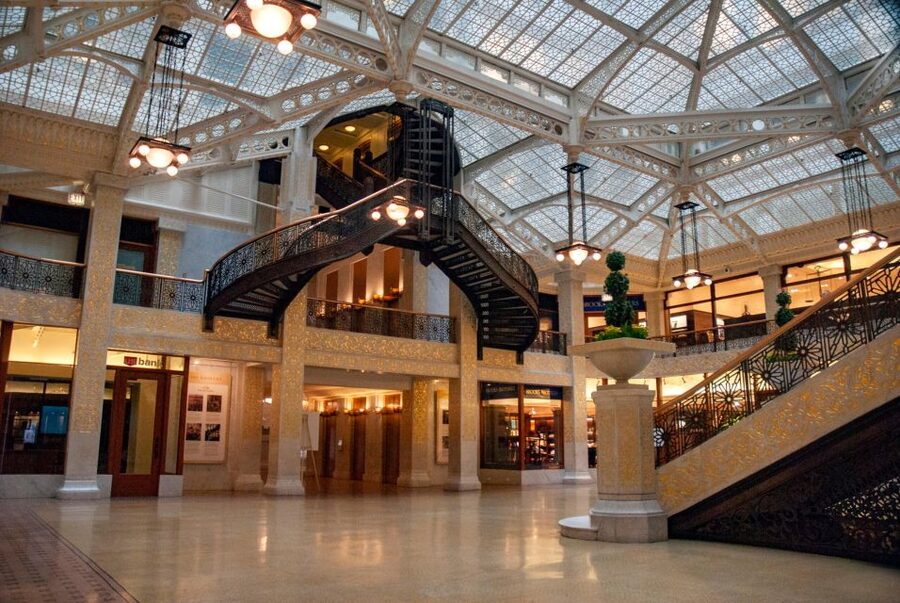
Review · HIDDEN GEMS WALKING TOURS
Chicago: Secret Interiors Architecture Walking Tour
Chicago keeps its best details indoors. This two-hour walk through the Loop reveals ornate domes, mosaics, and craftsmanship that are easy to miss from the sidewalk, while guides explain how architects handled light, weight, and limited urban space. I especially like the mix of beautiful interiors and practical engineering stories. The tour also brings Chicago’s Gilded Age and Roaring Twenties characters into the picture without turning the walk into a dry lecture.
The main drawback is weather: much of the tour is outside, and one January guest estimated that about 90 percent of the time was outdoors. You’ll also cover a fairly large part of the Loop at a brisk but manageable pace, with stairs in and out of some buildings. At $35, I consider it good value if you want context and access to places you might otherwise pass by.
Key points to know before you go
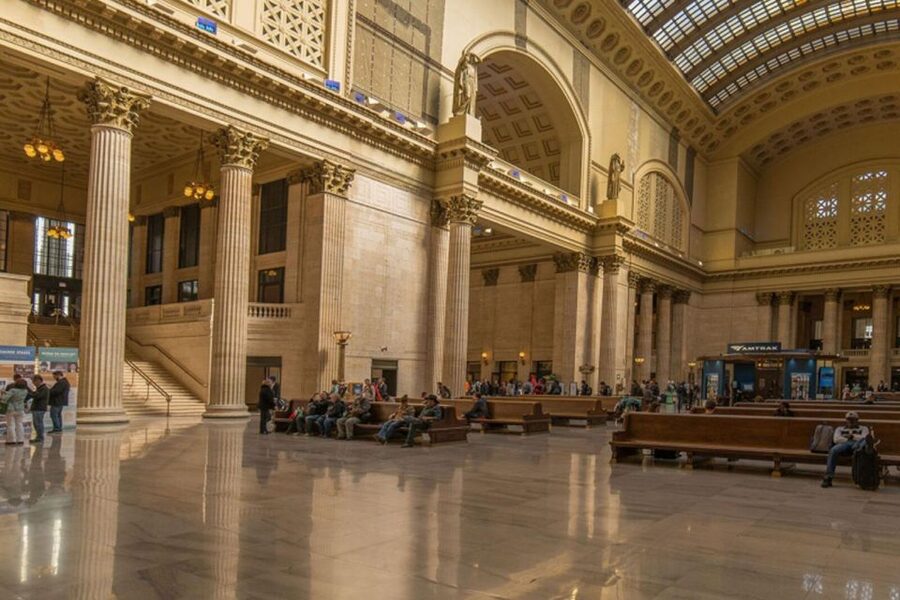
- Meet beneath the Clinton Street sign: Your guide gathers inside Union Station’s Great Hall.
- Expect a mostly outdoor walk: Comfortable shoes and weather-appropriate clothing matter, especially in winter.
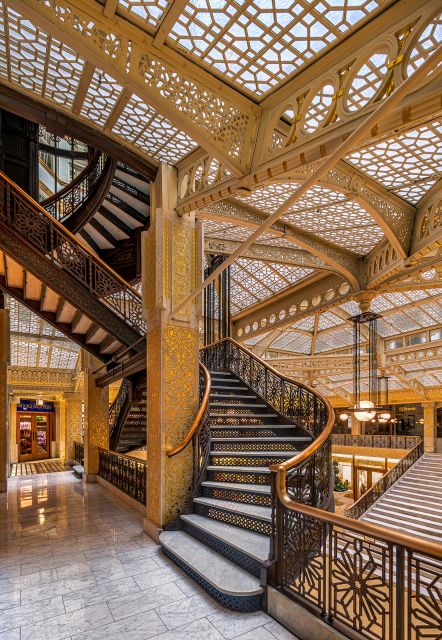
- The interiors are the prize: The Rookery, Field Building, Marquette Building, Palmer House, Cultural Center, and Marshall Field and Company Building each offer a different visual lesson.
- Guides shape the experience: Grant, Talia, Annie, Angel, Matthew, and Avery have all led highly praised tours, with storytelling and questions welcomed.
- Sunday changes the route: The Rookery is closed on Sundays, so an alternative stop is used.
- The tour suits architecture fans and curious first-time visitors: You do not need a technical background to follow the stories.
Starting inside Union Station’s Great Hall
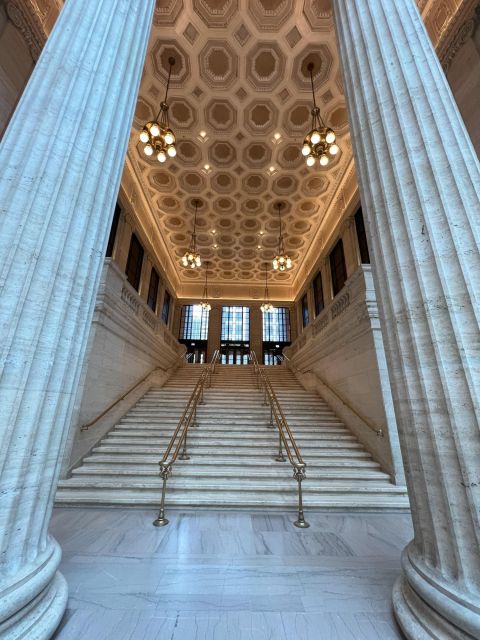
The meeting point is easy to identify: go inside Union Station and wait in the Great Hall, under the Clinton Street sign. That is a useful start for a walking tour about Chicago buildings, since the station immediately puts you among the grand civic spaces that shaped the city’s identity.
From Union Station, the route heads into the Chicago Loop. The guide sets the scene with stories about ambition, money, fame, and the people who moved through these buildings during the Gilded Age and Roaring Twenties. This background matters because Chicago’s architecture is not just a parade of façades. It reflects business competition, new technology, social status, and the desire to make a permanent mark on a fast-growing city.
The experience is led in English, and the guide is included in the $35 price. Group size can vary. Several tours have had only a few people, which gave the guide room to answer questions and adjust the pace. That can make a real difference when you want to stop and look closely at a doorway, decorative panel, or ceiling.
Guides have been a major strength. Grant is often praised for clear explanations, enthusiasm, and broad knowledge of Chicago. Talia has a warm, patient style and is good at keeping a group comfortable. Annie, Angel, and Matthew have also been praised for lively storytelling, while Avery has been singled out for interesting commentary. The guide you receive will vary, but the pattern is clear: this works best when you ask questions and point out the details you want explained.
More Hidden Gems Walking Tours in Chicago:
- Chicago: Underground Pedway & Downtown Secrets Walking Tour
★ 4.7 · 268 reviews - Dublin Highlights and Hidden Gems Guided Walking Tour
★ 5.0 · 6,020 reviews - Explore Berlin: See All The Iconic Sights & Some Hidden Gems
★ 5.0 · 4,429 reviews
South LaSalle Street and the Loop’s vertical ambition
The route continues through the Loop and along South LaSalle Street, where the tour shifts between street-level observation and interior visits. You’ll hear about the design choices that helped Chicago move from a low-rise city toward the early skyscraper era.
A useful feature of this section is the focus on problems as well as beauty. The guide discusses how architects and engineers dealt with illumination and structural integrity. In plain terms, you are not only looking at what a building displays. You are learning why certain openings, materials, decorative features, and structural solutions mattered.
This is also where you begin to appreciate the contrast between seeing Chicago from a boat and seeing it on foot. A river cruise gives you the big profile of the city. This walking tour asks you to look up close, then step inside. It is a good companion to a river architecture cruise rather than a replacement for one. One guest who had taken both preferred the boat tour overall, but considered this walk a strong complement because it supplied access to interiors and smaller details.
The Rookery Building and the drama of the interior
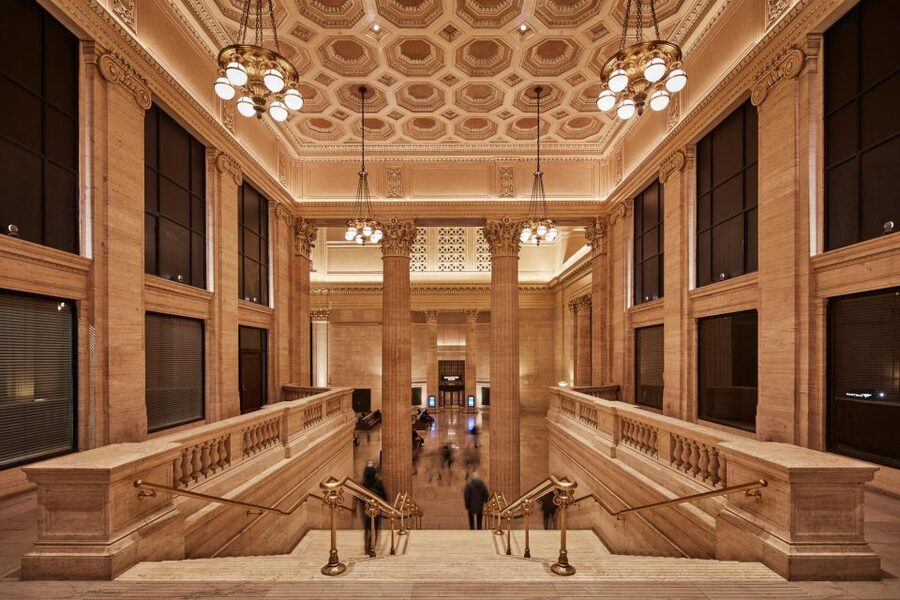
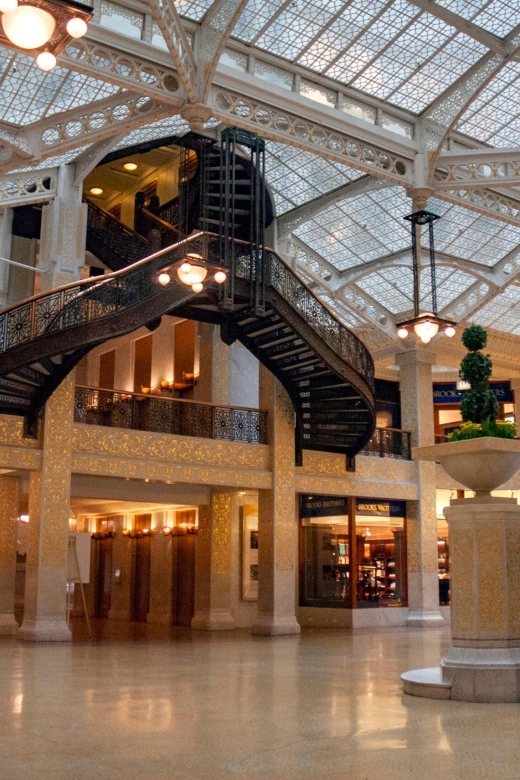
The Rookery is one of the route’s signature stops. Its place on the tour makes sense: the building offers a chance to discuss the relationship between structure, decoration, light, and public impression.
Inside, your attention is directed toward the details that are easy to miss when you simply enter an office building. The tour focuses on domes, interior decoration, materials, and the way architects brought light into a substantial urban structure. The guide also explains how the building fits into Chicago’s wider architectural development.
This is one of the places where the guide’s skill matters most. A quick look can leave you with only a pretty ceiling. Good commentary turns that ceiling into evidence of a design problem solved, a business culture expressed, or a period of architectural experimentation.
The Rookery is closed on Sundays. If you book for that day, the tour includes an alternative stop instead. That means the exact interior lineup can depend on the day, so do not treat every listed building as guaranteed access on every departure.
The Field Building and the value of looking upward
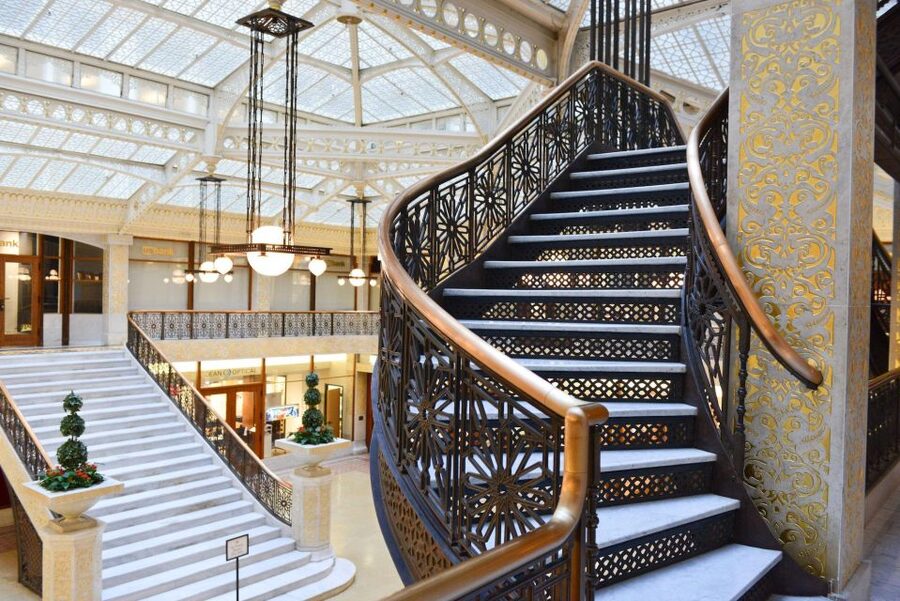
The Field Building provides another chance to see how Chicago’s commercial architecture balanced practical needs with visual ambition. The guide explains the building’s design and points out features that can disappear in the daily flow of the Loop.
This is a good point in the walk to slow down mentally. Chicago’s downtown buildings can feel overwhelming when viewed as a wall of stone, glass, and steel. A guide gives you a way to separate one structure from the next and understand what makes each one different.
You may find yourself looking at entrances, decorative surfaces, lighting solutions, and upper sections that you would have ignored while walking to lunch. That is one of the tour’s strongest benefits. You are not merely collecting famous names. You are learning a method for reading the city.
The route is not described as a long-distance hike, and several people found the pace comfortable. Still, you cover a sizable area in roughly two hours. If your legs are tired, tell the guide early. One guest found the pace a little fast and encountered more stairs than expected, while other groups described the walk as leisurely or easy. Your group, guide, and building access on the day will affect how it feels.
A few more walks around Chicago worth a look
- Chicago: Gangsters and Ghosts Walking Tour
★ 5.0 · 7,155 reviews - Chicago Favorites Ultimate Food and Walking Tour
★ 5.0 · 1,962 reviews - Chicago: Gangsters and Ghosts Guided Walking Tour
★ 4.7 · 1,697 reviews - Chicago: Gangsters and Food Tasting Walking Tour
★ 4.6 · 228 reviews
The Marquette Building and craftsmanship at close range
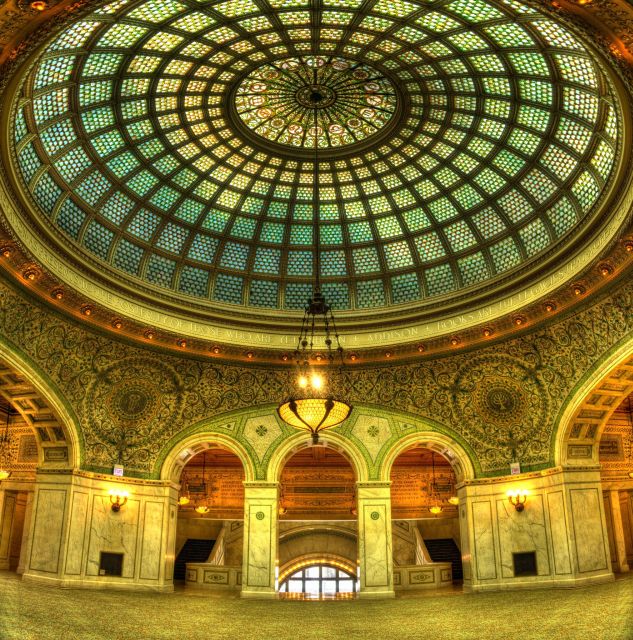
The Marquette Building continues the tour’s emphasis on interior artistry and detail. Here the guide draws attention to craftsmanship and explains how decorative elements connect with the period’s ideas about commerce, civic pride, and public image.
The most rewarding part is not simply seeing a handsome space. It is learning to ask what the decoration is doing. Does it guide your eye? Does it make a business building feel ceremonial? Does it help visitors understand the purpose and prestige of the place? The tour encourages that sort of question.
Several guides have been praised for explaining the history behind each building and piece of art. That level of detail is especially useful at the Marquette, where a quick self-guided visit might give you only a few minutes of visual appreciation.
If you enjoy Art Deco, historic commercial architecture, or design details, this section should appeal to you. The tour also works for people who do not normally seek out architecture because the stories include industrial magnates, infamous figures, and celebrated personalities who passed through these spaces.
Palmer House and the social side of Chicago architecture
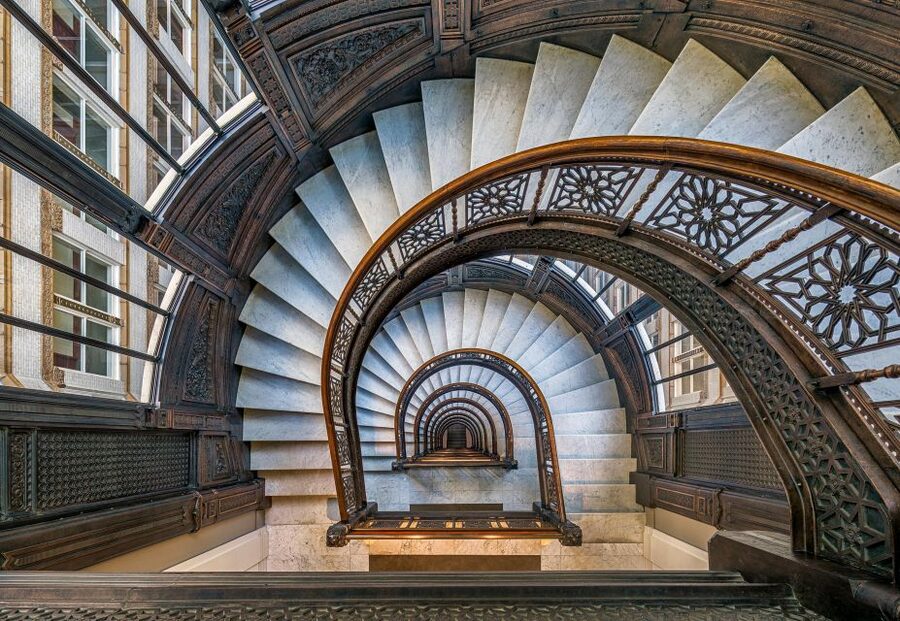
The Palmer House adds a different mood to the route. A grand hotel is not just a place to sleep. It is also a stage for business, politics, society, and public display. The guide uses the building to connect architectural design with the people who used these interiors.
That human angle keeps the tour from becoming a list of dates and styles. You hear about ambition and reputation, but you also get a sense of how buildings functioned as places where important people met, conducted business, and performed success.
The hotel also helps show the variety of the route. The tour is not limited to one style or one type of building. It moves among office structures, commercial spaces, public buildings, and hotel interiors, allowing you to compare their purposes and design choices.
Access to active buildings can change, and the precise amount of time spent at each stop may vary. Treat the walk as a guided introduction rather than a guaranteed long visit inside every building. The value comes from the sequence and the commentary, not from lingering for half an hour at one address.
The Chicago Cultural Center and a change of scale
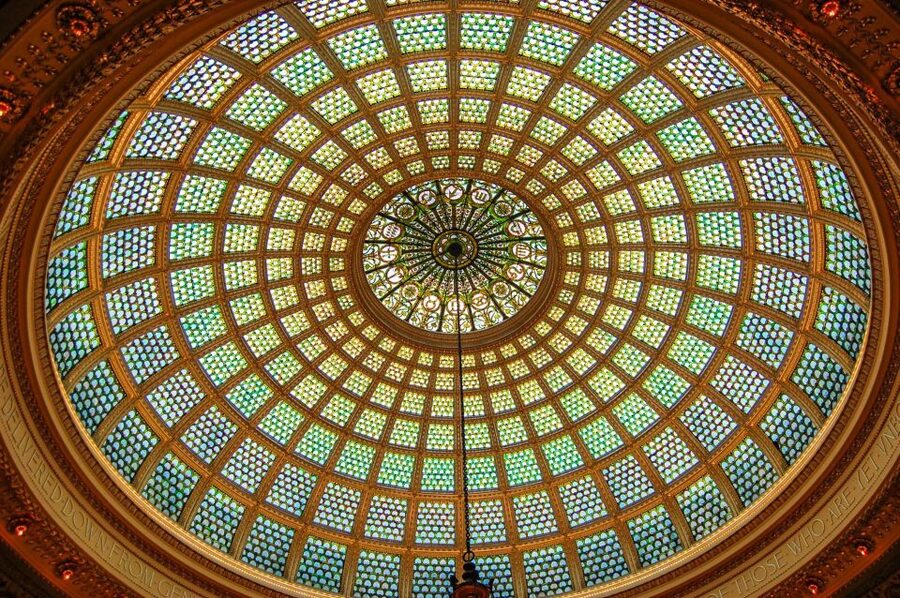
The Chicago Cultural Center is one of the most visually rewarding stops. Its public interiors give the tour a chance to discuss domes, mosaics, and decorative craftsmanship at a larger scale.
This is where the promise of secret interiors becomes especially clear. The exterior may be impressive, but the interior features are what make the visit memorable. The guide points out the significance of the design elements and helps you notice how light, pattern, and scale work together.
The Cultural Center also gives you a useful contrast with the commercial buildings earlier in the route. Here, the design feels tied to public culture and civic display rather than only business. That comparison helps you see Chicago’s architecture as an evolving conversation between commerce, government, art, and technology.
Bring a camera if you like architectural photography, but also give yourself time to look without it. Interior details can be hard to frame in a hurry, and the guide’s explanation may change what you notice.
Marshall Field and Company Building, the final stop
The walk ends at the Marshall Field and Company Building, another strong finish because it brings together commerce, design, and public spectacle. The guide discusses its architectural character and the features that make it different from the other stops.
Ending here is practical. You are already in the central Loop, with the tour’s main subjects gathered around you. It also leaves you with a final example of how a commercial building could be designed to impress shoppers, workers, and passersby.
The finish is not merely a photo opportunity. Use it to review the contrasts from the route: early skyscraper ideas, decorative interiors, modernist changes, lighting problems, structural solutions, and the social stories attached to each building.
A few guests wished the guide had offered more detail about every doorway and passing ornament. That is a fair limitation. Two hours goes quickly, and the route covers many buildings. If a specific feature catches your eye, ask about it. Guides such as Annie, Grant, Talia, and Angel have been praised for responding well to questions.
What $35 buys you in Chicago
At $35 per person, the tour is priced below many longer sightseeing activities, but its value depends on what you want from a city walk. You are paying for a live guide, a planned route, access to interiors you might not think to enter, and an explanation of the design choices behind them.
I think the price is fair for visitors who would otherwise walk past these buildings without knowing what to look for. It is also a strong choice for Chicago residents. People who have lived in the area for years have found themselves entering buildings they had never explored.
The value is less clear if you want a slow photography session or a full architectural lecture at every stop. The tour moves on because it has several places to cover. You will see a lot, but you will not study every decorative feature in equal depth.
Free cancellation is available up to 24 hours before the tour, and you can reserve now and pay later. The activity is listed as wheelchair accessible, but because one guest reported many stairs in and out of buildings, contact the provider ahead of time if you need step-free access at every stop.
Weather, shoes, and choosing the right day
Wear comfortable shoes. Even though the walk is not described as strenuous, you will be on your feet, moving through streets and buildings, and possibly using stairs.
Weather deserves serious attention. The tour runs through the open air for much of its duration, and winter conditions can make the experience far less pleasant without warm clothing. January guests still found it worthwhile, but they specifically advised bundling up. Summer and shoulder seasons should be easier, but a weather-ready layer is still sensible.
Sunday has one clear limitation: the Rookery is closed, so an alternate location replaces it. Holidays can also affect access. One guest booked on Labor Day and found that several locations were closed, though the guide adapted. If a particular building is your main reason for booking, ask about that departure before paying.
Who will enjoy this walking tour most
You should book if you like architecture, city history, decorative arts, or stories about how buildings work. It is also a smart choice for a first Chicago visit because it gives you a framework for understanding the Loop before you explore it on your own.
Families can do well on this tour if children are comfortable walking and listening for two hours. One family described it as a good afternoon activity because the guide mixed history, facts, and stories rather than delivering a nonstop technical talk.
The tour also suits locals, repeat visitors, and people who have already taken a river architecture cruise. I would choose the boat cruise first if you have only one architecture activity and want the broadest city view. I would add this walk if you want interiors, close-up decoration, and the story of how people used these buildings.
Should you book the Secret Interiors Architecture Walking Tour?
Yes, if the idea of walking past a grand building and wondering what is inside appeals to you. The strongest parts are the access to notable interiors, the focus on engineering and light, and the guides’ warm, story-driven approach.
Book with realistic expectations. This is a brisk two-hour introduction, not a private architectural seminar. Much of it takes place outdoors, some stairs may be involved, and Sunday or holiday access can alter the route.
At $35, it is a worthwhile Loop activity for curious visitors and locals alike. Pair it with a river architecture cruise for the best overall picture of Chicago, or choose this walk on its own if interior details matter more to you than skyline views.
FAQ
How long is the Chicago Secret Interiors Architecture Walking Tour?
The tour lasts two hours.
Where does the tour begin?
Meet inside Union Station’s Great Hall, under the Clinton Street sign.
Where does the tour finish?
The tour finishes at the Marshall Field and Company Building.
What language is the tour conducted in?
The live tour is conducted in English.
Is the tour wheelchair accessible?
The activity is listed as wheelchair accessible. However, one guest reported stairs in and out of several buildings, so contact the provider in advance if you need step-free access throughout the route.
Is the Rookery included every day?
The Rookery is closed on Sundays. On Sunday tours, an alternative stop is included.
What should I bring?
Wear comfortable shoes. Because much of the tour takes place outdoors, dress for the weather as well.
Can I cancel or pay later?
You can cancel up to 24 hours in advance for a full refund. You can also reserve your place and pay later.
Just added around Chicago
- Chicago: Treasures of the Golden Age Walking Tour★ 4.8 · 206 reviews
- Chicago: The Ultimate Foodie Walking Tour with Tasty Stops★ 4.6 · 92 reviews
- Chicago: Underground Pedway & Downtown Secrets Walking Tour★ 4.7 · 268 reviews
- Chicago: Must See Chicago 90 minute Walking Tour★ 4.7 · 73 reviews
- Chicago: Prohibition Speakeasies Bus Tour or Walking Tour★ 4.8 · 168 reviews
- Chicago: Classic Food & Walking Tour with Free Bike or Kayak★ 4.9 · 145 reviews
- Chicago: Gangsters and Food Tasting Walking Tour★ 4.6 · 228 reviews
- Chicago: Taste of Chinatown Food and Cultural Walking Tour★ 4.9 · 97 reviews
Hidden Gems Walking Tours, compared.
Dublin Highlights and Hidden Gems Guided Walking Tour
Read our review →
Explore Berlin: See All The Iconic Sights & Some Hidden Gems
Read our review →
Kyoto Geisha Walking Tour: Gion District & Hidden Gems
Read our review →
Ben Youssef, Secret Garden, & Souks Walking Tour
Read our review →
Montmartre Hidden Gems and Scenic Highlights Walking Tour
Read our review →
Guided Walking Tour of City Highlights & Hidden Gems
Read our review →
Paranormal Night Walking Tour & Secret Backstreets
Read our review →Browse the lists this tour appears in