
Review · HIDDEN GEMS WALKING TOURS
Chicago: Underground Pedway & Downtown Secrets Walking Tour
Chicago has a secret second city. The Pedway leads you beneath downtown blocks, through unexpected building interiors, stained-glass corridors, and spaces most people pass without noticing. I like the way this tour teaches you how the system works instead of simply marching you through it, and I like the mix of architecture, art, and city history. The main drawback is clear: staircases, about 1.5 miles of walking, and enclosed spaces make this a poor fit for anyone with limited mobility or claustrophobia.
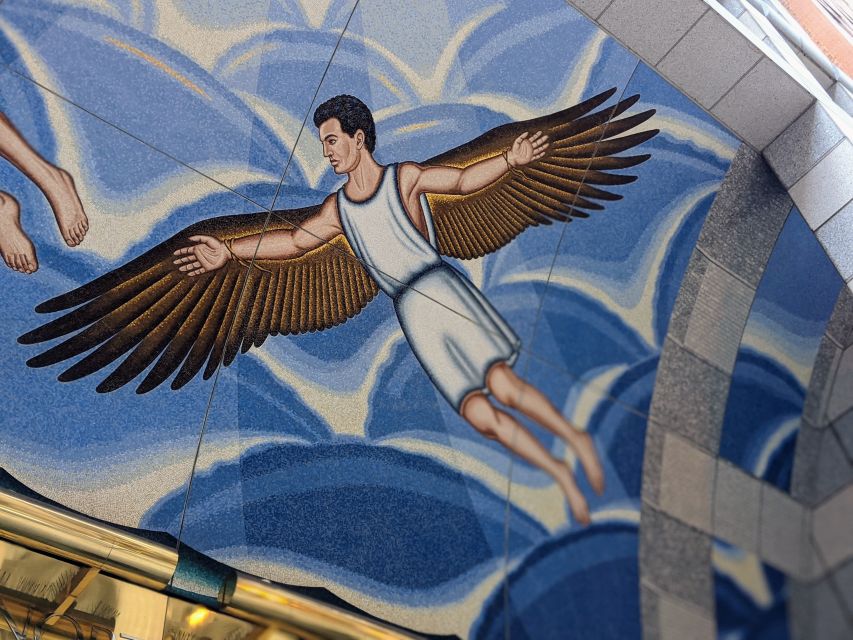
At $35, this is a useful introduction to a part of Chicago that is genuinely hard to understand on your own. Guides such as Heath, Adam, Kaylee, and Colleen have earned praise for their enthusiasm, stories, and practical advice, with several helping people figure out how to use the Pedway later. You should arrive early at 120 N. LaSalle Street, look for the giant mosaic mural over the front door, and be ready to start on time.
Key points to know before you book
- The tour teaches you the Pedway system: You learn how the underground routes connect, where stairs lead, and why the network can be confusing without a guide.
- The walk includes beautiful interiors: Expect stained glass, unusual architecture, public art, and building spaces that are easy to miss from street level.
- The second half reaches a less familiar section: The newer, more complicated portion is where a guide becomes especially useful.
- It stays mostly indoors: This is a smart choice for cold, rainy, or very hot weather, though you still walk outside briefly and use many stairs.
- The finish is near Millennium Park: You end in a central location that works well for continuing your own downtown sightseeing.
- The tour has a strong teaching element: You leave with more than stories. You learn how to use the Pedway as a practical downtown route.
Why Chicago’s Pedway is worth two hours
Chicago’s downtown is famous for its towers, bridges, river, and grand public spaces. But beneath and between those landmarks is a less obvious network of corridors that serves office workers, shoppers, commuters, and curious explorers. It is not one tidy tunnel with a single entrance. It is a patchwork of connected passages, staircases, building lobbies, and indoor routes.
That is exactly why this tour works. You are not simply shown a strange hallway and sent on your way. The first part helps you understand what the Pedway is, how it developed, and how to read the connections. Once you grasp the basic idea, the later route becomes more interesting because you can see why the system feels both useful and confusing.
I especially like the practical payoff. After two hours, you may be able to use the Pedway to avoid harsh weather or reach another downtown destination without staying on the sidewalk. One person even used what they learned to reach the train station and continue toward O’Hare. That is a good sign that this is more than a novelty walk.
Still, keep your expectations realistic. This is not a grand underground palace from end to end. Some corridors may feel plain, functional, or even bleak. The guide’s storytelling matters because it puts those less attractive stretches into context and points out the details you would otherwise miss.
More Hidden Gems Walking Tours in Chicago:
- Chicago: Secret Interiors Architecture Walking Tour
★ 4.9 · 498 reviews - Dublin Highlights and Hidden Gems Guided Walking Tour
★ 5.0 · 6,020 reviews - Explore Berlin: See All The Iconic Sights & Some Hidden Gems
★ 5.0 · 4,429 reviews
Starting at 120 N. LaSalle Street
The meeting point is in front of 120 N. LaSalle Street. Look for the giant mosaic mural above the entrance. Give yourself time to locate it, since the tour begins promptly and downtown entrances can be easy to confuse.
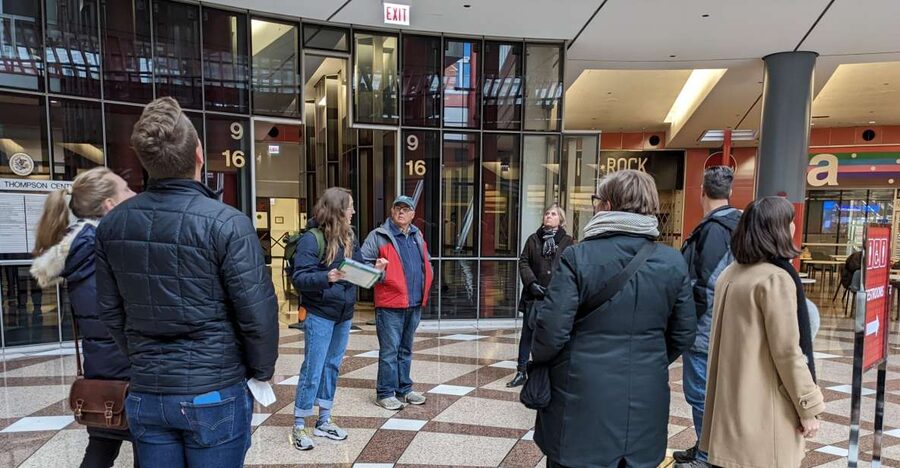
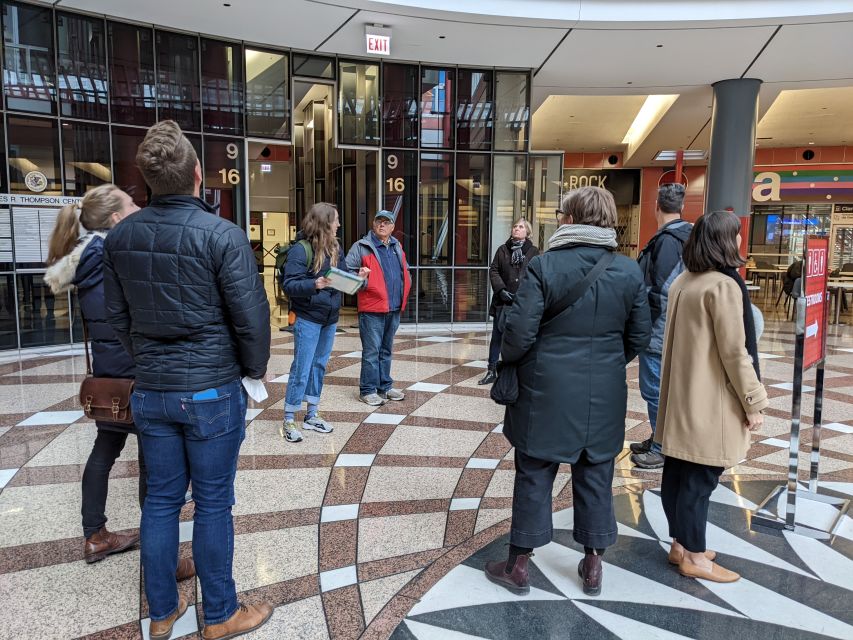
The opening section is important because it gives the tour its structure. Your guide explains the basic layout and starts showing how routes pass under full blocks and connect with building interiors. You will use staircases and move through different spaces rather than following one straight underground corridor.
That movement is part of the lesson. The Pedway does not always announce itself clearly. A staircase, lobby, or doorway can be the link between one section and the next. With a guide, you learn to pay attention to those transitions. On your own, it would be easy to walk past the correct entrance or assume two buildings were unrelated.
Guides have different personalities, but the best comments from this experience consistently point to the same strengths: clear explanations, strong Chicago knowledge, and a friendly pace. Heath is praised for mixing city stories with facts about buildings and the Pedway itself. Adam is described as funny and easy to follow. Kaylee and Colleen bring a strong local connection and plenty of practical suggestions.
The first half: learning the underground route
The first half of the two-hour walk is your orientation. You are introduced to the purpose of the Pedway and shown how it functions as an indoor route beneath downtown. You walk below full blocks, go up and down staircases, and enter building interiors through passages that are easy to overlook.
This is where the tour earns its price. Anyone can wander through a public lobby, but finding the right sequence of corridors is another matter. The network is not straightforward, and the route can change from one interior to the next. Your guide does the mental work of connecting the pieces while you focus on the architecture and stories.
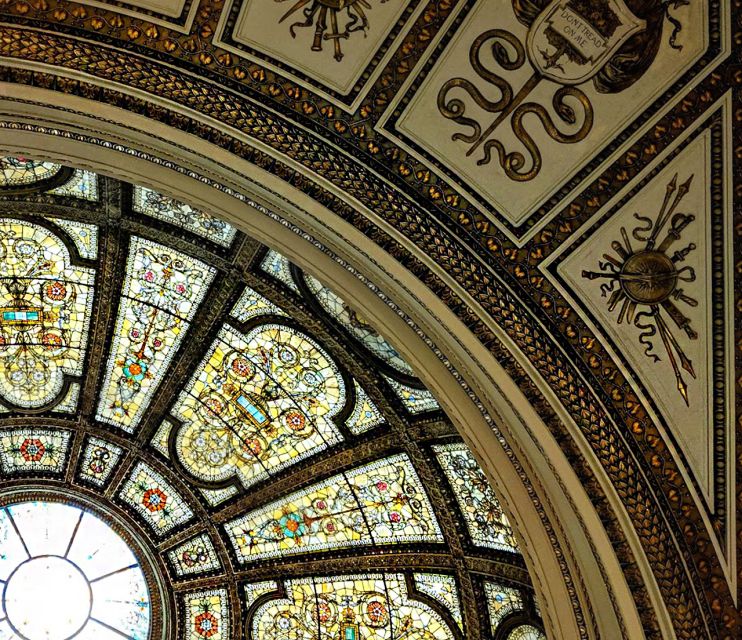
You may see hallways lined with stained glass, a detail that turns an ordinary passage into something worth pausing over. You may also see an underground swimming pool. The exact feel of the walk depends on the route and access on the day, but the larger point remains: Chicago’s private-looking interiors can reveal a surprising amount about the city’s design and daily life.
I like the contrast between the ordinary and the unexpected. One moment you are learning how to cross beneath a block, and the next you are looking at artwork or a carefully designed interior that seems to appear from nowhere. These surprises give the walk its character without requiring a flashy attraction at every stop.
The history also reaches beyond the tunnels. Guides use the buildings, art, and routes to explain Chicago’s growth and design. Some bring visual materials, including old photographs and pictures connected to the places being discussed. That helps when a story involves a changed streetscape or a part of the city that no longer looks as it once did.
Public art with more to say
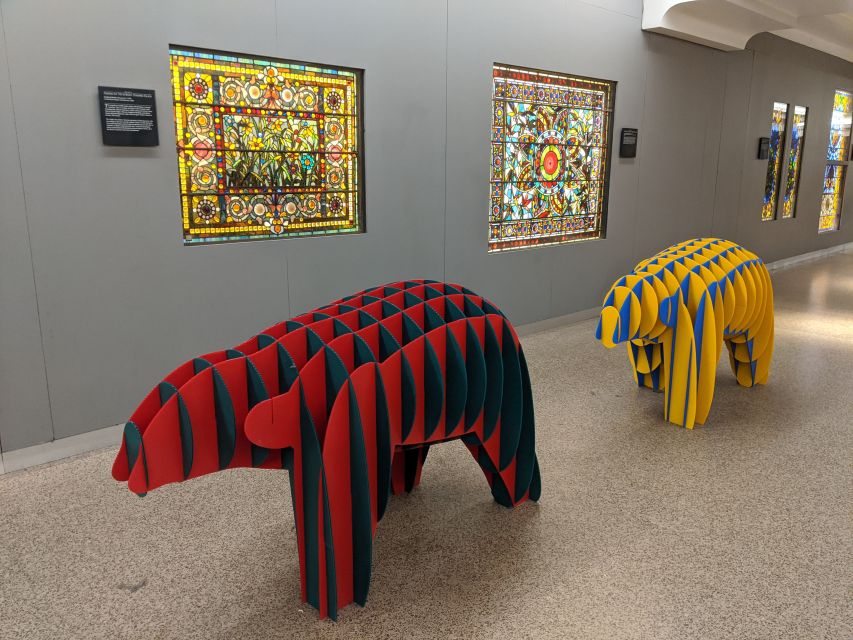
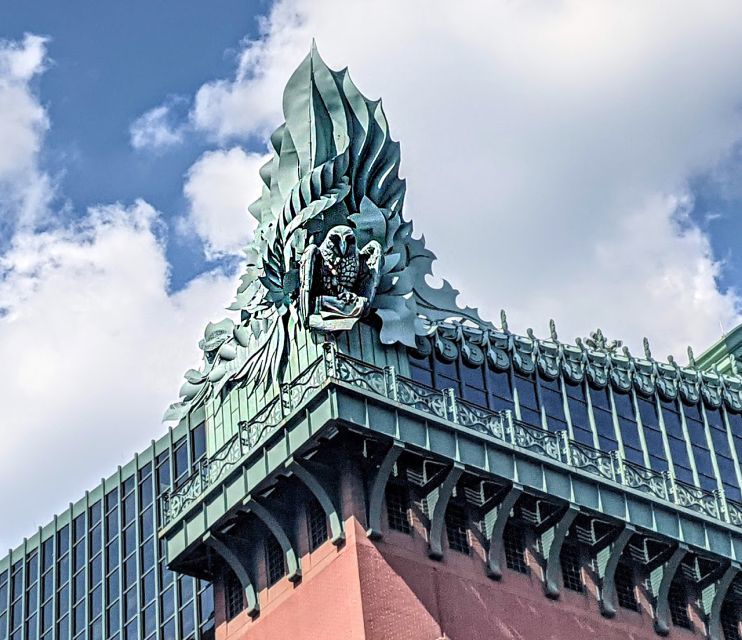
Public art is a major part of this walk, and the guide adds meaning that is easy to miss when you pass through downtown alone. The focus is not only on identifying a sculpture or mural. You learn about symbols, visual references, and the stories attached to well-known works.
This is one of the best reasons to take the tour early in your Chicago visit. Once someone points out a particular detail, you start noticing similar clues elsewhere. You also gain a better sense of how Chicago places art in lobbies, passageways, and public areas rather than keeping everything inside a formal museum.
The guides bring different strengths to this part of the tour. Heath is often praised for stories about art, buildings, and local history. Colleen is known for combining the tour with suggestions about places to eat and things to do afterward. If you ask questions, you are likely to get more than a memorized description because the guides clearly enjoy the city and its odd corners.
The pace matters here. The walk is designed to keep moving, but there is time for explanations and questions. One family with ages ranging from 14 to 77 found the pace comfortable, which suggests the tour can work for a mixed-age group if everyone can manage the stairs and distance.
A few more walks around Chicago worth a look
- Chicago: Gangsters and Ghosts Walking Tour
★ 5.0 · 7,155 reviews - Chicago Favorites Ultimate Food and Walking Tour
★ 5.0 · 1,962 reviews - Chicago: Gangsters and Ghosts Guided Walking Tour
★ 4.7 · 1,697 reviews - Chicago: Gangsters and Food Tasting Walking Tour
★ 4.6 · 228 reviews
The second half: a harder section to navigate
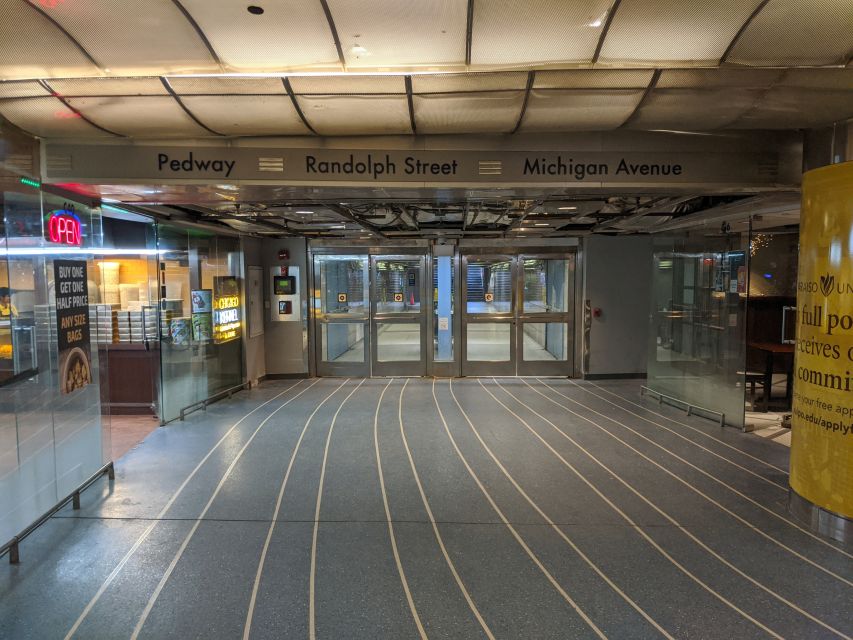
After you understand the basic system, the tour moves into a newer and more complicated section of the Pedway. This is the part most locals have never seen, and it is also where exploring alone would be most frustrating.
The appeal is not that every corridor is beautiful. The value is seeing how the network changes and how difficult it can be to follow without local direction. You learn to make sense of connections that are not obvious from the street and to think of downtown as a group of linked indoor routes rather than isolated buildings.
This section also gives the tour a feeling of discovery. You are not just repeating the easiest, most familiar route. Instead, you see a side of central Chicago that rarely appears in a standard sightseeing plan. That makes the walk particularly useful for repeat visitors who have already seen the river, the big museums, and the main architecture sights.
The tradeoff is that the newer section may feel more functional than scenic. If you want nonstop grand interiors, this may not satisfy you. I would judge it as a learning experience first and a beauty walk second. The reward is understanding how the system works and seeing spaces that would otherwise remain outside your plans.
Finishing near Millennium Park
The tour ends near Millennium Park in a distinctive interior with an unusual architectural design. The final location is practical as well as interesting. You can continue to Millennium Park, explore downtown, find food, or connect with another activity without needing to cross the city.
That ending makes the schedule easy to use. You could book the Pedway in the morning and continue sightseeing afterward, or use it as a weather-proof break between outdoor stops. Because the walk stays mostly indoors, it can be especially helpful on a cold winter day, during rain, or when summer heat makes a long sidewalk walk unpleasant.
Do not assume you will avoid the weather completely. The tour is mostly indoors, not entirely underground from door to door. Wear comfortable shoes and prepare for roughly 1.5 miles of walking, along with a handful of staircases.
How much value do you get for $35?
At $35 per person, the tour is fairly priced if you want access to places and connections you would struggle to find alone. You are paying for a live guide who handles navigation, explains the city, and makes plain interiors worth your attention.
The value is strongest for first-time visitors, architecture fans, curious repeat visitors, and anyone who enjoys understanding how a city functions. It is also a good choice for people who want a break from outdoor sightseeing without giving up local context.
The value is weaker if you dislike walking tours, want a polished attraction at every stop, or are mainly looking for famous Chicago landmarks. The Pedway is useful and unusual, but parts of it are utilitarian. Your enjoyment depends on liking stories, details, and the pleasure of finding something that is not obvious.
The tour also offers free cancellation up to 24 hours before the start and a reserve-now, pay-later option. Those terms make it easier to fit into a changing Chicago schedule, though you still need to check the available starting times when booking.
Who should take this tour?
I would recommend it to you if you fit any of these descriptions:
- You are visiting Chicago for the first time and want to understand downtown beyond the main sights.
- You enjoy architecture, public art, urban design, or local history.
- You want a mostly indoor activity for cold, rainy, or hot weather.
- You expect to spend more time downtown and would like a useful route for getting around.
- You are a repeat visitor looking for a side of Chicago you missed before.
- You enjoy guides who tell stories and answer questions rather than simply naming buildings.
I would be cautious if you have a mobility impairment, use a wheelchair, have claustrophobia, or have a low fitness level. The tour includes stairs and around 1.5 miles of walking, and the enclosed setting will not suit everyone.
Families can work well, especially when children are interested in unusual places and city secrets. But the tour is not a passive ride. Younger children need to handle the walking, stairs, and listening time.
Practical advice for a better walk
Arrive early at the LaSalle Street meeting point. The mural is the key landmark, but downtown entrances can still take a few minutes to locate.
Wear shoes you can comfortably walk in for two hours. You will not be hiking, but you will cover distance and use staircases.
Bring questions. The guides have been praised for answering everything from architecture questions to practical transit concerns. You can also ask for ideas about food and further sightseeing, especially if you are continuing through downtown after the tour.
If weather is poor, this is one of the better ways to keep exploring without spending the whole day outside. You will still need to dress for the short outdoor portions, but much of the walk gives you shelter and climate relief.
Try to take the tour early in your stay if you plan to use the Pedway afterward. The information becomes more useful once you know the downtown area and have places you want to reach.
Should you book the Chicago Pedway tour?
Yes, if you want a different view of Chicago and enjoy learning how a city works behind its public face. The strongest parts are the guide-led navigation, the unexpected interiors, the art details, and the practical knowledge you can use later.
Skip it if you need step-free access, dislike enclosed spaces, or want a grand landmark tour with little walking. For everyone else, $35 buys two useful hours, a new way to read downtown, and a better chance of finding Chicago’s indoor routes on your own.
FAQ
How long is the Chicago Underground Pedway tour?
The tour lasts two hours.
How much does the tour cost?
The price is $35 per person.
Where does the tour meet?
Meet your guide in front of 120 N. LaSalle Street. Look for the giant mosaic mural above the front door.
Where does the tour finish?
The tour ends near Millennium Park in a notable interior with a distinctive architectural design.
Is the tour conducted in English?
Yes. The live tour guide speaks English.
Does the tour run indoors?
It stays mostly indoors and uses the Pedway, but it is not entirely inside from start to finish. The route takes place rain or shine.
How much walking is involved?
You will walk about 1.5 miles and use a handful of staircases.
Is the tour suitable for wheelchair users?
No. The tour is not suitable for wheelchair users or people with mobility impairments.
Can I cancel the booking?
Yes. You can cancel up to 24 hours in advance for a full refund. You can also reserve now and pay later.
Just added around Chicago
- Chicago: Treasures of the Golden Age Walking Tour★ 4.8 · 206 reviews
- Chicago: The Ultimate Foodie Walking Tour with Tasty Stops★ 4.6 · 92 reviews
- Chicago: Must See Chicago 90 minute Walking Tour★ 4.7 · 73 reviews
- Chicago: Prohibition Speakeasies Bus Tour or Walking Tour★ 4.8 · 168 reviews
- Chicago: Secret Interiors Architecture Walking Tour★ 4.9 · 498 reviews
- Chicago: Classic Food & Walking Tour with Free Bike or Kayak★ 4.9 · 145 reviews
- Chicago: Gangsters and Food Tasting Walking Tour★ 4.6 · 228 reviews
- Chicago: Taste of Chinatown Food and Cultural Walking Tour★ 4.9 · 97 reviews
Hidden Gems Walking Tours, compared.
Dublin Highlights and Hidden Gems Guided Walking Tour
Read our review →
Explore Berlin: See All The Iconic Sights & Some Hidden Gems
Read our review →
Kyoto Geisha Walking Tour: Gion District & Hidden Gems
Read our review →
Ben Youssef, Secret Garden, & Souks Walking Tour
Read our review →
Montmartre Hidden Gems and Scenic Highlights Walking Tour
Read our review →
Guided Walking Tour of City Highlights & Hidden Gems
Read our review →
Paranormal Night Walking Tour & Secret Backstreets
Read our review →Browse the lists this tour appears in