

Review · ATHENS WALKING TOURS
Acropolis Walking Tour, Including Syntagma Square & City Center
Ancient Athens starts underground. This 3.5-hour walk links the Syntagma Station museum with Parliament, the National Gardens, and the Acropolis, giving you a useful introduction to the modern city before the old stones take over. I especially like the unusual metro exhibits and the finish at the Parthenon, where you can keep taking photos after the guided portion ends.
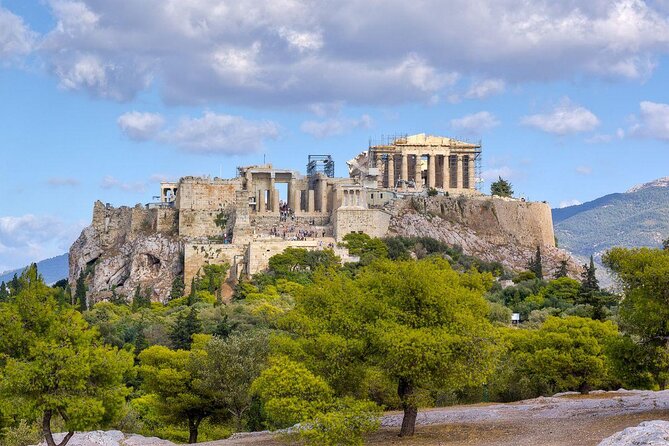
I also like the route through Dionysiou Areopagitou Street, the Theater of Dionysus, and the Herodes Atticus Odeon. Those stops put the Acropolis into context instead of treating the Parthenon as a lonely postcard. The main drawback is the physical effort: expect a long uphill walk, uneven ground, heat, security delays, and possible crowding near the summit. The south-side approach can be dusty and rocky.
Key points to know before you book
- Syntagma Station comes first: See tombstones, pottery, a 5th-century aqueduct, and a 2,000-year-old beehive inside the metro museum.
- The route ends at the Acropolis summit: You finish near the Parthenon, with time for photos and further exploring.
- The guide makes the difference: Guides such as Sissy, Dimitri, Helena, Olesya, Georgia, Vicky, and Giannis have been praised for clear storytelling and care with the group.
- The walk is active: You need a moderate fitness level, comfortable shoes, water, sunscreen, and a hat.
- Tickets may cost extra: The Acropolis entrance fee is not included unless you choose the option with a ticket.
- Small does not mean private: The maximum is 24 people, with an average group size of about 18.
Why this Athens route works so well
Athens can feel scattered at first. Syntagma Square, the Acropolis, the National Gardens, Roman ruins, and old neighborhoods all sit within walking distance, but the city does not always explain how its parts connect. This tour gives you a clear line through the center.
The route begins in the present-day heart of Athens and gradually moves toward the ancient hill. You start below street level, see the Greek Parliament, pass through green public gardens, walk by ancient monuments, and then climb toward the Acropolis. That progression helps you understand Athens as a living city rather than a museum with a city attached.
The tour costs $56.86 per person before any extra entrance fee. I consider that fair if you want a guide, a planned route, and a first orientation to Athens. The price also includes an Athens guide magazine and map. It is less appealing if you already know the city, prefer to set your own pace, or want a long, quiet visit inside the Acropolis.
The tour is offered in English and normally lasts about three and a half hours. It runs in rain or shine, and strict Acropolis entry times mean late arrivals cannot simply join later. Plan to arrive early.
A few more walks around Athens worth a look
- Athens: Acropolis and Parthenon Guided Walking Tour
★ 4.6 · 5,882 reviews - Acropolis and Parthenon Guided Walking Tour
★ 5.0 · 4,755 reviews - Greek Food Walking Tour in Athens
★ 5.0 · 4,740 reviews
Syntagma Station: ancient Athens beneath the metro
Meet at Syntagma Metro Station in central Athens. The meeting point is downstairs in the station museum, an important detail because simply waiting outside at Syntagma Square could put you in the wrong place.
The museum is a fine opening stop. During construction of the metro, archaeologists uncovered remains that are now displayed in the station. In about 15 minutes, you see tombstones, pottery, part of a 5th-century aqueduct, and an especially memorable 2,000-year-old beehive.
I like this stop because it makes archaeology feel close to daily life. You are not beginning with a grand temple or a heroic statue. You are looking at ordinary objects and infrastructure found beneath a modern transportation hub. It is a quick lesson in how much ancient Athens lies below the pavement.
The stop is free, but the station itself can be busy and noisy. Headphones are provided on the tour, and they are useful when the guide is speaking near traffic, crowds, or other tour groups. If your headset sounds distorted, tell the guide right away and request a replacement.
Parliament, the guards, and Syntagma Square
From the metro station, you walk to the Hellenic Parliament. The building was once a royal palace, and its formal exterior makes an impressive frame for photos. The visit includes the Tomb of the Unknown Soldier and the ceremonial changing of the guards.
The guard ceremony is one of the tour’s most popular moments. The soldiers’ movements are precise and formal, and the setting gives you a quick look at modern Greek national identity. Your guide can also explain why this square matters beyond its attractive architecture.
Timing matters here. The itinerary allows about 20 minutes for the Parliament and another 20 minutes for the change of guards, but the exact experience depends on the schedule and crowd conditions. You should not expect a long private viewing area. Stay close to the guide and listen for instructions.
This is also a good point to ask questions about contemporary Athens. The tour is mainly historical, but the route begins with places that still serve a daily civic purpose.
National Gardens and Zappeion Hall
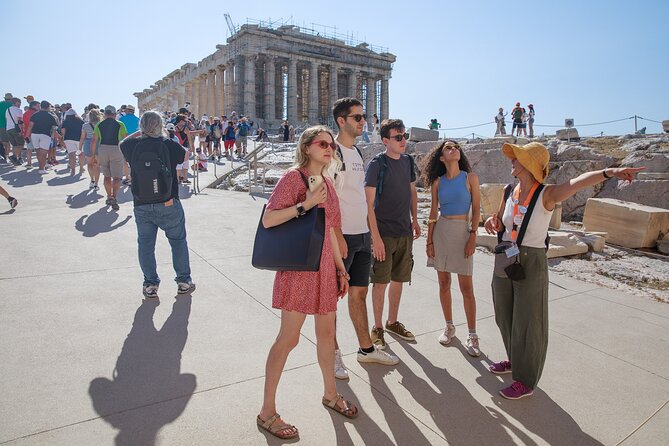
The walk continues through the National Gardens toward Zappeion Hall. This section offers a welcome change from stone, traffic, and open pavement. Trees and shade can matter greatly in Athens, especially during a hot afternoon.
The gardens also break up the historical information. A good guide uses the quieter paths to keep the group moving without turning the walk into a nonstop lecture. Olesya was praised for making this section feel calm before the climb, while other guides have been noted for finding shade and allowing rest stops when the heat became intense.
Zappeion Hall adds another elegant landmark to the route. You do not come here for a lengthy indoor visit. Instead, it forms part of the city-center walk and helps connect the public gardens with the older monuments ahead.
Same streets, a different way to see them:
- Acropolis: Acropolis and Parthenon Guided Walking Tour
★ 4.7 · 3,442 reviews - Athens: Guided Greek Food Walking Tour with Tastings
★ 4.9 · 2,859 reviews - Acropolis monuments & Parthenon Walking Tour with Optional Acropolis Museum
★ 5.0 · 2,678 reviews - Athens Acropolis and Parthenon Walking Tour
★ 4.5 · 1,355 reviews
The Temple of Olympian Zeus and the approach to the Acropolis
As you continue, the route passes important sights such as the Temple of Olympian Zeus. The walk gives you views and explanations rather than a long stop at every monument, so keep your expectations realistic. This is an introduction, not a full archaeological study of each site.
The route then joins Dionysiou Areopagitou Street, a traffic-free pedestrian path around the southern side of the Acropolis. This is one of the best parts of the outing. You walk with the Acropolis above you, while the guide points out ancient sites along the slope.
The street is easier to enjoy than a normal city road, but the overall route still requires steady walking. You are gradually gaining height, and the surface changes as you approach the archaeological site. The south-side entry has been described as dusty and very rocky in places. It can feel awkward, especially if you have an injured leg or limited mobility.
Theater of Dionysus and the Odeon of Herodes Atticus
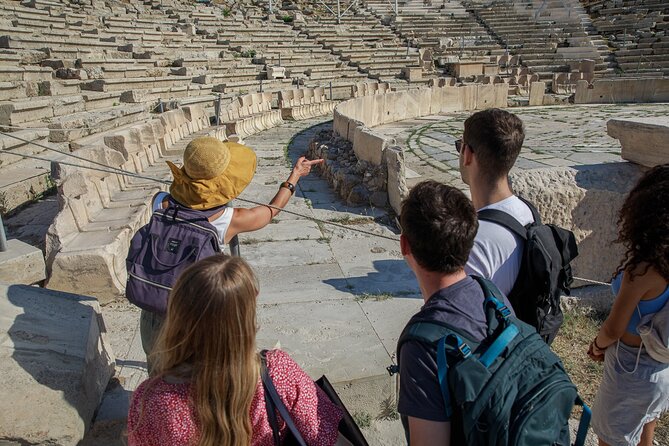
The Theater of Dionysus is a key stop on the southern slope. This is where the tour helps you picture the Acropolis as more than a fortified hill with one famous temple. The theater connects the site to drama, public performance, and civic life.
The stop lasts about 15 minutes and is free as part of the Acropolis visit. Your guide explains what you are seeing before the route continues uphill.
Next comes the Odeon of Herodes Atticus, often called the Herodeion. The monument is striking even from outside, with its curved theater form set into the slope. The visit here is brief, around 10 minutes, but it gives you an excellent photo opportunity and another view of the hill’s layered past.
You may also pass or hear about the Sanctuary of Asclepius and the Stoa of Eumenes. These lesser-known remains are a major reason to use the southern approach. A western entrance may offer smoother paving, but the southern route lets the guide introduce more monuments before you reach the summit.
Mars Hill, the Propylaea, and the climb
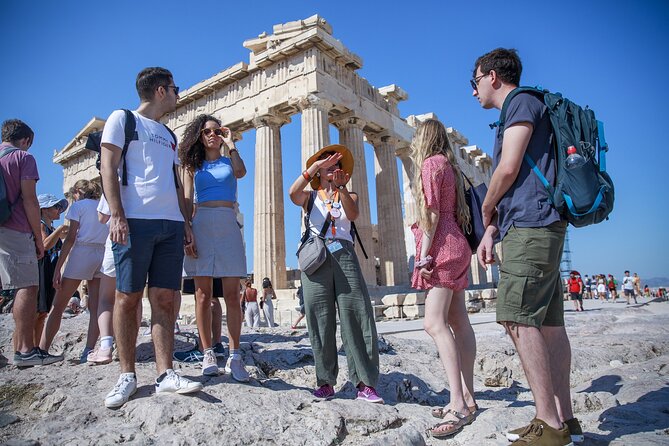
Mars Hill, also called the Areopagus, adds another viewpoint and another piece of Athens’ story. The route does not treat the climb as dead time. Your guide continues explaining the buildings and remains as you move upward.
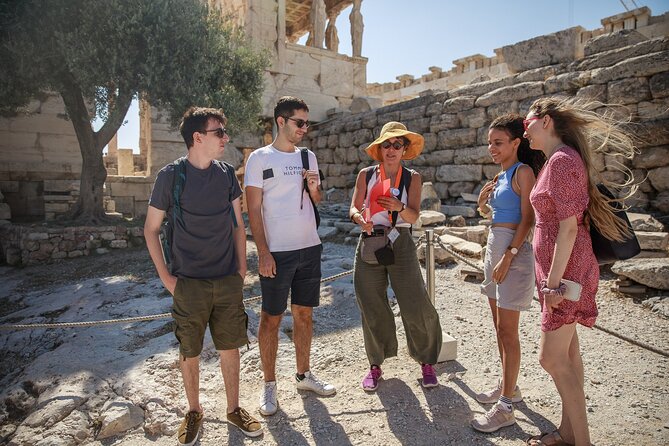
That is where the tour’s audio equipment matters. The group can spread out slightly, but you still need to stay within range. Several guides have been praised for pacing the climb, offering breaks, and adjusting their speed for people with injuries or lower stamina.
At the top, you pass through the Propylaea, the monumental gateway to the Acropolis. The Temple of Nike is another highlight near the entrance. These structures prepare you for the Parthenon, but they also deserve attention on their own. It is easy to rush through the gateway while thinking only about the temple ahead.
The climb is manageable for people with moderate fitness, but it is not effortless. Wear shoes with a secure grip. A stroller is not allowed on the Acropolis or archaeological site, and there is no cloakroom at the side entrance. A baby carrier is the practical choice.
The Parthenon and the final view
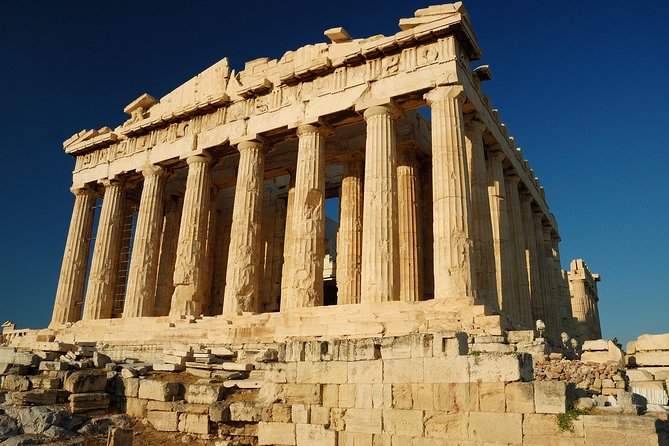
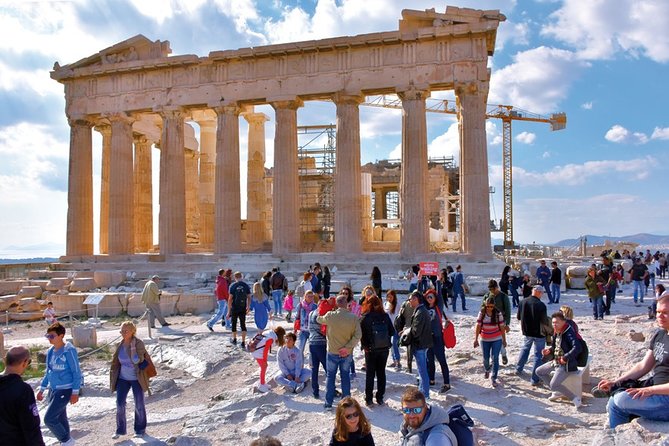
The Parthenon is the emotional high point of the route. After the gradual climb, the columns and broad views of Athens feel earned. The guide explains the monument’s architecture, religious role, and place in the larger Acropolis complex.
The guided visit inside the Acropolis lasts about 1.5 hours, though the exact pace can vary with crowds and entry conditions. At the summit, you can see the Parthenon, the surrounding monuments, and broad views over Athens. This is the place to pause, take photos, and let the scale of the site sink in.
The tour ends at the top of the hill rather than returning you to Syntagma. I see that as a real advantage. You can continue looking around, revisit a favorite viewpoint, or make your own way onward without being hurried back through the city.
The timing can also be a weakness. Security is airport-style, and peak-season waits may exceed 30 minutes. Crowds can form at bottlenecks, especially around midday. The south-side entrance may be quieter on some days, but it is not always smooth or fast.
What the guides add to the experience
The strongest praise has gone to the guides’ presentation and personal care. Sissy was singled out for explaining mythology and ancient Greek life in a way that held attention. Athena was praised for making the myths and monuments easy to understand. Helena was valued not only for her historical explanations but also for helping with practical directions at the end of the walk.
Dimitri, Giannis, Georgia, Vicky, Olesya, Margarita, Fotini, and others were also praised for clear explanations, friendliness, sensible pacing, and attention to shade. An archaeologist guide named Giannis adjusted the pace for a person with an injured leg and added breaks. That kind of flexibility matters on a hot, uneven route.
The experience is not perfect for every learning style. One participant found the narration too broad and the headset sound distracting, with less depth than desired on some subjects. A very talkative member of the group also interrupted the guide. The guide cannot control every group dynamic, but you should know that a group tour may include mixed interests and different levels of historical knowledge.
Physical effort, weather, and timing
Treat this as an active half-day, not a gentle stroll. You need to walk from Syntagma through the center, across the gardens, along the Acropolis slope, and up to the summit. The route includes uneven archaeological surfaces, an uphill approach, and exposed areas with little shade.
Bring:
- Comfortable walking shoes
- A bottle of water
- Sunscreen
- A hat
- Clothing suited to the forecast
The tour runs in all weather. Heat is the main concern in the feedback, but cold and wind can also make the summit uncomfortable. Guides have made efforts to find shade and schedule breaks, yet you should still prepare your own water and sun protection.
Strict entry times are important. If you arrive late, the group cannot wait, and no refund is offered for a missed entry. Give yourself extra time to reach Syntagma Station and find the downstairs meeting point.
Ticket choices and overall value
The entrance fee is not automatically included. You can book an option with a ticket and skip the ticket line service, or choose the option without a ticket and follow the voucher instructions to buy admission yourself.
That choice affects the real cost. At $56.86, the tour is good value if the price includes the convenience you need and you want a guide to explain the route. If you select the lower-cost option without admission, remember to add the Acropolis ticket before judging the final price.
The tour also includes a map and guide magazine, which are useful after the group finishes. When Acropolis admission is free, the entrance cost is deducted from the tour price, so you are not paying for an unnecessary ticket.
Who should book this Acropolis walk?
I would choose this tour for a first visit to Athens, especially if you have only a short time in the city or want the main historical sights arranged in a sensible order. It is also a good fit for anyone who values stories, mythology, and explanations more than wandering silently with a guidebook.
Families should think about the climb, stroller rules, heat, and the lack of a cloakroom at the side entrance. People with mobility concerns should also consider the rocky southern approach and discuss the physical demands before booking.
The 24-person maximum keeps the group smaller than a large coach excursion, although the usual group size of about 18 is still large enough for a shared experience. The overall score of 4.7 from 404 ratings and a 93 percent recommendation rate fit the pattern here: strong praise for the guides, route, and historical setting, with the main cautions focused on crowds, equipment, and the demanding surface.
Should you book it?
Book it if you want a well-organized first look at Athens that ends at the Acropolis instead of merely circling it. The Syntagma Station museum, guard ceremony, National Gardens, southern slope, Theater of Dionysus, and Parthenon form a satisfying sequence.
Skip it if you want to linger for hours at each monument, dislike group pacing, or need smooth, level paths. For most first-time visitors who can handle the uphill walk, the guide’s storytelling and the route’s final view make this a worthwhile introduction to Athens.
FAQ
How long does the tour last?
The tour lasts approximately 3 hours and 30 minutes.
Where does the tour begin?
It begins at Syntagma Metro Station in central Athens, specifically at the station museum downstairs.
Where does the tour end?
It ends at the top of the Acropolis Hill near the Parthenon.
Is the Acropolis entrance fee included?
The entrance fee is not included unless you book the option with a ticket. If you choose the option without a ticket, follow the voucher instructions to purchase admission.
Is the tour offered in English?
Yes. The tour is offered in English.
Does the tour include the change of guards?
Yes. The route includes the Hellenic Parliament, the Tomb of the Unknown Soldier, and the change of guards at Syntagma Square.
What should I bring?
Bring comfortable walking shoes, water, sunscreen, and a hat. Dress for the weather.
Are strollers allowed at the Acropolis?
No. Baby strollers are not allowed on the Acropolis archaeological site. A baby carrier is recommended, and there is no cloakroom at the side entrance.
What happens if I arrive late?
Strict Acropolis entry times mean the group cannot wait for late arrivals. No refund is provided for missing the scheduled entry.
Can I cancel for a full refund?
Yes, if you cancel at least 24 hours before the experience begins. Cancellations made less than 24 hours before the start time are not refunded.
Just added around Athens
- The Acropolis, Athens Walking City Tour and Acropolis Museum★ 5.0 · 442 reviews
- Acropolis monuments, Parthenon and Plaka, Monastiraki walking tour★ 5.0 · 182 reviews
- Athens Street Art Walk★ 5.0 · 309 reviews
- Athens Street Food Walk★ 5.0 · 385 reviews
- Athens Shore Excursion: Acropolis Walking Tour★ 4.5 · 131 reviews
- Athens Off the Beaten Track Private City Walking Tour★ 5.0 · 304 reviews
- Athens at Night Small-Group Walking Tour with Dinner★ 5.0 · 230 reviews
- Athens Highlights: Myths & Philosophers Walking Tour★ 5.0 · 125 reviews
Athens Walking Tours, compared.
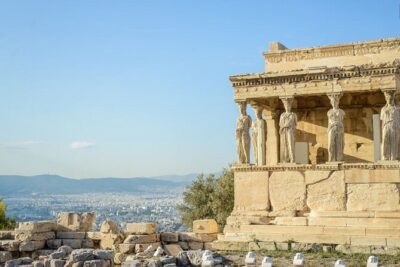


Acropolis: Acropolis and Parthenon Guided Walking Tour
Read our review →
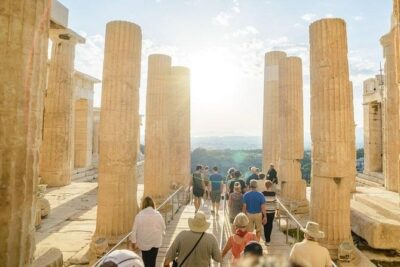
Acropolis monuments & Parthenon Walking Tour with Optional Acropolis Museum
Read our review →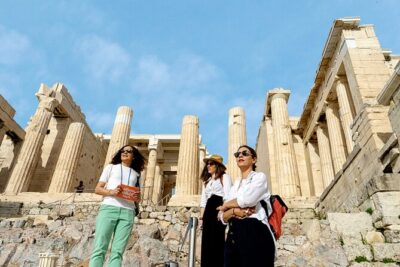
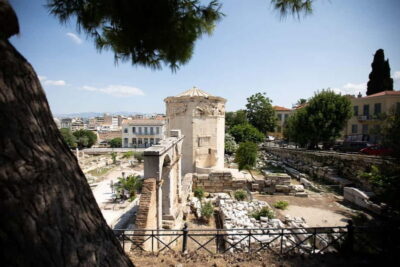
Acropolis, Parthenon & Athens Old City Heritage Walking Tour
Read our review →Browse the lists this tour appears in