
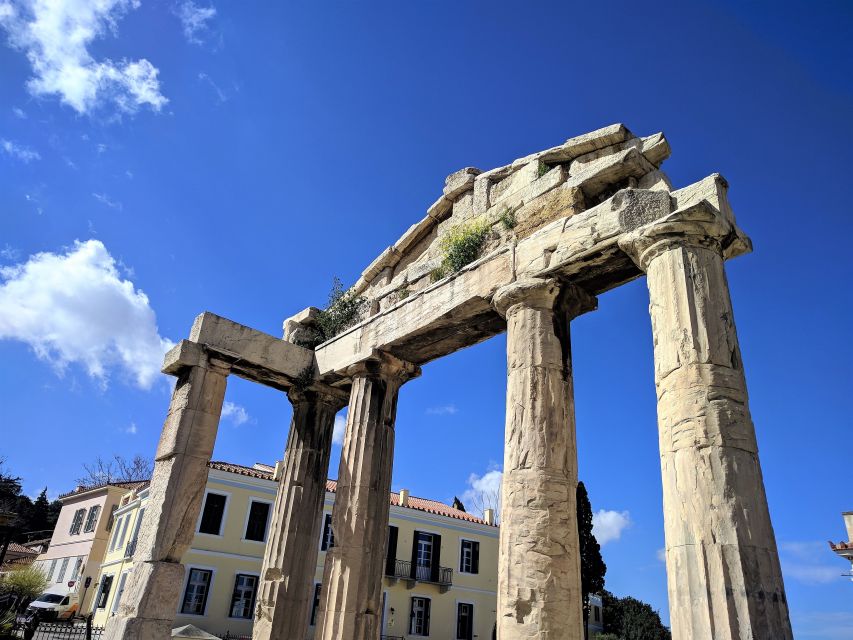
Review · ATHENS WALKING TOURS
Athens: Guided Mythological Walking Tour
Myths make Athens come alive. This two-hour walk links Greek gods, lovers, monsters, and punishments with the streets and monuments of central Athens. I like the way the tour treats mythology as more than a collection of old tales. You also learn about social customs, daily life, architecture, and the way ancient Athenians understood the world. I also like the route through Plaka, Syntagma, and less obvious city corners, where a good guide can point out details you might otherwise walk past.
The main consideration is the amount of information. Guide Penelope is praised for giving a detailed, thoughtful presentation that reaches into philosophy, literature, and cultural change. That is a strength if you want substance. If you prefer a short, light stroll with only the best-known stories, this may feel like a lot to absorb.
Key Points Before You Book

- A mythology tour with a history lesson attached: Gods and heroes provide the hook, but the talk also covers ancient customs, human behavior, and Athens itself.
- A useful central route: You walk from Korai 4 to Monastiraki, passing the Academy of Athens, Syntagma Square, Mitropoleos, and Plaka.
- Penelope is a major part of the experience: She is repeatedly praised for clear English, humor, patience, and strong storytelling.
- Good for families with older children: Children aged 8, 10, 11, and 13 have all been kept engaged, especially when the stories connect with statues and buildings.
- No archaeological-site admissions: You see monuments and city sights along the way, but entrance fees, food, and hotel transfers are not included.
- Bring practical walking gear: Comfortable shoes, water, and sun protection matter, especially in the summer. Penelope has been praised for seeking shade and taking breaks in hot weather.
Why Greek Mythology Works So Well in Athens

Athens can sometimes feel like a city of separate pieces: classical ruins here, neoclassical buildings there, busy squares, cafés, churches, and narrow lanes. This walk gives those pieces a common thread.
The stories focus on gods such as Zeus, along with satyrs, nymphs, heroes, and mythical creatures. But the appeal is not simply hearing who chased whom. The tales reveal ancient ideas about jealousy, desire, deception, pride, punishment, family power, and the uneasy relationship between humans and the divine.
I like this approach because it gives you a way to notice the city. A statue is no longer just decoration. A building may connect to a god, a hero, or an old idea about power. A corner you might have ignored can become the setting for a story about seduction or revenge.
The tour also looks at the everyday side of ancient Greek life. You hear about social customs and the interaction between people and gods. That wider frame helps explain why mythology mattered so much. These stories were not kept in a separate fantasy box. They were tied to religion, art, public life, and the way people explained the origins of their city and civilization.
More Guided Walks in Athens:
- Athens: Acropolis and Parthenon Guided Walking Tour
★ 4.6 · 5,882 reviews - Acropolis and Parthenon Guided Walking Tour
★ 5.0 · 4,755 reviews - Acropolis: Acropolis and Parthenon Guided Walking Tour
★ 4.7 · 3,442 reviews
Meeting at Korai 4 and Starting in Central Athens
The meeting point is in front of the Starbucks café at Korai 4. This is a practical place to begin, since the walk starts in central Athens rather than requiring a hotel transfer or a long trip to the edge of town.
Allow yourself enough time to find the café and the guide. The experience is conducted in English, and the guide is live rather than an audio recording or phone-based walk. That makes a difference here because the subject invites questions. You can ask about a particular god, a name you recognize from school, or a detail you noticed on the street.
The group size can vary. On quieter dates, the experience has sometimes been nearly private, with only two people attending. That creates more room for questions and lets the guide adjust the pace. Larger groups may feel less personal, but the strong feedback about Penelope’s clear delivery suggests she is used to holding attention.
The Academy of Athens and the City’s Mythic Ideas
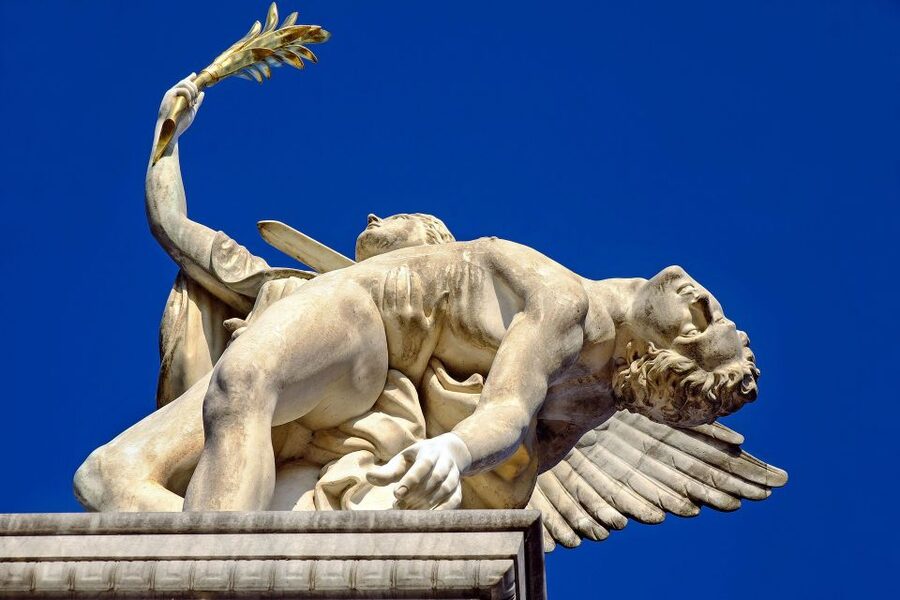
The first major stop is the Academy of Athens, reached after about a 20-minute walk. The building is one of the city’s most striking examples of neoclassical design, and it gives the guide a useful setting for discussing how ancient Greek ideas have been remembered and reused.
Do not expect an archaeological-site visit here. The price covers mythological storytelling from the guide, not entry to monuments or museums. The value comes from looking closely at the surroundings while learning how architecture and sculpture can carry classical references.
This is where the tour’s modern angle becomes clear. Athens is not only an ancient city preserved under glass. Later buildings, statues, and public spaces continue to borrow from the language of Greek gods and heroes. The guide can help you notice those links.
The walk also suits people who already know the basic myths. One participant who was a major mythology fan still learned new details, especially about how the characters connect with philosophy and imagery. You do not need to arrive with a textbook, but a little familiarity will help you follow the many names.
The Numismatic Museum and Smaller Details

The route continues toward the Numismatic Museum, with about 15 minutes of walking. The museum itself is a significant Athens landmark, but entrance is not part of this experience. The stop is better understood as part of the city walk and the guide’s commentary.
This portion can reward close attention. One of the most repeated strengths of the tour is the way the guide points out details on buildings, statues, and monuments that people had previously passed without noticing. That is useful early in your Athens stay, when you are still learning how to read the city.
The mythology also becomes a tool for orientation. Instead of memorizing a string of streets, you connect places with stories. That can make later independent walks more rewarding because you may recognize a figure, symbol, or architectural reference.
A few more walks around Athens worth a look
- Greek Food Walking Tour in Athens
★ 5.0 · 4,740 reviews - Athens: Guided Greek Food Walking Tour with Tastings
★ 4.9 · 2,859 reviews - Acropolis monuments & Parthenon Walking Tour with Optional Acropolis Museum
★ 5.0 · 2,678 reviews - Athens Acropolis and Parthenon Walking Tour
★ 4.5 · 1,355 reviews
Akadimias to Syntagma Square
The route then moves along Akadimias, followed by a walk of about 20 minutes to Syntagma Square. This section keeps the experience firmly in the modern center of Athens. You are not simply standing among ruins. You are crossing working city streets and seeing how ancient ideas sit beside present-day life.
Syntagma is one of Athens’ best-known public spaces, and it provides a strong change of scale after the quieter focus on statues and façades. The guide uses the city around you to connect public life, civic identity, and ancient Greek customs.
You should expect plenty of names and stories by this point. Penelope is often praised for making complicated material understandable through humor and enthusiasm. Still, the content is not a quick introduction only. One participant described it as a proper study of myths, characters, philosophy, and imagery. Take notes if you are especially interested, or ask the guide to repeat a name before it disappears into the Greek pantheon.
Mitropoleos and the Shift Toward Plaka
From Syntagma, the walk continues toward Mitropoleos, with about 15 minutes on foot. This part of the route helps bridge the formal center of Athens and the older-feeling streets around Plaka.
The guide’s role matters most here. The route itself is easy to follow, but the experience depends on what is explained along the way. A strong storyteller can turn a statue or building into a prompt for a larger question: Why did the ancient Greeks tell this story? What did the gods represent? How did human beings fit into a world controlled by divine forces?
Families may find this section particularly useful. Parents have appreciated that the tour can hold the attention of children and teenagers, not by simplifying everything, but by using vivid stories and asking questions. The tales include romance, betrayal, pursuit, and punishment, so parents should remember that Greek mythology is not always gentle. It deals with adult themes as well as monsters and heroic adventures.
Plaka: Athens Seen Through Its Legends
Plaka is the most atmospheric part of the walk. Its picturesque lanes provide a natural setting for stories about gods, nymphs, satyrs, and humans. The route allows about 30 minutes here before finishing in Monastiraki.
I like the idea of saving Plaka for later in the walk. By then, you have learned the basic mythological framework, so the neighborhood becomes more than a pleasant place for photographs and cafés. You begin to look for links between the stories and the city’s visual details.
This is also where the tour may reveal corners you would otherwise miss. Several people who had already spent days in Athens discovered sites they had walked past without understanding. That makes the experience useful even after you have visited the Acropolis area and the major monuments on your own.
The walk does not replace a proper visit to Athens’ archaeological sites. You will not get the same depth of physical access as you would from a museum guide or an Acropolis tour. Instead, it adds a different layer, one based on storytelling and city observation.
Finishing at Monastiraki
The tour ends at Monastiraki after about 30 minutes of walking from Plaka. This is a convenient finish for continuing your day in central Athens, though no onward transport or hotel drop-off is included.
The final location also suits the theme of the experience. Monastiraki is one of the city’s most active central areas, with shops, food, and easy access to other parts of Athens. You can continue exploring on foot after the guide says goodbye.
A previous guide, Christina, was praised for sharing restaurant, café, and bar suggestions after the tour. That sort of local advice is not guaranteed with every guide, but it shows how the experience can become a useful first-day orientation. If you are new to Athens, consider booking it near the beginning of your stay so the stories and route help you make sense of later sightseeing.
The Guide Makes the Difference
The strongest praise centers on Penelope. She is described as warm, funny, patient, and able to explain a large amount of material in clear English. Several families appreciated her work with children, while mythology fans valued the extra detail.
Her presentation seems to combine formal teaching with conversation. You are not only listening to a memorized speech. There is room to ask questions, test what you already know, and connect mythology with architecture, philosophy, and cultural change.
The tour has also been led by Christina, who received similar praise for combining myths with the history of Athens and for showing less obvious places. The guide you meet may vary, so the exact style can differ. Still, the consistently positive response to both guides points to storytelling as the experience’s main strength.
The possible weakness is the same thing that makes the tour valuable: there is a lot to take in. If you want a relaxed walk with a few famous tales, ask yourself if two hours of detailed explanation sounds appealing. If you enjoy history, literature, anthropology, or mythology, the density is more likely to feel worthwhile.
Is $47 a Fair Price?
At $47 per person, this is not the cheapest way to walk around central Athens. You can explore Plaka, Syntagma, and Monastiraki without paying for admission. The price needs to be judged by the guide’s expertise and the amount of interpretation you receive.
The fee includes the mythological storytelling and the live English-speaking guide. It does not include meals, archaeological-site tickets, or hotel pickup and drop-off. Since the route is on foot, you are paying for explanation rather than transport.
I think the value is strongest for three types of people:
- You want context for the monuments and statues you see around Athens.
- You enjoy mythology but want more than a list of gods and monsters.
- You are visiting with children or teenagers who need stories to make ancient culture hold their attention.
It is less useful if you have already booked several detailed history tours and only want a quick orientation. It is also not the right choice if you dislike walking or prefer to spend your sightseeing time inside museums and archaeological sites.
Practical Tips for a Better Walk
Wear comfortable shoes. The route includes repeated walks between stops, and the experience covers much of central Athens on foot.
Bring water and a hat, especially from late spring through summer. Penelope has been praised for seeking shade, taking breaks, and helping the group manage hot weather, but you should still come prepared. Comfortable clothing is specifically recommended.
Try to book early in your Athens stay if you want the route to serve as an introduction to the city. You may return to Plaka, Syntagma, or Monastiraki later and notice details that make more sense after the tour.
If you already know Greek mythology well, do not assume the tour will be too basic. The presentation can reach into philosophy, literature, architecture, and the cultural development of Greece. On the other hand, if you want a gentle, story-only walk, you may find the extra material demanding.
Free cancellation is available up to 24 hours before the start for a full refund, and you can reserve now and pay later. That gives you some flexibility when building an Athens schedule.
Who Should Book This Athens Mythology Tour?
I would choose this experience for families with school-age children, mythology fans, first-time visitors to Athens, and anyone who likes to understand what a city’s statues and buildings are trying to say.
It is especially good for you if you enjoy asking questions. The smaller groups available on some dates can make the walk feel almost private, and the guide’s ability to follow up on questions adds real value.
I would skip it if your priority is entering ancient sites, seeing the Acropolis interiors, or keeping the day physically easy. Those needs call for a different kind of tour.
Should You Book It?
Book this walk if you want Athens to feel like more than a collection of famous places. The best part is the connection between myth, public art, architecture, and daily life. Penelope appears to be an exceptional guide, and Christina has also led the experience with warmth and strong local insight.
At $47, the tour is worth it when you value interpretation and storytelling. Bring water, wear good shoes, and expect a serious amount of material in two hours. For a visitor who wants to see Athens through the eyes of its old stories, this is a smart addition to a city stay.
FAQ
Where does the Athens Mythological Walking Tour begin?
It begins in front of the Starbucks café at Korai 4 in central Athens.
Where does the tour finish?
The walk finishes at Monastiraki.
How long does the tour last?
The stated duration is two hours.
What language is the tour offered in?
The live tour guide speaks English.
What is included in the price?
The price includes mythological storytelling from an expert guide.
Are archaeological-site entrance fees included?
No. Entrance to archaeological sites is not included.
Are meals included?
No. Meals are not included.
Is hotel pickup and drop-off provided?
No. Hotel pickup and drop-off are not included.
What should I wear?
Wear comfortable clothes and comfortable walking shoes.
Can I cancel for a full refund?
Yes. You can cancel up to 24 hours in advance for a full refund.
Just added around Athens
- Acropolis monuments, Parthenon and Plaka, Monastiraki walking tour★ 5.0 · 182 reviews
- The Acropolis, Athens Walking City Tour and Acropolis Museum★ 5.0 · 442 reviews
- Athens Street Art Walk★ 5.0 · 309 reviews
- Athens Street Food Walk★ 5.0 · 385 reviews
- Athens Shore Excursion: Acropolis Walking Tour★ 4.5 · 131 reviews
- Athens Off the Beaten Track Private City Walking Tour★ 5.0 · 304 reviews
- Athens at Night Small-Group Walking Tour with Dinner★ 5.0 · 230 reviews
- Athens Highlights: Myths & Philosophers Walking Tour★ 5.0 · 125 reviews
Athens Walking Tours, compared.

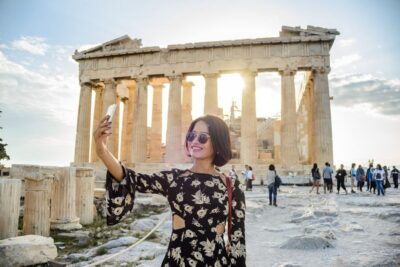
Acropolis: Acropolis and Parthenon Guided Walking Tour
Read our review →
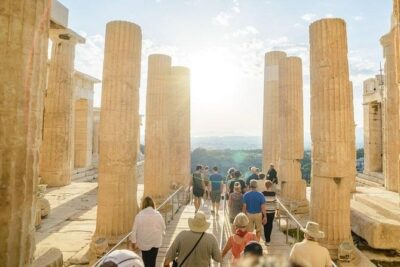
Acropolis monuments & Parthenon Walking Tour with Optional Acropolis Museum
Read our review →
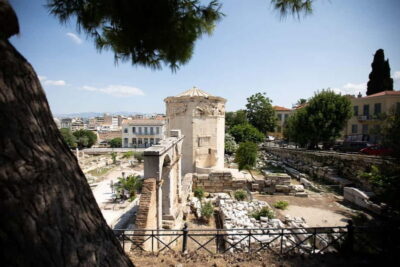
Acropolis, Parthenon & Athens Old City Heritage Walking Tour
Read our review →Browse the lists this tour appears in