
Review · BOSTON WALKING TOURS
Boston: Freedom Trail Guided Walking Tour in French
Boston tells its story on the sidewalk. This 150-minute French-language walking tour links the city’s key Freedom Trail sites with clear explanations, local anecdotes, and a route that ends in the North End. I like the small-group limit of 15 people, and I like that guide Maria uses an earpiece so you can hear her while walking. The main consideration is pace: you cover a lot of ground, and museum interiors are not included.
This is especially useful if you are visiting Boston for the first time or want the city’s early American story explained in French. Maria has earned repeated praise for her warmth, detailed storytelling, and ability to adjust for families with young children. At $45 per person, the value depends on your interest in history, but the coverage is strong for a guided walk.
Key details before you book
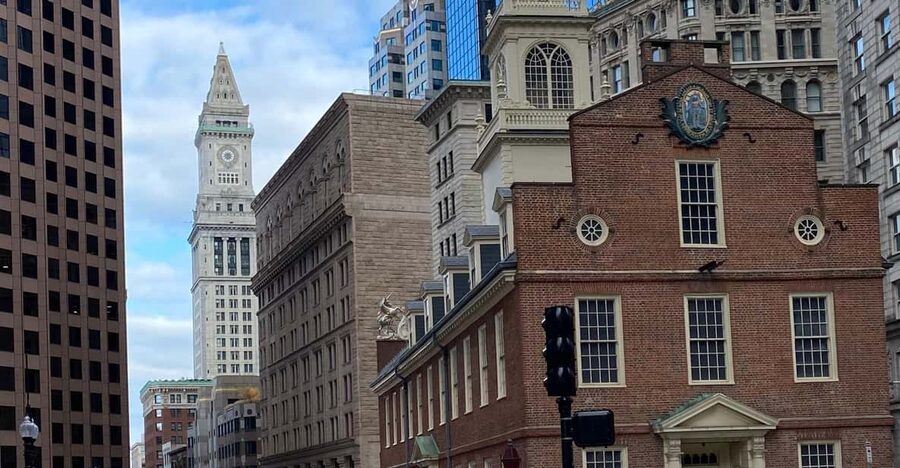
- A full Freedom Trail route: You see all 16 emblematic sites, from Boston Common to the North End, including the Old State House, Faneuil Hall, Paul Revere’s house, and Old North Church.
- French throughout: The guide speaks French and adds stories about the American Revolution, immigration, abolition, education, architecture, and modern Boston life.
- Small group size: A maximum of 15 people gives the walk a more personal feel than a large city tour.
- A practical 150-minute schedule: The route moves from Boston Common through downtown and into the North End, ending at Copp’s Hill Terrace.
- Mostly exterior sightseeing: You see and discuss major buildings, cemeteries, monuments, and landmarks, but museum admission is not part of the tour.
- A guide who gets strong praise: Maria is singled out for her clear explanations, friendliness, and patience with families traveling with children.
Why this French Freedom Trail walk works for first-time visitors
Boston can look compact on a map, but its history is spread across busy streets, churchyards, markets, monuments, and old neighborhoods. A guide gives those places an order and a purpose. Instead of seeing a red brick meetinghouse as just another old building, you learn why people gathered there, what decisions were made inside, and how those choices shaped the American Revolution.
The route begins inside Boston Common at the Boston Common Visitors Center, near the Freedom Trail starting point. Look for the guide in the alley to the left of the visitor center entrance. The sign says Gilded Age Tour, which is useful because Boston Common can be busy and the meeting point is not described as a grand outdoor plaza.
The tour is conducted in French, making it a good choice for French-speaking visitors who want more than a translated audio guide. You can ask questions in the language you are most comfortable using, and the guide can explain American history without forcing you to work through unfamiliar English terms.
The group limit of 15 matters here. You are walking through narrow historic areas, cemeteries, and busy downtown streets. A smaller party makes it easier to stay close to the guide and hear the commentary. Maria has also been noted for providing an earpiece, a useful touch when traffic, crowds, or street noise compete with her voice.
More Guided Walks in Boston:
- Harvard University Campus Guided Walking Tour
★ 4.5 · 3,632 reviews - Boston Freedom Trail Walking Tour with Costumed Guide
★ 4.5 · 2,531 reviews - Self Guided Classic Freedom Trail Location Aware (GPS) Walking Audio Tour
★ 4.5 · 258 reviews
Boston Common and the first steps toward the State House
The walk opens with about 10 minutes in Boston Common, Boston’s oldest public park. This is a smart starting point because it gives you room to get oriented before the route enters the denser historic center.
Here, the story begins with Boston’s founding and the early settlement period. The guide also places the city in the wider story of the first pilgrims and the Mayflower. You should expect context rather than a museum-style presentation, since the tour stays outdoors.
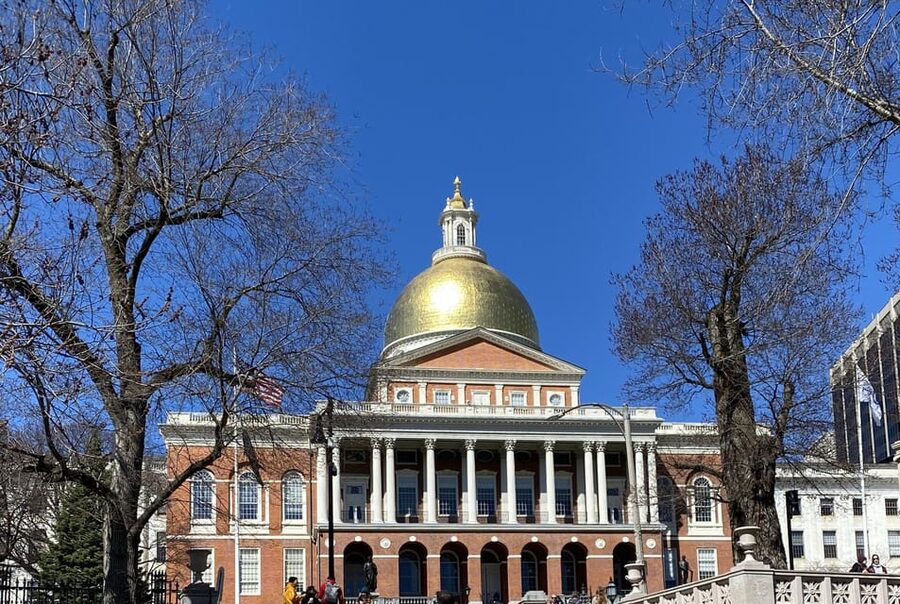
From Boston Common, the route moves toward the Massachusetts State House for a five-minute photo stop. The building helps connect Boston’s colonial past with its continuing role as a center of government. You will mainly pause for explanation and pictures rather than enter the building.
The early part of the walk is also where your guide can point out how Boston was built and changed over time. The tour covers city construction, architecture, notable figures, and daily life in modern Boston, so the story is not limited to battles and famous men.
Cemeteries, churches, and Boston’s early civic life
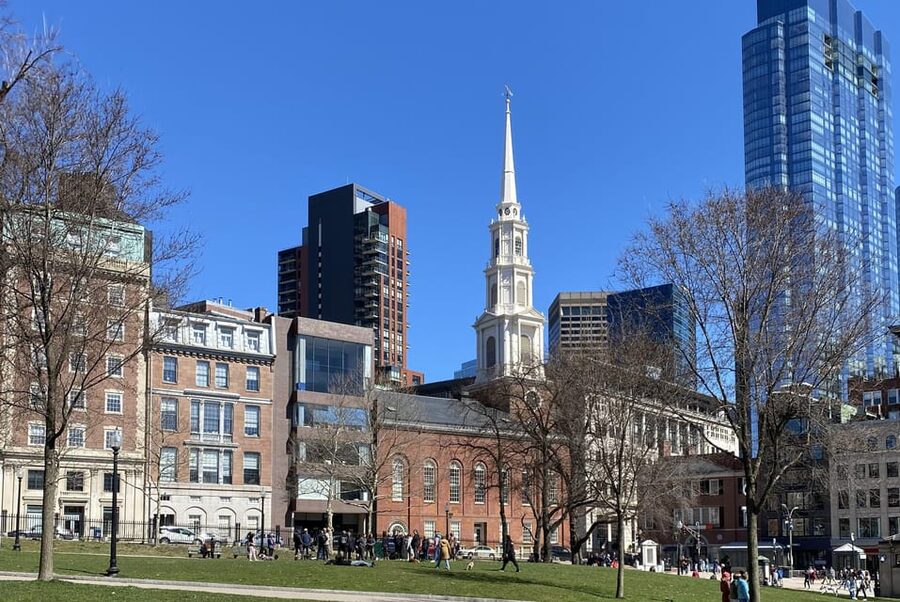
The route continues toward Park Street Church and Granary Cemetery, two places that show how closely religion, politics, and public life were linked in early Boston. Granary Cemetery is one of the city’s most atmospheric stops, with old gravestones and the names of important figures from the colonial and revolutionary era.
King’s Chapel follows, adding another layer to Boston’s religious story. The tour also includes the statue of Benjamin Franklin and the site of Boston Latin School. These stops broaden the picture beyond revolution. You hear about education, public institutions, and the people who helped shape the young city.
The guide’s role is particularly valuable here because the sites can be easy to pass without much context. A church may look impressive, but the explanation of its place in Boston’s social life gives it meaning. The same is true of the cemetery. You are not simply stopping to photograph old stones. You are connecting names, institutions, and events.
At the Old South Meeting House, you get a 10-minute photo stop. This building is closely tied to the political arguments that led to the American Revolution. It is also one of the places where the tour’s French commentary can make a difference, since the subject involves several names, events, and competing points of view.
The Old State House and the Boston Massacre site
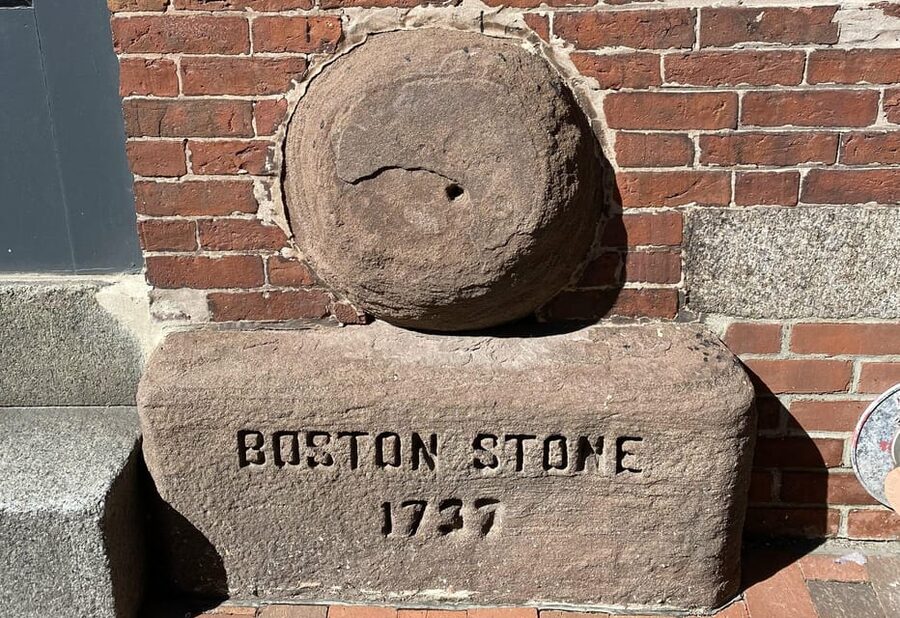
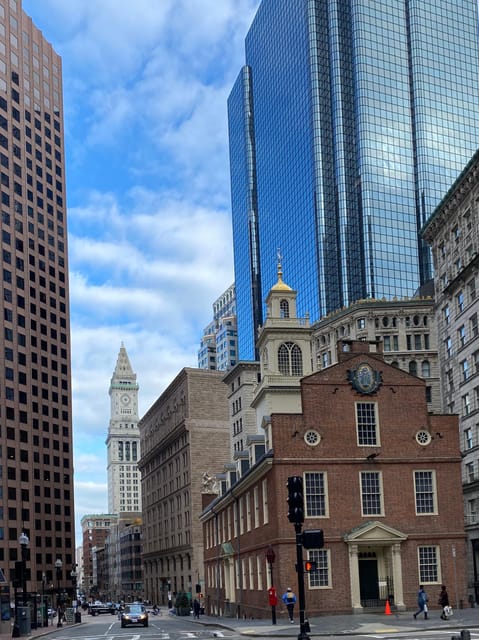
The Old State House receives a shorter five-minute stop, but it is one of the key points on the route. Its position among modern downtown buildings makes the old government building feel especially striking. The guide explains Boston’s role in the Revolution and how public conflict unfolded in the city.
Nearby is the site of the Boston Massacre. This is a small urban location, not a huge monument, so the story benefits from careful explanation. You learn why the event became such a powerful political tool and how it affected relations between Boston residents and British authority.
This is one of the strongest reasons to take the walk with a live guide. You get a sequence: public meetings, rising tension, violence, and the political response. The Freedom Trail works best when you understand how the stops relate to one another, rather than treating each as a separate attraction.
If you want to enter the Old State House or Old South Meeting House, plan to return on your own. Museum visits are not included in the $45 price. That keeps the walking tour focused and helps it cover more ground, but it also means the ticket does not replace admission to Boston’s historic interiors.
A few more walks around Boston worth a look
- Boston: Freedom Trail History Small Group Walking Tour
★ 5.0 · 6,450 reviews - The Full Revolutionary Story Epic Small Group Boston Walking Tour
★ 5.0 · 2,356 reviews - Boston’s Freedom Trail: A Revolutionary Walking Tour
★ 4.9 · 1,748 reviews - Boston: Freedom Trail History Small Group Walking Tour
★ 4.9 · 1,590 reviews
Faneuil Hall, the marketplace, and modern Boston
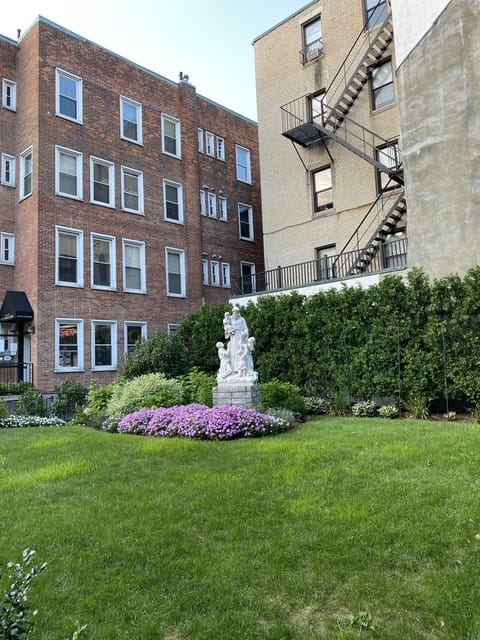
Faneuil Hall gets about 10 minutes. This is one of Boston’s most famous public spaces and a natural place to discuss debate, trade, speeches, and the growth of the city. It is also a useful transition from the Revolution story to Boston as a living city.
The walk includes the famous Oyster House restaurant and Haymarket. These stops bring food, markets, and everyday commerce into the story. Boston’s past was not only made in meetinghouses and government buildings. It was also shaped by merchants, workers, immigrants, and people buying and selling goods.
You will also encounter modern public art, including The Embrace, a sculpture dedicated to Martin Luther King, and A Donkey, acquired from Italy. These pieces give the route a contemporary edge. They remind you that Boston is not frozen in colonial times, even though the Freedom Trail often feels like an open-air museum.
The Holocaust Memorial adds a more somber note. It is a poignant stop that shifts the subject from American independence to memory, persecution, and the responsibility to remember. The contrast is useful. It keeps the tour from becoming a simple parade of revolutionary landmarks.
North End stories, Paul Revere, and Old North Church
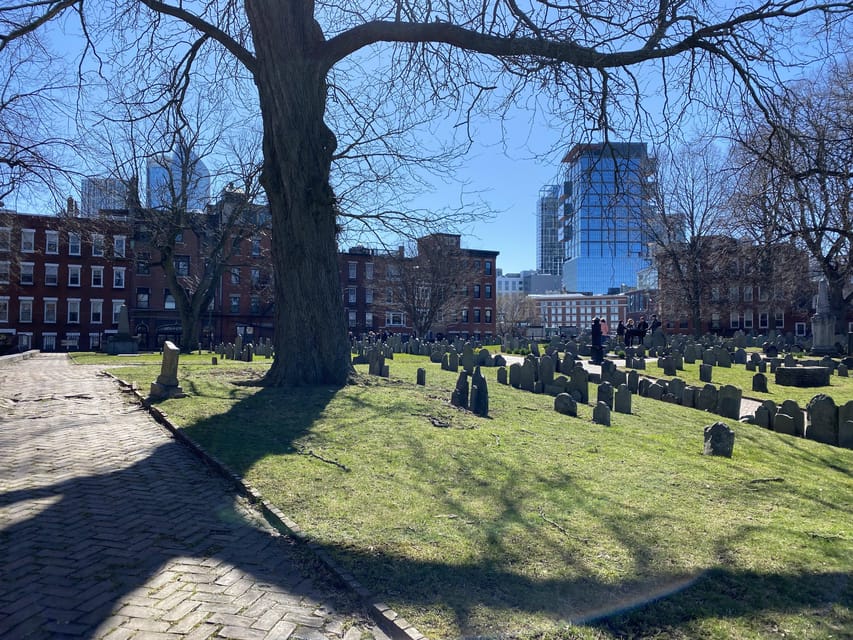
The North End receives about 30 minutes of guided attention, making it one of the longest sections of the tour. That is fitting. This is Boston’s Italian district, but it is also one of the city’s most important historic neighborhoods.
You visit Paul Revere’s house and see his equestrian statue. The guide connects Revere to the events of the Revolution while also discussing the neighborhood around him. His home is a reminder that major historical figures lived in ordinary urban settings, surrounded by families, businesses, and changing communities.
Old North Church receives a 10-minute photo stop. Its role in the Revolution makes it one of the most recognizable sites on the Freedom Trail. You should expect to see and discuss the church from outside, not take a tour of the interior as part of this experience.
The North End is also where the tour feels most connected to present-day Boston. After the historical commentary, you are steps from Italian restaurants and the neighborhood’s food culture. The official end is Copp’s Hill Terrace, close to Old North Church and the restaurant area, so you can continue exploring without needing another transfer.
Copp’s Hill Cemetery and the final stretch

Copp’s Hill Cemetery gives the walk a final dose of old Boston. Its gravestones and elevated position help explain the physical shape of the neighborhood and the city’s early growth.
The wider route also includes references to the USS Constitution and Bunker Hill Monument. These are important parts of Boston’s revolutionary story, though you should pay attention to the exact structure of the visit. The tour information identifies the 16 Freedom Trail sites, but the listed stops emphasize guided commentary and photo stops rather than interior access or extended visits at every location.
That distinction matters if you want a slow, detailed examination of each building. This is a broad city walk, not a set of separate museum tours. You get a strong introduction to Boston’s historic center, then you can choose which places deserve a return visit.
The walk concludes at Copp’s Hill Terrace. From there, Old North Church and North End restaurants are close by. Ending in this neighborhood is more useful than finishing in the middle of a business district, especially if you want lunch, dinner, or more time with the Italian district.
What $45 gets you
At $45 per person, this is not the cheapest way to see Boston’s Freedom Trail. You can follow the red brick path on your own for free. The question is what the guide adds.
I think the price is reasonable if you want French commentary, a planned route, and a connected explanation of the city. The tour lasts 150 minutes and covers a wide range of subjects, including the Revolution, architecture, abolition, education, immigration, famous residents, and modern daily life. You are paying for interpretation and company, not admission tickets.
The value is stronger for first-time visitors. You do not need to work out where each stop fits into the larger story, and you avoid spending your first morning puzzling over maps. The route also ends in a neighborhood worth exploring, which makes the tour a useful part of a full day in Boston.
The value is weaker if you mainly want interior visits. Museum admission is excluded, and the schedule leaves limited time for extended stops. I would use this tour as an introduction, then return independently to the buildings that interest you most.
Who should book this walking tour
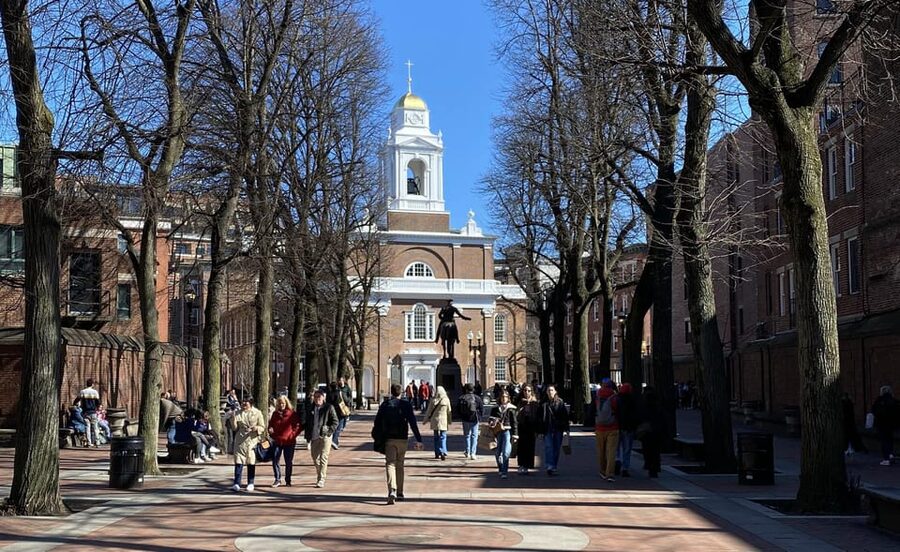
I would recommend it to French-speaking adults, couples, families, and first-time visitors who want Boston’s history explained in a lively way. The feedback about Maria is especially consistent: she is friendly, detailed, easy to understand, and able to keep the visit enjoyable. One family specifically appreciated her patience with children aged two and four.
The tour can also suit you if you prefer a small group to a large bus or a self-guided route. You walk the full historic center, hear anecdotes along the way, and have time to ask questions.
You should think twice if walking for 150 minutes is difficult or if you want to spend most of your time inside historic buildings. The activity is listed as wheelchair accessible, but the tour still takes place across city streets, public areas, and historic sites. If you need specific accessibility details for a particular stop, confirm them before booking.
Flexible booking helps too. You can cancel up to 24 hours in advance for a full refund, and you can reserve now and pay later. Those terms are useful if your Boston schedule is still changing.
Should you book it?
Book this tour if you want Boston explained in French, with a human guide, a manageable small group, and a route that covers the city’s major historic sights. Maria’s clear delivery, anecdotes, and willingness to adapt are major reasons to choose it.
Skip it if you want a free, self-guided walk or a tour built around museum interiors. For most first-time French-speaking visitors, though, $45 buys a well-organized introduction to Boston, from Boston Common to the North End, with plenty of ideas for what to see next.
FAQ
How long does the French Freedom Trail tour last?
The tour lasts 150 minutes, or two and a half hours.
Where does the tour begin?
It begins at the Boston Common Visitors Center, inside Boston Common. Meet in the alley to the left of the visitor center entrance, near the Freedom Trail starting point. The guide holds a Gilded Age Tour sign.
Where does the tour finish?
The tour finishes at Copp’s Hill Terrace in Boston’s North End. It is close to Old North Church and Italian restaurants.
What language is the tour conducted in?
The live guide speaks French throughout the walking tour.
Are museum admissions included?
No. Museum visits and interior admissions are not included in the $45 price.
Is the tour wheelchair accessible?
The activity is listed as wheelchair accessible. It is a walking tour through Boston’s public streets, historic areas, and outdoor sites.
Just added around Boston
- Cambridge, Massachusetts: MIT and Harvard Walking Tour★ 4.7 · 486 reviews
- Boston: Full Revolution Story Epic Small Group Walking Tour★ 4.9 · 132 reviews
- Boston: Salem by Boat – Witch Trials & Walking Tour★ 4.3 · 263 reviews
- Boston: 2-Hour Historic Walking Tour★ 4.7 · 88 reviews
- Boston: North End Pizza Walking Tour with 3 Slices & Cannoli★ 4.8 · 162 reviews
- Self Guided Classic Freedom Trail Location Aware (GPS) Walking Audio Tour★ 4.5 · 258 reviews
- Boston History Tour: Scenic Walk Through Time & Landmarks★ 5.0 · 627 reviews
- Freedom Trail Walking Tour 250★ 4.5 · 1,118 reviews
Boston Walking Tours, compared.
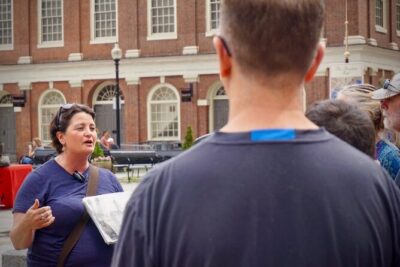
Freedom Trail History Small Group Walking Tour
Read our review →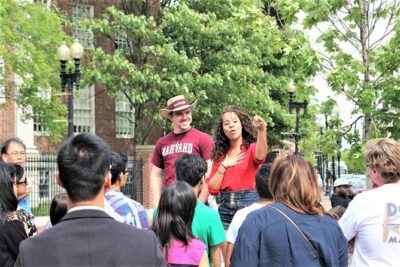
Harvard University Campus Guided Walking Tour
Read our review →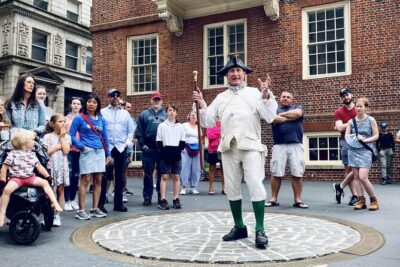
Boston Freedom Trail Walking Tour with Costumed Guide
Read our review →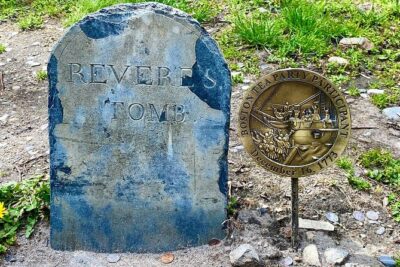
The Full Revolutionary Story Epic Small Group Boston Walking Tour
Read our review →
Boston’s Freedom Trail: A Revolutionary Walking Tour
Read our review →Freedom Trail History Small Group Walking Tour
Read our review →
Boston North End Food Tour of 6+ Tastings, Cannoli, Lobster Roll
Read our review →Boston’s Freedom Trail: A Revolutionary Walking Tour
Read our review →Browse the lists this tour appears in