

Review · BOSTON WALKING TOURS
Boston’s Freedom Trail: A Revolutionary Walking Tour
Boston’s past is hiding in plain sight. This 2.5-hour walking tour links all 16 official Freedom Trail sites with stories of revolution, abolition, immigration, and civic life. I like the full route and the guides’ knack for making familiar names feel human. The tradeoff is simple: you cover a lot of ground quickly, so anyone with limited mobility may find the pace demanding.
I also like the range of stories. You get Paul Revere and the Boston Tea Party, but also women’s rights, anti-slavery speeches, publishing, immigration, and the city’s religious conflicts. Strong guides such as Kenny, Alissa, Jim, Alfred, and Julia have been praised for humor, clarity, and a real feel for the city. Still, sound can be an issue in a large group, and some stops receive only a short explanation.
- All 16 official sites in one walk: You check off the entire Freedom Trail, from the Embrace to Copp’s Hill Terrace.
- A route through four centuries: The stories range from Boston’s colonial beginnings to abolition, education, immigration, and the Revolution.
- A North End finish: The tour ends with views toward Bunker Hill Monument and the USS Constitution.
- Guides make the difference: Kenny, Alissa, Jim, Alfred, Julia, and others have earned praise for storytelling, humor, and clear explanations.
- Expect several miles of walking: Comfortable shoes and moderate fitness matter more here than fancy historical credentials.
- Good value at $31: You pay for a guided overview, not admission to a long list of interiors.
Starting at The Embrace and Boston Common
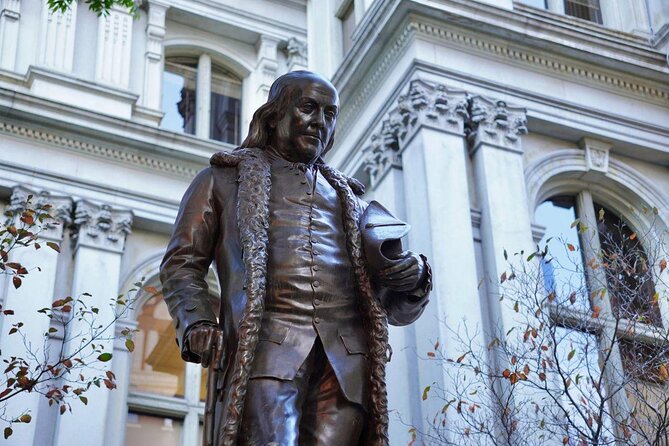
The meeting point is The Embrace, the large sculpture honoring Martin Luther King Jr. and Coretta Scott King. It sits beside the Boston Common Visitor Information Center at 139 Tremont Street, a useful place to get your bearings before the group sets off.
Beginning here gives the walk a wider frame. Boston is not presented only as a stage for powdered wigs and musket fire. The opening point links the city’s revolutionary ideals with later struggles for civil rights. That helps you see the Freedom Trail as a story about changing ideas of liberty, not just a string of old brick buildings.
The tour is offered in English and uses a mobile ticket. Confirmation arrives when you book. Groups can reach 25 people, which is small enough for a personal feel but large enough to create sound problems in a busy street. If you cannot hear a guide when the group gathers, move close and face the speaker. One recent experience was excellent because the guide made sure everyone could hear, while another found it hard to follow when the guide turned away.
The State House and Boston’s early civic arguments
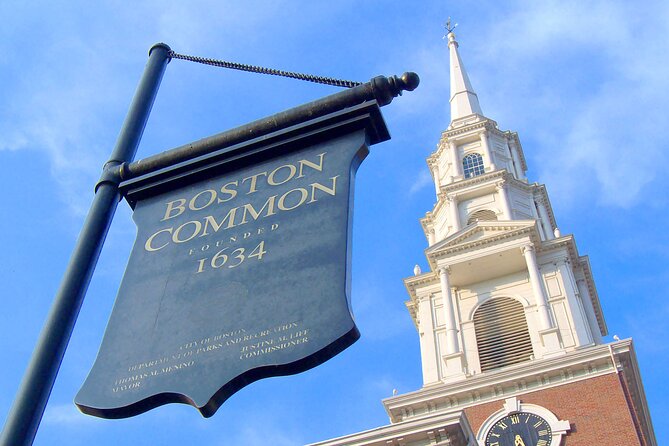
The Massachusetts State House is the first major stop. Its golden dome is easy to spot, and the building’s history reaches back to 1795, when Samuel Adams laid the cornerstone.
I find this a useful early lesson in Boston’s political character. The city’s story is not only about battles. It is also about who gets to govern, who gets a voice, and how arguments move from meeting rooms into the streets. The State House helps connect the colonial period with the civic institutions that followed.
The next stop is a red brick church built in 1809. Its congregation included abolitionists, and the guide explains the forceful anti-slavery speeches delivered inside. This is one of the tour’s more important corrections to the usual Revolution-centered version of Boston. The city’s fight over freedom continued long after independence, and the church’s history shows how religious spaces became places for public debate.
A few more walks around Boston worth a look
- Boston: Freedom Trail History Small Group Walking Tour
★ 5.0 · 6,450 reviews - Harvard University Campus Guided Walking Tour
★ 4.5 · 3,632 reviews - Boston Freedom Trail Walking Tour with Costumed Guide
★ 4.5 · 2,531 reviews
King’s Chapel Burying Ground and the people beneath it
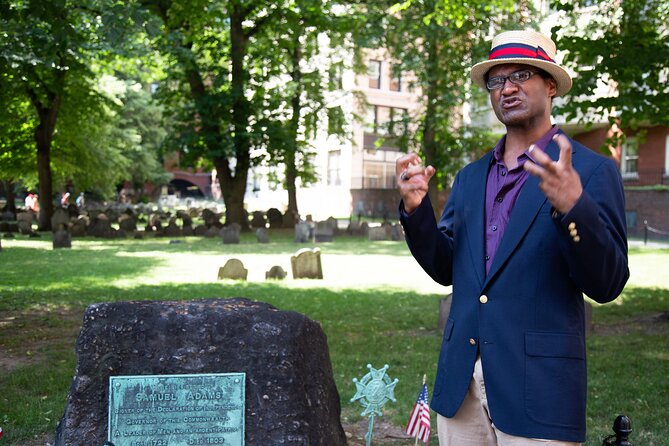
King’s Chapel Burying Ground dates to 1660 and contains the graves of John Hancock, Paul Revere, and Samuel Adams. You are not simply shown a few famous names. The guide uses the cemetery to explain the people behind the legends and the different roles they played in Boston’s political life.
A cemetery stop can be one of the most memorable parts of this tour because it slows the story down. You see the names, dates, and crowded stones that make the past feel less abstract. The caution is pacing. One guide spent a long time in the cemetery, leaving the rest of the walk feeling rushed. If you use a walking stick or need frequent pauses, tell your guide early.
King’s Chapel itself was built in 1754 as Boston’s first Anglican church. The church, neighboring burial ground, and underground crypts open another window onto religious divisions in colonial Boston. The tour does not treat the Revolution as a clean fight between two simple sides. It shows a city where political loyalty, faith, class, and family ties overlapped.
Old South Meeting House and the road to rebellion
Old South Meeting House dates to 1729 and is closely tied to the Boston Tea Party. This is where the gathering began, before the tea ended up in Boston Harbor.
The value of this stop is the setting. A mass meeting inside a religious building feels different from reading a paragraph about the Tea Party. You learn how public anger was organized and how speeches could turn frustration into direct action. If this event is your main interest, keep your expectations in check. The tour gives the broader political story, but it may not spend much time on the exact number of participants or every detail of that evening.
The next building was once the home of a colonial apothecary and later housed the publishing firm Ticknor & Fields. That change in use matters. Boston’s story did not stop with independence. The city also became a center for books, writers, and public ideas. This stop adds a literary layer to a route often dominated by soldiers and politicians.
The Old State House and the Boston Massacre
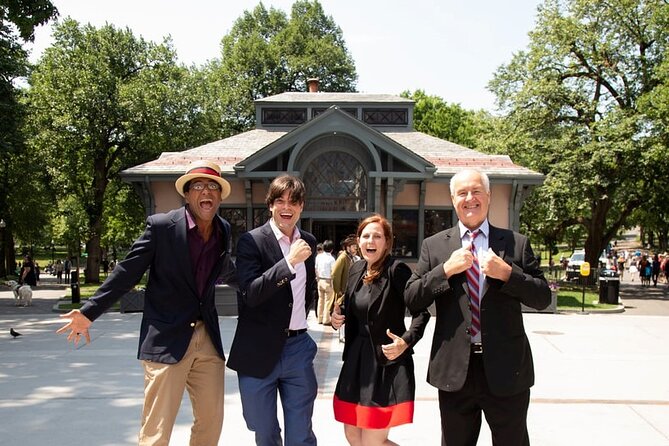
The Old State House, built in 1713, was once the center of British government in Massachusetts. Its Lion and Unicorn symbols still point to the authority of the Crown. Inside and around the building, the tour turns to speeches, confrontations, and the rising strain between local residents and British officials.
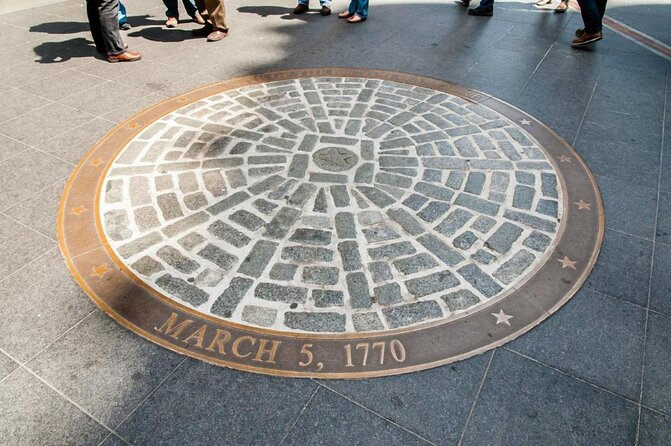
Then comes the circle of stones marking the site of the 1770 Boston Massacre. The guide reconstructs the night when British soldiers fired into a crowd and killed five colonists. This is where good storytelling matters most. The event was not just a tragic burst of violence. It became a powerful political tool, and the image of the massacre helped build opposition to British rule.
I like this part because it shows how revolution is made through memory as much as through combat. What happened mattered, but so did the way people described it afterward. A strong guide can make that distinction clear without turning the stop into a dry lecture.
Same streets, a different way to see them:
- The Full Revolutionary Story Epic Small Group Boston Walking Tour
★ 5.0 · 2,356 reviews - Boston’s Freedom Trail: A Revolutionary Walking Tour
★ 4.9 · 1,748 reviews - Boston: Freedom Trail History Small Group Walking Tour
★ 4.9 · 1,590 reviews - Boston North End Food Tour of 6+ Tastings, Cannoli, Lobster Roll
★ 5.0 · 1,404 reviews
Faneuil Hall and the sound of public dissent
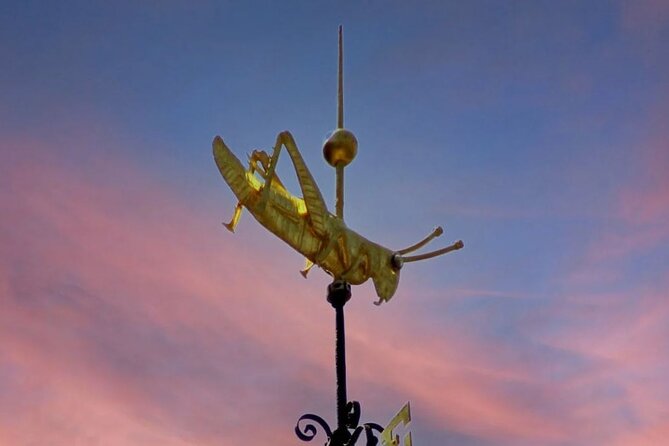
Faneuil Hall was built in 1743 as a marketplace, but its upstairs meeting hall became more important. Known as the Cradle of Liberty, it hosted speeches that helped shape public opinion.
This is a good place to listen for the difference between private complaints and organized resistance. Markets brought people together, and public halls gave them a place to argue, persuade, and recruit support. You get a sense of Boston as a city where commerce and politics were always close neighbors.
The stop can be crowded, and the guide may need to compete with city noise and other groups. That is one reason the experience of the guide matters so much. Jim has been praised for clear speech and humor, while Kenny has been praised for keeping even a large group interested. Your guide will vary, but the company uses several experienced storytellers.
Paul Revere House and Old North Church
Paul Revere’s home, built in 1680, is Boston’s oldest building. It later became the Revere family house, and the guide explains how Paul Revere lived there before riding into the story of the Revolution.
The building is valuable because it shrinks a famous figure down to a real household. Revere was not only a midnight rider. He was a craftsman, a family man, and a participant in a wider network of political action. The house also reminds you that the North End was a lived-in neighborhood, not a museum set.
Old North Church, built in 1723, is tied to the famous lantern signal: one if by land, two if by sea. The guide explains how the signal was arranged and why it mattered on the eve of the Revolution.
This is one of the route’s most recognizable moments, but the visit may be affected by construction or crowds. One guide handled that situation well by moving the group around obstacles while continuing the story. The tour is mainly an outdoor walking experience, so do not assume every building includes an extended interior visit.
Copp’s Hill and the view toward Bunker Hill
The route continues to Copp’s Hill Burying Ground, which dates to 1660. During the Battle of Bunker Hill, British forces placed cannon here. The cemetery also contains the graves of notable Bostonians.
From Copp’s Hill Terrace, you can see the 221-foot Bunker Hill Monument across the water. The monument marks the area where colonial militia defended hastily built earthworks and repelled two British attacks before retreating.
This is an important distinction, and a good guide will make it clear: the battle is remembered as Bunker Hill, but much of the fighting took place on Breed’s Hill. The view from Copp’s Hill gives you a better sense of the distance between the sites and the strategic setting.
The walk ends with views of the masts and rigging of USS Constitution in Charlestown. Known as Old Ironsides, the ship won battles in the War of 1812 and is the oldest warship afloat anywhere in the world. You do not finish in a random downtown corner. You finish with two major symbols of American military history in view.
Pace, group size, and the physical effort

The advertised duration is about two hours and 30 minutes. That is an efficient schedule for the number of places covered. You will walk through downtown Boston and the North End, with frequent stops for stories.
I would wear your most comfortable walking shoes and plan for a moderate physical effort. One guide kept the pace comfortable, and another made the route feel easy because the walks between sights were short. Other experiences found the pace fast, especially after a long cemetery explanation. The route covers enough ground that you should not treat it as a gentle stroll.
The maximum group size is 25. That is manageable, but you will get more from the tour if you stay near the guide. In noisy areas, sound quality may vary. The company has received a request for a louder speaker, so hearing ability and group position can affect how much you catch.
The tour is near public transportation, and service animals are allowed. It requires good weather. If poor weather cancels the experience, you are offered another date or a full refund.
Is $31 a fair price?
At $31 per person, I consider this a good buy if you want a guided introduction to Boston. You are paying for the guide’s narrative, route planning, and ability to connect scattered buildings into one story. Walking the red line alone costs nothing, but you may miss why each stop matters or spend time sorting out the sequence yourself.
The value is strongest for first-time visitors, families, and anyone who wants the full route in one outing. The tour also works for history fans because guides often add side stories about abolition, women’s rights, education, immigration, publishing, and lesser-known patriots.
The price is less compelling if you already know Boston well and prefer to explore at your own speed. You may also want a separate visit to sites where you hope to spend a long time indoors. This experience is built around coverage and storytelling, not lengthy museum visits.
Which guide style suits you best?
The company uses different guides, so the personality of your tour will vary. Kenny has been praised for giving careful answers and keeping a large group entertained. Alissa is known for humor and an easy manner. Jim is praised for clear explanations, strong stories, and a steady pace.
Alfred has received particular praise for balancing facts, questions, and light humor. Julia has been praised for her love of Boston’s past and for handling construction and crowds without losing the thread of the story. Sam, Noah, Charles R., Stewart, Kathy, Eliot, and Rob Crean have also been singled out for energy, clarity, and engaging explanations.
You cannot build your booking around a specific guide unless the company confirms one. I would choose this tour for the company’s general approach, then treat the individual guide as a pleasant variable.
Who should book this Freedom Trail walk?
I would recommend it to first-time visitors who want a strong orientation to Boston. It is also a smart choice for families with teenagers, since the best guides use humor, memorable characters, and dramatic events rather than reciting dates.
History fans will appreciate the full route and the extra subjects beyond the Revolution. You will likely enjoy it if you want to understand how Boston’s politics, religion, commerce, literature, and reform movements fit together.
I would think twice if you have difficulty walking several miles, need a slow pace, or dislike group tours. You can still ask about your needs at the start, but the schedule has a lot to cover. Bad weather can also cancel the outing, and a large group may make some explanations hard to hear.
Free cancellation is available up to 24 hours before the start time. Changes or cancellations made inside that window are not refunded, so keep an eye on the local forecast and your plans.
Should you book it?
Book this tour if you want to see all 16 official Freedom Trail sites without doing the planning yourself. At $31, it offers solid value, especially when you get a guide who can turn the Old State House, Paul Revere House, cemeteries, and meeting halls into one connected story.
Skip it if you want long interior visits or a leisurely pace. For most first visits, though, this is a practical way to get Boston’s bearings, learn the city’s major stories, and finish with a memorable view toward Bunker Hill and USS Constitution.
FAQ
How long does Boston’s Freedom Trail walking tour last?
The tour lasts approximately two hours and 30 minutes.
Where does the tour begin?
It begins at The Embrace, beside the Boston Common Visitor Information Center at 139 Tremont Street, Boston.
Where does the tour end?
It ends at Copp’s Hill Terrace in Boston’s historic North End, with views toward Bunker Hill Monument and USS Constitution. The listed street location is 7 Jackson Avenue, Boston.
Does the tour cover all 16 official Freedom Trail sites?
Yes. The route is designed to cover all 16 official sites of Boston’s Freedom Trail.
How much walking is involved?
You should expect several miles of walking and need a moderate level of physical fitness. Comfortable walking shoes are strongly recommended.
What happens if bad weather cancels the tour?
If poor weather causes a cancellation, you are offered a different date or a full refund. You can also cancel for a full refund up to 24 hours before the experience begins.
Just added around Boston
- Cambridge, Massachusetts: MIT and Harvard Walking Tour★ 4.7 · 486 reviews
- Boston: Salem by Boat – Witch Trials & Walking Tour★ 4.3 · 263 reviews
- Boston: Full Revolution Story Epic Small Group Walking Tour★ 4.9 · 132 reviews
- Boston: Freedom Trail Guided Walking Tour in French★ 4.9 · 106 reviews
- Boston: 2-Hour Historic Walking Tour★ 4.7 · 88 reviews
- Boston: North End Pizza Walking Tour with 3 Slices & Cannoli★ 4.8 · 162 reviews
- Self Guided Classic Freedom Trail Location Aware (GPS) Walking Audio Tour★ 4.5 · 258 reviews
- Boston History Tour: Scenic Walk Through Time & Landmarks★ 5.0 · 627 reviews
Boston Walking Tours, compared.
Freedom Trail History Small Group Walking Tour
Read our review →
Harvard University Campus Guided Walking Tour
Read our review →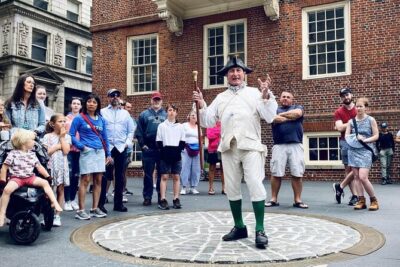
Boston Freedom Trail Walking Tour with Costumed Guide
Read our review →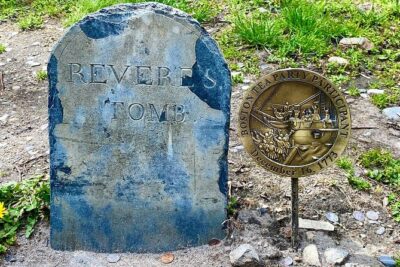
The Full Revolutionary Story Epic Small Group Boston Walking Tour
Read our review →
Boston’s Freedom Trail: A Revolutionary Walking Tour
Read our review →Freedom Trail History Small Group Walking Tour
Read our review →
Boston North End Food Tour of 6+ Tastings, Cannoli, Lobster Roll
Read our review →
Browse the lists this tour appears in