
Review · MARKET WALKING TOURS
Bristol: Air Raid Shelter & St. Nicholas Market Walking Tour
Bristol has secrets beneath its streets. This tour pairs a preserved WWII air raid shelter with a walk through the Old City, giving you two very different views of Bristol in one outing. I like the strong sense of place, from Blitz damage and old trading streets to rooms linked with 1960s music. I also like the guides’ obvious passion, especially Owen and Duncan, who bring the stories to life with humor and costume. The main drawback is that the shelter is not a polished museum, and its narrow underground spaces will not suit everyone.
You begin at the Corn Exchange and finish near St. Nicholas Market or back at the Corn Exchange, depending on the arrangement. The advertised time ranges from 75 minutes to two hours, and some recent visitors found it lasted about an hour and 15 minutes while others enjoyed close to two hours. Allow enough time afterward for food at St. Nicholas Market, since eating and shopping are not included.
Key points to know before booking
- The shelter is the main event: You enter Bristol’s largest public air raid shelter, a largely untouched wartime space beneath the Corn Exchange.
- The tour starts above ground: Expect old streets, Blitz damage, architecture, and stories about Bristol’s long trading past before heading underground.
- Guides make the difference: Owen, Duncan, and Theresa have been praised for clear delivery, humor, strong storytelling, and personal commitment to the project.
- There is a music connection: The Corn Exchange includes rooms associated with major 1960s bands, including the Rolling Stones.
- St. Nicholas Market adds a tasty finish: Food and souvenirs are available to buy, but they cost extra.
- Plan for physical limits: Comfortable shoes are required, and the tour is not suitable for people with mobility impairments, claustrophobia, a body weight over 136 kilograms, or those over 95 years old.
Why this unusual Bristol tour is worth your time
Bristol has plenty of familiar sights, but this experience takes you somewhere most city walks cannot: below the street. The wartime shelter gives the tour its strongest hook, yet the walk works because it places that shelter within the wider story of Bristol.
You are not simply shown a dark underground room and sent on your way. The guide first takes you through the old city, pointing out places connected with Bristol’s trading past and the damage caused by German bombing raids during the Second World War. That outdoor section helps you understand the shelter as part of a real city under pressure, rather than as an isolated attraction.
I also like the human scale of the experience. The guides use stories, wartime memories, period objects, and character presentation to make the subject easier to picture. Owen is sometimes dressed in WWII costume, and Duncan has been especially praised for developing the attraction and explaining the history with real commitment.
The tone is not purely solemn. Humor and lively delivery are part of the format, which makes the tour work for mixed-age groups. You still hear about the physical conditions people faced during air raids, but the presentation is designed to keep the group engaged rather than lecture at you.
More Market Walking Tours in the UK:
- London Bridge & Borough Market Food Tour with 7 Authentic Dishes
★ 5.0 · 1,972 reviews - Air Raid Shelter + St. Nicholas Market Walking Tour
★ 5.0 · 1,950 reviews - Bangkok: City Highlights Temple and Market Walking Tour
★ 4.5 · 3,990 reviews
Meeting at the Corn Exchange
The tour begins outside the main entrance of the Corn Exchange. This is an important practical detail because the building is both your meeting point and one of the main subjects of the experience.
From here, the guide leads you through nearby streets in Bristol’s Old City. You can expect commentary on old buildings, the city’s commercial past, and the places affected by the Blitz. The tour connects Bristol’s earlier trading life with its wartime experience and present-day city center.
The Corn Exchange also has a more unexpected side. You are given access to areas associated with music in the 1960s, including rooms linked with bands such as the Rolling Stones. That detail adds some variety to a tour that could otherwise focus almost entirely on war history.
The exclusive access matters. You are not only looking at the building from the pavement. You are entering parts that are usually unavailable to the public, which gives the opening section a sense of discovery without requiring a separate attraction ticket.
Walking through Bristol’s Old City and Blitz damage
The outdoor portion covers old streets around the Corn Exchange and the Old City. The guide discusses Bristol’s trading story and points out architecture that can be easy to miss when you are walking from one modern errand to another.
The wartime material is particularly tied to places such as Temple Church, Wine Street, and Corn Street. These locations help make the bombing raids more concrete. Instead of hearing only dates and general facts, you are shown the city spaces that were affected.
This section is also where a good guide matters most. Several guides have been praised for speaking clearly, pacing the walk well, and balancing serious material with lighter moments. Owen and Duncan are the names most often associated with the strongest praise, while Theresa has also been noted for bringing the stories to life.
You should expect a guided walk rather than a long stop at every site. The guide’s narration carries the experience, so stay close and listen carefully. If you are especially interested in Bristol’s wartime past, you may want to ask questions when the group reaches the shelter, since some visitors wished they had more time for questions and for looking at the displays.
Going below the Corn Exchange
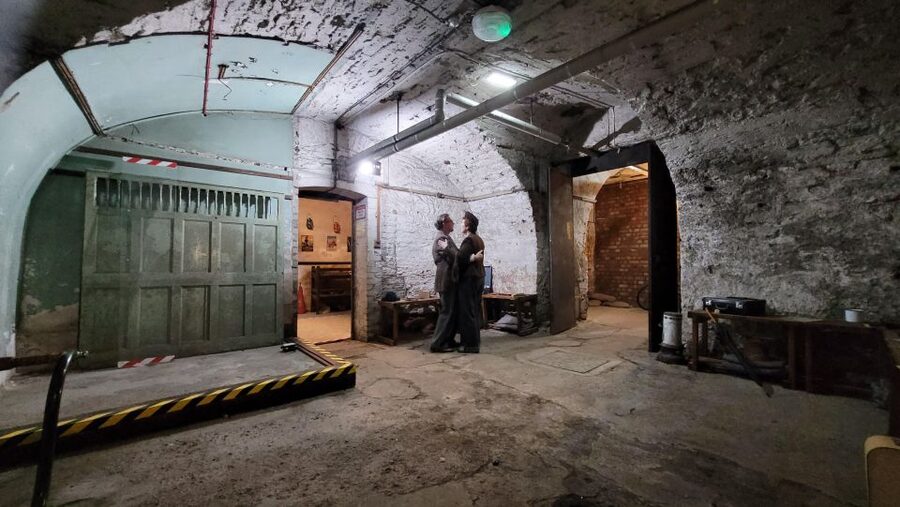
The underground shelter is the tour’s central experience. You enter Bristol’s biggest public air raid shelter, which remains largely untouched and is described as a time capsule from the Second World War.
That lack of polish is part of the appeal. This is not presented as a fully finished museum with a large exhibition hall, carefully staged lighting, and extensive interpretation at every turn. It feels more like an important place being brought back into public view.
You may see wartime items and early museum displays, while the guide explains what it was like to shelter below the city during bombing raids. Owen has been praised for helping visitors picture those conditions, and other guides have used stories and period details to make the space feel more immediate.
The shelter’s unfinished condition is also the clearest limitation. Some people wanted more museum space, more time to study the artifacts, and further renovation. The attraction is still developing, and the available space is modest. If you want a large, formal war museum, this will feel limited. If you value original places and direct storytelling, the rough edges add credibility.
There is even a playful reference to Margaret, the shelter’s friendly ghost. Treat that as part of the atmosphere rather than the main reason to book. The worthwhile part is the surviving shelter itself and the chance to hear how Bristol was affected by the raids.
A few more walks around the UK worth a look
- Magical London: Harry Potter Guided Walking Tour
★ 4.7 · 22,044 reviews - Edinburgh: Harry Potter Magical Guided Walking Tour
★ 4.8 · 11,944 reviews - Edinburgh Castle: Guided Walking Tour with Entry Ticket
★ 4.7 · 11,699 reviews - Underground Vaults Walking Tour in Edinburgh Old Town
★ 4.5 · 8,506 reviews
The Corn Exchange’s 1960s music connection
The music story gives the tour a welcome change of pace. The experience includes rooms that once hosted some of the best-known bands of the 1960s, including the Rolling Stones.
This is a small but memorable part of the visit. You are not only dealing with wartime Bristol. You are also seeing how the same city-center building later became associated with live music and popular culture.
The material on offer may vary as the project develops, so do not expect a full music museum. Still, the connection helps explain why the Corn Exchange is more than a meeting point. It is a building with several different chapters, and the tour uses those chapters to tell a broader Bristol story.
Ending at St. Nicholas Market
The tour leads you toward St. Nicholas Market, one of Bristol’s best-known covered markets. The market is a practical finish because it gives you somewhere to eat, browse, and continue exploring after the guided portion ends.
Food and drink are not included, but that is not a serious flaw at this price. Instead, you can choose what suits you, from sweet treats to savory street food, and pay only for what you want. Souvenirs are also available.
The market works best as extra time rather than part of the tightly guided historical route. The guide introduces the market and its place in the city, but you should allow your own time if you want to eat or browse properly. Depending on the arrangement, the tour may finish at St. Nicholas Market or return you to the Corn Exchange.
If you are booking this as a lunchtime activity, check the start time and leave room for food afterward. The market is included in the route, but your meal is not included in the $16 price.
How much value do you get for $16?
At $16 per person, this is strong value if you want more than a standard city walk. The price includes a live English-speaking guide, entry to the WWII shelter, and access to exclusive Corn Exchange areas. The combination of underground access and guided city history is what makes the cost reasonable.
You are also paying for interpretation. The shelter alone might be difficult to understand without context, while a walk around Bristol can easily become a list of buildings. Here, the guide links the streets, the raids, the shelter, the market, and the Corn Exchange into one route.
The value is weaker if you dislike guided storytelling or want plenty of independent time with displays. Some visitors wanted longer for questions and for reading the articles and artifacts. At roughly 75 minutes to two hours, the tour is compact, but its length can feel short if the subject grabs you.
The high rating of 4.8 from 320 ratings fits the experience’s main strengths: enthusiastic guides, unusual access, and strong local stories. I would not book it expecting a finished museum. I would book it as a personal, developing attraction that offers access to a part of Bristol you would otherwise probably miss.
Who will enjoy it most?
I would recommend this tour to anyone interested in wartime history, urban history, architecture, or places that are usually closed to the public. It also suits people who already know Bristol. Several local attendees discovered facts and spaces they had never encountered before.
Families and mixed-age groups can enjoy it because the guides use humor, costume, stories, and visual details rather than relying only on dates. History fans will appreciate the shelter and Blitz sites, while music fans get the 1960s Corn Exchange connection.
You should think twice if you are uncomfortable underground or in enclosed spaces. The tour is specifically not suitable for people with claustrophobia or mobility impairments. The shelter may also feel physically demanding for anyone who has trouble walking or standing for the duration.
Wear comfortable shoes. That advice matters because the experience combines a street walk with an underground visit, and the exact duration can vary.
What the guides add
The most consistently praised part of this experience is the guiding. Owen is described as enthusiastic, clear, entertaining, and highly informed about the subject. Duncan is praised for his passion, humor, and role in creating the attraction, while Theresa has also received strong approval for her storytelling.
That range of guides means the tone may differ slightly from one departure to another, but the common thread is personal commitment. This is not a detached audio tour. The guide is the link between the places and the people who once used them.
The costume element helps set the period, but the real strength is delivery. A shelter can be quiet and visually simple. Without a good explanation, you might walk through it in a few minutes. With a strong guide, you begin to picture the crowded, tense conditions it was built for.
Should you book the Bristol air raid shelter tour?
Book it if you want an unusual, good-value introduction to Bristol that combines old streets, wartime sites, a genuine underground shelter, and a market stop. The price is modest, the access is distinctive, and the guides bring plenty of energy.
Skip it if you need step-free access, dislike enclosed places, or expect a large, finished museum with extensive display space. The shelter is still being developed, and some areas may feel basic.
For most visitors who enjoy local stories and original places, I would book it early in your Bristol schedule. You will leave with a better sense of how the city traded, suffered bombing, sheltered underground, and later filled the Corn Exchange with music. Then you can finish with lunch at St. Nicholas Market, which is a sensible Bristol reward.
FAQ
Where does the tour begin?
Meet outside the main entrance of the Corn Exchange in Bristol.
Where can the tour finish?
The listed drop-off points are St. Nicholas Market and the Corn Exchange.
How long does the tour last?
The advertised duration is between 75 minutes and two hours. The exact time depends on the departure and tour arrangements.
What language is the tour in?
The tour is conducted in English with a live guide.
Is entry to the air raid shelter included?
Yes. Entry to the WWII air raid shelter is included in the tour price.
Is entry to the Corn Exchange areas included?
Yes. The tour includes access to exclusive areas of the Corn Exchange.
Is food included?
No. Food and drinks are available to buy at St. Nicholas Market but are not included.
What should I wear or bring?
Bring comfortable shoes because the experience includes a walking tour through Bristol and an underground shelter visit.
Is the tour suitable for people with claustrophobia?
No. The experience is not suitable for people with claustrophobia.
Can people with mobility impairments take the tour?
The activity is listed as unsuitable for people with mobility impairments. It is also not suitable for people over 136 kilograms or people over 95 years old.
Just added around the UK
- The Real Eclectic Belfast City Walking Tour/Experience.★ 5.0 · 152 reviews
- Belfast Political Tour-Conflicting Stories Walking Tour★ 4.5 · 459 reviews
- Belfast Eclectic Walking City Center Experience, The Marti Way★ 5.0 · 348 reviews
- The Real Story of Belfast walking tour with a local guide★ 5.0 · 144 reviews
- Best of Belfast Walking Tour★ 5.0 · 399 reviews
- Belfast Centre Food Tour of 12+ Local Irish Dishes & Drinks★ 5.0 · 266 reviews
- Belfast Troubles Murals Street Art and Peace Wall Walking Tour★ 5.0 · 163 reviews
- BATH: 2-Hour Bath Walking Tour of Bridgerton Filming Locations★ 5.0 · 99 reviews
Market Walking Tours, compared.

City Highlights Temple and Market Walking Tour
Read our review →
Tokyo Tsukiji Fish Market Food and Culture Walking Tour
Read our review →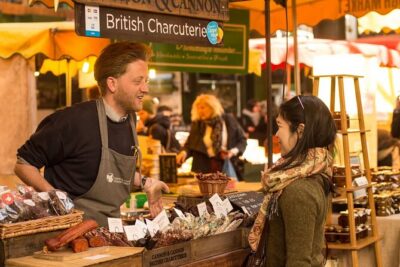
London Bridge & Borough Market Food Tour with 7 Authentic Dishes
Read our review →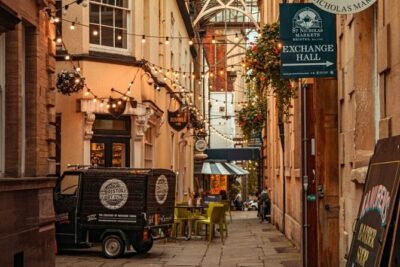
Air Raid Shelter + St. Nicholas Market Walking Tour
Read our review →

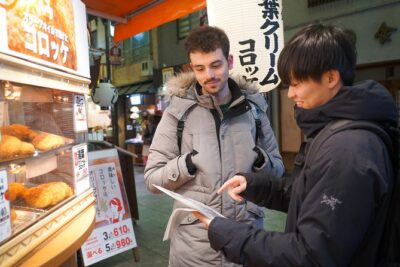
Nishiki Market Brunch Walking Tour (7 Tastings + Brunch)
Read our review →
Bologna Food & Market Tour with 6 Tastings, Pasta, Wines & More
Read our review →Browse the lists this tour appears in