
Review · PRIVATE WALKING TOURS
Dresden: Private Guided Walking Tour
Dresden tells its story in stone. This private two-hour walk brings the city’s Baroque center into focus, while also connecting medieval beginnings, Renaissance power, wartime destruction, East German life, and the Peaceful Revolution of 1989. I especially like the route’s concentration of major sights and the chance to ask your own questions along the way. The main drawback is its short length: two hours gives you a strong introduction, but not time to explore the interiors of every landmark.
I also like the private format, which lets the guide adjust the pace and explain details that fit your group. Guides such as Frau Schulz and Idiko have earned particularly warm praise for making the walk entertaining for both younger and older participants. One practical caution: a private group can include up to 25 people, so confirm the expected size if you want a truly intimate walk.
Key points at a glance
- A compact Baroque route: Begin at Neumarkt and see Frauenkirche, the Semperoper, Zwinger, Dresden Castle, and Dresden Cathedral within two hours.
- History beyond grand buildings: The guide covers more than 1,000 years, including the Middle Ages, Renaissance, Baroque Dresden, East Germany, and 1989.
- Private, but not always tiny: Your group has its own licensed guide, though the maximum size is 25 people.
- Strong guide feedback: Frau Schulz is praised for engaging young and old alike, while Idiko is described as sensational.
- Useful local advice: The guide can offer tips on restaurants, events, and other things to do in Dresden.
- Easy central meeting point: Meet at Dresden Information in the basement of QF Passage at Neumarkt 2.
Why Dresden works so well on foot
Dresden’s historic center is unusually well suited to a short walking tour. Many of its best-known buildings sit close together around Neumarkt, the Elbe River, and the old royal quarter. You spend less time getting from one sight to another and more time looking up at domes, palace walls, stone reliefs, and long ceremonial courtyards.
That compact setting also makes the city’s changes easier to understand. Dresden can look like a polished Baroque capital at first glance, but the guide’s job is to show you the layers beneath it. You will hear about the medieval city, the Renaissance court, the grand rebuilding of the Baroque period, the difficult years of the 20th century, and the events that helped bring down East Germany’s government.
I would choose this walk early in a Dresden visit. The route introduces the main old-town sights and gives you a useful map in your head. The restaurant and event tips at the end may also help you plan the rest of your stay.
More Private Walking Tours in Germany
- Berlin Private Complete History All Day Walking Tour
★ 5.0 · 474 reviews - Private Walking Tour Berlin Third Reich Hitler and World War II
★ 5.0 · 360 reviews - Private Berlin: Iconic Sights and Hidden Gems Walking Tour
★ 5.0 · 292 reviews
Starting at Neumarkt and Frauenkirche
The tour begins at Dresden Information, located at Neumarkt 2 in the basement level of QF Passage. That is a central and practical meeting point, but take a moment to find the correct floor before your start time. Neumarkt is one of the city’s key public squares, so it is a fitting place to begin.
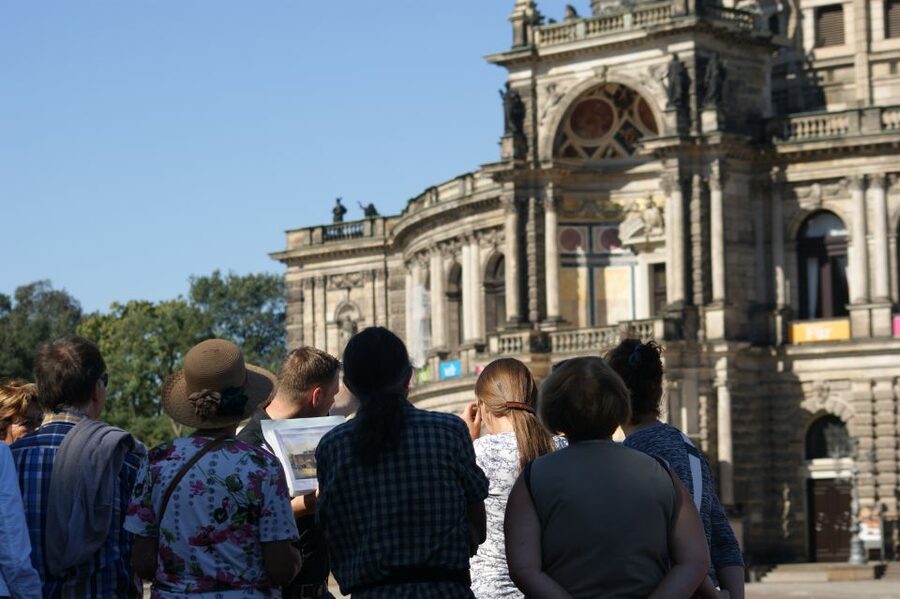
Frauenkirche dominates the square. Its large stone dome and carefully restored exterior make it one of Dresden’s most recognizable buildings. Here, the guide can introduce the city’s Baroque style and explain why the church matters beyond its appearance.
The church also gives the tour a chance to address Dresden’s painful 20th-century story. The city was heavily destroyed during World War II, and Frauenkirche later became one of the clearest symbols of reconstruction. The building’s past and return help explain why Dresden can feel both old and newly restored at the same time.
You should not expect a lengthy interior visit as part of this walking tour. The focus is the city outside, the setting of each building, and the stories that connect the sights. If seeing the inside of Frauenkirche is important to you, plan separate time for it.
Semperoper and the Baroque Zwinger
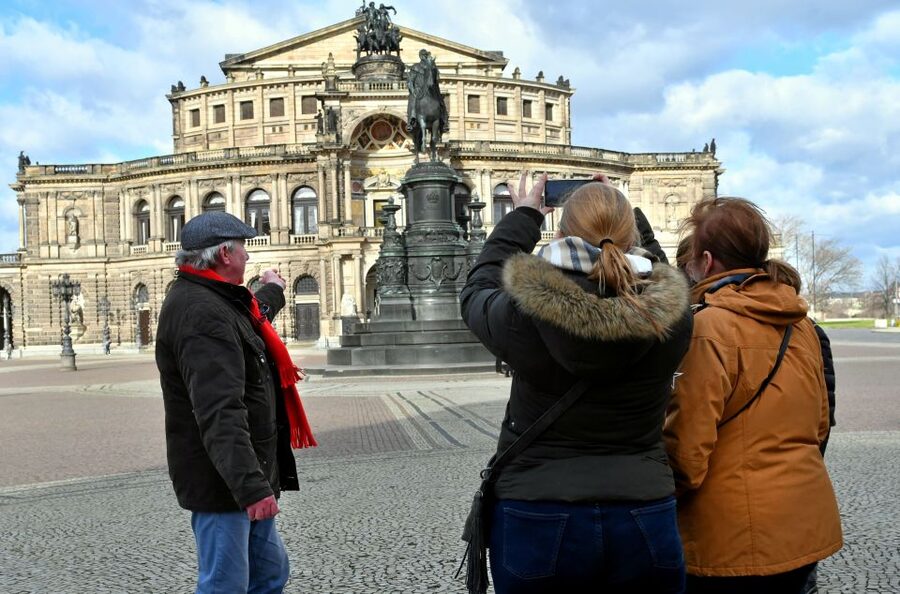
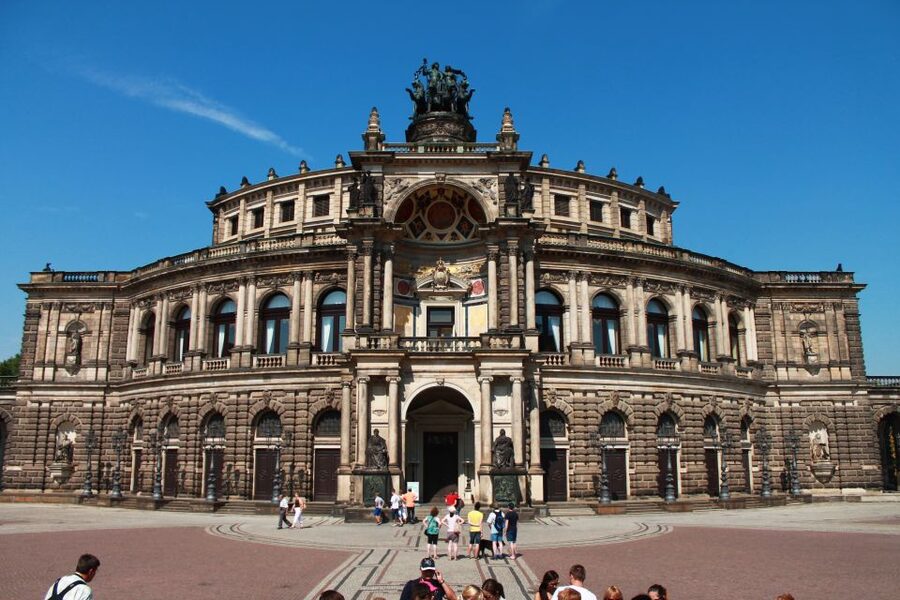
From the central square, the route brings you toward two of Dresden’s biggest architectural attractions: the Semperoper and the Zwinger. The Semperoper is the city’s famous opera house, known for its grand appearance and its place in Dresden’s cultural life.
The exterior alone gives you plenty to study. Its decorative details and formal design fit the city’s royal image, but the guide can add the human side of the building’s story. This is where a local guide earns the fee. A list of dates and names is easy to find, while anecdotes can help you understand how the building functioned within the court city.
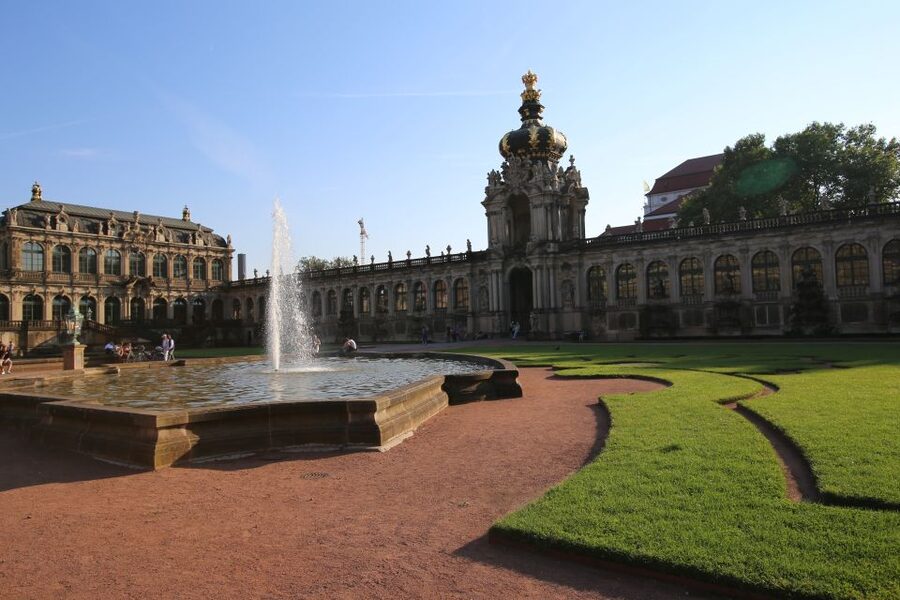
The Zwinger offers a different kind of spectacle. Its Baroque buildings, galleries, pavilions, and open spaces were designed to impress. You can expect the guide to point out the dramatic decoration and explain the role of ceremony and display in Dresden’s past.
The benefit of seeing the Zwinger with a guide is that the scale can make more sense. Without context, it is simply a striking complex. With context, you begin to see how architecture was used to project power, wealth, taste, and royal ambition.
The limitation is time. The Zwinger contains more detail than a two-hour walk can cover, and this tour does not give you a full museum visit. If you enjoy art and palace collections, return later with a longer block of time.
Dresden Castle and the royal quarter
Dresden Castle takes the tour into the former royal center. From here, the route connects the castle with Brühl’s Terrace, the Procession of Princes, the Stallhof, and Dresden Cathedral. This sequence is one of the strongest parts of the walk because the sights are close together yet each presents a different view of the city’s past.
The castle represents royal authority and long-term political change. Its history reaches back far beyond the Baroque period, so it helps the guide explain how Dresden developed over more than 1,000 years rather than appearing fully formed in the 18th century.
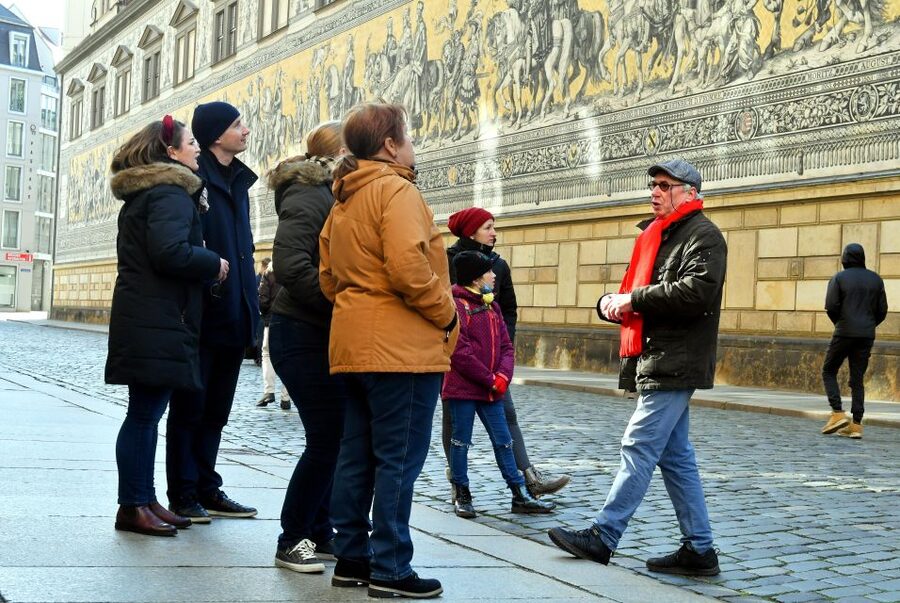
The Procession of Princes is especially useful for understanding Dresden’s rulers. This long outdoor mural presents a procession of members of the House of Wettin. As you walk beside it, the guide can help you read the figures and place them within the story of Saxony.
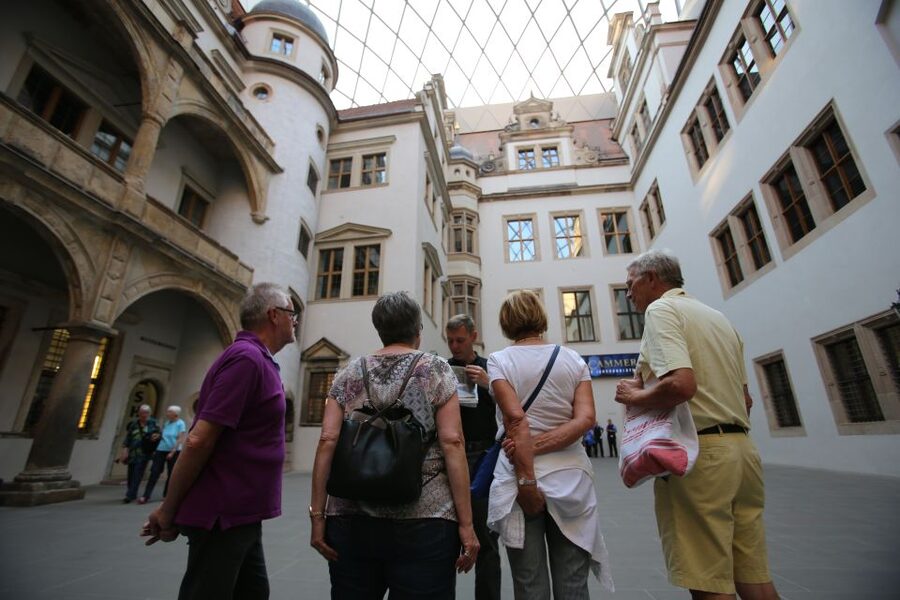
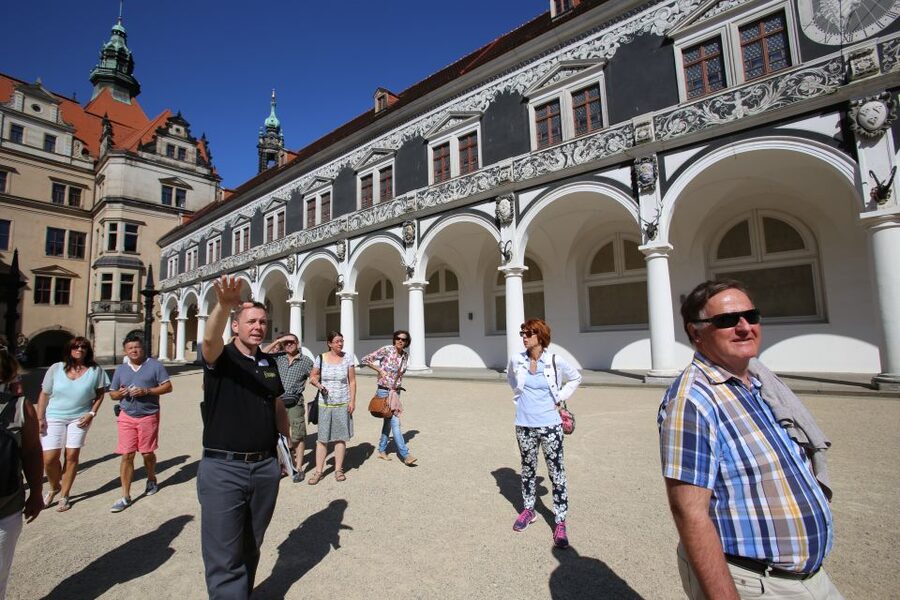
The Stallhof, or stable courtyard, brings you into a more enclosed royal setting. Its name points to its original court function, and its surviving layout gives you a sense of how much of Dresden’s old center was organized around the royal household.
Dresden Cathedral adds another layer. Its prominent position near the castle reflects the close relationship between religion, monarchy, and public life. The route does not treat these buildings as isolated photo stops. It links them into a picture of how the city worked.
Same streets, a different way to see them:
- Discover Berlin Half-Day Walking Tour
★ 5.0 · 9,624 reviews - Berlin City walk Government District and Places of Democracy
★ 4.7 · 8,467 reviews - Berlin: Third Reich & Cold War Guided Walking Tour
★ 4.9 · 8,378 reviews - Munich: Third Reich & WWII Walking Tour
★ 4.6 · 6,181 reviews
Brühl’s Terrace and the view toward the Elbe
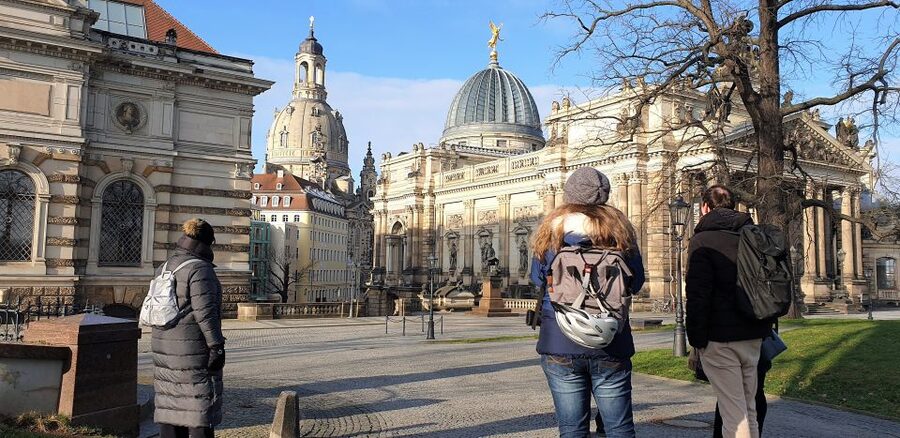
Brühl’s Terrace is often called the Balcony of Europe, and the nickname makes sense once you reach the riverside promenade. It offers a change of pace after the dense royal quarter. You can look out toward the Elbe and see Dresden from a broader angle.
This is a useful pause in a two-hour walk. The Baroque buildings and palace courtyards can feel visually crowded, while the terrace gives you space to understand the city’s position along the river. The guide may also use this point to explain Dresden’s development and the importance of its river setting.
I would not expect a long stop here. The tour has a fixed route and several major sights to cover. Still, even a short pause can help you connect the old town’s grand architecture with the wider city.
If photography matters to you, keep your camera ready, but do not let it distract you from the guide. The value of this stop is not just the view. It is the explanation of how the river, the royal quarter, and the old city fit together.
From Taschenbergpalais to Augustus Bridge
The route continues to Taschenbergpalais and then toward Augustus Bridge. Taschenbergpalais adds another palace setting to the walk, while Augustus Bridge brings you back toward the Elbe and the wider city.
These stops are valuable because they prevent the tour from becoming a simple parade of the most famous names. You see how Dresden’s grand buildings connect through streets, squares, and river crossings. The guide can also point out details you might otherwise pass without noticing.
Augustus Bridge is a natural place to think about Dresden’s geography. From the bridge, the city’s historic center and riverfront relate to one another in a clear way. It also marks a shift in the walk, moving you back toward the area around Frauenkirche.
The tour ends near Frauenkirche, close to where it begins. That is convenient if you want to continue sightseeing, find lunch, or return to a building you want to explore in more detail. It also means you are not left at an unfamiliar edge of town.
The history beyond Baroque Dresden
The architecture may attract you first, but the historical range is what gives this walk its depth. The guide covers the Middle Ages, the Renaissance, and the Baroque age, then moves into modern German history.
That final part matters. Dresden was in East Germany after World War II, and the experience of life in the former East and West German states shaped families, work, travel, and politics in different ways. The tour also discusses the Peaceful Revolution of 1989, which helps place Dresden within the events that changed Germany.
You may find this especially useful if your knowledge of German history is limited to the Berlin Wall and reunification. Dresden provides a local setting for those larger events. The guide can connect national change to the people who lived through it.
The supplied information promises both little anecdotes and larger historical stories. That balance is important. Dates give you structure, but personal details and humor can make a difficult subject easier to follow.
What the guide adds to the walk
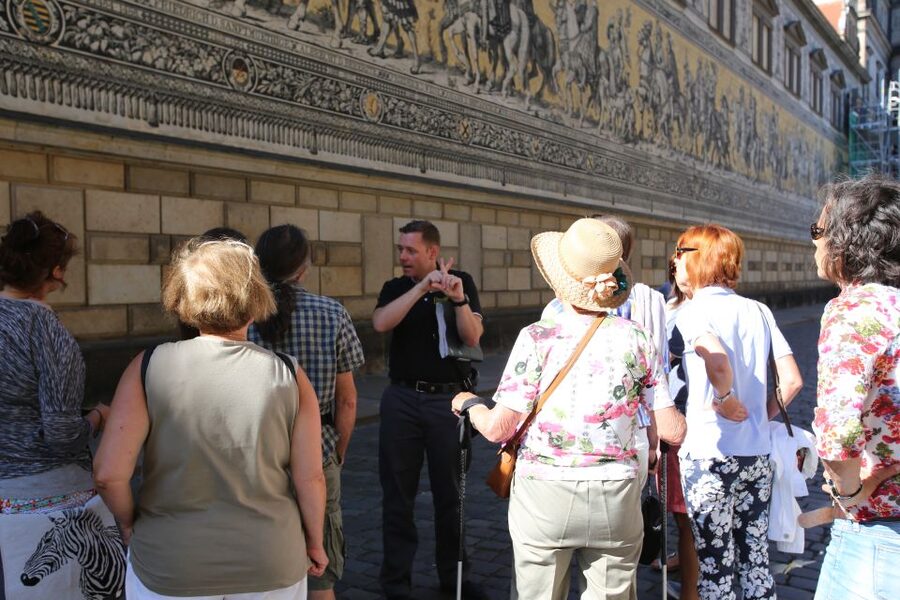
This experience depends heavily on the individual guide, and the feedback points to a strong pattern: friendly, experienced guides who adjust to the group. Frau Schulz is singled out for creating a tour that appealed to young and old. Idiko is praised with unusual enthusiasm, and another booking notes that the guide adapted well to the group and included less obvious corners of Dresden.
That flexibility is one of the main advantages of booking privately. You can ask about a building, pause for clarification, or request restaurant and event suggestions. A standard group tour may need to keep moving, while a private guide has more room to respond to your interests.
The tone also seems important. The best comments focus on humor, entertainment, and the ability to make a large amount of history feel manageable. This is not a silent architecture walk. You should expect conversation, stories, and explanations.
At the same time, a private booking does not guarantee that the same guide will lead every departure. If a particular guide is important to you, ask when booking rather than assuming. The languages offered are English and German only.
Is $212 a fair price?

The price is $212 for a private group of up to 25 people. At the maximum size, that works out to about $8.50 per person, which is good value for a two-hour private introduction. The calculation changes sharply for smaller groups. Two people would be paying $106 each, and four people would pay $53 each.
That makes the tour most appealing to families, friend groups, school groups, and organized parties that can share the cost. A couple may still prefer it if personal attention and schedule flexibility matter more than the lowest possible price.
You are paying for more than a guide walking you between buildings. The fee includes a professional licensed guide, private group service, historical interpretation, and local suggestions for restaurants and events. You also avoid having to organize the old town route yourself.
The value is weaker if you only want a quick list of sights or plan to spend most of your time inside museums. The tour covers exteriors and city context. It is an orientation walk, not a replacement for detailed visits to the Zwinger collections, Frauenkirche, Dresden Castle, or the Semperoper.
Who should book this Dresden walk?
I would recommend it to first-time visitors who want a clear introduction without spending half a day on a tour. It also suits families because the guide can adjust explanations and keep the pace responsive to the group.
History-minded visitors will appreciate the span from the Middle Ages through 1989. Architecture fans will enjoy the concentration of Baroque buildings, royal sites, courtyards, and river views. The private format is also useful for groups with mixed interests, since you can ask for restaurant advice or focus more closely on a particular period.
You should think twice if you want a long, slow art tour or a full interior visit to Dresden’s museums and churches. Two hours passes quickly, especially with so many major sights. I would pair this walk with a separate visit to the buildings that interest you most.
The tour is wheelchair accessible, which makes the central route available to a wider range of visitors. Still, your group should confirm any specific needs in advance, since the supplied details do not describe every surface or access point along the route.
Practical details before you go
Meet at Dresden Information in the basement of QF Passage, Neumarkt 2, 01067 Dresden. The tour lasts two hours, and starting times depend on availability.
English and German are available. If you need another language or a different meeting point, you must send a request rather than assume it can be arranged.
The group limit is 25 people. That is private in the sense that your booking is reserved for your own party, but it is not necessarily a small group at the upper limit. Ask about the expected number if that affects your decision.
You can cancel up to 24 hours before the tour for a full refund, and reserve now while paying later. Those terms help if your Dresden schedule is still changing.
Should you book it?
Book this walk if you want Dresden’s old town explained rather than simply photographed. The route covers the city’s major Baroque sights, adds the important story of 1989, and gives you a local contact for food and event advice.
I would book it early in a stay and use it as a foundation for later visits. The $212 price is sensible for a larger private group, but harder to justify for just one or two people. If you accept that the tour is a fast outdoor introduction, its strong guide feedback, central route, and wide historical range make it a useful Dresden choice.
FAQ
How long is the Dresden private walking tour?
The tour lasts two hours.
Where does the tour meet?
Meet your guide at Dresden Information, Neumarkt 2, 01067 Dresden, in the basement floor of QF Passage.
Where does the walking tour end?
The tour concludes near Frauenkirche.
Which languages are available?
The tour is offered in English or German. Requests for other languages can be sent to the provider.
How many people can join the private group?
The maximum group size is 25 people.
Which sights are included on the route?
The route includes Neumarkt, Frauenkirche, Semperoper, the Baroque Zwinger, Dresden Castle, Brühl’s Terrace, the Procession of Princes, Stallhof, Dresden Cathedral, Taschenbergpalais, and Augustus Bridge.
Is the tour wheelchair accessible?
Yes, the activity is listed as wheelchair accessible.
Can I cancel for a full refund?
Yes. You can cancel up to 24 hours in advance for a full refund.
Just added around Germany
- Berlin Walking Tour★ 4.5 · 378 reviews
- Small Group Walking Tour of East Berlin with a French Guide★ 5.0 · 176 reviews
- Berlin Street Art Walking Tour – Off The Grid★ 5.0 · 270 reviews
- Berlin Highlights Private Guided Walking Tour★ 4.5 · 89 reviews
- Private Walking Tour: World War 2 and Cold War Sites in Berlin★ 5.0 · 230 reviews
- East Meets West: Berlin Food Culture & Street Art★ 5.0 · 157 reviews
- The History of Berlin: WWII PRIVATE Walking Tour With Locals★ 5.0 · 209 reviews
- Kreuzberg Berlin: Off the Beaten Track PRIVATE Walking Tour★ 5.0 · 128 reviews
Private Walking Tours, compared.

Private 3 hrs Venice Tour: St Mark’s, Walking tour & Boat tour
Read our review →
Private Street Food Evening Walking Tour in Ho Chi Minh City
Read our review →
Old Quebec City: Grand Walking Tour with Private Option
Read our review →

Barcelona Helicopter, Sailboat & Old Town Private Walking Tour
Read our review →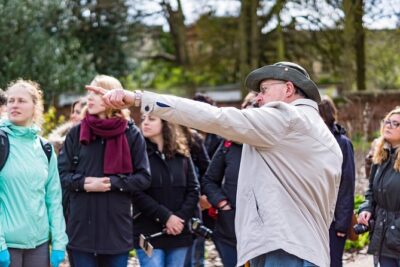
Browse the lists this tour appears in