
Review · MALTA WALKING TOURS
From Cospicua: Senglea, Bormla, and Birgu Walking Tour
Ancient walls, local stories, and a gondola-style finish. This 2.5-hour walking tour introduces Senglea, Bormla, and Birgu, the historic Three Cities across the harbor from Valletta. I like the way it connects grand fortifications with everyday Maltese life, and I like that the tour ends near Birgu’s waterfront, where you can continue independently or catch a dgħajsa back toward Valletta. The main thing to consider is that Birgu receives the most detailed walking time, while Senglea and Bormla are covered more briefly.
The price is $24 per person, which is fair for a guided history walk with a live English-speaking guide. Come ready for streets, walls, waterfront paths, and regular stops rather than a quick checklist of sights. Comfortable shoes matter, and the boat back to Valletta costs extra.
Key points at a glance
- Birgu gets the main attention: Expect about 75 minutes around Vittoriosa, especially the Collacchio quarter, its narrow streets, and former knights’ palaces.
- The meeting point is simple: Meet at the unloading point of the Valletta to Three Cities ferry in Cospicua, immediately after stepping off the boat.
- The history reaches beyond the Knights: The walk also explains British naval power, drydocks, the Royal Navy headquarters, and the heavy bombing suffered during the Second World War.
- Small groups can make a real difference: Several bookings describe groups of around five to ten people, with plenty of room for questions when numbers are low.
- Guide quality is a major strength: Karl, Chris, Lorraine, Christian, Kris, and other guides have been praised for clear English, humor, local stories, and lively storytelling.
- The final boat is not included: The dgħajsa, a traditional Maltese boat similar to a gondola, is an optional extra rather than part of the tour price.
Why the Three Cities deserve your morning
Valletta gets much of Malta’s attention, and rightly so. Yet across the water, Senglea, Bormla, and Birgu offer a quieter look at how the island grew around its harbors, forts, dockyards, and working communities.
These towns are often grouped together as the Three Cities. Birgu is also called Vittoriosa, so do not worry if your guide uses both names. The names reflect different layers of Malta’s past, and the walk uses those layers well: the arrival of the Knights of Malta, the military role of the harbor, British naval activity, and the endurance of local residents during wartime.
I especially like the mix of grand and ordinary. One moment you are looking toward huge stone defenses and harbor walls. A few minutes later, you are walking through a narrow lane or hearing about customs that still belong to local life. That contrast gives the area more character than a tour made up only of monuments.
The tour is also useful for placing Valletta in context. From across the harbor, you see the defensive logic of Malta more clearly. The cities were not built as isolated postcard attractions. They grew because the harbor mattered, and because military and naval power shaped daily life for centuries.
A few more walks around the world worth a look
- Magical London: Harry Potter Guided Walking Tour
★ 4.7 · 22,044 reviews - Reykjavik Food Walk – Local Foodie Adventure in Iceland
★ 5.0 · 18,952 reviews - History and Hauntings of Salem Guided Walking Tour
★ 5.0 · 14,564 reviews
Starting in Cospicua after the ferry
Your meeting point is the unloading area of the Valletta to Three Cities ferry in Cospicua, also known as Bormla. This is a practical arrangement because the ferry brings you directly into the setting you are about to explore. You do not need to search through a large square or guess which street corner is correct. Get off the boat and look for the guide at the unloading place.
The opening section lasts about 30 minutes and introduces Cospicua, Senglea, and the waterfront setting. Expect an orientation rather than a long museum-style stop. The guide helps you understand how the three cities relate to one another and why the harbor shaped their fortunes.
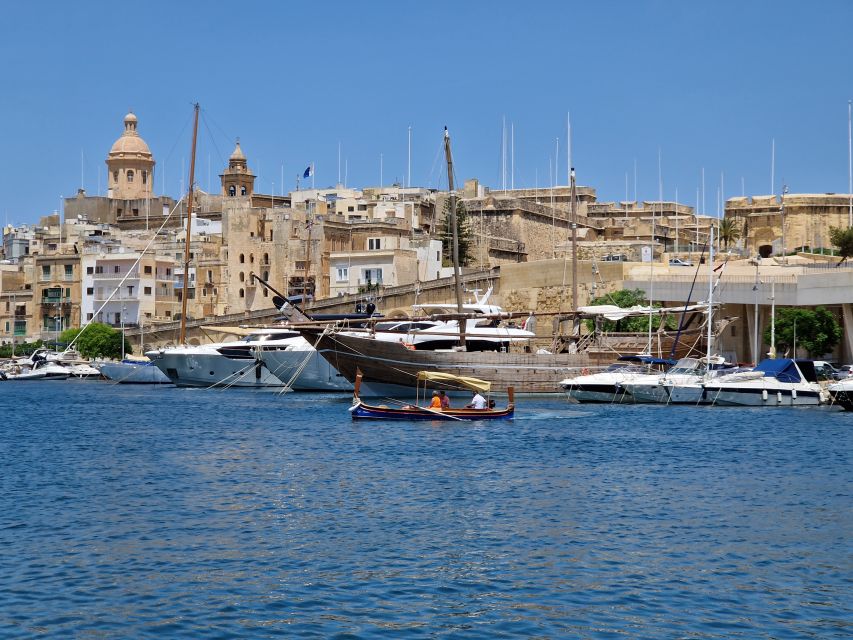
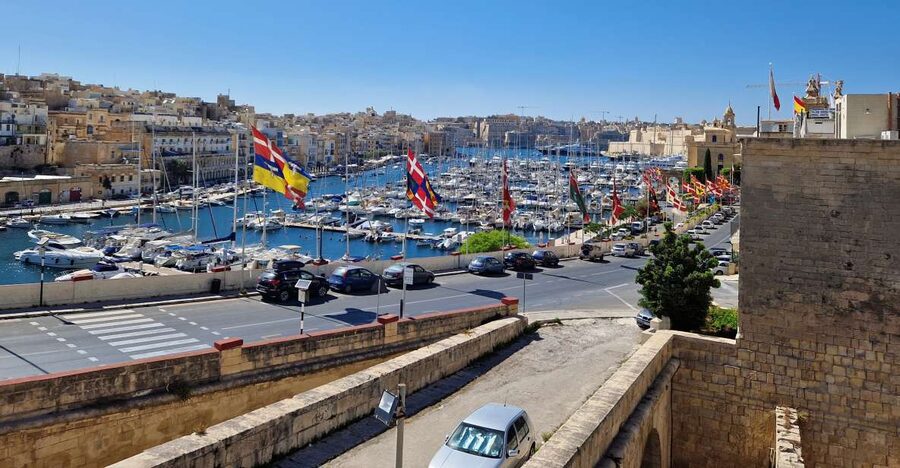
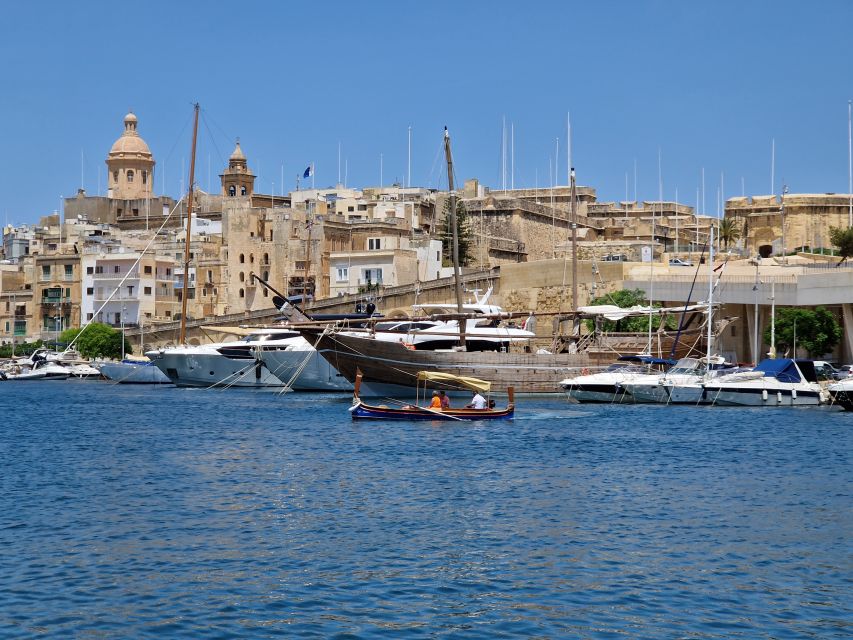
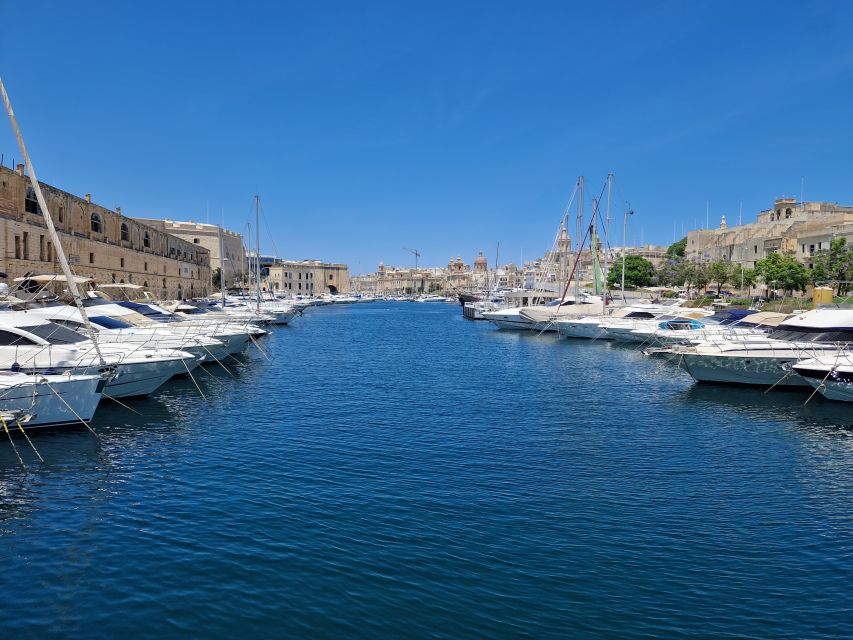
The waterfronts are lined with yachts, but the view is not only about modern pleasure boats. You are also looking toward fortifications, harbor entrances, and areas tied to shipbuilding and naval work. The result is a useful first lesson in Malta’s layered character: old defensive stone beside an active waterfront.
The ferry itself is not included in the tour price, and hotel pickup is not offered. You need to make your own way to Cospicua. Since the meeting point depends on the ferry arrival, allow enough time to reach the Three Cities before the scheduled start.
Senglea and Bormla: a short introduction with a big setting
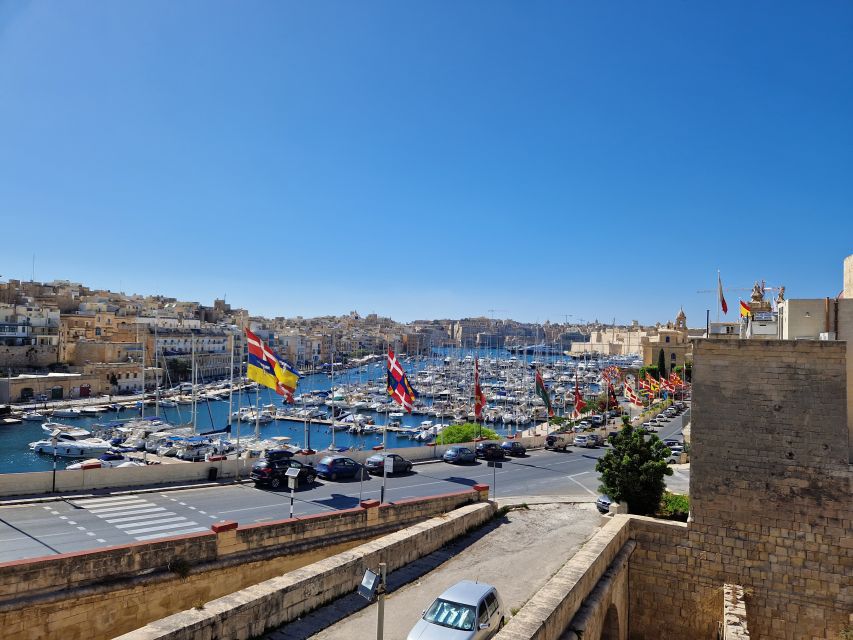
The Senglea and Bormla portion gives you the broad setting before the walk concentrates on Birgu. This is important because the Three Cities are easy to confuse when you first arrive. A guide can point out their positions, explain how they connect, and show why the harbor made them one strategic area rather than three unrelated towns.
Do not expect a full, separate tour of every street in all three cities. The available time is limited, and Birgu receives the most attention. One booking specifically noted that the walk focused mainly on Vittoriosa because it offers the strongest concentration of historic sights. That is worth knowing before you reserve.
Still, the shorter introduction has value. You get waterfront views, an understanding of the harbor crossing, and a clearer sense of how Senglea and Bormla fit into Malta’s defensive and naval story. If your main goal is to wander every corner of Senglea and Bormla, you will want to return on your own after the tour.
Crossing toward Birgu and its massive defenses
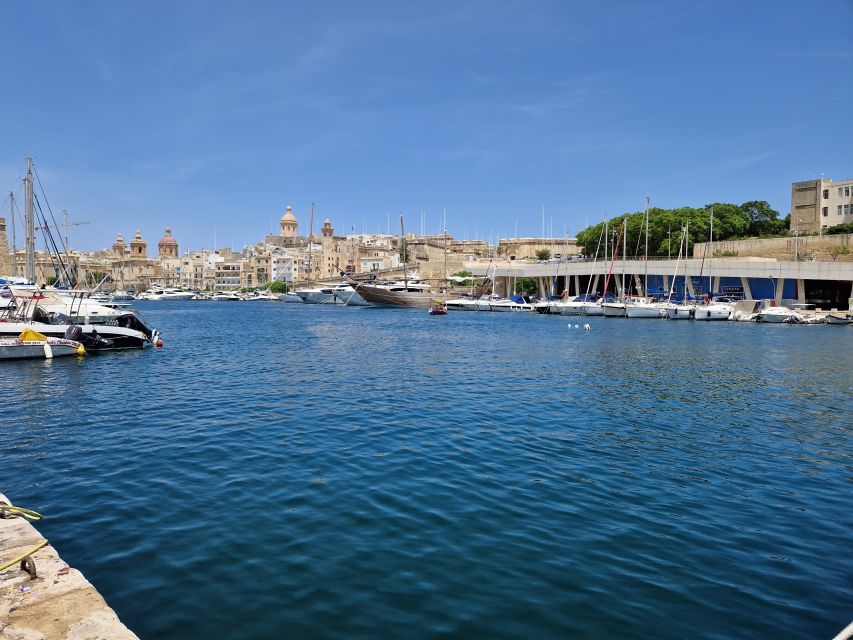
As the route moves toward Birgu, the fortifications become the visual star. Malta’s stone defenses are not small decorative walls. They are huge, practical structures that tell you how seriously the island’s rulers treated naval attack and control of the harbor.
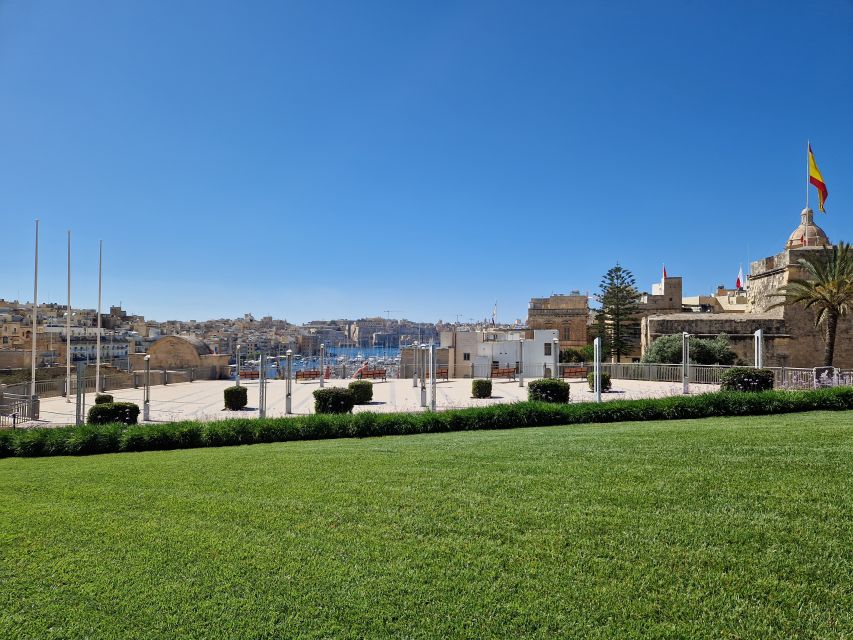
A viewpoint stop lasts about 15 minutes and allows time for photographs, sightseeing, and more explanation. This is a good moment to pause rather than rush. The walls, harbor, and opposing shore make more sense when you can see them together.
Your guide can also connect the scenery to the Great Siege era and to the arrival of the Knights in 1530, both central parts of the Three Cities story. The tour description places particular emphasis on palaces built by the knights after their arrival. You will not simply hear a list of dates. The point is to see how the order’s presence changed the streets, defenses, and status of Birgu.
Bring water in warm weather, even though the tour is not especially long. Stone walls can reflect heat, and a stop that feels mild in the morning may feel more demanding later in the day. The pace is generally described as manageable, with a good balance between walking and pauses, but comfortable footwear remains essential.
Same streets, a different way to see them:
- New Orleans Premier Ghost, Voodoo and Vampire Walking Tour
★ 4.5 · 12,856 reviews - Amsterdam Anne Frank: Small-Group Walking Tour & Local Guide
★ 4.8 · 12,789 reviews - Edinburgh: Harry Potter Magical Guided Walking Tour
★ 4.8 · 11,944 reviews - Edinburgh Castle: Guided Walking Tour with Entry Ticket
★ 4.7 · 11,699 reviews
Birgu’s Collacchio quarter and the knights’ palaces
Birgu is the heart of the experience. The Collacchio area is a compact old quarter of narrow, winding streets, historic buildings, and former palaces linked to the Knights of Malta. This is where the tour shifts from broad military history to close-up details.
I like this section because the streets do much of the teaching. You are not only looking at a grand facade from a distance. You are moving through the scale of the old city, where tight lanes and stone buildings reveal how different Birgu feels from Valletta’s more planned streets.
The palaces associated with the knights date from the period after 1530, when the order made Malta its base. Your guide explains who used these buildings and why Birgu became so important. The strongest guides add small stories, local traditions, and visual details that help you remember the place after the walk is over.
The guides named in the feedback include Karl, Chris, Christopher, Lorraine, Christian, and Kris. The names may vary by date, but the pattern is consistent: the experience depends heavily on the individual guide. Karl is praised for a lively delivery, regular informative stops, and strong organization. Chris is repeatedly described as warm, funny, and able to turn complicated Maltese history into an easy conversation. Lorraine receives praise for her passion, clear English, and ability to answer questions.
That personal approach matters in a place like Birgu. You can walk through the streets alone, but it is easy to miss why one lane, building, or harbor view matters. A good guide gives the stones a human story.
Birgu during the Second World War
The tour does not treat Birgu as a preserved medieval scene with no connection to modern life. It also explains the city’s experience during the Second World War, when Birgu was among the most heavily bombed areas in the Maltese Islands.
This section adds weight to the pretty streets and restored facades. You learn about the resilience of the people who lived here and how the city endured repeated attacks. The story helps you see that Birgu’s history is not safely sealed in the era of the Knights. Its residents faced very recent hardship.
Several guides are praised for using anecdotes and, in one case, actual photographs to make the past easier to picture. That can be especially helpful during the wartime section, where a modern street may give little visual clue about what happened there. Listen for the contrast between the city you see today and the damage and disruption it once faced.
The tour also covers the British Navy’s role. Drydocks and the headquarters of the British Royal Navy in the Mediterranean brought work, military importance, and outside influence to the Three Cities. This explains why the harbor remained central long after the Knights had gone.
That wider view is one of the best reasons to book the walk. You get more than a medieval sightseeing route. You see how different powers used the same harbor and how local communities adapted to each period.
Ending beside St. Laurence Church
The walk ends on the Birgu waterfront, in front of St. Laurence Church. This is a pleasant place to finish because you are back beside the water, with a chance to pause after the inland streets and fortifications.
From here, you can board a dgħajsa toward Valletta. The boat is similar in style to a gondola and offers a different view of the harbor, but it is not included in the $24 tour price. Think of it as an optional continuation, not a promised final part of the package.
The ending point is listed in Birgu rather than back at the original Cospicua meeting point. Plan your day with that in mind. You may choose the boat, continue exploring Birgu, or arrange your own return. The guide does not provide hotel drop-off.
The waterfront finish also keeps the tour flexible. You are not pushed straight onto transport or into a restaurant. You can decide what suits your schedule, which is useful if you are staying in Valletta or have a free afternoon in the Three Cities.
Guide style and group atmosphere
The clearest strength of this walk is the guide. The highest praise goes to guides who combine facts with humor, local anecdotes, and an easy conversational style. Chris is frequently described as a strong storyteller who makes the time pass quickly. Karl receives similar praise for energy and depth of local knowledge. Lorraine is singled out for her passion and the personal feel she brings to smaller groups.
Group size can vary, but some bookings describe only five people, while another mentions a group of ten. Smaller numbers make it easier to ask questions and hear the guide clearly. They also allow the guide to adjust the pace or explain a detail that catches your attention.
The tour is in English. The guides are praised for clear communication, and several bookings specifically note that questions were welcomed. That makes the walk a good choice if you want more than a memorized speech.
You should not book it expecting a silent photo walk. The point is the narration. If you enjoy history, local stories, and the chance to ask why a place matters, the guide adds real value. If you prefer exploring alone and setting your own pace, the fixed route may feel less flexible.
Is $24 good value?
At $24 per person, I consider this a strong-value introduction to the Three Cities. You get 2.5 hours with a live guide, a structured route, waterfront views, fortifications, the Collacchio quarter, and historical context spanning the Knights, the British Navy, and the Second World War.
The value depends on how much you use the explanation. A self-guided walk can show you the same streets, but it may not explain the connections between them. The guide also saves you the work of sorting out the names Senglea, Bormla, Cospicua, Birgu, and Vittoriosa as you go.
There are extra costs to remember. Hotel pickup and drop-off are not included, and neither is the dgħajsa to Valletta. The ferry to reach the meeting point is also separate. Even so, the base price remains modest for a guided half-day activity.
Free cancellation up to 24 hours before the start and reserve-now, pay-later booking add flexibility. Those terms are useful if your Malta plans depend on weather, ferry timing, or a changing day-by-day schedule.
Who should book this walking tour?
I would recommend it to first-time visitors who want a clear introduction to the Three Cities without committing to a full-day excursion. It is also a good fit if you are staying in Valletta and want to see the harbor from the opposite side.
History fans will appreciate the range of subjects. You get the Knights of Malta, fortifications, palaces, British naval activity, drydocks, and wartime survival in one route. Photographers will like the harbor views, stone defenses, narrow lanes, and waterfront ending.
The tour also suits people who prefer a small-group feel. The strong guide feedback suggests that you may get a personal, question-friendly experience, especially when the group is small.
I would hesitate only if your priority is equal time in all three cities. The route introduces Senglea and Bormla, but the main walking portion is Birgu. If you want a slow, independent exploration of every neighborhood, use this tour as an orientation, then return later on your own.
FAQ
Where does the tour meet?
The meeting point is at the unloading place of the Valletta to Three Cities ferry in Cospicua, as you get off the boat.
How long does the walking tour last?
The tour lasts 2.5 hours, including guided walking, sightseeing, and a viewpoint stop.
Which cities does the tour cover?
The experience covers Senglea, Bormla, and Birgu, also known as Vittoriosa. Birgu receives the longest and most detailed walking section.
Is the dgħajsa ride to Valletta included?
No. The dgħajsa ride is not included in the tour price and must be paid for separately.
What language is the tour conducted in?
The live tour guide speaks English.
Can I cancel and receive a refund?
Yes. You can cancel up to 24 hours in advance for a full refund.
Should you book it?
Book this tour if you want the Three Cities explained by a local guide rather than simply photographed from the waterfront. The best part is the combination of Birgu’s Collacchio streets, imposing defenses, and human stories about war, naval work, and local life.
Go in with the right expectation: this is mainly a Birgu-focused walk with shorter coverage of Senglea and Bormla. Wear comfortable shoes, allow for separate ferry and boat costs, and choose it for the stories as much as the sights. At $24, it is an easy way to give the Three Cities a proper place in your Malta plans.
Just added around the world
- Bern Private Walking Tour with a Local★ 4.5 · 75 reviews
- Berlin Walking Tour★ 4.5 · 378 reviews
- Bern Walking Tour: Explore Top Sights & Hidden Gems★ 5.0 · 108 reviews
- Small Group Walking Tour of East Berlin with a French Guide★ 5.0 · 176 reviews
- Berlin Street Art Walking Tour – Off The Grid★ 5.0 · 270 reviews
- Berlin Highlights Private Guided Walking Tour★ 4.5 · 89 reviews
- Private Walking Tour: World War 2 and Cold War Sites in Berlin★ 5.0 · 230 reviews
- Kreuzberg Berlin: Off the Beaten Track PRIVATE Walking Tour★ 5.0 · 128 reviews
Malta Walking Tours, compared.
Valletta: Street Food and Culture Walking Tour
Read our review →
Malta: Mdina and Rabat Walking Tour with Catacombs
Read our review →
Browse the lists this tour appears in