
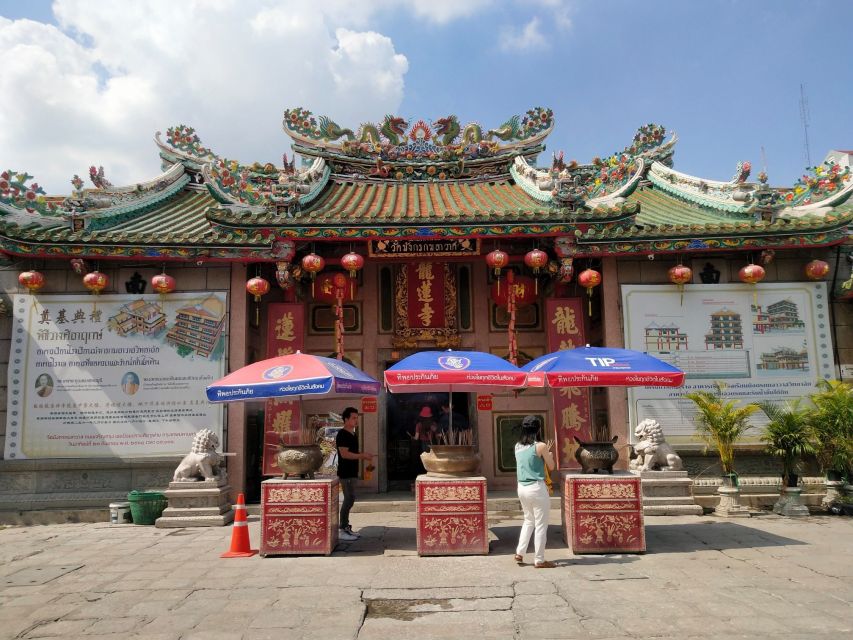
Review · FOOD WALKING TOURS
Local Life, Culture & Food Walking Tour at Chinatown
Chinatown reveals itself one alley at a time. I like the small groups and the chance to see shrines, old shophouses, markets, and food stalls with a local guide rather than simply passing through. I also like the personal touch: guides such as JoJo, Sunee, Kae, and Khun Kaew have adjusted walks to guests’ interests, answered endless questions, and introduced corners many visitors would miss. The main drawback is the heat and walking: this is not a gentle sightseeing ride, and the route is not suitable for wheelchair users.
The $75 price makes the most sense if you want context as well as snacks. You are paying for a local expert, several food tastings, access to narrow lanes, and a small-group format that can feel almost private when bookings are light. Bring comfortable shoes, arrive 10 minutes early, and leave large bags behind.
Key points about the Chinatown walk
- Start at Odeon Circle: Begin at MRT Wat Mangkon Station, Exit 1, near Plaeng Nam Road and Odeon Circle, a useful gateway into Chinatown.
- Food with a story: Sample items such as crispy pork belly, handmade dumplings, herbal tea, and other Thai-Chinese tastes.
- Small groups matter: The format allows time for questions, photographs, food stops, and changes based on your interests.
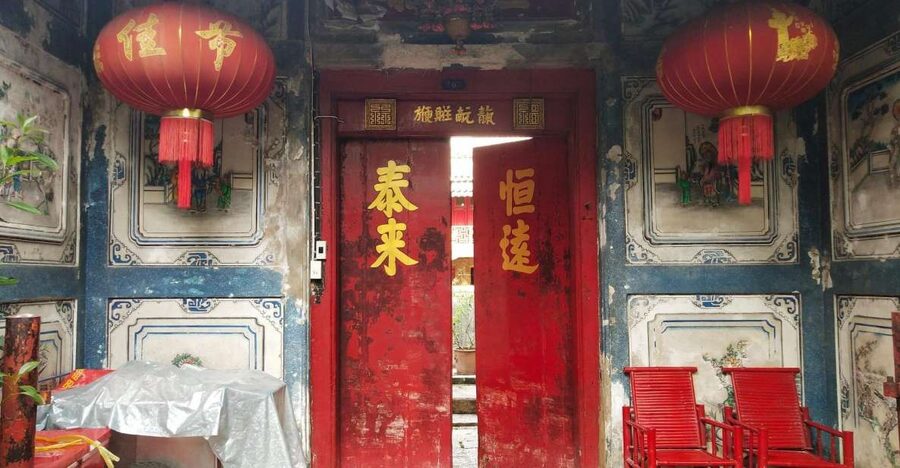
- Beyond Yaowarat Road: Walk through markets, shrines, old wooden homes, narrow alleys, and community spaces away from the main streets.
- Talad Noi adds depth: Visit one of Bangkok’s oldest Chinese-Thai communities and learn how early settlers shaped the riverside district.
- Plan for Bangkok weather: The tour runs in rain or shine, so pack an umbrella or raincoat and wear shoes that can handle uneven streets.
Starting at Odeon Circle and MRT Wat Mangkon
Your meeting point is MRT Wat Mangkon Station, Exit 1, at the Plaeng Nam Road intersection. The listed address is 3 Plaeng Nam Road, Samphanthawong, Bangkok 10100. Arrive 10 minutes before the start so the group can set off together.
Odeon Circle is a fitting place to begin. It acts as a grand entrance to Chinatown, and your guide uses the area to explain how Chinese immigrants helped shape this part of Bangkok. That opening context matters because Chinatown is not simply a food district. Its shrines, family businesses, religious customs, and old buildings all connect to generations of Chinese-Thai life.
The location is also practical. The MRT makes the meeting point easier to reach than many old-city starting locations. Once the walk begins, though, you are on foot for the rest of the experience. The tour ends back at the meeting point, so you do not need to arrange a ride from a distant final stop.
More Food Walking Tours in Bangkok:
- Bangkok Authentic Tasting Thai-Chinatown Walking Food Tour
★ 4.9 · 852 reviews - Bangkok by Night Food Tour with 10+ Tastings in Chinatown
★ 5.0 · 545 reviews - Reykjavik Food Walk – Local Foodie Adventure in Iceland
★ 5.0 · 18,952 reviews
Markets, herbal remedies, and everyday Chinatown
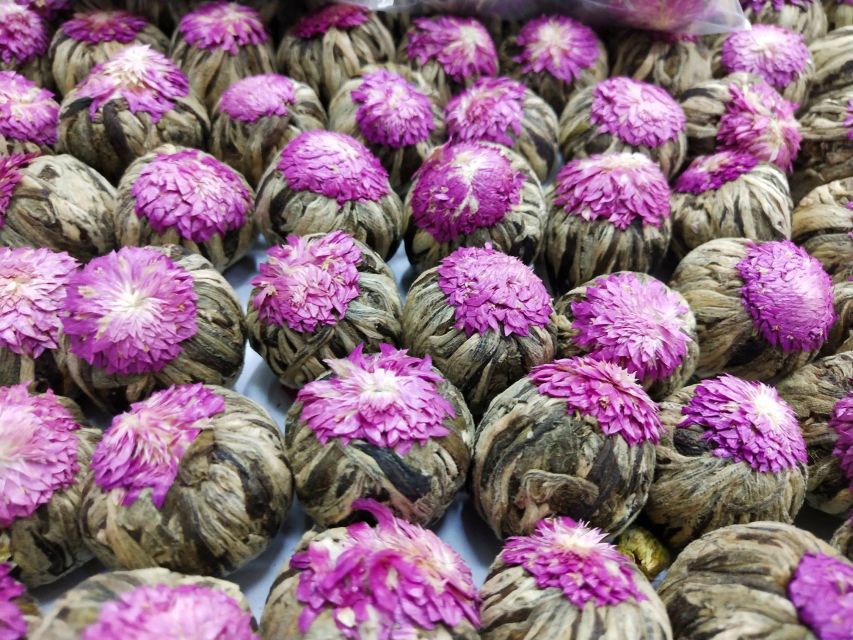
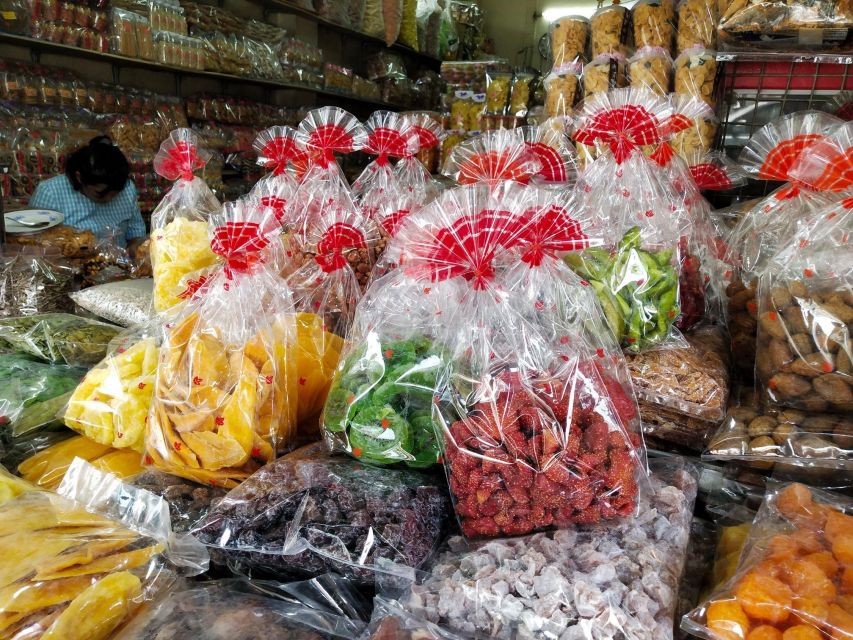
The first part of the walk moves through lively markets filled with herbal products, small goods, colorful trinkets, and ordinary neighborhood trade. This is where the tour should feel most useful to anyone who wants to understand how local commerce works, not just photograph it.
A guide can explain what you are seeing and help you read the scene. Without that help, a display of dried herbs or unfamiliar ingredients may look like a wall of color. With context, it becomes part of the district’s food traditions, health practices, and family businesses.
Keep your expectations sensible. The tour includes market exploration, but personal shopping is not included, and purchases are your responsibility. You can browse and take photographs, but the walk is not designed as a dedicated shopping trip.
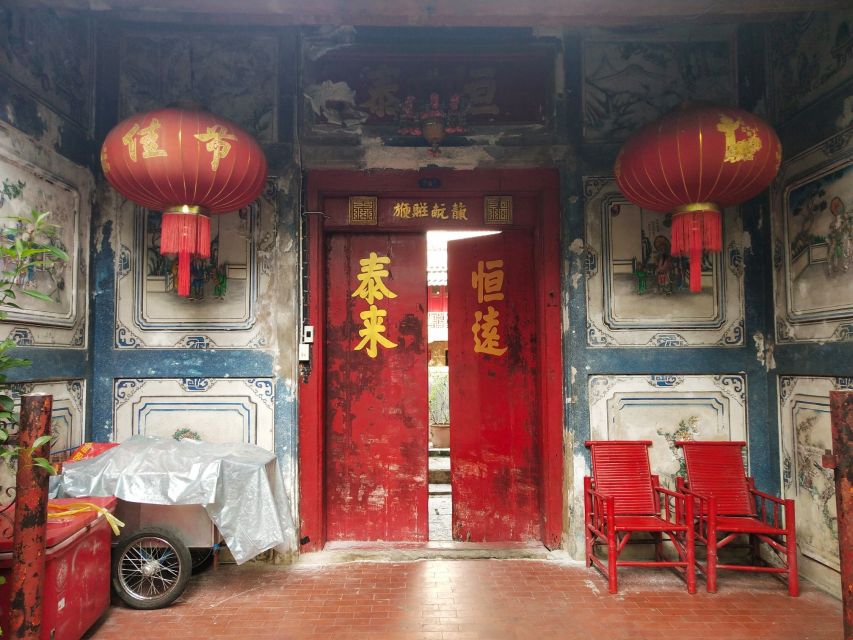
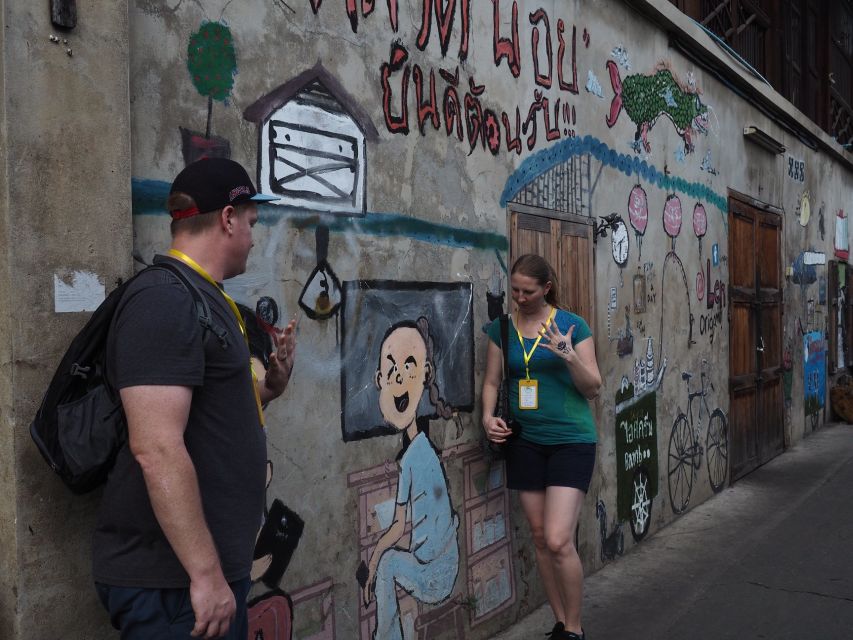
The narrow lanes are a major reason to choose this experience. They show a quieter side of Chinatown, where daily life continues behind the main roads. One especially memorable part can be seeing older wooden homes and the living conditions in small passages. These areas offer a more honest picture of the neighborhood, but they are also places to walk respectfully. Keep your voice down, follow your guide, and remember that people live and work here.
Temples, shrines, and the meaning behind the incense
Several stops focus on historic temples and shrines. The value is not only in seeing gold details, incense, and religious decoration. Your guide explains how people use these places to pay respects, ask for blessings, and preserve customs passed from one generation to the next.
This is where a personal guide earns the fee. A quick independent visit can give you a few photographs. A guide can explain why one shrine matters to the Chinese-Thai community, how customs differ between religious sites, and what respectful behavior looks like.
The route may include smaller temples and community spaces that are easy to overlook. You should expect simple access rather than a polished attraction with signs at every corner. That is part of the appeal, but it also means the experience depends heavily on the guide’s explanations.
Kae, one of the guides praised for her warm approach, has taken guests through temples while explaining their customs, beliefs, and local importance. Khun Kaew has also been singled out for making cultural information easy to follow. Names and guide assignments can vary, but the best version of this walk is clearly one where you ask questions. Do not save them for the end.
Thai-Chinese food along the route
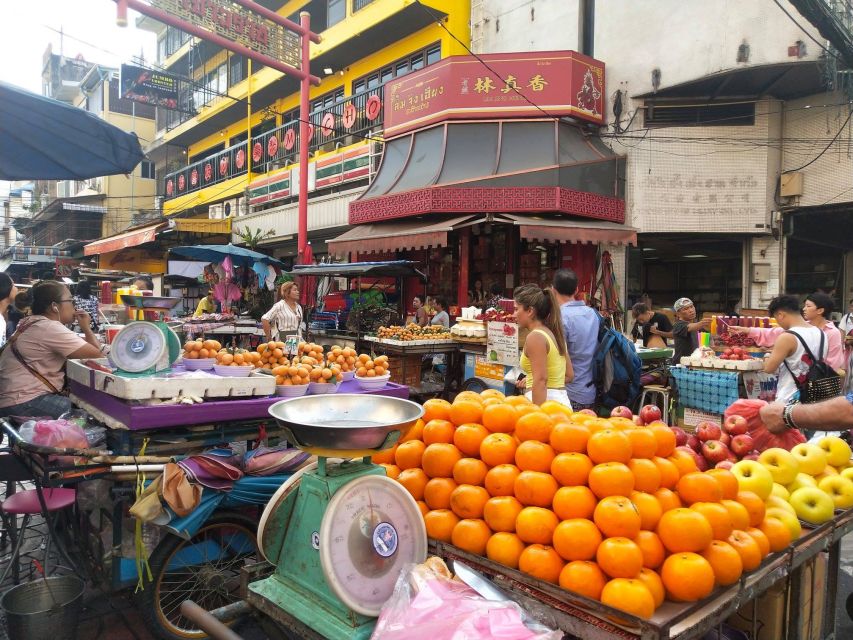
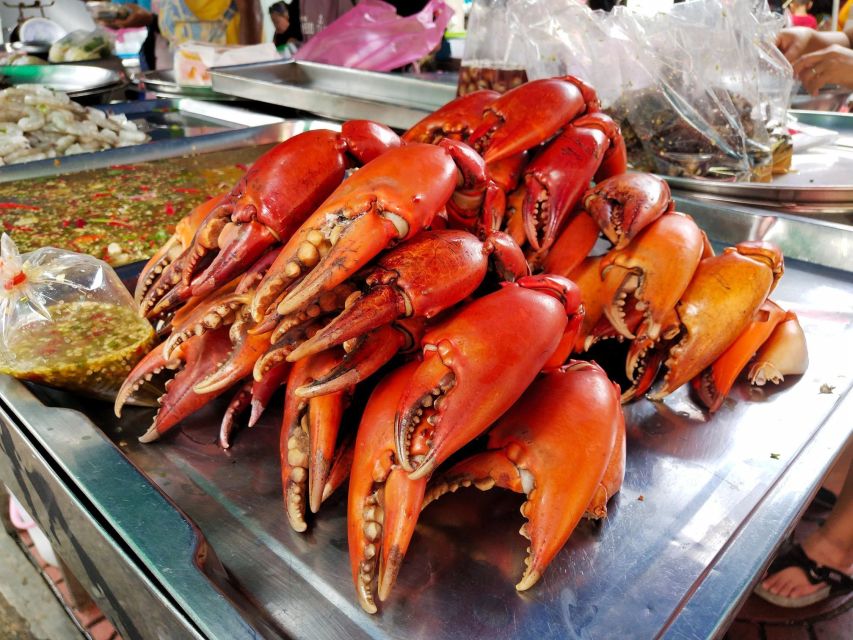
Food is woven into the walk rather than treated as a separate meal. Tastings may include crispy pork belly, handmade dumplings, herbal tea, and other Thai-Chinese street foods. The point is not fine dining. It is trying ordinary local tastes in the setting where they belong.
This makes the food stops useful for first-time visitors who are unsure what to order. Your guide can explain unfamiliar dishes and point out how Chinese cooking traditions have influenced Bangkok food. You may also encounter opportunities to try other local items, but the exact tastings can vary.
One guide has helped guests make their own papaya salad. Another has tracked down two kinds of durian after guests expressed interest in trying it. Those details show how the small-group format can work at its best. If you have a particular curiosity, tell your guide early.
Food allergies and dietary restrictions should be reported in advance. Additional snacks, drinks, and personal purchases are not included, so bring some spending money if you want to continue sampling after the included tastings.
If you are cautious about street food, the guide’s presence can make the experience easier. Still, you should be clear about your comfort level and any medical concerns before eating. The tour promises food tastings, not a full lunch, so do not arrive expecting every meal of the day to be covered.
More Hidden Gems Walking Tours in Bangkok:
- Dublin Highlights and Hidden Gems Guided Walking Tour
★ 5.0 · 6,020 reviews - Explore Berlin: See All The Iconic Sights & Some Hidden Gems
★ 5.0 · 4,429 reviews - Kyoto Geisha Walking Tour: Gion District & Hidden Gems
★ 4.7 · 3,273 reviews - Marrakech: Ben Youssef, Secret Garden, & Souks Walking Tour
★ 4.6 · 2,802 reviews
Old shophouses and the story of Talad Noi
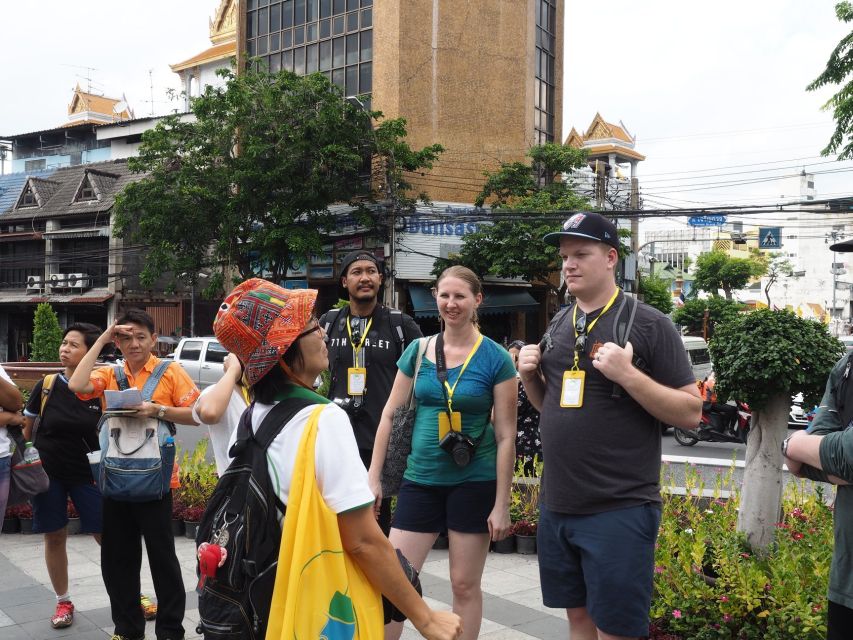
The walk continues past old Chinese architecture and shophouses, many of which carry traces of family history and long-running trade. Their narrow fronts and stacked living spaces help explain how Chinatown developed as both a business district and a home.
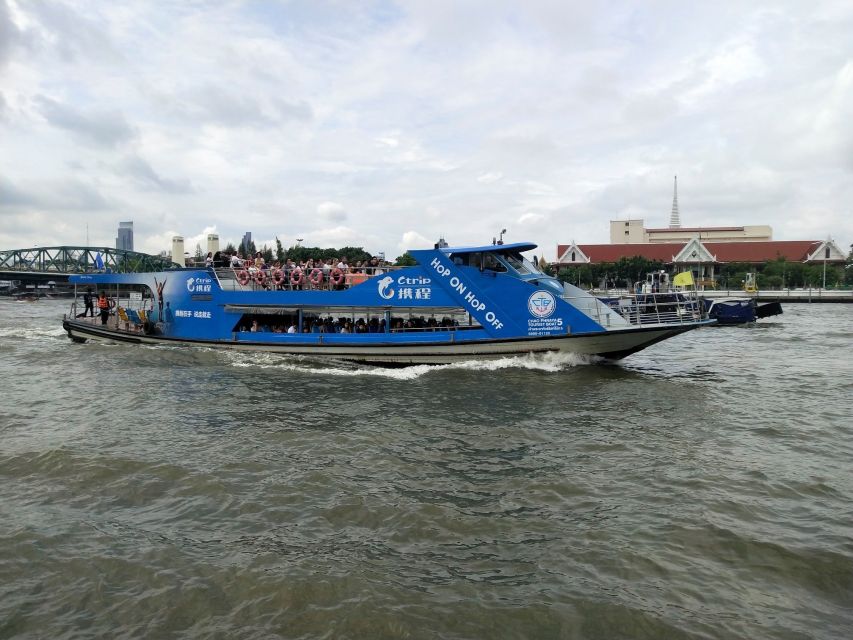
Talad Noi gives the route a stronger historical focus. It is described as the oldest Chinese-Thai community in Bangkok, located near the Chao Phraya River. Here, the guide explains how early settlers made their homes along the river and helped build the community’s cultural identity.
You should not expect a museum-style presentation. The history comes through stories, buildings, shrines, alleys, and conversations about present-day life. That makes the walk feel more connected to the neighborhood, but it also means the route can be visually uneven. Some moments are striking; others are simply scenes of ordinary homes and work spaces.
That ordinary quality is valuable. Chinatown is still a lived-in district, not a stage set. The tour gives you a chance to notice how old traditions and modern Bangkok exist side by side.
Why the small group changes the experience
The tour is designed as a mini group experience, and that affects nearly every part of the afternoon. A small party can stop for photographs without blocking a street, fit into narrow lanes, and ask questions without waiting through a long line of people.
Several guides have adjusted the route around individual interests. Sunee has tailored a walk to a guest’s tastes and taken them to places they would not have reached alone. JoJo has been praised for knowing the district well, making local connections, and keeping explanations fun. Kae has provided fans, helped with gifts, and spent time discussing cultures over coffee.
Do not treat these examples as guaranteed add-ons. They show what is possible when the group is small and the guide has room to respond. If you are alone in Bangkok, this format can be especially appealing. One solo guest received a near-private walk and had plenty of time to ask questions. Couples and families can also benefit, particularly if everyone enjoys walking and trying unfamiliar foods.
The tradeoff is that you have less control than you would on a self-guided route. You follow the guide’s pace and the group’s needs. If you want to stop for long shopping sessions or spend an hour at one shrine, this may not be the right format.
Is $75 a fair price?
At $75 per person, this is not the cheapest way to walk through Chinatown. You can visit the main streets and order food independently for much less.
The value comes from the combination of access, explanation, and time saved. You get a local guide, temple and shrine visits, market and backstreet exploration, cultural stories, food tastings, and a small group. You also avoid the common problem of seeing a fascinating district without understanding what you are looking at.
I would consider the price reasonable for a first visit, especially if you are traveling alone, want help with food choices, or prefer a structured introduction to Bangkok’s Chinese-Thai communities. It is less compelling if you already know Chinatown well, dislike guided walks, or plan to spend most of your time shopping.
The occasional private-tour feeling can improve the value. If few people book your departure, you may receive much more individual attention than the price suggests. That cannot be promised, but the small-group design gives you a better chance of it than a large coach tour.
Practical advice before you go
Wear comfortable walking shoes. The route includes markets, lanes, temples, and older community areas, so footwear matters more than fashion.
Bangkok weather can change quickly. The tour runs in rain or shine, and an umbrella or raincoat is a sensible addition. Lightweight casual clothing will make the walk easier.
Do not bring luggage or a large bag. The narrow streets and crowded market sections are difficult places to manage bulky belongings. Personal shopping is not included, so you can bring a small wallet for optional purchases without turning the walk into a packing exercise.
The tour is offered in English and German. It is not suitable for wheelchair users, and the route’s narrow streets and walking demands may also be difficult for anyone with limited mobility.
Cancellation is allowed up to 24 hours before the tour for a full refund. You can also reserve and pay later, which helps if your Bangkok plans are still changing.
Who should book this Chinatown tour?
I would choose this walk if you want more than the famous food streets. It suits curious first-time visitors, solo travelers, couples, and anyone who enjoys asking questions while walking through an active neighborhood.
It is particularly good for people who want to understand Chinese-Thai customs, see shrines and old homes, and try foods with some explanation attached. The guides’ ability to adjust the experience can be a real benefit if you have a specific interest in architecture, religion, markets, local food, or community life.
I would be cautious if you have difficulty walking, need a wheelchair-accessible route, dislike humid weather, or want a fully planned meal rather than tastings. You should also tell the operator about allergies before the tour begins.
Should you book it?
Book this Chinatown walk if you want a friendly introduction to Bangkok that combines food, local stories, temples, and everyday streets. The strongest reason to go is the guide. JoJo, Sunee, Kae, and Khun Kaew have each shown how much better Chinatown becomes when someone can explain the details and respond to your interests.
Skip it if you prefer to explore at your own pace or already know the area well. For everyone else, especially solo visitors and first-timers, the $75 cost buys useful context and a good chance to see the district beyond its main roads.
FAQ
Where does the tour start?
The tour starts at MRT Wat Mangkon Station, Exit 1, near the Plaeng Nam Road intersection and Odeon Circle. The listed address is 3 Plaeng Nam Road, Samphanthawong, Bangkok 10100.
Where does the tour end?
The tour ends back at the meeting point.
How early should I arrive?
You should arrive 10 minutes before the tour begins.
What languages are available?
The tour is offered in English and German.
What food is included?
Food tastings may include crispy pork belly, handmade dumplings, herbal teas, and other Thai-Chinese street foods. Extra food and drinks are not included.
Can I bring luggage?
No. Luggage and large bags are not allowed.
Is the tour suitable for wheelchair users?
No. The tour is not suitable for wheelchair users.
What happens if it rains?
The tour operates in rain or shine. Bring an umbrella or raincoat if rain is possible.
More Cultural Walking Tours in Bangkok
- Savannah First Squares Culinary & Cultural Walking Food Tour
★ 5.0 · 3,229 reviews - Tokyo Tsukiji Fish Market Food and Culture Walking Tour
★ 5.0 · 3,184 reviews - New Orleans French Quarter, Voodoo and Culture Walking Tour
★ 4.5 · 2,961 reviews - Amsterdam: Cultural Highlights Walking Tour
★ 4.9 · 2,629 reviews
Just added around Bangkok
- 3-Hour Bangkok Walking Tour: Wat Pho and Wat Arun★ 5.0 · 102 reviews
- Bangkok by Night Food Tour with 10+ Tastings in Chinatown★ 5.0 · 545 reviews
- Grand Palace, Wat Phra Kaew, Wat Pho and Wat Arun Walking Tour From Bangkok★ 4.5 · 88 reviews
- Bangkok: Discover a Taste of Chinatown – 2 Hr Walking Tour★ 4.2 · 152 reviews
- Bangkok: Grand Palace, Wat Pho, & Wat Arun Walking Tour★ 4.6 · 116 reviews
- Bangkok: Grand Palace and Wat Arun Guided Walking Tour★ 4.5 · 118 reviews
- Bangkok: City Highlights and Landmarks Private Walking Tour★ 4.3 · 142 reviews
- Bangkok: Chinatown by Night Walking Tour★ 4.5 · 162 reviews
Food Walking Tours, compared.
Reykjavik Food Walk – Local Foodie Adventure in Iceland
Read our review →
New Orleans Food Walking Tour of the French Quarter with Small-Group Option
Read our review →

Authentic Parisian Gourmet Food Tour with 10 Local Dishes & Wines
Read our review →
Tapas Walking Tour with Food, Wine, and History
Read our review →
Browse the lists this tour appears in