
Review · ITALY WALKING TOURS
Lucca: 2-Hour City Center Walking Tour
Lucca rewards slow steps and sharp eyes. This two-hour walking tour gives you a clear introduction to the old town, with stops at San Michele, Piazza dell’Anfiteatro, the towers, and the ancient walls. I like the way the route joins famous sights with local stories, and I like that guides such as Roberta, Vittoria, Lucia, Paola, and Giorgio bring real affection for Lucca into the walk. The main consideration is that the tour runs in both English and Italian, so the commentary may take longer than on a single-language walk.
At $17 per person, this is an easy way to get your bearings before exploring alone. You should wear comfortable shoes, and keep €3 handy if you want to enter Lucca Cathedral with the guide. The route is a gentle stroll rather than a forced march, though the exact ending deserves attention because the description says the tour ends at the cathedral while the meeting details say the activity ends back at the starting point.
Key points to know before booking
- A gentle two-hour introduction: The pace is designed for seeing central Lucca without racing from one monument to the next.
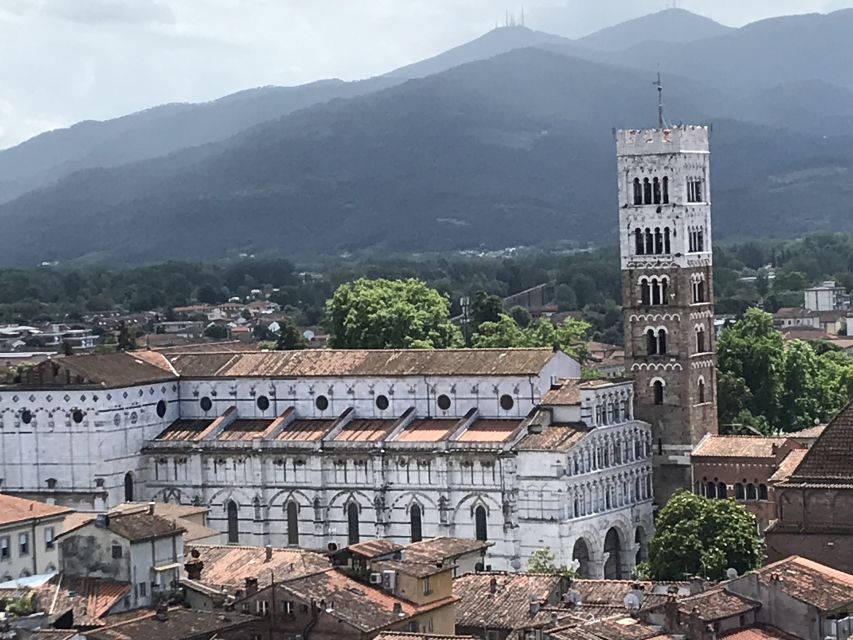
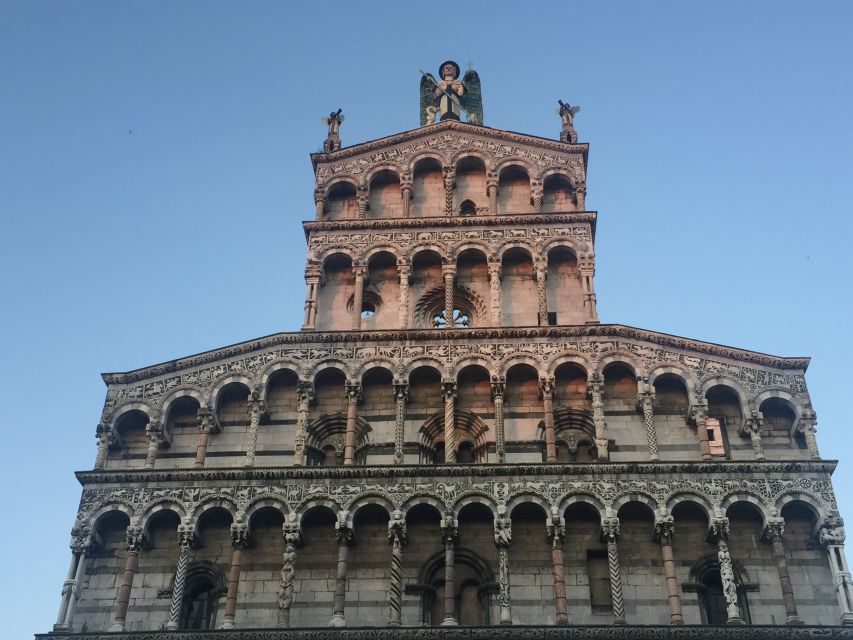
- San Michele is a major early highlight: The church is more than 1,000 years old and anchors one of Lucca’s most important squares.
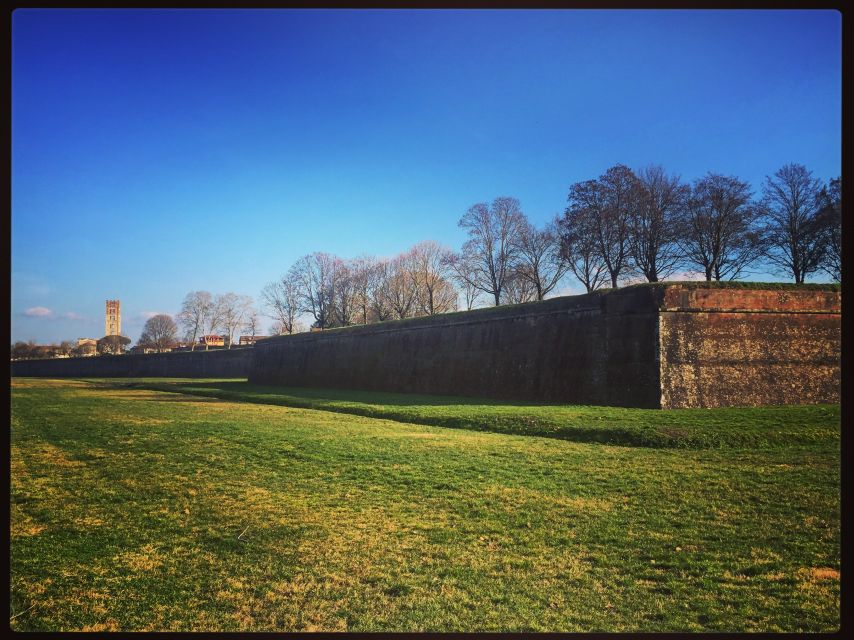
- The old walls put Lucca in context: You will see and walk along the sixteenth-century fortifications, a defining part of the city.
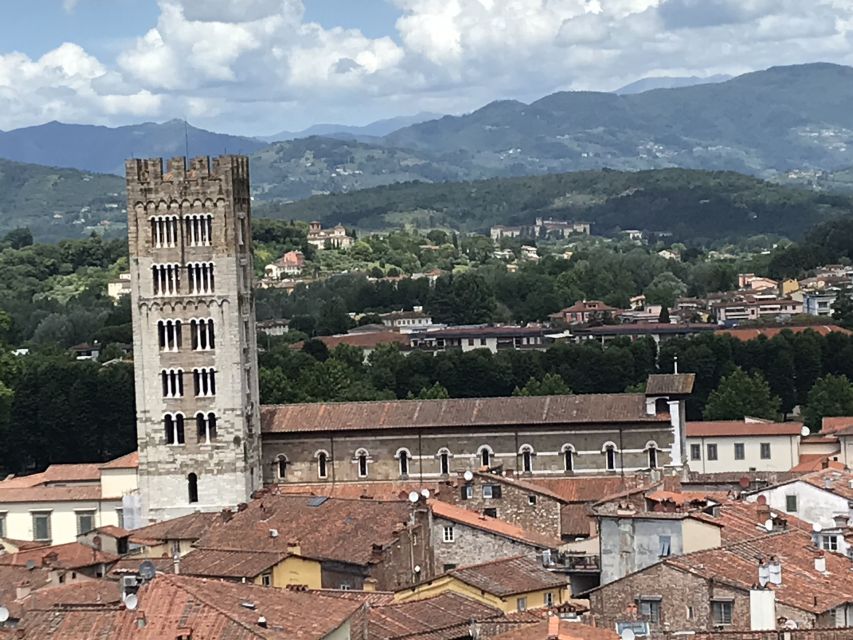
- The route covers the essential center: Expect Piazza San Michele, Piazza Napoleone, Via Fillungo, the Clock Tower, Guinigi Tower, San Frediano, Piazza dell’Anfiteatro, and Lucca Cathedral.
- Bilingual guiding changes the rhythm: English and Italian are spoken during the same tour, but guides have been praised for keeping both groups involved.
- The cathedral costs extra: Entry is not included and costs €3 if you choose to continue inside with your guide.
Why two hours works well in Lucca
Lucca is a city best understood on foot. Its historic center is compact, and many of its most important sights sit within an easy walking route. A short guided walk helps you connect the churches, squares, towers, shopping streets, and walls instead of seeing them as separate postcard views.
I would use this tour near the start of a Lucca visit. You will learn the basic shape of the city, hear stories that give meaning to the buildings, and get ideas for where to return later. Several guides also point out food, shopping, and cultural details, which can help you plan the rest of your day.
The walk is scheduled for two hours, and that is a sensible length for a first look. It is long enough to cover the central sights but short enough to leave time for lunch, a museum, a wall walk, or a train connection. One guide reportedly spent much longer with the group, but you should treat that as an exception rather than the normal plan.
A few more walks around Italy worth a look
- Genoa: 2-Hour Guided Walking Tour of the Historical Center
★ 4.2 · 605 reviews - Milan by Night 2-Hour Walking Tour
★ 4.4 · 286 reviews - Florence: Dan Brown’s Inferno 2-Hour Walking Tour
★ 4.5 · 187 reviews
Meeting your guide at Porta San Donato
The tour begins at the Tourist Information Office, at Vecchia Porta S. Donato on Piazzale Giuseppe Verdi. This places you near one of the old entrances to Lucca, just outside or beside the historic center depending on your approach.
Arrive with comfortable shoes and a little time to locate the office. The supplied meeting information gives the start point clearly, but the end information is less tidy. The route description says the tour ends at Lucca Cathedral, while the activity details say it ends back at the meeting point. Confirm the final arrangement when you book, especially if you have a train, meal reservation, or timed visit afterward.
The guide speaks English and Italian during the same walk. This is useful for mixed-language groups, and the strongest guide comments suggest that the bilingual format is handled well. Still, expect pauses while information is repeated. If you prefer a rapid stream of English commentary, this format may feel slower.
Piazza San Michele and Lucca’s religious center
Piazza San Michele is one of the first important stops. The Church of San Michele is more than 1,000 years old, and its presence gives the square a strong sense of Lucca’s age and importance.
This is the kind of stop where a local guide adds real value. You can admire the facade on your own, but a guide can explain why the church matters, connect it to Lucca’s development, and point out details that are easy to miss when you are simply passing through.
The square also helps you understand the city’s scale. Lucca does not feel like a collection of isolated monuments. Churches, public spaces, shops, and narrow streets are woven into an active town center, and the walking tour lets you move between them at a human pace.
Piazza Napoleone and Lucca’s public face
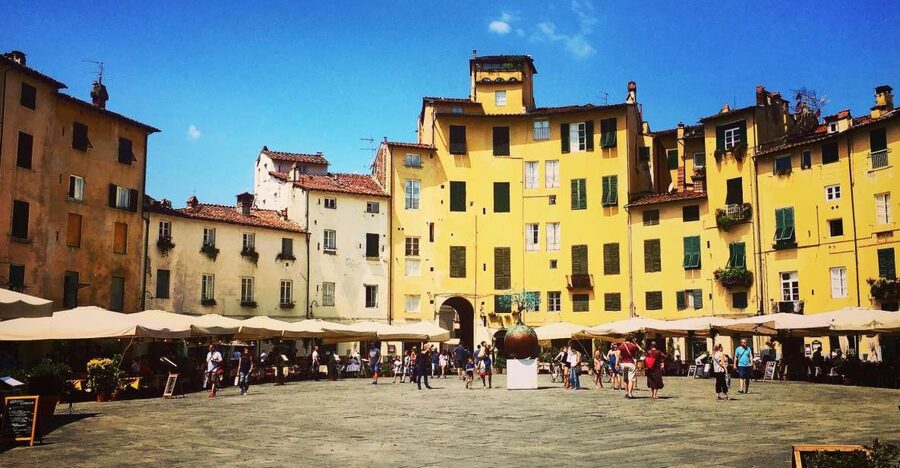
The walk continues to Piazza Napoleone, one of the city’s major open spaces. The square offers a useful contrast with the tighter streets nearby. Here, you can get a better sense of Lucca as a civic center rather than only an old fortified town.
A guide may also help explain how the city’s long political story shaped its appearance. Lucca managed to preserve its independence for centuries through a cautious policy, and the old center still reflects that continuity. The point is not just to memorize dates. It is to understand why Lucca feels unusually intact.
This stop is also practical. It gives you a reference point for finding your way around later, and it helps orient the main streets that lead deeper into the center.
Same streets, a different way to see them:
- Venice: Doge’s Palace and St Mark’s Basilica Walking Tour
★ 4.4 · 6,291 reviews - Milan: Guided Walking Tour & Last Supper Visit with Ticket
★ 4.7 · 5,409 reviews - Naples: Street Food Walking Tour with Local Guide
★ 4.9 · 4,976 reviews - Florence: Highlights Walking Tour with Expert Guide
★ 4.6 · 4,662 reviews
Via Fillungo, the Clock Tower, and Guinigi Tower
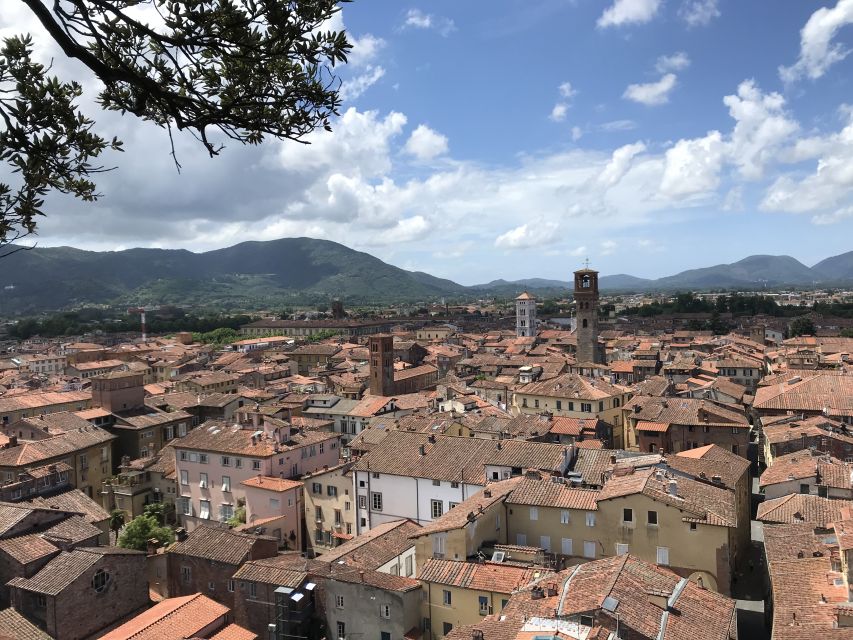
Via Fillungo is Lucca’s principal historic shopping street and one of the easiest places to see daily life mixed with old architecture. You will pass through a street that works both as a sightseeing route and as a normal part of the city.
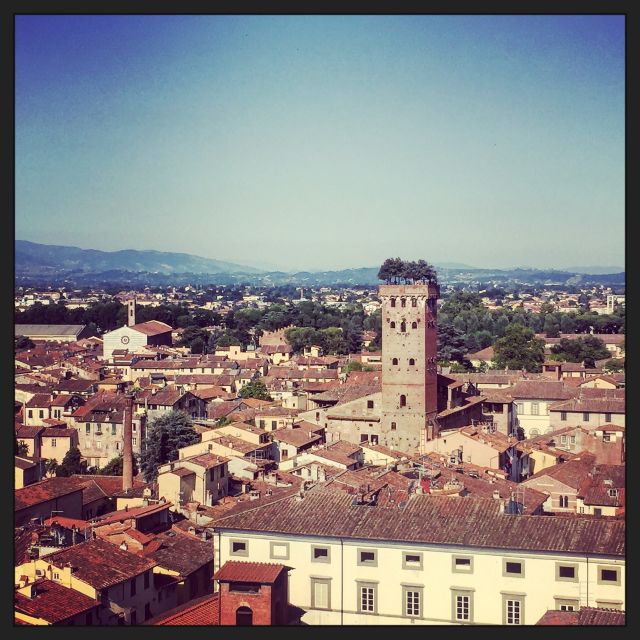
The itinerary includes Torre delle Ore, or the Clock Tower, and Torre Guinigi. These towers are among Lucca’s most recognizable features. Their height makes them useful markers as you walk, and their presence reveals how much the city once depended on towers for status, defense, or both.
The tour does not include tower admission in the stated price, so do not assume you will climb them during the walk. The guide’s role here is to explain the sights from the route and help you decide which places deserve a return visit.
Guinigi Tower is especially memorable because it is a distinctive symbol of Lucca. Even without entering, you will understand why it appears so often in photographs of the city. If you plan to climb any tower later, ask your guide about the best timing and access during your visit.
San Frediano and Piazza dell’Anfiteatro
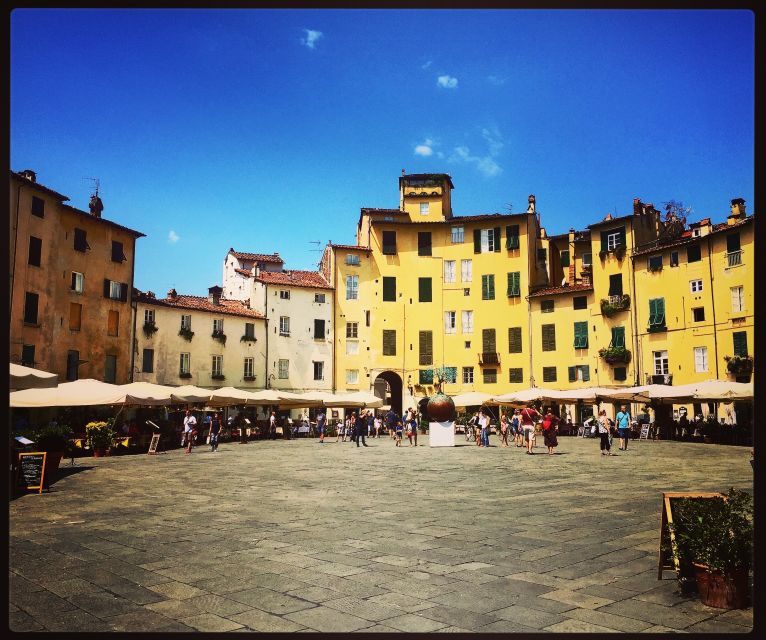
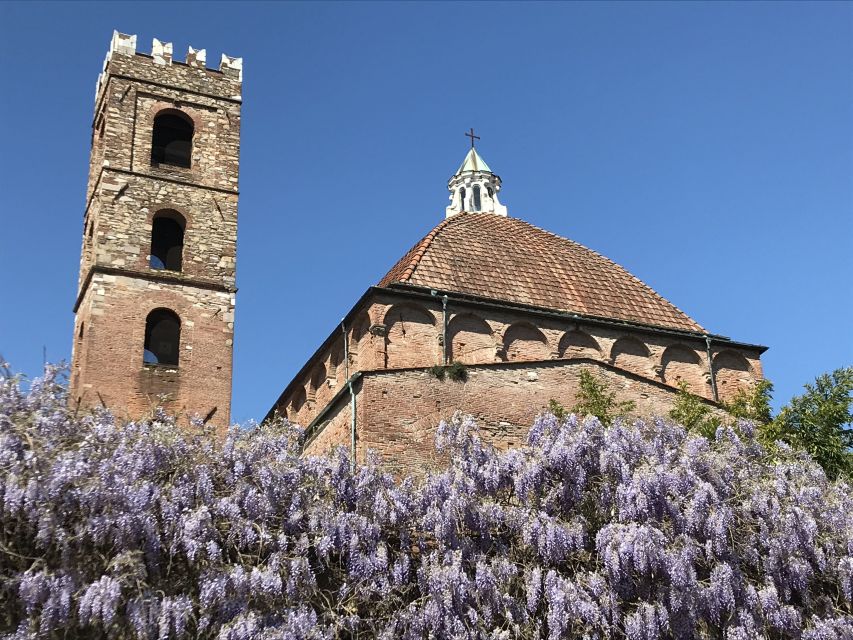
San Frediano is another key stop on the route. The area adds a different view of Lucca’s religious and architectural character, and it helps break up the walk between the larger squares and the commercial center.
From there, the route includes Piazza dell’Anfiteatro, one of Lucca’s most atmospheric spaces. Its oval shape follows the outline of the ancient Roman amphitheater that once occupied the site. Today, the enclosed piazza is lined with cafes and restaurants, making it a natural place to return for a drink or a meal after the tour.
This is one of the tour’s most useful practical outcomes. Once you understand the shape and location of the piazza, you can come back without wandering. A detailed guide may also connect the current buildings to the ancient structure, giving you a clearer picture of why the square has such an unusual form.
The piazza is a good example of Lucca’s layered character. Roman foundations, medieval streets, later buildings, and modern cafe life all occupy the same space. You do not need a long lecture to appreciate it, but a few well-timed explanations make the view more memorable.
Walking along the sixteenth-century walls
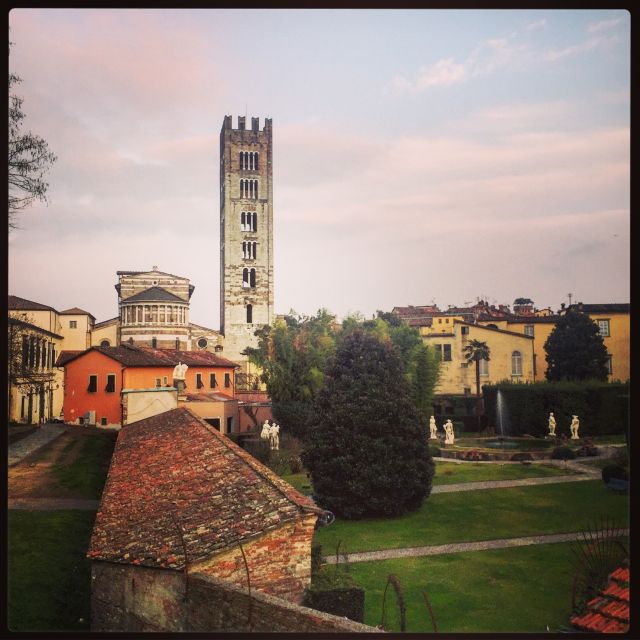
The ancient walls are one of Lucca’s defining features, and the tour includes them among its main sights. The fortifications give you a sense of how the city was protected and why the historic center has remained so contained.
Walking along the wall is also one of the simplest ways to see Lucca from a different angle. From above street level, the city’s layout becomes easier to read. You can see how the old center fits inside its defenses and why Lucca feels so manageable on foot.
The supplied route does not specify how long the group spends on the walls, so do not book this tour expecting a full wall circuit. If walking the entire ring is important to you, plan separate time for it. One visitor used the tour as an introduction and returned to the walls at sunrise the next morning, a sensible plan if you want a quieter walk and more time for views.
The walls are also worth considering if you have mobility concerns. The activity is listed as wheelchair accessible, but surfaces, ramps, and access points can vary. Ask the provider about the exact wall section and route if you need detailed accessibility information.
Finishing at Lucca Cathedral
The official route ends at Lucca Cathedral, also known as the Duomo. The guide can continue inside if you pay the additional €3 entrance fee. This arrangement gives you a choice: finish the guided portion outside, or add the interior visit for a small extra cost.
I would consider paying the fee if you want the guide’s explanation of the cathedral’s art and architecture. A guide can point out details that may not be obvious during a quick self-guided visit. One guide, Roberta, was praised for spending extra time inside and adding stories that enriched the visit.
If you are tired, short on time, or planning another church visit, you can skip the entrance and continue independently. The tour is still complete as an introduction to the city. You can then relax in a cafe or return to any sight that caught your attention.
Because the activity information also says the experience ends back at the meeting point, clarify whether the cathedral is the final guided stop or whether the group returns afterward. That small detail matters if you have luggage, transport, or a fixed booking.
How the guides shape the experience
The strongest part of this tour is the guide-led interpretation. The guide names vary, but the praise is consistent for people such as Marta, Roberta, Vittoria, Lucia, Paola, Anna, Giorgio, and Gregorio.
You can expect more than a list of construction dates. The best commentary includes stories, humor, local customs, food, art, and personal connections to Lucca. One guide explained the origin of the word Vespa in a memorable story, while another used anecdotes about local people to make the city easier to remember.
Several guides were praised for clear English and for keeping the group moving without rushing. That balance matters. A city walk can become tiring when every doorway turns into a ten-minute lecture, but it can also feel thin when the guide simply points and names each building.
The bilingual format deserves a fair assessment. Guides such as Giorgio and Vittoria were praised for managing English and Italian well. You should still expect the tour to proceed in two languages, so the walk may feel less concentrated than a private English-only tour.
Group size, pace, and practical comfort
One account described a group of about 15 people, which is modest enough for most people to hear the guide. The exact group size is not stated as a fixed limit, so it may vary by date.
The pace is described as leisurely. That suits Lucca, where the pleasure comes from noticing small architectural details and moving through the streets without pressure. You should still wear supportive shoes because the route is entirely on foot and includes streets, squares, and the walls.
The tour is a good match for first-time visitors, couples, families who want a structured introduction, and anyone arriving in Lucca for only a day. It also suits people who enjoy history but prefer stories and context to a long formal lecture.
I would be less likely to choose it if you have already spent several days studying Lucca and want specialist details on one narrow subject. It is an overview, not a focused art-history seminar or a complete wall walk.
Is $17 a fair price?
At $17 per person, the tour offers solid value if you want a local introduction to Lucca. You are paying for two hours with a licensed local guide, not for admission to a series of monuments. The price covers the walking commentary, while the €3 cathedral fee is separate.
One supplied account referred to a €15 price, so the cost can vary by booking date or currency. Check the current amount before paying, but even a small difference does not change the basic value: you get a structured route through the old center and advice that can shape the rest of your visit.
The value is strongest when you take the tour early. You can use the guide’s suggestions for shops, cafes, the walls, and sights to revisit. If you take it at the end of your stay, you may still enjoy the stories, but you lose some of the planning benefit.
Free cancellation up to 24 hours before the start and a reserve-now, pay-later option make the booking flexible. Those terms are useful if your Tuscany schedule is still changing.
Who should book this Lucca walking tour?
You should book it if you want a friendly overview of Lucca’s main sights without spending half a day on a formal tour. It is especially useful for a first visit, a short stop from Florence, or the opening morning of a longer stay.
You will get the most from it if you listen for local stories, ask questions, and note places to revisit. Bring comfortable shoes, arrive at the Tourist Information Office in good time, and decide in advance if you want to pay €3 for the cathedral interior.
I would skip it only if you strongly dislike bilingual tours, need a private pace, or want a full-length walk around the city walls. For most visitors, the combination of central sights, local storytelling, and modest cost makes this a practical first step into Lucca.
FAQ
How long is the Lucca walking tour?
The tour lasts two hours. Starting times vary, so check availability when booking.
Where does the tour start?
It starts at the Tourist Information Office, Ufficio Informazioni, at Vecchia Porta S. Donato, Piazzale Giuseppe Verdi, 55100 Lucca LU, Italy.
Which languages are available?
The live guide speaks English and Italian. Both languages are used during the same tour.
Is Lucca Cathedral admission included?
No. Entry to Lucca Cathedral costs €3. You can pay the fee if you want the guide to continue inside.
Is the tour wheelchair accessible?
The activity is listed as wheelchair accessible. Contact the provider if you need details about specific surfaces, wall access, or the cathedral route.
Can I cancel the booking?
Yes. You can cancel up to 24 hours in advance for a full refund. A reserve-now, pay-later option is also available.
Just added around Italy
- Private Bologna Food & Market Tour with 6 Tastings & Wine★ 5.0 · 102 reviews
- Bologna Walking Tour with Audio and Written Guide★ 4.5 · 132 reviews
- Bologna historical art walking tour with hidden gems and tastings★ 5.0 · 108 reviews
- Bergamo: Digital guide made by a local for your walking tour★ 5.0 · 184 reviews
- Full Day Tour by Car and Walking among the Apulian Beauties★ 4.5 · 182 reviews
- The Original Street Food Walking Tour in Bari★ 4.5 · 226 reviews
- Bari Walking City Tour★ 4.5 · 511 reviews
- Bari: Street Food Walking Tour with a Local Guide★ 5.0 · 160 reviews
Italy Walking Tours, compared.
Doge’s Palace and St Mark’s Basilica Walking Tour
Read our review →
Guided Walking Tour & Last Supper Visit with Ticket
Read our review →
San Marco to Rialto Walk & Spritz Like a Local
Read our review →
Uffizi & Accademia Timed Entry: Small Group Duomo Walking Tour
Read our review →
Browse the lists this tour appears in