
Review · HISTORY WALKING TOURS
Genoa: 2-Hour Guided Walking Tour of the Historical Center
Genoa rewards curious walkers. This $16 tour makes the city’s caruggi, or narrow lanes, easier to read, and I like the way it links grand sights with small urban details. I also like the included admission to the Strada Nuova and Sant’Agostino museums. The main drawback is the bilingual format, since every explanation is given in both English and Italian.
You begin at the Tourist Information Center on Via Garibaldi, then move through Genoa’s historic center with a live guide. The route covers the Palazzi dei Rolli, San Matteo Square, San Lorenzo Cathedral, the Doge’s Palace, the Opera House, and Via Garibaldi.
This is a strong first activity in Genoa, especially if you arrive by cruise ship or have only a few hours. The walk is not designed to explore each museum in detail, and the museum visits happen independently after the guided portion, so you need to manage your remaining time.
Key points to know before booking
- Via Garibaldi is your starting point: Meet at the Tourist Information Center at Via Garibaldi 12red, in the heart of the UNESCO-listed palace district.
- The route explains Genoa’s confusing old town: Your guide leads you through the caruggi, where a map alone can make the city feel like a puzzle.
- The Palazzi dei Rolli are the star sight: These 16th- and 17th-century aristocratic residences reveal Genoa’s former wealth and political power.
- The tour is bilingual: English and Italian are used together, which can lengthen stops but has generally worked well with clear guides.
- Two museums are included afterward: You receive admission to the Strada Nuova Museums and Sant’Agostino Museum for independent visits on the same day.
- The price is unusually good: At $16 per person, the guided walk plus museum access offers strong value for a first look at central Genoa.
Why this two-hour walk is useful in Genoa
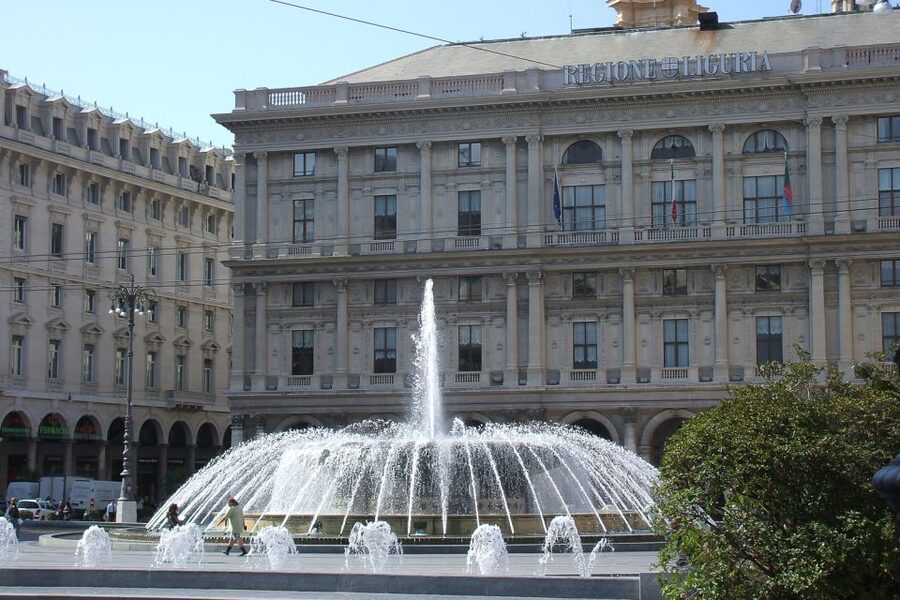
Genoa is not a city that explains itself at street level. Its grand palaces, medieval lanes, churches, harbor connections, and modern streets overlap in a tight area. You can walk past a plain doorway and miss a major aristocratic residence, or enter a narrow alley without realizing that it once connected the city’s trading and political centers.
That is where this tour earns its keep. A guide gives you the basic map of the old center, then adds the stories that help the buildings make sense. Past guides have included Barbara, Anna, Paola, Marina, Irene, Roberta, and Daniel, though the guide for your departure can vary.
The overall rating is 4.2 from 605 ratings, and the most consistent praise has been for the guides’ local insight, clear explanations, and ability to handle the two-language format. Several tours ran a little longer than two hours, but that should not be assumed. Plan for two hours, with extra time afterward for the museums.
More Old Town Walking Tours in Italy:
- Rome Food Tour in the Historic Centre with 8+ Food Tastings
★ 5.0 · 1,000 reviews - Cagliari: Walking Tour of the Old City
★ 4.8 · 560 reviews - Naples: Old Town Guided Walking Tour
★ 4.8 · 553 reviews
Starting on Via Garibaldi among the Rolli palaces
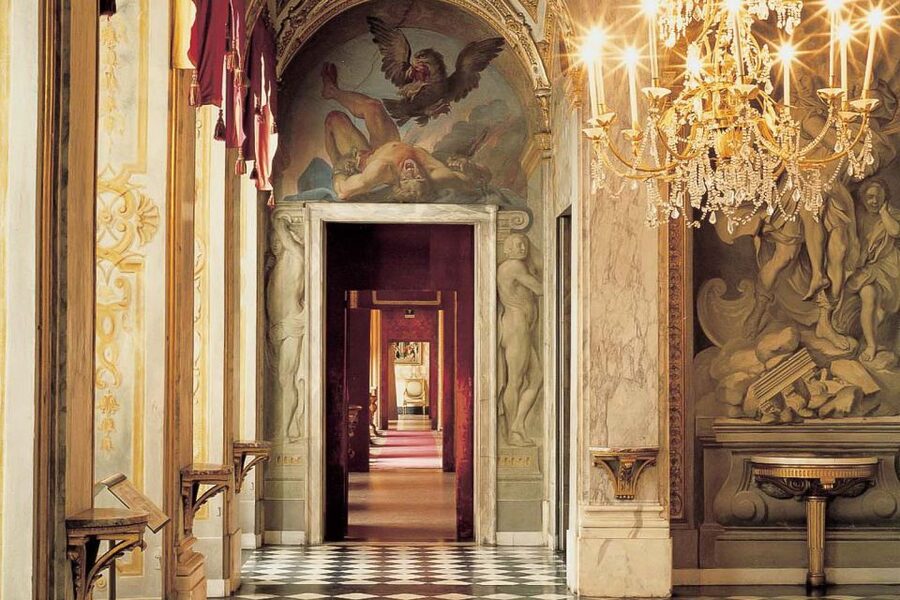
The meeting point at Via Garibaldi 12red is a smart place to begin. Via Garibaldi, also called Strada Nuova, is one of Genoa’s grandest streets and part of the UNESCO World Heritage Site connected with the Palazzi dei Rolli.
The Rolli were aristocratic residences built mainly during the 16th and 17th centuries. Genoa’s most powerful families used these palaces to display their wealth, and the city selected some of them to host important official visitors. This was not just private luxury. The palace system was tied to Genoa’s role as a major maritime and financial power.
I like beginning here because the street gives you an immediate contrast. The façades are formal and grand, while only a short walk away the old city tightens into dark, narrow caruggi. Your guide can help you read that contrast rather than treating the palaces as a string of pretty fronts.
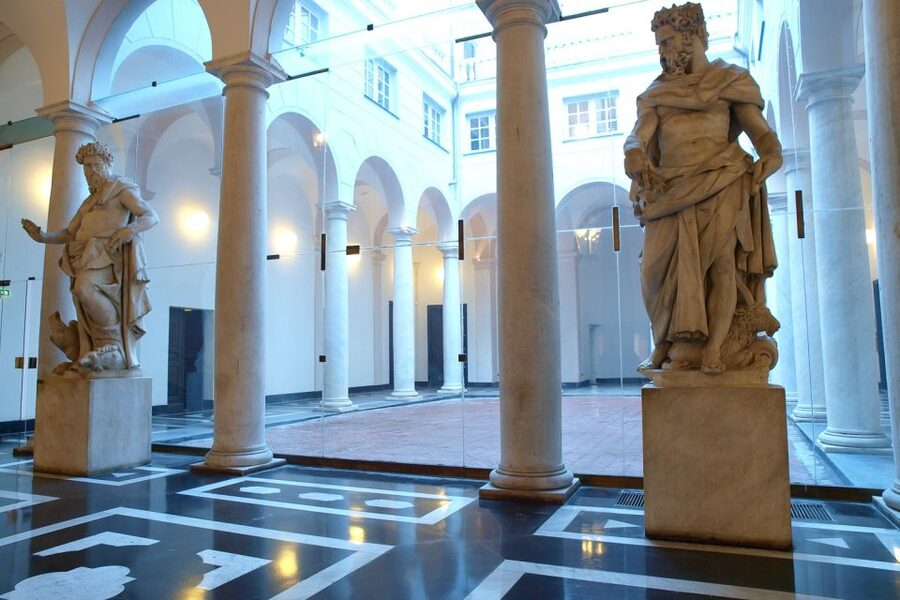
The tour may also introduce the Strada Nuova Museums from this area. These museums occupy several historic palaces and contain works by Italian and foreign artists from the 15th through the 19th centuries. The collection has notable examples from Genoese and Flemish artists.
Do not expect the guided walk to function as a full museum visit. The museums are saved for the end, when the guide introduces them and you continue on your own.
Walking the caruggi without getting lost
The old center’s narrow lanes are the most atmospheric part of the route, but they can also be hard to understand without help. The caruggi twist between tall buildings, small squares, churches, shops, and unexpected openings. A guide can point out how the city developed in layers and show you places you might pass without noticing.
This part of the tour is less about covering distance and more about learning how Genoa fits together. One past description called Genoa a vertical city, which is an apt way to think about it. The city rises from the port into streets that change character quickly, and a short walk can shift from a grand public building to a very enclosed medieval lane.
The pace has generally been described as comfortable. One guide adjusted the speed for a group with different physical abilities, and other tours were praised for allowing time to look around and take photographs. Still, you should wear practical shoes. The route is a walking tour through old streets, not a smooth coach excursion.
The bilingual format affects the rhythm. If your guide speaks first in Italian and then in English, or switches back and forth, each stop takes longer. Some English speakers have appreciated the chance to take photographs during the Italian explanation. Others would prefer a single-language tour so the walk could move faster.
That is the key tradeoff. You get a guide who can serve both groups, but you may spend part of the two hours waiting for the second explanation. The quality of the guide matters here. Past English-speaking guides such as Barbara and Anna were praised for giving the same information in both languages rather than treating one group as an afterthought.
San Matteo Square and the Doria family
San Matteo Square is one of the most rewarding stops because it connects architecture with Genoese power. The square was closely associated with the Doria family, one of the city’s most important ruling families.
This is the kind of place that benefits from a guide’s explanation. On your own, you may admire the scale and harmony of the square without understanding why it mattered. With context, it becomes a reminder that Genoa was shaped by powerful merchant and aristocratic families, not only by distant rulers.
The tour also places Genoa’s medieval story beside later political and commercial developments. You may hear about the city’s role as a Roman port, its trading strength during the Middle Ages, and institutions such as Banco di San Giorgio. The exact amount of detail depends on your guide and the group, but the walk is intended as a broad introduction rather than a specialist lecture.
You may also hear about Marco Polo’s imprisonment, Genoa’s former prison history, or other local stories tied to the old city. These smaller details are useful because they keep the route from becoming a parade of dates and architectural labels.
More History Walking Tours in Italy:
- Venice: City Center Historical Guided Walking Tour
★ 4.2 · 1,873 reviews - Palermo: Street Food and History Walking Tour
★ 4.9 · 1,486 reviews - Verona: History and Hidden Gems Guided Walking Tour
★ 5.0 · 1,379 reviews - Rome: Forbidden History Walking Tour & Pub Crawl with Drinks
★ 4.9 · 688 reviews
San Lorenzo Cathedral and the city’s sacred treasures
San Lorenzo Cathedral is another major stop. Its Gothic character makes it one of the most important landmarks in the old center, and it houses significant religious objects.
The cathedral also connects Genoa with the wider medieval world. Guides have discussed relics associated with St. John the Baptist, which were brought to Genoa during the Crusading period and are now kept in the cathedral. That detail helps explain why a port city was also a place where religious objects, wealth, and political influence gathered.
You should think of the cathedral stop as an introduction. The tour does not promise a detailed examination of every chapel or object, and the supplied information does not specify how long you spend inside. If the cathedral particularly interests you, note what your guide points out and return later if your schedule allows.
This is one reason the tour works well early in your visit. You get a list of places worth revisiting, rather than trying to settle every question in two hours.
Doge’s Palace, the Opera House, and Genoa’s public face
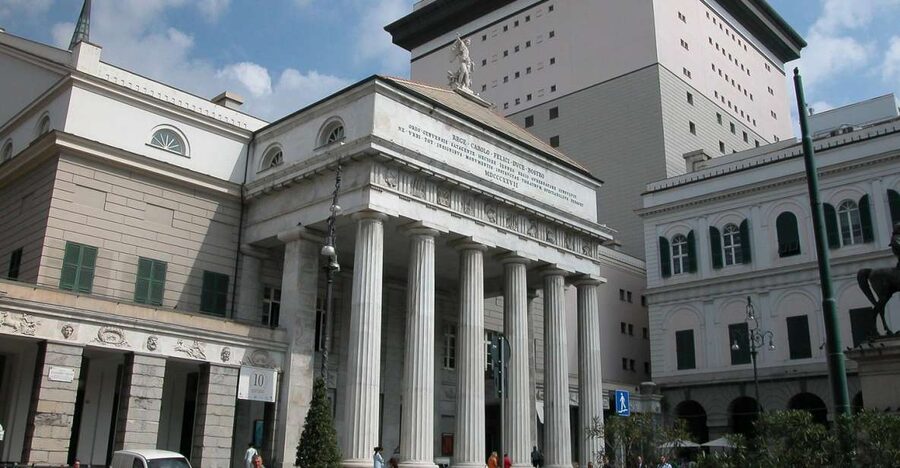
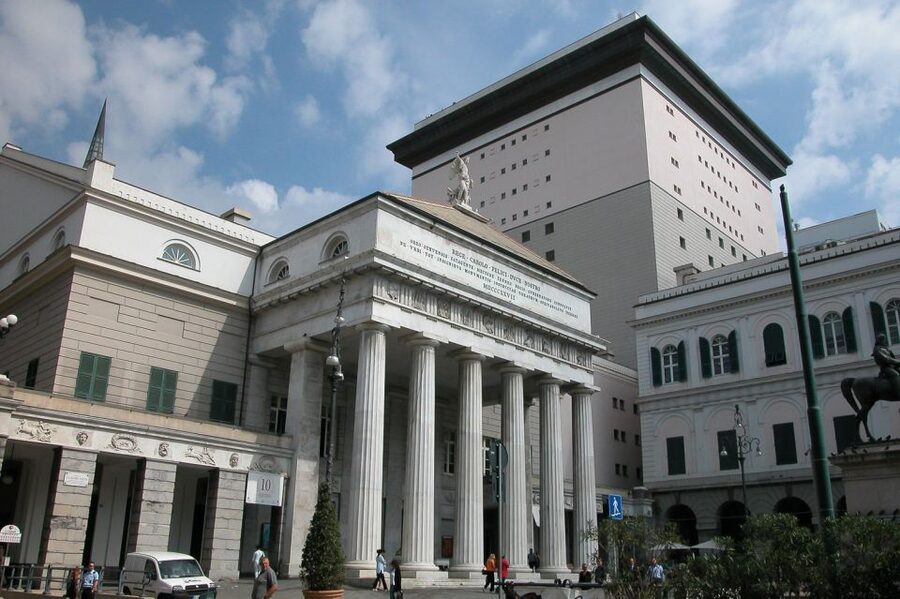
The route also includes the Doge’s Palace and the Opera House. These stops broaden the story beyond aristocratic homes and medieval alleys.
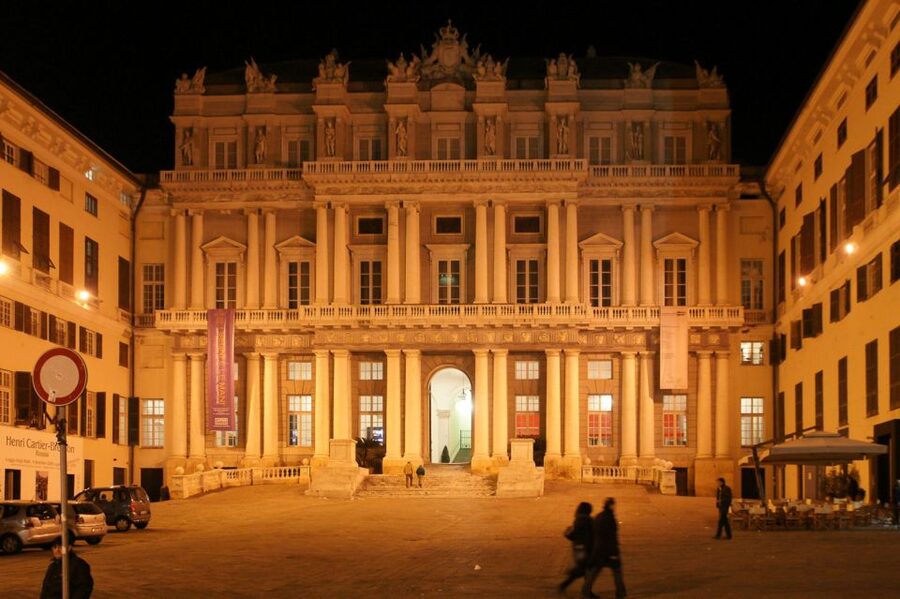
The Doge’s Palace represents the formal political center of the former republic. The Opera House adds a later cultural layer, showing that Genoa’s identity was not limited to maritime trade and medieval churches.
You should not expect long interior visits at every major building. The walk is designed to show you the key points of the historic center and explain their place in the city. That approach suits a first visit, but less so if you want extended time inside each landmark.
The best way to use the route is to keep a short mental list of places you want to revisit. The tour gives you orientation first, then lets you choose where to spend your own time later.
The Strada Nuova Museums after the guided walk
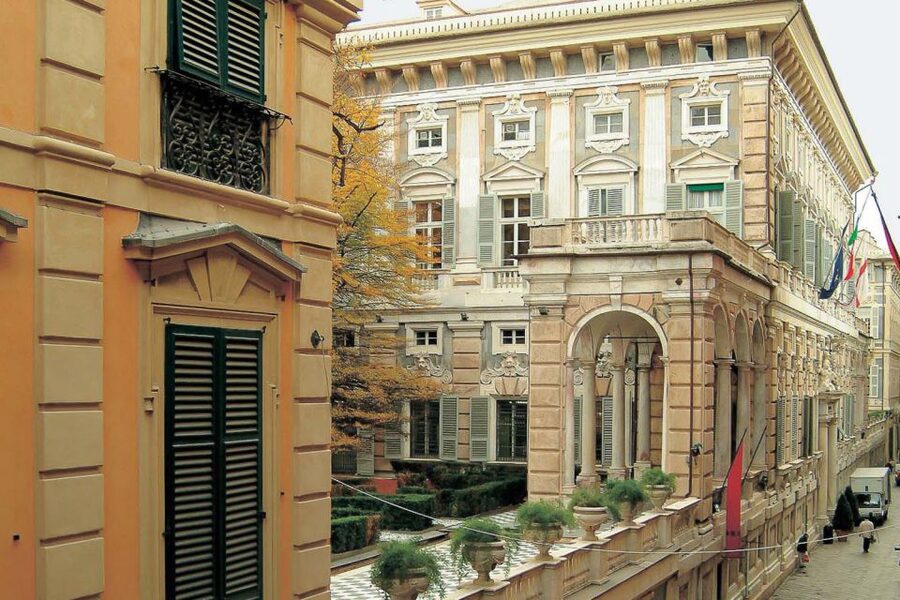
The museum admission is the tour’s strongest practical extra. At the end of the walk, you receive access to the Strada Nuova Museums and Sant’Agostino Museum, but you visit them independently rather than as part of the guided group.
The Strada Nuova Museums are Genoa’s principal museum center and occupy the palace district you have just been exploring. Inside, you can see Italian and foreign works from the 15th through the 19th centuries, including important Genoese and Flemish representation.
This arrangement has both advantages and limits. You are free to set your own pace, linger over the works that interest you, or leave when your attention fades. On the other hand, you do not get the guide’s interpretation inside the galleries, so the museum experience depends more on your own reading and preparation.
The Sant’Agostino Museum offers a different setting. It uses the spaces of a triangular cloister and the largest preserved Gothic church in the complex. Its collection focuses on important medieval works connected with Genoa.
You must visit both museums on the same day as the walking tour. That rule matters if you are planning a late tour, a cruise departure, or a packed sightseeing schedule. The tour itself lasts two hours, but the museums can easily extend your outing.
Is $16 good value?
Yes, especially if you plan to visit both museum sites. The price is $16 per person, and it includes the guide plus admission to the Strada Nuova Museums and Sant’Agostino Museum.
Even if you treat the museum access as an optional extra, the guided orientation is reasonably priced for a city whose old center can be difficult to decode. You are paying for a local explanation of the main sights, not for transport or a full-day program.
The value is strongest for first-time visitors, cruise passengers, and anyone who wants a useful introduction without committing to a long excursion. It is less compelling for you if you already know Genoa well or prefer to move quickly through museums on your own.
The tour has also been compared favorably with cruise-line excursions because it can offer a more focused walking experience at a lower price. That comparison depends on the size and style of your departure, but the meeting point is practical for people arriving from the port. One past participant described it as roughly a 20-minute walk from the port, though your exact route and walking speed will vary.
Timing, language, and group comfort
The tour runs for two hours, with starting times depending on availability. English and Italian are the available languages, and the tour takes place with a bilingual guide.
Group size can vary. Some past departures were small, including one with only two participants, while another had about 15 or 16 people. A smaller group makes it easier to ask questions and hear the guide. A larger group can still work well if the guide speaks clearly, but narrow lanes make it important to stay close.
Several past guides were praised for being easy to hear and for making sure everyone was included. One practical criticism was that a guide sometimes turned away while pointing at a building, making the explanation harder to hear. That is a minor issue, but it shows why your position in the group matters. Stay near the guide when possible.
The bilingual structure is the largest planning point. It may add waiting time at each stop, but several guides have handled the switch with patience and humor. If you strongly prefer a fast, single-language walk, this may not be your ideal choice.
The activity allows cancellation up to 24 hours before the start for a full refund, and you can reserve now and pay later. Those terms are useful if your Genoa schedule depends on a ship arrival or changing plans.
Who should book this Genoa walk?
I would choose this tour if you want a clear first look at the old center, especially on your first day. It suits adults, families able to walk through historic streets, cruise passengers, and anyone who likes history explained on site rather than read from a guidebook.
It also suits you if museums are part of your plan. The included admissions make the price stronger, and the route places you near the Strada Nuova Museums from the beginning.
I would think twice if you dislike bilingual tours or want long, detailed interior visits. You may spend part of the time listening to a language you do not understand, and the museum visits are self-guided after the walking portion.
Should you book it?
Book it if you want a low-cost orientation to Genoa’s caruggi, palaces, cathedral, political squares, and museum district. The best reason to go is the combination of local explanation and same-day museum admission, not simply the number of sights checked off.
Arrive ready to walk, keep close enough to hear, and leave room afterward for both museums. At $16, this is a sensible way to get your bearings fast and decide which parts of Genoa deserve a second look.
FAQ
How long does the Genoa walking tour last?
The guided walking tour lasts two hours. Some past tours ran slightly longer, but the scheduled duration is two hours.
Where does the tour begin?
The meeting point is the Tourist Information Center at Via Garibaldi 12red in Genoa.
Which languages are available?
The tour is offered in English and Italian with a bilingual guide.
Is the tour conducted in both languages?
Yes. The guide gives the tour in both English and Italian.
Are museum admissions included?
Yes. Admission to the Strada Nuova Museums and Sant’Agostino Museum is included.
Are the museum visits guided?
No. At the end of the walking route, the guide introduces the Strada Nuova Museums, and you continue through the museums independently.
When must I visit the museums?
You should visit the Strada Nuova Museums and Sant’Agostino Museum on the same day as the walking tour.
Can I cancel for a refund?
Yes. You can cancel up to 24 hours in advance for a full refund. You can also reserve now and pay later.
More 2-Hour Experiences in Italy
- Lucca: 2-Hour City Center Walking Tour
★ 4.7 · 1,314 reviews - Milan by Night 2-Hour Walking Tour
★ 4.4 · 286 reviews - Florence: Dan Brown’s Inferno 2-Hour Walking Tour
★ 4.5 · 187 reviews - Pisa: 2-Hour Walking Tour
★ 4.8 · 147 reviews
Just added around Italy
- Bergamo: Digital guide made by a local for your walking tour★ 5.0 · 184 reviews
- Full Day Tour by Car and Walking among the Apulian Beauties★ 4.5 · 182 reviews
- The Original Street Food Walking Tour in Bari★ 4.5 · 226 reviews
- Bari Walking City Tour★ 4.5 · 511 reviews
- Bari: Street Food Walking Tour with a Local Guide★ 5.0 · 160 reviews
- Bari Walking Tour with Pasta Experience★ 4.5 · 270 reviews
- Assisi Private Walking Tour including St. Francis Basilica★ 5.0 · 124 reviews
- Private St. Francis Basilica of Assisi and City Walking Tour★ 5.0 · 114 reviews
History Walking Tours, compared.
History and Hauntings of Salem Guided Walking Tour
Read our review →
Freedom Trail History Small Group Walking Tour
Read our review →
Historic Charleston Guided Sightseeing Walking Tour
Read our review →
Tapas Walking Tour with Food, Wine, and History
Read our review →
Savannah History and Haunts Candlelit Ghost Walking Tour
Read our review →
A History of Terror – Belfast City Centre Walking Tour
Read our review →Browse the lists this tour appears in